>
| INTRODUCTION |
|---|
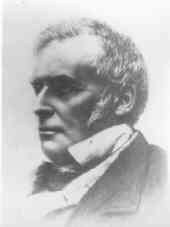
Even in Bethesda and in the sects, as well as among those who claim to be his spiritual descendants, many know of J. N. Darby.
- Some invoke his name to support their views, others carelessly speak ill of that faithful servant,
- but few understand the motivating power of his long life of service, much less emulate him.
- Those who are sincerely interested in the unique service and ministry of this honoured servant of the Lord should be sure to read Biography: J. N. Darby.
Mr. Darby's extensive and valuable ministry is still in print, and available from Kingston Bible Trust.
- Therefore, as noted on the main 'Ministry' page, only those articles which have special significance – or on subjects not covered in the ministry of other servants – will appear on My Brethren.
The articles that appear here – except What is a Sect?, The Oblation, The Nazarite, On Worship and "A Man in Christ" – and in Part Two are taken from the booklet The Faith Once Delivered to the Saints and various papers published by the Stow Hill Depot in 1943.
- References to the 'Collected Writings' are also given.
- The following papers had a distinctive place in connection with the revival, in the last century, of the truth relating to the assembly of God, and they are now re-issued so as to be accessibale to those who may not previously have had opportunity to read them.
- They bring out clearly from Scripture the principles on which Christians can walk together consistently with the truth, in a day when the truth is almost universally departed from.
- The subjects treated of are of the utmost importance, and they claim serious and prayerful consideration on the part of all saints.
- They bring out clearly from Scripture the principles on which Christians can walk together consistently with the truth, in a day when the truth is almost universally departed from.
|
The unsigned prefatory note in the 1943 booklet says:
|
- History: Early Years
- History: John Nelson Darby: An Unfriendly Appraisal
Pages with ministry by J. N. Darby: - Ministry: J. N. Darby
- Doctrine: Inspiration of the Scriptures
- Doctrine: The Sufferings of Christ
- Doctrine: Eternal Life
- Doctrine: Baptism and Christening
- Doctrine: One Body: Is the "One Body" the Ground
- of Gathering?
- Doctrine: The Lord's Table, the Lord's Supper and
- the Service of God
- Doctrine: Gifts and Offices
- Doctrine: Ministry
- Doctrine: Man and Woman
- Doctrine: Marriage and Divorce
- Doctrine: Religious Holidays
- Doctrine: The Public Ruin of the Church
- Doctrine: The Unequal Yoke
- Doctrine: The World, Its Politics and God's Government
- History: Early Contentions: The Bethesda Circular
Related Pages: - History: Darby Bible
- Guests: Site News – Select the following:
Bibles and Books: Kingston Bible Trust
Bibles and Books: Dover Bible Fund
Links: JND's translation of the Holy Scriptures
Links: JND's Synopsis of the books of the Bible - Ministry: J. N. Darby
|
|
G.A.R.
| THE FAITH ONCE DELIVERED TO THE SAINTS – Jude 3 |
|---|
| Collected Writings of J. N. Darby, 32: 379-91, no date |
It is a great thing for us, beloved friends, in all our path to know where we are,
- and then to know the mind of God, not only as to where we are, but as to our place in the path in which we find ourselves.
Not only has God visited us in grace, but we have to take into our minds what the actual present result of that grace is,
- so that we hold fast the great principles under which God has set us as Christians;
- and at the same time be able to apply those principles to the circumstances in which we find ourselves.
- These circumstances may vary according to our position, but the principles never vary.
Their application to the path of faith may vary and does. I mean such a thing as this:
- in Hezekiah's time they were told, "In quietness and in confidence shall be your strength", and the Assyrian should not even cast a bank before Jerusalem.
- They were to stay perfectly calm and firm; and the host of Assyria was destroyed.
- But when a certain time of judgment was come, in Jeremiah's time, then he that went out of the city to the Chaldeans, their enemies, should save himself.
- It was not that God's mind was altered or His relationship to His people changed – that never will be.
- Yet the conduct of the people was to be exactly the opposite.
- Under Hezekiah they were protected; under Zedekiah they were to bow to the judgment.
I refer to these circumstances as a testimony, to show that while the relationship of God with Israel is immutable in this world, yet their conduct at one time had to be the opposite to that at another.
Look at the beginning of the Acts of the Apostles, as regards the Church, God's assembly in the world.
- There I find the full display of power; all had one heart and one mind and they had all things in common; the very place was shaken where they were.
- But suppose I take the Church now, including the Roman Catholic system and all, if we look at all that and own it, we bow down to everything that is evil at once.
While God's thoughts do not change and He knows His people and so on, yet we need spiritual discernment to see where we are, and what the ways of God are in the circumstances,
- while never departing from the first great principles which He has laid down for us in His Word.
- Another thing, too, we have to take account of as a fact of Scripture, is that wherever God has set man, the first thing man has done has been to spoil the position; we must ever take that into account.
Look at Adam, Noah, Aaron, Solomon and Nebuchadnezzar. God goes on in patient mercy,
- yet the uniform way of man, as we read in Scripture, has been at once to upset and destroy the thing which God set up good.
- Consequently, there cannot be any walking with a true knowledge of our position if this is not considered. But God is faithful and goes on in patient love.
- Thus in Isaiah 6 we find "Make the heart of this people fat, and make their ears heavy, and shut their eyes" and so on,
- but it was not fulfilled for 800 years, and when Christ came they rejected Him.
Patience went on in that way, individual souls were converted, there were various testimonies by the prophets and a remnant was preserved still.
- But if we should plead the faithfulness of God, which is invariable, to put a positive sanction upon the evil which man has brought in, our whole principle is false.
That would be exactly what they did in Jeremiah's time when judgment was coming, and what Christendom is doing now;
- they said, "The temple of the Lord, the temple of the Lord, are these",
- and "The law shall not perish from the priest, nor counsel from the wise," when they were all going to Babylon.
- The faithfulness of God was invariable, but the moment they applied that to sustain them in the place of evil, it became the very ground of their ruin.
- The same principles which would be our security become, if we leave out the sense of where we are, our ruin.
We get the Word, "look to the rock whence ye are hewn, and to the hole of the pit whence ye are digged. Look to Abraham your father and unto Sarah that bare you;
- "for I called him alone, and blessed him, and increased him", Isaiah 51: 1; a passage constantly misapplied.
- God is saying there, Abraham was alone and I called him.
- Israel, to whom God spake this, was then but a little remnant – Do not let that make you uneasy, I called Abraham alone.
- Their being little was of no consequence – God could bless them alone as well as Abraham.
Now in Ezekiel, a similar statement by the people in different circumstances, is denounced as iniquity.
- They said there, "we are many", "Abraham was one and he inherited the land", Ezekiel 33: 24; God blessed him and so He will bless us still more.
- From want of conscience, really, they misapprehended the condition in which they were, and with which God was dealing.
- So now, if we leave out the sense of our condition – I mean that of the whole professing Church in the midst of which we stand – we shall be utterly wanting in spiritual intelligence.
We are in the last days, but sometimes I think people do not weigh the full force of that.
- I think I can show you from Scripture that, the Church as a responsible system down here was,
- from the very outset, that which had got into the condition of judgment, and the state of it was such as to require individual faith to judge it.
The great thought that is current among hundreds and thousands is to get away from the present confusion
- to a kind of resource, that the Church teaches and judges and does this and that;
- but, on the contrary, God is judging the Church.
- Patience He does show and grace, calling souls to Himself as He did in Israel; but what we have to look in the face is that
- the Church has not escaped the effect of that principle in poor human nature, that the first thing it does is to depart from God, and ruin what He has set up.
When we speak of the last times it is not a new thing, but one which we have in Scripture, one which God in sovereign goodness has given us before the closing of the canon of Scripture.
- He allowed the evil to come up so that He could give us the judgment of Scripture upon it.
- If you look at Jude – and I take now merely some of those principles which the Church of God wants – he says,
- "Beloved, when I gave all diligence to write unto you of the common salvation, it was needful for me to write unto you, and exhort you that ye should earnestly contend for the faith once delivered to the saints".
- The faith was in danger already, they were obliged to contend for that which was slipping from them, so to say, for there were "certain men crept in unawares", etc., so that you must look at judgment now.
- God saved the people out of Egypt and afterwards had to destroy them that believed not. So, too, with the angels in like manner.
Then again Enoch prophesied of those of whom Jude speaks, the ungodly, on whom the Lord will execute judgment when He comes again.
- These were then, and the starting point of it in the Apostles' days was sufficient to give the revelation of God's mind by His Word.
- The ground of judgment when the Lord comes again was there present already.
If you take John's first epistle, chapter 2: 18, he says, "Little children, it is the last time: and as ye have heard that antichrist shall come, even now are there many antichrists, whereby we know that it is the last time".
- So that it is not a new thing that is developed, but it began at the first, just as in Israel they made the calf at the outset, yet God bore with them for centuries,
- but the state of the people was that which a spiritual man judged.
- John says, "we know that it is the last time". I suppose the Church of God has hardly improved since then.
- In verse 20 he adds, "But ye have an unction from the Holy One, and ye know all things" – you have that which will enable you to judge in these circumstances.
Again, take the practical state of the Church as seen by Paul in Philippians 2: 20-21,
- "I have no man like-minded, who will naturally care for your state. For all seek their own, not the things that are Jesus Christ's".
- That was in his day. What a testimony! It was not that they had given up being Christians.
He tells Timothy, "At my first answer no man stood with me, but all men forsook me; I pray God that it may not be laid to their charge", 2 Timothy 4: 16. Not one stayed by him!
- Peter tells us that "the time is come that judgment must begin at the house of God", 1 Peter 4: 17.
- I name these as the authority of the Word of God, showing even then, at the very beginning, there was that going on outwardly which the Spirit of God could discern and testify to as being
- the ground of final judgment, but already manifest in the Church of God.
There is another thing that shows this principle strongly, and that is the ground of action, under the circumstances disclosed in the seven churches in Asia; Revelation 2 and 3.
- I do not doubt but that it is the history of the Church of God, but the point is,
- "He that hath an ear, let him hear what the Spirit saith unto the churches".
- The churches could neither guide nor have authority, nor anything else of the kind but whoever had an ear to hear God's Word had to judge their state.
- That very evidently is an important principle, and a very solemn thing it is.
- Christ is speaking to the churches, not as Head of the body, though He is that for ever and ever, but they are being looked at as responsible down here on the earth.
- It is not the Father sending messages to the Church, as in the different epistles; it is not that, but it is Christ walking in the midst of them to judge them.
- He is here, therefore, neither the Head of the body, nor the Servant. He has His garment down to the feet – I tuck it up if I want to serve.
- He is walking in the midst to judge their state. That is a new thing.
It is a question of responsibility, and so you find some approved and some disapproved.
- Their condition is the subject of judgment on the part of Christ, and they are here called to listen to what He has to say.
- It is not the blessing of God properly, which you get in the churches, though they had many blessings,
- but the condition of these churches when these blessings had been put into their hands. What use had they made of them?
Look at the Thessalonians in their freshness – the work of faith, labour of love and patience of hope are manifest.
- But in the first epistle to the churches, that to Ephesus, we read, "I know thy works, and thy labour, and thy patience".
- Where were the faith and the love? The spring was wanting. The Lord had to say "I will … remove thy candlestick … except thou repent".
- They were put in a place of responsibility and He deals with them according to it.
- The first thing is, "thou hast left thy first love"; so the time was come when judgment should begin at the house of God.
Peter's words allude to Ezekiel, when he says, "begin at my sanctuary", Ezekiel 9: 6;
- God's house at Jerusalem, for that is where God looks first for what is right – to His own house.
- I feel it is an exceedingly solemn thing, and one that should bow our hearts before God.
The Church has failed in being the epistle of Christ – it was set as such in the world – but now is it anything like it at all?
- Can a heathen – that is the way to look at it – see anything of it?
- Individuals may be walking blessedly; yet where do we get faith like Elijah's, though he knew no one in Israel who was true, while God knew seven thousand.
- Blessed man he was, but even his faith failed and God asks him, "What doest thou here, Elijah?"
- This should not be discouragement either, for Christ is sufficient for us.
- Nothing reaches the full perfect faithfulness of God's own grace, and our hearts ought to be thoroughly bowed as to that.
Neither is it the thought of attacking or blaming, for we are all in it in one sense, but our hearts should take notice,
- that what was set up so beautiful in the power of God's Spirit – what has it all come to? It casts us on the strength that can never fail!
When the spies returned to Israel, the faith of ten gave way.
- Caleb and Joshua say, "neither fear ye the people of the land for they are bread for us".
- It is the same for us in view of difficulty and opposition now.
- We are called to see where we are, and what the path and the place are, in which we have to walk, and to have a consciousness of the state all is in around us.
- Yet if the Church has utterly failed, the Head can never fail.
- Christ is just as sufficient for us now, in the state of things in which we find ourselves, as at the first when He set up the Church in beauty and blessedness.
- It may require us to look at His Word and see what His mind is, but we are not to hide our eyes from what the state is in which we are.
In reading the Acts it is most striking to see that there is power in the midst of evil.
- When we get to heaven there will be no evil at all, we shall not want faith or conscience in exercise then, but now we do,
- and the only thing we have is the power of the Spirit of God where evil is dominant, and by it we should be dominant over the evil in our path.
It does not say that every Christian will be persecuted, but it says, "all that will live godly in Christ Jesus shall suffer persecution", 2 Timothy 3: 12.
- If a man show the power of the Spirit of God, the world will not stand it; that is the principle.
- In the Acts, when we get the power of the Spirit shown in miracles, as in Christ before, what did it draw out? The enmity which crucified the Lord.
- What we have now is good in the midst of evil – that is what Christ was, perfect good in the midst of evil;
- but the effect of the display of God in Him – inasmuch as the carnal mind is enmity against God – was that it drew out hostility,
- and the more the display, the more the hostility drawn out; and so for His love He had hatred.
- but the effect of the display of God in Him – inasmuch as the carnal mind is enmity against God – was that it drew out hostility,
- As yet we have not come to the time when evil is removed – that will be when Christ comes again – and that is the difference between that time and this time;
- that time will be the coming in of good in power, so as to bind Satan and put down evil.
- But Christ being in this world, and afterwards His saints, is on the contrary, good in the midst of evil, while Satan is the god of this world.
When once these became mixed up, the good was swamped and all floated on together.
- Take the wise virgins and the foolish; while they are asleep they can all stay together – Why should they not?
- But the moment they trim their lamps comes the question of the oil, and they do not go together any more. And we shall find it the same.
Again in Joshua it was a time of power. True they fail at Jericho and get beaten at Ai, but the general character is power.
- Enemies were subdued and cities walled up to heaven were taken, faith overcame all, and that is a blessed picture – good in the midst of evil and power carrying on the good and putting down enemies.
- In Judges it is the contrary; God's power was there, but power was manifested by the evil because the people were not faithful. They got at once to Bochim – Judges 2: 1-5 – i.e., tears, weeping,
- while in Joshua they went to Gilgal, where the total separation of Israel from the world had taken place;
- they had crossed Jordan and that was death, and then the reproach of Egypt was rolled away.
- while in Joshua they went to Gilgal, where the total separation of Israel from the world had taken place;
- But the Angel of the Lord went to Bochim; He did not give up Israel though they had left Gilgal. It was grace going after them.
- And on our part, if we do not go to Gilgal, if we do not go back to the utter humiliation of self in God's presence, we cannot come out in power.
If a servant's intercourse with God does not surmount his testimony to men, he will break down and fail. He must renew his strength.
- The great secret of Christian life is that our intercourse with God should make nothing of ourselves.
- God, however, did not give up Israel, and they built an altar to the Lord, but they were weeping at the altar; they were not in triumph, but were constantly being triumphed over.
Then God sent them judges and He was with the judges, though the people had lost their place. That is what we have to consider in the same way.
- "All seek their own, not the things that are Jesus Christ's".
- Was not that losing their place? – not that they had ceased to be the Church of God, I do not mean that.
- Unless we consider this, we, too, shall get to Bochim, the place of tears.
- The whole state of the Church of God has to be judged, only the Head can never lose His power, and there is a grace that fits the condition, too.
What I see in the beginning of the history of the Church is first this blessed power converting 3,000 souls in one day.
- Then came opposition; the world put them into prison, but God shows His power against that, and I do not doubt that if now we were more faithful there would be a great deal more of the intervention of God.
- But the power of the Spirit of God was there, and they were walking in a blessed unity, showing that power, and that in the midst of the power of evil,
- though we do not leave that scene until we find, alas, evil working within, as seen in Ananias and Sapphira.
- They got credit for giving up their goods falsely. The Spirit of God was there, and they fell dead and fear came upon all, both inside and outside.
- Then, before the history of Scripture closes, the time has come that judgment must begin at the house of God.
- It is a most solemn thing characterising the present time until Christ comes, and then His power will put down evil – a very different thing.
Next we get the testimony to the gross evil where good ought to be:
- "in the last days perilous times shall come; for men shall be lovers of their own selves" and so on; 2 Timothy 3: 1-2.
- There the professing Church – for such it is – has the same description as is given of the heathen in the beginning of the epistle to the Romans.
- It is a positive declaration that such times should come, and that the state of things would return to what it had been in heathendom.
- It goes on to say that "evil men and seducers shall wax worse and worse, deceiving and being deceived", 2 Timothy 3: 13.
- But Paul tells Timothy to continue in the things he had learned.
People say now the Church teaches these things, but I ask, Who is that? The Church? What do they mean?
- It is all something in the air – there is no inspired person in the Church now to teach. I must go to Paul and Peter and then I know from whom I learn.
- Just as he said to the elders from Ephesus, "I commend you to God and to the Word of his grace".
- Evil men and seducers had waxed worse and worse, but the apostle casts Timothy on the certainty of the knowledge he had received from particular persons;
- to us now, it is, "the holy scriptures, which are able to make thee wise unto salvation".
- We have to learn all this, when the professing Church is a judged thing, and the mere form of godliness characterises it.
- Here we get, I think, what Christians must look in the face. Do we not see men now turning away who were once called Christians; such turning infidels?
Mere formality is turning into open infidelity or open superstition. It is notorious, even in an outward way, how things are going.
- In itself, Christianity is Christianity as God gave it, but outwardly, as seen around us, it is gone.
- It is Christianity that we want, as it is in the Word of God.
- Not that there is anything to fear – it is a blessed time in a sense, casting us upon God, only we must look at these things simply and steadily.
There is not a more blessed picture of lovely faith and godliness, before the gospel came in, than you find in the first two chapters of Luke.
- Amidst all the iniquity of the Jews, we see Zacharias, Mary, Simeon, Anna and other like minded ones.
- And they knew each other, and Anna "spake of him to all them that looked for redemption in Jerusalem"; just as we ought to be in another way.
But as to the present state of things – taking the side of man's responsibility – man departs at once from what God sets up,
- and then comes in a growing corruption, till judgment is necessary.
- John spoke of the last days being come in, because there were then already many antichrists; but God's patience has been going on, until at the close perilous times have come.
Now I add a Word as to how we are to walk in the midst of such a state of things.
- It is clearly by the Word of God – by immediate reference to it.
- Not that God does not use ministry – ministry is His own ordinance – but for authority we must turn to the Word of God itself.
- There is the direct authority of God, as determining everything; and we have the activity of His Spirit to communicate things.
- Yet it is an unhappy thing if a person goes only to Scripture, refusing help from others, or looks at men as direct guides and denies the Spirit's place.
A mother ought to be blessed in the care of her children, and so should a minister among saints;
- that is the activity of the Spirit of God in an individual – he is an instrument of God.
- But while owning that fully, we must go to the Word of God and that directly, and that is what we have to insist upon.
- We all say that the Word of God is the authority, but we have to insist that God speaks by the Word.
- A mother is not inspired and no man is, but the Word of God is, and it is direct,
- "He that hath an ear, let him hear what the Spirit saith unto the churches".
- I never get the Church teaching – the Church is taught and does not teach; individuals teach.
- But the apostles and others whom God used in that way, were the instruments of God, to communicate directly from God to the saints, so it is,
- "I adjure you by the Lord that the letter be read to all the holy brethren", 1 Thessalonians 5: 27.
- This is of all importance, because it is God's title to speak to souls directly.
- He may use any instrument He pleases, and you cannot object –
- "the eye cannot say to the hand, I have no need of thee", 1 Corinthians 12: 21;
- but when you come to direct authority, it is a most solemn thing to touch that.
- Neither do I talk of private judgment in the things of God, I do not admit it as a principle.
- You have to discern about other things, but the moment I get into divine things am I going to talk of judging the Word of God? That is one sign of the evil of the times that are come in.
When I own the Word of God, brought by His Spirit, I sit down to hear what God will say to me, and then it judges me, not I judge it.
- It is the divine Word brought to my conscience and heart, and am I to judge God when God is speaking to me? It would be denying that He is speaking to me.
- To have real power it must be the Word of God to my soul, and then I do not think of judging it, but I sit down before it to have my heart drawn out and my conscience exercised.
- Then I must take it up, as that which gives me what was from the beginning. Why? because God gave that.
- At the beginning we have not the thing as it was spoiled, but that which God set up.
- But after the beginning, the very next thing in ecclesiastical history was all wretched division.
- John says, "If that which ye have heard from the beginning shall remain in you, ye also shall continue in the Son and in the Father", 1 John 2: 24.
- You lose your place in the Son and in the Father if you go away from that which was from the beginning.
- It is evident, then, in applying this, that I must take notice of the circumstances we are in, for in them I get, not what was from the beginning, but what man has made of what God set up at the beginning.
- People say the Church is this and that, but if I take what God set up, I see the unity of the body, and Christ the Head, and that is what the Church was manifested to be on earth. But do we get it now?
On the contrary we get warned.
- Paul, as a wise masterbuilder, laid the foundation, and when others build he warns them not to build with wrong materials – wood, hay, stubble – which will be destroyed; 1 Corinthians 3: 12.
- The building work was put upon man's responsibility, and as such became the subject of judgment.
- "Upon this rock I will build my Church", Matthew 16: 18, gives me Christ's building, and that is going on; it is not finished yet.
- Again in Peter, "To whom coming, as unto a living stone, disallowed indeed of men, but chosen of God and precious, ye also as lively stones are built up a spiritual house", 1 Peter 2: 4-5.
- There, too, it is seen as still being built up; then in Ephesians 2: 21, Paul says the building "fitly framed together groweth unto an holy temple in the Lord".
- Now all that is Christ's work, what men call the invisible Church, and so it is.
- But on the other hand, "Let every man take heed how he buildeth thereupon", 1 Corinthians 3: 10, i.e., upon the foundation laid by Paul; there you have man's work as a responsible instrument.
Now men confound these two things; they go on building in wood, hay and stubble, and then they speak of the gates of hell not prevailing against that, because they do not give heed to the Word of God.
- We have to look at God's principles and the power of the Spirit of God, to hear what the Spirit saith to the churches, and to discover truly where we are,
- so finding the path which God has marked out and in which we are distinctly to walk and I add, faith in the presence of the Spirit of God.
- That Spirit will use the Word and make us take notice of the state of things, not confounding God's faithfulness with man's responsibility – what the superstitious world is doing –
- but owning that there is a living God and that that living God is amongst us in the Person and power of the Holy Ghost.
- All is founded on the cross, surely, but the Comforter did come, and by one Spirit they were all baptised into one body.
Whether I take the individual or the Church, I find this is the secret of power for all the good against the evil, outside or inside, this fact – the Word being the guide – of the presence of the Spirit of God.
- "Know ye not", Paul said, to people going on very badly, in order to correct them, "that your body is the temple of the Holy Ghost which is in you, which ye have of God", 1 Corinthians 6: 19.
- Do you believe, beloved friends, that your bodies are the temples of the Holy Ghost? Then what kind of persons ought we to be?
In 1 Corinthians 3: 16, we get the same thing said of the Church, "know ye not that ye are the temple of God, and that the Spirit of God dwelleth in you?"
- The presence of the Spirit gives power, and practical power, too, for blessing, whether in the Church or in the individual, and He alone can do anything for real blessing.
Again, it is only on the footing of redemption that God dwells with man. He did not dwell with Adam innocent, though He came down to him.
- He did not dwell with Abraham, though He visited him and ate with him.
- But when Israel came out of Egypt, God said He brought them to Himself "that I may dwell among them".
- And at once the tabernacle was built, and there was God's presence in the midst of His people.
Of course, now, we have true and full redemption, and the Holy Ghost has come down to dwell in those that believe,
- that they might be the expression of what Christ was Himself when He was down here.
- "Whosoever shall confess that Jesus is the Son of God, God dwelleth in him and he in God", 1 John 4: 15; and
- "Hereby know we that we dwell in him and he in us, because he hath given us of his Spirit", 1 John 4: 13.
- "Whosoever shall confess that Jesus is the Son of God, God dwelleth in him and he in God", 1 John 4: 15; and
- Where a person is really a Christian, God dwells in him; it is not merely that he has life, but he is sealed with the Holy Ghost who is the power for all moral conduct.
- If we but believed that the Spirit of God dwells in us, what subjection there would be, and what manner of persons would we be, not grieving that Spirit!
Further, in 1 Corinthians 2: 9, I find, "Eye hath not seen, nor ear heard, neither have entered into the heart of man, the things which God hath prepared for them that love him, but God hath revealed them unto us by his Spirit" –
- "Now we have received, not the spirit of the world, but the Spirit which is of God".
- The Spirit of God and of the world are always in contrast. But then I find the revelation is in contrast with what is our state.
- We have to say, "Eye hath not seen"; these things are so great we cannot conceive them, but God has revealed them by His Spirit.
- The Old Testament saints could not find out or know these things, but with us it is the opposite; we do know them, and He has given us His Spirit "that we might know the things".
In this passage the Holy Ghost is seen in three distinct steps;
- first, these things are revealed by the Spirit;
- then, they are communicated by words the Spirit taught;
- and then, they are received by the power of the Spirit – are "spiritually discerned";
- all three are the operation of the power of the Spirit of God.
If I were to take the Word of God by itself and say I can judge of it and understand it, then I am a rationalist; it is man's mind judging the revelation of God.
- But where we get God's mind communicated by the Holy Ghost, and the Holy Ghost the power to receive it, then I get God's mind.
- There is just as much wisdom and power from God for us to meet the state of ruin in which we now are, as there was at the first when He set up the Church; and that is what we have to lean upon.
| THE NATURE AND UNITY OF THE CHURCH OF CHRIST John 17:21 Luke 12: 36 |
|---|
| Collected Writings of J. N. Darby, 1: 20-35, Dublin 1828 |
The writer of these pages – he trusts, not the author of them – would add whatever God might afford him in ministering to the progress of the Church through the various exercises to which its faith is exposed.
He cannot doubt that much of the moral truth on which the following considerations depend has been realised in the minds of believers, of students of the divine Word;
- but he has felt in the little communion, though great intercourse, which such have with each other, that the expression of these thoughts
- might, by the blessing of God, direct the attention of believers to, and more explicitly manifest to the Church from the divine Word, its just objects;
- and consequently, by their reception, determine its character and conduct; ensuring, under God's blessing, more consistency of operation;
- stablish, strengthen, settle it in its own hopes, and make it exhibit with more clearness and power the grace of God to the world;
- lead believers to more explicit reliance on the operations of the divine Spirit, and to look less to the plans of men and human co-operations, or what will be found in the end to be human interests.
While the aims and purposes of believers are very mixed in their nature, and fall far below the standard for which God has gathered them, and which He proposes as the influential object of their faith and consequently motive of their conduct, yet
- division, and sectarianism are, even in the mercy of God's providence, the necessary result, whether it assume the character of Establishment or of Dissent.
I am supposing here, of course, that the great truths of the gospel are the professed faith of the churches, as they are in all the genuine Protestant churches.
- For the just consequence of the reception of gospel facts by faith and its end in man is the purification of the desires in love – a life to Him who died for us and rose again – a life of hope in His glory.
To suppose therefore unity where the life of the Church falls entirely short of the just consequences of its faith,
- is to suppose that the Spirit of God would acquiesce in the moral inconsistency of degenerate man,
- and that God would be satisfied that His Church should sink below the glory of its great Head, without even a testimony that He was dishonoured by it.
In truth it has never been so: judgments from without for a good while marked His displeasure while it was sinking,
- and when it was utterly sunk in apostasy, He raised His witnesses, who should sigh and cry for the abominations that were done in it;
- who, in much darkness of spiritual understanding, bore testimony against the moral corruption that had overwhelmed the Church;
- and who, in the acknowledgment of the redemption by the Lord Jesus out of this present evil world, testified the apostasy of the professing Church.
When it pleased God to raise this testimony into the place of public sanction, while doctrinal truth – we may believe – was fully developed for the foundation and edification of the faith of believers,
- it by no means followed that the Church thereupon emerged wholly in spirit and power from the depression, and assumed the character which it has in the purpose of its Author, and became an adequate and distinctive witness of His thoughts to the world.
- Such indeed, however blessed, as we are all bound most thankfully to acknowledge the Reformation to have been, was not the case: it was much and manifestly mixed with human agency.
- And though the exhibition of the Word, as that on which the soul could rest itself, was graciously afforded, still there was much of the old system which remained in the constitution of the churches,
- and which was in no way the result of the development of the mind of Christ, by setting up the light and authority of the Word.
- This gave to the state and practice of the Church – whatever the excellence of individuals may have been – a character which many discerned to be short of that which was acceptable to God:
- and the authority of the Word having been recognised as the basis of the Reformation, many sought to follow it, as they supposed, more perfectly.
- Hence arose all the branches of Nonconformity and Dissent, in proportion to the secularity or alienation from God of the body publicly recognised as the Church.
- For it must be observed that, since the time when Popery prevailed over the nations till lately, among those who have taken a share in the revival of religion,
- that has in general been called the Church which has been received as such by the rulers of this world,
- and not those who were delivered from the power of darkness, and translated into the kingdom of God's dear Son; who were come to the "Church of the first-born which are written in heaven".
- that has in general been called the Church which has been received as such by the rulers of this world,
- These observations are in some measure applicable to all the great national Protestant bodies since the outward form and constitution became so prominent a matter, which was not the case originally while deliverance from Babylon was in question.
From all this has flowed an anomalous and trying consequence; namely, that the true Church of God has no avowed communion at all.
- There are, I suppose, none of its members who would not now acknowledge, that individuals of the children of God are to be found in all the different denominations, who profess the same pure faith; but where is their bond of union?
- It is not that unbelieving professors are mixed with the people of God in their communion, but that the bond of communion is not the unity of the people of God, but really – in point of fact – their differences.
The bonds of nominal union are such as separate the children of God from each other; so that, instead of – itself an imperfect state – unbelievers being found mixed up with them,
- the people of God are found as individuals, among bodies of professing Christians, joined in communion upon other and different grounds; not in fact as the people of God at all.
- The truth of this, I think, cannot be denied, and surely it is a very extraordinary state for the Church to be in.
- I think the study of the history of the Church – bearing in mind what the true Church of God is – will enable us to account for it.
- Such is not my present purpose, as writing merely on the principle of that inquiring, strengthening character, in which they that feared the Lord spake often one to another.
- But it must surely form a practical matter of great importance to the judgment of those who, loving Jerusalem, it pitieth them to see her in the dust" – those who "wait for the consolation of Israel".
I do believe, indeed, that there will be a gradual development of the people of God, by a separation from the world of which many of them perhaps now think little.
- The Lord will be present with His people in the hour of their temptation, and hide them secretly in the tabernacle of His presence; but it is not my purpose to follow presumptuously my own thoughts about this.
We may remark that the people of God have found, since the increased outpouring of His Spirit, – I leave this and other incorrect expressions unchanged – a sort of remedy for this disunion – manifestly an imperfect, though not an untrue one –
- in the Bible Society, and in Missionary exertions; which gave – the one, a sort of vague unity in the common acknowledgment of the Word, which, if investigated, will be found to have partially inherent in it, though not recognised in its power, the germ of true unity –
- the other, an unity of desire and action, which tended in thought towards that kingdom, the want of the power of which was felt.
- And in this they found some relief for that sense of want, which the workings of the divine Spirit had produced in them.
From the state of things of which I have spoken have resulted other efforts, either of the energies of knowledge, or the desires of spiritual life, exercising themselves, often to the peril of the individual, in – as it is conceived –
- mistaken efforts at producing a separation or reunion of believers, by taking a ground of their separation quite distinct from ordinary dissent as much as from Establishment.
The spirit and desire in which much of this was carried on, was, doubtless, in many instances the genuine cravings of a mind actuated by the Spirit of God;
- but it has often been defective, in not practically waiting upon His will;
- and though doubtless affording a part of that testimony to what the Church was, which was consistent with the infirmity of our nature and the actual position of the Church,
- yet, even when of the highest order, it has failed for the reason mentioned, as in fact it ran before the general progress of the divine counsels.
- But those strivings of the Spirit in us – for such I believe them to be – are surely deserving of the serious attention of the people of God.
This painful sense of our immense distance from that genuine exhibition of the purpose of God in His Church, this looking after His power and glory,
- ought to lead us to thankfulness that He still thus deals with us,
- and to receive it as a pledge of that faithfulness which shall make the people of God, in due time, shine in the glory of the Lord.
- It should lead us also assiduously to seek what is the mind of Christ as to the path of believers in the present day;
- that it may be, though not exactly according to their own desires, yet perfectly according to what His present will concerning them is.
We know that it was the purpose of God in Christ to gather in one all things in heaven and on earth; reconciled unto Himself in Him;
- and that the Church should be, though necessarily imperfect in His absence, yet by the energy of the Spirit the witness of this on earth, by gathering the children of God which were scattered abroad.
- Believers know that all who are born of the Spirit have substantial unity of mind, so as to know each other, and love each other, as brethren.
- But this is not all, even if it were fulfilled in practice, which it is not;
- for they were so to be all one, as that the world might know that Jesus was sent of God: in this we must all confess our sad failure.
- I shall not attempt so much to propose measures here for the children of God, as to establish healthful principles: for it is manifest to me, that
- it must flow from the growing influence of the Spirit of God and His unseen teaching; but we may observe what are positive hindrances, and in what that union consisted.
In the first place, it is not a formal union of the outward professing bodies that is desirable; indeed it is surprising that reflecting Protestants should desire it:
- far from doing good, I conceive it would be impossible that such a body could be at all recognised as the Church of God.
- It would be a counterpart to Romish unity;
- we should have the life of the Church and the power of the Word lost, and the unity of spiritual life utterly excluded.
Whatever plans may be in the order of Providence, we can only act upon the principles of grace;
- and true unity is the unity of the Spirit, and it must be wrought by the operation of the Spirit.
In the great darkness of the Church hitherto, outward division has been a main support, not only of zeal – as is very generally admitted –
- but also of the authority of the Word, which is instrumentally the life of the Church;
- and the Reformation consisted not, as has been commonly said, in the institution of a pure form of Church, but in setting up the Word, and the great christian foundation and corner stone of "Justification by faith", in which believers might find life.
But further, if the view that has been taken of the state of the Church be correct, we may adjudge that
- he is an enemy to the work of the Spirit of God who seeks the interests of any particular denomination;
- and that those who believe in "the power and coming of the Lord Jesus Christ" ought carefully to keep from such a spirit;
- for it is drawing back the Church to a state occasioned by ignorance and non-subjection to the Word, and making a duty of its worst and antichristian results.
- This is a most subtle and prevailing mental disease, "he followeth not us", even when men are really Christians.
- Let the people of God see if they be not hindering the manifestation of the Church by this spirit.
- I believe there is scarcely a public act of Christian men – at any rate of the higher orders, or of those who are active in the nominal churches – which is not infected with this;
- but its tendency is manifestly hostile to the spiritual interests of the people of God, and the manifestation of the glory of Christ.
- Christians are little aware how this prevails in their minds; how they seek their own, not the things of Jesus Christ; and how it dries up the springs of grace and spiritual communion;
- how it precludes that order to which blessing is attached – the gathering together in the Lord's name.
- No meeting, which is not framed to embrace all the children of God in the full basis of the kingdom of the Son, can find the fulness of blessing,
- because it does not contemplate it – because its faith does not embrace it.
Where two or three are gathered together in His name, His name is recorded there for blessing;
- because they are met in the fulness of the power of the unchangeable interests of that everlasting kingdom in which it has pleased the glorious Jehovah to glorify Himself,
- and to make His name and saving health known in the Person of the Son, by the power of the Spirit.
- In the name of Christ, therefore, they enter – in whatever measure of faith – into the full counsels of God, and are "fellow-workers under God".
- Thus whatever they ask is done, that the Father may be glorified in the Son.
- But the very foundation on which these promises rest is broken up, and its consistency destroyed, by bonds of communion not formed on the scope of the purposes of God in Christ.
I say not, indeed, that they may not find a feeble measure of spiritual food; which, though generally partial in its character, may be suited to strengthen their personal hope of eternal life.
- But the glory of the Lord is very near the believing soul, and, in proportion as we seek it, will personal blessing be found.
It puts me in mind indeed – as all doubtless have some separate portion of the form of the Church – of those who parted the Saviour's garments among them;
- while that inner vest, which could not be rended, which was inseparably one in its nature, was cast lots for whose it should be;
- but in the meanwhile, the name of Him, the presence of the power of whose life would unite them all in appropriate order, is left exposed and dishonoured.
- Indeed, I fear that these have fallen too much into the hands of those who care not for Him, and that the Lord will never clothe Himself with them again, viewed in their present state. Indeed, it could not be when He appears in His glory.
I say it not in presumption or dislike – for the reproach of it is a grievous burden, it is an humbling, most afflicting thought –
- but that second temple, which had been raised by the mercy of God after the long Babylonish captivity, we have learned to trust in too much as "the temple of the Lord, the temple of the Lord are these".
- We have been haughty because of the Lord's holy mountain; we have looked at it as adorned with goodly stones and gifts;
- and have ceased to look to the Lord of the temple – have ceased almost to walk by faith, or to have communion in the hope of the return of the messenger of the covenant to be the glory of this latter house.
- The unclean spirit of idolatry may have been purged out; but the great question still remains,
- Is there the effectual presence of the Spirit of the Lord, or is it merely empty, swept and garnished?
- If we have been at all blessed, are we not disregarding Him from whom it came, by pride, and self- complacency, and seeking to turn it to our own, instead of going on to His, glory?
Let us then pass, brethren beloved of the Lord – ye who love Him in sincerity, and would rejoice in His voice – to the practical exigency of our present situation.
- Let us weigh His mind concerning us. The Lord has made known His purposes in Him, and how those purposes are effected.
- He hath made known to us the mystery of his will, according to his good pleasure which He hath purposed in Himself, that in the dispensation of the fulness of times, He should gather together in one all things in Christ, whether they be things in heaven, or things on earth, even in Him, in whom we also have received an inheritance – in one and in Christ. Ephesians 1.
- In Him alone therefore can we find this unity; but the blessed Word – who can be thankful enough for it? – will inform us further.
- It is as to its earthly members, gathering together in one, the children of God who are scattered abroad. And how is this? That one man should die for them.
- As our Lord in the vision of the fruit of the travail of His soul declares, "I, if I be lifted up from the earth, will drawn all men unto me. This he said signifying what death he should die".
- It is then Christ who will draw – will draw to Himself – and nothing short of or less than this can produce unity, "He that gathereth not with me, scattereth" – and draw to Himself by being lifted up from the earth.
In a Word, we find His death is the centre of communion till His coming again, and in this rests the whole power of truth.
- Accordingly, the outward symbol and instrument of unity is the partaking of the Lord's supper – "for we being many are one body, for we are all partakers of that one bread".
- And what does Paul declare to be the true intent and testimony of that rite? That whensoever we eat of thst bread and drink of that cup, we do show the Lord's death till He come.
- Here then are found the character and life of the Church – that into which it is called, that in which the truth of its existence subsists, and in which alone is true unity.
- It is showing forth the Lord's death, by the efficiency of which they were gathered, and which is the fruitful seed of the Lord's own glory; which is indeed the gathering of His body, "the fulness of him that filleth all in all";
- and shewing it forth in the assurance of His coming, "when he shall come to be glorified in his saints and to be admired in all them that believe".
Accordingly the essence and substance of unity, which will appear in glory at His coming, is conformity to His death, by which that glory was all wrought.
- And it will be found in result, that conformity to His death will be our frame for glory with Him at His appearing; as the apostle desires,
- "that I may know him and the power of his resurrection, and the fellowship of his sufferings, being made conformable to his death; if by any means I might attain unto the resurrection of the dead".
- Have we faith in these things? How shall we show it? By acting on these directions of our Lord, which are founded in His divine knowledge of the objects of faith.
- What follows upon our Lord's declaration, in the view of His glory, that it must be by His death?
- "He that loveth his life shall lose it, and he that hateth his life in this world, shall keep it unto life eternal. If any man serve me let him follow me, and where I am, there shall also my servant be; if any man serve me, him will my Father honour".
- The servant is he who is to be honoured. If we would be servants, we must be so in following Him who died for us.
- And in following Him, our honour will be to be with Him in His glory, and the glory of his Father, and of the holy angels.
It is matter of great thankfulness that, notwithstanding the scattering of the Church, by its becoming of this world as a body, and its most imperfect revival by the discovery of the free hope of glory, believers have a way before them marked in the Word;
- that, if we are not given to see as yet the glory of the children of God, the path of that glory in the wilderness should be revealed to us.
- We are assured, in doctrine, that the death of the Lord, in whom the free gift came, is the sole foundation on which a soul is built for eternal glory.
- In truth it is only to believers in this that I address myself. Our duty as believers is to be witnesses of what we believe.
- "Ye", says the God of the Jews by the prophet Isaiah, "are my witnesses", in His challenge to the false gods; and as Christ is the faithful and true Witness, such ought the Church to be.
- "Ye are a chosen generation, a royal priesthood, a holy nation, a peculiar people, that ye should shew forth the praises of him who hath called you out of darkness into his marvellous light". 1 Peter 2: 9.
Of what then is the Church to be a witness – against the idolatrous glory of the world?
- Even of that glory into which Christ has risen, by their practical conformity to His death; of their true belief in the cross, by their being crucified to the world, and the world to them.
- Unity, the unity of the Church, to which "the Lord added daily such as should be saved" (the saved – I believe the authorized version right)
- was when none said anything was his own, and their conversation was in heaven; for they could not be divided in the common hope of that. It knit men's hearts together by necessity.
- The Spirit of God has left it upon record, that division began about the goods of the Church, even in their best use, on the part of those interested in them; for there could be division, there could be selfish interests.
- Am I desiring believers to correct the churches? I am beseeching them to correct themselves, by living up, in some measure, to the hope of their calling.
- I beseech them to shew their faith in the death of the Lord Jesus, and their boast in the glorious assurance which they have obtained by it, by conformity to it –
- to show their faith in His coming, and practically to look for it by a life suitable to desires fixed upon it.
- Let them testify against the secularity and blindness of the Church; but let them be consistent in their own conduct. "Let your moderation be known to all men".
While the spirit of the world prevails – and how much it prevails, I am persuaded few believers are at all aware – spiritual union cannot subsist.
- Few believers are at all aware how the spirit which gradually opened the door to the dominion of apostasy, still sheds its wasting and baneful influence over the professing Church.
- They think, because they were delivered from its secular dominion, that they are free from the practical spirit which gave rise to it; and because God has wrought much deliverance, therefore they are to be content.
- Nothing could be a testimony of a greater alienation of the mind from the Spirit of promise, which, having the prize of the high calling of God set before it, ever presses towards it, ever seeks conformity to death, that it may attain to the resurrection of the dead.
- It waits for the Lord, and, beholding His glory in unveiled face, is changed into the same image, from glory to glory.
- For, let us ask, is the Church of God as believers would have it? Do we not believe that it is, as a body, utterly departed from Him?
- Is it restored so that He would be glorified in it at His appearing?
- Is the union of believers such as He marks to be their peculiar characteristic?
- Are there not unremoved hindrances?
- Is there not a practical spirit of worldliness in essential variance with the true termini of the gospel – the death and coming again of the Lord Jesus the Saviour?
- Can believers say they act on the precept of their moderation being known unto all men?
- Is it restored so that He would be glorified in it at His appearing?
I do believe that God is working, by means and in ways little thought of, in preparing the way of the Lord, and making His paths straight – doing by a mixture of providence and testimony the work of Elias.
- I am persuaded that He will put men to shame exactly in the things in which they have boasted. I am persuaded that He will stain the pride of human glory,
- "the lofty looks of man shall be humbled, and the haughtiness of man shall be brought low, and the Lord alone shall be exalted in that day.
"For the day of the Lord of hosts shall be upon every one that is proud and lofty, and upon every one that is lifted up, and he shall be brought low; and upon all the cedars of Lebanon, that are high and lifted up, and upon all the oaks of Bashan, and upon all the high mountains, and upon all the hills that are lifted up, and upon every high tower, and upon every fenced wall, and upon all the ships of Tarshish, and upon all pleasant pictures.
"And the loftiness of man shall be bowed down, and the haughtiness of man shall be made low; and the Lord alone shall be exalted in that day. And the idols he shall utterly abolish. And they shall go into the holes of the rocks, and into the caves of the earth, for fear of the Lord, and for the glory of his majesty, when he ariseth to shake terribly the earth.
"In that day a man shall cast his idols of silver, and his idols of gold, which they made each one for himself to worship, to the moles and to the bats; to go into the clefts of the rocks, and into the tops of the ragged rocks, for fear of the Lord, and for the glory of his majesty, when he ariseth to shake terribly the earth", Isaiah 2.
- "the lofty looks of man shall be humbled, and the haughtiness of man shall be brought low, and the Lord alone shall be exalted in that day.
But there is a practical part for believers to act. They can lay their hand upon many things in themselves practically inconsistent with the power of that day –
- things which shew that their hope is not in it – conformity to the world, which shews that the cross has not its proper glory in their eyes. These things let them weigh.
- These are but desultory suggestions; but are they the testimony of the Spirit or not? Let them be tried by the Word.
- Let the mighty doctrine of the cross be testified to all men, and let the eye of the believer be directed to the coming of the Lord.
- But let us not defraud our souls of all the glory which accompanied that hope, by setting our affections on things which will be proved to have had their origin in this world, and to end in it. Will they abide His coming?
Further, unity is the glory of the Church; but unity to secure and promote our own interests is not the unity of the Church, but confederacy and denial of the nature and hope of the Church.
- Unity, that is of the Church, is the unity of the Spirit, and can only be in the things of the Spirit, and therefore can only be perfected in spiritual persons.
- It is indeed the essential character of the Church, and this strongly testifies to the believer its present state.
- But, I ask, if the professing Church seeks worldly interests, and if the Spirit of God be amongst us, will it then be the minister of unity in such pursuits as these?
- If the various professing churches seek it, each for itself, no answer need be given.
- But if they unite in seeking a common interest, let us not be deceived; it is no better, if it be not the work of the Lord.
There are two things which we have to consider.
- First, Are our objects in our work exclusively the Lord's objects, and no other?
- If they have not been such in bodies separate from each other, they will not be in any union of them together. Let the Lord's people weigh this.
- Second, let our conduct be the witness of our objects.
- If we are not living in the power of the Lord's kingdom, we certainly shall not be consistent in seeking its ends.
- Let it enter our minds, while we are all thinking what good thing we may do to inherit eternal life, to sell all that we have, take up our cross, and follow Christ. Does not this go very close to the hearts of many?
Let us bear in mind then strongly the following truths, that what are called communions are – as to the mind of the Lord about His Church – disunion; and, in fact, a disavowal of Christ and the Word.
- "Are ye not carnal, and walk as men?" "Is Christ divided?" Is He not, as far as our disobedient hearts are concerned?
- I ask believers, Whereas there is among you envying and strife, and divisions, are ye not carnal, and walk as men?
Yea, there is no professed unity among you at all. So far as men pride themselves on being Established, Presbyterian, Baptist, Independent, or anything else, they are antichristian.
- How then are we to be united? I answer, it must be the work of the Spirit of God.
- Do you follow the testimony of that Spirit in the Word as is practically applicable to your consciences, lest that day take you unawares?
- "Whereto we have already attained, let us walk by the same rule, let us mind the same thing";
- "if in anything ye be otherwise" [.e., differently] "minded, God shall reveal this also unto you", and show us the right path.
- "Whereto we have already attained, let us walk by the same rule, let us mind the same thing";
- Let us rest on this promise of Him who cannot lie. Let the strong bear the infirmity of the weak, and not please themselves.
Professed churches – especially those Established – have sinned greatly in insisting on things indifferent and hindering the union of believers, and this charge rests heavily on the hierarchies of the several churches.
- Certainly order is necessary; but where they said, 'The things are indifferent and nothing in themselves: therefore you must use them for our pleasure's sake,'
- the word of the Spirit of Christ says, 'They are indifferent: therefore we will yield to your weakness, and not offend a brother for whom Christ died'.
- Paul would have eaten no meat while the world endured, if it had hurt the conscience of a weak brother, though the weak brother was in the wrong.
- the word of the Spirit of Christ says, 'They are indifferent: therefore we will yield to your weakness, and not offend a brother for whom Christ died'.
And why insisted on? Because they gave distinction and place in the world.
- If the pride of authority and the pride of separation were dissolved – neither of which are of the Spirit of Christ – and the word of the Lord taken as the sole practical guide, and sought to be acted up to by believers,
- we shall be spared much judgment, though we shall not perhaps find altogether the glory of the Lord, and many a poor believer, on whom the eye of the Lord is set for blessing, would find comfort and rest.
- Yet to such I say, Fear not, you know in whom you have believed, and if judgments do come, dearest brethren, you may lift up your heads, "for your redemption draweth nigh".
- But for the churches – if yet the Lord might have mercy, for sanction them in their present state He cannot, as they must own – let them judge themselves by the Word.
- Let believers remove the hindrances to the Lord's glory, which their own inconsistencies present, and by which they are joined to the world, and their judgments perverted.
- Let them commune one with another, seeking His will from the Word, and see if a blessing do not attend it; at any rate it will attend themselves; they will meet the Lord as those that have waited for Him, and can rejoice unfeignedly in His salvation.
- Let them begin by studying the twelfth chapter of the epistle to the Romans, if they think they are partakers of the unspeakable redemption wrought by the cross.
Let me ask the professing churches, in all love, one question. They have often professed to the Roman Catholics, and truly too, their unity in doctrinal faith, why then is there not an actual unity?
- If they see error in each other, ought they not to be humbled for each other?
- Why not, as far as was attained, mind the same rule, speak the same thing; and if in anything there was diversity of mind – instead of disputing on the footing of ignorance – wait in prayer, that God might reveal this also unto them.
- Ought not those who love the Lord amongst them, to see if they could not discern a cause?
- Yet I well know that, till the spirit of the world be purged from amongst them, unity cannot be, nor believers find safe rest. I fear lest it should be by the "spirit of judgment and the spirit of burning".
- The children of God can but follow one thing – the glory of the Lord's name, and that according to the way marked in the Word; if the professing Church be proud of itself, and neglect this,
- they have nothing else left, but as He, that He might sanctify the people with His own blood, "suffered without the gate" they "go forth to him without the camp, bearing his reproach".
- It were well to weigh deeply the 2nd and 3rd chapters of Zephaniah. What is going on in England at this moment – a moment of anxiety and distress of judgment among her political and thinking men?
- Why, we see the churches themselves using the advocacy of actual unbelievers – I say it in no scorn to them –
- to obtain a share in, or keep to themselves the secular advantages and honours of that world out of which the Lord came to redeem us.
- Is this like His peculiar people? What have I to do with these things? Nothing. But as there are brethren connected both with one and the other,
- every one who thinks of it has to testify with his whole strength, that somehow or other he may keep himself clear of it, that he be not ashamed in the day of the Lord's coming.
- And many whom the people of God have trusted in, and relied upon, as they that have understanding, go on in the train; and the simple, as they that followed Absalom, go after them, not knowing whither they are going.
We may well believe what this advocacy is. But what a substitute for leaning on the Lord Jehovah the Saviour, for the spiritual prosperity of His own people, as their servants in prayer and ministry for His name's sake: while,
- as we might well suppose, their advocates use them but as the instruments of their own party purposes. But such alliances cannot prosper.
- But what are the people of the Lord to do? Let them wait upon the Lord, and wait according to the teaching of His Spirit, and in conformity to the image, by the life of the Spirit, of His Son.
- Let them go their way forth by the footsteps of the flock, if they would know where the good Shepherd feeds His flock at noon.
- Let them be followers of them who, through faith and patience inherit the promises, remembering the word:
- "Bind up the testimony, seal the law among my disciples. And I will wait upon the Lord that hideth his face from the house of Jacob, and I will look for him".
- And if the way seem dark amongst them, let them recollect the word of Isaiah:
- "Who is among you that feareth the Lord, that obeyeth the voice of his servant, that walketh in darkness and has no light? Let him trust in the name of the Lord, and stay upon his God".
If I be asked again what have I to do with them; I can only answer, that I earnestly care for them:
- for the Dissenters for their integrity of conscience, and often deep apprehensions of the mind of Christ;
- and for the Church, if it were but for the memory of those men, who, however they may have been outwardly entangled with what was not of their own spirit and failed in freeing themselves from it,
- seem to have inwardly drunk more deeply of the Spirit of Him who called them, than any since the days of the apostles; men in whose communion I thankfully delight myself, whom I delight to honour.
- But are there none to call in mind the spirit they were of? We have many advantages which they had not.
- seem to have inwardly drunk more deeply of the Spirit of Him who called them, than any since the days of the apostles; men in whose communion I thankfully delight myself, whom I delight to honour.
- O that God may put the power of His Spirit in many to work the work while it is called today: that He may take away the spirit of slumber from them that sleep, and lead in His own path –
- the narrow but blessed path which leadeth unto life – the path in which the Lord of glory trod – those whom He has awakened, that they may walk in the light of the Lord.
But if any one will say, if you see these things, what are you doing yourself?
- I can only deeply acknowledge the strange and infinite shortcomings, and sorrow and mourn over them; I acknowledge the weakness of my faith, but I earnestly seek for direction.
- And let me add, when so many who ought to guide go their own way, those who would have gladly followed are made slow and feeble lest they should in any wise err from the straight path, and hinder their service though their souls might be safe.
- But I would solemnly repeat what I said before – the unity of the Church cannot possibly be found till the common object of those who are members of it is the glory of the Lord, who is the Author and Finisher of its faith:
- a glory which is to be made known in its brightness at His appearing, when the fashion of this world shall pass away, and therefore acted up to and entered upon in spirit when we are planted together in the likeness of His death.
- Because unity can, in the nature of things, be there only; unless the Spirit of God who brings His people together, gather them for purposes not of God, and the counsels of God in Christ come to nought.
- The Lord Himself says, "That they all may be one; as thou Father art in me and I in thee, that they also may be one in us; that the world may believe that thou hast sent me.
- "And the glory which thou gavest me I have given them, that they may be one, even as we are one: I in them, and thou in me, that they may be made perfect in one; and that the world may know that thou hast sent me, and hast loved them, as thou hast loved me". John 17.
O that the Church would weigh this word, and see if their present state do not preclude necessarily their shining in the glory of the Lord, or of fulfilling that purpose for which they were called.
- And I ask them, do they at all look for or desire this? or are they content to sit down and say, that His promise is come utterly to an end for evermore?
- Surely if we cannot say, "Arise, shine, for thy light is come, and the glory of the Lord is risen upon thee", we should say,
- "Awake, awake, put on thy strength, O arm of the Lord; awake, as in the ancient days, as in the generations of old. Art thou not it that hath cut Rahab and wounded the dragon?"
- Surely the eye hath not seen nor ear heard what He prepareth for him that waiteth for Him.
- Will He give His glory to one division or another? Or where will He find a place for it to rest upon amongst us?
- Or is it that finding the life of your hand [i.e. "finding your life in what you are doing" – earlier reference to the Bible Society, etc.], therefore you are not grieved?
- Yet will He surely gather His people and they shall be ashamed.
I have gone beyond my original intention in this paper; if I have in anything gone beyond the measure of the Spirit of Jesus Christ, I shall thankfully accept reproof, and pray God to make it forgotten.
J. N. Darby.
| WHAT IS A SECT? |
|---|
| Collected Writings of J. N. Darby, 14: 362-65 Compare Ministry by G. V. Wigram: On Heresy |
The word 'sect' is employed in the English translation to express the Greek word 'hairesis'. The meaning of this word is well known.
- It is used – except in the Acts of the Apostles, where it is found six times – only once in the Epistle to the Corinthians, once in the Epistle to the Galatians – 1: 20, and once in that of Peter – 2 Peter 2.
- In the first epistle to the Corinthians alone is it translated by the word 'heresy'. 1 Corinthians 11: 19.
- It signifies a doctrine, or a system, whether of philosophy or religion, which has its adherents united as adopting this doctrine.
- Its meaning is a little modified now, because the professing church – at least the greater part of it – has taken the name of Catholic, that is to say, universal.
- Then every religious body, every Christian gathering, which does not belong to this community – so-called Catholic – is by it called a sect; from this the word is become a word of censure.
- All the Christian bodies are sometimes called sects, in the sense of divisions, when they separate themselves from the whole complement of Christians, or from those who bear this name.
- However, the word sect implies in itself always more or less of censure, from the idea that those who compose it are reunited by a doctrine or a particular denomination.
- We cannot say that this way of looking at it is entirely false; the application may be false, but not the idea itself.
- But what is important is to discover that which, in fact, is an assembly of Christians justly deserving this name;
- or, since it is applied to assemblies or Christian corporations, it is necessary to understand the true principle on which we ought to assemble.
- That which is not based on this principle is really a sect.
Although the Catholics – so-called – have made a bad use of this truth, it is not less true that the unity of the Church is a truth of the greatest importance for Christians,
- whether the unity of all individually manifested in the world – John 17,
- or that of the body of Christ, formed by the Holy Ghost come down here – Acts 2; 1 Corinthians 12: 13.
- So in John 17 the Lord asks the Father, with regard to those who shall believe through the word of the apostles,
- "that they all may be one in us: that the world may believe that thou hast sent me", John 17: 21.
- We see there the practical unity of Christians in the communion of the Father and the Son.
- The apostles should be one in thought, word, and deed, by the operation of one Spirit, as the Father and the Son in the unity of the divine nature. Verse 11.
- Then those who should believe by their word ought to be one in the communion of the Father and the Son. Verse 21.
- We shall be perfect in the unity of the glory – verse 22; but we ought to be one now, in order that the world may believe – verse 21.
- Further, the Holy Ghost came down from heaven on the day of Pentecost – Acts 2, baptized all believers of that time into one body, united to Christ as a body to the head, and manifested here below on the earth in this unity. 1 Corinthians 12: 13.
- We see clearly that it is on the earth, where it says, in the twelfth chapter of the first epistle to the Corinthians,
- "If one member suffer, all the members suffer; and if one member be honoured, all the members rejoice with it". We do not suffer in heaven.
- But then it is added, "Now ye are the body of Christ, and members in particular".
- "If one member suffer, all the members suffer; and if one member be honoured, all the members rejoice with it". We do not suffer in heaven.
The whole chapter shews the same truth; but these verses suffice to demonstrate that it treats of the Church on the earth.
- See here, then, the true unity formed by the Holy Ghost:
- first, the unity of brethren between themselves;
- and, secondly, the unity of the body.
- first, the unity of brethren between themselves;
The spirit of a sect exists when we see disciples unite outside this unity, and
- when it is around an opinion that those who profess it are gathered, in order that they be united by means of this opinion.
- The unity is not founded on the principle of the unity of the body, nor of the union of brethren.
- When such persons are united in a corporation, and mutually recognize each other as members of this corporation, then they constitute formally a sect,
- because the principle of the gathering is not the unity of the body;
- and the members are united, not as members of the body of Christ, when they are even such, but as members of a particular corporation.
- because the principle of the gathering is not the unity of the body;
- All Christians are members of the body of Christ – an eye, a hand, a foot, etc. 1 Corinthians 12: 13-25.
- The idea of being a member of a church is not found in the word.
- The Holy Ghost compares the Church on the earth to a body, of which Christ is the Head – Ephesians 1: 22-23; Colossians 1: 18; then each Christian is a member of this body, so of Christ.
- But to be a member of a particular corporation is quite another idea.
- Now, the supper of the Lord being the expression of this union of the members – as says 1 Corinthians 10: 17 –
- when a corporation of Christians recognizes its right to receive its members to it, there is a unity formally opposed to the unity of the body of Christ.
- It is possible that this may be ignorance, or that these Christians have never apprehended what is the unity of the body, and that it is the will of God that this unity be manifested on the earth;
- but, in fact, they form a sect, a denial of the unity of the body of Christ.
- Several of those who are members of the body of Christ are not members of this corporation; and the Supper, although the members partake piously of it, is not the expression of the unity of the body of Christ.
But now a difficulty is presented: the children of God are dispersed; many pious brethren are attached to this opinion, to that corporation, and mixed up for advantage' sake, even in religious things, with the world.
- There are alas! many who have no idea of the unity of the body of Christ, or who deny the duty of manifesting this unity on earth.
- But all that does not annihilate the truth of God.
- Those who unite themselves, as I have already said, are but a sect in principle.
- If I recognize all Christians as members of the body of Christ, if I love them, and receive them, from an enlarged heart, even to the Supper,
- supposing that they are walking in holiness and truth, calling upon the name of the Lord out of a pure heart – 2 Timothy 2: 19-22; Revelation 3: 7 – then I am not walking in the spirit of a sect,
- even although I cannot gather together all the children of God, because I walk according to the principle of this unity of the body of Christ, and seek practical union amongst the brethren.
- If I join with other brethren to take the Lord's supper only as a member of the body of Christ, not as a member of a church, whichever it may be, but verily in the unity of the body,
- ready to receive all Christians who are walking in holiness and truth, I am not the member of a sect; I am a member of nothing else but of the body of Christ.
- But to gather together upon another principle, in whatever manner it may be, to make a religious corporation, is to make a sect. The principle is very simple.
- The practical difficulties* are sometimes great by reason of the state of the Church of God; but Christ is sufficient for all; and if we are content to be little in the eyes of men, the thing is not so very difficult.
- * Now in 2002, well over a hundred years later, the "practical difficulties" are much greater. See Ministry: C. A. Coates 1: Present Conditions in the Christian Profession. Even in 1926 CAC says, "every exercised Christian must see that there is an immense and solemn change in the whole condition of things since those days" – the days of JND and JBS. Note that JND appeals to 2 Timothy 2: 19-22 which is still our guide.
- GAR
A sect, then, is a religious corporation united upon another principle than that of the body of Christ.
- It is formally such when those who compose this particular corporation are regarded as being the members of it.
- It is to walk in the spirit of a sect when those alone are recognized in a practical manner, without giving themselves out as properly members of a corporation.
- We do not speak of the discipline which is exercised in the bosom of the unity of the body of Christ, but of the principle upon which we are gathered together.
- The word does not recognize any such thing as to be member of a church; it speaks always of the members of the body of Christ.
- But these are bound to manifest unity in walking together.
- We can cite Matthew 18: 20 as a precious encouragement in these times of dispersion, in these sad times of the last days, where the Lord promises His presence to two or three gathered together in His name.
- He gives us 2 Timothy 2: 22 to direct us in the path of His will, in the midst of the confusion which reigns around us.
| THE OBLATION |
|---|
| Leviticus 2 – The Meat-Offering An Extract – J. N. Darby, Synopsis 1: 116-18 Compare Ministry by C. A. Coates - Part 5 - The Offerings ‘Oblation’ has been substituted below for ‘meat-offering’ per note f to Leviticus 2: 1 in JND's New Translation: Minchah, ‘gift’, ‘food-offering’. ‘Oblation’ will always represent this word. |
I now turn to the oblation. This presents to us the humanity of Christ;
- His grace and perfectness as a living man, but still as offered to God and fully tested.
- It was of fine flour without leaven, mingled with oil and frankincense.
- The oil was used in two ways; it was mingled with the flour, and the cake was anointed with it.
- The presenting – Christ’s presenting Himself as an offering to God – even unto death, and His actually undergoing death, and shedding blood, must have come first;
- And this for a double reason: He came to meet our case, and we were in sin, and the basis of all must be blood-shedding in virtue of what God is, and His obedience all through must have this perfect character -- unto death. Hence, too, there was no eating it. Sin being there, it was according to what God is, and wholly to God. Sin was before Him and He glorified as to it. JND
for, without the perfectness of this will even unto death, and that shedding of blood by which God was perfectly glorified where sin was, nothing could have been accepted;
- yet Christ’s perfectness as a man down here had to be proved, and that by the test of death and the fire of God.
- But the atoning work being wrought, and His obedience perfect from the beginning – He came to do His Father’s will – all the life was perfect and acceptable as man, a sweet savour under the trial of God – His nature as man.
- Thus the holocaust [ i.e., the burnt-offering ] gives what the sinful man's state according to God's glory needed; the oblation, the sinless perfect man in the power of the Spirit of God in obedience; for His life was obedience in love. JND
- Abel was accepted by blood; Cain, who came in the way of nature, offering the fruit of his toil and labour, was rejected.
- All that we can offer of our natural hearts is ‘the sacrifice of fools’, and is founded on what is failure in the spring of any good, on the sin of hardness of heart, which does not recognise our condition – our sin and estrangement from our God.
- What could be a greater evidence of hardness of heart than, under the effects and consequences of sin, driven from Eden, to come and offer offerings,
- and these offerings the fruit of the judicial toil of the curse consequent on sin, as if nothing at all had happened?
- It was the perfection of blind hardness of heart.
But, on the other hand, as Adam’s first act, when in blessing, was to seek his own will
- – and hence by disobedience he was, with his posterity such as he, in this world of misery, alienated from God in state and will –
- Christ was in this world of misery, devoting Himself in love, devoting Himself to do His Father’s will. He came here emptying Himself.
- He came here by an act of devotedness to His Father, at all cost to Himself, that God might be glorified.
- He was in the world, the obedient man, whose will was to do His Father’s will, the first grand act and source of all human obedience, and of divine glory by it.
- This will of obedience and devotedness to His Father’s glory, stamped a sweet savour on all that He did: all He did partook of this fragrance.
It is impossible to read John’s,* or indeed any of the Gospels,
- * In John, the divine displayed in man, specially comes out. Hence his Gospel attracts the heart, while it offends infidelity.
- JND
where what He was, His Person, specially shines forth,
- without meeting, at every moment, this blessed fragrance of loving obedience and self-renouncement.
- It is not a history – it is Himself, whom one cannot avoid seeing
- – and also the wickedness of man, which violently forced its way through the coverture and holy hiding-place which love had wrought around Him, and forced into view Him who was clothed with humility –
- the divine Person that passed in meekness through the world that rejected Him: but it was only to give all its force and blessedness to the self-abasement, which never faltered, even when forced to confess His divinity.
- It was “I am”, but in the lowliness and loneliness, of the most perfect and self-abased obedience; no secret desire to hold His place in His humiliation, and by His humiliation: His Father’s glory was the perfect desire of His heart.
- It was, indeed, “I am” that was there, but in the perfectness of human obedience. This reveals itself everywhere.
- “It is written”, was His reply to the enemy, “Man shall not live by bread alone, but by every word that proceedeth out of the mouth of God”.
- “It is written” was His constant reply.
- “Suffer it thus far”, says He to John the Baptist, “thus it becometh us to fulfil all righteousness”.
- “That give”, says He to Peter, though the children be free, “for me and for thee”.
- “Suffer it thus far”, says He to John the Baptist, “thus it becometh us to fulfil all righteousness”.
- This historically.
In John, where, as we have said, His Person shines more forth, it is more directly expressed by His mouth:
- “This commandment have I received of my Father”, “and I know that his commandment is life eternal”.
- “As the Father hath given me commandment, so I do”.
- “The Son can do nothing of himself, but what he seeth the Father do”.
- “I have kept”, says He, “my Father’s commandments, and abide in his love”.
- “If a man walk in the day, he stumbleth not”.
Many of these citations are on occasions where the careful eye sees through the blessed humiliation of the Lord, the divine nature – God – the Son, only more bright and blessed, because thus hidden;
- as the sun, on which man’s eyes cannot gaze, proves the power of its rays in giving full light through the clouds which hide and soften its power.
- If God humbles Himself, He still is God; it is always He who does it.
- “He could not be hid”.
- This absolute obedience gave perfect grace and savour to all He did. He appeared ever as one sent. He sought the glory of the Father that sent Him.
- He saved whoever came to Him, because He came not to do His own will, but the will of Him that sent Him:
- and as they would not come without the Father’s drawing, their coming was His warrant for saving them, for He was to do implicitly the Father’s will.
- But what a spirit of obedience is here! He saves whom? whomsoever the Father gives Him – the servant of His will. Does He promise glory?
- “It is not mine to give, but to those for whom it is prepared of my Father”.
- He must reward according to the Father’s will. He is nothing, but to do all, to accomplish all, His Father pleased.
- But who could have done this, save He who could, and He who at the same time would, in such obedience, undertake to do whatever the Father would have done?
- The infiniteness of the work, and capacity for it, identify themselves with the perfectness of obedience, which had no will but to do that of another.
- Yet was He a simple, humble, lowly man, but God’s Son, in whom the Father was well pleased.
Let us now see the fitting of this humanity in grace for this work.
- This oblation of God, taken from the fruit of the earth, was of the finest wheat;
- that which was pure, separate, and lovely in human nature was in Jesus under all its sorrows, but in all its excellence, and excellent in its sorrows.
- There was no unevenness in Jesus, no predominant quality to produce the effect of giving Him a distinctive character. He was, though despised and rejected of men, the perfection of human nature.
- The sensibilities, firmness, decision – though this attached itself also to the principle of obedience – elevation, and calm meekness which belong to human nature, all found their perfect place in Him.
- In a Paul I find energy and zeal; in a Peter ardent affection; in a John tender sensibilities and abstraction of thought united to a desire to vindicate what he loved, which scarce knew limit.
- But the quality we have observed in Peter predominates, and characterises him.
- In a Paul, blessed servant though he was, he does not repent, though he had repented.
- He had no rest in his spirit when he found not Titus, his brother. He goes off to Macedonia, though a door was opened in Troas.
- He wist not that it was the high priest.
- He is compelled to glory of himself.
- In him, in whom God was mighty towards the circumcision, we find the fear of man break through the faithfulness of his zeal.
- He had no rest in his spirit when he found not Titus, his brother. He goes off to Macedonia, though a door was opened in Troas.
- John, who would have vindicated Jesus in his zeal, knew not what manner of spirit he was of, and would have forbidden the glory of God, if a man walked not with them.
- Such were Paul, and Peter, and John.
But in Jesus, even as man, there was none of this unevenness. There was nothing salient in His character,
- because all was in perfect subjection to God in His humanity, and had its place, and did exactly its service, and then disappeared.
- God was glorified in it, and all was in harmony.
- When meekness became Him, He was meek; when indignation, who could stand before His overwhelming and withering rebuke?
- Tender to the chief of sinners in the time of grace; unmoved by the heartless superiority of a cold Pharisee – curious to judge who He was – when the time of judgment is come, no tears of those who wept for Him moved Him to other words than,
- “Weep for yourselves and your children”
- – words of deep compassion, but of deep subjection to the due judgment of God. The dry tree prepared itself to be burned.
- On the cross, when His service was finished, tender to His mother, and entrusting her, in human care, to one who, so to speak, had been His friend, and leant on His bosom;
- no ear to recognise her word or claim when His service occupied Him for God;
- putting both blessedly in their place when He would shew that before His public mission He was still the Son of the Father,
- and though such, in human blessedness, subject to the mother that bare Him, and Joseph His father as under the law;
- no ear to recognise her word or claim when His service occupied Him for God;
- a calmness which disconcerted His adversaries; and, in the moral power which dismayed them by times, a meekness which drew out the hearts of all not steeled by wilful opposition.
- What keenness of edge to separate between the evil and the good!
True, the power of the Spirit did this afterwards in calling men out together in open confession, but
- the character and Person of Jesus did it morally.
- There was a vast work done – I speak not of expiation – by Him, who, as to outward result, laboured in vain.
- Wherever there was an ear to hear, the voice of God spoke, by what Jesus was as a man, to the heart and conscience of His sheep. He came in by the door, and the porter opened, and the sheep heard His voice.
- The perfect humanity of Jesus, expressed in all His ways, and penetrating by the will of God, judged all that it found in man and in every heart.
- But this blessed subject has carried us beyond our direct object.
In a word, then, His humanity was perfect, all subject to God, all in immediate answer to His will, and the expression of it, and so necessarily in harmony.
- The hand that struck the chord found all in tune: all answered to the mind of Him whose thoughts of grace and holiness, of goodness, yet of judgment of evil, whose fulness of blessing in goodness were sounds of sweetness to every weary ear, and found in Christ their only expression.
- Every element, every faculty in His humanity, responded to the impulse which the divine will gave to it, and then ceased in a tranquillity in which self had no place. Such was Christ in human nature.
- While firm where need demanded, meekness was what essentially characterised Him as to contrast with others,
- because He was in the presence of God, His God, and all that in the midst of evil – His voice was not heard in the street –
- for joy can break forth in louder strains when all shall echo, “Praise his name, his glory”.
- If your soul has been touched by the the perfect humanity of Christ in the above extract, you should read the rest ot the comments on Leviticus 2 in the Synopsis – and J. G. Bellett's classic, The Moral Glory of the Lord Jesus Christ.
- GAR
| THE NAZARITE |
|---|
| Numbers 6 An Extract – J. N. Darby, Synopsis 1: 184-189 |
The Nazarite presents to us another character connected with the walk of the Spirit down here – special separation and devotedness to God. They separated themselves unto Him.
- Christ is the perfect example of this. The church ought to tread in His footsteps. Cases of special call to devote oneself to the Lord come under this class.
There were three things connected with this separation.
- The Nazarite was to drink no wine;
- he was to let his hair grow;
- and he was not to make himself unclean for the dead.
1. Wine designated the joy derived from the pleasures of society, which rejoice the heart of those who give themselves up to them.
- "Wine which cheereth God and man".
- From the moment Christ began His public service, He was separated from all that nature had its just part in. Invited with His disciples to a marriage, He says to His mother,
- "Woman, what have I to do with thee?"
- But in fact even His disciples knew Him "after the flesh". *
- His intercourse with them was, as to the capacity of their fellowship in it, on the ground of the presenting of the kingdom then as come in the flesh.
As to this too, however, He must take His separate and Nazarite character, and, true as His affection was for His disciples, even in that human sphere where He, who saw through weakness, delighted in the true "excellent of the earth", the poor of the flock that waited on Him, yet He must be separated from this joy too.
- "I will not drink henceforth of this fruit of the vine", says the Lord, "until that day when I shall drink it new with you in my Father's kingdom".
- He separated Himself indeed from that intercourse which, miserable as even His own were, His love had led Him to desire to have with them. He had said,
- "With desire I have desired to eat this passover with you".
- These natural affections were already denied, because God's consecration was upon His head. "What have I to do with thee?" had already expressed this to His mother. It is not that He had not the most tender affection for her; but now He was separated from everything to be God's.
2. Secondly, the Nazarite let his hair grow: it was neglecting self in yielding oneself to the will of God, renouncing one's dignity and rights as a man; for a long head of hair marked, on the one hand, in a man, the neglect of his person; and on the other, subjection – power on the head.
- It was consecration to God in the giving up of the joy, the dignity, and the natural rights of man – man considered as the centre of the affections proper to him – and that to be wholly God's.
Man has his place as the representative and the glory of God, and in that place he is encompassed by a multitude of affections, joys, and rights, which have their centre in himself.
- He can give up this place for the special service of God, seeing that sin has entered into all these things, which, far from being bad in themselves, are, on the contrary, good in their proper place.
- This Christ has done. Having made Himself a Nazarite, He did not take His place as a man, His rights as Son of man; but, for the glory of God, He made Himself completely subject; He submitted to all that that glory required.
- He identified Himself with the godly remnant of the sinful people whom He had loved, and became a stranger to His mother's children.
- He did nothing that was not prescribed to Him; He lived by the word that proceeded out of the mouth of God; He separated Himself from all the links of human life to devote Himself to the glory, the service of God, and obedience to Him.
- If He found, in the love of His own, any consolation, which can only have been very small and poor, He had to give up this also, and with regard to this, as to everything else, become, in His death, a complete Nazarite, alone in His separation to God.
- The church should have followed Him; but alas! she has taken strong-drink; she has eaten and drunk with the drunken, and has begun to smite the servants of the house.
The believer may be called to deny himself, for the precious service of his Saviour, in things which are not bad in themselves. But this act is accomplished inwardly.
- "Her Nazarites were purer than snow", says Jeremiah.
- Devotedness is inward. It is proper to consider here to what those who fail in this separation expose themselves.
If we have devoted ourselves to the Lord in a way which is pleasing in His sight, enjoyment follows this devotedness in the measure of the testimony which is rendered to Him.
- God is with His servant according to His call; but it is a secret between His servant and Himself, though the external effects are seen by others.
- If we have failed in this separateness, we must begin all afresh: divine influence and power in the work are lost. There may be nothing amiss in other respects; we may arise to shake ourselves, like Samson, but we have lost our strength without being aware of it. God is no longer with us.
- The case of Samson is an extreme but a solemn one; for it may be that our strength has placed us in the presence of evil, and then, if God be with us, His magnificent glory manifests itself; but if not with us, the enemy has the sad opportunity of glorying over one long known as a champion for God, and apparently over God Himself. In this second alternative the inward secret, the true strength of separation unto God, was lost.
Let us beware, in ordinary things, of the first step that would separate us from inward holiness, and that separation of heart to Him which gives us His secret, light from above on all that is around; for the secret of the Lord is with them that fear Him.
- If grace has called us to separation for an extraordinary service in anything whatever, let us keep ourselves from any lack of obedience to the word of the cross, whereby we are crucified to the world, sin, and the law.
Generally, the unfaithful Nazarite returns to his separation, through the sacrifice of Christ; he is consecrated anew to God.
- But anything which brings us into contact with sin produces its effect on our Nazariteship. We lose the power attached to the communion of God, and the special presence of the Spirit with us, whatever be the measure in which this power was granted to us. Alas! the time which has preceded is lost: we must begin again.
- It is great grace that all privilege of serving God is not taken from us; but though it be not, we suffer something from the effects of our unfaithfulness, when the power is restored unto us. A blind Samson was obliged to kill himself in killing his enemies.
- It belongs to us, in any case, immediately to acknowledge our defilement, to go to Christ, and not pretend to be Nazarites externally, when we are not so in the eyes of God. Nothing is more perilous than the service of God, when the conscience is not pure: however, let us ever recollect that we are under grace.
This separateness and this self-denial are not for ever. Even Christ will not always be a Nazarite. He will know fulness of joy with God and His own. He will say,
- "Eat, O friends; drink, yea, drink abundantly, O beloved".
- It is by the alone power of the Spirit that we are separated from that which is evil, and often even from that which is natural, to be vessels of service and enjoyment, a testimony to God in the midst of evil.
- The time will come when, evil being removed, we shall be able to gratify our nature, but it will be a new one; a time in which the operation of the power of the Holy Spirit will only produce joy, and when everything surrounding us will be in communion with us.
- Then Christ will take a place which it was impossible for Him to take heretofore, although He was ever the perfect sociable man, perfectly accessible to sinners because He was thoroughly separated from them, and set apart for God inwardly, and had denied Himself, to live only by the words of God.
Such is the life of God here below. That which He has created cannot be bad. God forbid we should think it! Such an assertion is a sure sign of the latter days. Christ could think about His mother with tenderness, when the work of His soul on the cross was done.
- But the Holy Spirit comes in as a power foreign to this life, and takes up man to make him go through it according to that power; so that, the more man is a stranger to it himself, the more he is able to shew, and does indeed shew, sympathy to those who are there according to God. Anything else is only monkish.
- If we are truly free within, we can sympathise with that which is outside; if we are not so, we shall become monks, with the vain hope of obtaining this freedom.
- When, in the time fixed by God, the sacrifice of Christ shall have obtained, in its effects, its full and entire efficacy, the energising power of separation will merge in the communion which will be the happy consequence of this sacrifice.
- We are thankful to know that the power of the Holy Spirit, now spent, in a great measure in checking the lusts of the flesh, will then be wholly a power of joy in God, and of communion with all that will surround us.
Let us now speak of the ways of God when the Nazarite vow is ended. Then the result of the work of Christ will be produced; all the varied efficacy of His sacrifice will be acknowledged; His people will enter into the communion of His joy; wine will be taken with joy.
- Jesus Himself awaits that time. I believe this specially applies to His people here below, to the Jewish remnant in the latter days. Their partaking of the Holy Ghost will be joy and delight.
- Something similar, however, awaits us, but in a still better way. So we have this joy by anticipation up to a certain point; for the Holy Spirit produces these two things, the joy of communion, and separation in loneliness for the service of God.
- It is a little what the apostle means in these words to the Corinthians,
- "Death worketh in us, but life in you".
However, it can always be said of all Christians,
"I would to God ye did reign, that we also might reign with you".
- "Death worketh in us, but life in you".
After having placed the people around Himself – having counted them by name, having arranged the service, cleansed the camp – which is distinct from the cleansing of defiled individuals, a subject which belongs to Leviticus;
- – and shewn the true position of the devoted servant, a position which Israel might have taken, and which Christ, true servant, set apart for God, has taken – God ends by putting His blessing and His name on the people.
- The blessing places them under the keeping, the grace, and in the peace of Jehovah; and effectively Jehovah first blessed them in a general way; then, in making His face to shine upon them, He caused them to enjoy His grace; lastly, in lifting up His countenance upon them, He gave them the assurance of peace.