Menu•SiteMap |
Ministry
The Coming of the Lord
and other
Ministry by P. H. Hardwick
– Part Four
| INTRODUCTION |
|---|
| Ministry by Percy H. Hardwick
|
|---|
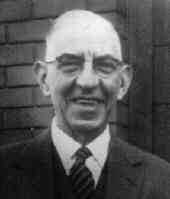
This page has three fine addresses: 'The Saints Delivered from Satan's Attacks', 'The Coming of the Lord' and 'Renewal'.
- They are taken from the, now out-of-print, Stow Hill publication 'The Glory of Descending Love', addresses in New Zealand in 1947.
- If the Lord will, the remaining three addresses from that book will appear later.
G.A.R.
Page Top
THE SAINTS DELIVERED
FROM SATAN'S ATTACKS |
|---|
Job 1: 12; 1 Chronicles 21: 1-4; Zechariah 3: 1-5; Luke 22: 31-34
Auckland, N.Z., December 1947
|
|---|
The brethren will observe that these scriptures contain the account of some accusation or onslaught of Satan, against one or more of God's people, and I desire much help in speaking of them for it is a sobering subject.
- These attacks are to be met, and similar ones in our day, for we may well understand that the attacks of Satan are not finished. The way that they are suggested to us in the Scriptures is just a picture of wwhat has been going on ever since the garden of Eden, and will go on until Satan is finally dealt with.
- In the very chapter in which he is cast out of heaven, he is described as, Satan,
- "the great dragon was cast out, the ancient serpent, he who is called Devil and Satan … the accuser of our brethren", Revelation 12: 9-10.
- This collection of titles is to show the kind of concentrated attack which we may expect by the enemy against every feature of God's work, and every feature of spirituality and encouragement in God's people.
- Now, let that not discourage anybody, because God is greater than Satan. We have heard during the last few months about the expanse and the way that Satan has invaded it, but the expanse does not belong to him. The expanse belongs to God and God is supreme in it.
Not only is God in it, but the Lord Jesus is in it, and the Spirit is in it, and the saints
are in it. The saints are in it, not only individually, but as the assembly.
The Lord seems to bring one feature of the expanse in at His first mention of the assembly, as if to show that there would have to be the balance in our minds between the assembly and the gates of hades. He says,
- "I will build my assembly, and hades' gates shall not prevail against it", Matthew 16: 18.
- No doubt, to any thoughtful person, that would have been something to ponder deeply, that the Lord should mention the gates of hades in the same sentence as the assembly. Whether Peter understood it then or not, we understand it.
- We understand that there is designed against the assembly a great body of wicked politics, described in several ways, for instance as the
- "authority of darkness", Colossians 1: 13,
and its personnel, its cabinet, as
"the universal lords of this darkness", Ephesians 6: 12.
- The position of it is of wicked spirits in heavenly places, and the outgoings of it politically are described as "hades gates", that is its administration. I mention that, dear brethren, to show that it is a very positive matter.
- Darkness is not just the absence of light. It is a great realm which is ruled over by Satan, and in which he propagates things.
- He has spiritual propaganda of darkness, full of accusation, and I would say that everyone here who is a believer, and especially an exercised believer, understanding his place in the assembly, would be, at some time or other, the object of some satanic attack.
Now in choosing these scriptures I did not wish to be exhaustive about them, but just to give an impression.
- In the first we have a man who is being tested as to his circumstances and his family, as well as to what there is in his own soul. It brings the matter down to each one of us individually.
- Moreover, the great matter depicted in this book, especially in the early part of it, is set on by God who described Job as an upright man, eschewing evil. "My servant" He says. So we have to bow in the presence of that. God has every right to test and challenge His own work and His own people and He will do it with us all.
- But He first of all draws Satan's attention to this, knowing that Satan would attack and would accuse. His name is Satan, "the adversary", not 'an adversary', and so the early conversation here shows just what I have said that Satan is really accusing God, and alongside of his accusation of God he is accusing Job.
- He implies that God arranged Job's circumstances in such a way that nobody could get at him. The divine answer means that God is willing to test that. He allows Satan to affect all his circumstances, not to touch him personally. Satan does so, but all under God's control, of course.
These animals that were ploughing, the oxen and the asses, were smitten, and of the servants only one escaped to tell Job the story.
- "While he was yet speaking", there came another servant to say that the sheep were smitten, and while he was yet speaking, there came a servant to say that the camels were gone.
- This is very striking, I suppose, as we consider other narratives in the Scriptures about camels. For if man has a camel he can get out of his distressing circumstances, but when God allows Satan to take the camels as well, then he must remain where he is.
- Finally Job's family is stricken. How touching this narrative is of what happened to an upright man, God's servant, eschewing evil, serving his family, offering up burnt-offerings every morning for them.
- Think of God allowing Satan to handle that. How would we come out of such an experience? Job came out of it in victory. We are told he
- "sinned not, nor ascribed anything unseemly to God", Job 1: 22, a marvellous result!
Then there is the second chapter of this drastic discipline, where God hands to Satan Job's body, except that he is not to take his life, with the resulting circumstances, illness, the botch, terrible disease.
- See Job in this terrible condition, sitting in a heap of ashes, in torment, and the woman, his wife, his companion adding to his troubles. "Curse God and die", she says. There is something in all this for us, that we might understand where we are with God, in our circumstances and in our very bodies.
- God gives some of us troubles in our bodies which we are not able to get rid of. We can send them off a little, but we can never get rid of them. Some here would know that. God does it, I believe, to keep us humble, to keep us near Him, to test our links with Himself and to test the links of other people.
- How do our wives and husbands take these things? This wife said "Curse God and die", Job 2: 9. But God was testing His work and Job comes out in the first case with a note of worship. He says there that he came out naked from his mother's womb, he brought nothing into the world, he could take nothing out and he worships God.
- "Jehovah gave", he said, "Jehovah hath taken away; blessed be the name of Jehovah", Job 1: 21
- What a man! I wonder whether our spirituality would go as far as that? And at the second onslaught in regard of his body, he said
- "We have also received good from God, and should we not receive evil?", Job 2: 10.
- Wonderful thing.
Now I would like just to say a word as to how it was all met. There was weakness in Job, you see, and we have all to humble ourselves here, finding moral weaknesses in our souls.
- The weakness with Job was that, underneath it all, he was justifying himself and blaming God. His words were one thing and himself was another, and so, when his friends came, these three friends, they found a very ready material in a way for all their speeches, a good ear. They flattered Job and even Job at the end became disgusted with it, he says,
- "Grievous comforters are ye all", Job 16: 2.
- Grievous comforters, a devastating word to us, if we are trying to comfort a person in sorrow, without reality ourselves; we must be real to bring in comfort.
- In the end Elihu, the young spiritual brother, standing by respectfully waiting till his elder brethren had ceased, now speaks. I have a feeling that Elihu wrote the book of Job, or at any rate a part of it. Read what Elihu has to say as he heard Job justifying himself.
Now, Elihu said, I have waited, and now I can speak, a man just like themselves, but in his speech he brought God in, and he had much knowledge of God to bring in.
- He says, "I am full of matter", Job 32: 18.
- The others might think it, but he was it. "I am full of matter".
- He says, "Why dost thou strive against him?"
- – against God. For He giveth not account of any of His matters. We must not demand of God to explain Himself. He does not have to give an account of what He is doing.
- What a start, you see, to connect a suffering person with a God who can do as He likes, and raise the challenge as to whether after all, we are not striving against Him. And so he goes on.
- I do not pursue this, but it is the matter of the satanic attack, being met by God Himself, but by way of ministry, the ministry of the truth through a servant. So we want to be in the presence of the ministry, and of spiritual brethren all the time, or as often as we can.
- Here is a sick man, Job, but he was in the presence of one who was bringing God in in an intelligent way, for Elihu means 'Whose God is He'. Job was brought through really by the utterances, the ministerial utterances of Elihu, who brought him into the presence of God.
It is a remarkable thing that God used Elihu's ministry to come in Himself.
- I believe that would be the true test of ministry, whether God could link Himself on with it. One might give a word, but would God link Himself on with it.
- God linked Himself on with Elihu's word and I would like Him to link Himself on with my word now. That would be an honour indeed, but would be what was proper and right in connection with ministry. So presently God comes in, as if to say, 'I can follow up what Elihu said'.
- He answered Job out of the whirlwind and when He had finished there was not much of Job left. He did not have another word to say. He put his hand on his mouth he repented, he abhorred himself in dust and ashes, he was a recovered man and the satanic attack had failed utterly, for Job was fully recovered, reinstated now as a man going on with God.
- It is a wonderful thing, dear brethren, that an attack like that should fail as being met along these lines. It may be that in our own way somebody here may find that there is something going on of that kind. The truth of it is that God is going to reach His end in the matter.
- James speaks about the endurance of Job, and about the end of the Lord with him. That is the full victory reached and Job is brought to correspond with God's end. Job is set up again, reinstated, full of substance, a wonderful monument to moral victory, in the presence of all this attack.
Now I would speak of David for a moment, because David here in 1 Chronicles is where we all are; he is being recorded in a history which speaks of recovery.
- This is not in the books of Samuel or Kings. Chronicles speaks of days of recovery, the narrative being written after the people had not only been taken away, but brought back. It is the narrative gone over with a priestly hand in the days when the captivity had been turned, and that is where we are now.
- The history of the saints, the history of the testimony, the truth of the present time, is being recorded as we may say by priestly hands, with the accuracy of the scribe, and with all the priestly feelings which belong to the full recovery of God's people under His hand.
- So we are entitled to speak of David now in a very delightful set of circumstances, right in the midst of the glory of the recovery. The ark is in its place, Christ come back into His glory, with the service of God fully set on and added to, in refinement and spiritually delicate feeling, in the music.
- And here in the midst of it all Satan rises up and sets on an attack through the one who had been the instrument of all the recovery, namely David.
No man cared for the service of God like David, no man cared for the person of the Lord, typified in the ark, like David.
- There was no shepherd like him, no worshipper like him, no warrior like him, or psalmist, or lover. David is wonderful as a model before our eyes and yet here he is the tool of Satan. What a sobering thing!
- "Satan stood up against Israel, and moved David to number Israel".
- What lay beneath it was the clerical principle. David saying, as it were, 'This is my people. Let me see how great they are'. That kind of thing – oh let us beware of it.
- It does not take much to see through it; I may blind myself, but even the unspiritual can see through it, for Joab could see through it, even Joab, wicked man as he was. It does not need a spiritual man to see through it.
- Gehazi could see certain things that needed attention, Joab saw certain things which needed attention and so we need to beware doubly lest in some kind of pride we attach things to ourselves amongst the people of God. We know the thoughts of pride which would come into our hearts.
And so the people are numbered, and God now comes into it and offers David this solemn set of alternatives, three years, as it says, of famine; or three months fleeing before his enemies; or three days of pestilence and the divine sword.
- Now David is here having to do with God. Satan, you may say, set it on, yes, but David was the tool, for this is the record, the divine record in these otherwise bright days, and the truth is out.
- Well now, without going into detail again, how is it to be met? We find that there is still something which God can use for meeting such things. Amongst other things he uses our power to calculate rightly. That is a good thing, never to lose our power of calculation, soberly turning things over, in the presence of God and weighing things up without panic. So he said to the seer Gad,
- "I am in a great strait: let me fall, I pray thee, into the hand of Jehovah, for his mercies are very great; but let me not fall into the hand of man", verse 13.
- He has power to calculate, even when it is a question of a penalty. May we never lose that, dear brethren, for it means that the Spirit is still there and while He may be grieved, He is not quenched.
- And so the penalty comes, the three days' pestilence and sword, and David is there too with the elders, in sackcloth. They are feeling it; they are not stoics; they feel it until the climax comes when David's priestly spirit is again in evidence as he sees the angel hovering over Jerusalem and he speaks to God, bowing down and speaking to God, he says, It was I who did this.
- "Is it not I that commanded the people to be numbered? It is I that have sinned and done evil; but these sheep, what have they done? Let thy hand, I pray thee, Jehovah my God, be on me and on my father's house; but not on thy people, that they should be smitten", verse 17.
- How touching! That brings the end, a glorious end really, as it will always be, dear brethren, no matter what the attack. It will always be glorious as we judge ourselves in church matters, not merely in individual matters.
- David took to himself what belonged primarily to himself, but there were others ready to feel it with him, and the elders with him also took it on. Is it not a beautiful thing to find a brother or a sister to share such a thing with us?
The story goes to its end, Ornan the Jebusite was there. If David had neglected the people of God, carelessly, Ornan had not neglected them.
- He was threshing wheat and he had the oxen and the implements of wood and offered them all to David, for there was to be an altar there. That is morally the only place for an altar, where people judge themselves. What is the good of an altar which has no moral foundations?
- So David is recovered; he reached an end as God reached it, at this threshing floor and the threshing floor means that you refuse the evil and choose the good, and go on with the good. And that is what David did, for he was able to say at this particular point,
- "This is the house of Jehovah Elohim, and this is the altar of burnt-offering for Israel", 1 Chronicles 22: 1.
- This really means that all Solomon's beautiful house of glory was built upon the moral base of David's exercise. The foundation was laid at the place where David came to the victorious end of his searching time.
- Solomon's foundation in glory is laid upon David's moral foundation at the threshing floor. How marvellous it all is. Think of the gentile coming in, Ornan the Jebusite.
- Our minds of course at once go to Paul, and the nations, and the mystery, and the house, and the service. It all lies there you might say in embryo, a marvellous story.
- Satan is defeated, for things are laid here on a moral foundation which was later to receive a superstructure in untarnishable glory.
Now I just speak of Zechariah, for he helps us again in this matter of remnant days.
- What is in mind here is the service, and the people who are to have part in it. We are introduced in the early part of Zechariah's prophecy to positive things. We may be in days of weakness and days of attack, scattering and comparative fewness of numbers, but we are not in days of defeat, we are in days of what is positive.
- So in the end of chapter 1, God shows four craftsmen; God is going to construct something. It is like the positive features in the darkness of Jude's day, when we read of building ourselves up on our most holy faith, keeping ourselves in the love of God, praying in the Holy Spirit, awaiting the mercy of our Lord Jesus Christ unto eternal life.
- These are positive features in a poor day, bringing in the operations of divine Persons, in the economy of grace. And God has more to say too. Presently, there was a man with a measuring line and the question is, in chapter 2: 2,
- "And I" [that is, Zechariah] "said, Whither goest thou? And he said unto me, To measure Jerusalem, to see what is the breadth thereof, and what is the length thereof".
- There is something to measure, dear brethren. There is something to measure in all our localities where the assembly is represented and the service goes on. In fact when it comes to our system, the heavenly system, if it is the heavenly city in Revelation there are three dimensions.
- If it is the great realm in Ephesians, there are four dimensions. There is much more to measure in our time than there was in Zechariah's time. But whatever it be, it is positive, and God is going on like that.
Then again, it says the Lord will be a wall of fire round about Jerusalem.
- In the midst of all Satan's attacks, and all that he might use men to do, God, so to speak, says, Where there is a positive thing worth measuring I will surround it with a wall of fire and nobody shall touch it, and the place shall be more and more populated; it will be full of people.
- These are the things that characterise this moment, and now here is the man that stands for the service of God, Joshua, the High Priest. We are not told the reason, but Joshua the High Priest is represented in filthy garments, meaning to say that things are not yet what they should be and Satan is standing there to resist.
- The word 'resist' contains the same root idea as the word 'Satan', so it is a double attack, Satan himself personally and all his resisting powers, a terrible thing.
- This kind of thing may even affect us in the service of God. We may have good readings on the service of God, on our heavenly relationships as brethren of Christ, as the assembly, and as the sons of God, and as worshippers, but then be diverted or discouraged in the actual expression of the service and its joys.
- We may even give up in despair as feeling we are not up to it. Let us beware we do not surrender the position to Satan, so constantly is he ready to attack. Satan is the one who accuses and resists, he knows nothing of love, the truth is not in him, he is a liar and the father of it, as the Lord said.
Now what is there to meet all this? God will meet it, for a positive thing is in God's mind. He says,
- "Take away the filthy garments from off him. And unto him he said, See, I have caused thine iniquity to pass from thee, and I clothe thee with festival-robes".
- God has done that. It has cost Him much, all the sorrows and the travail we sang of in our hymn, the suffering, death and sin-bearing of Jesus. Somebody has to take the place of the person who should wear the filthy robes, and Jesus has done it. God has done it in Jesus.
- Now the other side is that God has given the Spirit and these festival-robes are, we might say, spiritual and heavenly. Zechariah then continues,
- "And I said," [have you noted that] "Let them set a pure turban upon his head. And they set the pure turban upon his head, and clothed him with garments; and the Angel of Jehovah stood by".
- Zechariah, the prophet, is fully in line with God so it can be recorded, in scripture, at least I judge that is what it means; it can be recorded that Zechariah said this as adding to the divine word. He was in keeping with God, he knew what would finish the apparel so that the person should be furnished for the full service of God. That is a marvellous thing, and Satan is defeated.
Now, what is the bearing of all this upon ourselves? Clearly it is a matter particularly affecting our minds.
- The turban is on the head, and it is a matter of our minds beginning to take on what is glorious, to think the great thoughts of glory about the saints in relation to the service of God.
- Thus the satanic attack is finished and God has His servants full of dependence, but full of glory. That is where we are today, I would judge, dependent but glorious, and our minds and hearts affected, particularly our minds, in relation to the service of God.
I just read the last passage to show how sympathetically the Lord is in this matter; at this very time when there was so much confronting Him, at the introduction of His supper, there was a traitor's hand on the table with Him.
- It is like the hand of people going on with wrong things, really traitors, partaking of the Lord's supper and going on with their own affairs. That is the idea of a traitor, a word belonging to the kingdom of darkness. How the Lord feels it!
- "The hand of him that delivers me up is with me on the table", Luke 22: 21.
- In christendom we are in the presence of many an organised system of indulgences, allowing almost anything, whereas our very bodies are to be temples of the Holy Spirit, clean, pure, holy, and our companionships likewise, true and faithful and honouring to the Lord, not the associations of treachery.
Well may we challenge ourselves by saying, "Is it I?"
- On the side of unspeakable grace the Lord could say,
- "ye are they who have persevered with me in my temptations", verse 28.
- What a gracious word, that the Lord should say that. Have we persevered very much? How touching! And then to Simon He says,
- "Simon, Simon, behold, Satan has demanded to have you," [all of you, not merely thee] "to sift you as wheat; but I have besought for thee", verses 31-32.
- Just think of that, dear brethren; Satan demanding to have us all for sifting
- "but I have besought for thee".
- The individual is coming under the power and grace and the priestly service of Christ, none of us is forgotten. All of us and each of us are on the breastplate of the High Priest and the testing down here is matched by the love there where the Lord is, for all are on His shoulder and on His heart:
- "I have besought for thee".
- The Lord is making intercession for us, speaking to God about us, always; that is what intercession means. The Lord Jesus, our great Priest is always freely speaking to God about the saints, because He loves them and supports them and feels for them in their testings; even when they are faint. He said
- "I have besought for thee that thy faith fail not; and thou, when once thou hast been restored, confirm thy brethren".
Peter says in effect, like many of us, perhaps, 'Lord, you have misjudged me, I am strong Lord, I'll never leave'.
- We are indeed strengthened when we are with the brethren; then we are safe, but when we are alone, then we need the word,
- "I have besought for thee that thy faith fail not".
And the Lord continued to the end:
"I tell thee, Peter, the cock shall not crow today before that thou shalt thrice deny that thou knowest me", verse 34.
- How unthinkable these things are and yet they are true. Now how is it met? It is met on high by the advocacy and priesthood of Christ, and it is met below by repentance, and the inward feature of bitterness.
- "Peter, going forth without, wept bitterly", verse 62.
- It is the feature of Marah, real soul searching in genuineness and that is the way back, and now the thing is over. Satan is defeated; he demanded to have you but the sifting is over and the wheat is left, and the wheat means that there are persons there just like Christ.
- He is the corn of wheat and the saints are the much fruit. So the attacks may come, will come, but along these lines they are met and defeated and God is glorified, Christ is magnified, the truth is maintained, and so we shall go on humbled, but in victory to the end.
Page Top Article Top
| THE COMING OF THE LORD |
|---|
Luke 10: 33-35; 19: 11-13, 20-23; 1 Corinthians 11: 23-26; John 21: 20-22
Tauranga, N.Z., December 1947
|
|---|
I wish to speak about the coming of the Lord, not, however, as an event, or to have to say to what is prophetic, but rather from the point of view of the using of the time until the Lord does come.
- We do not despise anything that is to be known about the Lord's coming prophetically, for, especially in the early part of the recovery that we are now in, a great deal of useful time was spent indicating the assembly's own place in the great dispensations which God has unrolled.
- But the Lord is not dealing with that now, nor does He put much premium on the study of prophecy merely by itself. It tends rather to dry up the soul, whereas what is of the prime importance to us is to occupy well the present time while we have it, as Scripture says,
- "the rest of his time", 1 Peter 4: 2.
As regards the Lord's coming in its character, and even as an event, it would be quite right to say that the christian is the only one who knows anything about it.
- He knows far more than the Jew knows about the coming of the Messiah. He knows far more about it than any who would speak about the "desire of all nations" coming. Godly men have had some inkling as to the coming of the Lord, and they have recorded their impressions. One man said,
- These are impressions from the lips of godly men, but the intelligent christian knows far more than that, because he has been instructed, and in this instruction Paul's writings have a paramount plan.
- The Lord has told us through John's writings that He is coming again.
- "If I go and shall prepare you a place, I am coming again and shall receive you to myself", John 14: 3.
- The Lord has told us about it, and it will happen. The passage of time is a test for us so that we do not throw any doubt upon the sincerity of the Lord's words.
- Then, as I said, we rely chiefly upon Paul and his unique touch. The four chief revelations that he had are marvellous.
- The gospel; the revelation of the gospel in this special vessel Paul. He did not receive it, he says, from man, nor was he taught it, but by revelation.
- Then the assembly, he used similar language, the revelation of the mystery.
- Then the Lord's supper, "I received from the Lord …" he says.
- Then the coming of the Lord, which includes the rapture, 1 Thessalonians 4, in view of the appearing.
- Each one of these is not only given to us through the special vessel, but each one of them has a special touch, a heavenly touch, as coming through Paul.
Now Luke would undoubtedly have these things in mind, and so we are at liberty, as reading Luke, to have Paul in our minds, Luke having companied with Paul.
- At one time he was said to be the only person with him, with Paul:
- "Luke alone is with me", 2 Timothy 4: 11.
- That is not to convey to us merely the loneliness of Paul; it is to speak about the advantage of Luke, for to be the only man with Paul would give him, you might say, almost unspeakable advantage, in almost anything he should like to communicate.
- So in reading from these chapters we have Paul in our minds. When the Lord here in this parable says to the host in the inn,
- "whatsoever thou shalt expend more, I will render to thee on my coming back",
- we are entitled to think about what Paul would mean, in this setting of the coming of the Lord. Meanwhile, what is to happen? According to the tenor of this parable, so well known, we are to expend care upon one another involving the need of the Spirit.
- The Lord has led the way in it. He is the true Samaritan.
- "A certain Samaritan journeying".
- I could not tell you which way he was going on that road. Knowing the Lord Jesus as we do, we might think that the Lord would have in His mind to be going to Jerusalem.
- There is no need for us to think that the Samaritan was going down to Jericho at all. It is very likely, I would say, he was going to Jerusalem; and in his journey he came across this man, half dead, a picture of all of us.
- So we fit in, and unless we have been ministered to along the lines of the attentions of the Samaritan, I would doubt whether we have got very far in our souls at all.
This does not depict a completely dead state; it is not God acting in the scene of death; it is the Lord, we might say, bringing in recovery for a half dead man, meaning that the person is recoverable.
- It is quite likely that some of us here now need recovering, need something done in our souls, need this touch which as I said involves the Spirit. The Spirit is clearly indicated in the oil and the wine and the beast, just as the assembly in a general way is indicated in the inn.
- Well, the Lord is still on that road. It is the road so fully suggested in the epistle to the Romans, and the Lord in His attentions makes it a most blessed ministry to our souls. Let us not say that we find Romans unattractive, for it begins with
- "God's glad tidings … concerning his Son"
- That is beautiful. Anybody who has a son will understand the kind of feelings which underlie this glorious message. Herein God's feelings and the blessedness of His word are expressed. Then do we not read about "the goodness of God"? The writer says,
- "not knowing that the goodness of God leads thee to repentance", Romans 2: 4.
- That is like Peter in his boat surrounded by the goodness of God in the uncountable fishes. It led him to repentance.
- Then we are told that God set forth Christ as
- "a mercy-seat, through faith in his blood", Romans 3: 25.
- That is Christ on high, in His glory. I do trust you find interest in this. Having dealt with the whole question of sin, not primarily for us, but for Himself, God has set Christ forth a mercy-seat, for Himself. It is God's glory to do that.
- We come into the benefit of it, but God has done it for Himself. We might speak about David's word
- "the blessedness of the man to whom God reckons righteousness", Romans 4: 6;
- and then God commending His love. These are magnificent things.
- "What then shall we say?"
Now chapter 6 speaks about many things, including persons becoming bondmen, bondmen to righteousness, bondmen to God, truly baptised persons, persons who are willing to answer the question,
- "What then shall we say?"
- What are we going to say in regard of our baptism? – and the chapter ends by speaking about our fruit. Our fruit!
- "Ye have your fruit unto holiness", Romans 6: 22.
- Then there is the Spirit, and then there is the assembly, not fully described, but hinted at,
- Just as in this parable the assembly is hinted at, as if the Lord would take the man and put him into the assembly, and let him find out for himself what a blessed place it is. The Samaritan put him into the inn, and took care of him there. We would say the Lord took care of him!
- Have we failed to experience the Lord's care in the assembly? We are here tonight because we have experienced it, wayward as we have been; and then the Lord has, as it were, gone away, having given two pence to the innkeeper.
- Who is the innkeeper? We are not told, but no doubt it embodies the idea of responsibility, as we have been saying earlier, today; that is, the spirit of the innkeeper is to be in us all. The Holy Spirit is there, indwelling persons, and thus they continue the Lord's work. I have no doubt that the innkeeper is to be thought of in terms of the Holy Spirit.
- The Lord spends a night there for it says, "on the morrow as he left" – He spent the night there and then left this message behind, with the invitation to spend more in the care, cost what it may. The Lord says, I will render it to thee on my coming back.
- Now that is one of the ways of filling up the time. Thus we may invite one another to do it; we are to care for one another. It is to begin in our homes. That is what makes it important to have a home. As being married, we need to have a home, however difficult circumstances may be.
- The apostle Paul, writing to Timothy, speaks about that; a man having his children under control, and so on, and then caring for his house; if he does not, he says, how can he care for the assembly? If our houses are not in order we cannot care for the assembly, Paul would say. These things are all linked up, and he knew about them, although not a married man; he knew what care was.
- "Besides those things that are without", he says, "the crowd of cares pressing on me daily, the burden of all the assemblies", 2 Corinthians 11: 28.
- He would have known every meeting and loved all the saints, and the spirit of that kind of care came upon him daily. Daily! So that is to fill up our time, dear brethren; that is one of the things.
Now I would speak of other things, and pass briefly over them. Chapter 19 speaks of trading, as the Lord says,
- "Trade while I am coming".
- This means that it is not so much the event, the last event; that is, the Lord putting the finishing touch on the waiting time, but it is how we fill it out. "Trade while I am coming". And He gives us a further illustration, to show how it is to be done.
- This allows us to speak a word now about listening, because this is the parable which the Lord added as they were listening. It is one of the practical ways in which the Lord adds things to us. He has His own way of doing it, but He is very interested when somebody is listening. The end of the chapter says,
- "The chief of the people sought to destroy him, and did not find what they could do, for all the people hung on him to hear", verses 47-48.
- I expect that marks all of us here a little, and that enables us to ask what the Lord has added to us. That should be answerable by us all. What the Lord adds here is in answer to their listening. It is a very important matter.
According to Genesis, Joseph took Simeon, the listening man, and bound him, as much as to say, that is the thing that needs attention for the moment.
- He took him, without asking permission, and bound him, and left him there amongst his brethren, bound, to call attention, I believe, amongst other things, to the importance of this matter of hearing.
- And so the Lord answers to their hearing. Very likely it was in the porch of Zacchaeus's house. They were all talking about the Lord having gone in there, and they went in themselves, and there the Lord spoke to them about Zacchaeus.
- As they listened, He told them something else, and how important that something else was, because it shows us our bearings for the rest of our time, until the Lord comes.
- We learn that there are at least two sets of people, and one of them belongs to the Lord, and is described as being His own servants or bondmen, His own! That would refer to believers, and especially if they have taken up some link with the assembly.
- Then there is another set of people, who write a message as it were, after the Lord, and say, "We will not that this man should reign over us".
- And it is of all importance to us, dear brethren, to keep these two sets of persons completely distinct. It is quite right of course for the Lord's servants to preach to men, and to preach well, and often, and to converse with them, but not to be affected by their company.
This first bondman who presented his lord with ten pounds had done well. He had used his money well. And the second man had used his money well, and his time, but what about this third man?
- He is called "Another", meaning, it might be, myself. There is no name there. What has he been doing? He says that he was giving the pound back.
- "There is thy mina", he says, "which I have kept laid up in a towel".
- The Lord had given him a gift, and he had despised it. We do not know what the gift was.
I do not know what it is in your case, but the question is, what is being done with it? Is it some impression of Him? some impression of the truth from Him? some gift to announce Him, proclaim Him, speak of Him, something which can go into the setting of christian currency, where the mina will gain a mina, and so on?
- It will not gain anything in the world. You cannot spend these minas in the world. But you can spend them where the currency is right. Do you think that this man may have been influenced by the people who said, "We will not that this man should reign over us"?
- Do you think that is where he found his ideas about the Master being harsh, over-demanding, reaping what He had not sown, and so on? Where did he get those thoughts from? Where do all wrong and extravagant thoughts arise? They come from somebody who is influenced by the enemy.
- That is the Lord's people bringing themselves down, wrongly, by some link or other with those who will not have Him, and refuse Him. It is not necessary to particularise. The link there is plainly seen. Morally it exists today.
Well, the Lord has a very strict word to say about that, a word of judgment.
- "Out of thy mouth will I judge thee, wicked bondman".
- Oh, that the Lord should have to say that to any of us! "wicked bondman". Well, there it is, but I can avoid it, and the avoiding of it is by trading.
- The Lord does add a word which would have helped the man. Why did you not put my money into the bank, that at my coming again I might have reclaimed it with interest? We have gone all over this many times, dear brethren.
The bank is the fellowship. The word for "bank", and the word for "table", in 1 Corinthians 10: 21, are the same.
- It is the fellowship; the fellowship of the blood of Christ, the fellowship of the body of Christ; it is the Lord's table, that is what it is. Let us put the money there. To put it in the bank, you see, is to give the Lord His own, and interest is added.
- How pointed this was, that they should hear all this, and how searching when it comes to our own affairs, and the way that we fill up the time, until the Lord comes. It puts fresh concern into our souls in regard of the use of the time. For the Lord has not yet come; things are not fixed, but very near fixity.
- "Let the filthy make himself filthy still; and let him that is righteous practice righteousness still", Revelation 22: 11.
- We are very near fixity, but the fulness of grace allows us just time to get this matter adjusted. We can turn ourselves, you might say, into profitable bondmen, for our Lord's sake, by trading.
Now, one of the great matters, perhaps the greatest matter of all in relation to fellowship, is the Lord's supper.
And so, it is a question of letting this great matter have its place with us, dear brethren. The Lord is more than satisfied with His Supper. He has appointed it as that which is to bridge the gap of time and to bring in the full furnishings of love, until the Lord returns. He is satisfied with it. He does not add anything else.
- There are two ordinances of a public character in christianity; one is baptism, and the other is the Lord's supper. And the Lord's supper is that which the Lord left, and uses to bridge every distance, and every longing of His heart until He comes.
- It is a kind of secret from that side as we say often, it has an 'inwardness' to it, which only those who love our Lord Jesus Christ, and break bread, can truly discern.
- If you have asked to break bread, and it is a happy matter, there are some beautiful touches in store for you. No doubt you have had hints of them already, as you have sat with the brethren, as they have broken bread together, the inwardness of this, the affections which begin to steal into the hearts of the saints, entirely beyond any outward action which is done.
- This inwardness, I say, is something which is remarkable. It is spiritual, and only a divine Person, really, could bring it in. The Lord indeed has appointed that way to come in Himself. Speaking as the house-father, he says,
- "I will not leave you orphans, I am coming to you", John 14: 18.
- He does come, and that is one of His ways of coming. I would say it is His principal way, and the sweetest way. It is love's sweetest way of coming in Himself, coming to His own! "I am coming to you". And what it leads on to is "from glory to glory".
Then there is the outward side, and the outward side is connected with the testimony.
- It means that as certain lovers of Christ sit together, and the bread and the cup are there, publicly, and they partake of them, with certain thanksgivings, there is a testimony which anybody can see, that those present are missing the Lord, and they are waiting for Him. Somebody might even say that. They are showing something.
- The bread is one thing, connected with the Lord's body; the cup is another thing, connected with His blood, the body and the blood presented in that sense separately. Death has come in. The great Lover of the saints has died, and there are people here who are faithful to Him.
- That is not all that can be said, but that is one side; and that is the side which I would like to leave with you to affect you, the side of loyalty to the One who is our Lover. The 'Eternal Lover', as one could say. 'Towards me as e'er Thou'rt bright'.
- That includes all those who take the Lord's supper in sincerity, not only enjoying the inwardness of it, but having part in the announcing of the Lord's death until He come!
- the great One. Not anybody's death, not even the death of a Stephen, or a David, or a Moses. This is the Lord.
- The word is not in the form of an adjective there, it is not 'the dominical death', it is the death of the Lord, THE LORD! Meaning that it is a very great matter, and a very great testimony!
- And Paul says as often as you have part in this, you are showing the death of the Lord, till He come. I would not like to give up. If even I have not broken bread for some time, I would like to get that adjusted.
- I was hearing of somebody today who has not broken bread for years. You might ask what kind of part there is, whether such a person is affected at all, whether it means anything.
Here the Lord has given Paul this as a special message, because it is to be of special effect upon all the saints. It has come down to us in all our localities, showing the Lord's death till He come.
- I would like you to fill that out, not thinking of the brother or sister next to you, but thinking of it yourself.
- Perhaps if you are a brother you might be helped, you see, as affected, to say something to influence somebody else; you might perhaps tell the Lord you are affected. Perhaps you have not done that.
- If you are a sister, you might speak of it to somebody; you might share it with somebody. That would be good. Mary and Elizabeth had holy conversation in their time. Sisters can have holy conversation in our time.
- There would be a spiritual flow as there is an effect upon the heart, by these things, and chiefly by the Lord's supper.
I would now mention John, having in mind that the Lord has chosen him to abide with us till the end.
- Peter elicits this answer from the Lord. He, Peter, had been thoroughly adjusted himself, and when a man has been adjusted he is in power. Forcefulness and dominance do not make for power, but adjustment does. And Peter has been adjusted, but not fully.
- There is just one other little thing he has in his mind; perhaps a little jealousy, a little rivalry, as we find arising in our own hearts at times. He looks behind and sees John following, and says,
- "Lord, and what of this man?"
- The Lord answers him very severely, really, accrediting John, for He has something for John to do.
- To ask questions like that, or to make remarks like that, is like quarrelling with the place that one has on the breast-plate of the High Priest. The breast-plate is skilfully arranged by divine hands, in love, and every saint has a place there. Every company of saints has a place there, not only the persons, but the tribes, all have a place there.
- To quarrel with the place which one has, over against the place another has, is a matter which the Lord must have to say to. It is that kind of thing that Peter was doing. So the Lord says, "If I will …"
- Now let us note that. That is the sovereign disposal of the Lord's servants by Himself.
- "If I will that he abide until I come, what is that to thee? Follow thou me".
- He reminded Peter that He had given him his work and that he was to follow. And so we are to get to know our work. The Lord will help us to know it, and as we serve the brethren we will begin to know it, the Lord tells us through the brethren.
- Perhaps there is an invitation for us, we must prayerfully consider it to discover whether it is part of the Lord's opening of the door, because if so it will fit in with what He has in His mind about our service.
- And if the Lord opens the door by way of the brethren, then our happy and peaceful course is to take it. If He does not, we had better stay at home. He says this now,
- "If I will that he abide until I come".
So now we can think of John and John's ministry, and the very beautiful things that the Lord has brought to us through John, all couched in love, all in terms of goodness,
- "the good wine till now".
- That is a kind of title over a certain part of John's presentation of the truth.
- "Thou hast kept the good wine till now", John 2: 10.
- We are having it at the end. I do not go over the things; they are all there, concerning the persons, and the truth, and the Spirit, and the service, and all these things, the Lord has caused John to keep them.
- And he wrote them very late; he was possibly well over ninety years of age when he wrote his gospel. That is, the Lord says, "If I will". A man can write a gospel when he is nearly a hundred years old, if the Lord says, "I will".
- It has been waiting for us now, until the Lord comes, and it will be there when He does come. Everything there is at the best, for love is there permeating all.
So we can say, dear brethren, that we are well furnished, but we are left with good, solid exercise as to caring for one another, and trading well too, with spiritual currency in love, in the truth, and going on with the testimony too, and being true to it.
- Showing the Lord's death until He come is not only true at Supper time, but it is the kind of thing that forms the persons; they are always loyal.
- Then lastly, the great matter of the Lord reserving emphasis on certain parts of the truth, so that we shall be equipped in love at the end.
Thus we have plenty, dear brethren, with which to fill up the time. I trust the Lord may help us in it all, for His name's sake.
Page Top Article Top
| RENEWAL |
|---|
Genesis 40: 9-14; Judges 15: 14-20; 1 Kings 6: 14-15, 33-34
Auckland, N.Z., December 1947
|
|---|
The thought, dear brethren, is the matter of revival, or according to the word in the New Testament
- "the washing of regeneration and renewal of the Holy Spirit", Titus 3: 5.
- The word renewal signifying that what attaches to the Spirit is to bring about the feature of freshness in the saints.
- While we may have, in a certain sense, the same occasions over and over again, like the Lord's supper, yet what is to mark every occasion is the freshness of life, in the Spirit.
- This is one of the reasons for the Holy Spirit being sent, so that an occasion may, while being repeated as to its general title, yet be thoroughly living and different as compared with any one that has gone before.
- It is a very encouraging matter to consider, because it was to be seen in the Lord Himself; it was He who, through the prophet, spoke of being wakened
- Every one of His days was fresh under the blessed awakening hand of God. No day was stale, no day was exactly like the one that had preceded it. According to Luke's account He refers to Himself in relation to "the green tree". He says to the daughters of Jerusalem,
- "If these things are done in the green tree, what shall take place in the dry?", Luke 23: 31.
- The days of the Lord's service were the "green tree" with all that it meant, without weariness, without languishing. Wearied in body it may be, but ever fresh in the service.
- What a day it was when He met and graciously dealt with the woman at the well of Sychar, "wearied", it says, "as He was". Yet what a triumph of divine grace was secured, what a vessel!
- Let us take note of that and imbibe that Spirit. A brother may say he was too tired to pray, too weary to take part. John 4 is always encouraging in relation to weariness, for the Lord secured one of the finest vessels when He sat by the well
- "wearied with the way he had come;" it says, "As he was!"
Many thoughts come into your mind as you think of this.
- The Lord in the epistle to the Hebrews is spoken of as the Mediator of a new covenant; it speaks of what is new, not merely different from everything that has gone before, but abidingly fresh.
- In our links with God we are to be kept fresh, and we never weary of them and God is ever new to us, because the Mediator is always new in His service – fresh and beautiful!
- This is one of the integral parts of the system, the mount Zion system to which we have come, beginning with mount Zion and Jerusalem; we have come to the assembly, and to God, and to Jesus, the mediator of a new covenant.
- The Lord Jesus is on high, never weary, there we might say, the keeper of Israel, Psalm 121: 4, and always ministering night and day fresh thoughts in regard of God.
Then one could speak of the assembly too. The persons of the assembly may become weary and some of us do, but the assembly as such has a power which will shine one day in all the great spirit of renewal, a thousand years of reign with Christ not wearying her in the least, nor tarnishing her glory. She is described at the end of it;
- "prepared as a bride adorned for her husband", Revelation 21: 2.
- The thousand years are but the introduction of what shall be eternally true, she will never tarnish, she shall abide. How much that means for Christ, that His bride, His wife, should never weary, should be eternally fresh!
- These are the things we have part in, dear brethren, and the present desire is that we might be reminded of this feature which belongs to us. It is to take hold of us individually and no circumstances are to make any difference; circumstances of limitation and pressure are to make no difference to this because of the Holy Spirit poured out.
- How wonderful those words are, the washing of regeneration; that is to say there is a new kind of age and epoch in view, and we in the light of it, and then as having the Spirit poured out lavishly upon us, we are to be renewed every day. The spirit of this renewal permeates our scriptures.
In Genesis 40 we have men in circumstances of pressure, of limitation, and while our circumstances may not involve very drastic limitation, yet such it is.
- It is described here as a prison and God has in a sense put all His people in it, for we cannot do what we like nowadays! We are not in this prison on account of bad behaviour. I am not thinking of that, but of the way God has of putting His people under limitation.
- Because He has a purpose in it, and according to the narrative and the type, we can say that the Lord Jesus draws near to us in it, with sympathetic purpose in view. Joseph came and looked upon these prisoners and they were sad, and he asked them the reason and he elicited from them that each had had a dream.
- That is, I believe, God had given each man in those circumstances an impression. These dreams are from God. The dreams of Genesis, especially in connection with Joseph, are to be understood and interpreted according to divine impressions. And as Joseph enquires of the butler he finds he is pondering his dream; he says:
- "Behold, a vine was before me". Christ was before him.
It is perhaps a healthy question for us to ask whether during the several years now of limitation of various kinds, doors not opening where they used to, and the lack of liberty to do what we like;
- it may perhaps be asked, Have we received any impression from God in the matter?
- Think of having a vine in a prison! An unheard of thing! But there it was, and not only so but it expands and grows, it develops, meaning to say that it is not merely some impression of Christ, but full fruit will come from it. So this man speaks of the buds and the blossoms and the fruit and the clusters of ripe grapes.
- And now see what an impression God would give this man. He says,
- "And Pharaoh's cup was in my hand; and I took the grapes, and pressed them into Pharaoh's cup, and gave the cup into Pharaoh's hand".
- There would not be anything more wonderfully fresh than that, that the grapes should yield at once something for the pleasure of God. For I doubt not that Pharaoh here represents God, and here is the man being reminded that even out of these circumstances God is going to be served, and served through what Christ brings in in impressions of His own Person as the Vine.
Now, I have no need to elaborate that, save to ask for our pondering whether we have considered that, whether in our circumstances of pressure, of tightening controls, we have got some impression of Christ.
- If so that is hopeful, for it means that we shall begin now to have some part in ministering to God's pleasure. May I appeal to us all, dear brethren, as to this, for there are some who take no active part in the service of God. May I just appeal that the result may be something for God on the principle of freshness.
- There was no time here for the ordinary processes of wine, maturing and so on; the indications are of rapid growth and early full development; God is to get something at once and in the very circumstances where we are.
- The cup-bearer was free for God in the prison, and when Joseph interpreted the dream, he understood it. He understood that it was going to be a reality, and not just merely an idle tale, for in three days he was returned to Pharaoh and he did hand the cup into Pharaoh's hand.
- But one important thing he forgot, that was about Joseph. We also are likely to forget Christ it may be – a sobering matter indeed – but he did not fail to have his part in that blessed service.
Now we are led to enquire the difference between the butler and the baker.
- The baker says, seeing this was going so well, "I also was in my dream". How well we recognise this feature! I am in my dream, I can understand that God does not get anything!
- A man may be the centre of his dream, in his greatness or in his smallness, but if a man is in his own dream, then God gets nothing. The baker provided nothing and he lost his life. He lost spiritually.
- We may say the cup-bearer represents the heart man, the baker the head man. There is a word there for us, dear brethren, in relation to reviving spiritually so that we may give God what He has in mind.
- The idea of the cup goes right through into the Lord's supper and is a great thought. It means that persons are satisfied. It is called the cup of the Lord in the Lord's supper and it is, amongst other things, to bring in this great feature of satisfaction, so that being engaged with such a portion we want nothing else. What we partake of in the liberty and joy of the love of Christ completely satisfies us.
Now, this is but one portion of what belongs to this great subject. Some need recovery, and I am thinking of people who need recovery out of wrong links, wrong associations; I think of Ephraim.
If you read through a certain part of the prophecy of Hosea you would say at one point, Ephraim is beyond recovery, for God said,
- "Ephraim is joined to idols: leave him alone", Hosea 4: 17.
- And it has to be said of some, that they are not recoverable; they are lost. Paul says that. He says,
- "If also our gospel is veiled, it is veiled in those that are lost", 2 Corinthians 4: 3.
- Very solemn word! But happily we find that Ephraim is not as far gone as that; it is as if the heart of God could not really leave him alone. So He speaks again in the last chapter of the prophecy, saying to His people,
- "Take with you words", verse 2.
- I expect that is the difficulty with some, they cannot find the words that belong to repentance and recovery. "Take with you words". They do it and they have finished with idols. They are not now going to bring literal calves to offer to idols, but calves of their lips to God. Ephraim is a recovered man.
- Is there anyone here who needs recovering in a special way? Take with you words, acceptable words, to God, and bring the calves of your lips,
- "the fruit of the lips confessing his name", Hebrews 13: 15.
- What a marvellous recovery it is. Ephraim says,
- "What have I to do any more with idols?"
- That is it. Ephraim is a recovered man when he says that. God says "I answer him, and I will observe him". God is not finished with him.
- "I answer him, and I will observe him".
- It is going on, for God does not take things for granted. God says "I will observe him". I will look at him. I will watch how he is getting on. Then Ephraim speaks again.
- "I am like a green fir-tree".
- Beautiful that, is it not? "A green fir-tree", in all the reality of revival in life before God, there surely. Then God has the last word:
- "From me is thy fruit found!", Hosea 14: 8.
- Not from idols, but from Me. Do we want help in regard of coming out of wrong associations? As long as we remain in them, whatever they are, there will be no fruit for God, but as we leave them and act for God, He says, "from me", as if God would say, 'Now I can help you'.
- The green fir-tree is there reminding us of the greenness and freshness of manhood in a recovered person, and there is nothing like it. They tell us that a broken bone, set properly and healed is stronger than ever it was.
- What a word for a recovered person, to forsake his idol, to "Take with you words" and come to God. He is possibly the freshest person in a locality, a mighty encouragement indeed.
Now I turn to Judges, because in our chapter in the principle of it, we have to do with the ministry.
- In chapter 15 the story of Samson is meant to provide us with distinctiveness in manhood, that is the bearing of his name. He is an outstanding man, who grows up in his own place, one whom the Spirit of God can use and move. It says,
- "the child grew, and Jehovah blessed him. And the Spirit of Jehovah began to move him at Mahaneh-Dan, between Zoreah and Eshtaol", Judges 13: 24-25.
- That was where he lived; that means in your own locality. Samson could go here and there and serve, but he begins in power in his own locality. It says of him that he grew and Jehovah was with him and the Spirit moved him in his own regions, and we are to be similarly helped, dear brethren.
- We are to be growing and accompanied by God, we are not to forfeit His presence, or bring anything in which drives Him away and we are to be moved by the Spirit in our own place.
Now in this part of Samson's life he has to do with the Philistines. We translate this into terms of what belongs to ourselves; that is, he is dealing with the great mind of man, fleshly mental activity intruding among the people of God, and how is this going to be met?
- How do we meet it in our localities? It is not a question of thinking up a sermon, it is a question of what you can find that is fresh. Oh, what an exercise that is! Not that one cannot use the same scriptures, they will bear repeating indeed, but oh, the fresh power which must attach to the ministry. There is the fresh jawbone, and Samson finds it.
- The Lord Jesus found the place where it was written. He found the scripture suitable for that particular occasion, and Samson found the fresh jawbone of an ass. That is as being with God and under a touch of the Spirit, we are to find something in freshness from God, and how successful that is and that alone. No ordinary methods would have done for all these Philistines, "a heap, two heaps", he says,
- "With the jawbone of an ass have I slain a thousand men".
- Think of it literally, dear brethren, one man and one jawbone and a thousand men laid low. Think of the victory of the word of God as ministered in this fresh power. A jawbone is interesting, the jaw is for mastication as well as for speaking; and that means in principle that we have taken in something before we speak, as David says,
- As we come to the priestly section of the book of Deuteronomy in chapter 18, we find that the jawbones belonged to the priest. The shoulder, and the jawbones, and the maw – that is the stomach – meaning to say that the mastication, and then the assimilation are necessary to any power in the service.
- So here it is, and the service is successful, whether it be an address or a contribution in a reading, or whether it be in the ministry meeting. You see how needful it is there, that there should be something fresh, as Paul says,
- "If there be a revelation to another sitting there", 1 Corinthians 14: 30.
- That is the fresh jawbone, and if that is so it is to take precedence over everything else. The first speaker is to be quiet so that this great matter may come out into expression, the choicest part of the meeting. It is what we wait for and hope for, that there may be this choice thing.
Samson provides this in principle in this experience. But then, like every other servant, having finished his service he gets weary and he needs reviving; his mind, affections and his very being need reviving, so he cries to Jehovah and Jehovah revives him by, I would say, a touch of
- "the renewal of the Holy Spirit".
- That is, He cleaves the rock in Lehi and causes the water to flow and Samson assuages his thirst; he is a new man again, and so we go on, dear brethren, and that is the secret of it. You wonder how some of our dear brethren who serve us so constantly go on, but the secret of it is that
- "with what measure ye mete, it shall be meted to you", Mark 4: 24.
- It comes out and God gives more. The ministry is over and the servant is thirsty and Jehovah ministers to him. What an encouragement!
- Now why should not you begin to have a part in that? Why not let us all have a part in it? The fresh jawbone is there, for the finding, and the abundant touch of the renewal of the Holy Spirit, as opening up to us the mind of God alongside of the Scriptures, and so things are helped along.
- We may say as a result of ministry like this that the brethren have rest. It says after that,
- "And he judged Israel in the days of the Philistines twenty years",
- meaning to say that the spirit of such a man dominated the position. They all came into the benefit of what he was.
In Kings we come into the more collective setting of the saints in the house. As some of us know, the house in first Kings is a peculiarly attractive place.
- For what is really in the mind of the Spirit in speaking of the house in 1 Kings is not so much the processes by which we move into the truth, but the joy and liberty of dwelling in it.
- It is, we might say, more heavenly than Chronicles in this particular section, not in every section, but in this one.
- I said we are not so much engaged here with processes, and this is one of the things that the one who is called upon to minister must watch, that he is not always occupying the saints with moral processes. There are times when it is right and important to do so, but at other times the blessedness of things should be just placed before us, for our enjoyment, something like the opening verses of Ephesians 1.
- We should open our hearts to it and enjoy it, and say: 'This is our God, this is what He has done, this is what He had in mind; this is what He will arrive at and nothing shall stop Him, and the persons include us'. Let us say these things; let us open our hearts and enjoy the truth.
This section of 1 Kings is something like that. There is no great mention of the altar;
- that is, we are not being probed as to how we get into this great place, we are not being tested as to our understanding of the sacrifice of Christ.
- He came by way of the altar, and an understanding of that and what it involved is good and leaves us free to enjoy what is before us.
- Some people will always say, 'Very good; but are we up to it?' That, of course, will always be true, but God has His way of bringing a different setting before us if He wants us to enjoy it.
There is no veil here either. For it is not now a question of things being separated one from another.
- It is more the idea of liberty and openness and getting into the fulness of things at once. Something like a very good time in the assembly, God dwelling with us, God enjoying His holy part along with the saints, and the saints reverently, worshipfully, enjoying their part along with God. That is the idea, and that is the kind of thing that is in mind in 1 Kings.
- So in the two short sections I read there is dignity; for the cedar speaks of the saints in their dignity.
- But then there is freshness in the cypress-wood, for it is an evergreen, there is freshness there on the floor, meaning that your footsteps do not flag. It is not a wearying thing to come along to the assemblings of God's people, there is freshness there. You greet the brethren gladly,
- "I rejoiced when they said unto me, Let us go into the house of Jehovah. Our feet shall stand within thy gates, O Jerusalem", Psalm 122: 1-2.
- It is the freshness which is relative to the footsteps of the brethren, and the footsteps of the priests as they come out of their cells, preparing themselves to serve. It is good to come out not only of our houses but of our priestly cells, ready to serve, as Paul says,
- "When ye come together in assembly", 1 Corinthians 11: 18.
- "In assembly", means that you are ready to serve, and serve with fragrance and renewal. That is the word tonight, renewal of the Holy Spirit.
Then again, there is this second matter that I speak of, connected with the house, and its various wonderful chambers and cells.
- The very oracle itself is wonderful, where God speaks, where He speaks His mind, relative to Christ and the assembly, where He comes out with His most intimate thoughts.
- God cannot morally have an oracle except where there is separation and where there is spirituality, for the doors of the oracle are of olive-wood, meaning that there is spirituality there. If separation be not recognised and the Spirit not given room, how can God speak?
- He may speak in a fire, or in an earthquake, or in a tempest, but that is not what we are speaking of.
- We are speaking of God in His oracle in the assembly. I have no doubt that is referred to in Ephesians 3: 17,
- "that the Christ may dwell, through faith, in your hearts".
- That is the Ark brought into the oracle, and we understand it now, that it is Christ in His own place according to the full mind of God.
- And then as I read in the last verses of this chapter, it is the posts of the temple. That is the very entrance of it.
We were talking about the entry into the oracle in verse 31,
- That is, we come in freshly and brightly into the temple gatherings of the saints. We might say, borrowing another scripture, that our entrance into the meetings is always by the gate whose prospect is towards the east.
- It is the way of hope, the way of looking for Christ in His glory, and if Christ in His glory does not light up our meetings then we may doubt whether it is very much of a meeting.
- But it is a beautiful thing to come into the gatherings of the saints by that gate, the gate whose prospect is toward the east. It is spoken of in Ezekiel, and Ezekiel returns to it as if it is a gate too good to miss, and that means, dear brethren, that the assembly is filled with the spirit of freshness, the times of refreshment. They are known to us now as we gather together in assembly.
- I would like to leave that with the brethren, that the thing may be worked out with us individually in our souls, in our circumstances, and likewise in our ministry.
- This would include the sisters of course. They are in it all and are to consider soberly this matter of the holy interchange of prophetic thought.
- How it would work out is a matter of wisdom and I suppose many of the sisters are waiting on God about it. If they pray, they can prophesy, that is what is in the mind of God at the present time. It is one of the furnishings of the assembly, and if the assembly began with it, why should it not be here at the end?
- Then also this great collective matter of being in freshness in our links with the people of God, and in the service, and coming in in freshness by the door whose prospect is towards the east. The Lord bless these things to us.
Page Top Article Top