Menu•SiteMap |
Ministry
The Acceptable Year of the Lord
and other
Ministry by P. H. Hardwick
– Part Three
| INTRODUCTION |
|---|
| Ministry by Percy H. Hardwick
|
|---|
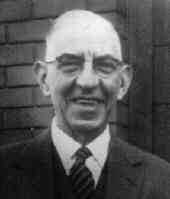
This page has a further three fine addresses: 'The Acceptable Year of the Lord', ' "All Night unto the Morning" ' and 'Awaking out of Sleep'.
- They are taken from the, now out-of-print, Stow Hill publication 'The Glory of Descending Love', addresses in New Zealand in 1947.
- If the Lord will, the remaining six addresses from that book will appear later.
G.A.R.
Page Top
| THE ACCEPTABLE YEAR OF THE LORD |
|---|
Luke 4: 16-21; Isaiah 61: 3, 6; Deuteronomy 24: 1, 5: 11: 10-12
Nelson, N.Z., December 1947
|
|---|
I should like to bring before you, dear brethren, some thoughts connected with the scriptural thought of the year, as the Lord Jesus calls it, quoting Isaiah,
- "The acceptable year of the Lord".
- It enables us to think of a fairly long time, and therefore the proposal of such a period would be full of encouragement. That is the main thought before us, that the Lord might fill us with a spirit of encouragement, that we might go on to fill out the year with all that is necessary for completion.
- So that the rapture may not find us immature and incomplete, but fully furnished with all that grace has in mind to supply. So I am thinking of the year now as the year of grace. Not exactly in a gospel setting, although it would be good to preach the gospel at all times, especially from this account in Luke.
- But I am thinking of it from the point of view of the Lord's service to us, that we might be helped to have our part before God. We may go back to the scripture in Isaiah which has in mind people being set up as priests of the Lord, and ministers of our God.
- It is in my mind, that we might consider a little the Lord's completed service to us in order that we might stand in the service of God as ministers and priests.
Many will have noted in reading the gospel of Luke, how many persons who, on being served by the Lord, glorify God. Now that is Luke's secret, not just relieving our needs and leaving us there.
- Luke, and I might say, Paul, for undoubtedly Luke drew largely from Paul, believes in setting us up so that we can add something to the service of God. I believe it is a new day in our lives, and adds a ray of glory for our minds and hearts when we see that we are to be set up here to serve God.
- We need not look very far for illustrations of this, for Luke always provides his own, and there are none better. In Luke 4: 18 the Lord, speaking as the anointed Preacher, says,
- "He has anointed me to preach glad tidings".
- It is a wonderful service in the Lord's hands, wider perhaps than some of us have thought, for it eventuates in God getting glory from the persons served. As the Lord finishes reading, and hands the book back, the eyes of all those that were in the synagogue were fastened upon Him. Not upon the book, nor upon the attendant who took the book, but upon Christ.
- That is really the secret of all successful ministry, that the eye is directed to Christ. In Him we find the verification of all the truth that is uttered, as here are foretold the lifting of every burden and the completing of every service.
- May that be in our minds, dear brethren, as we refer to these scriptures, that the eyes of all are fixed upon Him. And then the Lord adds another word,
- "To-day this scripture is fulfilled in your ears".
- That is, that every scripture applies to the person who reads it when he reads it. It is not just historical. So the Lord takes Isaiah's prophecy of centuries earlier and reads it word for word saying
- "To-day this scripture is fulfilled in your ears".
- Thus we can turn to any part of the scripture for it has a voice for us which applies at the present time.
Now, I would just refer to these persons. It says here,
- "He has anointed me to preach glad tidings to the poor; he has sent me to preach to captives deliverance, and to the blind sight, to send forth the crushed delivered".
- Luke brings forward the well-known woman in chapter 7, to show how the Lord can serve and how He can relieve and establish, and especially how He can serve where there is love.
- I believe the Lord finds it very difficult to serve persons in whom there is no love. The woman loved before she was served. That explains the Lord's remark,
- That is to say, love is there before the actual service in detail begins. Thus we would challenge ourselves to see if there is really any love for Christ, for the more love there is for Him, the more ready He will be to serve.
- How are we to tell? By the indications which love so readily furnishes, movements towards the truth, towards the brethren, towards the practice of self-judgment. These are the signs. Nothing would stop this woman from reaching the Lord, because she had love. The needs, therefore, become, I might almost say, secondary, incidental.
- The Lord says of her, "she loved much".
- I would suggest that perhaps some of our burdens have not yet been lifted because our love is so little, and therefore in the end we are not free to serve. This woman went out a rich woman, and it was not exactly that the Lord saved her.
- What is essential is involved here: the matter of our sins and the matter of our love and of our faith. So, the woman may be regarded as set up in service. Morally, I believe she found her place among those in the next chapter – the women who ministered to Him of their substance.
- I believe that scriptures like this show that the substance came from those who loved Him, who were set free and who ministered to Him.
- Likewise, we today need to be set free, and I would speak thus to any here who are not free. It may be a matter of sins; it may be something that needs confessing, something that is weighing us down; the way of this woman will help us:
- "A woman … knew that he was sitting at meat in the house of the Pharisee", Luke 7: 37, and she came in.
- She wanted the Lord and the Lord set her free; in principle now she has part in this great company of priests and ministers of our God. The broken hearted person is healed and set up to serve.
Then it says, "to preach to captives deliverance".
- The woman in the synagogue, in chapter 13, needed help. She was a woman who had been in and out of that synagogue I should say, for eighteen years. She was a kind of religious exhibit. I do not think they wanted to part with her at all.
- I do not think that the rulers of the synagogue ever wanted to see that woman healed. She seems to me to have been a cause of attraction, something eccentric, but which is really not of God at all.
- In fact, the Lord speaks of this woman as having been bound by Satan for eighteen years. Her head was bowed down and she could in no wise lift up herself. She had been bound like that for eighteen years by Satan – something governmental, perhaps.
- The Lord comes in, He was fulfilling this part of His ministry "to preach to captives deliverance". And He called to her; not called her to Him. No;
- Jesus "called to her, and said to her, Woman, thou art loosed from thine infirmity", Luke 13: 12.
- He followed that up by putting both His hands upon her. The Lord does these wonderful things; He is not attending to two things at once, He put both His hands on her; she is the sole object of His gracious attention at that wonderful moment. And immediately her back was straightened, she stood upright and glorified God.
We may have to endure the withering indignation and criticism of such persons as these rulers of the synagogue, nominal religionists, as we may call them. But if we have had our backs straightened and are standing upright and praising God, we need not heed the indignation. We can leave that to the Lord, Who says "Hypocrites!"
- We may know it, but He says it. He calls their own attention to their own doings, and says of this woman that Satan had bound her, but He had loosed her. She was a daughter of Abraham, she was going forward in faith, taking part in the service of God – she glorified God.
- Luke presents a daughter of Abraham and a son of Abraham, persons who were marked by active faith, which expresses itself in every needed way, including the service of God. We need faith in taking part in the assembly; we may not be able to say much the first time, but we shall say more the next time. The service will increase.
- The Lord sets the woman entirely free and apparently the matter influences others, for it says that all the people rejoiced, and the adversaries were silenced in shame. And so the Lord Jesus acts in the fulness of His own personal service in order to set us free.
Next we find, giving "to the blind sight". Blind Bartimaeus comes to mind, sitting by the wayside, hearing that Jesus was passing by, and he called out.
- This is one of the outstanding incidents of Scripture, for there are very few persons in Scripture who are described as having their eyes opened. Some eyes are shut because of sleep, some because Satan has blinded them.
- Bartimaeus is a man who wants to see, and will not be put off. He cries. The Lord stood, and as Bartimaeus stood before Him, He said,
- "What wilt thou that I shall do to thee?", Luke 18: 41.
- Have you ever heard the Lord say that? It is like the Lord giving us a blank cheque on the bank of heaven. You would like to see some of the dear brethren fill that cheque in.
- and he glorified God and followed Jesus. This is the Lord's service in recovering sight to the blind.
- But, as stated, there are not very many people in scripture whose eyes are opened. It is surely for us take the matter seriously. But what a cheering one is this, coming under the service of grace, the Lord setting him up completely as one who can see and follow, and serve.
- The Lord help us to serve. His servants are going to see His face. Not that we shall not all see His face, but His servants are singled out
- "they shall see his face", Revelation 22: 4.
- The bondmen shall see the One who Himself became a Bondman. He is more than a Bondman, but He has known what bondman's service is. How blessed to get your eyes opened now in view of that wonderful day, to see things spiritually now, literally then.
The last item mentioned is, "to send forth the crushed delivered". I think of those two souls in the last chapter of this book, full of dashed hopes, disappointments, false beliefs, and rumours,
- they said to the Lord as He drew near to them. The Lord had said to them first of all,
- And they told Him partly what had happened, and partly what they trusted. How graciously the Lord served them, to take them out of the realm of uncertain things, and to have them fastened to the Person
- He began: "O senseless and slow of heart to believe in all that the prophets have spoken! Ought not the Christ to have suffered these things and to enter into his glory?", Luke 24: 25-26.
- This reminds us that the Scriptures to guide us as to what is personal to Christ and to give us a certain expectation of what is to take place, and we have no right to expect anything different.
- As the Lord spoke to these two, He just warmed their hearts, and as they drew near home, He had secured them completely. He just gained them, so that they invited Him in; "Stay with us" they said.
- Wonderful service, dear brethren, that the Lord so gets hold of us, even when He has to rebuke us, that as He goes along, we feel we cannot do without Him any more. We must have Him in our houses; having had Him on our way, and give Him the chief place. He sat at the head of the table. He broke the bread. He was made known to them as He did it, then He vanished out of their sight.
- He had gone with them, now they were to go with Him. The crushed were sent forth delivered, and they brought the best possible contribution into the meeting that followed.
- "And rising up the same hour, they returned to Jerusalem. And they found the eleven, and those with them, gathered together, saying, The Lord is indeed risen and has appeared to Simon", verses 33-34.
- Then they added their part, and what a part! How He had been with them and
- "was made known to them in the breaking of bread".
- The choicest portion that came into that meeting came through the Lord's service to two who were bruised and crushed, but now sent forth, delivered. They are now in the meeting where the service is going on.
- So, we may be encouraged. The Lord is not ceasing to serve; we well understand that, though His formal place is on the throne, yet He draws near to us. In any case that needs serving now, the Lord would be nearby just to minister all that grace could furnish, so as to set us up completely for the service of God. That is the Lord's personal service.
The matter of the year is what is before us and how it is filled out.
- In Deuteronomy 24 we are reminded of the present time. The first verse refers to Israel, a man who had taken a wife and she had found no favour in his eyes, because he found some uncleanness in her.
- "He shall write her a letter of divorce, and give it into her hand, and send her out of his house".
- What a description of Israel. God had taken on Israel, He would have been a husband to her.
- He said, "I was a husband unto them", Jeremiah 31: 32.
- They disobeyed Him, they disregarded Him. He sent His messengers, His prophets, He rose up betimes, sending as it says, until there was no remedy. And Israel had to go. She was, as it were, sent out of His house.
- Verse 5 brings in the assembly in principle. The man has taken a new wife, and
- "he shall not go out with the army, neither shall any kind of business be imposed upon him; he shall be free for his house one year, and shall gladden his wife whom he hath taken".
- What a remarkable prophetic statement in regard to the assembly. The Lord now having taken on the assembly, what an encouragement we see for our time, that the Lord is giving up the whole of this year,
- "the acceptable year of the Lord",
- in order to pay attention, without let or hindrance, to the assembly regarded as His wife. He is not yet taking on the nations, it is not that they are completely forgotten, but He is not dealing with them actively, neither is He now dealing with Israel, although they are never out of His eye or His mind,
- but He is dealing with the assembly. He is gladdening the heart of the assembly all the time.
- He has not yet taken up conflict, going to war, He has not yet had business imposed upon Him, the administration of the world to come, and so on. He is free to gladden the heart of the assembly. It is a question whether we are conscious of that, and understand how great and how eclipsing the assembly is to Christ.
Paul had the impression of the assembly, and its greatness to Jesus, as being shone upon from the glory. While quiet, separate and secluded for three days, I believe he got the full impression of this. The Lord said to him
- "Why dost thou persecute me", Acts 9: 4,
- and doubtless it came into Paul's mind that those disciples of the Lord were the "me". They were Himself, in this sense, and He was by them. He protected them completely, by striking down this great opposer.
- He did more than that, when He shut his eyes, as Jehovah shut the eyes of the Syrians in Elisha's time, it was only to flood his soul with grace. So Ananias came along to him saying brother, and I believe what happened in Paul's soul at that time was that he apprehended what the assembly meant to Christ, as a bride, as the new wife.
- So Paul went out into the gentile world to secure a bride for Christ. That was his mission. He says to the Corinthians
- "I have espoused you unto one man, to present you a chaste virgin to Christ", 2 Corinthians 11: 2.
- That was the burden of his ministry. Does that underlie our ministry? As having an opportunity to speak, do we want the saints in marital link with Christ, and do we hold them thus in our minds?
- Paul caught the spirit of his Master, prophetically portrayed in this scripture, Christ having nothing else before Him for the whole year; that is, the whole of this time, this era, except to serve the assembly.
- I would say too, that unless we have the assembly before us, all that we do will be deficient.
- It is note-worthy that the assembly is married to Christ before He comes out in judgment, and in the administration of things here. Revelation 19. Thus we need to know the love of Christ in this marital setting before properly taking our part in assembly administration.
So also in Exodus 21, the bondman plainly declares his love for his wife before details of practical adjustment are taken up with others; the assembly must come first. This is the filling out of the year from love's point of view. How attractive, dear brethren.
- And if that is what is in the mind of the Lord Jesus, it may well be in our minds too. We may well come into it where there is the practical expression of the assembly enjoyably among the brethren.
And then God has a portion in this year. I speak now of our last passage. God has a land it says,
- "a land which Jehovah thy God careth for; the eyes of Jehovah thy God are constantly upon it, from the beginning of the year even unto the end of the year".
- It is in a very interesting place, this verse, between the tenth and twelfth chapters of Deuteronomy.
- In chapter 10 Moses has been told to hew two tables of stone, like unto the first; that is the saints are now in mind as formed under the hand of the true Mediator. In chapter 12, God has a place where He has chosen to put His name and He wants us to know that too. And in this very chapter 11, Moses says,
- "I speak not with your children who have not known … for your eyes have seen all the great work of Jehovah which he hath done", verses 2, 7.
- This should appeal to us as being intelligent persons who understand the ways of God, so that our eyes and our attention may be on the land of God's love, the land of His purpose.
- For us, I believe, it would be the land, so to speak, of the heavenly calling, where God will yet have us all, where every influence is heavenly, where it is not a question of Egyptian working, with the foot – which was hard work.
- It is a question of the heavenly heritage, and the heavenly rain, and the benign countenance of our blessed God shining upon this land from the beginning of the year to the end of it.
- If you should ask where the land is, I should have to say that strictly for us, we are waiting for it, it is heaven.
- But if you should ask for a foretaste of it I would point to the saints of the assembly, such as are here now. Such a gathering as this, where the water brooks are, the fresh flowing of the Spirit; where the hills are, the heights, the valleys, the depths; all kinds of moving streams in the plenitude of the earnest of the Spirit. All this kind of thing is to be found in the assembly.
- The assembly is the anteroom to heaven. You will find in it what you will find in heaven, a perfect foretaste in the Spirit of what we shall enjoy so soon.
Now it is God's land and He is not allowing anyone to spoil it. In another setting there are enemies that have to be turned out, but from this point of view God is looking after His land in love, from the beginning of the year to the end of the year, His eye and His heart are always upon it.
- What beautiful things to go in for, dear brethren, to have a living connection with all this – the Lord's service – that there are persons equipped through the year, equipped to serve.
- And the assembly, that is the marvellous object of His own personal affections, is to be used as a vessel for the service of God eternally. This is the land where things grow, where the heavenly Father's plants grow up, where the sons are.
These things are to fill out the year and we would say to one another that the year is far spent. We know that the Lord's coming is to be before us.
- Christ being the Head, the saints being the body, what is moving in the Head is reflected in the body. It may not be in full intelligence as to some things, but what is moving there is to be known by us.
- And I believe you would find that this kind of feeling is moving now amongst the saints, which means that the year is nearly over and the Lord is quickly coming.
May we fill out the remaining moments of it gloriously to the pleasure of divine Persons!
Page Top Article Top
| "ALL NIGHT UNTO THE MORNING" |
|---|
Leviticus 6: 8-9, 12-13; 24: 1-4; Song of Songs 3: 6-8
Christchurch, N.Z. December 1947
|
|---|
I wish to speak of the night-time, this being one of the ways whereby we may describe the present period while we are waiting for the Lord Jesus.
- It is a very solemn way of describing our time because it is the night in which Jesus was betrayed. It is in the midst of an external scene, which is marked by hatred and treachery where there are persons who partake of the character of the scene around them, and are called in Scripture the children of the night.
- It is very remarkable that the Lord's supper should be set in such a time; it surely is to be a great compensation for the hearts of those who have to share the night-time.
The night-time will go on until the Lord comes, and this may probably not be very long because the day star has already arisen in the hearts of the saints. That is, the day is near at hand on the principle of hope.
- It has not come yet. So there is still some portion of the night season to be lived through.
- This enables me just to place before the brethren this question of the Lord's supper, that we should all be in it faithfully and loyally. It is to be our comfort in the night of the Lord's absence, and is to occupy the saints in a pre-eminent way, for it is full of glory and full of love.
- It is the Lord's supper, or the lordly supper, suggesting what is majestic, and all to be enjoyed during the time which Scripture calls the night in which Jesus was delivered up. It is indeed very impressive.
We have not any difficulty now about describing how near the things of the day are to us for we well understand that the Lord Jesus has His formal place on high in glory in heaven,
- but we also understand that He comes near to us spiritually.
- He comes near to us, but as coming near to us He comes in all His glory. He does not come as He was on that dark night literally in Jerusalem. He comes gloriously, and directly He comes the light of glory begins to radiate. Have you not tasted these things, dear brethren.
- These are some of the things which help to occupy and light up the night, so that morally we are not children of the night. That is what the apostle says to the Thessalonians. There were some there doubtless who would drag them down and get them occupied with low thoughts, faithless thoughts, some saying that the Lord had come and that kind of thing.
- Now the apostle exhorts them not to be children, or sons, of the night, as much as to say that, although it is the night-time literally and morally, outwardly, we are not to conform to that.
- We are to be children of the day; and the day really involves the sun rising and that means Christ. It means that our time is lit up by Christ glorified. I hope that is true of all here.
- I can say quite soberly, that if that be not true of us we do not know what christianity is, for it consists primarily of Christ glorified, with its holy and corresponding characteristic that the Spirit is here.
So, dear brethren, there is much to go on with to fill out the night. It is very wonderful to think that the Lord has chosen this simple yet powerful way of our occupying the night-time.
- He has appointed this simple way of His own Supper so that He might have His own here wholly occupied with Himself.
- The psalmist says,"I will wake the dawn", Psalm 57: 8.
- That is, typically, he is a man who is in the light of another day in which Christ shines in all His . It is a marvellous beginning and a marvellous characteristic of the saints during the night.
I would like in passing to say a word about the literal night, that it might not be altogether lost by us.
- Some stay up late literally in conversation amongst the brethren and the Lord helps. I do not think He would help if we were merely following physical pleasures, but He helps in speaking about the truth.
- Sometimes the Lord allows us to have sleepless nights. The Lord is prepared to fill those out too. One could say,
- "in the nights my reins instruct me", Psalm 16: 7.
- The reins are those organs of the body which serve for discrimination of what is good and pure, and the refusal of what is injurious and poisonous. It is remarkable that David should use that expression, saying that his reins instructed him in the night season.
- Perhaps we may not find time or make time for the discriminating of things in the day-time, and the Lord therefore gets an entrance then. If He does it is a good thing.
Without thinking of this matter in a purely human way relative to the Lord, it is marvellous to think where He spent His nights – on the mount of Olives – a great spiritual realm in touch with heaven.
- "And the Lord", it says, "remained abroad;"
- that is, He was free, not confined to one particular thought, but ranging abroad on the mount of Olives during the night season. How suggestive these things are for us and even if we just catch the spirit of one of them, how good it would be if we were with the Lord in that matter.
Now I come back to these scriptures which are typical; that is, they help us to fill out the moral night, and I start with Leviticus for this is a word for the priests.
- It is something which affects us where we are most interested at the present time, namely the service of God. It is a word through Moses to Aaron and his sons about the altar. The fire on the altar was never to go out, never
- "This is the law of the burnt-offering; this, the burnt-offering, shall be on the hearth on the altar all night unto the morning, and the fire of the altar shall be kept burning on it".
- Let us think, dear brethren, what it is for God now to find something going up, not as of old, from the brazen altar in the court of the tabernacle system, but something going up from the ready altars of the hearts of the saints.
- Christ is there and the offering is going up so that God has before Him the burning of it, really we might say the incense of it, at all times from night until morning. I am speaking of our occupation from now onwards until the Lord comes, that there should always be something readily going up from our hearts which reminds God of Christ.
- It is a peculiar offering, the burnt-offering, in that the burning of it was just like incense, not burned to be eaten, not burned to be consumed, but burned like incense.
The instructions of the priests go further. They tell us in verse 12 that,
- There is something by which the fire is kept going and that is the wood. Thus we have the fire, and then the wood, and then the offering, the offering in its pieces.
- I would say that that gives us the secret. It tells us that as we take up holy thoughts of the manhood of Christ as found in the gospels and occupy our minds with them we shall find that there are readily combustible materials in the affections of the saints for offering something of Christ to God.
- Let us take note of the wood. It was Nehemiah's great exercise in the time of the recovery, that the service of God should go on and that the wood-offering should never be forgotten. He speaks of the wood-offering and the first-fruits. The wood-offering and the first-fruits are the first two great lines of concern for the saints in recovery.
- This leads us to speak about Christ in His wonderful manhood. It is not the tree, it is the wood; that is, it is something cut down and made of material use, some thoughts of Christ, which come to us by way of His death, and enable us to release our affections in a greater way Godward.
- Nehemiah mentions it twice over in his writing, as if it were in his mind one of the most important things that he could leave with his brethren, the remembrance of the wood-offering.
- The effect is that everyone who loves the Lord and who desires to be in His service, and to offer praise would have this in mind too, some thoughts of the uniqueness of Christ's manhood as under the eye of God.
Let us not be vague in our thoughts, dear brethren. Let us fasten on something definite, something connected with the humanity of Christ.
- Let us think of His touch upon some soul, the woman at Sychar, or the woman in John 20. How He went about, the Anointed of God, doing good, healing all that were oppressed of the devil. Let us think about Himself, His hands, His feet, His side, and His mind; the mind of Christ. Let these things occupy us.
- One of these days, you see, we shall be ushered into a realm where there is nothing else to occupy us but Christ. It will be Christ all and in all.
- Now is the time by way of the fire and the wood to begin in the great general service of God. This line of consideration would greatly help us to have our part in it intelligently.
- I am not thinking merely of the brothers taking part in assembly. I am thinking of all of us, the brotherhood and the sisterhood, all having our part at all times in the service of God.
- Let us not at this late hour elect ourselves out of it, because this is the richest time; it is part of the night just before the morning. The word is to the priests. It is a matter now not of the altar, but of our hearts, our affections and our minds, that there should be fire there, that which enables the wood to burn.
- "Was not our heart burning in us?" two of them said.
- Christ was there. The wood was laid upon the fire, and thus they joined their brethren and had part actively in the service, adding their own rich touch. These are only impressions which I leave with you.
I turn to the next chapter. It is here a question now of moving further inwards.
- It is the tabernacle system which is being described literally, and we move inwards by way of the altar and then the laver, and we come now to a more inward position where the candlestick is, and the table, and the altar of incense.
- The candlestick was on the south side, and the table opposite on the north, and the incense altar before the veil. We are in the anteroom to the very presence of God in the ark. So we are moving in, and these holy furnishings provide us now with some more outlet for spiritual desire.
I would remark that chapter 24 is the last utterance of God from the tabernacle in this book. There are two great speaking places in Leviticus. One is out of the tabernacle, as in the first 24 chapters; and chapter 25 is from Sinai. That is not for nothing.
- We are here in the presence of the divine speaking from the tabernacle, out of the holiest, from off the mercy-seat, from His own immediate presence, and He is telling us His final wishes in regard to this intimate position before Him.
So He occupies us with the light and the candlestick, and then the bread on the table, and then we have a warning about the man who gathered sticks on the sabbath day and lost his life.
- That is to say, in our day these holy surroundings of the presence of God and His service, His time, are not to be trifled with. They are to be regarded holily, a sobering thought as we consider these great matters.
Here we are in the presence of the lampstand, or the candlestick, and the particular setting of it here is that of the children of Israel.
- Not Aaron and his sons, but the children of Israel, that is all the saints, are to
- "bring unto thee pure beaten olive oil for the light, to light the lamp continually. Outside the veil of the testimony, in the tent of meeting, shall Aaron dress it from evening to morning before Jehovah continually".
- We are led to enquire what the lampstand means, and what its bearing is upon ourselves. The lampstand is Christ. The lamps belong to Him, and I suppose they refer perhaps in New Testament language more to the assemblies.
- They have a bearing at least upon the local companies, and all the lamps are the same, one is not larger than the others. The lamps are the same and on the same level. They are all to be kept alight with the same kind of oil, this pure beaten olive oil.
- That is to say, dear brethren, that the testimony is to be illumined amongst us in all our localities and it is to shine out. Christ is the great bearer of the testimony. The Holy Spirit is the great means of the light.
- But there are certain persons who are to see that the service is maintained. That brings us in, and challenges our effectiveness during the night-time, to ensure that the lamps will be trimmed, the light of the testimony will shine.
Corinth was suffering very badly because the lamps were burning very dimly.
- The apostle Paul in his care, in the spirit of the true Aaron, was attending to those lamps, or rather I should say he was getting the saints to attend to the lamps, a great deal having to be done, mostly in the provision of the oil. That had to be done before the light could shine out.
- As it says, "shine out before it", Exodus 25: 37.
- I understand that to mean that there is a definite radiation of light from the candlestick spreading before it. This is dependent upon the attention during the night from the evening until the morning.
We are led to ask then whether there are any priestly hands available in this place to see to the bringing of this beaten olive oil. Beaten things involve exercise which we are all to take up. The oil would be beaten in the houses.
- We read also that incense was beaten; and the gold was beaten. These are exercising matters.
- It means that the oil is brought fully available for the furnishing of the light. How valuable are the tents round the tabernacle, which are supplying this wonderful and essential ingredient for the shining out of the light in the holy place.
The light here would light up the table of shewbread, which speaks of Christ personally. It is of pure gold. The bread on it is the saints, and the saints after the order of Christ.
- We have been engaged with some wonderfully elevating things and this is another, the shewbread, the bread of the presence, made of fine wheaten flour; just after the order of Christ, and the light would shine on it. That is part of the testimony before God, that the saints are to be in our affections week by week. These loaves were changed week by week, and they were eaten.
- It bears somewhat on the Scripture saying, that we partake of one another. If we have affections or have a part in the service of God, or have spiritual features reminding us of Christ, it would be good to partake of one another in this sense. Love will do this, finding it not difficult, for it really belongs to the fellowship.
- Week by week there is the fresh thing continuing in the same order, but new frankincense; everything the same as to order; but fresh as to its placing, fresh as to its treatment.
- So week by week as we have our part in the Lord's supper, the service of the assembly, it is the same thing over again and yet eternally fresh. How marvellous it is!
Then there is the altar of incense, the golden altar, and on it there are the bowls for pouring out. So the incense is to go up to God, something is to rise in a priestly way in the service.
- I suppose in the very nature of things the holy place would have been filled with the fragrance of the incense. It was a fairly small chamber and there would be the light there, and the bread, and the incense. The priests' clothes would have been perfumed with the incense. It is like a man going out of the presence of God, his whole being pervaded with the holy wealth of that place.
- What things we are engaged with during the night. There is no outlook here on the world, no windows at all; just the boards and the veil and the door and then the curtains, that is all it was, yet everything speaking of glory, indescribable glory, all to be taken account of in relation to Christ and the saints.
In Paul's second letter to the Corinthians he speaks in chapter 5 about some great things, mentioning eternity, and God's work.
- "He that has wrought us for this very thing is God", verse 5
- Not only wrought something in us but "wrought us". He has made the persons so that they can enter into eternal conditions at any time that God wants.
- And he speaks of the judgment-seat of Christ in all its transparency and manifestation! Paul says it made him love Christ.
- "The love of the Christ constrains us", verse 14.
- That is the impression he had from the judgment-seat of Christ and the glory that is there!
- Finally, he can talk about new creation; that is what God has done, a great realm filled with what God has done! His work is in the saints, not now literal mountains and valleys and rivers, but the heights the saints touch, the depths and the freshness, the spiritual freshness!
- "If any one be in Christ, there is a new creation", verse 17.
- There is plenty to occupy us. Then he says,
- "the old things have passed away; behold all things have become new: and all things are of the God".
- Lofty things, dear brethren! The light is as it were burning brightly and lighting up the whole of the truth. It enables Paul to speak to the Corinthians as he never spoke before of the high levels of the truth. May we be impressed with them!
Now just a final word as to the Song of Songs. It is a very attractive book which has occupied us much during the last few years.
- It is impregnated with glory and love, for it is Solomon's. Solomon is the son. Sonship involves glory and love.
- The Song of Songs, I believe, is written for us. I do not understand that it will ever mean so much to Israel as it does to us. It will mean something to them, no doubt, but it will not mean so much to them as it does to us, for we are in the closest proximity to the Lord as being of the assembly.
Certain things stand out, the things which belong to Solomon.
- He has a table, for instance, and the spouse sits at it, and all her fragrance is released as she sits at it.
- Then Solomon has a garden, and a chariot, and a palanquin, and a vineyard. He has all these things, each one meaning much in itself, but meaning more because it belongs to Solomon.
- How dignified Solomon's palanquin would be in its slow majestic movements, borne on the shoulders of his men! It reminds us of our part in the service of the assembly as it opens up in its glory.
- Bearing the palanquin needs more than one person. It needs the brethren to bear Solomon along in this way. Sometimes he must move quickly, so he has chariots,
- "The chariots of my willing people", Song of Songs 6: 12.
But our immediate point is that he has a couch. The writer speaks of the assembly,
- "Who is this, she that cometh up from the wilderness Like pillars of smoke, Perfumed with myrrh and frankincense, With all powders of the merchant?"
- For us this is the assembly, this is the woman, literally Israel. There are pillars of smoke, much evidence of sacrifice, as the burnt-offerings and the other offerings are going up. And there are the pillars of smoke now for it is a living thing.
- And now our thoughts are transferred to Solomon's couch, as if Solomon would rest where sacrificing affections are evidenced. She is coming, and now there is provided a resting-place for love, Solomon's couch.
- How the Lord loves to be detained where His own are! Even if it is only one! The Lord says in another connection:
- "If any one love me, he will keep my word, and my Father will love him, and we will come to him and make our abode with him", John 14: 23.
It is not merely one now. It is the assembly, I would say. So it says:
- "Behold his couch, Solomon's own".
- It is a resting-place in love, but he is not there alone, He is resting in the unreserved affections of the assembly. He has his spouse with him, the assembly.
- And so the ministry has come back to that now, it has come back to the glory of Christ, but the assembly with Him. So you will find that those who have the privilege of ministering to you will always speak not only of Christ, but of the assembly, Christ and the assembly.
So His couch is here, and it is guarded, for it is a precious thing. This is the assembly setting and it needs the assembly for the couch to be there.
- So we need assembly ministry, dear brethren, and we need to be thinking assembly thoughts and putting on our assembly clothes, and thus we make a resting-place for Christ, for the Son in His glory.
- "Threescore mighty men are about it … They all hold the sword, Experts in war".
- Paul would not allow the Corinthians to use a partisan thought in relation to Christ. Some said, "I of Christ", making Him head of a group, so to speak. He would not allow that.
- Peter would not allow it either. He would not allow any wrong thought to attach to Christ.
- He says, "who did no sin, neither was guile found in his mouth", 1 Peter 2: 22.
Paul says, "who knew not sin", 2 Corinthians 5: 21.
John says, "In him sin is not", 1 John 3: 5.
- These are three of the valiant men with their swords, but there are plenty more. There is room for us all, dear brethren, to have our part in guarding this couch, and it is needed, for it is love's couch. It is love at its best, love in the setting of Christ and the assembly.
- It says, "Because of alarm in the nights".
I suppose there was never a time when the person of Christ was so much belittled. There has never been a time when there has been such an attempt to undermine the ministry of the assembly. It belongs to our time, during the night.
- So we need the mighty men and we need the swords. We need to guard these great matters of love until the day dawns and we are ushered into the presence of glory where there is no evil at all.
- What a day, dear brethren! We shall open our eyes and never have an anxious thought again; never think of any difficulties in the assembly; never have any indifferent thoughts about our brethren; never have to judge ourselves for any evil thought again about the Lord or about anything connected with the truth; never be afraid again of anything!
- It will all be untarnished glory, but until that time it is the night, and so these features are, I would submit, to fill it for us until He comes. May the Lord bless the word.
Page Top Article Top
| AWAKING OUT OF SLEEP |
|---|
Psalm 78: 58-72; Mark 4: 35-41; Judges 16: 1-3; Luke 9: 28-32
Hastings, N.Z., December 1947
|
|---|
I thought it necessary to read these four passages to cover our subject, which is the matter of awaking out of sleep;
- starting with God Himself, and referring also to the Lord Jesus, and then referring to ourselves, the saints of the assembly.
- The matter of sleep provides a very rich field for thought in the Scriptures, and must be regarded according to its context.
- It is quite clear, for instance, that the sleep of Genesis 2, when God put Adam to sleep in order to bring out the woman, is a very different matter from the sleep of Peter and others on the mount of transfiguration.
- It is very different again from the sleep of the Corinthians, which meant that they had died, and died governmentally owing to spiritual lethargy. So we need to take every scriptural thought in its context.
Now starting with God in this great matter helps me to refer a little to the way God has revived the truth amongst us during our own time. The central verse for our consideration being,
- "Then the Lord awoke as one out of sleep, like a mighty man that shouteth aloud by reason of wine".
- It is a simile, of course; it does not mean that God was ever literally asleep. It does not mean that God was ever overcome with anything, even by the wickedness of Israel, or ourselves typically.
- It is a simile to enable us to understand that God changed His tactics, changed His approach, that He started some new thing.
- Moreover, the Psalm being Maschil of Asaph, leads us to ask ourselves a great many questions as to our moral bearings. Maschil meaning instruction, and Asaph being the man who always raises moral issues, and leads us into the sanctuary to get before God and to find the answers there.
- He himself had been misled, as he tells us. In Psalm 73 he tells us he had misunderstood things, that at one period he was well nigh carried away by the prosperity of the wicked, that his steps had well nigh slipped, and that he was as a brute beast before God. That is what he came to.
Asaph, one of the great Levites figuring prominently in the service of God, reminds us that even the most spiritual amongst us have to find their own level, and conduct themselves in their service on moral lines, as well as according to their gifts.
- So Asaph in this psalm writes about God's way with Israel, His gentle, careful, powerful ways, and also about their response, a matter very much applying to our day, God has been very gracious with His people.
- Difficulty after difficulty has arisen, even from the first century, for we read of John saying, in the first century,
- "Even now there have come many antichrists", 1 John 2: 18.
- Think of it. Why should God go on with that? But he does. John says moreover,
- "the whole world lies in the wicked one", 1 John 5: 19;
- and yet God has gone on. What a blessed God we have, to go on all this time. And I say these things to bring the parallel of Israel's history into our own time; for God has been very tender. It says, for instance,
- "He made his own people to go forth like sheep, and guided them in the wilderness like a flock; And he led them safely, so that they were without fear", verses 52-53.
- This is our God, this is what He has done.
But then the other part of the story is the response. What have the saints, speaking generally, done by way of response to God?
- As we look at the history of the assembly, and read the Lord's seven addresses to the assemblies, and ponder what He has to say, beginning with
- we discover that the Lord has been scrutinising all the time.
- that is a very gentle way of putting it, for He says what He can that is good; but the answer that the Lord gives after His scrutiny is a faithful one.
- And it is a history including downfall, and breakdown, until the end of the chapter, where the Lord is seen outside, standing, knocking on the door; the people are inside, as it were, saying they do not want Him.
Now in order that we may have the spirit of these things intelligently before us, I am using the history of Israel to indicate that God had great justification at the time when it says,
- "He forsook the tabernacle at Shiloh, the tent where he had dwelt among men, And gave his strength into captivity, and his glory into the hand of the oppressor".
- It refers to God giving up the ark, and allowing it to go into the hand of the Philistines, in Samuel's time.
- Samuel personally seems to be withdrawn in those chapters in the early part of the book; from chapter 4 onwards he is not prominent. God withdraws him, perhaps so as to allow the true state of the people to come out.
- Sometimes God does that; He withdraws His servants. He put Paul in prison; He put Peter in prison, and put John in limitations. He withdraws His servants so that the true state of things may come out.
So we find that God gave the ark into the hands of the Philistines. I suppose it corresponds largely in christendom with the time when there was no real outstanding ministry of Christ.
- For centuries there was nothing much that we can point to in the history of the assembly to enable us to see the full thoughts of God in Christ, or the service of God. He had, as it were, allowed things to lapse, outwardly.
- They had gone down to a very poor level; and the resulting confusion and wickedness, I believe, touches God's heart, that things should get into such a state, when He had such great thoughts in His own mind for Christ and His own, for Christ and the assembly.
- We may say, that He awoke like a man out of sleep, like a mighty man that shouteth aloud by reason of wine.
- Even in our own time He raised up a man more than a century ago to take the sword from end to end of christendom, to issue the challenge of God's word against everything that was wrong.
- It was like Moses' command to go in and out of the camp from gate to gate, and slay every man his brother. Exodus 32: 27.
Thus God has, in these last days, brought back a state of things like that of which the psalmist speaks, forsaking the old order, choosing something new.
- Bringing us into great things – Judah (praise) – Mount Zion (the assembly) – His sanctuary like the heights, and great high levels of the truth – and David, the Lord Jesus Christ in the character of the Beloved.
- That is the present time, dear brethren. I do not think I am departing from the meaning of the truth when I say that the revival at the beginning of the last century is the fulfilment in an anti-typical way, of God awaking out of sleep, and bringing the best before us, so that we can enjoy it in our time.
- As we read down the Psalm, we find that things are there which have a most excellent name. It is Mount Zion, and David, and the heights, and there is feeling and tenderness and skill. This is what is going on.
Now Asaph, whose name means a gatherer – a very suggestive name for our time, the assembly time – would rejoice in reporting this great and powerful revival which has brought the very best before us in relation to the person of Christ, and His love, and the assembly, and the high levels of the truth and the skill in feeding God's people.
- So we may well ask one another whether we have awakened to see the kind of time in which we are. The Lord Jesus said on one occasion, commenting on the people's ability to discern the face of the sky and the earth,
- "How is it then that ye do not discern this time?", Luke 12: 56.
- This time! We would have to say, Do these things mean anything to us? Do we react in a living way? Are we having part in this great system of elevation and glory that God has brought in in the way of revival?
- This record is in the third book of Psalms, which gives us an outlook upon all the people of God. It begins,
- "Truly God is good to Israel",
- – all the people of God. Surely under this type we can say everything is ours. Ours is the tribe of Levi; ours is the service; ours are the oracles. Everything belongs to us, but let us remember that it is all based on moral features.
- We cannot get anything spiritually lofty, unless we approach it through the moral avenues of Asaph and the sons of Korah, the great men in this book.
Now I speak of the Lord's awakening, and I turn to Mark's gospel for it, because there we have in a peculiar way the greatness of His Person.
- What is really in mind as to the Lord's awakening is that He is regarded as not actively intervening. He may awaken and intervene, but speaking in general, His intervention is not active for the moment, except on the part of those who belong to Him as being of His own.
- So I just bring this passage before you as suggestive of our own times. It is the evening time; it is the end of the day.
- "And on that day, when evening was come, he says to them, Let us go over to the other side".
- It is the end of the day, when all the results are coming in, and there is not much time left. The Lord's supper itself suggests that; supper is the last meal of the day, when there is nothing to follow but rest and ease and comfort.
- That is what is in mind, and that is partly what is in mind in the Lord's supper; that there is nothing more to come, but what is peaceful and glorious, and heavenly, and eternal.
- Anyone who takes the Lord's supper, and sits with the brethren in sincerity, will tell you that that is in mind. That is through grace our experience; without our being taken off the earth, for we do not move literally from where we are.
- Christ comes to us, and as He comes to us He glorifies us, in living links with Himself, and we may at the end of the day, by way of His Supper, enjoy the most glorious outgoings of the evening.
"The outgoings of the morning and evening"
- are spoken of in terms of rejoicing. Psalm 65: 8. We are in the time of the outgoings of the evening; and we are coming into the best.
- Not to partake of the Lord's supper is not only to miss the best, but to miss what I might call love's command, and the Lord does not appreciate that. He appreciates our response to the command of love, and He answers it by giving us the best, at the outgoings of the evening.
Now this matter we have read of is not exactly the privilege side of our tasting what is heavenly, although I would say it is included, in a sense.
- But it is a matter of travelling over to the other side, in the way of testimony, meaning that we are regarded here as being on a journey, not as settlers, but as heavenly pilgrims and strangers.
- We cannot be pilgrims unless we are strangers; the scripture says
- "strangers and pilgrims".
- The pilgrim depends upon the stranger; the pilgrim is the one who is making a journey, and he has something in view, but he has not reached it yet. He is on the way, and what helps him to keep on the way is the fact that nothing detains him; he is a stranger here.
- Moses, as to time, was detained in Midian for forty years, but he was a pilgrim, and whenever he could, he moved towards the best. If he had a flock of sheep to look after, he took them to the mount of God. He had something good in his mind; he was on a pilgrimage; and what helped him was that he was a stranger, as he said
- "a sojourner in a foreign land", Exodus 2: 22.
- If you are a stranger to the world, the world is a strange land to you. That is what it should be, and that helps us.
Now I refer to Mark 4, so that on this pilgrimage, as I might call it, we might be definite. We can say humbly that the Lord has directed it, and the Lord is with us. He may not appear, as in this incident He is asleep in the boat, but He is with us.
- There are many things that Satan raises, like the great, fluid, uncontrollable elements of wind and sea. He raises them to impede the progress of the ship of the testimony, and to overwhelm the occupants, including our Lord Jesus if such a thing were possible.
- The waves come into the ship; and if you read the three narratives in Matthew and Mark and Luke, you will be amazed to see the circumstances. It was evidently a very rough and stormy time. But the Lord was asleep in the stern, on a pillow, and we have to learn that; indeed it would not be of faith unless we did learn that.
- If the Lord were to appear publicly, as I might say, at every frequent interval to allay our fears, where would faith be? Faith is called for in activity, as Hebrews 11 shows; it is active faith; not just a definition of faith,
- "the substantiating of things hoped for, the conviction of things not seen", verse 1.
- But faith is active! By it elders obtained a good report and the writer speaks to us about them; Abel, Enoch, Noah, Abraham.
- So it is active faith, and our faith is to be active, not just something spoken about amongst the brethren. It is to fasten itself on the goal, and according to the passage before us I might say that the goal is the other side, where divine Persons would have us arrive.
- We may not immediately see the reason, but we are to reach the place in mind. It is a question of our making for something in a definite way. That is, whether we are going to see through a matter of some truth; or whether we are going to see through our earthly pathway to heaven; or whether we are going to see through an exercise to the end.
- Whichever way you like to look at it, it is a question of our getting to the other side. And the Lord will be with us; but He may not be active, He may not intervene, but He will be there. Which of us here could not substantiate that?
- So our faith is tried, and the faith of these disciples, was tried in this matter. They took Jesus with them.
- "They take him", that is the interesting thing, "as he was", it says, "in the ship".
- I do not pursue the narrative in detail. It will be filled out as you read it, and meditate upon it. But there came a time, when faith broke down; and that is a sad time in our histories, dear brethren.
- It does not mean that the Lord breaks down. It does not mean that He fails us and He will never be with us again.
- "If we are unfaithful, he abides faithful, for he cannot deny himself", 2 Timothy 2: 13.
- A wonderful word, sobering but comforting! Faith broke down there, as I suppose it has broken down in all our histories. It has broken down in the history of the assembly publicly, and is still broken down, for people demand something visible, just as they asked Aaron to make gods to go before them. Faith is not sufficient.
In this incident they woke the Lord because there was no relief, no intervention, and the Lord says, Where is your faith?
- "Why are ye thus fearful?"
"Awaking up he rebuked the wind, and said to the sea, Silence; be mute. And the wind fell, and there was a great calm".
- The rebuke was tender from the mouth of such a Person, no less than the Son of God, but underneath all the externals He would have them, and us, understand that He will go with us. There is no need to awaken Him; He will go with us. Could any floods have drowned the Son of God? No trial or testing diverts Him in His service to the saints.
- In a veiled way, see Him minister to Abraham under the figure of Melchisedec; see Him stand with the three Hebrew children in the fiery furnace, in Daniel's time; and now in the boat, and according to Matthew's account, on the water, coming to them.
- If He is with us, shall we not go through? Therefore cannot faith be active? That is the question that is left with us as the result of a narrative like this. We have to call upon ourselves, that faith may be here.
- "When the Son of man comes, shall he indeed find faith on the earth?", Luke 18: 8.
- Each of us has to answer that.
Now I speak finally of ourselves and I just split the last reference up into two parts, in order to speak of two sides of the matter.
- I read from Judges, in connection with Samson in order to call attention to the time, the darkest hour, midnight, when, in the history of the assembly, energy was revived in the power of Nazariteship.
- We have a man here, Samson, a distinctive man. His name means something like that, a distinctive kind of man. He is here, as it were, hidden away under the burden of a great many Philistine weights laid upon him. Samson is indicative of the history of the saints, and in a declining day; the Judges being a book of declension.
- But there are some very bright parts in it, and this is one; very concentrated, very bright. We may look upon Samson as indicative of the manhood of the testimony and of the assembly, but being weakened by such undesirable, unclean associations as are suggested in this woman, who is, in principle, completely against God and playing into the hands of the enemy, with treacherous affections completely subverted.
- For the moment, it looks as if everything is going the way of the enemy, but at midnight God brought about a change.
I refer again to the revival in our own times, when the midnight hour came. It says,
- "He arose at midnight, and seized the doors of the gate of the city".
- Think of that. No ordinary gates were these! The gate speaks in scripture mostly of the administrative activity of a place. Here it is, so to speak, the gate of the harlot city, reminding us of the great, crushing influences that have been brought to bear upon the church, the Lord's assembly. All kinds of assumed authority and human ideas; these are the works of the Philistines, the great mind of man.
- The great havoc which has been wrought, for instance, with claims to grant absolution, the forgiveness of sins, the indulgences, every kind of wickedness allowed and provided for in the religious profession. Think of these weights which have been brought like bars and posts, all bound upon the man who, though so weak, was a Nazarite.
- But here God arranged that at a certain hour, this should all be shaken off, and it was so. Samson lay till midnight, and at midnight seized the doors of the gate of the city and the two posts, and went away with them, bar and all, upon his shoulders, and carried them up to the top of the mountain, that is before Hebron.
- What a suggestive passage! God allowing the Nazarite, as it were, to bring all the counsel of hades into the presence of His own purpose, as typified in Hebron.
- "Hebron had been built seven years before Zoan in Egypt", Numbers 13: 22,
- we are told, and here is a man who exposes the great power of the harlot's city; in principle Babylon. He exposes all this machinery, the crushing machinery of the harlot's city, by exposing it to the pure light of the purpose of God, suggestively brought before us in the type of Hebron,
- "the top of the mountain that is before Hebron".
Well, I believe, dear brethren, that as we think over this we shall find that, in a certain sense, the book of Revelation comes suggestively before us. The fall of Babylon then will be literal, and the shining of God's heavenly city will come into display.
- The fall of Babylon is not yet complete literally, but it is to be morally so with us and in us. It works by way of Nazariteship, by way of complete consecration to the Lord, separation to the Lord.
- The "special vow of a Nazarite" in Numbers 6,
- is for man or woman. Let us note it; consecrated to the Lord, so that not only is there victory here at the darkest hour, but Nazariteship is the way to God's blessing brought in upon His people, as at the end of that chapter.
- You may say, Does Nazariteship exist today? It exists in persons who have presented their bodies to God, and so I have to ask myself, Am I a Nazarite, really or just in name? Have I really presented my body to God? That is the beginning of it.
- If I present my body without recall to God, then all the testimony that lies connected with that body will go through and God's end will be reached.
Now that is one side of what God has brought to pass, and the other side is the full awakening to the glory of Christ. So I have referred to these verses in Luke 9, at the moment of the transfiguration. It says,
- "And as he prayed the fashion of his countenance became different and his raiment white and effulgent.
"And lo, two men talked with him, who were Moses and Elias, who, appearing in glory, spoke of his departure which he was about to accomplish in Jerusalem.
"But Peter and those with him" [that is James and John] "were oppressed with sleep: but having fully awoke up they saw his glory, and the two men who stood with him".
- This leads me now, dear brethren, just to leave with you, what I believe to be the prominent note in the ministry of the present time, which has returned to the Person of Christ, but with the assembly added.
- So it is suggestively said here, Jesus, and His glory, and the two men who stood with Him. The two men are more than two men; that is to say, they are the witness that the saints are going to appear in glory with Christ.
- It is just, I believe, the complete witness of the saints in their heavenly glory with Christ, and I believe that is the note that is in the ministry now. Not only are we to exercise ourselves as to Nazariteship, but we have this privilege on the principle of being fully awake. This is what we shall see as we are morally and spiritually awake.
- As awake, we may contribute a great deal as to this great matter of the glorious Person of Christ, and the part that the saints are to have with Him in glory. It does not say here that the Lord awoke them, they awoke, meaning that there is something moving, living and powerful now. May we not say that Paul has awakened us all with his heavenly ministry?
- "Wherefore he says, Wake up, thou that sleepest, and arise up from among the dead, and the Christ shall shine upon thee", Ephesians 5: 14.
- Here Christ is in all His glory, as in the Ephesian position, shining upon us. The expression "the Christ" sometimes embraces more than Jesus personally, including all His interests, all that is attached to Him in the glorious company of the saints. Hence the word "the Christ shall shine upon thee" prepares our hearts for His glorious surroundings in the assembly.
God has waited now nearly two thousand years to reach the great end, nearly two millennia; think of that! to bring in the great light of this ministry.
- t has appeared before, it appeared at the beginning, and then it started reappearing, according to the record in Matthew 25: 6,
- "Behold, the bridegroom";
- it began to reappear, but not many understood it at first, nor shared it, just a few.
- If you had gone into those early meetings at Plymouth and Dublin, you would not have found great assemblies such as we know now, with many brethren taking part and speaking to the Lord intelligently about the assembly.
- God has waited, and now He is reaching His end. We are very near the end literally, and it is a matter of being fully awake and seeing God's end and His great thoughts. God has come back now finally to the greatest of His thoughts, embracing Christ and the assembly.
- The ministry bears the stamp of God's final operations, and as being fully awake, awaking out of sleep, we may be in it and enjoy it all, enjoy the best at the end.
Page Top Article Top