Menu•SiteMap |
Ministry
The Service of God
and other
Ministry by P. H. Hardwick
– Part One
| INTRODUCTION |
|---|
| Ministry by Percy H. Hardwick
|
|---|
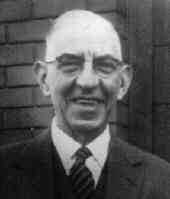
Percy H. Hardwick was local in West Hampstead, London. He was son of the well-known Harland Hardwick.
- Professionally he was headmaster of a school.
This new page has three fine addresses: 'The Influence of Manhood in View of Completion', 'Genuineness' and 'The Service of God'.
- The latter two were given in April 1953 just weeks after the departure of Mr. James Taylor and, in addition to their own worth, are valuable as a witness to the gracious yet faithful spirit marking the brethren at that time before the 1959 slide into legality.
Memorabilia: Ears of the Assembly: London 1938 is Mr. Hardwick's own report of special city gospel preachings in which he took an active part.
His ministered in New Zealand in November and December 1947. Twelve addresses were included in the now out-of-print book 'The Glory of Descending Love'.
- Nine of those addresses are now included in Kingston Bible Trust's 'Selected Ministry - Volume 4', and appear here in 'Ministry by P. H. Hardwisk 2, 3, 4'.
G.A.R.
Page Top
THE INFLUENCE OF MANHOOD
IN VIEW OF COMPLETION |
|---|
Deuteronomy 3: 1-8; Daniel 9: 17-23; 2 Corinthians 10: 1-3; Philemon 8-10
Auckland, N.Z., November 26, 1947
Not included in the Stow Hill publication 'The Glory of Descending Love'.
|
|---|
I would like to speak of these three men, Moses and Daniel and Paul, as exercising great influence among the brethren, among the people of God, and especially as helping them to reach completion in certain lines of exercise.
- Likewise we, as being near the end of the church's time and being concerned about completing everything which we have to complete, may perhaps catch the spirit of these three men and be helped to influence one another, for good, for it must surely be said wherever there are brethren together, few or many, they do influence one another.
- Where divine love is operative and there is cleaving to the truth, the influence is for good, and it is to be calculated therefore that everything will be finished that should be.
- We shall end well, but as at Corinth we may have to face some adverse influence working at times in a person or in persons, and the lesson for us is to allow for the necessity for self-judgment in ourselves.
- This all has to be thought of when we are contemplating the thought of influence amongst God's people.
MOSES
The first thing which really would arise in our thoughts would be the kind of person that a man is, so we may inquire at the outset of our meditation,
- what kind of a man is Moses, and particularly what kind of a man is he under pressure, when there are difficulties?
What we find is that Moses exhibits a wonderful spirit throughout the whole of his pathway, having in mind always great thoughts of God and great thoughts of God's people. Indeed these two things always go together.
- It would hardly be an exaggeration to say that if we have poor thoughts of the saints it is likely we have poor thoughts of God.
- The two act and react upon one another; moreover, what is needed alongside of great thoughts of God and great thoughts of His people, is small thoughts of oneself, all seen very happily in Moses, Moses the man of God.
The word used for man, as many will know, is Ish, meaning, I believe, that in all that Moses had to undertake whether for good or correction, or in suffering or in victory he always had the affectionate feelings of a man, as I might say, a husband.
- He had, as it were, God's feelings for His people. God says of them later,
- "I was a husband unto them", Jeremiah 31: 32,
- and I believe Moses shines in this particular way as he shone in affection and real husbandly thoughts towards God's people. He would not be hard unless he had to be.
We think of him as even hesitating to speak,
- "I am slow of speech", Exodus 4: 10, he says.
- Stephen says of him later, "mighty in his words and deeds", Acts 7: 22,
- but he says of himself, "slow of speech". It was no doubt a thing which God helped him in, but that is what he says and that is what he meant.
- Think of the meekness of spirit too, which marked such an one, even under the most irritating circumstances of the whole people worshipping a golden calf, Moses going up to the mountain and saying he would pray for them,
- "perhaps", he says, "I shall make atonement for your sin", Exodus 32: 30.
- Think of being served, dear brethren, by a man like that. We have known the spirit of that in our day.
Again when the people were calling out for flesh, Moses confesses that God had told him to carry all these people in his bosom, as a nursing father carried the suckling, Numbers 11: 12.
- Think of being served for forty years by a man of that spirit and being brought by such a man to the fringe of the heavenly land.
- We have been brought in just such a spirit by many of those who have led and helped us; we have been brought now, as it were, to the very fringe of the land.
- We are in the plains of Moab, as we may say, our eyes lifted up across the Jordan thinking of the good land and the goodly mountain and Lebanon; we are thinking of heaven, the assembly being the 'anteroom' to heaven;
- we are thinking of all that is heavenly now which we may say a man like Moses would help us to reach, reach in spirit, that which we are soon going to reach literally.
So we are led to think of the spirit of a man like Moses, how he would impress the greatness of the inheritance upon us,
- as Paul says in our day, that we have a holy calling, a heavenly calling, a high calling,
- the "calling on high of God in Christ Jesus", Philippians 3: 14.
- It is that kind of thing which Moses typically sets out, and with which he charges himself through many a wearisome year in the wilderness to bring the people to at the end.
So Moses' blessing is beautiful, dear brethren; he himself is about to depart and he leads the brethren, as you might say, with great thoughts of God and His movements, and great thoughts of the saints.
- What a great God we have! God in His holy movements, as it says, He "came from Sinai", that is in His majesty. How majestic are His movements! Especially how they appeal to us at the present time.
- Our God moves in majesty according to His own rights of glory, coming from Sinai; then He "rose up from Seir unto them". God would cover every part of our wilderness journey, dear brethren, with great majestic shining, as from Himself.
This is our God, and He is not moving alone, as He says through Nathan to David, He walked the wilderness with Israel
- "in a tent and in a tabernacle", 2 Samuel 7: 6,
- content to go along in all the lowly humble circumstances which belong to a pilgrim people. Who can compass a God like that?
- So great He is and yet coming down so low, and yet the pilgrims that He accompanies are necessary to Him in His love, and so He comes down like this in order to shine upon us and encourage us in the way.
- We might well, therefore, dear brethren, encourage one another at the end of the day with great thoughts of God, for He is our Father, He is our Saviour, He is our God, the eternal God, but He has come down so close to us that we can know Him even in our pathway right to the end.
Then these wonderful thoughts about the saints, not forgetting the place that Moses had amongst them, for there was never a lawgiver like him.
- The law here is not merely the enunciation of the ten commandments, it is that which the people of God are to live in. That is the heritage; nothing more happy than for us to find out what it is to live in the blessedness of the will of God, that good and acceptable and perfect will of God.
- It is not merely that which is put before us at the outset but that which opens out before us in all its grandeur, and includes the great thoughts of God's purposes, as it says in Ephesians,
- "the good pleasure of his will", chapter 1: 6.
- These are to be the things which we live in especially at the end of our time, and Moses is set before us here in the end of the time as being the one that commanded a law.
- He is likewise king in Jeshurun, a man enshrined in a kingly way in the affections of the saints, shining particularly when they are together.
Well, this is Moses, the man of God. Not only has he a great place himself, not only would he give us great thoughts of God,
- but he would ensure, as it were, that we should step over into our heavenly inheritance as understanding God's best thoughts about His people.
- Think of His blessing, think of Reuben, meaning 'See! a son'. We may say that Reuben personally in Genesis is not much; he has had a shameful history … but now, it is not a man, we may say in our case it is not even a tribe, it is the whole of the people of God who are to shine in the great matter of sonship.
- For God is going to have His people as sons before Him for ever. He has not just thought of it, it is that which He has had before Him from before the foundation of the world, as it says,
- "marked us out beforehand for adoption through Jesus Christ to himself", Ephesians 1: 5.
We may well admire God's pattern in sonship in Christ, the blessedness of being in such a relationship, God rending the heavens at least three times to speak to His Son, saying not only, "This is", but "Thou art",
- "Thou art my beloved Son".
- God would speak thus in a way to show us that intimate relationships and love are entwined in this matter of sonship. He is calling, you might say, upon His sons to be released
- saying to the north, "Give up", and to the south, "Keep not back", Isaiah 43: 6.
- Literally this is a word for Israel, spiritually a word for us, God wanting us all released in the glory of sonship for Himself.
- We should exercise ourselves to see that we are keeping the company of the best of God's people that we can find, those who walk in the light and the joy and the love and the intelligence of God's sons. If we can find them, let us walk amongst them, for they are soon to cross over into the land.
- He has the praise of God in mind too, in speaking of Judah whose name means 'praise', for praise is being released; it is released now,
- "Hear, Jehovah, the voice of Judah",
- the voice is going up in the assembly, the great praises of God, praises of Israel as we read, in which God dwells.
- These are the great signs of maturity, the great matters of completion with which the saints will finish as going over into their heavenly inheritance.
- David in his day even lowered the age of the young men, the Levites, that they might come earlier into the service of praise. God would thus have His assembly fuller and more resonant with the praises of His people.
- We might well take in that word, I would submit to the brethren, "Hear, Jehovah, the voice of Judah".
Then Levi, whose name means 'joined',
- "joined to the Lord", 1 Corinthians 6: 17,
- I suppose, preparing our hearts for the saints being united to Christ.
- Of Levi it is said,
- "Thy Thummim and thy Urim are for thy godly one".
- The Thummim first, the perfection first before the light, meaning, I believe, that Levi has got on, we may say, in his soul, that is to say, the brethren have got on;
- they have arrived at something; there is not only now light about the truth, but there is arrival at the truth.
- "Thy Thummim and thy Urim are for thy godly one".
- Levi has something and that would be, dear brethren, I judge, a voice for us, that we should see that we are arriving somewhere.
The gifts have been many within our own time, not apostles, but the apostolic writings, then the prophets, the evangelists, the pastors, the teachers;
- we have them all, we may say, but it is for us now to see that we do not fail to arrive, as it says
- "until we all arrive …", Ephesians 4: 13.
- God said to Israel, not only "the land which I give you", "the land into which I bring you", but the land "into which ye come",
- as if God would urge upon us in the end, the glorious end, that we should be arriving at something substantial in the truth.
Well, that is not all that is said about Moses, but it is sufficient, perhaps, to show what kind of a man he is, what kind of influence he exerts over the people and what kind of things he said, and what kind of things he was thinking about,
- for these things we would say now are to be constantly in our minds, great thoughts of divine Persons and great thoughts of the saints. Thus he blesses the people.
DANIEL
Now coming to Daniel I am thinking of him as reading and praying.
- We may say, transferring him into our day, that he read the Scriptures and he read the ministry and therefore he gained intelligence, understanding.
This part of the book of Daniel is not the official service part, it is the more private and personal part, beginning with dreams and visions, and now reading and praying.
- he veil is lifted upon the private exercises and the private history of Daniel, between him and heaven. It underlies largely the public side of this great man's service and it is to be so with us all;
- whether serving in little or in much we are to have our private dreams and visions, reading and prayer and confession between ourselves and heaven.
- Otherwise there will be little or no power in the public service, and so we find Daniel here at the end of a certain period reading and praying and confessing. The dates will show that it was only a year or two before the people were released to go back to Jerusalem.
- We may not have long, dear brethren, before we are released to go to our own place on high. As we have been repeatedly told, there is not very much more time for reading and praying and learning and getting understanding.
- Daniel was well using his time. He understood by the books, as it says,
- that "the number of the years, whereof the word of Jehovah came to Jeremiah the prophet, for the accomplishment of the desolations of Jerusalem, was seventy years", verse 2.
- Sixty-eight of them had gone; he was very near the end. As being there you see it was a question now of a suitable attitude in view of the great release of the people of God.
- Shall anything hold us up, shall anything, morally speaking, prevent the Lord from having full pleasure in taking them to be with Himself? If so, let us pray and confess.
- Thus Daniel prayed, and you notice as he goes on he gets away from I and me and says we and us and our and within a very few verses his prayers are on the glorious level of what belongs to God;
- "thy people … thy city … thy sanctuary … thy holy mountain".
- These are the things that Daniel speaks about in his prayer.
You can well understand that a prayer like that opens the way for power, and that the angel came at the time of the evening oblation.
- The evening oblation means power at the end, corresponding to the morning oblation. The man standing by the cross saying,
- "In very deed this man was just", Luke 23: 47,
- is in the presence of the evening oblation, the offering of the evening time.
- And now it is not Christ, it is the testimony of Christ, and the truth, and so if we are to have power at the end, we must pray; and if there is anything to confess, as there is much, let us confess it.
- Daniel is not thinking merely of himself, or the three other Hebrew children; he is thinking of all the children of the captivity, Israel, what they have done, their sin, their departure.
- We are thinking of it too, for we are thinking of Christendom, we have much to confess, much to take on by way of church sorrow; and the evening oblation is the time for us to take it on in power.
- At this very same time, the time of the evening oblation, Elijah had power in recalling the people to God. Think of it. Thousands and thousands of them all bowed down and said,
- and slew the false prophets at the brook Kishon, 1 Kings 18: 39-40. What power there was there!
At a similar time Ezra was weeping and confessing, blushing to lift up his face before God, for the unholy links of companionship that had been taken on by the remnant.
- But at that time there was power to deal with it, Ezra 10.
It is power, not at the beginning of the day, but at the end, so that the end corresponds with the beginning.
- And Daniel now, in his own way, is signally approved of by heaven. The man Gabriel came and touched him, it says,
- that is, it is to unfold to him the rest of the time, the seventy weeks, and how it should all work out.
- For us, of course, it is a question now of our being near the end of our time, and how that is going to work out; but in his approval, the touching of him, he says,
- I suppose, dear brethren, this is the way that power comes in, and the people of God are influenced for good and rightly helped, that one should be thus before God about the whole position in general, take it on humbly;
- and that one should read, one should pray, one should confess, and that one should take on the whole situation, as it were, as it is under the eye of heaven, and approved by heaven.
I would like to be one like that, to help the people of God to be released rightly; that there might be no moral hold-up to the people of God going out in power.
- You might say that God was fully justified by the exercises of Daniel, in releasing His people to go into their inheritance. And Daniel himself never went, as we know; he stood in his lot but what a power there was behind the goings of Zerubbabel, behind that proclamation of Cyrus.
- It is not only now the prophetic word as to Cyrus, uttered years and years beforehand; it is the prayers, exercises of moral power standing behind it all in the person of Daniel. He is in keeping with his own name; he judged himself in his confession;
- and as we judge ourselves, we shall be called, I believe, as vessels for the power of God and the glory of God, to go forth in victory.
- Now that influence, we may humbly desire to take on ourselves;
- "The fervent supplication of the righteous man has much power", James 5: 16.
- That still remains, so we can take this on, the spirit of it amongst ourselves, and help the brethren, as they help us.
PAUL
Now Paul is not exactly blessing in this chapter in 2 Corinthians. We may say he is a father, but for the moment, his fatherly affections are somewhat restrained.
- There is more here in this verse or two of the apostle; but at the same time there is the meekness and gentleness of Christ in his manner. He says at the opening of the chapter,
- reminding us that we are to develop in heavenly and spiritual personality. We are to be able, all of us, from the youngest believer to the most spiritual amongst us, to say in measure, "I myself".
Some may ask how can we get into it, which is always one of the very best questions, and I would suggest that one way to get into it is to keep close to the light that we have.
- I am thinking of Ruth in saying this. She followed Naomi as the vessel of light. She came into the inheritance, she came into good companionship; she came, we may say, to thoughts of Christ out of death as suggested in the barley harvest, and thoughts of the saints.
- She came into the field that was being reaped, the present ministry; she came into the Lord's supper in type, the "mealtime", chapter 2: 14, and then there came a time when Boaz said to her,
- "Bring the cloak that thou hast upon thee, and hold it", chapter 3: 15.
- "The cloak", the cloak being, we may say, our capacity, our personality, what we can contain. He poured into it six measures of barley. And with it she went home to Naomi, and Naomi said to her,
- "Who art thou, my daughter?", chapter 3: 16.
- "Who?". That is to say, it is a question of the person; the personality, that is in mind.
- Now, dear young brethren, that is a good start, and as we may say, a normal start. If you are close to a vessel of light, keep company there; follow the light. It will take you into good things, good fields, good company.
- Indeed the typical teaching of Ruth's end is marvellous, as she comes into union with the "mighty man of wealth" – Boaz – that is Christ!
These are very attractive things, dear brethren. And it all leads into this great matter of "I myself". Another time Paul said,
- "I myself with the mind serve God's law".
- He has come under the influence of the new husband in Romans 7; he is like Ruth. He begins to understand what it is to be to another; to be free from every kind of bondage; now he says, I am free.
- "I myself with the mind serve God's law".
- I am reminded often of the Tachkemonite amongst David's men, of whom it says, in David's last words – "He fought against eight hundred". The word "fought" is not strictly there in 2 Samuel 23: 8. It is not a question of his fighting; the fighting comes in from Chronicles; but in Samuel it is his person.
- "He fought against eight hundred".
- Think of it; what a person! No wonder he had the chief seat, the chief of David's mighty men. This is a man formed under David, the Beloved!
- That is where personality is formed, I am sure, under the influence of the love of Christ.
- The green grass mentioned in David's last words is something growing, living, fresh! His mighty men, as it were, are the green grass. Saul never had any, not a blade. David had many, many of them; there they are like blades of green grass, coming up under the shining of the sun, and the refreshing of the rain.
- These are hints, you might say, if you will allow them, dear brethren, in relation to personality.
So we come to this great man, Paul, and yet he is so approachable. They could write letters to him about collections, and about all kind of exercises and he would write the answer, and he says:
- I understand that to mean that he is answering the points in their inquiries; he is taking them up, but when he has finished all this,
- he says, "But I myself, Paul, entreat you by the meekness and gentleness of the Christ".
- That is, he is greater than all his answers, and all his ministry; and he needed to be, for there was a naughty man at Corinth, a wicked man. There was one whom Paul does not name; he just calls him "he".
- "His letters", says he, "are weighty", chapter 10: 10.
- Who is the he? It is the false apostle at Corinth.
- "But his presence in the body weak, and his speech naught".
- That is what he said of Paul in Corinth. We need something to counterbalance all that. If there is anything of that kind in Corinth, or anywhere else, we shall need personality to deal with that.
- "Let such a one think this", Paul says, verse 11.
- He says in the next chapter that he, Paul, reckons. He says, In nothing I am behind any of them.
- "Let such a one think this, that such as we are in word by letters when absent, such also present in deed", that is in actual fact.
- All that lies in my mind in relation to that, dear brethren, is the need for bringing all that we are to bear upon our local position. Not that there is a false apostle in our localities, thank God!
- But there is the need for influence for good, and so we have to call upon ourselves, little in our own eyes, so that Christ may shine, and all that we are as formed by divine grace, to bear upon the local position, for its good, so that the saints may not only be saved from evil, but carried by the truth.
How much more could be said about that. Think of this beloved brother; think of his having been caught up to heaven, the third heaven, and into paradise!
- Think of the personality, you might say. Think of what was lying in his soul, what he knew, what he had heard, what power he would be in a meeting. He would not have to say much, if he were there, though you would delight to hear him.
- That is it, I believe, that we might have some development of spiritual heavenly personality, for the enrichment of the saints in our localities.
- Unless we should think that Paul is too great to deal with our small matters, he reminds us in his beautiful epistle to Philemon, how interested he is in all the saints, even the smallest.
- One has to admit to having had to judge oneself about this, that is, overlooking the interests of the saints. And here they are!
Paul in writing to Philemon is thinking about a runaway slave; he had come to Rome and had been converted, and Paul, the father, says:
- "whom I have begotten in my bonds". "My child".
- Think how Paul, dear brethren, could come down to the smallest of us here tonight, one who has come under the influence of the truth, we might say, a boy or girl, as we were hearing last night, a twelve year old, or even less, and under the interest of a man like Paul such an one becomes valuable;
- he is valuable in a spiritual father's eye; and he commends him to his master;
- "not any longer as a bondman, but above a bondman, a beloved brother", verse 16.
- Think of it. Onesimus now, as he goes back, will sit down in the meeting in Philemon's house. The assembly is in his house; the meeting is there; and Onesimus, the runaway slave, now the believing, Pauline child, is to sit there with the brethren, as he comes back; and Philemon shall have nothing against him.
Philemon would say, 'Paul has offered to pay, but he will not have to pay, I will pay'.
- What a delightful spirit, dear brethren, the spirit in which Philemon and Paul, would regard this matter;
- Paul "being such a one as Paul the aged".
- What a spirit in an aged father amongst the saints. What a benign influence shines in Paul, "such a one as Paul the aged". What an influence he would exert.
So we may encourage one another, dear brethren
- Sometimes it is a question of outlining the truth in its scope, and saying the right thing, and saying it as helpfully as possible, and seeing to it that the brethren get the best;
- if sonship is the best, let us bring it before the brethren, let us have it before ourselves.
If the land, heaven, is the best, let us speak of it, let us have it before us increasingly.
- Sometimes it is a question of praying, and confessing, and giving God, we may say, a justification from our side, for His taking us on as self-judged persons, vessels of mercy, prepared for glory.
- But most of all, I suppose, this great matter which comes in with Paul, the matter of spiritual personality, whether in the meeting or in regard of a person, is to have weight with us. Thus we shall be influential for good, I believe, and serve one another well and finish well.
The Lord help us in these things, for His Name's sake.
Page Top Article Top
| GENUINENESS |
|---|
Proverbs 25: 1-40; Revelation 3: 7-11; 10: 9-11; 11: 1-2; Ezekiel 44: 15-18
Newtownards, Co. Down, April 4, 1953
|
|---|
It is in mind, as the Lord helps, to say a word about what is genuine as over against what is merely profession. Scripture helps us in considering this.
- Timothy, for instance, is spoken of as one who would care with genuine feeling how the saints get on. Philippians 2: 20. Paul could trust him; and it is to Timothy that Paul speaks of laying hold of what is really life. 1 Timothy 6: 19.
- At that time the saints, according to Paul's ministry to Timothy, were being warned about what was false and apostate coming in. It is still more so today, so the injunction to Timothy is the more for our heeding at this time, that we might lay hold of what is really life.
Then we read elsewhere that love is to be unfeigned, Romans 12: 9, or without dissimulation.
- We have hardly any need to say that in the world love is practically unknown according to what it really is as springing from God;
- but the saints know it, for they have the love of God poured out into their hearts by the Holy Spirit, so that there is liberty and ability, especially in the christian circle, for love to be expressed in its unfeigned purity.
I might mention, too, in thinking of what we are in our assembly setting, that the Lord hates indifference.
- I would seek your grace as I utter a word of warning, I believe I may say on the Lord's behalf, in regard to indifference. The Lord says to the church in Laodicea,
- "because thou art lukewarm, and neither cold nor hot, I am about to spue thee out of my mouth", Revelation 3: 16.
- It is a figure of what is most obnoxious, for the Lord would have us take on His own feelings of hatred for what is neither cold nor hot but completely indifferent, indifferent to the best and brightest days of the truth.
- Therefore I believe we can see the need for genuineness, dear brethren; it will prove itself if it is there, for a person who is going on with God and with the truth will make his own way, and will be seen to be approved of God, known of God.
- It says, "if any one love God, he is known of him", 1 Corinthians 8: 3. God has many things for those that love Him, but this is, perhaps, the sweetest of all, that
- God knows him. That is, He definitely establishes a link with such a person, and writes him in the books of heaven. The youngest of us may be in this book; we are in it as loving God; therefore let us love God.
This brings me to my scriptures, which I would use to bear upon reliability
- in our persons,
- in our regard for ministry of the truth,
- and in the service of God.
- Proverbs 25 is a remarkable chapter which brings in a new setting. There are several in this wonderful book;
- the first section goes over about nine chapters,
- the second section begins with chapter 10,
- and the third section begins here, presented to us as being the "proverbs of Solomon, which the men of Hezekiah king of Judah transcribed".
That is to say, they came to light in a day of recovery. Hezekiah's day presented a most remarkable recovery, but there was opposition too. Sennacherib came up with all his scorn against Jerusalem, 2 Kings 18, 19.
- The enemy is coming up now with all his scorn especially in regard of the assembly. He has his ways of doing it: some are open, some apparently insignificant, but they are insinuating ways of darkness and hostility, all directed against the assembly.
- What Sennacherib could not take account of was that in that day God was recovering His people, just as He is doing in our day.
- We have been lost and are becoming recovered to the full light of the truth; and in transcribing these proverbs we are to understand, I believe, that we are coming into the very best things which the Son has caused to be written.
- Solomon says, "I was a son unto my father", Proverbs 4: 3.
- They are worth holding to, dear brethren, whether they are the high things, "the heavens for height", or the deep things, "the earth for depth", connected with the death of Christ.
- He descended into the lower parts of the earth, and then it says,
- He "ascended up above all the heavens, that he might fill all things", Ephesians 4: 10.
How great are those depths and heights! These are amongst the things which come into mind in the day of recovery. God is bringing them into mind in connection with His Son.
- He does not blazon everything abroad; He conceals matters. Mystery is written over Christianity, and, we might say, over the Christian, or so it should be.
- A Christian is not understood; there is mystery attached to the public life and movements of one who is really Christ's. This springs from God, for God conceals things.
If I speak to anyone here who is finding his life in the world, I may say, quite simply but truly, there is no mystery about you. You may think you hide things, but your life is open, your thoughts and pursuits are open.
- There is mystery about the believer, just as they said about the manna, "What is it?", Exodus 16: 15.
- That is its name; it was never described in any other way but by that mysterious name, Manna, "What is it?"
- We never see through the life or Person of Jesus; there was always something mysterious even in His public teaching, something which we can never fathom, and in character it is the same with the believer.
- God has hidden things for us, and as we search them out He tells us. The Holy Spirit, who is God, searches them for us, for He searches the depths of God.
- How wonderful it is to be a believer! I trust all here, including the children of the saints, are believers.
- These meetings are not merely for the grown-up persons; the children sit with their parents and the great desire is that all may be believers, and be found in the company of those who have these marvellous privileges.
One trait of a genuine person in Christianity – and I speak of Christianity though I have read from Proverbs – is that he judges himself.
- That is something which a man in the world never fully does, the reason being he has no power to do it.
- A believer has power, he has the knowledge of God, and by means of the Spirit he is able to show himself a genuine person by judging himself.
- He takes away "the dross from the silver", and leaves a "vessel for the refiner".
- I would ask the dear brethren to ponder it. Jacob took away the dross from the silver. Every time God spoke to him, a little further work was done, until at one time God came down and stayed with him and spoke to him in a way of holy friendship, and then went up from him, Genesis 35: 9-13.
- Think of God coming down to a person like any one of us, as with Jacob, and staying awhile, talking, putting impressions into the soul, and then going up.
- That is worth far more than the best that this world can offer you, education or anything else. Education never leads us to God, nor provides a basis for God to come down and be with a man.
If we come to our own day, how wonderful were Peter's experiences, cleaving to the Lord while owning his sinfulness, Luke 5.
- What but a spiritual experience could bring us to such a state of things as that, asking the Lord to go away, and yet cleaving to Him?
- Likewise Jacob wrestled with the man and said,
- "I will not let thee go except thou bless me", Genesis 32: 26.
- The "man" was really God, and this is Jacob speaking to God, not God speaking to Jacob.
These people are people who learned to judge themselves, and as such they come out as vessels for the refiner.
- It does not mean that all the refining is done; it does not mean that the first touch with Jacob, with Peter or with ourselves completes the work; there is much more to be done.
- But the vessel is now in the right hands, it is in the hands of the Refiner, and He will do the rest gradually. Some of it will be tender service like
- the "washing of water by the word", Ephesians 5: 26;
some of it will be drastic like
"a refiner's fire and like fuller's lye", Malachi 3: 2,
- which has a sting about it, but we are such that we need this.
- God is not concerned with disciplining persons in whom He has nothing; He leaves them. He says, "I hated Esau", Malachi 1: 3 – a very solemn word.
A genuine person in the Revelation, as we have read, is referred to under the title of the Jew.
- The term Jew here does not mean the Jew nationally, it refers to the genuine person. Romans 2: 29 refers to the person in this way.
- There are those according to Revelation 3 who say they are Jews and are not; they lie; so we are not thinking about Jews nationally, but we are thinking about genuine persons in our day.
- In Esther's day the Jew was the genuine person coming under the preserving hand of God, Mordecai and Esther being helped together practically to provide a way of escape, life and preservation for the Jew.
In this passage in Revelation the Lord Jesus is addressing a company in Philadelphia – meaning 'brotherly love' – and He is saying that He really has not anything against them: on the contrary He is encouraging them.
- It is remarkable that in the two addresses to companies in whom He has nothing to find fault with, He warns them about the synagogue of Satan. I refer to Smyrna in Revelation 2: 9:
- "I know thy tribulation and thy poverty; but thou art rich; and the railing of those who say that they themselves are Jews, and are not, but a synagogue of Satan".
Then in the passage we read in chapter 3:
"I have set before thee an opened door, which no one can shut, because thou hast a little power, and hast kept my word, and hast not denied my name. Behold, I make them of the synagogue of Satan who say that they are Jews, and are not, but lie …"
- That is to say, the religious persecution under the title of synagogue – and no doubt bringing in many terms and names common to Christianity, but being altogether hostile – is very near; it is really at the door.
- So we are to warn one another that where there is genuineness it is sure to be attacked.
I understand that there are seven so-called sections of Christianity in these lands where the names, Father, Son and Holy Spirit are named,
- but the deity of Christ is not only disregarded but refused, and the atonement of the blood of Jesus is also refused.
- What is that but evidence of the synagogue of Satan standing right over against genuine persons whom the Lord here salutes as Jews – Jews "inwardly", circumcised in heart and spirit, real believers.
- That the Lord should say this to two companies against whom He has nothing outwardly is very remarkable, and is to enter into our education lest we should get lulled into a kind of sleep.
The Lord then says, I have kept a door open for you. There is no door open like this in Russia: scarcely one open like this in eastern Germany [1953].
- We can go on with the service of God, so that we find an opened door spiritually, not only publicly; this is what the Lord has in mind, and no one can shut this door.
- "Because thou hast a little power".
- How often Samson has been brought forward in this, one in utter weakness, but it says,
- "the hair of his head began to grow" again, Judges 16: 22.
- There was life there, a little power, and that life showed itself in power. Let us not be ashamed of the life that is there; let it come into expression.
- In Samson power revived in outward weakness, and in principle brought down the whole world of the mind of man. Think of the whole Philistine world being demolished by one man, not strong, but strengthened. What one man may do in such a setting!
The Lord goes on to say, "and hast kept my word".
- We should need to look into the Scriptures to see what that means as to detail, but amongst other things it means that we value the truth as it comes. The Lord's word indicates His mind, and His word comes out in ministry. It includes the great matter of the Lord's supper.
- The Lord says of Philadelphia, thou "hast kept my word". Could we say that? Think of the Lord saying that. He credits them with that, that they have kept His word. He said as to the Supper,
- "this do in remembrance of me" – then let us do it.
- If we have not yet taken away the dross from the silver, let us do it that we may keep His word.
- The footnote 'i' to 1 Corinthians 11: 24 is interesting. It says, 'For the calling of me to mind': not 'a calling me to mind', but 'the calling me to mind'. There is really no other. It is part of the Lord's word.
- "And hast not denied my name".
- Abigail did not deny David's name. David said,
- "go to Nabal, and greet him in my name", 1 Samuel 25: 5,
- and we know the result: Nabal scorned and flew upon them. The religious world does that, but we are to keep true to the name of the Lord.
- A young man came forward that day and told his mistress, Abigail, there was going to be trouble, as the name of David had been shamed, subjected to ignominy.
- So a remedy had to be found, and was found by this woman Abigail going down, not empty-handed, for she had food.
That is the way to start, finding our place as real persons answering to what the Lord credits us with in the place of all the activity of the enemy.
- The Lord says, I will reward you:
- "I also will keep thee out of the hour of trial …"
- One would not like to prophesy about future events, but one is sure about one thing, and that is that the great tribulation, the hour of trial,
- "which is about to come upon the whole habitable world",
- will not find us here. The Lord does not say, You will enter it and I will take you out of it, but
- I feel greatly tested as to that, for like many we have thoughts in our minds as to what we should like to do in personal activity: like to go here and there, like to be free from restrictions, free from discipline, or get into a settled position.
- The Lord does not approve of that spirit. According to the prophet even He Himself says,
- "I will wait for Jehovah", Isaiah 8: 17.
- Christ is presented as coming according to the word of God; and if the Lord Jesus is waiting, by the help of the Spirit we can be waiting too. We cannot do it by will power, or by stifling our feelings.
- It is "the word of my patience" in us by the Spirit.
- The ministry helps us too, as enlarging these great thoughts.
In Revelation 10 John takes the book and eats it. It is a book of prophecy which need not detain us in detail now,
- but in our day too we have prophetic ministry, not dealing with times, or seasons, or coming events, but concerning the truth,
- and I think it would do us good to take it and eat it, so that we feel it inwardly.
- We say about some of our meetings for ministry, 'That was a good meeting. I was glad to hear so-and-so's word'. That is like its being sweet in the mouth, but during the ensuing time it is to work into the inwards of our being.
- The belly is the inward part of the man where the word is to operate, whence the Spirit is to flow, where things are to be formed, and as the word gets further down and operates there may be reduction with us, a bitterness, but formation and an appreciation of what is genuine.
- So John is told to go now and measure what is genuine. A man like this, eating the book, is able to discern.
- The spiritual discerns all things", 1 Corinthians 2: 15,
- but himself is a mystery; he is discerned of none.
So John is told to "Rise, and measure the temple of God, and the altar, and them that worship in it. And the court which is without the temple cast out, and measure it not".
- The outward thing can be left, as if God would say, I am not concerned about that; presently I am going to judge it; you go on with what is genuine and measure it.
- How interesting it is to see real souls coming to the meetings and saying, I never knew such things existed. How delightful to see somebody coming along and beginning to measure, and finding genuineness there.
- So these two things help one another. The prophetic side in ministry helps us to appreciate the worshipping side, the priestly side, and then the priestly side helps the prophetic word again.
- This is genuineness in regard to the effects of the ministry, that we may be able to measure what is of the truth.
My last remarks are about the sons of Zadok, as bearing on the service of God.
- "But the priests, the Levites, the sons of Zadok, that kept the charge of my sanctuary when the children of Israel went astray from me, they shall approach unto me to minister unto me, and they shall stand before me to present unto me the fat and the blood, saith the Lord Jehovah".
- I suppose I speak for all when I say we should like to be amongst them. They are wonderful persons. The Levites are spoken of here as having gone away, and Zadok represents those who replace them in genuineness. It says in chapter 43: 19,
- "the priests the Levites that are of the seed of Zadok".
- That is where we want to be. Then in chapter 44: 10 there is reference made to
- the "Levites who went away far from me".
- So we have to begin to measure what is genuine in connection with the service of God, and to leave out what is not genuine. God will help us in that.
- We have been hearing a good deal about the grace of the dispensation and its operating. We are all being forgiven; our links with one another are far more gracious than they have ever been.
- The brethren are making it as easy as possible for us to get into the best, but along with that there is the call for reliability, so that we have to judge the state of things as well as the words.
These sons of Zadok had a very illustrious father, Phinehas, going back through Eleazar to Aaron himself.
- It says of Phinehas in Numbers 25 that
- he "rose up from among the assembly, and took a javelin in his hand", verse 7
- – a weapon for what we might call very close conflict, not an arrow for distant battle – and went into the tent where it was necessary for things to be dealt with, and thus saved the brethren.
- Zadok, too, carried the ark when Absalom was seeking power, and remained in Jerusalem with it, 2 Samuel 15: 29. He showed his genuineness by being ready in times of conflict.
- So God says, I have noticed all that, and in this great matter of my service going on these are the ones that shall have the charge of my sanctuary.
We are now in the days of the best. There has never been a time when the service of God has gone so high or been entered into by so many, as at the present time.
- Inquire amongst the localities where the saints are and you find the story is all of a piece; they are being helped to respond to God in the greatest levels.
- If you inquire a little more closely you will find that certain things have had to be discarded, some of our old well-treasured impressions, perhaps, born of sentiment, like the wool which produces heat.
- There is to be no heat in the service of God, no "sweat". There is to be the coolness and spiritual collectedness suggested in the linen on the head and on the loins; the mind and strength are to be controlled.
- Peter brings them together; he speaks of
- "the loins of your mind", 1 Peter 1: 13.
- Ezekiel makes them separate, the mind and the loins; they are both to be kept under control so that God's service is not spoiled, but kept in all its wonderful height and wealth.
- These are genuine persons, and the simple desire behind this word is that we might be among them in power, not merely in appearance.
- God is looking now for the glory, purity and spirituality of His service, and the Spirit is here, the Spirit of Jesus, the Spirit of the Lord, the Spirit of adoption, the Spirit of God, the Spirit of the Father – we may say, the Spirit Himself is here to help us in all these things now.
May we be helped so that we have our part in these things now.
Page Top Article Top
| THE SERVICE OF GOD |
|---|
Revelation 1: 4-6; Romans 12: 1-2; 1 Peter 2: 1-7; Hebrews 12: 25-29
Londonderry, April 11, 1953
|
|---|
I would like to register a few impressions, with the Lord's help, in connection with the service of God,
- and I hope that the brethren may be encouraged to give themselves entirely to it, especially those who hitherto, perhaps, have hesitated, for it is a very attractive matter.
There are many words for 'service' in the Scriptures. The one I am thinking about really indicates the priestly service of God, so that there is something going up from men which God receives, and which He is pleased with.
- It is, according to the word of Moses, like burnt offerings upon His altar, incense before His nostrils, Deuteronomy 33: 10.
- There is much going up that is called service, very often called divine service, which, alas, does not please God. It has a certain expression which practically does not alter, and it does not depend upon the state of the person who voices it. It seems just automatic.
- Even in a company like this where we are accustomed to the living voice of the truth, we need help so as to be living, not to be merely repeating. It may be that we need reminding of the renewal of the Holy Spirit.
As I was saying, there are many words for service.
- There is the service which consists of the small, humble things like helping a person who has fallen, or even handing, as the Lord said, a cup of cold water to a person, Matthew 10: 42.
- All these things, however humble, may come, in a certain general sense, into the service of God.
- There is the service in the preaching: Paul said,
- "God … whom I serve in my spirit in the glad tidings of his Son", Romans 1: 9.
- He served God as he preached. It is not only that he was speaking to men, but the whole service went up to God as a sweet savour.
But what we are speaking of mainly is the priestly service of God, which offers something to Him; and I judge from the reading of the Scriptures that
- to be effective and full it demands a certain state and condition in those who serve.
- For instance, to quote from our second passage,
- "be not conformed to this world, but be transformed by the renewing of your mind";
- that is a state; it demands a state. God has provided for that state in the gift of the Spirit.
- He has also provided for us to come before Him with substance and fulness:
- "none shall appear before me empty", Exodus 34: 20.
- It is a very exercising thing if brothers never take any active part in the various services known to us in the assembly. It may raise the question as to whether we have anything.
- It is equally exercising for the sisters, whether they depend for their spirituality upon their husbands and menfolk. We are not to live by our relations or Christian parents; we are to live by Christ:
- "he also who eats me shall live also on account of me", John 6: 57.
- We can never make a start on this line unless we are feeding on Christ; there is no life or substance in the soul apart from that.
I may take the parallel from the Old Testament scriptures, which, of course, come readily to mind when thinking of the service of God, and you find persons bringing an offering.
- It was contemplated that there should always be offerings going up. A bullock was a rare kind of offering, a very large offering, but there were times when a bullock was brought.
- One woman brought three, 1 Samuel 1: 24, a magnificent offering! She could not bring them if she did not have them.
- We cannot bring anything unless we have it, so we had better see that we have something, and all the more so as God has arranged for every circumstance.
- He has taken away every difficulty, He has removed every hindrance, even our sins; He has removed the old order of man which so stands in the way; every kind of enmity God has slain by the cross;
- "having effaced the handwriting in ordinances which stood out against us", Colossians 2: 14.
- What a God He is! He has not only removed it, but according to John He has done it in a Man in whom love has been pre-eminently manifested. John says,
- – that is Jesus, and then, as I said, God has given us the Holy Spirit.
I would like to encourage some of our younger people who are not yet breaking bread, because serving God without starting where God starts is just impossible;
- and God says, The beginning of My service in Christianity is the Lord's supper.
- That is the beginning of the public service of God, something which can be seen, where any person coming in can note it and say, There are persons who are committing themselves all alike to one thing; the things said and the hymns sung show that they have God in mind, not just the performing of a service or religious exercise, but serving God.
Now, according to John in this passage in Revelation 1, difficulties have been removed by "him who loves us". What are our main difficulties? Our sins.
- Not necessarily only our outward acts of sins, but the unholy, unclean thoughts that come into our minds, over which we seem to have no control whatever.
- They are sin; and deeper down behind all there is the great root which seems, somehow or other, never able to be dealt with. We may attempt to get down and cut it, and it springs up again like the weeds in our gardens.
- Now, the blessed God has dealt with all these things, every single one of them, in Jesus.
- John says, "To him who loves us, and has washed us from our sins in his blood".
- That means just what it says; so we can be free. If you are a believer you can say, I am free. If I paid a small debt of yours, you would have a certain respect for me, and thankfulness towards me.
- Think of Jesus, the One who has washed us from our sins, so that we need never be disturbed about them any more.
A man who is disturbed about his sins does not understand forgiveness about them.
- He may know about the One who has died for our sins, he may know His name and be able to repeat certain things, but could we all join together in this verse:
- "To him who loves us, and has washed us from our sins in his blood"?
- This was John's enjoyment. He was alone; there was not a brother or sister with him on the island where he was, no meetings to go to, perhaps no New Testament scriptures. He had no fellowship actively, and yet he could speak like this.
- He brings us salutations from divine Persons:
- "Grace to you and peace from him who is, and who was, and who is to come" [that is God], "and from the seven Spirits which are before his throne" [it is the Holy Spirit in a peculiar way of presentation]; "and from Jesus Christ, the faithful witness, the firstborn from the dead, and the prince of the kings of the earth".
- That is the salutation, and now immediately he turns and we get this upward trend.
We see the upward trend at the well of Sychar. Jesus attended to the woman's difficulties down here, and then He says,
- "God is a spirit; and they who worship him must worship him in spirit and truth", John 4: 24.
- That is the upward trend, securing the woman for what is going up.
- "To him who loves us, and has washed us from our sins in his blood";
- that is the upward trend. You can hardly have any real beginning in the service of God unless you know this.
"And made us a kingdom" – a realm for God. It is not exactly, 'made a kingdom for us'; it is the idea that the saints are made into a kingdom; they are a kingdom.
- A person coming for the first time to Britain might say, What kind of sovereign have you got? and then, looking round, say, I have formed the conclusion that your monarch is of such a kind, for the subjects would take character from the sovereign.
- What kind of a kingdom is the kingdom of God? You begin to see what it is like as you see the subjects of it.
- If you see a Christian doing wrong things, or going to wrong places, what kind of impression does he give of this kingdom?
- This kingdom is to shine in us, in our homes and in the localities to which we belong. The persons in it are priests who have part in the upward trend "to his God and Father".
Now John says, "to him be the glory and the might to the ages of ages".
- That is the beginning of the service of God. You begin to worship the Lord Jesus and utter glory to Him.
- The gospel of Luke is full of this. The shepherds began it. They were touched by what they found and saw; it affected them and they glorified God.
- These are wonderful things, and yet so simple. It is hard to understand why a real believer is not touched.
Now, perhaps someone will say, That sounds very attractive, and I would like to come into it; what have I got?
- You have your body. That is what we read in Romans 12.
- "I beseech you therefore, brethren, by the compassions of God, to present your bodies a living sacrifice, holy, acceptable to God, which is your intelligent service".
- You will notice that Paul – not John this time – says,
- "I beseech you … by the compassions of God, to present your bodies a living sacrifice".
- In this book God has come down to where we were, and Christ has died; indeed now He has been set on high, a mercy-seat. The mercy-seat refers to Christ risen and glorified:
- "whom God has set forth a mercy-seat", Romans 3: 25.
- His dying, and His being raised and glorified means that there is salvation,
- "through faith in his blood".
- It is the compassion of God that makes that available for us; and not only that, but the way, for instance, that God has, for the moment, set aside the Jew in order to bring us in. We are Gentiles, and God has done this wonderful thing in His compassion.
- That is to say, it is not just a word, or a sign with the hand, or a display, or a preaching; it is accompanied by the deep inward feelings of God, and the way they have expressed themselves.
- Paul says, as it were, Look at what God has done; not only has He made it plain as to our own soul history, but He has even set aside the Jew and brought in the times of the Gentiles that we might come into the service of God.
Now, that is to be our answer? Paul says, "present your bodies".
- I have a body – in one sense I have nothing else. Money, career, fame, style of living, education, none of that will go with us beyond death, but the body of the believer is very precious.
- Paul says your body is to be for God; it is a vessel. Paul likes to speak about vessels. He speaks about "vessels of mercy" and "vessels of wrath", Romans 9: 23, 22. What a sobering expression is that latter!
- – "vessels of wrath fitted for destruction".
- God gives us an example in Pharaoh, who hardened his heart so many times that even at the last, when he may have wanted to soften his heart and repent, he could not; God hardened it.
- Again, in one part of Exodus it speaks about bowls for pouring out, chapter 25: 29, and in Revelation we have bowls full of incenses, chapter 5: 8, which are the prayers of the saints. In the Old Testament again it speaks of vessels full of oil; that speaks of the Spirit.
- Vessels for pouring out before God, vessels for prayer, vessels for the Spirit; these are the precious things which enter into the composition of the person before God.
You may remember that at one time God said to His people, I want to have you as priests; you have seen what I have done to the Egyptians, and how I have borne you on eagles' wings and brought you to Myself.
- "And now", [this is the important part] "if ye will hearken to my voice indeed and keep my covenant, then shall ye be my own possession out of all the peoples … and ye shall be to me a kingdom of priests, and a holy nation", Exodus 19: 5, 6.
- "Hearken to my voice"; the vessel is to be for God.
There may be some in this company who are thinking to do their own will, and may be saying to themselves, When I am a little older I shall do what I like and turn my back on all this.
- God says, "if ye will hearken to my voice …"
– listen to what kind of a God I am and cleave to that –
>"ye shall be to me a kingdom of priests, and a holy nation".
- That is what enters into the presenting of the body. What a noble thought it is.
- I have often thought that people will give a fortune to get themselves presented at court, to be allowed the liberty of moving in royal circles for a moment. God says, Your body is precious to me, I want you to present it.
- I do not know how many Christians there were in Rome to whom Paul was writing, but he says, "present your bodies", plural, "a living sacrifice", singular, as if everybody was to do the same thing.
Christianity brings us on to the same level, not these low levels, but the high level of what is pleasing to God.
- Note the word, "present your bodies a living sacrifice". The bullock I spoke of is not living, it has to die.
- The believer's body is to be a sacrifice, but living. Why? on account of the Spirit.
- These are simple things, but how deep! Those who go along in this beautiful way of complete surrender come into the service of God.
Now, we must take account of what Peter says – John, Paul and then Peter.
- Peter says it is not merely the giving of yourself, but there is the great spiritual structure in mind:
- "To whom coming, a living stone".
- First it was a living sacrifice, now it is a living Stone.
- "Yourselves also, as living stones, are being built up a spiritual house, a holy priesthood, to offer spiritual sacrifices acceptable to God by Jesus Christ".
- My impression is that in the short time which remains, the Lord Jesus will make assembly service very precious to us, and that He will help us to shine as serving in it,
- in service to Himself, service to the Spirit, service to the Father, and service to God, the great final thought.
- Think of men being able to serve as far as that! Peter would secure us for it as the great, holy priesthood.
We have to put things together spiritually. We remember Peter in the boat and the Lord Jesus walking on the water. He says to the Lord,
- "Lord, if it be thou, command me to come to thee upon the waters", and the Lord says, "Come", Matthew 14: 28-29.
- Peter went and walked upon the waters; he began to sink, but he was strengthened by Jesus. That is an illustration.
- The first epistle of Peter is to some extent coloured by this, in Matthew 14, the second epistle by Matthew 17, the Son and the companions with the Son in the glory.
- This is Matthew 14 – "to whom coming". Peter stepped out of the boat, and I think Peter is just a sample. We are not told what the others thought, but I believe they were all in sympathy with it. Peter was really attached to the Lord, and so he went.
We have to learn to think spiritually, because we should hardly, perhaps, put together these ideas of Peter leaving the boat to go to Jesus, and the spiritual house, but the two things do go together.
- The Lord Jesus is showing with Peter there that He has got a structure which is entirely outside of nature and beyond Satanic attack, the winds and the water, and all that kind of thing.
- Naturally, it is an impossible position, but yet the marvel of what God has done is just that; it is what He has brought to pass in the assembly, in this spiritual house, a holy priesthood. He has brought about a position which, naturally, is absolutely impossible.
- Peter walking on the water is the assembly position. The assembly position is not in the boat.
- The return to the boat will come later on; it refers to the Jewish remnant, and the Lord Jesus going back to the boat is another dispensation. Their worshipping Him as the Son of God is an event later on, and does not refer to our day; it is a prophetic touch referring so Israel.
- The present time is far more wonderful than that: standing with the Lord, ready to serve Him –
- "a holy priesthood, to offer spiritual sacrifices acceptable to God by Jesus Christ".
- These are wonderful things; I trust I have whetted your appetite for them, that you may have part in them.
Now, to return to Paul, he would say, Everything is going to be shaken except God's kingdom.
- "Yet once will I shake not only the earth, but also the heaven. But this Yet once, signifies the removing of what is shaken, as being made, that what is not shaken may remain".
- The inference is that what remains is eternal – and it is.
What is seen around us as being made, made in the ordinary and natural sense, is going to be removed.
- God even says, so to speak, This earth and these heavens are not good enough for My eternal dwelling-place, I am going to make new heavens and a new earth, as Peter says,
- "wherein dwells righteousness", 2 Peter 3: 13.
- Paul says God will there be "all in all", 1 Corinthians 15: 28. There will not be anything that has not the stamp of God upon it.
- The Lord Jesus will give a special touch for the saints of this dispensation:
- "I go to prepare you a place", John 14: 2.
- John speaks again about this wonderful vessel, the assembly, coming down from God. According to the vision, that is the assembly's place, up there. It is our place. We have done nothing to deserve it, but we can do something to give thanks for it.
- "Wherefore let us, receiving a kingdom not to be shaken, have grace, by which let us serve God acceptably with reverence and fear".
- We can have our part in the service of God now as receiving what really is eternal.
So the persons are right and cleared of what is unsuitable, and they surrender themselves to God.
- The system is right, it is spiritual, and everything goes up to God by Jesus.
- The surroundings are right, a kingdom that cannot be shaken, a realm eternally for God.
- The only persons to whom the thing has to come now, perhaps, as a challenge, are ourselves. Is it not worth going in for on the eve of the translation?
The last word in the Scriptures is left to the assembly.
- The Lord says, "I come quickly",
and the assembly answers,
"Amen; come, Lord Jesus".
- It is remarkable that the Lord leaves the last word with the assembly; He does not feel as if He needs to add another word.
- It is the same in the Song of Songs; the last word is left with the spouse:
These are wonderful things, and the simple desire is that we might all have our part in them without reserve. The Lord grant it, for His Name's sake.
Page Top Article Top