Menu•SiteMap |
Ministry
Suffering and Glory
and other
Ministry by H. D'Arcy Champney
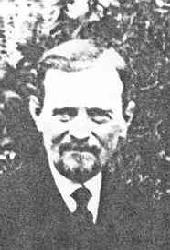
The three challenging addresses on this page
- – 'Suffering and Glory',
'The House of God' and
'The Holy City Jerusalem and Its Political Influence in the Coming Day' –
- regrettably, are all of Mr. Champney's ministry available at this time.
G.A.R.
Page Top
| SUFFERING AND GLORY |
|---|
Luke 9: 18-36; Romans 8: 17-19;
1 Peter 4: 12-16; 2 Timothy 3: 10-12; 4: 6-8
London, October 1914
|
|---|
I have read these passages because they bring out very clearly that the Christian's path here is one of suffering, but it leads to glory.
- But coronation is preceded by crucifixion, or, to use very familiar words, 'No cross, no crown'.
- The Lord had all along been preparing His disciples for the announcement He makes as given in Luke 9. But never before had He fully unfolded what is here brought out.
- The disciples had, however, been daily more and more impressed with His competency to take up the ruined or falling interest of Israel, and to set them free from the dominion of the Romans and deliver them from all evil, and, as Messiah, to reign over them and bring in the long-promised kingdom.
- But, strange to say, Jesus is about to tell them that their hopes for the immediate setting up of the kingdom in power and glory, and the removal of the outward pressure and evil could not yet come to pass.
- Before Jesus unfolds this to them, we find Him alone praying. His disciples being with Him He asks them,
- "Who do the crowds say that I am?"
- They answered to the effect that there were different opinions. Upon this Jesus said to them,
- "But ye, who do ye say that I am?"
- and Peter answers with the greatest decision and certainty,
The disciples had no question about it at all. It was evident to them that He was the long-looked-for Christ, and that He had all the power needed to deliver man and to set up the kingdom over Israel.
- But to their astonishment they are strictly charged and commanded not to tell any man that He was the Christ! Jesus takes another title – that of Son of man – and says,
- "The Son of man must suffer".
- Instead of showing them that their hopes for earthly blessing were to be immediately realised, He closes such hopes for the moment, and says He must suffer!
- He takes a grand title – that of Son of man – a title connected with far more glory than that of Messiah, Israel's King.
- Psalm 8, written long before Christ came, shows it is connected with universal dominion and glory, but that first He would be made some little inferior to angels. Hebrews 2: 9 shows that it was
- "on account of the suffering of death",
- but that it leads to all things being put under His feet in the coming day.
- He told the disciples, not simply that He would suffer, but that He must – there was no way of avoiding it if men were to be saved. He must die for them. So He says,
- "The Son of man must suffer many things, and be rejected of the elders and chief priests and scribes, and be killed, and the third day be raised up".
- The last words, however, showed that the suffering was not to end in death, but in resurrection and glory, for He would be raised again, yea, He must – God's glory demanded it – be raised again the third day.
- What an eye-opener this was for the disciples! They naturally would have looked for the elders and chief priests – the leaders of religion – to receive Christ, but no, they would reject Him and kill Him!
- But for their encouragement, He shows that the elders, etc., would not succeed in their plot to get rid of Him, for the third day He must rise again!
Then He shows them that, if they would follow Him, their path also would be one of suffering, for He said to them all,
- "If any one will come after me, let him deny himself and take up his cross daily and follow me"
- Now this is no light thing. We may deny ourselves hosts of pleasures, etc., and yet not deny ourselves. To let self go is the last thing we want to do.
- It means real suffering to refuse ourselves, but we cannot follow Christ truly unless we deny ourselves. Yea, more, for the Lord added,
- "and take up his cross daily and follow me".
- Christ took up His cross willingly for the glory of God and in His love for us, that He might die for us, and we are called to follow Him.
- But we cannot take up His cross – we are not called to do so, nor could we. We are called to take up our own. Each man has his own cross to take up.
- Men were not crucified on the same tree. Each had a tree, or cross, to himself, and had to carry it to the place of crucifixion. Your cross is not mine, nor mine yours, but every disciple has to carry his own cross. This must mean suffering and shame here, and even moral death.
- If a man was seen carrying his cross, every one knew that he was on the way to be crucified, and that he was considered not fit to live. This is the place the world will give us if we are true in following Christ, and we have ourselves also to take that place as being in ourselves not fit to live.
- The cross represents the end of man. That is why we read in Romans 6: 6 –
- This we are called to do practically every day – not to spare the flesh, but to deny ourselves, and that without anybody knowing it perhaps in this world.
- If we sought to get a name for it, and to be thought something of for our self-sacrifice or self-denial, it would not any longer be carrying our cross, but the very opposite.
- It is a great test for us to do this every day. A man might be willing to do some heroic deed for Christ once and for all, and perhaps lay down his life, but to do this daily, week by week and year by year, for many a long year, this is where the test comes in.
- But the Lord is sufficient for us and can enable us to do that which He encourages us and bids us to do. He said, moreover, that
- "whosoever shall desire to save his life shall lose it, but whosoever shall lose his life for my sake, he shall save it".
- He would find life in a far better way, above and beyond this world, and he would gain far more than all that could be got in this world.
- Besides, in what way would a man be advantaged if he should gain the whole world and lose himself or be cast away? For in any case he would lose the whole world after gaining it, for he could not keep it, nor take it with him when he dies.
Then to help us and encourage us He speaks of His coming in glory, and that in a threefold character of glory, and shows how serious it would be if He had to be ashamed of us then.
- The Lord does not want to have to be ashamed of His people. It is a delight to Him to be able to say, "Well done!" He does not want us to receive some mark of shame and disapproval on His part at that day, but rather a mark of approval.
- So in His love and care for us He warns us beforehand, and speaks of the threefold glory of His coming.
First, He would come in the glory of the Son of man. This glory is opened out in Daniel 7: 9-10, where the thrones were set, that is, cushions were thrown down for the monarch to sit upon, and
- "The Ancient of days did sit … thousand thousands ministered unto him, and ten thousand times ten thousand stood before him".
- Then, after the destruction of "the beast" – that is, the Latin empire in its last form – a Man is brought near before Him, and everlasting dominion is given to Him, a kingdom that can never pass away. For we read,
- "Behold, there came with the clouds of heaven one like a son of man, and he came up even to the Ancient of days, and they brought him near before him.
"And there was given him dominion, and glory, and a kingdom, that all people, nations, and languages should serve him: his dominion is an everlasting dominion, which shall not pass away, and his kingdom that which shall not be destroyed",
verses 13-14.
- We find, too, in the same chapter that "the saints of the most high places", verse 25, the heavenly saints who died in faith, and who served Him faithfully here, take the kingdom with Him and reign with Him then.
- It is needless to say, that the Son of man of Daniel 7, to whom is given, by the Ancient of days, that vast dominion, is the despised Jesus of Nazareth whom we find in Luke 9 quietly opening out His glorious future to His dear disciples.
- How rightly glad, then, should we be at that day if He were to own us when coming in such amazing glory! But how sad if we were passed by in shame, or if we had to receive some mark of disapproval, or if He could not own us at all as belonging to Him!
- Let us then carefully consider those words, "ashamed of me and of my words". Many perhaps would not exactly be ashamed of Him, but are ashamed of His words.
- Perhaps we slight what He says about forgiving our brother, or about fighting for our rights, or about not being of the world, or about taking up our cross and denying ourselves. If so, we shall find He will have to show His disapproval of us in that day when His approval and glory will be found to be of eternal value.
He will come, too, in the glory of His Father. This is even a greater glory than that of having universal dominion as Son of man, the last Emperor of the world, if I may so speak of Him.
- He is more than universal Ruler, He is the Son and is the object of the Father's love and delight. What He is with the Father is even more than what He is as having universal dominion.
- What an honour to be associated with the Son of God! Yea, even to be brought, through Him, into the same blessed relationship with God as His dear sons, so that the world will know at that day that God has loved us as He has loved His Son! Ought not such a thought to affect us deeply?
Again, there is a third glory, for He comes in the glory of the holy angels
- Now Christ Himself it was that made those holy angels, for the direct work of creation is attributed in Scripture to the Son, the second Person of the Trinity. Jesus is not only Man, He is God, and He made the holy angels to do His will and carry out His pleasure, and they are all at His command, and they delight to serve Him.
- Think, then, what a magnificent escort for the Son of man! For He will come accompanied by His mighty angels, whose power is far greater than that of men, and all ready to serve Him! We read of one angel slaying an army of one hundred and eighty-five thousand men!
- What resistance, then, could the world make against Christ establishing His kingdom and reigning over the whole world? He will carry all before Him, and men who do not want His kingdom will be cut off and perish.
- What an encouragement, then, to suffer with Him now, if we are to reign with Him then, and have some distinction, it may be, in a kingdom that will be so glorious that all other kingdoms in the past will be absolutely forgotten or sink into the shade.
- If, through grace, we are God's children, heirs too of God and joint-heirs with Christ, as we read in Romans 8, we must not forget what follows –
But to further encourage His disciples, Jesus said that some of them should not taste of death till they saw the kingdom of God. And accordingly, eight days later, He took three of them up into a mountain.
- We read, He went up to pray – an expression of dependence on God, for there never was a man so dependent as Christ, and He it is who will bring in universal happiness for this world.
- It will not be brought in by the independence of the rulers of this world, nor by the independence and will of the people, but by the praying and dependent Man, the Lord Jesus Christ.
- Suddenly the praying Man is shining like the sun, Matthew 17: 2, and "his raiment white and effulgent".
- There were also two men with Him and intimate with Him, who "talked with him". They were Moses and Elias, and they appeared in glory and spoke, not of Christ's glorious kingdom, but
- "of his departure which he was about to accomplish in Jerusalem"
- that is, of His exit or exodus, the glorious way He would leave this world by Calvary's cross. For what men look upon only as shame and weakness – the death of Christ – was really a moment of supreme moral glory.
- For He shone out in those closing moments more gloriously than ever before, in His grace and love to man, and in His devotedness to the will of God in giving Himself a sacrifice for sin, and in expressing fully the love of God to man.
- He won the battle of Calvary, not at the cost of the blood of thousands, but only of One – of Himself, the Son of the living God, so that through the shedding of His precious blood we might be cleansed from all sin, and might never perish, but be eternally saved.
- Moses and Elijah also appearing in glory, not only expressed that the law and the prophets of the Old Testament were fulfilled and made good in Christ's glorious kingdom, and on the ground of His death,
- but they are also figures of the saints who have died in faith and of the saints who are, as Elijah was, taken up without dying, when Christ comes for His own.
- Then we shall be caught up to meet the Lord, together with all those who have fallen asleep through Him; in other words, with all those who have died in faith, and we shall all come with Him in glory
- Thus Moses and Elijah are a picture of the heavenly company in glory with Christ, while the three disciples represent the earthly company who will enjoy the reign of Christ over the earth in the coming day.
- What a day that will be when the praying Man, our Lord Jesus Christ, comes in power and majesty and rules the earth for God, and when all the heavenly saints come in glory with Him!
But there is a still greater thing than the manifested glory of the kingdom.
- We read that as Moses and Elijah departed, there came a cloud, a bright cloud, Matthew 17: 5, and overshadowed them, and that the disciples were afraid as they entered into the cloud, and there came a voice out of the cloud, saying,
- "This is my beloved Son: hear him".
- That cloud was the cloud of "the excellent glory", 2 Peter 1: 17, and was the Father's dwelling-place, the Father's house.
- It represents the brightest portion and privilege that we can have – namely, to be associated with God's own Son in the Father's presence, before His face, to know and enjoy His love as revealed to us by His Son. This is why the voice out of the cloud said:
- "This is my beloved Son: hear Him".
- As we listen to Christ, and learn of Him, all fear goes, and He unfolds to us the place we have in the Father's bosom of love, and in the Father's house. Only the Son could reveal that love.
- How foolish then was Peter, or ignorant, to put, as it were, Christ on the same level as Moses and Elias, and wish to make three tabernacles, etc. But he soon found his mistake when Moses and Elias disappear, and they find themselves overshadowed by the cloud of glory, and hear the Father's voice calling attention to His Son.
- After that "they saw no one but Jesus alone", Matthew 17: 8.
- Surely, beloved, it is worthwhile suffering for Christ here, in view of such glorious privileges!
- It is nothing new that saints have to suffer. They have always had to suffer from the very beginning of time. And they suffered for many and various reasons. The Old Testament Scriptures reveal many kinds of suffering.
Abel is the first case. Abel suffered for righteousness at the hands of Cain, who hated him and slew him. He slew him
- "because his works were wicked, and those of his brother righteous", 1 John 3: 12.
- Abel owned by his sacrifice that death was on man, and therefore he slew a lamb and offered it to God, and was accepted. He was righteous and suffered from Cain whose works were evil.
Then we have Enoch, who walked with God three hundred years, and who prophesied of the Lord coming
- "amidst his holy myriads, to execute judgment against all; and to convict all the ungodly of them of all their works of ungodliness, which they have wrought ungodlily, and of all the hard things which ungodly sinners have spoken against him", Jude 14-15.
- It is evident that Enoch suffered because of his godliness or piety. Piety brings God into everything in daily life, and Enoch lived godlily in the midst of an ungodly world, and God owned him by taking him away without his passing through death.
- "He was not, for God took him", Genesis 5: 24.
Then we come to Noah – he built an ark for the saving of his house, believing that God would drown the world by a deluge.
- Noah suffered because he acted under the influence of things not seen as yet, for before the flood the earth was watered by a mist rising from the earth, Genesis 2: 6. It is not recorded that there was any rain before the flood.
- For one hundred and twenty years he testified that God would drown the world, and as Peter speaks of scoffers in the last days who say,
- "Where is the promise of his coming?", 2 Peter 3: 4,
- so no doubt in those early days, before the flood came, Noah had to suffer from scoffers and bear any amount of ridicule.
- But the flood did come – and swept them all away.
- We too must expect suffering in this world if we live and are moved by the light of the world to come and by the
- "things which eye has not seen, and ear not heard … but God has revealed to us by his Spirit", 1 Corinthians 2: 9-10.
- The world vainly hopes it will continue for ever, and we must expect their ridicule if we maintain that God is going to judge it and bring in a world of life and glory to take its place.
Then Abraham had to suffer in leaving his country, kith and kin, in obedience to the call of the God of glory who appeared to him.
- For one hundred years he was a pilgrim and a stranger in the land of Canaan, with no politics in this world – no patriotism – for he looked for a city which had foundations and for a country which was heavenly, and rejoiced to see Christ's day.
- How often we allow natural relationships or false ideas of patriotism to prevent us following the Lord. But if we answer to the call and live as belonging to another country, we shall have to suffer here.
- What wonderful compensation, however, when we find ourselves part of the holy city, the heavenly Jerusalem, which descends out of heaven from God for the blessing of all the nations!
Next, Joseph suffered from his brethren.
- He suffered for several reasons – because his father loved him, and because of his coat of many colours, and because of his visions and revelations, and also because he exposed their evil ways.
- So the Christian who enters more than others into the Father's love, or who comes out distinctly in the beautiful moral clothing of Christ, with its many colours or varied graces, is often hated or disliked by his fellow Christian, who knows little of that love, and does not seek to know it, though the same love is for him too, and whose clothing is more that of the world than of the beauty of Christ.
- He is hated too by the world which has always shown great antipathy to the chosen objects of the Father's love and care, and who are morally altogether different from themselves.
- Then, too, Christians have to suffer because of the wonderful revelations of God's purposes of love, which the Spirit reveals to those who love God,
- and again they often have to suffer, not only because, by their walk they convict the world, but because their godliness is a rebuke to their brethren who walk carelessly, and hand in glove with the world.
- Joseph also suffered under a false charge when sold into Egypt, and he was imprisoned, though perfectly innocent, and was laid in irons until what God had said came to pass, and the king sent and let him go free and exalted him to be the chief ruler in the land.
- Perhaps to be falsely accused and misunderstood in this world is one of the hardest kinds of suffering;
- but let us remember the time is fast approaching when God will publicly justify His maligned people, and at the judgment-seat of Christ every one will be manifested, and no false charges will stand then, and the approved will be publicly manifested.
Then again, Moses suffered for identifying himself with the despised people of God, the children of Israel, when they were still in bondage under Pharaoh.
- He might have remained great in Pharaoh's court and have been the patron of the Israelites, but he chose
- "rather to suffer affliction along with the people of God than to have the temporary pleasure of sin; esteeming the reproach of the Christ greater riches than the treasures of Egypt, for he had respect to the recompense", Hebrews 11: 25-26.
- It was the first time in Scripture we have a people who were the people of God, and Moses had the courage to leave all and identify himself with them.
- Now this today means real suffering if we identify ourselves with the Lord's people, however much they are despised and however poor, or of what nation they may be.
- But they will not always be poor and despised. Very soon now they will be seen in the glory of Christ and shining like the sun, and will be by far the most exalted people in the whole universe, and they will have the highest place in heaven of all God's creatures.
- Do not then let us now be ashamed to own and identify ourselves with those who love the Lord, and who are bound together in true and holy fellowship, waiting for Christ.
- Again, Moses also suffered because he was the servant of the Lord. He is a striking figure of Christ and was a very remarkable servant.
- He brought Israel out of Egypt and served them forty years in the wilderness. His was a very difficult service and cost him much suffering.
- At one time, in his faithfulness, he had to stand alone for God against the whole vast congregation of Israel. But God sustained him till the end, and Luke 9 shows him in glory in the coming day.
- So, too, all who serve the Lord here must expect to suffer, and sometimes even to stand alone, but remember,
- "If any one serve me, him shall the Father honour", John 12: 26.
Again, Caleb and Joshua suffered because they brought a good report of the land,
- the whole congregation of Israel, six hundred thousand men, spoke of stoning them, when the glory of the Lord interfered, and the six hundred thousand had to perish in the wilderness, and the two faithful witnesses alone survived to go with the children of Israel into the land forty years later.
- So, too, if we are faithful in our witness and testimony and encourage one another to take a present possession, in the power of the Spirit, of what God has purposed for us, as His own dear sons and as belonging to heaven, we shall have to suffer at the hands of those who, as it were, despise the pleasant land.
Again, David suffered because he was the Lord's anointed.
- Saul was the people's choice, but David was chosen of the Lord; he had, however, to suffer many a long day, and his people with him, before he eventually came to the throne.
- But they were happier in the cave than Saul and Jonathan were in the palace, for God was with them.
- So all who are anointed with the Holy Spirit, the Spirit of Christ, are sure to suffer in this world. The world does not like that Spirit. It is too blessed for them.
- "All indeed who desire to live piously in Christ Jesus will be persecuted", 2 Timothy 3: 12,
- but relief will soon come, and if we suffer with Him, we shall reign with Him.
Then, too, the prophets suffered for having the word of God.
- They had a word from God, and it reached the conscience and heart of man and exposed him. It also brought God to him, and called for repentance, and testified of Christ as the only hope for man.
- But they all had to suffer for their testimony.
- "Take as an example, brethren, of suffering and having patience, the prophets, who have spoken in the name of the Lord", James 5: 10.
- So today, if any one now has anything at all of a prophetic gift, in the way of bringing God to people, and thus causing the secrets of the heart to be made manifest, however small his service in this way, whether it were a brother or a sister, he would have to suffer.
- Sisters may have some prophetic gift, but if so, they have to exercise it in a way suitable to a woman. Many a mother has in this way brought up her family for the testimony.
- But whoever at any time has a word from the Lord, even in a little way, he must expect to suffer if he is faithful to what the Lord gives. The prophets took the side of God in a day when God was dishonoured and forgotten, and this meant suffering.
The last character of suffering that I have to mention from the Old Testament is found in the Book of Daniel.
- Daniel and his three friends suffered from Babylon. They refused the defiling food of Babylon.
- Also Shadrach, Meshach and Abed-nego refused to bow down to the golden image and join in the world's united religion. They were thrown into the fiery furnace for it, but God delivered them and publicly honoured them.
- Daniel, too, refused to pray to man instead of God, when all agreed to displace God and set up the king in His stead. It cost Daniel the den of lions. But the living God closed their mouths and vindicated His servant before the world.
- What an encouragement all this is for us, to refuse the modern Babylon, the proud system of this world's glory, which is quickly approaching its end!
Then in the New Testament the leading sufferer is Christ. He suffered beyond all men.
- He suffered because of what He was – absolute blessedness embodied in a Man, the full expression of God.
- Also He suffered in making atonement and in bearing the wrath of God for us as the sin-offering. He, of course, was quite alone in this.
- Then, too, He suffered for all the reasons I have mentioned above. He is the expression of all the varied sufferings the saints have been called upon to endure, for He is the Leader.
- He was the greatest of all sufferers, and consequently He leads the way in glory, as far beyond all. The prophets all united in testifying to the sufferings of Christ and the glory that should follow.
But in a similar way we are called to suffer too. All who have Christ's Spirit are called to suffer for Christ's sake.
- Christian suffering is more intense than anything known in the Old Testament. It is more inward than outward, more in spirit than in flesh, though there is also often the outward as well.
- But, "If ye are reproached in the name of Christ, blessed are ye; for the Spirit of glory and the Spirit of God rests upon you", 1 Peter 4: 14, and
- "the God of all grace who has called you to his eternal glory in Christ Jesus, when ye have suffered for a little while, himself shall make perfect, stablish, strengthen, ground", 1 Peter 5: 10.
- Let us take care we have nothing to do with suffering as an evildoer, etc., but only as a Christian, and when the crowning day shall come how great will be our joy and our reward.
For how will recompense His smile
The sufferings of this "little while!"
May the Lord keep us faithful till then, so that we may receive the
- which the Lord will give at that day, not only to Paul, but
- "also to all who love his appearing", 2 Timothy 4: 8,
- for His name's sake!
Page Top Article Top
| THE HOUSE OF GOD |
|---|
Romans 8: 18-24, 29; 1 Timothy 2: 1-10; 3: 14-16
Belfast, April 1929
|
|---|
I want to say a few words this evening upon the house of God, because of its great importance at the present moment.
- Dear brethren, the house of God is here, for God is here in His sons. All who have the Spirit dwelling in them are amongst the sons of God who make a dwelling – place for God here where He can put Himself in touch with men;
- where what He is can be expressed and an immense service be carried on, because His representatives are here.
- The day we live in is a day of small things outwardly; we Christians are only a little handful compared to the vast number of unbelievers in Christendom today, even counting all saints wherever they may be – we know not where they are, He knows them, He knows every one that belongs to God.
- There is not a son unknown to Him, and it is a pity when a man has been taken up in this way and yet does not enter into the character of blessing God has given him. We must help such, and to help them, we must pray.
I read that passage in Timothy to show you one great characteristic of the house of God:
- it is the house of prayer, and the house of prayer for all nations. We are meant to think of every one.
- God works where He pleases, He is not tied to this place or that, and as long as we are here God would have us make it manifest that God is not the enemy of man, but the very reverse, that He would have all men to be saved, and to come to the knowledge of the truth.
- That is what is in His mind for all men. The Lord Jesus could not have a different mind from that, and so He gave Himself a ransom for all. It is a wonderful thought: He gave Himself as 'a propitiatory ransom' (Greek antilutron) in behalf of all.
- Any one may have it, and, when he has it, he finds he has a substitute; he finds that what the Lord Jesus did was actually to take his cause up before God and clear him for ever.
- But as a propitiatory ransom, He has given Himself in behalf of (Greek huper) all. Scripture does not say 'instead of all'.
- As to the actual result, the ransom was instead of (Greek anti) many.
- When you come to the substitutionary side, another thought is expressed by the Spirit – He came "to give his life a ransom for" [instead of] "many";
- but when you think of the other side, the universal side, this grand propitiatory ransom has been so given that any one may come and take advantage of it, and whoever does so will find himself in the blessing.
Do not let us have too limited thoughts, therefore, in preaching the gospel, and in moving amongst men.
- We have nothing whatever to do with God's election in the way of settling whom He has chosen and whom He has not.
- Nor has He so chosen as to make it useless for us to evangelise universally.
- He has kept these secrets in His own bosom – how the two dovetail He only knows, but they do.
- So there is no one, however rough, however unlikely, that you may not evangelise and encourage. You are here for that purpose.
Now what is a son? We never can solve that question without looking at Christ. Christ came here and set forth in His own Person in becoming man, what it is to God to have a Son. But He did not remain alone.
- God had thoughts in eternity which He intended to work out in time, and carry through into the future eternity. He had the thought of this One becoming man, and being found here in manhood, and that blessed Man in the most holy conceivable liberty with God – and far more than simple liberty, with the holy privilege of constant approach to God.
- But along with that is the thought of being His delight, for God has in Him His delight. In the whole creation He could not find such delight, but He found it in His Son.
- But His thoughts could not stop there. He had to be made perfect; that is, reach the full thought of God as to man through sufferings. Why had He to suffer? So that God might bring many sons to glory.
- He would only have that one Son otherwise; but that He might bring many sons to glory, He made the Leader of their salvation perfect through sufferings. Untold sufferings! No one could gauge those sufferings but God Himself; and He so constituted the holy body which He prepared for Him, that He could die.
- He is the same Person now, but in a new condition; in the condition which He now is in, death is impossible.
- But He was once here in flesh – God's dear Son was in touch with this groaning creation; and you may be sure nobody ever groaned like Christ. You may be sure He had His own wonderful way of expressing the groans of this poor unhappy world to God.
- You know what the answer will be – we will look at that presently, perhaps – but of course the first thought was the pleasure of God found in Him; and then that God should make Him perfect through sufferings, in order that He might have many like Him.
Now that is our study – dear brethren, young and old – Christ is our study.
- What is He really like? What was He like? What kind of life did He live? What were His thoughts? What were His ways? What was His spirit? Thank God, we have the four gospels that we may learn these things, and the Holy Spirit to open them out.
- Of course, at the time God alone saw His true beauty, and He did so fully and perfectly. What satisfaction He brought to God!
- How wonderful to think of Him in the poorest circumstances, and yet always content; not a murmur ever escaping His lips from first to last. Blessed Lord! What a Son God had in Him, had He not?
- Then how trustworthy He was! There was nothing unreal or false in Him like we find in ourselves.
I might have turned to the story of Jacob for the thought of the house of God, because that side is needful.
- It was long before he really came to Bethel so as to enjoy the thought of God's dwelling. He got the light of it the first night he slept away from home, and said,
- "How dreadful is this place", Genesis 28: 17.
- He was not then at home in it, but he determined that, if God did this and that, then his father's God and his grandfather's God should be his God; but it does not speak of God being his God at that time.
- Then he would build an altar in that spot and so on. It was many a long year before he came to it, and he only came to it after great disgrace had come upon his house, but he did come to it after the idols were put away.
- Then when he did come to it, oh! how God blessed him, and how grandly he came out for God as Israel, a prince of God!
Now that history is more or less true of all of us, in regard to our arriving at the thought of God for us, as to our being His house.
- We have to learn in Jacob that we need the same God, the God of Jacob, for our refuge.
- Shifty, deceitful man as he was, going his own way to get things, there was nothing very much in his life at that time to admire, and many of us would say, 'Nor is there in mine'.
- The dear younger brethren may think the older brethren can look back with great satisfaction on their lives. I am afraid many of us can look back and can see Jacob pretty clearly, when we consider our past lives; but yet not without hope, for we know that God's thought for us is Bethel, the house of God.
- He would have us find ourselves at home where God dwells amongst His sons, and realise that we are His sons.
- Oh, it is very fine to arrive at the thoughts of God! Think now, God had these thoughts, about having many sons, before the world was; then time came in and the fall of man, and then the entry of Jesus into the world:
- "When the fulness of the time was come, God sent forth his Son, come of woman, come under law, that he might redeem those under law, that we might receive sonship", Galatians 4: 4-5
- Now you see what God had in His mind, that there should be many like His dear Son – that is what He came for. Is it possible that anyone could be a pleasure to God, as Jesus was? Yes, thank God, in our measure we may be – there was no measure with Him, of course.
But God is moving today, and the present moment, the present earth, is the grand ground for God's work.
- All over the world God is working, doing a magnificent work in the soul of every believer, not only preparing this one and that one so that he can have the Spirit, but when the Spirit has come, moving their hearts in regard to Christ.
- The Holy Spirit knows that He is the Spirit of sonship, and nothing in me that is not the spirit of a son will ever do for the Holy Spirit.
- He must reduce all that is contrary in me, He must break it down. He must make me refuse this and that; He will not have me in any way different from what a son should be; that is surely the work of the Spirit of God at the present moment – a most important work.
- Many of us wish we had given more attention early in life to that word,
- "Do not grieve the Holy Spirit of God, with which ye have been sealed for the day of redemption", Ephesians 4: 30.
- The Spirit is very easily grieved – our foolish ways, our devoting ourselves to pleasure when others are devoting themselves to the Lord, and our allowing what is false and unreal –
- all that is a grief to the Spirit, and it results in the lengthening out of the time before we really come out as the sons of God.
- The sons of God, if they really come out in truthfulness here, come out in the likeness of Christ. That is why I spoke of prayer; I go back to it again now.
The house of God is the house of prayer, and men are encouraged to pray everywhere. A man may pray publicly everywhere. The woman is to be more quiet in that way.
- The brother can pray publicly in the meeting; the sister can follow the prayer, make it her own, and be in the spirit of prayer the whole time.
- No one can say what an immense advantage a silent sister is when she is in the spirit of prayer, when the ministry is given or when the gospel is being preached, yea, and when we are together in a prayer meeting.
- Brothers little know the help they get from prayerful sisters, though no sound is heard, except the 'Amen' they are encouraged to say to the brothers' prayers. Now, seeing things are so, do let us be more earnest in prayer.
- Think of the vast numbers of young people there are on the way to fellowship. What prevents them seeking fellowship? They feel their own weakness and sinfulness; many of them say, 'Fellowship is not for me; I am such a poor feeble creature'.
- They need our prayers. Suppose we took to heart more the great temptations that the youthful amongst us are exposed to specially: who knows what victories might be the result for these dear young ones!
- How they would get delivered earlier, and how gladly they would come to us and say, 'I too would like to break bread! I feel the Lord would have me so to do'.
- Because, when you are free in spirit, you very soon find out that the Lord wants you to be with others who are free, and to remember Him in His death.
So the thought of prayer is a very far-reaching one, is it not, brethren?
- We may pray for the gospel and for the saints in all lands, the vast majority of whom, not walking with us, are greatly hindered by their surroundings and associations. Yet the Lord has them where we might not expect to find them.
- It was delightful to me to find the other day a Catholic, to whom I spoke of how well known every true Catholic was in heaven – every Catholic that truly trusts Jesus and believes in Him and answers to His love, all such, I said, are well known in heaven.
- His reply was, 'Yes, there is only Christ'.
- Thus, whatever the darkness of his surroundings, he had this light, that there was no one for him really like Christ, and evidently he knew Him. Yes, and you may be sure there are many such hidden away, and we ought to find them. Is it not partly through our negligence that we do not find them?
- I know how negligent I have been, and it is sad, because, you see, I cannot begin life over again. Dear younger ones, beware of negligence! You little know what opportunities you have, and if the sons of God are in a place, it is to make God known there. God dwells in His house.
The sisters have a wonderful influence by their quiet demeanour, so different from the women of the world; by their quiet way of dressing, and so on, such a contrast to the world.
- It is not that they wish to dress so as to call attention to themselves, but they are suitably attired, and their quiet spirit has a great influence amongst the neighbours around, but, above all, in their own house.
- The Lord can use such in the home in a wonderful way. What a help such are to their husbands, to their children!
- How remarkably the Lord has given to the woman a special influence over the children; so that they are early taught the things of Christ. Almost the first thing they hear is the name 'Jesus', as the mother, with the child in her arms, constantly turns to the Lord Jesus.
- That affects a child very early, and in that way the children get the immense advantage of those who are in the love of God, who are the sons of God, who are in the house of God.
Then I would speak of the goodness of His house – oh, how wide the subject is, is it not? May the Lord guide me as to what He would specially call attention to.
- The kindest people ever known have been the sons of God. I learn that in Christ Himself, nobody ever was so kind as Christ.
- He brought kindness here amongst men in a way never known before in a man, and then He left it here in the Spirit, so that you and I might be kind to the most miserable objects, kind to anyone, but specially so to the household of faith.
- "Let us do good towards all, and specially towards those of the household of faith", Galatians 6: 10.
- Many a poor miserable house has opened to the gospel, owing to the thoughtful act of some kind saint who, as a true son of God, entered that house and let them know that God is good, in a practical way, and that God is kind.
- Now this extension, so to speak, of God in the world is most important. I do hope that my brethren in this country – I would like to encourage you, we all would – will see the immense advantage of God's sons being set here, but we must be careful that we do not belie God.
- We do not learn in Jesus anything that belies God – the very opposite; His beautiful transparent spirit was most evident –
- "Altogether that which I also say to you", John 8: 25.
Now nothing but that will do for you or me. The Holy Spirit is as transparent as Christ, and, if He has His way with me, He will allow nothing that is shady, nothing that is not truly transparent,
- because now is the time when not only the sons are being prepared for glory, but the holy city is being built.
- You know how transparency marks specially that holy city – transparent men and women, transparent young people even.
- How one knows one can trust the work of God even a youth who is governed by the Spirit, you know he will not tell a lie, you know he will not deceive you.
- You can trust even a child like that when the Spirit is there, and that is really what brings out what the child is; you find that, though brought up first of all under the holy influence of others, he has gone further than that,
- he himself becomes like that blessed One, and there is a holiness, a separation, marking him, there is a reality manifest, even in a child.
- How blessed it is that the work of God is going on in that way!
Now, God will do nothing in heaven in the way of fitting us to be His sons;
- all the fitting morally for sonship is done here, for He has taken us up in grace because we are sons in the purpose and gift of God.
- He has given us His Spirit, but then He moves, breaking down everything that is contrary to Christ and putting Christ in instead.
- There was one dear man in whom the full work of God was seen more quickly than in others. I refer to the apostle Paul:
- "God … was pleased to reveal his Son in me, that I may announce him as glad tidings among the nations", Galatians 1: 15, 16
- – a man came amongst the nations who was in a most remarkable way the reflex of Christ Himself. His ways, his demeanour, everything about him, commanded confidence, and men listened to him when they would not listen to others.
- It was the marvellous power of the Spirit in which he lived and moved amongst men; he was a very son; nobody ought to have been astonished if in one moment he had been clothed with the glory of Christ, his body changed – at any moment he was ready for it.
- Are we? Is the work of God complete in us? Well, you may think it strange, but I am glad I am not dead, for I do feel the Lord will do more in me than He has done yet. I desire that – you do too.
- The Holy Spirit will finish the work, but this earth is the place for the work of God. It is very fine what He is doing, and in that way we become representative of God.
- "The love of God is shed abroad in our hearts by the Holy Spirit", Romans 5: 5,
- and we learn to answer to that love. We love Him and we learn to love one another, and when we do, I think we get to that thought,
- "Arise, go up to Bethel, and dwell there", Genesis 35: 1.
- We know the house of God as we never knew it before. God dwells in us, and we in God.
Is that not a lovely house aspect? When love has its way, how different we are in all our ways with one another; when we dwell in love, God can dwell in us, and does.
- In that way, though
- "No one has seen God at any time", John 1: 18,
- God becomes manifest through the dear brethren who walk in love.
- So, dear brethren, get the thought that God must have blessed beings on earth at this present time, His sons. He must be able to delight in us, He must find us delighting in Him. He would find us near Him every morning, and then going out from His presence to express God in the world.
- Think of all the sons of God in Ireland going in to God every morning, and then coming out to tell poor Ireland what God is! Who can tell what the result of that would be here, or in any country over the world?
- That is what God would encourage us to do, because His house is here, and we are learning what characterises it; what righteousness is; what holiness is; and what love is. We learn to be right, we get delivered from the confusion and we come into a house of peace.
- Wonderful peace belongs to God's house! The peace of God is there, the sons of God learn to walk in peace, to live in peace, and that is a wonderful testimony to the world around.
You may wonder why I read all that in Romans 8, but it is because of what is coming in.
- The day is coming when the sons of God will be revealed; yes, the sons of God are to be revealed. What will be the effect of the revelation? Every groan will be hushed, creation will groan no more.
- It "expects the revelation of the sons of God".
- Could not some of those groans be hushed now? Yes, if we were more truly sons. If we were in great power here as sons of God, what comfort we should bring to those around! Many a groan would be hushed, many a sigh would get its answer in the beautiful way in which a son of God moves and acts here amongst men.
- But this world is the sphere of operations; God is preparing you and me for that grand future when we shall come out of heaven to hush the groans of this troubled world. We shall soon come to it.
- When the world has come to it that it can live no more, when the state of things after the rapture of the saints is so bad that there seems to be no hope, no doubt many will be awakened to groan to God to do for them what men cannot.
- Then will come out the holy city, for then will come Christ out of heaven, and very soon the misery of this world will go, and instead of a groaning creation will be a creation delighting through and through in God. What a change it will be!
Now if that is so, and it is, you see the importance of what God does in us now. Suppose there is confusion amongst us believers now, how are we going to remove the confusion in the future day?
- The assembly, as the holy city, is coming out of heaven to remove confusion, and it will do it.
- The world is a system of confusion – Babel. Do we add to the confusion by our naughty ways? May God deliver us if anything like that is amongst us. May God come in for every saint, so as to produce the blessed result that He has really got a son.
- God's Son is here in us – the many sons. What does He want of us? He wants us to be free from every bit of bondage that might produce fear, to serve Him. No one ever served like a son.
- There is something very fine in seeing a business where a man has his sons with him in the business, and he has got to old age, and people are saying, 'Oh, that does not matter; his sons are like him! He was trustworthy, so are his sons'.
- If God's Son is no longer here, yet God has many sons here, and He loves to have trustworthy sons who can serve Him and be ready for any kind of work that He may give.
Then, too, there is a worshipping spirit about a son, and also the spirit of prayer. We learn that in Christ.
- We have been hearing during these meetings how Jesus was a Man of prayer, how constantly He was in prayer. That is what God looks for with us all, prayer in secret, and prayer in public.
- I am reminded of an incident. Two boys, cousins, were together for the holidays, and one day one of them suddenly opened the drawing-room door and finding his cousin there said, 'Whatever are you doing here?' 'Oh', was the reply, 'I was only having a little time with God'.
- The influence of that word told its tale, till the cousin himself delighted also in God and in the service of God.
- Those moments of private prayer – you can take them anywhere, in the fields, or anywhere that you can be alone – they are absolutely necessary if we are going to come into the thoughts of God in regard to a son.
- A son who does not pray! Is that your thought of a son? Why, it is one of the first thoughts of a son, that he prays. You learn it in Jesus.
Then think of the wonderful way in which Jesus delighted in God from moment to moment!
- Not only that God delighted in Him, but whatever the sorrow here, He had His delight in God.
- Nobody ever passed through pressure like Christ, but all through the pressure up to Calvary, and even when forsaken of God, He never gave up His delight in God, even when He cried out,
- "My God, my God, why hast thou forsaken me", Psalm 22: 1.
- If you read the psalm, you will find that the prophecy goes on to other thoughts that are not expressed in the New Testament.
- "And thou art holy, thou that dwellest amid the praises of Israel", verse 3.
- He, so to speak, appealed to God publicly to find any reason in Him for forsaking Him. Of course there was none. And it was uttered with a loud voice, in order that we might learn how holy that blessed One was.
- It was for us He suffered and was forsaken and drank to the last drop the cup of the wrath of God. It was all for us, that we might never know the wrath of God, but only enjoy His love.
May God help us to consider this great thought of the house of God here on earth and all the advantages of it.
- It is a house of piety. Pious people are not so very numerous, it may be; pious people bring God into everything; piety makes room for God.
- Nobody was so pious as Christ. No wonder He was received up in glory, for He was the embodiment of piety. God was in that blessed One, God was in all His thoughts.
- Now that is open for us; whatever our thoughts may be, there should be no thought which is unsuitable to God or which will leave Him out.
- The Lord will help us, and I believe the result will be a greater and brighter testimony all over the world in this closing moment, if we only rise up in the moral dignity that belongs to sons, all of us, as Gideon's brethren, like "the sons of a king", Judges 8: 18.
- There never has been royalty like that which is found in Christ, and in the sons that God is bringing to glory.
- Oh, the nobility that attaches to the poorest man if he is a son of God and walks accordingly! He may be breaking stones on the road, and aged – I have personally known such – and one has felt that if ever there was nobility in England, it was in those stonebreakers.
- They knew how to go in to God with an intimacy that astonished me, and they knew how to come out from God and express Him in the villages they lived in. May God help every one of us in these things, for Jesus Christ's sake.
Page Top Article Top
THE HOLY CITY JERUSALEM
AND IT POLITICAL INFLUENCE
IN THE COMING DAY |
|---|
Revelation 21: 9-10
Place and Date Unknown
|
|---|
The great political influence in the future day will be the holy city, Jerusalem, the bride of the Lamb.
- With this thought in view, I would like, with God's help, to bring before you the striking correspondence between the church, as here set forth in the symbol of the holy city, and Christ Himself, the Lamb, whose bride she is.
Christ was both inclusive and exclusive.
- He was inclusive, for He embraced everything that is blessed and beautiful. Nothing whatever was wanting in Christ that God could delight in, and which He would have man to be.
- The world could never produce a man like Christ. Christ was everything and had everything. Every moral grace and good was there, nothing was lacking. He fully expressed God and what was of God.
- The more the disciples listened to Him the more they were amazed to find how blessed He was. Each day He seemed to be more wonderful than the day before.
- In Him, God Himself was "manifested in flesh".
- Christ was the embodiment of all the good and of all the grace that is in the heart of God for man, and all that good was perfectly expressed in Man. He was entirely of God, the heavenly Man, the Man out of heaven.
On the other hand, Christ was the most exclusive Man the world has ever seen.
- He excluded everything that was of the world. He would have none of its thoughts and ideas and none of its ways.
- The world can never boast that they made that Man. And indeed the world has never made a man for God, nor can it do.
- Whatever we have learnt from the world we have to unlearn when we come to Christ, and learn of Him. His thoughts were in direct opposition to the thoughts of the world. The world never educated Christ.
- He brought all that marked Him from heaven, from God, who was the true spring of all His precious thoughts and His blessed ways.
- He was absolutely exclusive of all that is in the world – whether it was the lust of the flesh, or the lust of the eyes, or the pride of life. He was exclusive of its pride and self-importance, its ambition and its vanity.
- He would have nothing of its evil, nothing of its lying and deceiving character, nothing of its hatred, nothing of its lust. He had nothing to say to its violence nor to its corruption. He was the very opposite of all that the world is.
- Who was ever so gentle as Christ? Who was so full of love and grace? Who was so meek and lowly? Who was so dependent and confident in God? Who was so faithful? Who was so righteous and true?
- In every way He was the delight and pleasure of God, inclusive of all that is of God, but exclusive of all else. He was essentially the Holy One and the True, righteous in the midst of unrighteousness, godly in the midst of godlessness.
Naturally we do not like the idea of exclusiveness.
- But Christ was also inclusive, inclusive of all that is truly beautiful, of everything that has real value and worth, and He distributed liberally on every hand.
- He came into a world of need with grace to meet every bit of it. He had all the sweet light of God to give to man. He never lived to Himself or for Himself. He lived to God, and for God.
- Though greater than all, He came lower than any in order to serve, and to give Himself a ransom for all.
- He loved to communicate; and with the utmost patience He taught His disciples, and so He does still.
- All who are truly taught of Him become like Him, and soon will come with Him from heaven, in the character of the holy city, in order to exercise their holy political influence for the blessing of the whole world.
Now let us consider the inclusive character of the city – what she is and what she has.
Next, the city is seen "Coming down out of the heaven from God".
- The city is heavenly, and its origin is God. This is another feature of Christ. He was the heavenly Man, and He came from God, and
- "such as the heavenly one, such also the heavenly ones", 1 Corinthians 15: 48.
- What wonderful influence we should have even now, if every morning we came down, as it were, from heaven, from God, to illuminate men with the light of Christ!
- The church did so at the beginning, when all were in the power of the Holy Spirit, and individually we may do so now.
This brings out another thought – the city has the glory of God and a shining most precious.
- Her shining was "as a crystal-like jasper stone".
- Now in chapter 4 the jasper stone is descriptive of Christ, so that the church has the glory of God and the shining of Christ.
- Christ Himself is the glory of God, and was so when on earth. He revealed God fully, and God was glorified in Him.
- Christ was also the light of the world, the great light to lighten every man. Never before had there been such precious light.
- So the church will come out of heaven having the glory of God and a shining most precious. We find too in Ephesians 3:21,
- there will be glory to God "in the assembly in Christ Jesus unto all generations of the age of ages".
- The heavenly city then will bring the glory of God to the nations, and the shining of Christ. How sweetly will that light influence the whole world in the coming day, diffused, as it will be, through myriads of saints! May we have grace to do so in some measure even now!
Next, we read the city has "a great and high wall".
- The wall is for defence, and to keep out evil. It was of jasper and therefore like unto Christ, and presents that holy nature which repels instantly, and with abhorrence, everything that is not in accord with Christ.
- "Every one begotten of God does not sin, but he that has been begotten of God keeps himself, and the wicked one does not touch him", 1 John 5: 18.
- It is the saving character of the divine nature which allows no evil to penetrate.
- "Thou shalt call thy walls Salvation, and thy gates Praise", Isaiah 60: 18.
- God has called us to the fellowship of His Son Jesus Christ our Lord, and this fellowship is to keep out evil and to protect the interests of Christ down here, and to share in the wonderful privileges and blessings connected with Him.
- But it necessitates the fellowship of His death, so that we do not live in that to which Christ died. We are thus drawn together away from the world and sin, and by the Holy Spirit are bound together in holy fellowship.
- Christians need such help in a world opposed to Christ. They are not meant to walk absolutely alone, as if there were no others who love the Lord. We need the help of one another.
- Now the walls present to my mind that inner work of a defensive and protective character which is wrought in our souls by the Holy Spirit, without which fellowship would only be an empty name.
- Christ knew nothing whatever of sin, His holy nature was absolutely opposed to it. If then Christ is in us, we have a new nature which is abhorrent of evil and will have nothing to say to it.
- The wall is twelve times twelve cubits high. No sin or evil of any kind can get in, and this wall is now being built in the souls of God's people by the Holy Spirit, and can never be thrown down. It is insuperable and impregnable.
The number twelve in Scripture expresses perfection in service or administration.
- It occurs twelve times in the description of the holy city, if we count the length, breadth and height as separate twelves.
- Thus the great thought of the city is administration and service in the day to come, when she will distribute all the goodness of God for the benefit of man.
- The city has twelve gates, that is perfection in accessibility. No matter from what point you approach the city, you find a gate. It is accessible to all men.
- No one was ever so easy to approach as was Christ. And He is still. And it should be just as easy to approach us.
- The Lord teaches His people to put themselves at the service of the poorest and the most needy. None were too lowly or outcast for Christ to serve, and He encourages us to do the same.
- Often have heavily burdened souls found that they could approach christians, when they could approach no one else.
- How blessed to think we may be accessible to any poor sinner who has a need, and that it is for us to serve them and to tell them of the love of God. We are left here for that very purpose, that we may give to any and every one the sweet light of Christ, and bring the gospel within reach of all men.
- There were three gates on each of the four sides that the gospel might go out to all, and that no one might have to go away because he could not find a gate.
- In the future day the city will be within reach of the whole world, and all nations will find easy access into the good of the city and into the blessing of God.
Another thing brought before us is that at the gates were twelve angels.
- Angels, though now unseen, have a blessed service in guarding the Lord's people. So that we have here perfection in providential care.
- Angels were constantly seen in the Jewish dispensation protecting and guarding the saints, or opening prison doors, rendering some outward assistance to the Lord's earthly people. And they still serve us though unseen. Hebrews 1: 14 says:
- "Are they not all ministering spirits, sent out for service on account of those who shall inherit salvation?"
The Lord, too, says of infants,
"their angels in the heavens continually behold the face of my Father who is in the heavens", Matthew 18: 10
- We little know how the objects of God's love are cared for in this way. Angels will have their recognition in the coming day. They have, for nearly two thousand years, cared for and protected God's people providentially, and they are at the gates in the day of glory.
- They will escort the city when it descends from heaven. Though in a somewhat different way, they will serve Christ and those who are Christ's. They will ever be at the bidding of Christ.
- They are "mighty in strength, that execute his word, hearkening unto the voice of his word", Psalm 103: 20.
Further, I would notice that on the gates were inscribed the names of the twelve tribes of the sons of Israel.
- God can never forget Israel. It is from them that we got our light at the beginning of the gospel, for the first preachers were all Israelites, and so too the first converts. Also the history of the children of Israel was written for our instruction.
- Further, there will not only be a wonderful heavenly rule in the day of glory, but there will be perfection in earthly administration by means of the twelve tribes of Israel, who will occupy the first place on earth, and form twelve great nations.
- Israel will get its greatness and glory from Christ through the heavenly Jerusalem. They will be the first to get the good and blessing of the holy city, and they in turn will become a blessing to the nations, and all who bless them will be blessed.
- They will love God with all their heart, and their neighbour as themselves, and be the centre of blessing on the earth.
Again, the wall of the city has twelve foundations.
- Everything at the present moment is unstable. Men's hearts are failing them for fear. Things that seemed perfectly safe are giving way.
- But the walls of the holy city are marked by perfection in stability.
- Very soon there will be a general shaking of everything.
- "For thus saith Jehovah of hosts: Yet once, it is a little while, and I will shake the heavens, and the earth, and the sea, and the dry land; and I will shake all nations, and the desire of all nations shall come", Haggai 2: 6-7.
And this means "the removing of what is shaken, as being made, that what is not shaken may remain", Hebrews 12: 27.
- Christians receive a kingdom which cannot be shaken. The city cannot be shaken. Christ can never be overthrown, and never has been, great though the failure of our testimony has been.
- Christ still remains as precious and as faithful as ever to His people, and He is absolutely reliable.
Next we read that on the foundations are the names of the twelve apostles of the Lamb.
- The Lord entrusted the apostles with the testimony to give to us. He gave them the words which the Father gave Him, and they received them, and they have ministered them to the saints.
- Then it was given to Paul to complete the word of God. We get, therefore, here, the thought of perfection in testimony.
- Centuries have gone by, but nothing has been added to apostolic testimony. The church has been built upon it, upon their presentation of God as revealed in Christ. Nothing can be added to Paul's gospel.
- The whole light of a Saviour God was preached at the beginning, and nothing has been added to it since apostolic days.
Next, we come to the measurement of the city.
- It is a golden measure that is used, for God only can truly measure things. The measure must be divinely right.
- And it is the measure of a man. The city can never rise to Deity, it must keep its true place, and Christ as Man is the only standard of measurement according to God. There can be no exaggeration, no making great what is small, nor making small what is great.
- We get here perfection in symmetry. There is nothing which protrudes nor which offends the eye, for there was nothing uneven in Christ.
- The city is a perfect cube and absolutely and entirely the work of God. The length, breadth, and height are each twelve thousand stadia. It is far beyond any other city in measurement. It surpasses everything.
- It is God's greatest work, for it is the full setting forth of Christ.
- It is fifteen hundred miles high, whereas the wall is only about two hundred and fifty feet high. This shows that the greatest thought is not salvation, nor power to protect itself from evil, for Christ goes far beyond that.
- So, too, the city expresses a much greater thought than that of the wall. In every direction it measures twelve thousand stadia, and it sets forth the perfection of Christ. There Christ is set forth in all His greatness.
Again, the city is pure gold, like pure glass.
- Even the street of it is pure gold, as transparent glass. That is, the public highway is marked by divine righteousness and transparency.
- It is through and through what Christ was and is. There is no part dark. The saints are made righteous as He is righteous, and
- "created in truthful righteousness and holiness", Ephesians 4: 24.
Nothing less will satisfy the thought of God.
Christ, who "knew not sin he has made sin for us, that we might become God's righteousness in Him", 2 Corinthians 5: 21.
- Both publicly and privately, as the street and the inner part of the city indicate, the church becomes the full expression of the righteousness of God.
- If the question be asked – How could God put sinners in heaven? the heavenly saints will give the answer, for there will not be a trace of sin about us, or in us, then, nothing whatever to show that we had ever been sinners.
- We shall be, in Christ, the perfect expression of God's righteousness in putting sin away in the sacrifice of Christ, who was made sin for us.
- The heavenly company will not be sinners. They will be absolutely abhorrent of sin and perfectly righteous.
- We shall be entirely like Christ, and a grand proof to the universe of how completely God has put away sin in the death of Christ, and has satisfied all the claims of His righteousness.
I would say again, that great though the wall is, and high, the city is greater and higher still.
- It is blessed to be saved and to be impregnable against evil,
- but it is a greater thought that we should be in every respect like Christ and for the delight of God.
- What a wonderful day it will be when myriads of saints, in the image and likeness of Christ, reflect His glory for the blessing of the earth.
- At the present moment Christ is but feebly seen in us christians, but He is seen in no others, for none but true christians can bring the rays of a living Christ into this dark world. All others speak and act like the world, for they are of the world. Soon the whole world will be filled with His glory.
Next, we find that the foundations are adorned with twelve kinds of precious stones.
- "The first foundation, jasper; the second, sapphire; the third, chalcedony; the fourth, emerald; the fifth, sardonyx; the sixth, sardius; the seventh, chrysolite; the eighth, beryl; the ninth, topaz; the tenth, chrysoprasus; the eleventh, jacinth; the twelfth, amethyst".
- Here we have then perfection in what is precious and valuable. Everything that has moral value and worth is found there, as was the case with Christ Himself, and is still.
- Nothing whatever was wanting in Him. All grace was there, everything that God could value. There was more value in Him when down here than there was in the whole world put together.
- He presented everything that is precious in the eye of God, and that in striking contrast to the world.
- Babylon, the false church, is built upon every vile and worthless principle, on selfishness, pride and lust of all kinds, and will fall in one moment when its day of judgment comes.
- But Jerusalem, the true church, is founded in everything that is precious, as set forth in Christ, and now in those who are Christ's, at least in the measure in which they are like to Him. It will be the most valuable building in the universe, because it will resemble Christ more closely than any other.
Next we read that the twelve gates were twelve pearls.
- "Each one of the gates, respectively, was of one pearl".
- This sets forth perfection of beauty. At whichever gate you approach the city, you are struck by its amazing beauty. It is unparalleled.
- There was never such beauty seen in this world before as was seen in Christ. But it needed anointed eyes to see it.
- In the eyes of the blinded Jews there was "no beauty" that they should desire Him. There was no halo round His head, as is falsely represented in pictures.
- But there was a moral halo, an indescribable moral beauty which at once marked Him off from every other man. See, for instance, how, in contrast to the bitterest hatred round Calvary's cross, the beauty of His spirit shone out in the words:
- "Father, forgive them, for they know not what they do", Luke 23: 34.
- Similar beauty too, marked the early christians. The words of Stephen when they were stoning him to death, illustrate this:
- "Lord, lay not this sin to their charge", Acts 7: 60.
- There is a beautiful spirit about christians who live and walk under the influence of Christ, which at once attracts those who are seeking light.
- The only approach to the city to get the good and blessing of it is by means of the gates of pearl, the beautiful testimony of Christ. Christ sold all that He had to buy the church, the
"pearl of great value". Its beauty corresponds with that of Christ Himself.
Here I would notice that the throne of God and of the Lamb shall be in it.
- For this city of light and glory will be the seat of the rule and government when God and the Lamb are universally owned.
- God could never connect His rule with Babylon, where man must have a name, and which is only a system of confusion and evil.
- The holy Jerusalem is the seat of His rule, and the saints will reign with Him for ever and ever. Yea, even now, if we are right, He rules in our hearts; His throne is there. If we submit to His rule now, we shall be trusted with rule and political influence when Christ reigns.
Then, proceeding from the throne is the river, a pure river of water of life.
- It presents the living influence of the Spirit flowing far and wide and bringing life wherever it goes. Its source is God and the Lamb, but no one can say how far it flows.
- "He that will, let him take the water of life freely".
- It is found in the city, for all true christians have the Holy Spirit. It is both now and in that day the Spring and Power of all blessing, and goes out far and wide.
In the midst of the street of the city, and on either side of the river, is the tree of life, producing twelve fruits, yielding fresh fruit every month.
- The tree is Christ Himself, and the twelve fruits express perfection in delight, for Christ knows how, both now and also then, to minister unceasing fresh delight to those who feed on Him.
- What was lost through the fall of man, is given us in a far higher and more blessed way in Christ.
- Then the leaves of the tree are for the healing of the nations. It may be we shall be employed in healing the nations, by bringing to them as it were a leaf from the tree of life.
- Oh, that now, instead of hurting one another, we knew more how to heal the wounded with the grace of Christ.
Now let us look at the exclusive side. There are seven things which the city excludes.
1. First, no temple is there, no distance, nothing whatever between us and God.
- It excludes the religion of this world, which puts us at a comparative distance and would rail off God's people lest they should come too near.
- But we shall be in His immediate presence, in holy enjoyment of His love, and we may be now. The Lord God Almighty and the Lamb are the temple of it.
2. Secondly, the city has no need of the sun, nor of the moon, to shine in it.
- It is exclusive of all created lights. There is no place there for great men, nor for glorying in man.
- The Lamb is the great luminary there, diffusing the light of the glory of God.
- And instead of the kings of the earth hating the city, as they will do the false church, the great whore, Babylon the great, and destroying it, they bring their glory and honour unto it. The nations, too, greet the welcome influence of the holy city, and walk in the light of it.
3. Thirdly, "night shall not be there".
- No authority of darkness has sway there. It is all light, there is no dark spot. All there love the light and are light. Therefore the exclusive city is always open.
- "Its gates shall not be shut at all by day".
- The gates of a city are shut at night, but there is no night there, and so the gates are always open.
- The more exclusive of evil we are, the more open we shall be for the blessing of man. We must be exclusive, if we would keep the gates always open.
4. Fourthly, nothing common, nor that maketh an abomination shall enter there.
- It is impossible to connect Christ with defilement. The city must be holy and so free from defilement.
5. Fifthly, no idolatry has place there, "nor that maketh an abomination".
- God has had His witnesses against idolatry ever since the days of Abraham, and of Babel when, by means of idols, demons got man's heart instead of God.
- "Children, keep yourselves from idols", 1 John 5: 21.
- Everything that takes the place of God in our hearts is an idol. But nothing that works idolatry shall enter there.
6. Sixthly, no lie is there, nor anything that maketh a lie.
- Satan brought in the lie. Christ was the truth.
- Nothing false will the Spirit support in those who are Christ's. All must be true.
7. Lastly, no curse is there, for "no curse shall be any more".
- Sin brought in the curse, but Christ removes it.
- Christ never taught us to curse, but rather to bless. No people have ever been such a blessing as christians, and then we shall be the blessing of the nations.
- What a day that will be for His servants! They have been despised for thousands of years, but then
- they "shall serve him, and they shall see his face; and his name is on their foreheads"
- – not the name of the beast, but the name of God and of the Lamb!
Then when the millennium is over, and the new heaven and new earth are seen, the holy city, new Jerusalem, will be the tabernacle of God, and God will dwell with men for ever and ever.
- May we all be fitted now to have our part in it, for His name's sake!
Page Top Article Top