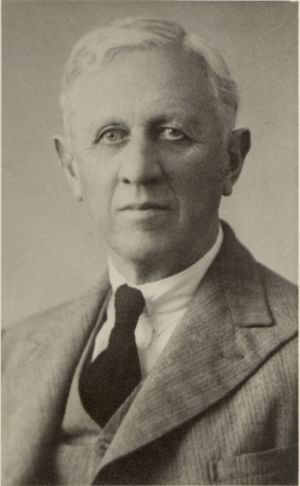
Unfortunately, personal details regarding Dr. C. C. Elliott of Cape Town, South Africa, are unavailable.
Dr. Elliott was one of the ten brothers who, along with JT and CAC, took part in the consultation meetings for the 1932 hymn book revision.
I want to present, the Lord helping me, some of His features, which come before us in those passages which I have read.
In speaking of the Lord Jesus Christ personally, the whole of Scripture lies before us. It speaks of Him from beginning to end; but I want first of all to show you how certain persons we read of were attracted to Him.
Let us take His attractiveness to some of the apostles. Peter was called from fishing to follow the Lord. You only follow a person who is attractive to you. Peter followed Him because he found something attractive in Christ.
Take a less known apostle, Thomas. What does he say?
Take all the apostles, they all followed Him in this world.
Then take Matthew, the tax-gatherer: he was a man of means. He was sitting taking in money, and money would have a great deal of attraction for him; yet the Lord only said,
John was particularly attracted to Christ. He was so attracted to Christ that he got as near Him as he could; he leaned on His breast at the supper. He had a special place in that sense, in the affectionate heart of Christ.
I was speaking about John, and the attractiveness of the Lord to him.
I want to say a word about Paul – a most wonderful example of the attraction of Christ. I want to show you how powerfully Christ attracted his heart.
Oh! the glories of Christ! He is very attractive: continue to get to know Him. Paul's great object was to know Him fully, to have a knowledge of Christ.
Take another apostle – Andrew, about whom we know very little.
Throughout John's gospel you find it.
In Revelation 14 one hundred and forty four thousand follow the Lamb whithersoever He goes. They follow Him because they find Him so attractive. They stand on mount Zion, they have His name and His Father's name on their foreheads.
- It is the very height of happiness for them to follow the Lamb whithersoever He goes.
In Revelation 19 the armies in heaven follow Him, as He comes out to judge. That is taking up a very peculiar work – taking up the work of putting down God's enemies. The horsemen were clothed in white raiment.
- As it explains in another passage, the white raiment is the righteousnesses of the saints. So the saints follow Him in this holy scene too: the attraction continues.
And so we see that the greatest privilege we can conceive is to be with Him.
- The apostle refers to it: to depart to be with Christ which is far better; and then he says, speaking of the rapture,
- "thus we shall be always with the Lord", 1 Thessalonians 4: 17.
- If we love a person we seek his company. In natural relationships, if two people are engaged to each other, and I find they hardly ever see one another, I should say there is not very much love there.
- You want the company of the person you love, it is quite natural. It is exactly the same spiritually; if we love Christ, we want to be with Him.
A happy and wonderful thing is that Christ gives us His company now, spiritually, but really; and so He comes to us, and we are with Him, and we find the highest spiritual delight to be with Christ.
- In the same way, when the Lord spoke to the disciples, He took their affections for granted, as well as His affections for them:
- "That where I am ye also may be", John 14: 3.
- He knew it would be their highest delight to be with Him, as it would be His delight to have them there. It does not say what the Father's house is like. There is no description of it. We do get a description of the holy city, but that is not the Father's house.
- The Father's house is such as cannot be described, and I am not surprised. How can you describe affection? Enough to say, it is the Father's house. It could not be described, because it is a home of affection; and that is where He wants us to be with Him.
- The Father's house would not be anything to us if it were not for the love of the Father and the Son.
It is of interest too, that when the Lord gives the promise to the thief on the cross, He says,
- "To-day shalt thou be with me in paradise", Luke 23: 43.
- Not today thou shalt be in paradise, but
- "To-day shalt thou be with me in paradise",
- and this to a soul converted a few minutes before.
- Do you not understand that there is a link between Christ and the soul that knows Christ? There is a wonderful attraction at once, and you want to be with Him.
I could adduce a number of instances. The demoniac desired that he should be with Him, not merely because he had got such blessings from Him, but there was something in Christ that attracted his heart
- If you have anybody dwelling in your heart, how can he be nearer to you? Christ comes near to us: and besides, He dwells in us –
- "That the Christ may dwell, through faith, in your hearts", Ephesians 3: 17.
- When the heart responds, then the greatest joy you can have is to be with Christ.
- I have even noticed that believers who are dying, and have not been walking with Him, say, 'I would like to be with Christ. Despite my unfaithfulness and worldliness, despite what I have been in my life, despite the way I have slighted the Lord, I am going to die, and I would like to be with Him', – because in the soul there is affection for Christ.
- I do not want that only: I desire that our souls may be really attracted to Him and His beauties. We may understand the attraction of Christ as down here; but this same Person is in glory and we can become acquainted with Christ in glory.
- Christ can be known to our hearts as He is. We do not have literal access to the glory now, but spiritually we have. As J.N.D. says in Hymn 74: –
"And see! the Spirit's power
Has ope'd the heav'nly door,
Has brought us to that favoured hour
When toil shall all be o'er."
We anticipate the joy of the Father's house, and the joy of the glorified position of Christ. We shall see Him and be like Him; but we now become acquainted with Christ, not only as He was but as He is.
May the Lord grant that He may become more attractive to our hearts. I am certain that if our hearts are more attracted to Christ we shall love His own more.
- We shall bear with each other: we shall love one another with a pure heart fervently.
We shall seek in prayer for the spiritual progress of Christ's loved ones.
We shall seek to help each other, not only in material matters, but in spiritual
- We should let believers feel 'someone cares for my soul'. A brother who occupied a position where he exhorted people, once said that no one seemed to care to exhort him. Let us care more for the things of others.
- If we love Christ we love His own, and seek the good of His own. May God bless His word.
Page Top Article Top
| THE GLORY |
|---|
Exodus 33: 18; 34: 5-7; Psalm 19: 1; 45: 13-14;
Romans 8: 17-19; Revelation 21: 10-11, 26
Bournemouth, May 1935 – Selected Addresses 2: 249-261
At meetings on the 'Liberty of Sonship' - JT NS 40
|
|---|
I desire to say a few words on the subject of glory, not that one could compass it, but to bring some thoughts before you which I trust may be for profit.
- In view of the present condition of things [the 'great depression'], surrounded as we are by various adverse circumstances, sufferings and sorrows, and the like, we may forget that we are connected with a vast system of glory, and it gives great elevation to the spirit when we catch sight of this system.
- The references to it in various forms in the Scriptures are many, and one can only just select a few that may illustrate and enforce what I have to say.
- In view of the present state of things, I feel there is great need of a present view of glory as well as the hope of glory. The Christian has both a present view and he also rejoices in hope of future glory.
The thought of the glory of God in some form or another appears very early in Scripture, and I may say that one of the main thoughts in regard of the term is that it may be described as
- the shining out of what is characteristic of a person, a condition, or a thing.
- What is characteristic – generally, of course, in excellence, but sometimes the opposite – is the glory of the thing, and so we find this thought confirmed in the scriptures I have read.
- Now, though we are brought to see special aspects of it in Christianity, we may also gather up in our experience and see all the aspects in which this subject is presented in Scripture. For instance,
- "The heavens declare the glory of God", Psalm 19: 1.
- That is, all the attributes of God in connection with order and light are exemplified in the heavens, and they declare the glory of God to anybody who can see them. All those special characteristics of God come out in the movement and the light of the heavenly bodies.
- Because we have further light, it does not mean that we should not consider this question. I think those who compose the assembly should observe, better than others, the glory of God in creation, and more especially in the heavens.
- In regard of the earth, of course, the glory of God still appears in the creation, but there is so much that has obscured it, yet not only do we know that the knowledge of God will fill the earth as the waters cover the sea, Isaiah 11: 9, but we learn from Habakkuk 2: 14 that
- "the earth shall be filled with the knowledge of the glory of Jehovah as the waters cover the sea".
- So that, though we know that now
- "the whole creation groans together and travails in pain together", Romans 8: 22,
- we recognise that not only will the physical universe be blessed, but the moral universe of men will have the knowledge of God and the knowledge of the glory of God.
- That is, men will know what is characteristic of God, and I may say that the greatest glory of man on earth is to know God. You could not have a greater glory or distinction attached to man than the knowledge of God. In fact, Jeremiah tells us so; he says,
- "But let him that glorieth glory in this, that he understandeth and knoweth me", chapter 9: 24.
- God takes the spirit of man and so forms and influences it by His blessed Spirit that the knowledge of Himself comes into man's view; and what an honour that we should know God.
In Exodus we learn that Moses desired to see God's glory, but he could not see God's face, he could only see the back parts, but in the declaration that was made to him, the glory of God came out morally.
- In connection with that I would say that the greatest glory is what we perceive spiritually.
- No doubt there is in certain cases the accompaniment of an outward public sign of glory, as for instance when Moses' face shone, or when the face of the blessed Lord shone as the sun, and His shining garments were white and effulgent.
- Though there is thus sometimes recorded a physical shining forth that accompanies a manifestation of the glory of God, as impressing our mortal vision,
- yet the greatest glory is the spiritual or moral, as, in this passage, the declaration of what God is in His attributes.
- In this wonderful passage, Exodus 34, you get the glory of God declared, as far as then revealed; that is, His essential characteristic attributes in regard to the revelation which He then made. In regard to that, it seems remarkable that the first thing said is,
- "Jehovah, Jehovah God merciful and gracious".
- Other qualities are mentioned but He begins with that, no doubt in view of the condition of the people; God insists that His great glory is that He is merciful and gracious.
- It does say that He will not clear the guilty, which is surely right, for no one would believe in a God who would ignore sin; no one would respect or reverence Him, and it says that retribution follows to the third and fourth generation, but in describing the other side,
- not only does it say that He shows, "mercy unto thousands" of those that love Him, Exodus 20: 6, but in Deuteronomy 7: 9 it says, "to a thousand generations" of those that love Him.
- It indicates the greatness of God's mercy that when it speaks of evil and the retribution of evil, it is on three or four generations,
- but when it speaks of those that love Him, it remarkably says, "to a thousand generations". I believe that to be one great glory of God, and so with His other attributes.
I proceed for a moment to the glory of the future kingdom – for it is well at times to dwell upon that, when God will be known here in this world as well as in heaven, and when the peculiar character of His distinctive glory will be known by men,
- when "they shall all know me, from the least of them unto the greatest of them", Jeremiah 31: 34.
- What a day that will be, when God is known and loved by the inhabitants of this world! When we see men's ignorance and hatred of God, to think that that will be displaced by the universal prevalence of the knowledge of God!
- The distinctive character of God will come out in that way, and the glory of God as then known will be seen; men will see it, and will believe and love it.
- It seems to me a wonderful thing, and so you get those beautiful Psalms which tell us of the glory of the kingdom. They all breathe the character of God.
- The King who then reigns will be the Lord Jesus Christ, and He reigns until He has shown the blessed characteristics of God, so that God's glory is known even on earth.
In connection with that, I read that verse in Revelation which says that the nations shall walk in the light of the heavenly city, and it says also,
- "They shall bring the glory and the honour of the nations to it".
- That, to me, is a very interesting statement, because the nations have honour and glory now. Certain nations are distinguished by certain kinds of glory, some by military glory, others by literary and artistic glory, and such like, and all those so-called glories are used for their own exaltation and adornment,
- but in that day, though there will be still the nations in the world, they will bring the distinctive honour and glory – because the distinction between nations will be maintained – which distinguish them rightly, not wrongly, to the holy city; that is, where God dwells in the assembly.
- All that will be laid down, so to speak, before the God whose glory fills that wonderful vessel.
- Man seeks glory and honour for himself, or for his nation or race, and it is not brought to God; the distinctive glories which God has given him even in nature are not used to distinguish God. They are not used for the glory of God,
- but in that day all the particular characteristics of the nations will be devoted to God and brought to the holy city.
- It will be a wonderful scene where man's glory is completely subordinate to God.
Now I want to draw your attention to the connection between sufferings and glory.
- Peter tells us in his epistle, which is full of the thought of the sufferings and glory of Christ, that
- we exult "with joy unspeakable and filled with the glory", 1 Peter 1: 8.
- So our minds are filled with the glory while suffering, and, however great the suffering, the glory is what fills our souls, so that we can endure it.
- When we think of all the conflicts, and the sufferings that the assembly has gone through since the time Christ ascended to heaven, that great weight of suffering, we know perfectly well, has a compensating glory, and not only a compensating glory because of those sufferings, but a glory even beyond the sufferings.
- Paul speaks of the sufferings working
- "an eternal weight of glory", 2 Corinthians 4: 17.
- The sufferings actually work a weight of glory; that is, each suffering is rewarded by a partaking of glory in greater or lesser degree.
That is one thing, but beside that, there is an admission in spirit to a vast scene of glory which is not necessarily connected with the reward of suffering, and that is most comforting.
- When we think of the present state of things in the world there is so much which would depress, but while we suffer in those things, there is always the sense that there is this glory system which is soon to burst upon our vision.
- It is not only most consoling, but elevating to know that just beyond us, so to speak, the next step may bring us into the manifestation of this glory, a glory to which morally we can become accustomed even now.
- So, too, in Romans 8: 18 we have that
- "the sufferings of this present time are not worthy to be compared with the coming glory to be revealed to us".
- If you have your eyes on that, I am perfectly certain that the sufferings are not worthy to be compared – they are small compared with that glory which shall be revealed to us, when the manifestation of the sons of God takes place.
- The glory of the children of God issues in the fulness of sonship and that which is connected with it.
Now, quite a different kind of glory, in a sense, from what had ever been seen in the world came in when the Lord Jesus was here. That is,
- "a glory as of an only-begotten with a father", John 1: 14.
- As seen in a divine Person, that is a glory that is new; this was never seen before. It was not accompanied by outward manifestations, that is, of visual appearances. It was found in a wonderful, perfect, humble Man.
- It was "a glory as of an only-begotten with a father". What a glory that is! Think of the affections of "an only-begotten with a father", the bright and peculiar glories or excellencies that belong to such a position!
- John says, "We have contemplated his glory".
- The apostles contemplated it, and handed on the report to us, and we see there the most wonderful thing ever known in this world, the glory of an only-begotten presented in a divine Person in manhood.
- The peculiar affections that exist between the Father and the Son are made known to us, and by means of what the apostles have told us, we are able to contemplate it. And what a blessed occupation that is! The excellencies that belong to that wonderful relationship.
Then further, excellencies that belong to that blessed Person engage our attention. We know that a special glory has been given to Him which is given to us;
- as He says, "And the glory which thou hast given me I have given them", John 17: 22.
- To think that the distinctive excellencies which belong to the position of Christ, now exalted, are ours! It shows the wonderful character of Man that God has introduced in Christ, and that He has associated men with Him, so that they share His glory. What a privilege!
- There are glories which we shall see. It says,
- "That they may behold my glory which thou hast given me", John 17: 24.
- There is that which we shall see, but besides that – and here our hearts bow down in holy reverence to Him – there is a glory which is incommunicable, and which is not to be seen by mortal eye. This the Lord speaks of in saying to the Father,
- "The glory which I had along with thee before the world was", John 17: 5.
- Perhaps someone will say, 'If that is so, how can you speak of glory being a shining forth of anything, if we are unable to see it?' Well, we know it is there,
- yet we must remember that there are untold depths in the Deity, and, while unknowable to us, this glory is known to divine Persons Themselves.
- WIs it not manifest, as it were, to them? Of course it is, so that the description I gave of glory still holds, that while we may not see it, while it is not shown to us, while there are these glories into which we cannot penetrate,
- they are known to divine Persons between Themselves, for the Son, who is One of the Persons, speaking to the Father, who is Another of the Persons, speaks of this glory.
- It is, however, well to note that there is something beyond us, because it induces in us a most holy sense of reverence for these divine Persons,
- and if the blessed Son of God has come out and is known as He is, and if the blessed Spirit of God has come out and speaks to us of the glories of Christ,
- it is for revelation, that we might know them; but then, there is that which is beyond.
Now, I just want to say a word about the condition of sonship, in that it underlies the complete moral transformation of a person spiritually.
- That is one thing; there is a moral transformation which goes on now, which I have no doubt is helped on by sufferings, and the dealings of God with us.
- What we think to be most untoward and distressing is no doubt meant to make us lose our hold of that which is after the flesh and what is natural, and to see that God has before Him a divine ideal, and that ideal is His Son, and that we are to share in that place of sonship.
- So that, first of all, you see there is moral transformation in the spirit, so that we assimilate, so to speak, the character which pertains to sonship. That is one thing, and is most important. God will see to it eventually that every saint is morally like His Son,
- but there is a corollary to that which is of the utmost importance, and which fills our hearts with joy, that we are going to have glorified bodies like to His Son's body.
- There is a future state which we can only dimly envisage, but which is our hope and joy,
- when He "shall transform our body of humiliation into conformity to his body of glory", Philippians 3: 21.
- Now, while that is beyond us, because we are not told exactly what it is, I can only say what a wonderful thing it is, that we shall have bodies of glory, bodies suited to the present glorified condition of Christ.
- When the Lord Jesus was down here, as I said, He showed forth the moral glories of God and of His own Person in a flesh-and-blood condition of body.
- Then He showed further features in His resurrection body. There were features of a glorious nature, connected with His resurrection body, which, of course, were very different from those which He showed in His flesh-and-blood condition. The resurrection body indeed showed glories of a kind, and had properties, which the flesh-and-blood body did not.
- When He was glorified a fresh accession of glory was added.
- It says Jesus "had not yet been glorified", John 7: 39,
- and when He was glorified, I have no doubt it was not just the resurrection body, but there were added to it glories on account of which it could be described as a body of glory.
- Now the features of that we cannot tell, for they have not yet been told us, but does it not fill our hearts with joy to know that at any moment we may put off these bodies and be granted bodies like to His body of glory, suited to that glorious scene? How wonderful those bodies will be!
- Do we understand that may happen soon? – that at any time the holy scene of glory, which our souls have known in part now in these mortal bodies, is to be known by us in full enjoyment in our glorious body.
- It is a most sublime thought, to think that men should have that destiny, that God should have that before Him – of course, because of His Son, but that He should have it before Him in view of men who are to be with and like His Son. Every believer is to have that body of glory.
- Oh! how I respect you! How I respect my brethren! I feel they are worthy of the utmost respect, not only the respect that I give to other men, for Peter says, "Shew honour to all", 1 Peter 2: 17,
- but the respect I give to one who is now morally being formed like Christ, and is to have a body like to that blessed Person's.
- All I can say is that I have the greatest respect for them. I feel that you are worthy, dear brethren, of all respect. It is God's holy, wondrous destiny for His own.
There is just one other matter I desire to bring before you, and that is in connection with the assembly, which is said to have the glory of God.
- This is not only individually but collectively, and the assembly is
- "coming down out of the heaven from God, having the glory of God".
- She is such a vessel that she is adequate to set forth what God is, in so far as can be known by men, in all His attributes, such as love, righteousness, goodness, faithfulness, truth, mercy – whatever attribute may be known of God.
- Not His almighty power in the Deity, of course, but nevertheless, she has the glory of God. The assembly is to have that which characterises God in the distinctive way He can be known and displayed.
- What do I respect now? I not only respect my individual fellow believers, but I respect that wonderful assembly of God which is to have such a distinguished destiny – think of it having the glory of God!
- "To him be glory in the assembly in Christ Jesus unto all generations of the age of ages", Ephesians 3: 21.
Now, Psalm 45 applies, as we know, primarily to the earthly bride;
- it says, "All glorious is the king's daughter within".
- Now, that does not mean within herself, but within the royal palace; she is not outside, but is all glorious within, and then it describes her gold and embroidered garments.
- I only want to draw attention to it, because I am sure it applies also to the assembly, for there is a glory of the assembly, given of course, which is within – what is for the King's eye. So, beyond the fact that
- He is coming "to be glorified in his saints, and wondered at in all that have believed", 2 Thessalonians 1: 10
- – that is true, so that all can see it – there is for the heart of Christ a private glory which He alone is going to see.
- This glory is within, that is, in the royal palace, where He is, and He will rejoice in seeing in the assembly the glories which, of course, are His own, and which the work of the Spirit has brought about.
- That is why I think that passage in Ephesians, so well known, is so beautiful when it speaks of the assembly as glorious. All that distinguishes her in His eye will be there for Him to see.
- There will be much that will be seen by men at large, as quoted in that verse, "glorified in his saints", but for the eye of Christ there will be that which is peculiarly precious to Him.
- Now, I think, that has a present application to us, that Christ desires to find moral and spiritual glories in us which are for His eye alone. Putting it in another figure from the Song of Songs,
- So there are beauties in the assembly which the Lord delights to find and to see, which are open only to His inspection: beauties connected with intimacy and affection, beauties connected with a close view of those beauties and affections.
- You cannot describe a person as persons are described in that wonderful book – either the bride or the bridegroom – by a cursory view in the street, but you need intimate knowledge and close attention to be able to draw such pictures as are drawn there.
- So, for the eye of Christ, there is that which He sees and which He can describe, and which He loves to see. And the obverse of that is the intimacy that leads to such a knowledge of Christ in which we can rejoice.
I end on that note, except for just one word, which, if I may, I will speak to the young believers here, and that is this.
- What is the glory of the world compared to this?
- Satan showed the blessed Lord all the kingdoms of the world, and the glory of them. Are we going to be deceived by that glory? Are we going to sacrifice spiritual welfare and spiritual progress and knowledge for the glory of the world? Is it worth it? I just make that appeal. It is not worth it.
- I believe the more we are occupied with the glory of Christ, and with all the special features that come out in divine Persons as made known to us in their excellence, the less the world and its prospects will allure us. Instead of it being a great luminary which Satan would have it be for us, to attract us by its false glitter, we see the thing shrink to a mite.
- Does it attract us in one form of ambition or another? I would say this to young believers, Get acquainted with the glory of Christ, and the world will have no attraction for you, and then you will be devoted to the will of God.
- I have felt it much that this great system of glory connected with the excellencies of divine Persons and the excellences of those whom divine Persons have blessed should be more before us, for we are soon to step into it in our glorified bodies, and in connection with this holy and beautiful assembly
- which Christ will present to Himself "glorious, having no spot, or wrinkle, or any of such things", Ephesians 5: 27.
I just wanted to indicate these matters to you, so that you might be on the tip-toe of expectation, and meanwhile we are to do all things to the glory of God, that is, to exalt God.
- So the time that remains is extremely important in every action of our lives. Whether in domestic service, or in shops, or wherever we work, we can do everything to the glory of God. Do not let anyone take that thought away from us.
- So may the Lord keep us on this tip-toe of expectation, till we find the whole system here disappear from our vision, and we are with and like our beloved Lord.
Page Top Article Top
COLLECTIVE TRUTH
AS HELD BY A REMNANT |
|---|
1 Corinthians 12: 13, 20-22; Ephesians 1: 5, 22-23; 5: 30, 32; 1 John 3: 1
Sydney, October 1939 – Selected Addresses 2: 453-466
At meetings on 'Spirituality' - JT NS 48
|
|---|
I have in mind this evening to review some of the characteristics of believers in their collective position;
- and to inquire how far this collective position can be realised in the present day.
- On the one hand, there is a tendency to say that it is a beautiful idea, but it cannot be realised today, because of the ruin of the church;
- and on the other hand, there is the opposite tendency in assuming that we can erect little perfect churches, so to speak, everywhere, after the ancient model of the apostles, without any modification at all. [See On the Formation of Churches.]
- Both these extremes are mistakes, but I want to show, if I can, that all the essential features in the collective position of believers not only can be held in the affections of those who seek to walk in separation from evil, however small in number they may be, but can be maintained and put into practice.
You will remember that in Exodus 24 we are told that Moses erected twelve pillars; and that on mount Carmel Elijah erected twelve stones for an altar,
- showing that, not only in the heyday of Israel's spiritual prosperity were the twelve pillars set up, but that
- when apostasy had set in, and Elijah had to stand against it, he recognised the significance of this matter, so that he erected the twelve stones according to the twelve tribes of Israel.
- So now, though we have fallen on evil days, as far as professing Christianity goes, yet we can still erect, so to speak, the twelve stones for the altar. We can recognise collective truths and act upon them.
BUILDING
Now the first collective truth I desire to speak to you about is building. It is connected with several aspects of the truth. Christ said,
- "On this rock I will build my assembly", Matthew 16: 18,
- that is, on the confession of His being the Son of God.
- It is referred to also in Ephesians and frequently elsewhere. It is an immense comfort in a tottering world, as it is at present, to know that He has said,
- "I will build my assembly, and hades' gates shall not prevail against it".
- I want that to sink deeply into our hearts. Whatever the condition of things is, what Christ builds cannot be prevailed against. We need not hang down our hands or our heads in depression. What He builds will stand, whatever happens.
- You may say the outward thing has failed and broken down – but not what Christ builds. It is "on this rock", and who can move that Rock?
- The Rock speaks of stability and durability – indestructibility. It is used in connection with the name of God about thirty times in the Old Testament, referring to the stability and indestructibility connected with Him. In Isaiah 33: 6 it says,
- "He" [that is, Jehovah] "shall be the stability of thy times".
- We can take that to ourselves – that whatever the times may be, He is the stability of our times. Things may change down here, as they do, and who shall tell what is going to happen next in the world? But God is the stability of our times.
- So the assembly takes character from that, and from this wonderful Builder, the Lord Jesus Christ; and it is indestructible; nothing can move it. We can take great comfort from that, dear brethren.
Now in regard to that wonderful assembly which He says He is going to build, the aspect is universal; that is, there is but one; yet it is not convened as one.
- I suppose the only time in its history when it was really convened as one was at Pentecost; and the next time it is to be so, will be in the time of which Paul speaks in 2 Thessalonians 2: 1,
- "our gathering together to him".
- That will be the whole assembly.
- Now, it has another aspect, a local aspect, and we do get assemblies in localities: so that this truth has a general and a local aspect.
- The point for us is, whether that local aspect can still be maintained? Not that any body of Christians should claim to be it, but can they stand, or act according to the light of it?
- I think we can all recognise that it is quite possible to act in the light of it. We have proved many a time that in local assemblies, however small, we can act in the light of what the assembly is to Christ and find needed direction and comfort in so doing.
THE HOUSE
The building is also likened to a house. The house of God is always a general idea. You do not get, so to speak, little houses of God scattered about in various places: that is not the idea when the house of God is spoken of.
- It is spoken of as a great idea, a great dwelling-place, in which the main thought is that God dwells there. A house is for somebody to dwell in, and the house of God is where God dwells.
- Christians are the house of God, and God does dwell among them, and walk among them. Again I ask: Can we apply that now? Can we get the benefit of it now in spite of the ruin and failure?
- We can indeed, and we can have the realisation of that great and wonderful fact that God dwells amongst His people. We – that is, believers having the Holy Spirit – are always the house of God, not only when the assembly is convened.
- We cannot convene the house of God universally, but we can enjoy the privileges, and exercise the discipline of the house of God. Timothy was told how to behave in the house of God – the assembly of the living God – and we can carry that thought through now, and act as in a place where God dwells.
- It is the habitation of God in the Spirit – what a remarkable thing! One is filled with wonder and admiration at God's great thoughts in regard to man, man in connection with Christ.
- Why should God want to dwell with men? It shows that God delights in men, and the fact that His Son has taken up manhood shows His delight in the human race as under Christ.
- Here we are in our little planet – it is said to be very small as compared with other heavenly bodies, but to this planet He who is God came and lived as a Man, the Son of God.
- The great problems of good and evil have been worked out, and are being worked out here, and now God is pleased to have a house on earth.
THE TEMPLE
There is another form which building takes, and that is the temple. The temple and the house are sometimes spoken of interchangeably. For example, Solomon speaks of the temple he built as the house; it, too, is a dwelling-place.
- But the additional thoughts in regard to the temple are many.
- In the first place, it is a sacred shrine which is shut off for sacred purposes from profane or common use. That is the essence of the temple – it was a sacred enclosure. It is being built now.
- There are two aspects of it: one, universal, as in the passage in Ephesians 2: 21, the other local, as spoken of in 1 Corinthians 3: 16:
- "Ye are the temple of God".
- The first great characteristic of the temple is that it is holy. Holiness pervades that dwelling of God,
- and the next great feature of it is, everything there says, Glory! It is filled with glory, for the glory of God initiated it, and the glory of God shines there, everything speaks of the God of glory.
- Then, God being there, the next great thought is that light is there; it is a place where we can come and enquire.
- I pause to say, 'Can such an idea be realised now?' Thank God, it can! Without our claiming to be anything, we have found it so. We have found the holiness of God's temple, and that it speaks of His glory, and that the light is there – how light streams out from thence.
- It is not theoretical, it is intensely practical. We find the light as we assemble in temple character, and that is borne out by hundreds of God's saints; we delight in the temple.
- These are only some of the thoughts connected with the temple. In the holy city there is no temple, for God is its temple, and that bears out what I have been saying:
- there is no need for a separate enclosure in that city, because the whole place is filled with the presence of God. God and the Lamb are the temple thereof – they fill that scene. What a wonderful thing it is!
THE BODY
Then there is another thought, that of the body, according to the passages in Corinthians and Ephesians.
- It would be an immense subject if I tried to go over it in detail, but what I want to emphasise is its unity. Some have said the body is split up into innumerable fragments: not at all; it is still one, it is indivisible; it cannot be divided.
- There is one Spirit and one body. Each time we see the loaf before us at the Lord's supper, we recognise there is still one body: we have to keep that in our souls.
- Then there are the functions of the body. See how flexible and adaptable it is! All the different members work together for the common good and the common end. Perhaps you say, 'Things are so disappointing, can we live in the light and truth of that?' We can indeed.
- The apostle points out that even those members which seem less honourable are absolutely necessary in the body. Of late years, as you know, men have found out that certain organs in the human body, which they thought to be of little use, are absolutely essential to life and health, and if you remove them, ill health or even death occurs.
- Applying this spiritually, how many members there are of the one body which function out of sight, which yet are absolutely essential! How much indeed do we owe to some poor, bedridden saint who, by prayer and supplication to God, effects what the world could never credit! They may be hidden, but they are all essential to the life of the body. It is an organism.
- In modern language, we speak of a body of Christians, or a body of this or that; but that does not give the true scriptural sense of the body. It is a real organism, having one Spirit. There cannot be two diverse warring elements in the body of Christ. We must resolutely refuse anything that denies that unity.
- This is what has led many of us out from the great organisations of christendom, for their existence denies the unity of the body. Do not think for a moment that any body of Christians, here or elsewhere, could claim to be the body; not at all; but we can refuse any imitation of the body, or anything that denies its unity.
Now the body is a general idea, but it is also local. Paul says to the Corinthians,
- "Now ye are Christ's body", 1 Corinthians 12: 27;
- in other words, there is a local representation of the body in any particular place, suited to the place. It is sufficient for the place – another thought we have to keep in mind.
- Then there is the Ephesian aspect of which I want to say a few words. There are two thoughts in connection with it, which I confess to you have been the stay and comfort of my heart for many long years.
- The first is, that the assembly, which is Christ's body, is the fulness of Him who fills all in all. The fulness means the complement. It needs the idea of the assembly to fill out the great thought of the Christ.
- What a remarkable conception! that the assembly is necessary to complete God's thought of the Christ – it is His body.
- And the second great thought is, union, not individual union, like "he that is joined to the Lord is one Spirit", 1 Corinthians 6: 17, but this other great thought of God, that just as the husband is joined to the wife, so the assembly is to Christ.
- That is the idea of union – union as between a wife and her husband. It is a general thought connected with the whole body and the whole assembly, but each of us has to apprehend it individually.
- The one who apprehends this individually finds in his heart that if he is in union with Christ, there is no interest for him apart from Christ and His interests. We do not reserve anything from Him.
- If you have certain interests, and you can make them Christ's interest, well, but if not, drop them. It is like a wife merging herself in the interests of her husband.
- If you knew union you would be not only wrapped in the love of Christ, which is one great thought; but because of it, no interest of yours would be diverse from His. You cannot imagine anything more wonderful than that such a state should exist here on earth!
- In the future it will exist in all its fulness, but we can each of us enter into it now, and, keeping it in our minds, we can behold the whole assembly.
THE FAMILY
There is another set of ideas connected with what is collective, and that is the family. It is a collective idea, and I want to speak of it in three sections
1. The first is the thought of children, as I read in 1 John 3.
- "See what love the Father has given to us, that we should be called the children of God".
- Reflect on that for a moment and see what it suggests: that God has been pleased to beget after His own moral likeness those whom He admits to His family. Can you think of anything more wonderful? That in you, and in me, there is that which is begotten of God – that which God begets. What a dignity and intimacy it gives us!
- What do children do? First of all, they love their begetter – that is obvious; and secondly, they partake of his moral character.
- Then again, as children, they are heirs. The idea of children is indestructible; there is that in us which is of God, and it can never be destroyed. We are said to be
- "heirs of God, and Christ's joint heirs", Romans 8: 17,
- and who can ever deprive us of that? If we ceased to be children of God, we should cease to be heirs – it is a family idea, and indestructible. How great a thing it is to recognise that we have this divine work in our souls.
2. Then another idea connected with the family is that we are sons. We are said to be sons by adoption.
- There are five references to adoption in the New Testament. In four of them the word is translated "adoption", but in Galatians 4: 5 it is "sonship".
- The original word contains the idea of adoption; that is, it is by adoption that God admits us to this privilege of being sons. Sons conveys a dignified idea, but is not in contrast to John's word for children. Sons is used in contrast to infants, as in Galatians 4: 1.
- When I was a child", 1 Corinthians 13: 11,
- means when he was an infant; not a child of God, but an infant. It is a different word from that used by John for "children of God".
- So the word "sons" implies dignity; not that we do not need discipline as sons. We do, for
- "who is the son that the father chastens not", Hebrews 12: 7.
- However dignified the sons may be, they have to go through discipline.
- But then think of the future, when we shall be conformed to the image of God's Son! What more glorious or wonderful prospect!
- In regard to children it says,
- "We shall be like him, for we shall see him as he is", 1 John 3: 2.
- John is referring to children; the two thoughts are related but different.
- Think of what sonship leads to through the redemption of the body, because sonship is called that – it is complete conformity to Christ in glory. So it is said,
- "Bringing many sons to glory", Hebrews 2: 10;
- that is our blessed future position. Now, indeed, we enjoy it in spirit, but it leads up to that wonderful position in which we shall ever remain.
- I point out to you that this is indestructible. You cannot destroy the relation in which you stand to God. You address Him, in correspondence to it, as Father, and nothing shall destroy it. It is a general family thought, to be entered into now, it is not lost by the defection in christendom.
3. Then there is a third way in which the family thought comes in in connection with Ephesians 2, and that is as the 'household of God'.
- In searching the Scriptures, you will find that the idea of households is largely connected with food; so the virtuous woman in Proverbs 31 gives food to her household. We find that Solomon sent Hiram food for his household. Joseph, too, sent food for Jacob's household, and there are many other instances in the Old Testament connecting the thought of food with the household.
- In the New Testament, the servant who is set over his lord's household is blessed, if he gives them meat or food in due season. So I think it may be safely said that one of the main ideas connected with the household is this supply of food.
- There are other thoughts connected with the household. Proverbs speaks of the household of the virtuous woman as being clothed in scarlet; and then again, she looks well to the ways of her household. So that we have not only the thought of food, but of clothing and order connected with the idea of the household.
- It is a great collective idea, but to be enjoyed now in these three features. I need not say to you how abundant has been the supply of spiritual food given to us! How bountifully God has provided for us week by week and year by year. All these blessings of the household are indeed ours.
THE BRIDE
Another aspect of the assembly I would touch upon is the bride; this also is a collective idea for the future. We read,
- "His wife has made herself ready", Revelation 19: 7 –
- referring to the marriage of the Lamb. That is the public announcement of what already exists, because if union exists there has been marriage.
- "The marriage of the Lamb is come, and his wife has made herself ready";
- that is the public display, when all shall know that the assembly is the bride of Christ; when she comes forth in the clothing Christ has granted her to wear. The robes she has woven in her sojourn here are allowed to deck her for the day of public glory.
THE CITY
There is a still further thought I desire to bring before you, and that is contained in the passage in Ephesians 2: 19,
- "Fellow-citizens of the saints".
- There is the political or citizen aspect of the assembly, and if you want to know the details of it you will find them beautifully described in Revelation 21. Every department found necessary for the government of a good city is found there.
- First, there is authority, for the throne of God is there;
- there is provision for divine service, too, for God is the temple of it. Every human city makes provision for the religious side, and so here, God and the Lamb are its temple.
- There is the idea of protection too, walls great and high, and sentries at the gates. There are no police in that city, its protection is from the outside.
- It is a city with foundations, and the names of the twelve apostles are built into them, and it is garnished with precious stones; in other words, the ministry of the twelve apostles is there shining in its beautiful spiritual value.
- Then, further, there is a street of gold – there is nothing unclean there.
- Then think of the greatness of the food supply – the tree of life – it is in the city itself, it is not imported; and the water supply, that also comes from within, not from a reservoir far away. It is the water of life.
- Then there is the glorious lighting system:
- "The glory of God has enlightened it, and the lamp thereof is the Lamb", verse 23.
- Every department is represented; but there is no drainage system needed – no dung-gate as we find in Nehemiah. That is a brief outline of the glorious character of the city.
- Again I ask, 'Can these things be found now in the assembly?' Indeed they can; morally and spiritually we can already live in these things, and without pretension can enjoy them.
THE MILITARY ASPECT
There is one other corporate aspect which I desire to bring before you, and that is the military aspect. It is a united thought.
- In Numbers, when all the tribes were round the tabernacle, and when they marched off in beautiful order and precision under their standards, one great army provided for every eventuality.
- So now, the assembly has always been militant and always will be while here on earth. It is a host of which there is only one Captain – the Captain of Jehovah's host. There may be rebellious soldiers, but the army goes on to victory.
- You ask, 'What is their uniform?' You will find their armour described in Ephesians 6, and every member of that army should have that uniform. We are told to take the panoply of God and, in keeping with the Ephesian epistle, each soldier forms part of a vast system.
- When it comes to the time that the armies of heaven emerge, following the One on a white horse, they are not said to be clothed in that armour, for the days of trial are over; they are sitting on white horses clothed in white linen.
- All the armies of heaven are there, for there are other armies, and other saints, who will come out with Christ, but the assembly army – if I may so speak – is not then clothed in the armour of Ephesians, but in white linen, pure and fine.
- She comes out with Christ as a spectator and participator in the great victory, but it is as an army, and we do well to remember it. We cannot rest on our oars now; if we are soldiers we must attend to our business, as Paul says to Timothy,
- "No one going as a soldier entangles himself with the affairs of life", 2 Timothy 2: 4.
- It does not mean that you are not to be a carpenter, or a shopkeeper, but you must not engage in anything that would prevent military service in this spiritual conflict. If there are rebels or disorders, let us stand by our colours and go on, because we shall surely be victorious.
A TABERNACLE
That is in substance what I wanted to bring before you, but I will just add that there will be a wonderful dissolving view at the end; the holy city comes down from heaven, but the next time you look at it, it is a tabernacle. John says,
- "I saw the holy city, new Jerusalem, coming down out of the heaven from God, prepared as a bride adorned for her husband", Revelation 21: 2,
- and then the loud voice out of heaven says,
- "Behold, the tabernacle of God is with men, and he shall tabernacle with them, and they shall be his people, and God himself shall be with them, their God", verse 3.
- That is a more intimate thought; it is the final aspect of the assembly as the tabernacle of God. What a wonderful eternal thought that is, heaven and earth in perfect accord, and God tabernacling with men.
OTHER ASPECTS – LOVE AND LIFE
I would just add that the whole thing is instinct with life.
- I have omitted some aspects which were touched on yesterday, in regard to the flock, and the children of God gathered into one. These are necessary to complete the subject, but the point is that they are all living – these thoughts are all living.
- Christ is the Son of the living God; and the sons in the house are all living sons.
- Then in regard to the flock, life permeates it; Christ gives them life, and gives it very abundantly. So the whole is characterised by life;
- the body is an organism, not an organisation; it is full of life – living in every part of it.
Then another great feature connected with this corporate idea is love; you find love everywhere; it permeates the whole system;
- it is connected with the body, with the flock, and with the children; there is nothing that I have mentioned where love is not present – even in the military aspect.
- All this beautiful collection of ideas is permeated by these two features – love and life. They are not mere abstract ideas to be cherished in our minds, and not carried out;
- on the contrary, they are very concrete thoughts, and as far as possible, without attempting to set up anything – any human organisation – we may be true to these ideas and live in them and by them.
- It is a wonderful region of life and love. May the Lord bless His word!
Page Top Article Top