Menu•SiteMap |
Ministry
Phinehas – the Warrior,
the Brother and the Priest
Ministry by Percy Lyon
– Part One
When as a young believer, in 1949, I was searching for those with whom to walk in fellowship I attended a few meetings of the Tunbridge Wells group in Toronto [See My Stand 3: Hyper Ecclesiasticim].
- There I met an older married couple – John and Belle Bulloch – who had recently left those represented here on 'My Brethren' – possibly over a disagreement as to addressing the Holy Spirit.
- The Bullochs later returned and when I began attending the meetings they were very friendly and hospitable to me.
- Earlier, on one occasion, they drove me part way home from the TW meeting and it was at that time I first heard the expression ' PL '.
- They spoke appreciatively of this PL but I didn't know what or who a PL might be, or why there should be such obvious respect.
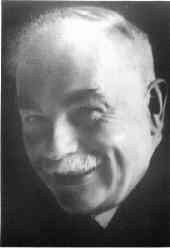
- It was many months later that I learned that PL was Percy Lyon and later still till I was introduced to his unique ministry of which some examples follow.
Phinehas – the Warrior, the Brother and the Priest is a stimulating word as to the features greatly needed in these last and critical days.
Agurs' Reflections show how spiritual food can be found in, what to us, may seem obscure passages.
Divine Instruction: After reviewing the five courses of instruction in Matthew, PL says, "Oh! dear brethren, let us give ourselves to that blessed Teacher, and go on steadily with divine teaching; for if our minds are not absorbing what will qualify us for our place in that coming world of glory, as well as to take up our part in the assembly now, we shall be imbibing the poison that is around, to our moral destruction".
G.A.R.
Page Top
PHINEAS – THE WARRIOR,
THE BROTHER AND THE PRIEST |
|---|
Numbers 25: 10-13; Joshua 22: 29-31; 24: 33;
Judges 20: 27-28; 1 Chronicles 9: 19-20; 2 Timothy 2: 3, 7-8
Harrogate, July 1934 – Selected Addresses 2
"Last week there were two days of meetings at Harrogate … P.L. gave an excellent address on Phinehas". Letters of J. Taylor, 1: 446, July 23, 1934.
|
|---|
I desire to touch upon this first reference to Phinehas as displaying a love that considers for the glory and will of God, without which indeed we cannot have His presence and blessing.
- Phinehas will go in zeal and devotion to the uttermost bounds to assure to God what is due to Him in holiness amongst His people in a dark and difficult day, and in this connection Phinehas is seen as a warrior.
- Later, in relation to the two and a half tribes, he is seen as a brother; then, in Judges, in his priestly service enquiring before God.
- In connection with the hill in which his father was buried, I would refer to him as a son, and finally in Chronicles as a ruler.
This military question is of supreme importance; he was not delegated so to act: the crisis brought him to light.
- Every succeeding crisis which the enemy in malice is allowed to promote, God converts into gain, as He joins issue with the enemy through vessels He has spiritually prepared for the crises as they arise.
- When Israel were numbered at twenty years of age, Moses and Aaron both had part in the numbering; Moses illustrating the responsible and authoritative side, suggesting that we are
conscripted, that we have no option.
- Indeed, love could not bear the thought of an alternative to the authority of Him who died and who lives to control us absolutely and eternally, for the pleasure of God.
- But Aaron came into the numbering, too, suggesting this lovely blend of authority and priesthood: a blend of God's own making.
- Aaron thus had part in this numbering, indicating that in the military defence of the testimony we need the support of our Priest; never will our spirits be right otherwise.
- Moses would indicate that the testimony is to be fought for, but Aaron would show how we are to fight, that all military operations are to be under the influence of priestly sensibilities; otherwise we are not contending lawfully, and a full yield in victory is not assured to God.
- While military operations have in view primarily the clearing of the ground of the enemy, the priestly side would emphasise that spoil is to be acquired for God, and blessing for His people.
- David, the great warrior, is ever priestly in his movements in warfare. In his early days he went to battle for the living God, having in mind no doubt the thought of the sanctuary, and that what God would have as the living God, was a living people here
- For David, life lay in the thought of God's dwelling and His service. So as claimed by the love that cannot tolerate a rival, we would own no other authority.
Then Aaron typically lays priestly claims upon us, and would have his part, so to speak, in our numbering.
- So that while the urgency of the battle would bring us into submission under divine authority, and we are to defend to the death, in the footsteps of our great Leader, the precious will and testimony of God in this world,
- on the other hand, if we are to endure the conflict to the end, we must be sustained in our spirits by holy priestly feelings.
- In other words, the ideal must be cherished by us responsively as in the presence of God in the contemplation of Christ there, if ever we are to stand for the Lord and His name and testimony in this world.
- If we forgo what is priestly in the stress of battle, or if we depart from the spirit in which, in meekness, we are to instruct those who oppose, we can rest assured that our spirits are not being sustained within by our great Priest.
- The great Conqueror is there in heaven, in the presence of God, in priestly service, to sustain our spirits that we may go on unswervingly and devotedly in the defence of divine principles, and of that great heritage which has come down to us.
- We little know at what a cost to our Lord Jesus Christ, to whom we owe everything, have we been left so great a heritage. Thank God, there have been defenders of it down to this day, and the Lord would enrol us all in His service.
- He has room for us – the soldiers at best are few! Timothy is called to be a "good soldier of Jesus Christ", for in the crises of 2 Timothy, the day in which we live, opposition is intensified.
- Our words are to be sound words, the heart is to be a pure heart, the men are faithful men, the soldier is to be a good one, all suggesting that in the presence of imitation, that which has excellence, which is in the way of love – the way of surpassing excellence – which takes its tone and glory from the surpassing glory, that alone will hold the field against the rivalries of our wily foe.
- Imitation was never pursued as it is today, to the destruction, alas, of many who, were they only whole-heartedly committed to the Lord in the power of divine love, could be counted among His warriors.
Now Phinehas rose to the occasion in Numbers 25. We hear little of him before, save that his birth is referred to in Exodus 6, and in being thus referred to before he was born, we are to understand the importance of what is said of him.
- Moses of course is writing after Phinehas was born, and if Caleb and Joshua are the only two of the first generation who survived the wilderness, it is evident that Phinehas was born in the wilderness.
- We have a similar allusion in John anticipatively to
- "the Mary who anointed the Lord with ointment, and wiped his feet with her hair", chapter 11: 2.
- This was before she did it, suggesting that the Lord has in reserve what He needs for every crisis. What a crisis was this in Israel, coming after such a time of blessing!
- We may well watch at this present moment, and in the days that follow, especially in times when we may be afforded leisure. Love would know or seek no respite in relation to the testimony and its conflict.
- Phinehas knew none; the enemy knows none; indeed, supremely, our blessed Lord knew none:
- "I must needs walk today and to-morrow and the day following", Luke 13: 33.
- Such were His blest days on earth. What others but these would He have for us according to our measure?
God had Phinehas in reserve. You may say that Moses was there. He was. It says in regard of this great sorrow that this sin was committed
- "in the sight of Moses, and in the sight of the whole assembly of the children of Israel", verse 6.
- Then it says, "And Phinehas" – his genealogy is given, to stress the purity of it – "the son of Eleazar, the son of Aaron the priest, saw it and rose up from among the assembly, and took a javelin in his hand".
- Will he come down to this unholy level of self-gratification in lustful will? No. In the exercise of his priestly service he has become steeped in the blessedness of the presence of God, and his arm is strong for the battle. His foot is steadfast, and the javelin is in his hand, ready to deal unsparingly with this evil, though it be in one who was an Israelite.
- In this Israelite and the Midianitish princess you see a combination of religious antecedents and social dignity: this Israelite defying God and His people, in the very place God had marked off as His own-in the camp of Israel.
- We are constantly being confronted with such elements that defy, elements that would challenge us, and would say, 'What will you do with me now? I am in the camp, I am in fellowship!' They would, so to speak, baffle the saints if they could, the enemy is behind it.
Phinehas represents the element of spiritual wisdom and resource that is not baffled; he rose up from among the assembly. Who could defend God's name in the assembly who did not rise up from it?
- He was not reigning on a throne in it as were the lords at Corinth; he rose up from it, as of it in power and dignity. And he pursued these wicked people into their entrenchment, into their very tent, single-handed, but God was with him.
- What was the result? He secured the presence and support of God amongst His people. In maintaining the principles, he saved the brethren; he saved for them what alone is blessing and life – the presence of God in holiness amongst His people.
- Did he thus secure general approval? Ah! the One who spoke out His delight was God Himself immediately, for did not God see in this deed the foreshadowing of the spirit of His own beloved Son, who would make a scourge of cords and drive intruders out of the temple, John 2: 15?
- He did not carry the whip about with Him, nor do His servants who learn from Him. That is not part of their equipment; they rely on the anointing; their reserves, their strength, and dignity lie in the spirit of their blessed Master.
- He made a scourge for the occasion. How lovely He was to God in the making of that scourge of cords! But He made it. In like manner Phinehas "took a javelin in his hand". We never hear of him using one again, but we can be sure that he could be trusted to make good use of one when occasion arose.
- His name means a 'man with a bold countenance'.
- "The righteous are bold as a lion", Proverbs 28: 1.
- The word also suggests a man with a confiding and winning countenance. The Lord says prophetically,
- "I set my face like a flint", Isaiah 50: 7
- – a bold countenance indeed! Who is like Him in that? But oh! how winning!
- If His countenance in boldness could look round in anger upon His opponents, Mary could sit at His feet and hear His word, as one who could look up confidingly into that countenance radiant with the glory of God, a countenance assuring protection to her against the charges of her sister.
So, dear brethren, here is Phinehas. God has something to say to us about him. He does not advertise his own exploits; quietly he goes out of sight.
- Say little, serve all, pass on – would be true of this man, a "good soldier", but God in the most remarkable way commits Himself unreservedly to him:
- "Behold, I give unto him my covenant of peace!"
- We do not war for war's sake, we war for peace according to God. Who can handle a javelin like a son of peace? Such would go forth not to secure peace at any price, but peace according to God, and he will not spare the javelin in regard of a disturbing fleshly element.
- Such an element would keep the saints in a ferment and continual distress, assuming a place amongst them while setting aside the rights of God in righteousness and holiness among His people. So, it is a wonderful word, "my covenant of peace", he shall have it.
- Not indeed a priesthood acquired by compromise, but spiritually acquired, but above all divinely given, in the love that delights to trust and reward those who will face anything and everything to keep a clean place for God, and for the Lord Jesus Christ, in this day of universal declension and general ecclesiastical defilement around.
This conduct of the Israelite in Numbers 25 was the enemy's challenge to Balaam's parables. He had sought to silence wicked Balaam, but God's determination to bless had carried the day, and now, after such an expression of blessing, as Balaam's prophecy suggests, the enemy sets out to defile God's people. Thus are we tested.
- We are about to disperse from these meetings where we have sat down together as in gardens well watered, spread forth in the valleys; we have been in such a wealthy place, so to speak, and now, what is to follow? Is the enemy to spoil all? Is he to rob God and His people too?
- Well, here is one man, just one – he was not looking for another. No good soldier does that! In the watchful instincts of holy jealousy for the glory and name of his God, he rises up, and as he rises, the enemy goes down before him and Phinehas carries the day in the name of Israel's God.
- What an inspiration this would be to the warriors of God in subsequent periods of Israel's history, right down to this day! How little would Phinehas know that his act of devoted zeal for God should serve the saints of this dispensation! – rebuking them, indeed, as it tests every one of us, and yet love's rebuke affords encouragement.
- As we were saying this afternoon, to sacrifice principles for persons, is to lose both. As truly having our place in the circle of love among the brethren, we are secured in subjection to the commandments of God and to the principles and law of the house of God.
I would add a word as to Phinehas in his subsequent history. The Spirit of God loves to bring him in, you might say, unofficially.
- He provides the golden thread illustrative of the spiritual generation that goes down through the ages of the testimony; he represents the man of God. He is not called that – indeed, Moses is called that in the Pentateuch – but if he is not formally called so, is it not for those who understand him as there with God so to view him?
- There is much that is unnamed in Scripture, left to the saints in this day to name by the Spirit. So if he is not formally called a man of God, in the letter of Scripture, he has all the lovely marks of such a man.
I would refer to him as a brother in Joshua 22: 30. This man who knows how to wield the sword, knows how to sheathe it. He has to do here with brethren who want appearances.
- The altar of Ed – see JND, NT note b., Joshua 22: 34 – was an altar of "grand appearance" a most testing exercise to a man who lived in the presence of God – one who went in, as of Aaron's seed, to the sanctuary, and whose eyes gazed lovingly and adoringly on the ark of the covenant, small indeed as it was in external appearance.
- How he would linger there, seeing divine greatness blended with spiritual perfection in that which would be small to man's eyes! And then to have to go on with brethren who build an altar of Ed, of grand appearance! What is he going to do?
- The brethren over in the land have a wrong impression about these brethren, but, thank God, they send along a man like Phinehas, with other princes, to hear what they have to say – and they were good listeners.
- Of course it was a sorry tale at best, but it was not the sin of the son of a prince in Israel, which called for Phinehas' sword. No; it was a tale that will be heard to the end of the chapter. They said, 'God has put Jordan between us and you'.
- How Phinehas must have felt that! He might have joined issue with them on that, but how will they stand it? Moses had deplored their decision; he knew they had much cattle; it was the observation of a spiritual man, who although read of none, can read all.
- There they are and they say, 'God has put this river between us!' God never put death between the brethren! He would put the river Jordan between the brethren and this scene, but never Jordan between brother and brother. No.
- Are the brethren divided in the heart of Christ? Is there a point of separation in the breastplate, or on the shoulders of the priest in the presence of God? One wrote, 'Nor what is next Thy heart Can we forget'. Such would be a Phinehas – all the tribes in his heart, no division there.
- But here are these brethren saying, 'God has divided us and has put this Jordan between us'. What strange perversion! Distance from God, begetting in our poor unbelieving hearts distrust of the thoughts of His love!
Well, Phinehas has to listen to all this. He did not interrupt them. It must have brought anguish to his soul to hear their sorry tale!
- But the brethren indicate that they did not intend to be idolators, they brought in this altar as a kind of testimony to their children that they really belonged to the land – only proving thus that they stood on the wrong side of the Jordan.
- If they needed an altar on the wrong side how much more did they need one on the right side, and why not give up the altar on the wrong side for the altar where God dwells, and where He is ready to welcome His people in all the eternal thoughts of His love?
- What a brother is Phinehas! He leads in this matter as a son of peace; it manifests that he has the covenant of peace in his soul. God had promised it to him, and now he is the embodiment of it, for it says the brethren were pleased. There was some point of contact, they would make the most of it. The husbandman has to wait a long time for the precious fruit.
Phinehas sowed the seed then that came up in David's day, when the Gadites went over the Jordan and joined David in the conflicts of the testimony – 1 Chronicles 12: 8-15 – and in the wealth of the inheritance.
- This is not a warrior's part, it is a husbandman's part. He sows his seed in soil that does not appear very promising, and yet years after he is gone there is a crop for David.
- Would any true servant of the Lord love to do otherwise than sow a seed in patience – content to wait, to pass off the scene, if need be, with nothing much to show for his sowing, but content in the assurance that God's David, His beloved Son, shall yet have the crop?
- How many husbandmen, the servants of God, have sown seed, the crop of which they have never seen, but which has yielded for their David in His own time. This indeed would be all their delight, as it is surely ours.
I refer now to Phinehas in relation to the hill in Joshua 24: 33. We know what he has done in the wilderness; we know what he has been in the land, pleading with the brethren.
- What is he in the mount? He has a hill, and he is occupying it, and no one can challenge him in it. You remember how Caleb, the man of spiritual taste, said to Joshua, "give me this mountain", Joshua 14: 12.
- The lowlands are general; the mountains are special. The general trend would be to accept the line of least resistance, the lowlands – what is generally accepted. But a Caleb and a Phinehas are men of the hill country.
- "Eleazar the son of Aaron died; and they buried him in the hill of Phinehas his son, which had been given him in mount Ephraim".
- The Levites were to have no inheritance, but this hill was given to him. You find Paul, the great Levite, on the hill in 2 Corinthians. Down in the low-lying marshes of fleshly culture are the Corinthians, stooping to the meanness of the human heart in an endeavour to silence that servant of the Lord –
- but there he is in Christ, moving in the elevation of the hill. He is in possession of it, he has a point of advantage which he uses, not against them, but in their favour.
- We know that in military operations a hill is a point of advantage to be used effectively. Paul uses this point of advantage, the holy anointing oil, to spiritual advantage in forbearing, forgiving grace to his brethren. The man in the second epistle to the Corinthians holds the field.
- In the first, he is the man of the valley; he comes among the Corinthians preaching Christ and Him crucified. How he handles in priestly sensibilities the holy and precious death of the Lord Jesus Christ, 1 Corinthians 10 and 11! He is at home in the valley.
- The Corinthians may reign as kings; but the way of the cross is the way of the valley, and Paul is the man of the hill in the second epistle, for his elevation is according to the thought of the Son of God, 2 Corinthians 1: 19.
- He is also caught up to the third heaven, and if spiritual elevation is with us in suffering and reproach in our service in the dignity of the anointing, who knows but the Lord may say to us, "Friend, go up higher", Luke 14: 10? Such was the word to Paul, who was caught up to the third heaven.
Eleazar, the father of Phinehas, is buried in the hill. How the faithful Phinehas must have felt his father's death, not just naturally, though he would do that, but spiritually. How much he had learned from his father and from his grandfather.
- Eleazar was a leader who led with Joshua, and who divided the land to the brethren and had given a piece of land to his son. Was he moved by party feelings? Did he try and find a special place in the service, or in the assembly, for his son? Was there anything of that kind?
- He had it, no doubt, in the unanimous spiritual feelings of the brethren. He had reached a point of spiritual elevation by way of the unsheathed sword of the wilderness, and the sheathed sword of the land of Moab; that is how he had reached the hill, and there he was in it.
- Now, what will he do with it? Will he spread himself out upon it? No, he will provide a grave for his father in that hill. His father had an elevated burial.
- How we love to attend a hill-burial. Stephen had such, not a burial on the low level of the world's mausoleum. Not an abbey burial-that is a very low burial, but a burial on the hill, for the hill suggests what remains in spiritual stability and devotion.
There is much in the plain, as of old, that is calling for God's destruction in judgment, Genesis 19: 17, 25, 28-29; but the hill tells of His own handiwork.
- "Be strong in the grace which is in Christ Jesus", 2 Timothy 2: 1.
- Timothy, like Phinehas, is to be a man of the hill, for the Spirit's power in spiritual elevation is the power of resurrection. He who pervaded this scene in grace, with the fragrance of heaven's elevation and heaven's spirit in His wonderful sojourn here, was raised from the dead by the Father's glory, according to the Spirit of holiness.
- So, if we bury our brethren in the dignity of the anointing, we are assured that by that same Spirit even their mortal bodies will be quickened, and they will be raised incorruptible.
- You do not find that a man who divides the inheritance amongst the brethren wants a grand burial. No, there is a simplicity about a hill burial; it is the burial of a man of the hill country, a spiritual man.
- There is a wonderful affinity between these two – not simply in flesh and blood, for they were father and son, but an elevated affinity marked by an atmosphere of reciprocity and spiritual affections. So when he departs, it is in the hill of Phinehas that he is buried.
- What does it mean? That Phinehas is to continue on the holy elevation of Eleazar. A man who with Joshua will spend his life dividing the inheritance among the brethren, is a man who leaves a spiritual seed behind him, and things are going to be maintained on the same high holy level.
- If Eleazar has gone – if men who have led in the testimony have been taken home – thank God the hill remains! That is, the point of spiritual elevation and dignity in the anointing,
- and there are to this day, and will be to the end, men of God, men of the hill, who will not come down to the low level of human diplomacy in the affairs of the assembly of God,
- but will maintain everything on the high and holy level of the holy anointing oil.
Now, I would like to refer for a moment to Phinehas in the book of Judges. Things had been getting lower and lower. Joshua had passed off the scene, and we know from this book that, as long as the elders who had been with Joshua survived, Israel was externally preserved.
- But the judges lose power, and they are going down hill all the time, till you come to a character that is apostate in Dan at the end of the book.
- But then we get this touch as to Phinehas, chapter 20: 27. You wonder what had become of him; you might think he had passed off the scene. He has disappeared where none of us can afford to do other than disappear. What a spot! He has disappeared into the presence of God.
- Did he not feel things? The very sorrows have taken him there no doubt. Is he intervening publicly to repair the situation as a reformer? No, he has retired with all the holy feelings that consoled his heart on another occasion and retained the hill amidst the general declension.
- Such is this man, and God has His answer for Israel in a crisis, when they do not deserve it, because there is a man who has secured His ear. There he is before the ark, an overcomer! One loves to think of him carrying on the best and the highest service, standing by the ark.
- What follows shows what they went in for in Judges, culminating in that Abimelech spirit of pride, and finally in the unholy exposure and surrender of the ark to the enemy by the sons of Eli.
- Yet, when things were at their worst, this Phinehas is at his best, and the overcomer knows that there is nothing to meet man's worst but God's best, and he stands by it. I think he never valued the ark more than in those days.
- So Paul, the Eleazar of a later day, addressing the Phinehas of that day, says to him,
- "Remember Jesus Christ raised from among the dead, of the seed of David, according to my glad tidings", 2 Timothy 2: 8.
- The ark is the power in which all is secured and carried through triumphantly for God, in the presence of the utter public breakdown.
In the Chronicles he is presented as a keeper. The Chronicles are marked by spiritual taste and selection.
- It is assumed that Ezra wrote them very largely, or edited them considerably, but any way we have a writer of spiritual taste. Of course, that would apply to all Scripture, but to the Chronicles peculiarly.
- There are lovely records of mercy in the Chronicles – the sons of Korah, the sons of Pherez, and others whose histories once were dark, but who had a good finish; histories replete with the spirit of Christ, and therefore imperishable to God in His holy records, and true of the saints through all dispensations.
- So Phinehas is introduced here; the Spirit never forgets this kind of man; he represents the man who goes through, to whom God has committed Himself. So, he is a ruler, and what kind of ruler? Over doorkeepers.
- This great thought of doorkeeping, which was developed spiritually by David as head, finds much of its initial thought in relation apparently to Phinehas, who
- "was the ruler over them formerly; Jehovah was with him".
So, dear brethren, we have the varied movements of a man of God with spiritual resource.
- We have him as the skilful warrior of the wilderness, as they are about to go into the land.
- We have him in Gilead as a brother going along with his brethren, exposing themselves as they do in their earthly sentiments. One who belongs to heaven can go along with what is weak.
- How the Lord went along thus – what a model He is! – carrying with Him that little company whose horizon was largely bounded by the earth. If they made enquiry about the future, limiting themselves to a coming scene of display and glory in Israel after the flesh, He would tell them that their names were written in heaven.
- If Peter's utterance could only belittle his Master in testimony, Matthew 17: 25, He could say to Peter, "me and thee".
- But their poor dull hearts, like ours, only come to earth. Did He bear with them? He carried them, and told His Father at the end that He had lost none of them. He had to carry them all the way.
- Only love can afford to carry, and how well love carries! Love does not complain of the load; love is alone to be trusted with the load. Indeed, we are either burdens to be carried, or burden-bearers.
- So Phinehas goes through. What a warrior he is! – and what a brother; Yea, what a priest!
We have his acts with the sword; we have the grace that marked him with the slow, earth-clinging brethren, the two and a half tribes; and we have the elevation and dignity that marked him in the inheritance.
- He graces his part and place in it in the dignity of a son, and he is referred to particularly there as the son of Eleazar.
- Then we find him holding fast to all that is precious to God on earth in a day of declension. He stands before the ark, and he has the mind of God for the moment in a crisis.
- Then, how the Spirit lingers over him when his pathway is over, for the Spirit had not forgotten. If God has committed Himself to that through all generations, the spirit that marks him pervades right down through the ages, and what was brought to spiritual completion under David's headship finds its initial movements, apparently, in the devotion and skill of Phinehas.
Well, dear young people, I plead with you. Many older ones, and those of us of middle age are passing off the scene, but there is a great heritage of divine principles. They have been challenged of late in a marked way and they will be to the end.
- The enemy is unrelenting. It is easy to surrender all that has cost the precious death of Christ, and all the labours in serving, suffering love of His servants through this past century. What a battle there has been, and will be to the end!
- Surrender is the word from the enemy; make terms, evade the suffering. But Phinehas suggests a generation that abides to the end, because God has committed Himself unreservedly to that order of man. The order of man seen in Christ continues to the end.
- What are we going to do now? Are we going to stand sufferingly, devotedly, ceaselessly? God will commit Himself to us.
- "Jehovah was with him", it says.
- Could there be anything greater? All else is vanity. Then, not only is there that wonderful heritage in divine principles of holiness pertaining to the house of God which is ours collectively, but there is a heritage in relation to spiritual and eternal blessing, our destiny and inheritance above.
- The field of the inheritance is so vast, that it is called the
- "unsearchable riches of the Christ", Ephesians 3: 8.
- Then there are brethren to hold in the inheritance. They are part of it, and as they are held in it in truth and love together, they afford heaven's best. The days of heaven upon the earth are ours indeed!
- We have proved them the last two days, and may we do so till the end, and may we not fail to be the warrior, or the brother, or the son, or the one who keeps and holds things, whatever we are called to.
- Let us humbly, in the wisdom of our Head, rise to the occasion, and in spiritual suffering feelings stand up in the spirit and power of these things for God and for Christ and for His people to the end! May the Lord grant it.
Page Top Article Top
| AGUR'S REFLECTIONS |
|---|
Proverbs 30: 1-4, 18-20
Auckland, N.Z., July 10, 1943
Ministry of the Word 2001
|
|---|
I have in mind, dear brethren, to follow up the inquiry of Agur as leading up to four things which he describes as too wonderful for him,
- for I believe they may be taken to illustrate certain features of the truth discernible in our day.
Agur's name means 'a gatherer', that is to say, he is not a man with mere academic questions; he seeks a divine answer to his inquiries. He has in his search an eye for gold; he is a noble Berean in that way. Acts 17: 11.
- And then he finds others with whom to pursue his inquiries. Ithiel is said to mean 'God is', and Ucal, 'God will prevail'.
- You can well understand that persons marked by the faith implied in the names of these men will furnish the suited atmosphere for the unfolding of the mind of God through prophetic channels as indicated in 1 Corinthians 14.
- So that, as in that chapter, the man coming in will own
- "that God is among you of a truth", verse 25.
Agur is content to unfold what he has gathered to two persons, and God helps him; for we are moving on figuratively towards
- the crowning issue of all true ministry, namely Christ and the assembly, as suggested in the husband and his wife, the virtuous woman, of the next chapter.
Agur pursues his inquiry in lowly and comely feelings;
- "Truly I am more stupid than any one; and I have not a man's intelligence. I have neither learned wisdom, nor have I the knowledge of the Holy".
- How wholesome are these sentiments, for if we are lacking in this essential feature of humility we shall be equally bereft of the substance God delights to give to the humble. To such a one taking thus his place in the lowest room, the Lord would say,
- as in Luke, "Friend, go up higher", chapter 14: 10.
- Such a spirit of acknowledged weakness, seen also in Paul as weak among the Corinthians, is calculated to awaken inquiry and support with those who are of the generation of faith, and thus the very lowliness of this speaker but invites the greater attention, on the part of those of kindred mind, to the wealth which he has gathered.
- Such are not slow to detect the divine credentials found with a true servant of the Lord, who is marked by the meek and lowly spirit of his Master.
- Thus Agur, and those with him, may be likened to the element of temple inquiry in which alone we get divine help as we look into the truth together.
We come now to verse 4: "Who hath ascended up into the heavens, and descended?"
- This would refer to the Lord Jesus. He ascended far above all heavens to fill all things. He has gone up in the majesty and dignity of His Person. He has ascended, but He also descended.
- In what love He went up, but then in what love He went down, even into death and into the lower parts of the earth, in that dignity which alone could be His as He went forth bearing His cross!
Then we read, "Who hath gathered the wind in his fists?"
- The wind in this scripture no doubt would refer to the power of the enemy, but then, what power there is with the Lord! The enemy raises storms, but in His fists the Lord holds the winds. This is exemplified on the Lake of Galilee when He said "Peace, be still" – Mark 4: 39, Authorised Version – and there was a great calm.
- Then again how the Lord in His death bound the waters of death in a garment! Also it says,
- "Who hath established all the ends of the earth? What is his name, and what is his son's name, if thou knowest?"
- You can well see that there is a veiled reference here to God's great operations of divine love and power universally, as given effect to by the Son of His love – His going up in majesty and dignity, His coming down in infinite love, and the power now that is His in regard to the winds blowing against His people.
- He has bound the waters in a garment, the garment conveying the thought of the Lord in manhood, having the mastery over death, as binding its waters. How engaging are His movements among us in this character on the first day of the week!
How various are the features in this chapter which come under the thoughtful consideration of this inquirer! He is an observer marked by the knowledge born of reflection, and thus given to spiritual thoughtfulness.
- His audience may be small numerically, because what is casual and superficial easily catches the popular ear, while the depth of feeling which attaches to spiritual thoughtfulness is at a discount in Christendom.
- This but adds value to the presence of those two listeners, challenging us as they do as to whether we are of their company. If there are two of such the Lord may be pleased to add more, and we would covet to be among them.
- How necessary is this spirit of discernment between good or evil if we are to have our living part, as in the next chapter, in the understanding and pursuit of what is good as seen in the virtuous woman, who, as commanding the confidence of her husband, does him good and not evil all the days of her life!
Think of the value, too, in heaven's sight, of a life devoted to doing good to the Lord Jesus.
- Perhaps one here may say, 'I set aside the Lord's Day wherein to do the Lord good', but which of our few and brief remaining days can we afford to let pass devoid of this service of love to Him?
- Let us give Him daily something positive and refreshing to His heart and the heart of the blessed God. Then we shall not lack in serving love to others.
In regard to the second scripture, Agur comes to what is too wonderful for him. He has under-standing, but now he comes to something that is beyond him; and there is a reason for that, for he belongs to an earlier economy, and has not the knowledge of who this wonderful Person is.
- John, although emphasising the inscrutability of the Person, presents Him in the first chapter of his gospel as the Word become flesh.
- And then he presents Him as the ascending One in the twentieth chapter, and as the descending One in those wonderful chapters 13 to 18, treading love's glorious way into death.
- John's ministry, as that of the other apostles also, would enable us to see that these things are not too wonderful for us; wonderful they are, but not too wonderful; that is, as having the Spirit indwelling us in liberty, we have some understanding of what this means.
- The Lord would not make things easy to the spiritual inquirer, for He intends to promote with him diligent search as with those of old at Berea, who thus acquired nobility in the view of heaven. Acts 17: 11.
- "It is the glory of God to conceal a thing; but the glory of kings is to search out a thing", Proverbs 25: 2.
- There is what has come to us in the simplicity of the Gospel, but then love is tested in following up matters in thoughtful and diligent temple inquiry and appropriation.
It is to be noticed that there is an allusion to what is inscrutable in these four things. Verse 19. Now I wish to make it clear, dear brethren,
- that I am seeking only to make an application, and do not assume to interpret the passage, which seems divinely intended to be in measure veiled, but I would suggest that it bears prophetically upon the present dispensation.
The first thing mentioned is "the way of an eagle in the heavens".
- This thought is set forth in the Lord Jesus. As He says,
- "no one has gone up into heaven, save he who came down out of heaven, the Son of man who is in heaven", John 3: 13.
- The eagle in its unrivalled power of flight has, so to speak, the liberty of the heavens; it can go anywhere it will. And so the Lord is presented as the ascending One – He had in His person that inherent right, a divine right unique to Himself.
But then the ascended One has now opened heaven to us in the Spirit's power.
- John is in the Spirit on the Lord's Day, he can soar; that is the time to soar, when conditions are divinely favourable. If we do not soar then, shall we do so as found in prayer, or in spiritual inquiry together, or in the meeting for ministry?
- We are to soar in spiritual power as a bird does in the open heavens. It has the inherent power that assures its liberty in a realm from which others are excluded.
Then we have "the way of a serpent upon a rock".
- You will understand that I am referring to a rock here not as representing the Lord personally, but rather the situation resulting from the presence of the Lord in manhood here, a situation in which the tactics of Satanic opposition were brought to bear upon Him.
"The ruler of the world comes, and in me he has nothing", John 14: 30.
- The Lord discerned his every move. He detected what was behind Peter's defection and met it with that word of rebuke,
- "Get away behind me, Satan", Matthew 16: 23.
He knew Judas from the beginning, saying
"of you one is a devil", John 6: 70.
- The descent of the Lord Jesus in grace into manhood, one would say with reverence, gave opportunity for the serpent's attack. His foes in their subtle questions sought to wrest His words, but all to their confusion.
- Think again of the tremendous power brought to bear against Him in the temptations, and finally at Gethsemane, but then all this has resulted in the serpent's exposure and defeat. The blessed Lord stood His ground here, even to the death of the cross.
- "That through death he might annul him who has the might of death, that is, the devil" Hebrews 2: 14.
But then the Lord would set us up individually in spiritual power to detect and resist the enemy's devices and to stand our ground against him – as the word is
- "prove the spirits, if they are of God", 1 John 4: 1.
And again, "every one begotten of God does not sin, but he that has been begotten of God keeps himself, and the wicked one does not touch him", 1 John 5: 18.
- How impregnable, also, is the assembly, as of the rock against which the gates of Hades shall not prevail! Matthew 16: 18.
The next thought is "the way of a ship in the midst of the sea".
- I would suggest that here we have an allusion to the testimony going through victoriously.
- We need have no fear as to this, for He who once went through this scene of death in triumph, freighted with all the treasures of divine love, will preserve His own.
- "Those thou hast given me I have guarded, and not one of them has perished, but the son of perdition", John 17: 12.
And then again the word to the disciples is
"be of good courage: I have overcome the world", John 16: 33.
- Thus Paul had no fear but that the testimony would go through. He was concerned that Timothy should continue, for many then, as now, were among the deserters. But Luke had stood by.
- "Luke alone is with me", 2 Timothy 4: 11.
- Deserters here are seldom reinstated, but such is the dispensation of grace that a Mark who fled from Pamphylia is recovered spiritually to acceptable service.
- "Take Mark, and bring him with thyself, for he is serviceable to me for ministry", 2 Timothy 4: 11.
The ship of the testimony is homeward bound. Let us be livingly in it. We cannot be mere passengers on that ship. There is no provision for such.
- Paul made no secret that there were storms ahead, as indicated in the second epistle to Timothy, and elsewhere. But the ship is going through triumphantly under the hand of the Lord, who is the Defender of the testimony.
- We are told of many ships starting across the Lake of Gennesaret, but we only hear of one reaching the other side, the one the Lord was in.
- There are many denominational ships today, but they are not seaworthy; they are water-logged from the start. How blest and safe to be in the same barque with Christ!
Now, one word as to the last thought, "the way of a man with a maid".
- We think of the Lord ascending far above all heavens; we see Him descending in love; we see Him in the testimony as Defender of it bringing the church through many a storm into the desired haven, and now we have this thought,
- "the way of a man with a maid".
- May this not be viewed as a veiled allusion to the relations of Christ and the assembly? His love so expressed –
How different by contrast is the woman in verse twenty, representing as she does the great imitative system marked by marital unfaithfulness, which she would seek to cover in hypocrisy!
- "Such is the way of an adulterous woman".
- But she is exposed in her attempted assumption of the feature of inscrutability marking the previous four.
- The Lord's ascent on high, His descent into death, His passing through in triumph – all these activities of love converge on His relationships of love with the church.
The man with the maid conveys the thought of the overtures of love in which the man leads – takes the initiative, as it were – otherwise there must be disaster even in natural relationships.
- This relationship of love will develop and abide to eternity, where there are no winds to be held in His fists, when those who are allowed to raise adverse winds here shall have been cast into the lake of fire, and there shall be eternal peace, unruffled by the storms of the foe
- What we are here considering will abide eternally – Christ for the assembly and the assembly for Christ.
In closing I would briefly illustrate these thoughts as seen in Acts. First as to the way of an eagle in the air. The Lord as the ascending One appeared among His disciples for forty days – chapter 1.
- How He would set forth the liberty of that scene to which He belonged, before His disciples, set up as they were through the gift of the Holy Spirit – chapter 2 – in the liberty of heaven!
- What a favour is ours in having such an outlet Godward! We have thus the power to rise and in the spirit of sonship to cry
Secondly, how well Peter was able to detect the movements of the enemy in Acts 5! In Ananias and Sapphira the foe has come very near, but Peter foils the enemy's attack.
What a comfort to feel that the subtle movements of Satan, apparently so baffling, will be exposed!
- The gates of Hades are not going to prevail, and however subtle and skilled the foe may appear to be – as he is described by the prophet, Ezekiel 28: 11-19 – he is but an instrument in the hand of God.
- He has sinned from the beginning. There is no forgiveness for the tempter – there is for the tempted; such is the discriminating fairness of God.
Then in Acts 7 may we not liken Stephen's spirit to a steadfast barque upon a stormy sea ploughing its way through the winds and waves of opposition and eventual martyrdom? What an abundant entrance into the everlasting kingdom was his!
- Was there ever such pressure in suffering, save in the unparalleled sufferings of the Lord Himself at Gethsemane and at Calvary?
- The storm increases round Stephen, but he enters harbour in full sail. He went right through in triumph and at the end he used what strength his enemies had left him to pray for them. Was there ever such a victory, save with his blessed Master Himself?
- The ship of the testimony is also seen in chapter 8 and thereafter continuing its onward course. All this leads up to the thought of the man with the maid –
- the mystery of God regarding Christ and the assembly, as implied in the Lord's utterance from heaven to Saul, "why dost thou persecute me?", chapter 9: 4.
We have then these four features:
- first the liberty of heaven afforded the saints in the gift of the Spirit, the power to rise given them at Pentecost;
- secondly, the ability to detect the foe as seen in Peter when he marked his deadly attempt to enter in amongst the saints;
- thirdly in Stephen and Philip and others, we see the ship of the testimony making headway though the storms increase;
- and finally, we come to what introduces us to the great issue of all these, the truth of the mystery as implied in the Lord's use of the word "me" in Acts 9: 4. Christ is in heaven and
the assembly here.
- Paul has of course his part in all these thoughts, but the first three features are all in view of the crowning issue, the man with a maid. How Paul developed that thought in his ministry!
May the Lord in His grace encourage us to move on in all that this suggests, so that we may grace that heavenly vessel, the assembly, in the gain of all these spiritual experiences!
Page Top Article Top
| DIVINE INSTRUCTION |
|---|
Matthew 7: 24-29; 10: 42; 11: 1; 13: 51-53; 18: 19-20; 19: 1; 25: 20; 26: 1-2
Londonderry, September 18, 1954
Ministry of the Word 1997 |
|---|
It is to be noted that five times in the scriptures read we have the thought of Jesus finishing a course of instruction; for example, in Matthew 7: 28, it says,
- "And it came to pass, when Jesus had finished these words".
- The five sections of His teaching in Matthew's gospel are thus marked out for us. We have five books of Moses, five books of Psalms, five parts of the book of Proverbs,
- all encouraging us, as conscious of our weakness, to depend upon divine Persons in the matter of our spiritual instruction, for five is the numeral of human weakness and dependence.
Now divine teaching is a serious matter, for God's assembly is composed of intelligent persons, who will appear as God's city, made up of myriads of sons, constituting, then, the library of the universe, so to speak,
- as choice volumes, full of the knowledge of God, with ability in divine wisdom to solve issues that may arise in that age, in the ripe experience acquired with God in the assembly now.
- In this light are the moral issues that continually arise in our localities to be viewed, and never to be evaded; they are fraught with spiritual instruction, calculated to develop us in the knowledge of God – that true wealth which alone we shall take with us when we leave this scene.
The young people here are not unconcerned about their learning at school, nor should they be, for faithfulness in natural duties lays the basis for constancy with us in spiritual matters, as we are dependent on the Lord and the Spirit. But our spiritual education is to command and absorb us; and with such a Teacher as the One who
- died for us, and lives for us, there is no excuse for our not graduating in the school of God.
- How attractive was the Lord as Teacher to those who followed Him here! Matthew 5 tells us that
- "he went up into the mountain, and having sat down, his disciples came to him; and, having opened his mouth, he taught them", verses 1-2.
- He did not force them up; He drew them up; and while we learn much individually as cast upon God in our several pathways, it is the Lord's intent that we should learn together, not only kingdomwise, but in relation to our church education.
- It is for this reason that persons who isolate themselves in a self-centred individualism are so far behind in the divine teaching that is current;
- an unsettled moral issue lies behind their unreadiness to sit down humbly with their brethren as knowing little, and desiring to learn much, in the most august school that earth and heaven could ever conceive, that is, the school of God.
In each of these five sections of the Lord's teaching in Matthew we find that He calls attention to a sample pupil – one whom we may view as a model for the class; and we find the first one in the man who built his house upon the rock. Matthew 7: 24-25. What testings came upon him!
- "The rain came down, and the streams came, and the winds blew and fell upon that house, and it did not fall, for it had been founded upon the rock".
- This man represents one who has passed his examination in regard to the teaching of the 5th, 6th and 7th chapters, full of basic instruction, never to be left behind, but carried forward by us throughout the spiritual curriculum suggested in the following chapters;
- for we can view the exercises of this man in digging deep and reaching the foundation, as set out for us doctrinally by Paul in Romans 7 and 8.
- "I thank God, through Jesus Christ our Lord" – he has reached the Rock, and can take account of himself in a new way – "I myself".
- In spite of the rough weather in Romans 8: 35-39 – hostile elements of various kinds – the house stands. It involves building in relation to another Man, making everything of Him, as having learnt one's own instability.
This prudent man did not choose a site of his own; God furnished the site, but he had, in strenuous digging, to get down to the foundation, and to see to the building;
- and building involves concentration of energy according to plan; for the man who built on the rock was one who not only heard the Lord's words but did them.
- What is so urgent is that the precious light from God given to us in a dark day should be translated in love into what is substantial and testimonial.
- We are not to live in academics, but the ministry is to be taken to heart and conscience, and applied. Thus are we built in the knowledge of God.
The Lord opens the door to each one of us in His appealing expression, "Whoever".
- Let us take His words to heart, and listen to them as having been attracted by Him into the mountain; for the schooling is not on the plain of this Babylon world. Zion is built on a mountain, and the Lord goes up into a mountain.
- This going up to the mountain involves on our part spiritual energy to abstract ourselves from that low earthly level so native to us all, in order to reach the exalted level pertaining to the Lord Himself.
- He taught them, gradually, systematically. Divine teaching is to put things in order by the Spirit in our souls, otherwise we cannot find and lay hold on them when we require them.
- The mind is urgent in relation to divine teaching; it is the battleground between God and Satan. Deliverance comes about in the renewed mind in which God would build up man in the knowledge of Himself as He is known in the economy, as Father, Son and Holy Spirit.
In this same gospel in which the economy is set out – Matthew 28: 19 – the assembly is brought in – chapters 16 and 18 –
- all showing that all the divine Persons in the economy converge on the assembly as the sphere and base here of Their operations, for Their own satisfaction and glory, and in power with the saints in testimony, to hold the ground during Christ's absence.
- The teaching, in its precious light and love, comes out of the death of the One who is our Teacher – who speaks of Himself, indeed, as our Lord and Teacher, calling for submission to the Lord's claims, rendering the mind supple, sensitive, and absorbent in relation to divine teaching.
- Nothing darkens the mind in understanding of the truth like will. Therefore the reception of the teaching is most urgent, and it is most attractive to subject hearts.
The King in His beauty is seen on the mountain, in anticipation of His sway in heaven, and how searching yet engaging is the extended teaching of these three long chapters, bearing upon us in our kingdom setting, and in our responsible history in relation to one another too.
- If any issue arises between two brethren, the word is,
- "go, be reconciled to thy brother", Matthew 5: 24;
- and how brief is the journey to find one's brother, as one's soul feeds upon Him who journeyed in love to the uttermost to die for the sake of the flock!
- We can see that this is our foundational education for what is collective. It is our primary school education, so to speak, involving, at the end of the term, an examination, and the Lord brings forward the kind of man who passes it.
- But we never leave behind what we have learnt in the primaries, but carry all forward cumulatively as we advance in the divine curriculum.
The first verse of chapter 11 indicates that we have reached the climax of another section of teaching, which is prefaced by the Lord's exhortation to His disciples to supplicate the Lord of the harvest, that He send forth workmen unto His harvest. Chapter 9: 37-38.
- While the names of the twelve apostles are given us early in the 10th chapter, discipleship is peculiarly in view in this instruction, as chapter 11: 1 indicates.
- In the last verse of chapter 10 the Lord shows the divine approval called forth by one who renders the most insignificant service to a little one in the name of a disciple.
- All this teaching is calculated to deliver us from the current religious outlook upon the sphere of service.
- We get here heaven's appraisal of the disciple, a little one, a nonentity, so to speak, in the eyes of the seminaries of Christendom, but distinguished in heaven as a humble learner; and each one of us is tested as to the regard we have for him.
- What a relief it is to get clear of the religious darkness prevailing around, and to mingle with lowly, happy learners as one of them.
- This disciple is here as representative of God; he has not only acquired the knowledge of God, but he is following in the lowly path after Christ, to which the Lord refers in verse 38 and onwards, involving taking up one's cross and following after Him.
- There is to be a representation of God in those who are distinguished in heaven as disciples, who never lose the Lord out of their sight. Such have lost their life, according to verse 39; they have lost it as to this world, as following the Lord,
- and they have found it in His company, and in the company of the "little ones", whom we surely would delight to serve, be it only in the giving of a cup of cold water.
- We are not in the realm of the assembly yet, but it is present to the Lord's mind in these utterances, potential church material being in view from the very start in Matthew.
No doubt Phoebe – Romans 16: 1 – had begun on the line of giving a cup of cold water to one of these little ones, and she became minister of the assembly at Cenchrea and a succourer of many, including the apostle Paul.
- We have indeed a wonderful record of little ones saluted with great respect by Paul himself in Romans 16. In the midst of the great ones of the earth gathered together in Rome, there are these little ones distinguished in heaven.
- Thank God such are with us unto this day, and they call for spiritual respect – persons who have surrendered here for the Lord, taken His path, accepted His rejection, and are representative of God.
- If any of us are here for less, we are not here at all according to God. The man who falls down, according to 1 Corinthians 14: 25, and does homage, says
- "God is indeed amongst you".
- How many have been attracted to God Himself amongst His people in those who, in discipleship, suffering and reproach, are learning from Christ in submission, and thus are representative of God here.
- Surely a little one belonging to such a company is great to us in the smallest service we may be allowed to render him; he is of a company representing all that is of God morally here on earth.
Then, having finished commanding His twelve disciples, the Lord departs thence
- "to teach and preach in their cities".
- The Lord is evidently looking on to Paul as He goes forth thus; through Matthew He is, so to speak, leaving the door open for Paul.
- We see this again in chapter 18 when the Lord takes the little child and puts him into the midst; Paul is in mind, as the little one, set in the midst of the disciples, less than the least of all saints.
- The Lord is teaching His own that it is a great matter to respect the saints. It may be said, Well, they are not what they ought to be.
- But what is their course characteristically? They are His disciples. We should view one another and speak of one another according to the course which is being pursued, for what a man's course is, that is he.
- "The righteous falleth seven times, and riseth up again", Proverbs 24: 16.
- The Lord does not charge us with the number of times we fall, but He looks to see in what direction our face is set when we rise again. It is not a question of brilliant pupils, but think of that Galilean company of fishermen and others, what does the Lord not make of them?
- The twelve will appear in the heavenly city as having a peculiar place there; on the twelve foundations of the wall will be
- "twelve names of the twelve apostles of the Lamb", Revelation 21: 14.
So the Lord finished, and His mind is to leave the saints as a finished article in relation to the particular course of teaching on hand.
- With such a Teacher how can we escape the charge of idleness if we do not pass our examinations, so to speak, in that particular course and phase of teaching through which the Lord at any given moment may be putting us, be it kingdomwise in regard of each of us, be it assemblywise in regard of all of us together?
The ascendancy of Christ is in mind in all these scriptures;
- His ascendancy as the King in His beauty in the so-called sermon on the mount;
- then as Lord of the harvest – chapter 9: 38;
- and thirdly, in the next section as the Expounder – chapter 13: 36.
He finishes these seven great parables, the last three being disclosed in the house where the disciples had followed Him, eager to hear more, and they were favoured with the choicest at the end. Ah! the lingerers, so easily diverted, miss the best.
- Actually, all that is glorious is coming in at the finish, the city having the glory of God.
- But what about the finish of any particular course of divine education? Let none of us miss it.
- These three choice parables at the end bring us very near to Christ, as understanding what is dear to His heart – chapter 13: 44-46 – and co-operating with Him in regard of selective material for the assembly – chapter 13: 48.
- It is not for us to cast the net; that has been done, but we are privileged to have a hand in gathering the good fish into vessels, involving the assembly in its local setting, brought before us by the Lord in prospect, and by the Spirit in Paul's ministry in actuality.
- The worthless fish are cast out; the fish are either good or worthless. The vessels are not provided for the fish to live in their natural environment; it is against nature to them to be placed in a vessel, and they die there.
- If anyone thinks that in coming into fellowship he has come into a place of comfort with a little more light than what is around, he is mistaken; he has come in to die, because fish caught do not set forth the side of relief; in the gospel they are caught for the pleasure of Another.
Persons are not relieved through the gospel from the burden of their sins in order that they may be set free to pursue their own wills here in their native element, but to merge with the brethren for the pleasure of God in the particular locality in which they are set.
- Is anyone thinking of a move, with a view to being in a locality more congenial to him? Surely the one in which he is set is a good enough place to die in. He is there to die. We have to do with a God who kills and who makes alive.
- Death is emphasised, so to speak, right through 1st Corinthians, ending with the death and burial of Christ, and His resurrection.
- 2nd Corinthians opens with life out of death, in attachment to Christ, the Yea and the Amen of God, a realm of life opening up; but consequent upon the acceptance of the teaching of the cross in the first epistle.
Now the Lord again finishes – chapter 13: 53. We can see how the learners are getting on as the Lord pursues that section of divine teaching to its conclusion.
- Our blessed Teacher never leaves us, but He completes a certain course of education, and – especially as we come up to the assembly realm – we want to understand what is the course of education, universally and locally, to which He would have us apply ourselves at any particular moment.
In the fourth section the Lord calls attention again to distinguished persons –
- "two of you", chapter 18: 19.
- We have seen how He brings forward the distinguished man who built on the rock, taking all his distinction from Christ the Rock;
- and then, the disciple distinguished in the faithful pursuit of Christ in a path of reproach; thirdly, the saints distinguished as learners in the house, hanging on every word of
Christ, and getting rich unfoldings from His heart bearing on the mystery, that which has been hidden from before the foundation of the world.
- In this fourth course of instruction, bearing peculiarly now on the assembly, the Lord shows how in a broken day all that belongs to the assembly can go through in principle in the "two of you" – two of the assembly.
- Everything relating to the assembly is workable with "two of you", and if there are two then the Lord can add.
- He makes also clear that His mind is to add to them, hence He goes on to speak of "two or three", verse 20; and the love that would add another, would add still more; but one by one –
- as Jeremiah says, "one of a city, two of a family", chapter 3: 14,
- and how constantly we have occasion to thank God for such additions in the tenderness of divine mercy.
Then before finishing these words, and with-drawing from Galilee – chapter 19: 1 – the Lord answers Peter's question as to forgiveness with this searching parable, in which He makes clear that if one has been forgiven, the only righteous thing to do is to forgive.
- This man was forgiven and would not forgive. It is untrue to say, 'I enjoy the forgiveness of sins', if I have the least feeling against any of my brothers or sisters in demand, for we only enjoy forgiveness in divine favour as we are forgiving.
- This parable the Lord leaves with the brethren at the close of this great course of education, beginning at chapter 16, involving the assembly, for it is the great vessel of grace where forgiveness is dispensed;
- and it can still function if reduced to even two, provided they are "two of you" – assembly persons – great in heaven, having a little church strength.
- The Lord takes on His lips the minimum collective number as encouragement for us in days of small meetings.
- And then He finished; He leaves us to work things out; for Matthew presents Him as absent, rejected as the Heir from the scene, and yet with us in a mysterious way as with us all the days in the presence of what is hostile to Him and to us, especially religiously.
We have throughout the gospel like a golden thread these five features of the Lord finishing; He began and then He finished, and now we come to the last section of His teaching, closing in chapter 26: 1.
- It bears upon the ground being held for the despised and rejected Heir. He is away in chapter 25; for the Bridegroom comes, which means that He has been away, and He appears in all the love which has characterised Him while He has been absent.
- Then in chapter 25: 14 the man goes away, leaving his servants with their commission to put into circulation his substance in view of increase on his return. The servants of Christ are left here to carry on in His absence, as drawing upon His resources, and they are tested thereby.
- There are the faithful five-talent and two-talent persons, and the unfaithful man with the one talent, who did not know his master's heart, and therefore could not put to use what he appeared to have as trading capital during his master's absence.
For spiritual trading there is no capital but love. We might say that the apostle had, under the Lord, set up the Corinthians as a trading establishment, but then He shows them that love is the supreme issue. How impossible it is to trade without love, and the more we have, the better we can trade.
- But we have here in figure these faithful persons, true to Christ; they love Him, and they accumulate wealth for Him.
- Chapter 26 opens with the rejected Heir as going away to die, to be crucified, but anointed in love by the woman in Simon the leper's house.
- He is for the moment accepting the suspension of all His rights in glory in relation to the earth in perfect subjection to His Father's will; but in the assembly He has something greater as compensation for Him for the refusal of His earthly rights – which He will yet take up again.
- So He finishes all these sayings as about to die, the Lord's supper being brought in, reminding us that while the cross means the closing up of everything here, the ground is held in His absence.
We can see that the Lord's supremacy is in evidence right through;
- firstly as the King in His beauty;
- then as the Lord of the harvest;
- thirdly as the great Expositor of the mind of God;
- fourthly as the Builder of the assembly;
- and finally as the still-rejected yet coming Heir of all.
- Oh! dear brethren, let us give ourselves to that blessed Teacher, and go on steadily with divine teaching; for if our minds are not absorbing what will qualify us for our place in that coming world of glory, as well as to take up our part in the assembly now, we shall be imbibing the poison that is around, to our moral destruction.
May the Lord bless the word.
Page Top Article Top