| INTRODUCTION |
|---|
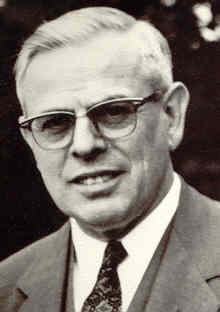
| Spiritual Unity in the Ministry of John London, June 25-27, 1957 Stanley McCallum |
This is the fifth set of annual London Meetings after the departure of Mr. James Taylor in March 1953.
G.A.R.
| READING 1 |
|---|
| SPIRITUAL UNITY IN THE MINISTRY OF JOHN (1) 1 John 5: 6-10; 2 John; 3 John 1-8, 12-14 |
S.McC. It is proposed that we should look at the subject of spiritual unity in the ministry of John.
Now in proposing 1 John 5 to be read, one has in mind that we should consider first of all that this unity must have a moral basis. Any unity that does not have a moral basis amongst us will not last very long.
A.J.G. I am sure it will be profitable to us.
— Would the thought of unity be in the Lord's service in the gospels and connected with the service of the apostles in the Acts, so that it is one thing that has come down to us?
S.McC. I thought so. I thought it was embodied in the expression
P.L. So that Christianity is all set forth in the Person of Christ. There has been nothing added, nor could there be, whatever unfoldings the Spirit has afforded.
S.McC. So that John stresses what is from the beginning. It is an important matter that we are to be affected and regulated by what is from the beginning; the fathers, that is those in a position of parental influence among the saints, being specially alluded to as knowing Him that is from the beginning. So that things are maintained in relation to that.
— Would you think then that the ministry of John comes in especially in view of the disunity that is in Christendom?
S.McC. One has felt that very specially. We even get in John's gospel the prophetic announcement through Caiaphas as to the Lord's death,
— I thought too, that the disunity that is in Christendom may have its reflection amongst us.
S.McC. Therefore we are to be searched in relation to the matter, and one feels it brings up the need for emphasis on the water.
A.P.C.L. The first reference to the water in verse 6 is
S.McC. And does not this become the great test in Christianity?
J.B.S. What would the name "Jesus the Christ" be intended to convey to us?
S.McC. I think it is to call our attention to a different kind of humanity, a different kind of Man. In the gatherings, in the assemblings, we need to see the importance of a different kind of humanity.
A.J.G. The Man who is approved and anointed of God – the Christ.
S.McC. Exactly. That is the kind of humanity that God can commit Himself to. And the water is to help us to judge unsparingly in our souls the features of the humanity and of the kind of man that He has expressed His displeasure in regard to in the death of Christ, typified in the water.
P.H.H. What exactly is pointed to in the thought of coming?
S.McC. I think it is. It is not a question of what is chronological, it is not a question exactly of a point of time, it is a question of the Lord coming into the sphere of the testimony, where full witness and testimony is to be rendered to this kind of humanity.
P.H.H. Therefore it includes the historical matter of His death, where the water and the blood became manifest. Would the death of Christ in that respect be one of the points in the testimony?
S.McC. It is. And we are to note in that sense, that in the gospel, the blood comes first, whereas in the epistle the water comes first. Well, that is not for nothing.
A.J.G. John lays particular stress on the witness.
S.McC. It is very interesting to see that, how along with the witness is stressed the moral value of the witness, the authenticity of it,
A.H. Has John in mind the maintenance of the saints in victory?
S.McC. I would say so, the beginning of the chapter emphasises that. How can victory be maintained amongst us, and how can spiritual unity be established, if this moral basis is not right in our souls?
G.R.C. Would it be justifiable to bring in Paul's doctrine to support what has been said? He says in Ephesians,
S.McC. I think there is a definite link with Paul's ministry in that setting.
G.R.C. So that the truth as it is in Jesus involves our having put off the old man. Does not the water imply that, that we have done it by profession, and we are to do it in practice? Is that right?
S.McC. That is how I understand it.
— So that baptism is the crux of the matter as to application, not just profession?
S.McC. Exactly. The death of Christ, in that separative way, sets us apart from the world, and the man that is in it, and the taking up of the practical teaching of it involves our arrival at this new state, where things are transparent, things are upright amongst us.
R.W. Is that seen in the eunuch, who after he had listened to the word said, "Behold water"? He was baptised and went on his way rejoicing.
S.McC. He got an impression as to the need of the water; and would to God that we all had a greater impression of the need of the water.
A.J.G. Would you say that the sense of the need of the water produces the sense of the need positively of the Spirit, as the power for the new life, and as the witness to us?
S.McC. So the water can only be rightly arrived at in its value, or be applied, in the power of the Spirit, in that sense. It is not a question of the human mind, or the resource of the flesh entering into it, because the water sets all that aside.
A.J.G. And the Spirit comes into prominence as the truth.
S.McC. It is very important to see the Spirit referred to in this way, because it links on with the truth as the bond of fellowship in the second and third epistles.
J.S.E. May there be some explanation for us now, as to how, since the Spirit has acquired a personal place among the brethren. He has had scope to bring emphasis into the ministry as to purification?
S.McC. It has a very definite bearing. The recovery of the saints to the recognition of the Spirit, and what is due to Him, and the place that He has in the service of God, in an all-embracive way, is not only to affect us objectively,
J.S.E. We have come into the gain of this better translation. According to the Authorised Version heaven and earth stood in contrast, reference being made to three bearing witness in heaven, and three on earth,
S.McC. It is important to see that because the whole point is our position in the testimony here.
C.M.M. Is the washing of the robes in Revelation 22 connected with the water?
S.McC. I think so. It is not the blood so much, important as the blood is, and we do not want to miss it here, but what is stressed is the water.
E.E.H. Is there a link with what you have in mind in John 3 in the Lord's own words,
S.McC. There is a link, only in John 3 it is the basic side that is emphasised, what is there basically through the operation of God to begin with, in new birth.
J.McK. Is your thought that the full result should be seen in the saints in this holy agreement?
S.McC. That is what is in one's mind. The result of what we have here would be spiritual unity or oneness in the saints.
J.McK. You mean that the idea of witness involves something that can be identified, and the three agreeing in one, in this witness, would be in the saints as affected?
S.McC. Exactly. Why is it that diversity of opinion and of judgment comes up amongst us? It must be that the matter of the water has not the place that it should have, especially where evil may be involved.
A.H. In Zechariah 13, after the prayers of chapter 12, you have the fountain opened in Jerusalem for sin and for uncleanness. And what follows upon that is remarkable unity as to the exclusion of idols, and even those who minister wrongly. Does that bear on what you have in mind?
S.McC. It does. Zechariah is concerned about uncleanness, and we should be concerned about uncleanness wherever we are, in any part of the world; for
H.W. Is the same end in view in Paul's ministry, where he presses in all his assembly epistles, the truth of the cross?
S.McC. Yes, you can see what a place the water had with Paul. I am sure it raises the question with all of us, as to the place that the water has with us, not just in teaching, and what is set out
M.A.W. Would "the washing of water by the word", Ephesians 5: 2, be a similar thought?
S.McC. There is a link in it with what we have here; it all shows the importance of the death of Christ in the water aspect. What would you say. Mr. M.?
A.E.M. I think it is very important that we should understand this, particularly with those that minister. If the minister is not clear, the saints will not be clear.
S.McC. You feel that very much, and the word comes home, as we speak together, and seek to help one another in relation to this matter.
C.J.H.D. It was in a place where it says there was a great deal of water, that the minister was able to say
S.McC. You mean John the baptist in chapter 3 of the gospel. Just so. John's ministry came along the line of the water, and the Jews were puzzled by him, as the Jews always will be puzzled by the minister who brings the water in.
A.E.M. Before you minister you must be assured before God as to your own moral state, and the truth that you minister must be clear in your mind. You would not minister in connection with what you do not know.
S.McC. That is very important, because it involves the result in the saints.
C.H. Would the teaching of this therefore imply death to what the man is, and not only what he has done? I think so often we limit the death of Christ to what we have done, whereas it has the utmost importance in its application to what the man is.
S.McC. That is very important, it involves the end of the man. That is, the water flowed from a dead Christ.
W.C. Would Peter, as a minister, have all this in mind, in regard of the sheet? We get there "what God has cleansed", as though it is a complete thing before God. There is the complete sweeping away of man after the flesh, but having in mind the securing of men after the order of Christ. Then it is "Rise up, Peter, slay and eat".
S.McC. You mean the way that the whole scene was cleansed and purified by that action of God.
W.C. Peter would start with that in his ministry, having in mind to secure men, completely free from the world that had been judged by God so fully, by the sweeping away of the whole scene.
S.McC. Yes. And it is important that we should see the place that the blood has, too, because we must not forget the blood.
G.R.C. So that the blood greatly affects our hearts. Mr. Taylor said, many years ago, that this scripture "not by water only" is an implied reference to the flood, which was water only.
S.McC. That is very important. Divine love did not come in in relation to the flood, divine love came in in relation to the death of Christ; see 1 John 3: 16; so that we do not have the water only, we have the water and the blood.
P.H.H. The blood being mentioned, for instance, in the Lord's supper, is calculated to affect our hearts. We might not think so much about the water, and the death of Christ, but with the blood it is unmistakable, and serves to affect our hearts all the time, every time it is mentioned.
S.McC. It does. So that Hebrews, which is dealing with the approach, greatly magnifies the blood before our souls. It is through that holy instrumentality that we draw near:
G.R.C. Before we leave the first epistle, could you say another word as to the Spirit, and the stress upon the Spirit in the end of verse 6? It says,
S.McC. I think it is important to see the place that the Spirit has in this matter. The water and the blood have in mind the producing of a state in the saints, in a purified way, and
G.R.C. Would you just say a further word as to the meaning of that expression
S.McC. I think it involves the Spirit as the truth here in the saints.
W.D. What bearing has the fact that when the Lord speaks of the coming of the Comforter He speaks of Him as the Spirit of truth?
S.McC. I think it helps us to see in regard of what we have here, that safety marks this position, as we recognise the Spirit, in that He is the truth – not in one part of it, or in two parts of it, but the whole truth.
C.H. Is that implied in verse 2 of the second letter?
S.McC. There is a remarkable link in verse 2 of the second letter with the Spirit of God, because almost the same expression is used as to the Spirit in John 14 as is used of the truth here. The Lord says in John 14,
C.H. Certain cardinal truths connected with the Spirit have been said, in recent years, to be just Christian liberties, and not to be obligatory; but these epistles show that the truth is obligatory, because it involves the presence of a divine Person here.
S.McC. Therefore the truth has a binding influence amongst the saints.
A.P.C.L. Would it be going too far to think of the Spirit personally as being the truth, not only as seen subjectively in the saints, but what there is in Himself as a divine Person?
S.McC. I would like to hear more what is in your mind in that regard.
A.P.C.L. I was only thinking of the possibility of a time when there was little, perhaps, subjectively in the saints, whereas the matter is there in His Person, do you think, or is that going too far?
S.McC. Do you mean the reference "the Spirit is the truth"?
A.P.C.L. Yes, as to whether one glory of His own Person would be that, that He is the truth. I was only thinking it would emphasise more what you are saying as to the truth being the bond; because it really is what lies in the divine Person who is here. I would like to get clear as to that.
S.McC. My own impression of it is that it has a subjective bearing, the Spirit being here in the saints because, whatever may have come into the dispensation in the introduction of failure and ruin and breakdown,
— He came into the assembly, and He is still here.
S.McC. That is it. When the ruin and the breakdown came in, and the Dark Ages came in, the Spirit did not retire into heaven.
A.P.C.L. That is what I was thinking, that if the matter lies with the Spirit, what a resource there is for us.
S.McC. Just so.
— To know that He is here in the way that He was when He came.
S.McC. He has not changed a bit. And it is not what He is in Deity.
J.S.E. Did not that same principle apply when Christ was here amongst His own? Could we not rightly say that He was amongst them in a condition that they could take account of; and that in that condition He says
S.McC. I think so. Now that the Lord has gone to the right hand of God, the truth in all its fulness is seen in Him objectively there,
P.L. Is it because the truth is not presented absolutely, but it is presented relatively as coming within our range in divine Persons in the economy?
S.McC. Truth involves comparison and stands over against error in that sense being the expression of what God is, but viewed in His essential existence, God does not express Himself.
R.W. The presence of the Spirit as the truth is seen in the meeting of evil in Acts 5.
S.McC. Yes. And what is to be noted in this section is that the truth is personified. The truth will make way for itself, like the ark in the land of the Philistines. The power of God is linked with it, bringing down things, the truth does that.
J.S.E. Do we need to understand, that both in the case of Jesus, and in the case of the Spirit, they are Each, in turn, said to be the truth, but, as in a circle of holy affinity with their feelings? Does not this matter of the water, if applied, bring us more into correspondence with what is proper to that circle?
S.McC. That is the whole point in the water, that we should be delivered from the world, and the system of things in it, and what is linked with man, and his state, and be linked up with a system of things that is marked by what is purified, and is in affinity with the Spirit of God. The state is a result of the work of Christ and the Spirit being here in this way.
J.S.E. Does that make the allusion to "yourselves" in the second epistle more understandable by us? Is "yourselves" a term which denotes the circle of affinity with the Spirit here as the truth?
S.McC. Just so.
A.J.G. So that the Spirit as the truth requires, for its expression, saints in moral accord with Himself?
S.McC. I think it is very important to see that. We do not thus talk over these matters as just platitudes and things that entertain our minds, but they have in view a corresponding state being produced in us, a state that is marked by uprightness, honesty and transparency, that is the fruit of the water aspect of the death of Christ applied in the power of the Spirit.
R.G.B. Do the distinctive references to walking bear on that, particularly the walking in the truth, and walking according to His commandments?
S.McC. That is very important, because we might say, Well, John is getting very detailed and very extreme; he says that
J.G.M. How does the Lord's word in John 17 bear upon this matter, when He says,
S.McC. Well, there is a link with it in that the truth becomes the instrument or agency, in the power of the Spirit, by which we become set apart from this world.
A.J.G. In this second epistle of John, and in the third, we get the expression "Walking in truth", and then, "walking in the truth". Do you draw any distinction between those two?
S.McC. I think there is; could you say something to help us on it, as to what is in your mind?
A.J.G. I was just seeking to get it clarified. We have "walking in truth" in verse 4 of the second epistle, and "thou walkest in truth" in verse 3 of the third, and then "I hear of my children walking in the truth" in verse 4 of the third.
S.McC. Is not the one a question of what is characteristic, and affects us subjectively and in practice, and the other – walking in the truth – involves what governs and controls our outlook, our thoughts? You get, for instance, in verse 1,
H.W. Is there any link, or any connection, between the thought of the truth, and "our faith", or "the faith once delivered to the saints", that Jude speaks of?
S.McC. I think there is a link in that sense. We walk in the truth, and the truth has come out.
H.W. Would that be encompassed, by the thought of "our faith", which gets victory over the world?
S.McC. Well, there you have a link.
G.C.H. I understand the expression "for the Spirit is the truth" is a reciprocal statement.
S.McC. Yes, it can be reversed, so that the truth is the Spirit.
C.H. In your reference a little earlier, to verses 9 and 10 in the second letter, you spoke about the importance of not receiving those who abide not in the doctrine;
S.McC. It will. Because it is the truth that abides in us and shall be with us to eternity.
C.M.M. Would you say a word about
S.McC. "For many deceivers have gone out into the world, they who do not confess Jesus Christ coming …"
S.McC. Well, it is very important, because it bears on the state that the water would produce.
J.P.H. Would Demetrius be one who was walking in the light?
S.McC. I think he was. It says of him, that he
J.P.H. Was he an exemplar in that way of all the truth that he had been taught?
S.McC. I think he was. The Lord said
P.H.H. Do you think that is illustrated in some of the men around David, like Joab, who passed muster in a public way, yet when the test came, it showed that they were dark, and not walking in the truth? So it led to something sectional.
S.McC. It is very important to see that, because one thing that marks the antichristian world and antichristian principles is deception.
P.H.H. Here the deception you speak of is connected with antichrist, it says, "This is the deceiver and the antichrist". That shows the origin of it.
S.McC. That is it. And John, in his writings, in the epistles, would remind us that there are many antichrists, and I have to see to that in my heart. Every one of us has to see to this feature of what is antichristian, because
M.H.T. Do we see the contrast between those that the elect lady was warned not to receive into the house, in the second epistle and those whom we ought to receive in the third epistle? It says "receive such, that we may be fellow workers with the truth".
S.McC. That is good. The second letter stresses those that we are not to receive, but the third letter stresses those that we are to receive. It is important therefore to see Demetrius in that light, as one who has witness borne to him by all, and by the truth itself.
| READING 2 |
|---|
| SPIRITUAL UNITY IN THE MINISTRY OF JOHN (2) Revelation 11: 3-13; 12: 1-6; 21: 9, 14 |
S.McC. The thought of unity appears in these passages in relation to the testimony; and suffering, and glory.
P.L. Is this thought of completion seen in perfection in the Lord, in relation to His own suffering testimony,
S.McC. Just so. We see how the Lord completed matters in His testimony here. You remember how He said to Pilate,
P.H.H. Does the completion of the testimony, as you are now speaking of it, stand somewhat connected with prophecy, that is the speaking forth in general of the mind of God?
S.McC. I think it does. And the prophetic side brings up matters in people's consciences. It says in verse 10
J.McK. Does the thought of measuring the worshippers imply that there is to be one divine standard? We have the measuring of the shrine, and the measuring of the altar, and them that worship in it. Would the idea of what conforms to the divine standard be in mind?
S.McC. I think it does. And it is a salutary reference there, because the court without is left, it is not measured; that is, it is not a question now of dealing with Christendom at large,
P.H.H. What connection do you see between the priestly side, and the measuring of the worshippers, and the prophetic side, as in verse 3?
S.McC. I think it shows that all these matters are interlocked. We cannot divorce them, and say they have no relation to one another; they are interlocked. That is, the service of God, and the matter of the completing of our testimony – there is an important link in it.
— So Moses completed his testimony immediately. There was an extensive period, seen in Moses' testimony in Egypt, involving that he went in continually into the presence of Pharaoh, and finally he is told to see Pharaoh's face no more.
S.McC. It is a very interesting section to which you refer; and we see the moral courage that marked Moses. One of the great things that is needed in regard to this matter of unity in testimony is moral courage.
A.H. Does the standing before the Lord of the earth bear on this matter?
S.McC. I think it does. Are we to allow the enemy to interfere with divine rights, to entrench upon Immanuel's realm, Immanuel's land, without raising any issue? That would not be according to faith, or to grace either. We are to remember the rights of God in this relation.
G.R.C. In Zechariah 4 it closes by saying,
S.McC. I think that is important. The authorities represent mysteriously, agents of control, indirectly under the hand of God, in view of the testimony; and they are to be acquainted through testimony rendered, as to the rights of the Lord of all the earth.
G.R.C. And that they themselves stand in responsibility to the God to whom witness is borne.
S.McC. That is it.
P.L. And to hold the ground for the only true and coming Heir?
S.McC. That would be it, in view of the Lord coming in, as this book from which we have read contemplates. The One who is the Heir of all.
R.W.S. Is it a daily matter in verse 3? It is not there a period of three and a half years, or a matter of so many months, but a thousand two hundred and sixty days. Would it suggest preparation daily for this suffering?
S.McC. Yes, it would. The protracted period of time in their prophetic service is very interesting in that sense.
C.M.M. Would our faithfulness in claiming the earth for God lead to this giving glory to the God of heaven? The Father is spoken of in Matthew 11 as "Lord of the heaven and of the earth".
S.McC. Yes, it is interesting that the remnant were filled with fear, and gave glory to the God of the heavens. While the testimony stands related to the Lord of the earth, the result works out in glory to the God of the heaven.
P.H.H. Are you suggesting that along with the much prayer that has been made about several matters, that the prophetic side and showing ourselves in testimony to the authorities should be the accompaniment?
S.McC. They do. The moral courage and power that enters into that is important. Because it requires moral courage and power to carry the testimony before the authorities.
P.L. "Shew thyself to Ahab", 1 Kings 18: 1.
S.McC. Show thyself; that is it. It is not just words of mouth; it involves words coming out of the mouth, but a great deal is made of the eyes in this section. It says they see the witnesses; and so those in Government in high office and the like are to be impressed with the saints, and what is seen in them.
H.A.H. Is there an impression of unity in the reference to "their body" being in the singular twice?
S.McC. Yes. That is what we referred to at the beginning of the reading; the mention of the body, in the singular in that verse, would point to the unity of the testimony, although you do get their bodies in the plural in verse 9.
C.H. And alongside of that, the acceptance of the principle of martyrdom, which this testimony might involve?
S.McC. I feel we have to face that matter, I speak feelingly – we would all speak feelingly about this matter.
W.J.T. Would the leverage be that it is in the place where their Lord was crucified?
S.McC. That verse is interesting as introduced by the Spirit of God through John here, because it would touch the affections, that that realm, the great city, which is called spiritually Sodom and Egypt, is where our Lord was crucified. It is stained with the guilt of that awful crime, and surely that would touch deeply in our souls.
C.H. We cannot isolate ourselves from what the Lord is raising in other countries, because it is being accomplished in the "brotherhood which is in the world". Should we not learn by delineation? The Lord is raising issues in certain parts, and we are all to face the principles which are involved in the experiences of others.
S.McC. So that it is a matter that we are all bound up in, in that way. That passage in Peter says,
W.S.S. Has that been the basis on which the testimony has come down through the centuries? Paul himself speaks of being delivered unto death, and dying daily, and facing martyrdom.
S.McC. I think there is ample witness all the way down through, right to our own time as to the preparedness to accept martyrdom, if it came to the full issue as to the truth.
W.S.S. However challenging it may be, it is the truth today, that that is our place in relation to the testimony. It is a very big thing to say, but it is readiness to die, is it not?
S.McC. We have to face it. Whether we are prepared for it or not is another matter, but we have to look into it, and face it. If our Lord went that way, and if Stephen went that way, and if Antipas went that way, would we expect to stop short of anything less, if need be?
R.G.B. In the type of the Hebrew bondman, he says
S.McC. I think it is. And we are tested as to our devotedness in that relation, and whether we are prepared to accept, in the spirit of unselfishness, the limitations that bondmanship may involve.
M.A.W. Would you say that perhaps deliverance may come in, as in Esther,
S.McC. Just so. And along with that we have to face the fact, or face the prospect, that deliverance may not come in. These two witnesses, symbolic as they are, were killed, they were conquered and killed.
A.H. Does what we are constitutionally enter into this? It says in verse 4,
S.McC. That is why we began the meetings with the subject of the water, because, if there is any dark part with us, it surely will affect the testimony, and the completing of it.
— We have the principle of two here, and while it is symbolical, there is something in the idea of two.
S.McC. Yes, there is a divine principle in it. It is referred to in other parts.
— It is on that principle that the assembly has really come into evidence again.
S.McC. Yes, I suppose you have in your mind that Matthew 18 would enter into it,
— Two of the assembly.
W.C. Is it significant that in the last letter to the assemblies in Revelation 3 the Lord presents Himself as "the amen", suggesting what is completed; and then as
S.McC. Yes, that helps. It is interesting to see how it stands at the very beginning of the book, where the subject of witness and testimony comes up peculiarly.
P.L. Would the "liquid myrrh, five hundred shekels", having such a large part in the holy compound connected with the anointing of the tent of meeting and the ark of the testimony, bear on the unifying power testimonially, sufferingly, of the spirit of Christ universally, marking the saints?
S.McC. The whole system was marked by the anointing, and the chief ingredient suggests suffering in that sense. So that it would cover the whole position.
G.R.C. Does the word to Laodicea indicate that the testimony becomes the proof of our affections for Christ? It is really those who are 'hot', who can render adequate testimony, not those who are 'lukewarm'.
S.McC. So that the Lord would raise the question with them that they were neither one nor the other. Because they had become so engrossed and absorbed with material things, material goods and the like, that they were neither one nor the other. It is an important thing that we should be ardent, in that way, in our affections for Christ, and ready to complete our testimony.
G.R.C. There is a point I wonder if you could help us on. In a good many minds, I think, there has been some doubt as to whether Scripture supports us in taking the initiative in an approach to the authorities.
S.McC. I do not think it is any question of avoiding suffering. It is a question of a responsibility before God, to enlighten that which He has set up Himself, in an ordered manner in this world, and which basically and abstractly stands for the protection of His interests in it. Why should government not be enlightened?
G.R.C. So that in a country like France, where since the Revolution the government has apparently been marked by a non-recognition of God, it is an important matter that it should be brought to the attention of the highest authorities, that there is a body of Christian faith and steadfast devotion in that country.
S.McC. I am sure it is important that we should see that, and that our brethren should see that.
P.L. And has not God ordered all the circumstances in which the nations now find themselves, and allowed the demands which they make, to force into evidence what God has here in their midst?
S.McC. Yes.
A.J.G. The Lord before Pilate said
S.McC. That is it exactly. He puts the matter back on Pilate, and in our testimony in the United States, to the Government, and appeal in regard to the truth, it has been putting back on them a sense of their responsibility to God, that there is a people in their midst that is thinking of God, and is prepared to die for principles that are according to God.
J.McK. In connection with this matter of power given to the two witnesses, I think the word is 'efficacy'. Would there be with the witnesses the ability to bring the thing specifically to the conscience of authorities?
S.McC. I think that is the point. It is not done in a vague way, but, as you say, something specific has to be done, and something specific has to be said, along with prayer and fasting.
J.McK. And not merely for relief, but in order that the truth might be borne witness to.
S.McC. I think that is the point, I might just read one or two passages in the Acts as to Paul. The question of whether it was right or wrong to appeal to Caesar comes up in our minds.
W.J.T. Ananias had a message for him in relation to it, that he was to bear His name before nations and kings and the sons of Israel,
S.McC. Just so. Then in Acts 27: 23 it says – and this is the scripture; this is not what I say, or anyone else is saying, this is the scripture –
R.G.B. So in 2 Timothy 4, where he speaks about appearing before Caesar, he says,
S.McC. Very good. "Fully made" would link on with the completing of the testimony here.
— In the chapter you have referred to in Acts, Paul's sister's son was really the one through whom the relief came to Paul. Does that show how things that are right may start in a small way, otherwise Paul might have been slain?
S.McC. That is very good. We might say in such instances, Well, why not count on God and just pray? But then there are all these methods of operations that the Spirit of God brings before us, and we are not to make little of them, in that sense, small as they may be.
P.H.H. It was possibly Paul's prayers that brought this young man forward.
S.McC. No doubt it was.
M.A.W. Do you think therefore that in chapter 16, Paul was right when he speaks of having been beaten publicly uncondemned and then insisting that the praetors themselves should come to release them?
S.McC. Well, they are just the facts, that what they did was not right; and, while it may be thought that Paul was standing on his dignity, we have to bear in mind that the government, and men in government, have to be reminded of what is right, and the due processes of law.
W.H. Would that be seen in John the baptist's word to Herod in regard of Herodias, "It is not lawful for thee to have her"? Did he not lose his life for his testimony?
S.McC. And it is very interesting in that relation, if I remember rightly, in Matthew 14 the verb in the Greek is the imperfect tense, according to the note that Mr. Darby gives. Literally it is, 'kept on saying'.
W.McK. Does the thought of standing enter into that? It says of the witnesses in Revelation 11 that they
and then, verse 11, "they stood upon their feet".
S.McC. That is important, because God said to Joshua,
A.J.G. You were saying that there must be the keeping on at it. In verse 11 of chapter 10, John says,
S.McC. Just so.
P.L. And the importunate widow in Luke?
S.McC. Exactly. She was heard because of her importunity. We may wonder, as some of us have wondered, at the long delay; but then, shall we give up, shall we not keep at it in importunity?
C.M.M. Would you advise us to emphasise conscience when before these people? They have consciences themselves.
S.McC. I think that is very important, because that is what the people do not like; the tormenting in verse 10 has to do with the conscience. It is the keen edge of the prophetic word on their conscience that they do not like. And when they are reminded of conscience it bothers them, like the gnats in Egypt, it is a source of annoyance, a source of irritation.
A.H. The prophets were clothed with sackcloth irrespective of the firmness of their communication. Would you say a word about that?
S.McC. I think an important feature comes in there, that we should be marked by what is comely, and by a sense of humility and dependence so that the governments of the world can see that there is a different kind of humanity. It is not the kind of humanity that will be consummated in the man of sin, but the kind of humanity that was seen in Jesus.
J.S.E. Would you say a word, please, as to the bearing of the Lord's own ministry? I think it is in the early part of Luke 12, as to the place the Spirit has in helping us as to standing before these agencies.
S.McC. I think it links with the olive tree here. You are referring to the fact that the Spirit speaks, as it says in Luke 12: 11,
W.S.S. You have referred once or twice to the importance of what is here. You spoke of it in connection with France, for example, and I was wondering about the opening verses of the chapter, the measuring of the temple, and the altar, and them that worship in it.
S.McC. It would indeed. It shows that God has taken account of what there is. It may be in a small way, but He has taken account of it in relation to His own pleasure in it.
W.S.S. I was thinking of the importance of our taking account of it also.
S.McC. Well, that is important too, for John says,
P.L. Would 1 Corinthians 13 suggest what is measurable – love, and chapter 14 the prophetic word issuing out of that?
S.McC. Yes.
P.H.H. Would you say a word about the next part, as connected with this? We have, the voice out of heaven, in verse 12, for instance, and the invitation to "Come up here". Is that heaven intervening as a kind of crowning approval of their sufferings and pathway in this testimony?
S.McC. It is very fine how heaven says "Come up here". They did not want them down there; they were glad to get rid of them, and sent gifts to one another because they thought they had got rid of them; but heaven says
— So it is a very interesting thought that these two really form part of the heavenly order of things. That is, they are not an earthly family, they form a heavenly one.
S.McC. Just so. That is, heaven says of persons that have completed their testimony in the sense in which we have been referring to it, "Come up here", because they are part of the heavenly order of things.
A.N.G. Does it actually show that what has been given testimony to is heavenly in its character? Mr. Taylor used to say that while Paul claimed Roman citizenship in the prison in Philippi, in his epistle to the Philippians he said
S.McC. Exactly. So that we are all tested as to where our interests are, because we cannot expect to have power in prophetic testimony and witness if our interests are bound up in the earth, and bound up in the world.
C.J.H.D. Does Nehemiah 2: 4 give an example of a successful appeal to the authorities? There is testimony as to the city lying waste, and then the king says,
S.McC. Well, that is an encouragement to us in regard to these matters that we have been speaking about. We should be encouraged to approach the authorities in view of these particular matters that require the intervention of the authorities, for God may have gone before us; He may have sent His angel, and have been working with the authorities, and we may find favour as we come to them.
A.J.G. So that the king said to Nehemiah, "Why is thy face sad?" Is not that like the sackcloth with these witnesses?
S.McC. That is it. We feel this matter; it enters into our beings, that God's rights should be disputed, and that the liberty of Christian conscience should be denied. We feel that, and the authorities should get a sense of the fact that we feel it.
A.P.C.L. According to Romans we are subject to the authorities for conscience sake. Should not there be the impression given of that, and that it is distressing to us that we cannot be subject to them for conscience sake, because they are standing out against God?
S.McC. Just so. And do you not think "for conscience sake" would also apply to this matter of completing testimony? It is right that the government should be enlightened as to the fact that there is that which God has here which can be called attention to in testimony.
A.P.C.L. So that it is a matter of an enlightened conscience that is brought to bear upon them.
S.McC. That is it.
E.E.H. How do you regard the word in Acts 5,
S.McC. That is what we have to recognise when it comes to a full issue as to the truth, that God must be obeyed rather than men. We have to be prepared to stand by what we have conviction in regard to, in relation to the rights of God and our consciences.
F.V.W. Would it be seen in Daniel? On the one hand Daniel purposed in his heart that he would not pollute himself, and, on the other hand, he requested certain things of the prince of the eunuchs; and then it says,
S.McC. That section helps in regard to the matter, and it becomes very challenging to us, as to whether we are clear in regard to matters. How can we approach the government in regard to matters if we are not clear in our own circumstances and lives of what would be defiling in regard to unions and associations and the like.
A.E.M. If there are two of them in the country you could approach the authorities on the ground of the assembly.
S.McC. That would be the point in Matthew 18,
C.H. Would faithfulness of this kind make way for the power of God in life? God seems to come into it in verse 11 after a certain period.
S.McC. It is very interesting how it is put there,
— Would you think that morally they would have to go through death first? I mean we have to go through death morally before we know what the spirit of life from God is.
S.McC. I am sure that is right.
C.H. They were not caught up to heaven immediately. It says
S.McC. That all contains important principles for us at the present time, not only in regard to our brethren who are suffering in France, and we think of them feelingly, but in other parts of the world.
We must go on now to the woman here in chapter 12. Perhaps now we come to what comes nearer home in regard to conditions in our localities involving the necessity of the maternal side, and the necessity of a completed result in this relation.
"her child was caught up to God and to his throne".
P.H.H. May I ask you a little more about this maternal side? Did you say earlier that the assembly is included in the male son? How does the maternal side work out in connection with that?
S.McC. I suppose the inclusion of the assembly in the male son would be an abstract thought – we are to learn how to hold abstract thoughts – but the woman in travail would be a very concrete thought.
P.L. And is that what the enemy is set against – divine matters fruitfully brought to a spiritual conclusion?
S.McC. He always is against that; as we have said already today, having been defeated in the open battlefield, he will come in in a seductive way; and he will hinder the saints going all the way in the judgment of evil, or in the solving of issues as to evil. If he can get them to stop half way he has gained the day as far as the matter is concerned.
C.M.M. Is right administration arrived at by the development of the maternal side amongst us? I was thinking of Lemuel's mother and the prophecy that she taught him; Proverbs 31: 1.
S.McC. That strengthens the thought of unity in this matter, because the completing of the twelve was in Benjamin, and it was through travail and sorrow.
J.McK. I was wondering about your reference to chapter 12. Does it come in over against chapter 11, where there has been faithfulness? Heaven now proceeds with its own thoughts and gives power for carrying them into effect.
S.McC. I think so. And it is a great thing that we should hold to heaven's thoughts. The woman here was
J.McK. Is it not important that the sign is seen in the heaven? Things have to be met on earth, and are met in testimony, but heaven unveils its great proposals, and its power to bring them all into effect, and to care for what is on earth, too.
S.McC. What mystery would attach to this! The human mind would be baffled by it, but God would enlighten us as to what enters into this great matter of the woman seen in this glory, and the child that is to be brought forth – a definite result.
W.W.S. So that travail would be a much deeper and more intensive exercise than wearing the sackcloth. Does the bringing forth involve these deep, secret exercises?
S.McC. It does, and all the power of heaven is behind the woman to help her. Christ is in mind, in the male son, and the assembly too, and the devil is against it for the red dragon is standing before the woman. The proximity of the dragon is to be noticed; we should be reminded, in that way, of how near the enemy is to attack this thought.
A.H. Is that the enemy religiously?
S.McC. Say something more what is in your mind.
A.H. I was wondering whether there is some mysterious reference to this religious element that is really set against the man child.
S.McC. Of course the religious side is linked with it, as we see in the details of the mystery of iniquity as it works out; but the political side is involved in it too as we see in Herod in the early chapters of Matthew. You have got a link between the two, the political side and the religious side.
G.R.C. So that when it speaks of the male child being
S.McC. It is interesting to see that. As if the enemy is against royalty, and against priestliness among the brethren.
G.R.C. That is what I had in mind; they are the two great qualities required in testimony.
S.McC. Yes.
A.E.B. In chapter 10: 7 it says "the mystery of God shall be completed".
S.McC. We know that chapter 11 completes the historical side,
J.S.E. Do you suggest in your allusions to the woman, the unified exercises of the saints in relation to Christ and His rights?
S.McC. I thought so. That is what was in one's mind, and especially the matter of bringing forth the male son. The enemy does not want administration according to God. He does not want government according to God, or royalty according to God, because he knows that that means his overthrow. He is thus ready to devour it, to spoil it and to destroy it, if he can. But he cannot.
A.J.G. Hence all the exercises in the local assemblies at the present time have in mind the development of this ability to shepherd in a right way in the day to come.
S.McC. That is it. At the present time the principle of the male son would work out in royalty according to God, as seen in this dispensation, grace reigns through righteousness unto eternal life.
G.R.C. So that the exercises assemblywise have been concentrated a good deal upon the development of priesthood amongst the saints, the service of God, which would link with her child being caught up to God,
S.McC. I think it is very important. I find in moving around amongst the saints, and in observing conditions, that there is great need for the male son, great need for moral power, moral courage to maintain the truth, and to face things in regard to the truth, and all that is inconsistent with our heavenly position, or with our pilgrimage and sojourning here.
P.L. Does the Spirit urge the intensity of the thought, in the dual expression "male son"?
S.McC. It is remarkable. It would have been sufficient to have said she brought forth a son, but it says she brought forth a "male son", that is, the matter is intensified. The remnant say, in the prophet Isaiah,
R.W.S. Would the thought of associations be a little more delicate than the matter of trade unions, and would the throne and the idea of royalty, that have been alluded to, bear upon it?
S.McC. I think so, I think the Lord is helping us to review all matters at the present time. A time of grace, and a time of patience is given, but there is need to look into all matters; professional associations and business associations need to be looked into.
E.J.B. And every locality should have the same aspect in relation to it?
S.McC. That is what we have in mind in unity. So that in Revelation 21, the Lamb's wife comes on to our view. The holy city is identified as the Lamb's wife, and unity marks the whole position. Wherever you look, you are reminded of the unity that enters into the position in the number twelve.
J.S.E. Is it presented as the spiritual outcome of the exercises that have already been touched?
S.McC. I thought it was. The allusion to the seven angels, and the seven bowls, full of the seven last plagues, would throw us back in our thoughts to what has gone before.
J.S.E. I thought the allusion to the Lamb's wife would involve the road of moral exercises being completed, and she is qualified to have that position on that ground.
S.McC. Just so. She has come through, over against the false woman, the whore that is judged, and she is a trustworthy confidante of the Lamb, of Christ. The other one does not go through. The violent man in Proverbs does not go through and the seductive woman does not go through, but this woman goes through, and the male son goes through.
G.R.C. Is there any help in looking back at chapter 15: 5-8, in this connection, because it says
S.McC. I think it is important to see in that sense the link between the moral side, and the spiritual side here, in the Lamb's wife; we cannot, as it were, divorce the two. While they may be separate departments, the one leads into the other, so that we must be right morally if we are going to move in power spiritually in kingship, and in priesthood in administration and the service of God.
W.S.S. In chapter 18 it says, "Rejoice over her, heaven, and ye saints and apostles and prophets; for God has judged your judgment upon her".
S.McC. It is very important that we should be in accord with heaven's judgment of matters. It says of certain "they shall be priests of God", not priests to God, but
— While it may appear that the assembly is out of sight, in the previous chapters, from chapter 4 to the one we have now read, actually she is there all the time.
S.McC. Do not you think that that is very helpful and important in regard to the present dispensation? We may have thought that the assembly was out of sight, in certain periods, but she is there all the time.
A.P.C.L. Is verse 10 important in view of our seeing this matter,
S.McC. That is a good point to finish with. We need to see how near the Spirit is to us in regard to these things, and how available He is to us, to help us to see the assembly and what the assembly is to Christ in this light.
Page Top Reading 2 Top Next Reading 3