Menu•SiteMap |
Ministry
Spiritual Quality
and other
Ministry by Stanley
McCallum
– Part One
| INTRODUCTION |
|---|
SPIRITUAL QUALITY
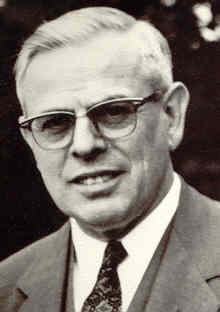
Stanley McCallum
Kingston, Jamaica – December 1950 |
|---|
As far as is known, this 1950 set of meetings is the first published ministry of Mr. McCallum, although he had served the Lord and the brethren acceptably in the ministry for some years.
- I did not know Mr. McCallum at the time and had just come 'into fellowship' – as we used to say – in August 1950, but they are of particular interest to me because they show:
- the positive and encouraging character of the ministry, which attracted me, when I first came among the brethren;
- the brotherly spirit among those who took part;
- the appreciation by the servant of the quality of the contributions by all, especially as in an area not noted for outstanding gift.
G.A.R.
Page Top
| SPIRITUAL QUALITY – 1 |
|---|
| Acts 1: 1-26; Acts 2: 1-4
|
|---|
S.McC. I was thinking of the book of the Acts having specially in mind the thought of spiritual quality appearing in those who are the subjects of divine workmanship in the book, and I thought it might be good to commence with the first chapter.
- It is hoped that in the pursuit of our enquiry together in a subject and dependent way we shall see the greatness of the Spirit's place in this book, and also the great place the assembly has.
- But it is particularly in mind to centre our thoughts on the thought of spiritual quality appearing in persons who come before us uniquely in this book, and who are serving in the testimony in relation to the promulgation of the thoughts of God. It is important, I am sure we would all agree, that in the closing days we should see the necessity for quality.
- I suppose at no time has there been such insistence on quality in the minds of men in the world as at the present time. Quality has a unique place, and great efforts are made in order that the materials and the like might be of dependable quality,
- and how much more so should it be in the testimony, and in relation to the assembly in the finishing of the dispensation. We are to be concerned about the matter of quality, quality in persons, for this book brings persons before us.
- Christianity is not something in the air, it is a living system of things centring in Christ glorified and the Spirit here. Then it is worked out, not just in books, nor in ritual or ceremony, but in persons who, coming under the hand of divine Persons, have been wrought upon by Them, and give evidence and testimony to that work.
- It is in mind as we go on to speak of Peter, Stephen, Philip, Paul, and others, and especially to see the place that women have, because it is of all moment that the sisters should understand the place they have in the present economy, the place they have to fill out in usefulness, whether old or young, because this book shows us quality in persons both old and young.
I thought we might begin with the first chapter which has primarily in mind those who were the fruit of the Lord's own personal service in the days of His flesh here, and they are brought before us in relation to the upper room in Jerusalem.
- We should dwell for a moment on the remarkable way in which Luke opens the book by drawing attention to Christ presenting Himself to His own, as it says,
- "I composed the first discourse, O Theophilus, concerning all things which Jesus began both to do and to teach, until that day in which, having by the Holy Spirit charged the apostles whom he had chosen, he was taken up; to whom also he presented himself living, after he had suffered, with many proofs; being seen by them during forty days, and speaking of the things which concern the kingdom of God".
- Now, we are to note the way the Lord continues to use the Spirit although He had been into death. When He came into manhood and entered into public service He referred to the Spirit, according to Luke, being upon Him as He stood up in the synagogue in Nazareth, and the Spirit was used by Him all through His pathway.
- Chapter 1 of Acts views the fact that He had died, and been buried, and had risen again, and we are to note the stress on the Holy Spirit. Because by way of model and example the Lord Jesus is setting out what is to be the true source, spring and power of all service in persons, whomsoever they may be that are used in the testimony in the book of the Acts.
J.R. Is this quality to be seen in the saints as the result of the work of the Holy Spirit?
S.McC. I thought so, because none of us are to rely on anything we may be naturally. There is nothing so uncertain in the things of God as anything we may have naturally, be it a keen mind, or keen perception naturally, be it a humble disposition naturally, or an obstreperous disposition naturally. None of those things can be relied upon.
- We have to make room for the Holy Spirit. He is the great power by which things are to be done in this book, so that the book might be rightly termed 'The Acts of the Holy Spirit'.
J.R. It was at Antioch that the disciples were first called christians. They were like Christ.
S.McC. Yes, at Antioch, showing I suppose that the name came out through what would be expressed in them. It was not a name given from heaven, but a name which seemed to be given in relation to what was expressed among them.
O.E.F. So Paul says in Philippians 3: 3,
- "We are the circumcision, who worship by the Spirit of God, and boast in Christ Jesus, and do not trust in flesh".
S.McC. Very good, showing what a complete deliverance there had been with Paul from judaism which claimed to be the circumcision. Paul understood the whole setting of christianity – that the Spirit was the great power and means by which things are done.
F.W. Do you have something in your mind as to the Lord using the Holy Spirit Himself in this first chapter?
- "Having by the Holy Spirit charged the apostles whom he had chosen".
S.McC. The way the Lord Jesus moves in these forty days has especially in mind, by way of precept and example, to inculcate into the minds of His disciples the way things were to be done. That is by the Spirit, not by natural resources or human strength, but by the Spirit.
- The Lord Jesus could say in resurrection, according to Matthew 28: 18,
- "All power has been given me in heaven and upon earth".
- But here it is remarkable that the Person who says that is presented to us as by the Spirit charging His apostles whom He had chosen – delightful reference – "whom he had chosen".
L.C. Would this expression "whom he had chosen" bring to our minds His choosing in regard to the pearl of great value? Quality had been in His mind in making that choice.
S.McC. Exactly. I am sure there is something in that. Before choosing these men He had spent a night in prayer to God. What ground must have been covered in that all night season of prayer! What He must have gone through in communion with God about the matter, and then they were chosen. It would bring in the great idea of spiritual quality.
- Of course, we have to bear in mind that among them appears Judas of whom the Lord says,
- "Have not I chosen you the twelve? and of you one is a devil," John 6: 70.
- In the great public profession we have to bear in mind that there may be what is unreal, and Judas represents that side. He is in the place of outward relations with Christ as many in the profession are. But this chapter soberly unfolds to us that he is an apostate, a very humbling thing which should search every one of our hearts.
- Because every one of us may be so near to divine Persons, the Lord Jesus, and the Holy Spirit, even perhaps be useable in any service, and yet there is always the possibility of a Judas coming to light. We have to watch that element. Only the work of God will go through.
F.H. The Lord's word to the woman in John 4: 23 was, "The Father seeks such as his worshippers". She had been the subject of the work of God and there was quality and reality with her.
S.McC. I am sure it has in mind the thought of quality, and I think the Lord would impress our minds with that this afternoon, that it is not a question of anything and everything, but a question of divine selection, divine choosing, and what can any of us say about the matter?
- If, in the sovereignty of God, and the exercise of His mercy, we have come into the line of the testimony, what can we say in the presence of it all? The Lord has in mind quality to carry on the testimony, and these persons come before us as persons of quality as under His hand.
M.D. "The Spirit said to Philip, Approach and join this chariot" in Acts 8: 29. Was there spiritual quality with Philip?
S.McC. Yes, we shall see that. He was a man with the quality of an evangelist. He was a remarkable man, and he had remarkable daughters, showing that there was not only quality in the man himself, but in his house.
- He had four daughters who prophesied; where and how is something we need to look into, but the Spirit of God says that they prophesied and we may be sure that they did.
G.S.R. In John 15: 16 the Lord says, "Ye have not chosen me, but I have chosen you".
S.McC. John's gospel has in mind very specially what is trustworthy, that the Lord could commit things into their hands, and we know that naturally we are not trustworthy. In the beginning of John we have,
- "Jesus himself did not trust himself to them, because he knew all men, and that he had not need that any should testify of man, for himself knew what was in man", John 2: 24-25.
- But as divinely wrought upon we become trustworthy vessels, and John's ministry has that particularly in mind.
J.R. In Acts 1: 15 it speaks of "the crowd of names". Would that suggest what is distinctive?
S.McC. That is what I thought, and the allusion to the women among them is interesting. We are to note how women enter into this setting in the upper room and are marked by spiritual quality.
- But before going on to that, the matter of the Lord's sufferings is alluded to in verse 3,
- "to whom also he presented himself living, after he had suffered, with many proofs; being seen by them during forty days, and speaking of the things which concern the kingdom of God".
- We are not to forget the impress the writer would put upon our minds and spirits as to the sufferings of Christ. How much we owe to them! Indeed, we owe all to the sufferings of Christ, and we shall see as we proceed with this book what spiritual quality shines testimonially in sufferings.
- However great the sufferings might be, we shall find features of spiritual quality shine in the persons in suffering, and we are not to forget the suffering, whether in Christ, or by extension in the saints of the assembly. Suffering is our privileged portion, and we ought to thank God for it all the time.
E.C.L. Would suffering enter into the making? The Lord says to Simon and Andrew,
- "Come after me, and I will make you fishers of men", Matthew 4: 19.
S.McC. I think there is something in that. Think of the Lord taking them in hand, and take all the personnel that are here today; each one has a certain individuality, and think of the Lord making disciples of us! Think of what He has had to take in hand in oneself, and in the rest of us.
- We are all different in temperament and make-up. We know, some of us in the field of engineering, how hard it is, and what a trial it is to work on difficult material.
- Well, think of the Lord working on material such as we, and we can thank God for the results, not that there is any praise to any of us, but to Him under whose hand we have come.
J.B. Would you say the woman of Samaria in John 4 was marked by spiritual quality after she came in contact with the Saviour?
S.McC. I think so, and we would like to see a lot of sisters like that. She did what the twelve did not. They were occupied with material things, but she was thinking about attracting the men of the city to Christ, and so wonderful was her testimony – she must have been remarkably affected because of the power there was in her testimony – that the men of the city followed her.
J.W. Would Rebecca in Genesis 24 be marked by spiritual quality in her readiness to follow Abraham's servant?
S.McC. I think so. Scripture abounds with suggestions in persons as to quality, right from the beginning to the end, and Rebecca is one of them. Of course, we have not time to go into all the examples that may come up.
- In our enquiry this afternoon we are centring on the beginning of the Acts to see what is making way for the great vessel which is about to come into view, the assembly, as formed by the incoming of the Spirit. A vessel that is to take the place of Israel in the ways of God, and in which the testimony of grace is to be set out.
- Acts 1 brings certain persons concretely before us. The Lord is preparing the way in His service for the descent of the Spirit, and they are to become accustomed in their minds and thoughts to what is spiritual, because the Lord is stressing the spiritual side
- Think of what the baptism with the Holy Spirit would mean; what a powerful touch that would be in their lives. Think of the first touch when Christ called them, when He said, "Come after me", and then think of what this touch, yea, more than a touch would be.
- The baptism of the Spirit involves that they would be merged together in that great vessel of grace in the dispensation, the assembly, the body of Christ.
O.E.F. I was thinking of the personnel as making room for the Spirit. Holy men of God were used by the Spirit of God in writing the Scriptures.
S.McC. It is a very great matter that the personnel should be kept before us. Men make a lot of personnel these days. Their records are voluminous that deal with personnel, but think of the personnel that form the assembly.
- While the assembly is a glorious entity, the body of Christ, we are not to lose sight of the fact that that entity is composed of individuals such as we are. They constitute the personnel, under the hand of divine Persons, in relation to the promoting of divine ends in the economy of grace.
- So that in the baptism of the Spirit what a testimony there would be in persons coming under the influence of the Spirit. If you met a person under the influence of the Holy Spirit you could not help feeling there is something different about that brother or that sister.
- I am sure we all need to be concerned more and more as to what the Lord has in mind here in His education of His disciples that they are to come under the hand of the Spirit. We are to get that into our minds that we are to come under the hand of the Spirit.
G.S.R. In connection with that does the word in verse 3 bear on it,
- "to whom also he presented himself living, after he had suffered, with many proofs".
- Is there a suggestion in that as to the Spirit's quickening service? The last impression the apostle had was of a living person who would give character to the system.
S.McC. I am sure that is right, for in the presentation of Himself living there was something in that in the way of testimony that was to affect them and is to give character to the whole system of christianity.
- Because christianity is a living system, and life is to be seen by extension in persons who are made to live in the life of a risen and ascended Man, because we are quickened in that life.
L.C. Is it a matter that the Lord Jesus accumulated certain material during His time here, and now is entrusting that material to the Holy Spirit and now it would be a question of what the Holy Spirit would make of these persons.
S.McC. Yes, I think that is what chapter 2 would bring us on to. But here the Spirit has not yet come. The Lord is with them during the forty days prior to the Spirit's coming.
- He is serving to help the disciples educationally in view of the coming of the Spirit and the fact that the Spirit was to take them on. They were to form part of the vessel the assembly that the Spirit would indwell, and were to be used by the Spirit in relation to that vessel.
S.W.R. What is the difference between the baptism of John and the baptism with the Holy Spirit?
S.McC. You notice that twice in the chapter reference is made to John's baptism, in verses 5 and 22. Now, there is a moral element in the matter of John's baptism that we are not to forget. The Lord is not pushing John's baptism aside.
- Notice the word "indeed". "John indeed baptised with water". That was the baptism of what we might call separation, through which the remnant were separated from what then existed.
- But the baptism of the Spirit is a merging baptism, which involves not so much that we are separated from something, but merged by the act into the glorious vessel that constitutes the assembly.
- But with John's baptism there is a moral element that we are not to lose sight of, because you will notice when the matter of selecting one in the place of Judas comes up, it says,
- "it is necessary therefore, that of the men who have assembled with us all the time in which the Lord Jesus came in and went out among us, beginning from the baptism of John until the day in which he was taken up from us, one of these should be a witness with us of his resurrection".
S.W.R. And that was maintained right on till the Ephesian disciples were found.
S.McC. Well, it would look like that, but there was something amiss there, and they had suffered from it in that they had not received the Spirit. It seems as if the baptism of John forms a kind of background for what the Lord proceeds with in relation to His service. He Himself said about it
- "thus it becometh us to fulfil all righteousness", Matthew 3: 15.
J.G. Is the baptism with the Spirit done once and for all in relation to the assembly?
S.McC. Well, the Spirit does not come twice, He came once. I know that in certain hymnals and others too, there is the thought of the renewing of the coming of the Spirit, but that does not fit in with the teaching of the Scriptures.
- The Spirit came once, He does not come again. 1 Corinthians 12:
13 says,
- "we have all been baptised into one body".
- The reception of the Spirit involves that we have part in this glorious entity that is formed of everyone who has the Spirit. In that way the baptism with the Spirit covers the dispensation.
J.R. Is it a fact that we have been baptised into one body when we receive the Spirit?
S.McC. We come vitally into the assembly as receiving the Spirit, because we could hardly refer to a person who does not have the Spirit as forming part of the body of Christ.
- Of course, what God will do at the rapture is another matter. Many persons who have just a little link with Christ, who may have the forgiveness of sins but not the Spirit, God will do wonderful things at the rapture, because I do not think there will be any person in heaven who belongs to this dispensation and has the forgiveness of sins who will not have the Spirit.
- We have the Spirit, of course, in this dispensation in a way that no other family has.
J.R. Is that where spiritual quality commences?
S.McC. That is what I think. The reception of the Spirit involves the beginning of the formative side of the work of God, because what we take in by faith in the way of light, and the receiving of the forgiveness of sins and justification, hardly alludes to the formative side of the work of God. It is a question of what we appropriate of the work by faith.
- Numbers 21 involves the life line. The reception of the Spirit and His service in us has in view the work of God subjectively bringing about spiritual quality.
There are a few interesting words to be noted in this chapter, and we should note the word in verse 4 "assembled", and then we have it in verse 21, "the men who have assembled with us".
- Notice the disciples are taking on the use of this word. In the first section it stands related to Christ assembling with His disciples, and now Peter takes on the word in this section.
- "It is necessary therefore, that of the men who have assembled with us".
- There is dignity about that word "assembled". It links on with the idea of the assembly, but we do not have the assembly in chapter 1 of the Acts, and it is well to keep that in mind. We have to come to chapter 2 before we get the assembly.
F.W. You mean the personnel were there, but the Spirit had not been given yet?
S.McC. Exactly. The assembly is formed by the Spirit; you have the assembly when the Spirit comes.
- Of course, the Lord says in Matthew 16: 18, "on this rock I will build my assembly",
and in Matthew 18: 17, "tell it to the assembly" which is anticipative,
and in John 20: 22 "He breathed into them, and says to them, Receive the Holy Spirit".
- That was pattern and anticipative. We have to wait till Acts 2 before the assembly is actually formed by the coming of the Spirit.
A.E.McC. Is there a suggestion of quality in the Lord saying to them that they were not to leave Jerusalem until they had received the Spirit? He does not say how long they would have to wait, but He would leave them with that word.
S.McC. That is very good, because the element of trustworthiness enters into that. The Spirit had not yet come, and I think these men and women are a wonderful tribute to the work of Christ. The Lord in John 17: 6 speaks to the Father of "the men whom thou gavest me".
- Think of what each of them was to the Lord Jesus, and how, in the days of His flesh He had served them and carried them through.
- "He said to them, When I sent you without purse and scrip and sandals, did ye lack anything? And they said, Nothing", Luke 22: 35.
- They had lacked nothing; but think of how He had cared for them, even in a paternal way, for He had been a father to them.
- Think of what they were, each of these persons with a known history who had been under the hand of Christ, because we must remember that the nucleus of the assembly in these persons is the fruit of the service of Christ.
S.T. So you would say that these men and women would learn from this blessed unique Person – all these features exemplified in Him, so that with the incoming of the Holy Spirit they would be witnesses here for the Lord Jesus; they had witnessed the way He did things and taught.
S.McC. That is right. Jerusalem would have in mind the very place, outside the gates of which He had been crucified. It is a wonderful testimony of grace.
- We should think of the grace that enters into it that in the very presence of the most terrible wickedness expressed in the Jewish leaders, and in those of the nations, that in that very place, grace was to be expressed in the testimony of the word of God in the glad tidings.
- The Lord said to them they were to remain there. They might have said, 'they will do the same to us as they have done to You', but there is nothing of that. In the very scene where Jerusalem had lifted its head against the vessel of grace, Jesus, they were to abide there until they received the Spirit from on high.
It is a great thing that we should see this matter of quality, because quality involves ourselves, as Peter and John said, "Look on us".
- It is a wonderful thing when you can not only point a soul to what may help him in the Scriptures, but when you can point him to persons in whom the truth is working. That is a great matter, and is what is in mind here; each of these men and women had a history with God, and with the Lord Jesus.
E.C.L. The Lord in Luke went through city by city, and certain women went with Him. That would be a testimony.
S.McC. It would, a wonderful testimony to the attractiveness of Christ in that way. Then it says in verses 12-14,
- "Then they returned to Jerusalem from the mount called the mount of Olives, which is near Jerusalem, a sabbath day's journey off
"And when they were come into the city, they went up to the upper chamber, where were staying both Peter, and John, and James, and Andrew, Philip, and Thomas, Bartholomew and Matthew, James son of Alphaeus, and Simon the zealot, and Jude the brother of James.
"These gave themselves all with one accord to continual prayer, with several women, and Mary the mother of Jesus, and with his brethren".
- Now we can see how the stress on quality is getting greater and greater. The upper chamber would allude to what is over against judaism which was vanishing away as Hebrews tells us. Wonderful things had been linked with Jerusalem, the temple and the glory, but now it is a transitional time, and persons are linked with the upper chamber.
- How do we get on with one another? All this enters into this matter of quality. Persons in whom God had wrought should be able to get on with one another. They recognised the grace that belonged to each; each is essential if the truth of the assembly is to be arrived at rightly and effectively.
S.W.R. Was it a normal thing for them to enquire in regard of the kingdom?
S.McC. Well, it is interesting the enquiry that comes up.
- "They therefore, being come together, asked him saying, Lord, is it at this time that thou restorest the kingdom to Israel?"
- Notice all these words, "being come together", "being assembled with them". The word 'meeting' does not appear in this chapter, it is assembling, a very dignified thought.
- "They therefore, being come together, asked him saying, Lord, is it at this time that thou restorest the kingdom to Israel? And he said to them, It is not yours to know times or seasons, which the Father has placed in his own authority;
"but ye will receive power, the Holy Spirit having come upon you, and ye shall be my witnesses both in Jerusalem, and in all Judaea and Samaria, and to the end of the earth".
- He is reminding them now that there are certain things that are beyond their ken. The Lord is drawing their attention to the supremacy of the Father in the economy of grace, and that is a thought that should touch our hearts. In the economy of grace the Father remains in the place of supremacy, the Lord Jesus and the blessed Spirit taking a subordinate position.
- In abstract Deity the Father, the Son and the Spirit are equal, but in the economy of grace the Father occupies the peculiar place of supremacy, and He has the times and seasons in His hand.
F.H. As this light of the dispensation is conveyed to them, does it settle the matter for them?
S.McC. I thought so. There is no other question raised. They are content to leave it. It is another tribute to the quality that was there, and what they were as coming under the hand of Christ, and they just leave the matter.
- "And having said these things he was taken up, they beholding him, and a cloud received him out of their sight".
- Now the sight period is over, and we enter upon the dispensation of faith.
We cannot pass on to this remarkable section at the close without referring to this matter of the women.
- "These gave themselves all with one accord to continual prayer, with several women, and Mary the mother of Jesus, and with his brethren".
- We have often thought of this matter – why should Mary the mother of Jesus be singled out and not left among the "several women"? But after all, in christianity divine Persons have a right to put forward whom They will.
- In the body of Christ we are all merged, and are all members of the body in that sense, we are all one in that sense. But what we are referring to now is the personnel of the testimony, and the Lord has the right to point to any one in whom a particular phase or feature of things may be presented to us.
- Like in Luke 7: 44 the Lord says to Simon the Pharisee, "Seest thou this woman?" Notice that. The Lord loves to single out persons in whom certain spiritual qualities may be present, and we want to be on the look out in our localities and make the most of any sister or any brother who has something.
- The point we are arriving at is the hidden wealth there is in christianity, and that is why the sisters are being brought forward, and we want to get at what is in the women, and get at the wealth that is circulating there.
S.W. There should be liberty amongst us to set forward those who have quality. Peter and John are first. They were men of quality and were set forward.
S.McC. Very good. That brings us to the thought of gift as we shall see as the book proceeds. It is remarkable that in 1 Corinthians 12: 28, a chapter which largely deals with the thought of the body, and the Spirit's place in the body, it says,
- "God has set certain in the assembly".
- It would never do to think of the gifts as set in the body, although part of the body, and a great means of wealth in the body, but the gifts are set in the assembly, so that there should be no overshadowing in the body. It is a poor thing if any ability a brother has becomes an overshadowing feature in any locality, and hinders the development of what is latent in the saints.
- You will always find where there is true gift, and true moral weight and worth under the hand of Christ, there will always be room for what there is latent in the saints. The Lord is laying stress on the hidden side of the body.
- Take all the sisters here, what a source of wealth they constitute! After all, what may come out in any given meeting depends largely on what is among the brethren. Gift is not like a water pump, you pump the handle and something comes out!
- Gift is in a setting of light and wealth, and there is ability to set in relief what may be there. F.E.R. said that gift was like a precious stone in the temple, it radiates the light. The light is there and gift radiates it.
E.C.L. "In those days Peter, standing up in the midst of the brethren".
S.McC. Not standing up above the brethren, but in the midst, and in those days. It is an interesting study in the book of the Acts in the first ten chapters to look into this matter of "in those days". You will find it a few times referred to, and you find it here.
- "In those days Peter, standing up in the midst of the brethren".
- It is a matter of leadership in regard to a given matter on hand, and nobody seems to appoint Peter. He sees what is needed, and we should concentrate now on this section and see what appears in Peter. He had a knowledge of the Scriptures, and what he says is from the Scriptures, showing that he was a man who read them.
- I think that is a word we need to take to heart as to whether we read the Scriptures, and as to whether we know the Scriptures, because that enters into our subject of spiritual quality.
E.C.L. The Lord reads from Scripture, saying,
- "To-day this scripture is fulfilled in your ears", Luke 4: 21.
S.McC. No doubt Peter must have been affected by the Lord's use of the Scriptures. The Lord used them in a remarkable way in His service at Nazareth, and in the wilderness in regard to Satan.
- There is nothing more effective than the word of God. Peter says it is necessary that the Scripture should have been fulfilled. Now notice this – it shows in Peter one feature of quality –
- "which the Holy Spirit spoke before, by the mouth of David, concerning Judas, who became guide to those who took Jesus".
- The Lord is charging the apostles by the Holy Spirit in the beginning of the first chapter, and Peter has got the gain of this. It is a great thing to be alert, and to apprehend things, and to be taught. For teaching is a great matter, especially in regard to the truth.
- The Lord had been inculcating into their minds this great matter as to the Spirit. Peter immediately takes it on and says,
- "that the scripture should have been fulfilled, which the Holy Spirit spoke before, by the mouth of David".
- I think that is a beautiful touch as to Peter as benefiting from the education. The Lord had just left them and gone up, and immediately there appears in the midst of the brethren the results of the education connected with the days the Lord was with them. That should come home to us. Are we quick learners?
H.F. It is very solemn what is said in regard of Judas,
- "that the scripture should have been fulfilled, which the Holy Spirit spoke before, by the mouth of David, concerning Judas, who became guide to those who took Jesus".
S.McC. Well, that is a very humbling matter how the Scriptures long before give us light as to Judas. I suppose in the Psalms Ahithophel would be in mind, the betrayer of David.
- What must it be to the heart of Christ to take account in christendom now, in the public profession, of the feature of betrayal. The matter is fully covered here. It says, "who became guide to those who took Jesus". That is a very interesting reference over against the Holy Spirit.
- When the Lord Jesus was going away He had to deal with Judas in the choice realm where love was operating in John 13. You remember how His spirit was troubled in relation to Judas, and then in chapters 14, 15 and 16 He draws attention to the Spirit and specially alludes to the Spirit as
- "the Spirit of truth … he shall guide you into all the truth".
- Here Judas is guiding those who took Jesus. What a contrast to the blessed Spirit who has come to guide us into all the truth.
- It says, "he was numbered amongst us, and had received a part in this service".
- A very humbling thing that. Hebrews 6 gives us a remarkable outline in relation to apostasy, and as to those who may
- "have tasted the good word of God, and the works of power of the age to come, and have fallen away, crucifying for themselves (as they do) the Son of God, and making a show of him", Hebrews 6: 5-6.
- For such there is no hope.
H.D. Does not Peter display great accuracy and authority in quoting the Scriptures?
S.McC. That is a great matter. There is nothing more important than that we should know the Scriptures, and know them accurately.
- The word of God is important, and especially important in the assembly in matters and issues that may come up, and I think what you point out is interesting and helpful.
- The way they go through with this matter, and the matter of the resurrection, not the ascension, is stressed. Resurrection is the greatest testimony to the power of God. We do well to keep that in mind.
- Ascension links more with the inward, private, heavenly, spiritual side, but resurrection stands related to the moral question and the public testimony and is the outstanding witness in the dispensation to the greatness of God's power.
J.R. Would that have a place in the preaching?
S.McC. That is what one has in mind. Quality in persons would stress this side of the truth in the preaching of the word of God. It is a matter of a Man out of death, divine power operating miraculously in breaking the power of death.
- In Numbers 17 Aaron's staff budded, and brought forth buds and bloomed blossoms and ripened almonds. It is life established on the basis of a miracle, a witness to resurrection, which means we belong to another world.
- We are not going on with this world, and its passing show, and fashions, but we are going on with that world and the resurrection from the dead.
L.C. Does Peter take on another matter in that the Lord Jesus had said in verse 8,
- "the Holy Spirit having come upon you, and ye shall be my witnesses both in Jerusalem, and in all Judaea and Samaria, and to the end of the earth"?
- So Peter states here that the person who is to be a witness must qualify for being My witness, as having seen the Lord.
S.McC. It shows what a quick learner Peter was, and how he must have paid attention, and I think that is a great matter that we should pay attention, and not sit casually in the meetings. When we read the ministry, or are in the meetings, we are not to be casual, but to pay attention because that is how spiritual quality develops.
H.D. In chapter 2: 32 Peter says,
- "This Jesus has God raised up, whereof all we are witnesses".
S.McC. Heaven was honouring their selection. We might finish with a reference to verse 24,
- The Lord had delegated to them apostolic authority, but their humility of mind is interesting here. "Thou Lord, knower of the hearts of all". Notice, hearts, not minds, of all. "They gave lots on them, and the lot fell on Matthias, and he was numbered with the eleven apostles".
- That is a wonderful tribute to quality, while they are exercising apostolic authority in selecting one to fill the place of Judas, they are doing it in such a dependent way, bringing God into the matter.
Page Top Reading 1 Top
| SPIRITUAL QUALITY – 2 |
|---|
| Acts 2: 14-18; Acts 7: 55-60; Acts 8: 26-40
|
|---|
S.McC. Our enquiry this morning takes us to these three choice vessels. The passages we have read refer to Peter, Stephen, and Philip. The scope of course, is large, and we shall have to keep within certain limits.
- I think the Lord would help us to take account of the quality that appears now in such a definite way in these vessels like ourselves. Men of like passions, who are under the divine hand in relation to the testimony, always keeping in mind, as we suggested yesterday, the place the Spirit has in the assembly in relation to all this.
- We must not forget the place the assembly has, because the assembly is a great thought in the chapter. As we were saying yesterday, whatever ability there may be in our localities we must never let the thought of the assembly be overshadowed.
- It is a sorrowful thing in our localities when persons think they are greater than the assembly. They are on decidedly wrong lines, and may come to disaster. It may take years, but we have proved it and seen it working out practically.
- If there is one thing the Lord will not tolerate it is setting ourselves against the assembly and the background in Acts 2 is the assembly. The assembly has been formed, and Peter is standing up in relation to this setting.
- Our hearts and minds should be affected by the pristine state in the Pentecostal church, for however much in the revival of our day we may come to certain things spiritually, we never come to the actual glory that existed in the assembly in Acts 2.
- We may touch spiritually and morally in a wonderful way in the light of the Philadelphian church revival, wonderful things, but we shall never come publicly to the actual conditions of the Pentecostal church
- – that is, in the power that was there as the blessed Spirit in His sovereignty had free right of way, uninterrupted in His service by the conditions we have to do with in the broken state of things, and all the confusion publicly.
- Think of the power that was there, the souls that were affected in this chapter, and Peter standing up against this background and the power that is evident in his ministry as he
- "lifted up his voice and spoke forth to them".
Now we are to take account of Peter. He was quickly recovered, because his behaviour had been very questionable in the end of the gospels, but the Lord took him personally in hand – wonderful touch as to the grace of the dispensation. Peter was fully adjusted, so that we see him here standing up with the eleven.
- That is another thought that enters into our subject. Isolationism is to be avoided. Peter is not an isolationist, he is standing up with the eleven. "First Peter", he is leading in the ministry, but not independent of what is under the divine hand.
- He stands up with the eleven, and he lifts up his voice and speaks forth, and he alludes to what had taken place, and it is an interesting thing to see how even the sisters were affected in the Pentecostal state of things.
- We are reminded of the glory and the power that existed then. While there is no return publicly to what existed in the pristine state of things in the Pentecostal assembly, we are to learn from all that is there, and to see that the Spirit that was there then is the same Spirit that is here now amongst us and with us.
- While hindered greatly by public conditions, yet He is the same Spirit and we may touch the power that is linked with that blessed Person in His operations in relation to the testimony.
- It is a question now of the testimony in this setting, and its bearing upon men. The Spirit is contemplated as the Person who has authority. He is here in charge in the assembly.
D.M.D. You were referring yesterday to the need of knowing the Scriptures. Peter starts here by referring to the Scriptures.
S.McC. I think that is a very important thing, especially in having any part, however small it may be, in serving in the testimony. There is nothing like a knowledge of the Scriptures.
- You will find that certain systems that are promoting things around in this island now, do not believe in the atonement, or in the Person of Christ, or the Spirit. You will notice, in contact with them, remarkable ignorance of the Scriptures.
- It is a great thing that we should have a knowledge of the Scriptures in meeting all that we have to do with, not only in the assembly, but with men generally, because there is nothing that carries power like the word of God.
- It is an interesting thing that Peter brings to bear upon the situation in Acts 2 a Scripture that really refers to a day yet to come, showing how the Scriptures may be used in spiritual application in regard of a given matter on hand at the time.
D.M.D. Was it to bring forward that it was the Spirit's day, and everything that was to be done was to be done in the power of the Spirit?
S.McC. I think so. So that we have quite a scope of things in mind in the pouring out of the Spirit here.
- It is important that the sisters should see the bearing that the Spirit has on them as well as on the brothers. While they do not take active part in the assembly as the brothers are doing now, it is important to see what is in mind here is that the Spirit is poured out
- "upon all flesh; and your sons and your daughters shall prophesy", verse 17,
and in verse 18, "yea, even upon my bondmen and upon my bondwomen in those days will I pour out of my Spirit, and they shall prophesy".
- So that room is to be made for the bondwomen as well as the bondmen who can prophesy in the appointed sphere that is theirs. Philip's daughters prophesied, and it is evident from 1 Corinthians 11: 5 that there is the thought of women prophesying –
- "every woman praying or prophesying with her head uncovered puts her own head to shame".
- Paul says in regard to the assemblies that the women are to be silent –
- "Let your women be silent in the assemblies", 1 Corinthians 14: 34.
- That would be the Scripture that would govern things generally. Of course, we have to understand what the word "silent" means; it does not mean that sisters are not to sing and not to say 'amen'. It is apparent that the allusion is to teaching and exercising authority over the man.
J.R. I will pour out of my Spirit. Does that suggest a plentiful supply?
S.McC. Yes, it would suggest that God has given the Spirit in full measure. He is not holding back in any way. Pouring out suggests the plenitude, the copiousness of it and the fluidity of it.
- That is a wonderful thing, and we shall have to see the fluidity of the state of things in going through Acts, as over against the crystallised state of things in judaism.
- Legality always develops a crystallised state of things, whereas grace, and what is linked with the Spirit always gives us a fluid state of things, as Psalm 133 sets out.
- If there is anything we should avoid and be on our guard against it is legality, although someone has said it is better to be legal than loose, but still legality is to be avoided because it stunts spiritual growth, and spiritual liberty in divine things.
A.E.McC. Does "pouring out" suggest the thought of filling?
- It says of Stephen he was a "man full of faith and the Holy Spirit", Acts 6: 5.
S.McC. Very good. That would be in mind in the type in 2 Kings 4 as to the pouring out of the oil and would fit in with that. It is a question of vessels, and we are to notice in Luke's writings the vessels that are full of the Holy Spirit. Not full of themselves, but of the Holy Spirit.
L.L.C. In Balaam's prophecy he says,
- "Water shall flow out of his buckets, and his seed shall be in great waters", Numbers 24: 7.
S.McC. Very interesting. It is remarkable that the types of the Spirit are particularly fluid and moving. In John 3 you get the wind, and in John 4 you have the water, all to be noted as fluid and moving types and figures.
- It says in John 7: 38, in regard to the one who receives the Spirit,
- "out of his belly shall flow rivers of living water".
- It is a good thing to find a brother or a sister who is in the gain of the Spirit's presence. What a power for refreshment they would be in this place – rivers flowing from them.
L.McF. In the beginning of the chapter it says
- "they were all together in one place", Acts 2: 1.
- Would you say a word as to being together?
S.McC. That is a very good thought to notice, the importance of being together. I am sure there is more than a geographical or physical reference to place.
- I think the result of the Lord's service is enhanced in that way in that reference. We were referring to His service in the first chapter, and the result of it shines out in this verse that they were all together.
- Unity is a great thing in christianity and in the assembly, not being together just physically, but together spiritually, not living independently of one another, but in relation to one another.
E.C.L. In relation to the rivers it is noticeable that in Genesis 2: 10-12,
- "a river went out of Eden, to water the garden; and from thence it was parted, and became four main streams. The name of the one is Pison: that is it which surrounds the whole land of Havilah, where the gold is. And the gold of that land is good; bdellium and the onyx stone are there".
- Quality is seen there in the gold, and the bdellium and the onyx stone.
S.McC. It is, and one has often thought of that section in Genesis 2 where Christ and the assembly in type come particularly before us in the man and the woman, and reference is made to the rivers –
- "And a river went out of Eden, to water the garden; and from thence it was parted, and became four main streams".
- Then, as you point out, the resources are referred to in the regions in which it is flowing. I think the book of the Acts shows us that as the Spirit flows, speaking in the language of the figure, the resources that are to be employed in the testimony are coming into view. So that as we proceed through the book we shall find the gold of that land, and the bdellium and the onyx stone coming into view.
- If there is to be a testimony over against the broken state of things in christendom it is to be in the service of God as maintained in the power of the Spirit amongst us.
- While we do not ignore the rightness of ecclesiastical position – I am using the word in the right sense, the word in its root meaning – there is the right assembly position, the great thing is that in all the service, and in all our activities there should be a testimony to the free unhindered movements of the Spirit amongst us.
H.D. Is it to be noted too how the Spirit governed and controlled the conversation of the saints together? They spoke of the great things of God. Is that one of the features to be looked for today as making room for the Spirit?
S.McC. Very much so. It is a great thing that conversation should be controlled, that we do not allow in our homes and elsewhere our conversation to run uncontrolled.
- In the early chapters of Luke it is the same – the things that were the subject of conversation in the hill country in relation to vessels filled with the Spirit is interesting.
H.R. Would you link that on with chapter 16 where they went out by the river and there met Lydia? She would be one who promoted kingly features. She was a seller of purple.
S.McC. Yes, she was a very interesting woman, and she is part of our subject; we shall come to it, and I think what you say is right. She is an interesting woman, a woman to be noticed especially as coming under the Lord's hand, coming under His operations. It is said of her,
- "whose heart the Lord opened to attend to the things spoken by Paul", Acts 16: 14
- – a remarkable statement about a woman.
E.C.L. Would the places set out geographically in verses 9 and 10 show the places into which this river was flowing?
S.McC. I think so. The different settings as to the eunuch, and Cornelius, and Saul of Tarsus would show us the distribution of the streams, and the channels in which they are flowing, and that the grace of God is towards every man.
- "For the grace of God which carries with it salvation for all men has appeared", Titus 2: 11.
- The flowing rivers in these chapters have that in mind. I think we should consider for a moment this matter of the Spirit coming upon all, and all speaking, bondmen and bondwomen.
- How much do the brethren here look to the sisters for a touch in prophecy? What can they say about the sisters prophesying? We are not, of course, referring to what takes place in the assembly, but that does not alter the fact that in the New Testament sisters are referred to as prophesying, and there is ample scope at home for it. It is left to us to look into the matter.
- Philip had four daughters who prophesied. There must have been some time and somewhere that the brethren got the gain of that.
- We brothers are so inclined to be occupied with what we say, but we want to bring the bondwomen into the matter. Are there any Deborahs who can help in these matters? Bondwomen, subject women, not any kind of women. Paul speaks of silly women. We do not want to make room for silly women.
S.W.R. What some of the sisters have said has at times helped the brothers in deliberation.
S.McC. I think it is a great matter that in our homes, and in our conversation we give full weight to what the sisters have to say in matters.
S.S. With reference to King Lemuel –
- "the prophecy that his mother taught him", Proverbs 31: 1.
S.McC. Very interesting. What comes out in that chapter is really wonderful, especially as the book speaks a lot of the strange woman. Proverbs is a very interesting book that we should all give attention to.
- Chapter after chapter speaks of the foolish, the clamorous, and the strange woman. We want to pay attention to that subtle influence, and not make room for it. That is what is abroad in christendom, and it refers to the subtle spirit that is abroad that would turn our feet into the paths of hell, the paths that lead to hell.
- What you refer to is very interesting over against that, that there was a woman of worth. Solomon spoke about searching, and how difficult it was to find a woman of wortH.
L.C. You are stressing that the Holy Spirit is available to brothers and sisters alike, and the means of acquiring the mind of God.
S.McC. That is exactly what is in mind, and that we should be more concerned in our contacts with the sisters to get the gain of what they have, and may be passing through in the way of experience.
O.M.R. Speaking is referred to in the three passages we read.
- Peter "lifted up his voice and spoke".
Then Stephen "cried with a loud voice",
and Philip "opening his mouth … announced the glad tidings of Jesus to him".
Then in the scripture referred to in John 7: 37,
"Jesus stood and cried saying".
- All is in connection with the Spirit's operations. I was wondering whether it is of much importance that not one thing should be lost of what the Holy Spirit is indicating.
S.McC. The matter of the mouth, and the matter of speaking are important, because there is so much speaking today. It says in 1 Corinthians 14: 10,
- "There are, it may be, so many kinds of voices in the world, and none of undistinguishable sound".
- The great thing is we are to hear and discern the speaking, and the speaking in Acts is to help us in regard of what is in the power of the Spirit.
- Therefore what you allude to is a remarkable thing, because it shows the change that has come about through divine operations that man's mouth, which is so corrupt according to Romans 3: 13-20 has become so changed that it becomes the channel for this authoritative speaking.
I think we should proceed to Stephen in this relation now. Of course, there is much more about Peter that could be referred to because there is so much said about Peter, but there is no time to go into all that is said, and written about him.
- I think it would be well for us now to go on to Stephen, so that we might get help in seeing the quality that is expressed in this great vessel. He comes to light with Philip, as we know, in regard of the most menial kind of service,
- and I would like to say in passing to the younger brothers and sisters that whatever work is to be done, put your hand to it. It is not a matter of how menial it may be, but if it is in relation to the testimony, put your hand to serving the saints, and you will find that God will take you on and honour you in the service.
- There may not seem to be much in regard to attending to matters in the meeting rooms, and different menial things connected with the comfort and care of the saints. But as we addict ourselves to these things we will find that God will take us on, and the Spirit will take us on as He took on Stephen and Philip.
- They took on what was to hand in a small insignificant kind of way, but yet they were honoured in it, and these closing verses of chapter 7 show the glory that is linked with vessels who did what was to hand to be done.
J.R. Quality was seen in Stephen. He was full of faith and full of the Holy Spirit.
S.McC. Exactly. It is an interesting thing how faith is linked on with the Holy Spirit there. Full of faith and of the Holy Spirit.
- The two great resources in christianity are faith and the Holy Spirit, and it is a great matter that we should see the place faith has in these things. Full of faith and of the Holy Spirit.
H.F. Do we get the idea of the myrrh seen in Stephen? Suffering enters into the matter so that he comes out like his Master, and dies praying for his enemies.
S.McC. It is important to see how like his Master Stephen is. We shall be like the Lord in glory. That is the great objective before us that we are to be fully conformed to His image,
- but it is a great matter that we should be like Him now in spirit and in all our ways.
- Now the subject of sufferings is before us here. It is one thing to be like Him when nothing is taking place, but it is another thing to be like Him when faced with the awful energy of opposition that Stephen is faced with here.
- These people knew the indictment was against them, and yet in persistency they resisted the truth. It says in verse 54,
- "And hearing these things they were cut to the heart, and gnashed their teeth against him".
- Think of that! This vessel full of faith and of the Holy Spirit, and it says, "But" – the conjunction "but" is to be noted –
- "But being full of the Holy Spirit, having fixed his eyes on heaven, he saw the glory of God, and Jesus standing at the right hand of God".
- I think we are to see what kind of spirit, and what kind of attitude is necessary for this state of suffering that is immediately before us in Stephen's case.
H.F. Accuracy marks Stephen in going through the Scriptures.
S.McC. And think of the intelligence he had in regard of all the ways of God, and that should raise enquiry with us as to how we follow through matters. It is quite apparent that Stephen did, for he begins with Abraham and not with Adam. Why?
- It shows, I think, the quality that was in the man, the vessel. Abraham is really the new head, the head of the race of faith. Adam was the federal head of the human race,
- but God began anew and called out Abraham, and he becomes the right head of the line of faith as it says, "who is father of us all", Romans 4: 16. Stephen beginning there shows his intelligence.
E.C.L. Before he commences his oration it says,
- "And all who sat in the council, looking fixedly on him, saw his face as the face of an angel", Acts 6: 15.
- Would that depict the quality that was in Stephen as before the council?
S.McC. I am sure it would. It is the look in his countenance, the very glory was affecting his visage, his countenance, and yet in spite of what there was there they went forward, and Stephen has to suffer, and we have all been called to suffering. As Peter says,
- "if, doing good and suffering, ye shall bear it, this is acceptable with God. For to this have ye been called", 1 Peter 2: 20-21.
- We are called to it. It is not something we fall into by the way, it is something we have been called to.
- "For Christ also has suffered for you, leaving you a model that ye should follow in his steps", verse 21.
- Stephen would help us in relation to the quality that shines in suffering.
A.E.McC. It says of Stephen in Acts 6: 8, that he was full of grace and power. I was wondering if that does not enter into the position too.
S.McC. I am sure it does. He was a very full man we might say – full of faith and of the Holy Spirit, and then in verse 8 full of grace and power
- It is a remarkable thing about this vessel, and I am sure it is not a question of mere rhetoric in his address in meeting the enemy, but it is a question of these resources, faith, and the Holy Spirit, and grace and power. What a combination it is in a man like ourselves.
J.E.W. He was the first choice of the brethren. It is interesting to see that
- "they chose Stephen, a man full of faith and the Holy Spirit".
S.McC. Yes, that is interesting, "They chose Stephen, a man full of faith and the Holy Spirit", so that he heads the list there, and it is important in these matters of deaconal work that we should take it on in the light of these resources.
- We sometimes think if the work of a deacon is to be done it might be done by one who knows how to do it naturally, but it is a question of one being full of faith, and the Holy Spirit, and grace and power.
A.E.McC. They were chosen too. The disciples were chosen by the Lord, and here Stephen and Philip and others are chosen by the assembly.
S.McC. Well, I am sure there is something in that because the brethren knew what was there.
- It is an interesting and a remarkable thing that Paul had to call the attention of the brethren at Corinth to what was amongst them.
- There were certain persons of quality amongst the Corinthians they were not regarding or making way for, and this is a great matter in our localities. He says to them in 1 Corinthians 16: 17-18,
- "But I rejoice in the coming of Stephanas and Fortunatus and Achaicus; because they have supplied what was lacking on your part. For they have refreshed my spirit and yours: own therefore such".
- It is a great matter that in looking over the ground we should see what there is in our localities and make the most of what there is, and appraise rightly what there is, and that was the case with Stephen and Philip.
L.C. Varying conditions seem to demand various qualities. I was wondering, in connection with the service, as to whether the suffering connected with it would bring the quality of durability to light.
- It was seen in a man like Stephen serving in menial circumstances, and would these conditions connected with circumstances of suffering bring out the quality of the heavenly man in Stephen?
S.McC. I think that is right, and I think all the sufferings of the present time give divine Persons great pleasure because the features of the heavenly Man are coming out.
- Take the young brothers called into the armed services. Well, think of the testimony that comes before the authorities as to the heavenly kind of man that is present under their eye.
- It is not a question of a great display of power, but as Abraham set before Abimelech seven ewe lambs, the spirit of Christ in testimony in the type, and such as Abraham are not easily moved. Try and shift them from their ground, try and change their principles.
- What tenacity and stability there is in relation to the work of God in them, the features of the heavenly Man. I think it gives divine Persons great pleasure that, through suffering circumstances, there come out these heavenly features.
- If we have another world war the young men will have to face it. One thing about it to which they do well to take heed, is that the one thing that stands in the testimony before the authorities is what you are, not only what you say, but what you are.
- There are persons who have gone before tribunals and authorities with much to outline as to the truth of the position, but it did not carry much power, while others have just stated to the authorities that they are believers on the Lord Jesus Christ and it carried power. There was something there.
- We want to be prepared for every exigency. What we say will flow out of what we are, and it is not the amount we say, but after all it is a question of what Mark says,
- "for ye are not the speakers, but the Holy Spirit", Mark 13: 11.
- Only Mark says the Holy Spirit is the Speaker. Why Mark? I think it is interesting, because Mark has a special bearing on young men. He went back from the work as a young man, he was not prepared to go all the way.
D.M.D. Is that why in verse 55 "full of grace and power" is not brought forward, but
- "being full of the Holy Spirit, having fixed his eyes on heaven, he saw the glory of God, and Jesus"?
- It is linked with the glory of another world.
S.McC. That is right. Full of grace and power would have reference to the testimony in its effect upon men, but the Holy Spirit would bear on the heavenly side, so that our entrance into what is heavenly lies in relation to the Spirit.
- Then notice the dignity of this sufferer, and the spirit that marked him in verse 59,
- "And they stoned Stephen, praying, and saying, Lord Jesus, receive my spirit. And kneeling down, he cried with a loud voice, Lord, lay not this sin to their charge. And having said this, he fell asleep".
- What a spirit in a sufferer like Stephen!
J.R. Is that the spirit of the dispensation?
S.McC. That is it, the spirit of the dispensation, and it is a great thing that we should get it into our minds. Because you know, people do us wrong sometimes, in our businesses, or in our work, and we are liable to be recriminatory in our thoughts, and speak accordingly.
- We are likely to take up the attitude of the ordinary man, but what is to be expressed are features of the heavenly Man – the meekness and gentleness of Christ. I think we all have to take courage, because these two men, Stephen and Philip appear in the very midst of the apostolic section.
- The apostles, of course, thought it was below their dignity to serve tables. While none of us would like to say much that would cast any reflection on the apostles, it is to be noticed what they said, because the Spirit of God seems to leave them for a while and make much of these two men, who were prepared to put their hands to the work, and do it.
- You find that in so many places there are only a few who put their hands to the work. Those who do not do it, it is not to their honour, it is not to their blessing, because you will always find that persons who put their hand to the work and do what is to be done, God takes them on and honours them.
C.W. Do you think the Spirit of God in calling attention to Stephen brings before us the intrinsic quality that you are speaking of over against what is official?
S.McC. That is just the way to express it – intrinsic quality. It is not a garment to be put on for certain occasions. It is not an attitude to be adopted, but it is what the man was intrinsically by the work of God.
- We are referring to the work of God, and what is coming out is what the man really was according to the work of God, and it is a great matter that we should get the full gain of that in any of us.
H.D. He fixed his eyes on heaven, not on his persecutors, and
- he "saw the glory of God, and Jesus standing at the right hand of God, and said, Lo, I behold the heavens opened, and the Son of man standing at the right hand of God".
- He remembers the Lord's own words,
- "Ought not the Christ to have suffered these things and to enter into his glory?", Luke 24: 26.
S.McC. It is important to see that, if I may use the expression we have used recently, Stephen was occupied with the 'unseen world', and I think we all, and especially the younger brethren, want to get our eyes filled with a view of the unseen world.
- Take this world and all that is against us, the might of man arrayed in all its strength in different associations, trade unions and other things, we do not want to get our eyes on that so much, but on the unseen world. Hebrews tells us,
- "ye have come to mount Zion; and to the city of the living God, heavenly Jerusalem; and to myriads of angels, the universal gathering; and to the assembly of the firstborn who are registered in heaven; and to God, judge of all; and to the spirits of just men made perfect; and to Jesus, mediator of a new covenant; and to the blood of sprinkling, speaking better than Abel", Hebrews 12: 22-24.
- We want to get our eyes filled with that view. The young man in Elisha's day had his eyes opened. 2 Kings 6: 17. You remember Mr Darby, in one of his hymns, says – there is much of the wealth of these hymns which is not in our hymnbook –
'What powerful, mighty Voice, so near,
Calls me from earth apart –
Reaches with tones so still, so clear,
From th' unseen world, my heart?'
– showing how he thought of the unseen world, and all that was linked with it – Christ and the assembly, the myriads of angelic hosts that surround us in all our goings. Little do men know the myriads of angelic hosts that surround us; even as we go by car we pray to God for angelic care and ministration. These things are real.
C.W. Stephen saw the glory of God and Jesus, but before that it says, "being full of the Holy Spirit". Is that the power and spring that would occupy him with what is unseen?
S.McC. That is it and it is a great matter, so that Stephen is a choice vessel. Would to God we were like him more, and what is to be noted in his indictment and address is that he makes the most of Moses. The biggest part of his address is surrounding Moses.
- There is something in that, because Moses made a definite choice to suffer affliction with the people of God, esteeming the reproach of Christ greater riches than the treasures of Egypt. It is interesting how Stephen makes so much of Moses, whereas Paul makes so much of David in his address at Antioch in Pisidia.
We should finish with a word as to Philip. I think Philip would encourage those who have in their hearts the subject of the gospel, and open air work. It is a great matter that open air work should be carried on. It gives great opportunity to the younger men to develop and to see what they have.
- We are now in the finishing of the dispensation and Philip would help us as to the evangelical side. There is, maybe, an Ethiopian eunuch to be met, or it may be a Samaritan in the principle of the thing, where there is a lot of work to be done.
- Philip's work had to have a certain amount of adjustment, but he was prepared to get the gain of it.
S.T. Philip goes out and purchases to himself a good degree.
S.McC. We are all to have that in mind, to do things well. After all, especially on this island in view of getting a job in the Civil Service you have to apply yourself, how much more so in the assembly?
- We are to apply ourselves and do things rightly, and well, and accurately. No one gets anywhere who does not apply himself. Ability to serve does not come suddenly out of the air. J.N.D. said if there was more devotion amongst us there would be more gift.
J.R. Do you think the brethren are especially supported in the preaching if they have the assembly in view?
S.McC. I am thankful you have brought us to the suggestion that the assembly is to be in our minds as a background.
- Philip seems to be going on individual lines, but it is very interesting to see how the work is incorporated in what is going on in the assembly. Peter and John came down and looked over the matter, and Philip does not say to them 'this is my work, you have nothing to do with it'.
- He is subject to the adjustment and gets the gain of it, and then the Spirit takes him on in these closing verses. The Spirit would delight to take us on as we are ready to be adjusted in these matters.
F.W. The Spirit speaks to Philip.
S.McC. What can we say about the Spirit speaking to us? The Spirit is a divine Person, and He can speak, and there the test lies as to whether we are moving in communion with the Spirit, and whether we are sensitive and can discern when the Spirit is speaking to us.
- The angel spoke to Philip earlier, and the angel would hardly denote what is linked in a distinctive way with the dispensation. Angelic speaking is more in the Old Testament, but the Spirit speaking is linked with the New Testament.
- The angel represents God acting providentially in speaking to us, perhaps in the loss of a job, or a bereavement, but the Spirit is a divine Person with us and in us directing in regard of the service.
H.D. Philip obeys immediately. When the angel spoke, "he rose up and went", but when the Spirit speaks he runs.
S.McC. It is a great thing to be immediately available for whatever the Spirit may be indicating in any line of service.
- This was one man, not three hundred or more, but one man, and the Spirit is moving in the area of his service and directing the service in relation to one man, and it is a wonderful thing the way Philip is amenable to the direction of the Spirit.
- "The Spirit said to Philip, Approach and join this chariot".
- Not join the eunuch. In dealing with souls the thing is to get alongside of them and find out about their circumstances. We never know who God may pass our way. He may pass our way someone to whom He would have us speak about his soul. Some refuse, but others in these circumstances are thankful for a word as to these matters because many realise the need of looking into their links with God. So the word is "join this chariot".
- These scriptures point us to how we are to learn from these vessels how to link on with men; how to link on with men having God and Jesus in mind, and the glad tidings of Jesus in mind, and get some opening to speak about their souls.
H.W. We are to be encouraged as Peter tells us,
- "If ye are reproached in the name of Christ, blessed are ye; for the Spirit of glory and the Spirit of God rests upon you", 1 Peter 4: 14.
S.McC. Well, indeed we have to see that, that suffering is our portion, a wonderful favour that has been given to us. You know we are liable to think of it as something awful, but it is a divinely conferred favour, and we are to take it up and go through it in the dignity of having the Spirit, the Spirit of glory, and the Spirit of God resting upon us.
Page Top Reading 2 Top Next Reading 3