Menu•SiteMap |
Ministry
Spiritual Manhood
and other
Ministry by A. J. Gardiner
– Part One
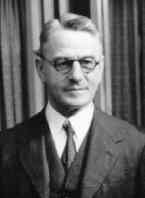
Mr. Alfred John Gardiner – of London, England – spent a long life of devoted service to the Lord and to His people
- in the care of the saints locally
- in the ministry of the word universally
- as a trustee of Stow Hill Depot for many years
- in the revision of the hymn book
- in preserving the history of the brethren.
He was loved and respected by all.
- His ministry will be appreciated as challenging and edifying, and always in "the spirit of meekness" that befits "a bondman of the Lord".
G.A.R.
Page Top
| THE BELIEVER'S BODY |
|---|
Romans 12: 1-2; 1 Corinthians 6: 11-15, 19-20
Address at Winnipeg, February 14th, 1959
|
|---|
Each believer has that which can be presented to God as a living sacrifice.
- Each believer, as having a body, has that in which the will of God can be done, and that is of great moral value in a world where men do their own will.
- We read of the Lord Jesus saying, as coming into the world,
- “Sacrifice and oblation thou didst not desire; ears hast thou prepared me. Burnt-offering and sin-offering hast thou not demanded; Then said I, Behold, I come, in the volume of the book it is written of me, To do thy good pleasure, my God, is my delight, and thy law is within my heart”, Psalm 40: 6-8
- – and with that in mind a body was furnished to Him.
- You can understand what pleasure God would have as He took account of the movements down here of the Lord Jesus, movements in His body, as He contrasted them with movements of men all around, who were doing their own will and seeking their own glory.
- Now God has in mind that what He had in perfection here in Christ should be continued in us His saints.
- And each of us, therefore, is to learn to regard his or her body as something of priceless value, which can be, and is to be, used for the pleasure of God.
- It greatly dignifies our bodies to regard them in that light, and our lives become sanctified and valuable to God as they are filled out in the light of the possibilities there are of ministering to the pleasure of God in our bodies.
- If we think of that it makes things practical.
- We are exhorted in the sixth chapter of this epistle to the Romans to yield ourselves to God as those who are alive from among the dead, and our members as instruments of righteousness to God. So that it is not to be a theory with us.
- It is not to be an abstract idea which does not work out in what is practical, our members are to be held as instruments of righteousness to God, that is to say;
- our hands, what we do; our feet, where we go; our minds, what we think of; our eyes, what we look at.
- All these things are practical and our members are all intended to be held at the disposal of our God.
Romans 12: 1-2
This exhortation that we have in the twelfth chapter of the epistle to the Romans is the result of the teaching that has gone before in the epistle.
- The epistle to the Romans is a most important epistle, a fundamental epistle.
- We are not to regard it as elementary, as something we can dispense with as having got past it, we are to regard it as essentially fundamental and therefore most important;
- because you know that if you are going to build, the higher you want to go in your building the deeper you must go in your foundations,
- and therefore the more we want to progress in the things of God, the more we must look to see that we are established in the truth of Romans. That is a very important matter.
- Take on by all means the truth of the epistle of the Ephesians, may God enable us to do it more and more, but the more we do so let us also see that we are paying attention to the epistle to the Romans, because that is fundamental and, as I have said, the higher you would build, the deeper you must go in your foundations.
- Now the epistle to the Romans takes account of the fact that we all need the gospel, it is instruction for believers as to the gospel of God.
- It is a good thing to recognise that we all have need of the gospel, and that means that we have all needed to be redeemed, and redeemed at infinite cost.
- And we are never to lose the sense that we have been redeemed, and that involves that God Himself and the Lord Jesus have absolute rights over us, rights that cannot possibly be denied and yet we may deny them practically.
- Redemption means that God has established rights over us, and our happiness and blessing, as well as what is morally right, lie in our recognising that unreservedly.
Now in the third chapter of Romans we are told that God sets forth Christ as a mercy seat through faith in His blood. Think of God calling our attention to Christ, setting Him forth as a mercy seat through faith in His blood.
- He is directing our attention to Christ in His glory, Christ in the presence of God, and presents Him to us as a mercy seat; that is to say, the place from which God speaks to men in mercy. It is through faith in His blood.
- It means that in the blood of Christ God has established a basis on which He can come out to us in mercy without surrendering anything that is right. That blood of Christ, how wonderful it is.
- The blood of Christ involves that the life of Jesus, so infinitely precious, moment by moment, to the heart of God, was laid down in death.
- The blood witnesses to that, that God surrendered that precious life in all that it meant to Him, never to have it again in that character.
- He has it again in another character, but the Lord never resumed flesh and blood condition after He had died. That life was given up, which had yielded unfailing pleasure to God, moment by moment, throughout thirty-three and one half years,
- save for that period of three hours when He was abandoned of God, when instead of the unfailing favour of God being His portion, He knew the depths of woe as sustaining in His Person all that God is against sin in wrath and judgment.
- Not for one moment, not for one hour, but for three hours. How much was concentrated into that! How much the personal glory of Christ shines in His ability to stand in that moment – forsaken of God. No creature could stand in that position, nor could any creature in any way enter into the judgment of God and emerge from it.
- But our Lord Jesus has entered into that position, forsaken of God, enduring the wrath and the judgment of God and exhausting it too, so that all that God is against sin, which otherwise would be against us, might be meted out to Christ and sustained and exhausted by Him,
- that we might be freed, and that God might be set free in righteousness to come out in mercy to whosoever will. Wonderful glory, the glory of the mercy seat!
- The mercy seat was the point from which God spoke to men, and that is the present position, that God is addressing Himself to men, and we are among them, in mercy that cannot be impugned, which cannot be challenged, because it has as its basis this precious death of Christ.
- And so it says, “whom God has set forth a mercy-seat, through faith in his blood, for the shewing forth of his righteousness, in respect of the passing by the sins that had taken place before, through the forbearance of God”.
- How were Adam’s sins forgiven? How were Abel’s sins forgiven? How were David’s sins forgiven? How were the sins of all the Old Testament saints forgiven? What was the basis of it? The basis of it was the precious death of Christ, which God knew would be effected in due time.
- “For the shewing forth of his righteousness, in respect of the passing by the sins that had taken place before through the forbearance of God”
- and then it says: “for the shewing forth of his righteousness in the present time, so that he should be just, and justify him that is of the faith of Jesus”.
- That is the position in the gospel and God loves to set it out before us.
- The intention is not simply that we should be brought into peace before God, the intention in it is that we should get a great view of God and His blessedness and His glory, in not surrendering, as I say, anything that is right,
- and yet establishing a means, through the blood of Christ, by which He can come out in all the glory of mercy and forgiveness and justification from every charge. Wonderful thing!
- Now that is part of the teaching of the gospel. And then in the fourth chapter of the epistle to the Romans we have to learn that the principle on which we are blessed is the principle of faith, and that makes everything of God. Not of works lest any should boast, it says.
- We have faith. Faith, itself, is the gift of God, but then it goes on to say that righteousness was imputed to Abraham on the principle of faith and will be imputed to us on that same principle,
- if we believe on Him, that is on God, who raised up Jesus our Lord from the dead, who was delivered for our offences and raised for our justification.
- Think of God delivering Jesus for our offences, think of Him raising Him for our justification. What a God we have to do with!
- You can understand how in the light of all this, the apostle begins to beseech us by the compassions of God.
Where should we be but for the compassions of God?
- And they are compassions that have come out to us in this remarkable way, so that we are not only justified, but we have peace toward God through our Lord Jesus Christ, and there He is at the right hand of God in His position of lordship to administer all the blessings that He has secured through His death.
And so in the fifth chapter of Romans it says,
- “Therefore having been justified on the principle of faith, we have peace towards God through our Lord Jesus Christ”.
- The Lord is administering the blessings, just like Joseph in Egypt.
- You remember in the days of Elijah there was the long drought, and then when God was vindicated in the offering by Elijah on mount Carmel, Elijah said, there is a sound of abundance of rain, and he sent his young man to look, and after a time the young man saw a cloud like a man’s hand appearing – a man’s hand!
- That is administration of blessing now in the hands of a Man! And that is exactly what we have in the epistle to the Romans in chapter 5 and onwards.
- It was not very long before that man’s hand became a cloud from which there was a great pour of rain. That was not judgment, it was grace, it was what they needed.
- And that is what the fifth chapter of Romans gives us, a great outpouring of divine grace, through the administration of our Lord Jesus Christ – a man’s hand has appeared, so to speak. So it says,
- “by whom”, again it is through our Lord Jesus Christ, “we have also access by faith into this favour in which we stand”.
- Has everybody here got access into the favour of God? It is not simply that He is not against us, but He is positively favourable,
- “access by faith into this favour in which we stand, and we boast in hope of the glory of God”.
- Are we rejoicing in hope of the glory of God? It is going to appear shortly – the glory of God. And saints may know it in their own souls now and rejoice in it – the glory of God.
- What a God He is – delighting in mercy, yet surrendering nothing that is right, establishing through Christ His right to bring in mercy, and then coming in in His power and raising up Christ from among the dead, and setting Him in the place of the administration of blessing. What a God we have!
And then we go on in the epistle to the Romans and we have to learn not only how God has dealt with our sins, our guilt,
- but then we have to learn what sin in the flesh is and how terrible it is, how incurable it is.
- It says, the mind of the flesh is enmity against God, for it is not subject to the law of God, for neither indeed can it be, and they that are in flesh cannot please God. We might say: what an impossible situation!
- It is impossible to everyone but God, but not impossible to God. Redemption having come in, God is free to give the Holy Spirit, and He does give the Holy Spirit to those who obey Christ.
- Do we appreciate that gift? The Spirit we have received is the Spirit of life in Christ Jesus. It is the Spirit of life in another Man, the heavenly Man.
- Having been set apart by death from all that we were as in the flesh, we are set up in the power of life in Christ Jesus, life in the heavenly Man, that is the riches of God’s grace.
- I am speaking of these fundamental things, because we want to come into the joy and power of the glad tidings. We can never serve God acceptably if we are not in the liberty and power of the glad tidings. And we can never take on the most glorious features of the truth, if we are not well grounded in the glad tidings.
- And so, as I say, we want to read the epistle to the Romans over and over again, and get to God about it, so that we understand it.
- And let me say to the younger ones here: Do not read the Scriptures in isolated verses, read them consecutively, remember that the epistles are intended to be understood. They are not intended to be mysterious to us.
- We have received the Holy Spirit and the Lord is able to give us understanding if we seek Him in relation to it.
- Read the epistle to the Romans over and over again. Read two or three chapters at a time. Do not pick out selected verses from the Scriptures and read them. You will never get very far that way,
- but read the Scriptures consecutively, understanding that they have been written so that they should be understood,
- and the Lord will give us understanding, by the Holy Spirit, so that we grow up into the truth and prove its power.
And so when we read on in the epistle to the Romans we are introduced to the thought of God’s purpose, because
- what underlies the glad tidings which is so blessedly opened up to us in the epistle to the Romans, is the purpose of God.
- It speaks of whom He did foreknow. I ask the young brethren here whether each one of them has taken it to heart, that you were known by God personally before the foundation of the world? You were in God’s heart and mind before the foundation of the world. What for? Well, read on and you will see what for. It says:
- “Because whom he has foreknown, he has also predestinated to be conformed to the image of his Son”.
- That is what God has in mind for you and me,
- “to be conformed to the image of his Son, so that he should be the firstborn among many brethren”, Romans 8: 29.
- That is to say, God has in mind to have a great expansion of Christ before His eyes and heart. Christ is there the joy of His heart, and now God wants that expanded in many sons conformed to His image, Christ Himself the firstborn amongst many of His own order.
- God has foreknown us before the foundation of the world with that in view, and having foreknown us and predestinated us, He called us by the gospel.
- When God called you by the gospel it was not simply that you might never come into eternal perdition, that is certainly a result of your receiving the glad tidings, but
- what God had in mind when He reached you by the gospel was this purpose of His that you should be conformed to the image of God’s Son that He might be firstborn among many brethren.
- Well now let the greatness of this and the dignity of it, the exalted character of it, sink into our minds and hearts, dear brethren. And so it says,
- “But whom he has predestinated, these also he has called; and whom he has called, these also he has justified”
- – the matter of our sins had to be dealt with, and God has justified us on the principle of faith and on the ground of the death and resurrection of Christ,
- “but whom he has justified, these also he has glorified”
- – that refers, I do not doubt, to the gift of the Spirit. What a glory it is to have received the Holy Spirit. Do you know it makes you greater than the greatest man in the world, than the greatest mind among men, than the greatest personality among men?
- It all fades into insignificance compared with someone who has the Holy Spirit of God. You can see it in the book of Genesis.
- Look at the history of Jacob who is a pattern of one who is a subject of the calling and work of God; how does he finish his days? He goes into the presence of Pharaoh, the greatest potentate of that day, and Jacob blesses him. Just a simple pilgrim, he blesses Pharaoh. And, as Scripture says,
- “Beyond all gainsaying, the inferior is blessed by the better”, Hebrew 7: 7.
- That is to say, Jacob was greater than Pharaoh. He goes into the presence of Pharaoh and he blesses him.
- He represents God in blessing that man, Pharaoh. And he repeats it, he blesses him a second time and then he goes out from his presence. It does not say that Pharaoh says, Now you can go. The whole matter is in Jacob’s hands.
- He is greater than Pharaoh and he moves in dignity as representing God and conveys the Spirit of God, in blessing, to that man.
- And then he blesses his sons faithfully telling them the truth in regard of themselves, yet blessing because he knew God. And he blesses Joseph, and he blesses Joseph’s sons. Jacob is a great blesser! And that is what we are to be.
- “Bless and curse not”, Romans 12: 14.
- We have been called to it, the question of representing God in our spirit and attitude toward men. What could be greater than to be representatives of God? And that is what we are here for as having received the Holy Spirit of God.
- I mention those few details in connection with the epistle to the Romans, so that our interest in the epistle to the Romans might be quickened, and that we might follow it up in our consideration of the Scriptures and our meditations upon it, so that we may become more and more established in the true grace of our God.
And now the apostle, at the end of chapter 11, bursts out in a doxology.
- There are four doxologies in the epistle to the Romans. A doxology is a spontaneous outburst of ascribing glory to God, or to Christ as in chapter 9.
- In going over the teaching, the apostle’s heart becomes filled with the sense of how blessed God is, and how blessed Christ is, and so he bursts out in four doxologies in the course of the epistle.
- And he has just burst out in one of these at the end of chapter 11, ending up with this:
- “For of him, and through him, and for him are all things; to him be glory for ever. Amen”.
And now he says “I beseech you therefore, brethren, by the compassions of God, to present your bodies a living sacrifice, holy, acceptable to God which is your intelligent service”.
- What an appeal it is! We may say, How can I serve God? Well, you have a body. All sorts of things are available to you, there is much can be done in the way of visiting. A young brother or sister might well visit, for there are plenty that could do with being visited now and then.
- You might say, I do not know that I can bring much. Never mind, maybe you could read the Scriptures to them, or a little bit of ministry, or tell them a little of what you had in the meeting when they have not been able to be there.
- Why not be practical in these things? We have bodies for that very purpose. Jesus went about doing good, and we are to go about doing good, using our bodies in a way that is acceptable to God.
- You can ask the Lord what He would have you do. Paul, the greatest of all the apostles, when he was converted, said:
- He had to learn first of all to appreciate his local brethren and to be prepared to receive guidance from them.
- But at the same time the Lord has His rights over each one of us and we can say, What shall I do, Lord? It is an important thing to see that not one of us is idle and certainly to see that we are not pursuing our own will.
- We have been redeemed. Egypt is a type, in Scripture, of the world – not in its worst forms, as men would say. It is not Sodom, nor is it Babylon, but it is just Egypt.
- And Egypt is a type of the world that lives in independence of God and does its own will. That is the character of the world as typified in Egypt, and God has redeemed us out of it.
- He redeemed His people out of it. That means that we are to be completely delivered from the principle of living to ourselves and to hold our bodies, which God has given us, as available to Him, it is our intelligent service. It is the beginning of what is priestly.
- The epistle to the Romans leads up to what is priestly, and this is the beginning of it,
- It is quite definite, dear brethren, be not conformed to it. Be afraid of anything that is taken on outstandingly by the world. You do not want to be marked by the world. You are not of it.
- The Lord has said, “they are not of the world, as I am not of the world”, John 17: 16.
- Remember that! What a standard! The Lord says that, speaking to His Father: They are not of the world, as I am not of the world. And if the scripture speaks in this way of the world as something we are not to be conformed to, let us see that we are not.
- It is not a question of legality, it is a question simply of obedience, and affection for Christ.
- “They are not of the world, as I am not of the world”.
- And so let us take these things to heart, dear brethren, and the more we do, the more we shall be conscious of the pleasure of God, of the approval of God.
- “And be not conformed to this world, but be transformed by the renewing of your mind, that ye may prove what is the good and acceptable and perfect will of God”.
1 Corinthians 6: 11-15, 19-20
I read the passage in Corinthians because that brings out in a remarkable way what the value of the believer’s body is.
- The apostle refers to certain terrible things. I suppose it is probable that none of us have been marked by the particular things that he refers to in verses 9 and 10 of that chapter and he says,
- “These things were some of you”. But then he says,
“But ye have been washed, but ye have been sanctified, but ye have been justified in the name of the Lord Jesus and by the Spirit of our God”, 1 Corinthians 6: 11.
- That is true of all of us. In the mercy of God we may not have been marked by the dreadful things in verses 9 and 10, but it is certainly true of us all that we have needed to be washed, we have needed to be sanctified, we have needed to be justified, and we have been washed, sanctified and justified, in the name of the Lord Jesus.
- That refers to the renown connected with His work, the value of His precious death, we have been set apart by it to God. We have been washed from all that marked us; we have been sanctified, set apart to God; we have been justified; in the name of the Lord Jesus,
- but then it also adds “and by the Spirit of our God”.
- That brings in what is practical. The name of the Lord Jesus – we are washed, sanctified and justified in the name of the Lord Jesus – that brings in what is objective.
- But then it also says “and by the Spirit of our God” and that brings in what is subjective.
- That is, as we are brought practically by the Spirit under the control of Christ, we are practically washed, and we are practically sanctified, and we are practically justified.
- That is to say, our course justifies the position we are in before God, we are justified in the Spirit.
And now the apostle goes on. He speaks of meats, he says,
- “Meats for the belly and the belly for meats; but God will bring to nothing both it and them”.
- That is, we are not to be too much occupied with meats. We are not to think too much about what we eat, or be too much concerned about it. We eat only to keep the body alive, in order that we may do God’s will. We do not want to eat for the sake of eating or make a great business of what we eat.
- “Meats for the belly, and the belly for meats; but God will bring to nothing both it and them”. The scripture says,
“Whether therefore ye eat, or drink, or whatever ye do, do all things to God’s glory”, 1 Corinthians 10: 31.
- If I eat or drink, my object in eating or drinking is just to satisfy my hunger or my thirst in order that I may continue to serve God in this body. That is all that is in it and we do not want to make any more of it than that.
- If we do, we are in danger of idolatry; the reason why we eat or drink is that our body may be maintained in vitality so that we may do God’s will. So whether eating or drinking we glorify God. Then the Spirit goes on to say,
- “but the body is not for fornication, but for the Lord, and the Lord for the body”.
- The body is for the Lord, how it dignifies the body that it is for the Lord, and the Lord is for the body. The Lord is for it. All the authority and grace of the Lord are available so that we may be encouraged, and enabled, to view our body as for the Lord. The body is for the Lord and the Lord for the body. What a great thing it is!
- I think you can see, dear brethren, as we begin to think of these things, how morally exalted the body of the believer is. It is for the Lord and the Lord is for the body.
- Later on in this epistle it says he that is called being a bondman, that is a slave, is the Lord’s freed man, but he that is called being free, which would apply to all of us now, because none of us are slaves now, is the bondman of Christ. It is remarkable how Scripture puts things.
- A slave who is called becomes the Lord’s freed man. The Lord frees him so that he takes up his position in relation to the Lord and not in relation to his master.
- But he that is called being free becomes the bondman of Christ, and that applies to each of us – the bondman of Christ. That is to say, He has absolute rights over us. And so the body is for the Lord and the Lord for the body.
And then it goes on to say,
- “Do ye not know that your bodies are members of Christ?”
- That is another thing. How dignified they are, how watchful we should be as to what we do with our bodies if we remember that they are members of Christ.
- That is to say, I take Christ anywhere I go. If I go somewhere I take Christ there, because my body is a member of Christ. I not only take the brethren there. Later on the epistle shows us that I take the brethren there.
- But this is something even more exercising, that I take Christ there. Your bodies are members of Christ.
- Well, that greatly elevates the thought as to our bodies and at the same time greatly exercises us as to how we use our bodies; that we are to present them a living sacrifice, holy, acceptable to God, and that they are members of Christ.
Finally, “Do ye not know that your body is the temple of the Holy Spirit which is in you?”
- That is, God Himself has taken possession of the body of each one of us by virtue of the Holy Spirit dwelling in us, and our body becomes His temple. It is a dignified view of it, the temple of the Holy Spirit. That is a most touching thing!
- One has often thought of it as one gets older and you see saints getting older and losing their faculties, it may be, and even their mental powers, it may be. You see them getting very frail and yet the Holy Spirit never leaves them. What a comforting thing it is, dear brethren!
- And our bodies are temple of the Holy Spirit. Think of the Holy Spirit being content to dwell in such conditions as our bodies afford. And yet the very fact of His dwelling in those conditions exalts the body into this glorious view of it.
- It is a temple, not a tabernacle, but a temple, a dignified dwelling place for God Himself. That is what the body of each believer is. “Do ye not know”, the apostle says, as though he is surprised that they do not know it.
- “Do ye not know that your body is the temple of the Holy Spirit which is in you, which ye have of God; and ye are not your own? for ye have been bought with a price”.
- He comes back to that, this great basic matter of redemption,
- “ye are not your own for ye have been bought with a price”.
- After bringing out this most wonderful thought as to the body of the believer being temple of the Holy Spirit, he adds, ye are not your own, ye have been bought with a price;
- and, therefore, the only logical conclusion, if I may put it that way, is “glorify now then God in your body”.
- That is how the Spirit of God ends this paragraph –
- “Glorify now then God in your body”.
Well, could there be anything greater, dear brethren, than for us to recognise that the body we have is thus capable of being used to the glory of God.
- Day in and day out, that is what we are here for, to glorify God. And we can accept God’s ordering for us, the detail of what He orders for us in our circumstances in the spirit of obedience.
- That is what the Lord has led in. He has led in the spirit of obedience. It says of Him,
- “Who, subsisting in the form of God, did not esteem it an object of rapine to be on an equality with God; but emptied himself, taking a bondman’s form, taking his place in the likeness of men”
- – that was one wonderful step. He who was in Godhead form and who was and is God, taking a bondman’s form, that is, taking up human conditions.
- But even then, He went further. As having become Man, He did not take the greatest place among men,
- “and having been found in figure as a man, humbled himself, becoming obedient”
- – becoming obedient right down to death, and that the death of the cross. Now obedience has been glorified by the pathway of Jesus
- Obedience is what is morally right in a man in relation to God, or a woman, too, of course.
- Christ has glorified the pathway of obedience by pursuing it, undeterred in all that it involved for Him, even to the death of the cross.
- And God has shown how morally excellent it is in His sight, in that He has raised Him from the dead and highly exalted Him and given Him a Name which is above every name.
- Now all that is intended to help us to see that there is a moral excellence attaching to obedience,
- and our bodies here are the vessels in which that which is so morally excellent should be worked out for the pleasure of God day by day,
- and as we do so we shall find that we ourselves are conscious of divine approval, and are sustained by the Spirit in the joy of eternal things.
May the Lord bless the word to us, and may each one of us have a sense as we have never had before of the value of our bodies.
Page Top Article Top
| SPIRITUAL MANHOOD |
|---|
Psalm 1: 1-3; Luke 2: 25-35; 2 Corinthians 12: 1-5;
Address at London, July 23, 1953,
at meetings on The Worship of God
|
|---|
I have in mind, dear brethren, to say a word as to manhood in a spiritual sense, including, of course, both brothers and sisters;
- first, in relation to piety,
- and then in relation to spirituality,
- and then the great elevation which Scripture presents as open to a man in Christ.
It is clear that God takes pleasure in men, and that itself gives cause for thanksgiving on our part, but He desires full growth, He desires manhood.
- Of course, when we are first brought to the Lord and receive the glad tidings, we commence as babes in Christ, and that is normal at that point, but it ought not to remain so for long. God has nothing less in mind than that we should develop into men, men in Christ.
- You remember that the apostle in writing to the Corinthians, spoke to them reproachfully and said he had to write to them as babes in Christ. That was a serious matter, for he had laboured among them and exemplified the truth among them for eighteen months, and yet when he wrote to them some little time after, he had to say that they were babes in Christ.
- He says, For when one says, I am of Paul, and another, I of Apollos, are ye not men? that is, men according to what the world around thinks of manhood.
- But to be men according to that standard is a reproach to a Christian, and so, along with that, as taking on the characteristics of the world around, and being men in that sense, that involves that as to what we really are we are only babes in Christ.
Well now, as I say, God has in mind that we should grow and develop in manhood.
- Many of us have had before us in Ephesians 4 that what is in mind in the ministry which the Lord gives from heaven in the power of the Holy Spirit operating in the gifts, is that we should arrive at the full-grown man, at the measure of the stature of the fulness of the Christ.
- God has nothing less in mind than that, and if He comes out with His thoughts of blessing towards men, He has ability in the Holy Spirit to bring about a perfect answer to those thoughts in manhood.
- So we are to apprehend in Christ the great standard of manhood according to God. We are to come to the unity of the faith and of the knowledge of the Son of God.
- The Son of God is to stand out before our hearts as the great ideal, speaking reverently, that God has before Him of manhood, perfectly responding to Himself and to all that He desires;
- and the contrary character of the scene in which we are for the moment in God’s ways, is all intended in His wisdom to develop us in features of manhood.
- But the secret of the development is that God Himself is before us and is brought in in a practical way in our consciences and exercises into the circumstances of our life here.
You may remember that in the history of Jacob, as Laban and Jacob were about to part, never again to meet so far as we know, they came to a point which they called Mizpah, meaning “watchtower”, and Laban takes the initiative;
- he calls upon Jacob as before God, the God of Abraham and the God of Nahor, to bear in mind that when they are parted from one another and no one is with them, God would be witness between them,
- that is to say, he set Jacob in his own consciousness in the sense that even when Jacob was separated from everybody else, was not in the presence of the brethren, notwithstanding that, the eye of God was upon him.
- That is a very salutary matter, dear brethren, and it is very remarkable, that God should use Laban to bring that to bear upon Jacob.
- It was Jacob that God had in mind for development spiritually. Jacob was on the way to the house of God, to Bethel, which is a further thought, and greatly helps in the promotion of practical piety with us, but to begin with he came to this point, Mizpah, in which he was to remember that wherever he was and even when he was not with the brethren, the eye of God was upon him.
- I say that is a very wholesome matter, dear brethren, and later on in the history of Israel, Samuel took it up as a great judge, as one of the places that he visited yearly in his circuit among the people. He judged the people there. He judged them also at Bethel, but he judged them at Mizpah.
- If matters came up for judgment when Samuel was at Mizpah he would say to them, ‘Have you forgotten that God sees, have you forgotten that God has His eye upon you?’ All that is brought to bear upon the saints to help us in the moral exercises that result in the development of true manhood, and God uses the contrary conditions of this present world to further this process of development that He has in mind for us.
- As I say, after Jacob left Mizpah he came two or three chapters afterwards to Bethel, the house of God. That was the point that God had in mind to bring him to just then. When he comes to that point and is according to God and can present a drink offering there, then the first stage of Jacob’s spiritual history has reached its climax.
- The thought of Bethel, of course, is that we are the house of God, not simply that God’s eye is upon us but that God Himself is dwelling in His people. He is always there, He is present. Not simply His eye upon us as it were from a distance, but He is there with us, dwelling in us as a matter of great nearness, and that is something that will greatly help us.
- The exercises of recent years as to the Holy Spirit have helped us greatly in this direction to remind us that the Spirit has taken up His abode in us, not simply collectively in the assembly but in us each individually.
- He has taken up His abode in us and there He dwells; and so we are always near to God and God is always near to us, and He is near to us in love, but as never surrendering the holiness which befits His presence.
So this psalm says, “Blessed is the man that walketh not in the counsel of the wicked, and standeth not in the way of sinners, and sitteth not in the seat of scorners”.
- Notice the ‘nots’, the great emphasis, you might say, that the Spirit of God would place upon the ‘nots’. It is a question of a man going through an evil world in which he is in contact with wicked and sinners and scorners, but the attitude of his soul is ‘not’. He maintains the spirit of separation.
- He may have to have dealings with such men in the course of his business, but the attitude of his mind is that he will not walk in the counsel of the wicked and he will not stand in the way of sinners and he will not sit in the seat of scorners, because God has said that such an one is blessed.
- One of the psalmists, the psalmist who wrote Psalm 119, said,
- “thy word have I hid in my heart, that I might not sin against thee”, verse 11.
- How important and practical that is, beloved brethren. Another important principle from the practical standpoint is that as we go forth every day, we go forth as armed, as it says in the epistle of Peter,
- “Christ, then, having suffered for us in the flesh, do ye also arm yourselves with the same mind; for he that has suffered in the flesh has done with sin”, 1 Peter 4: 1,
- that is to say, in the light of the sufferings of Christ you arm yourself with this purpose of heart that you are not going to allow the flesh to have dominion over you.
- There may be all the influences around that would tend to draw in that direction, but you arm yourself with that mind, in the light of the sufferings of Christ, that it is well for us to suffer in the way of the disallowance of the flesh, and thus to preserve our liberty, and at the same time develop in what is pleasing to God.
- So one has often thought as a practical matter, dear brethren, that if Peter had had this word hidden in his heart he would never have sat down to warm himself at the fire with those who were hostile to Christ, and if he had not done that he would not have been overcome, he might not have gone to the length of denying his Lord three times. But, alas, he did not have this word in Psalm 1 hidden in his heart.
- Hence the value of reading the Scriptures, so that they are there in our hearts, they are there as something hidden that the Spirit of God has furnished in His faithfulness to us and can bring out as occasion requires.
- The more we read the Scriptures, the more we acquaint ourselves with them, the more substance we have in our souls, even though we may not understand them at the time, the Spirit of God can draw upon and use them in a preservative and sanctifying way as well as an edifying way.
- So such an one as this, who is deliberately minded to be separate is blessed. God says it – he is blessed. Never mind what people say, God says he is blessed. People may say it is narrow-mindedness, and that it is a very narrow path, but God says, such an one is blessed.
Then there is not only what is negative, but there is that which is positive.
- It says, “but his delight is in Jehovah’s law, and in his law doth he meditate day and night”.
- It is a daily matter, not something that is taken up spasmodically and then left, but “in his law doth he meditate day and night”. That brings in what is positive.
- We have often referred to the distinguishing features of the clean beasts that God’s people of old were allowed to eat, that is, that they were marked by the cloven hoof and chewing the cud. The cloven hoof is verse 1; the chewing of the cud is verse 2, and the two things put together constitute cleanness that God takes account of and commends to His people.
- So it says that “his delight is in Jehovah’s law, and in his law doth he meditate day and night and he is as a tree planted by brooks of water, which giveth its fruit in its season”.
- He is constantly fresh, a tree planted by brooks of water.
- It is remarkable how constantly there are allusions in the Scripture to the Holy Spirit of God and the way that we can draw upon the wealth there is and the faithfulness there is in the Spirit of God; sometimes spoken of as a river, here spoken of as brooks, but something as to which there are roots that draw from it: “he is as a tree planted by brooks of water”.
- You may be sure that if a tree is planted by brooks of water the roots of the tree will go down into the brooks of water, and so
- “he is as a tree planted by brooks of water which giveth its fruit in its season and whose leaf fadeth not; and all that he doeth prospereth”.
- What a commendation that is of such a path as this. The Spirit of God says, all that such an one does prospers. It is the secret of prosperity; we get other features of prosperity mentioned in the Scriptures. We are told in the book of Daniel that Daniel prospered – this Daniel
- We get that at the end of Daniel 6 and so it throws us back in our minds to see what kind of a man Daniel was, the kind of man that prospered.
- Then you get in Psalm 122 that the one that loves Jerusalem prospers, the one who prays for the peace of Jerusalem,
- “they shall prosper that love thee”.
- That encourages us to have the whole assembly in our minds and the prosperity of the assembly, and to be looking out on the whole position to see what there is that is affecting the saints adversely and to be praying in relation to it and seeing what can be done in regard to it.
- They who “pray for the peace of Jerusalem; they shall prosper that love thee”.
- Well, this matter of practical piety in the circumstances of life is one of great importance. We read in the epistle to Timothy that the mystery of piety is great – And confessedly the mystery of piety is great. God has been manifested in flesh.
- A wonderful thing to contemplate that God Himself in the Person of Jesus has entered, sin apart, into the ordinary circumstances of human life in which His people are, and moved in them in a way that expressed complete dependence on God, entering in at a point and in a manner in which dependence is emphasised, entering in as a babe.
- You could not have a greater expression of dependence than you find in a babe, and the Spirit of Christ through the psalmist says,
- “I was cast upon thee from the womb; thou art my God from my mother’s belly”, Psalm 22: 10.
- He entered into the circumstances of human life and glorified God in that practical piety which is proper to man, He Himself setting it out in perfection at every point. So we read in Hebrews 5 that He was heard on account of His piety.
- Think of God taking account of that; the pleasure He had in one Man on this earth who in every circumstance of human life moved through it as bringing God into His life and glorifying Him in the dependence and obedience that are proper to man.
Well now, I pass on to Simeon because he is a man; it says,
- “and behold, there was a man in Jerusalem”,
- His interests were there. Jerusalem was God’s centre of interest on the earth at the time. I need not say that what corresponds with it now is the assembly, and Simeon was a man in Jerusalem; that was where he lived.
- We are not told anything about the street or the house in which he lived, but he is said to live in Jerusalem. That is to say, that is where his interests were, that is where his life was found, and he is a man in Jerusalem and he is a named man,
- “and this man”, it says, “was just and pious, awaiting the consolation of Israel”.
- What the Spirit of God is about to emphasise is the spirituality of the man, and what resulted from his spirituality in the way of praise to God, intelligent praise to God, and in the way of a prophetic word to the mother of our Lord.
- The Spirit of God is going to emphasise that, the spirituality of the man, but before introducing that we are told that he was just, that is, righteous in a practical sense, and pious. I mention that, beloved brethren, because we have been speaking of piety and manhood in piety, and because there is no way to arrive really at spirituality if we neglect piety.
- Practical righteousness and piety must be there as an underlying basis for the development of spirituality.
- So this man was just and pious, and it says the Holy Spirit was upon him. Not only so, but the Holy Spirit had communicated to him
- “that he should not see death before he should see the Lord’s Christ” – the Christ of God.
- The day of the Spirit had not yet come actually because Jesus was not yet glorified; at the same time, here he is. The Spirit of God is taking him up as setting out in him features that are to come to light in this day of the Spirit. He was one, you might say, on familiar though reverential terms with the Holy Spirit.
- The Holy Spirit was upon him, the Holy Spirit had communicated certain things to him and he came in the Spirit into the temple. His movements were in the Spirit and it says,
- “as the parents brought in the child Jesus that they might do for him according to the custom of the law, he received him into his arms, and blessed God”.
- Think of the outward smallness of the position, dear brethren. It was taking place in Jerusalem, it is true, but who was there in the secret of what was going on? There was Joseph there, and Mary there, and the child Jesus, and Simeon.
- As far as we know there was no one else there; no one else having part in these great matters. Outwardly the position was very small. I am only saying that for the encouragement of any who find themselves in localities in which the position is very small outwardly.
- But there were certain essential features there. Mary was there, who loved Christ, and Joseph was there who accepted responsibility. These are two important features in any locality, however small the position may be actually, that there should be genuine affection for Christ, and readiness to accept responsibility, and the readiness to accept the reproach of the smallness of the position that the truth may involve.
- So these elements were there and Simeon is not deterred by the smallness. Indeed the Spirit of God tells us that Joseph and Mary were poor. They were not able to bring the full offering that is provided for in the book of Leviticus and had to have recourse to the smaller offering that grace provided for those who were poor.
So the position was not at all strong or impressive outwardly, but there were those essential elements there in Joseph and Mary, and then there comes in this great and important element of a man who is characterised by the Holy Spirit.
- I might have said, and one might say at this point, that what we had in the first psalm really paves the way for spirituality, for it says in the first psalm that what characterises the blessed man of that psalm is that his delight is in the law of God – he delights in it.
- We find that brought in in Romans 7. The speaker in Romans 7 says,
- “for I delight in the law of God according to the inward man”, verse 22,
- but then he finds that there was a law warring in his members, the law of sin, and operating against the law of his mind and he cries out
- “who shall deliver me out of this body of death?”
- and the answer is, the Spirit of God. He says, “I thank God”, that is the answer, and the man arrives in that way through actual experience, and identifying himself in mind with the work of God in him, at what he was inwardly by God’s work, and he learns to repudiate the working of the flesh and to recognise that the Spirit of God was available to him as power.
- He arrives in that way at the reality of deliverance, but then he arrives at this that the Spirit is the only power for life. Paul knew it experimentally in large measure.
- He said, “for the law of the Spirit of life in Christ Jesus has set me free from the law of sin and of death”, Romans 8: 2.
- How good it is to be free, free from the law of sin and death as regulated by the Spirit of life in Christ Jesus, the Spirit of God known in that way as holding the heart in relation to the Man Christ Jesus, who is always the delight of God, so that the influence of Christ by the Holy Spirit is known as affecting us and governing us in our outlook and movements.
- Then in that chapter we find that we are led on to the point that the Spirit is life on account of righteousness.
All that is paving the way for spirituality, that is to say to become characteristically spiritual, so that your tastes are spiritual and you find you have the capacity to understand spiritual things and to move in them in the power that the Holy Spirit affords, and in spiritual intelligence, too.
- So, coming back to Simeon it says,
- “as the parents brought in the child Jesus that they might do for him according to the custom of the law, he received him into his arms, and blessed God”
- – he received the Christ of God into his arms. As I say, he is undeterred, not in the least affected by the outward smallness, because what great enlargement the Spirit gives when once we begin to have an apprehension of the Christ as the Christ of God. It does not matter then how small the circumstances outwardly in which the testimony locally may be, for we prove the great enlargement that the Spirit of God gives.
- We have been tasting something of the great things of God during the last three days as opened up to us in the epistle to the Ephesians. The Christ of God is Christ in relation to those great things, the One who is great enough to give effect to the whole scope of God’s holy will, and, too, the One who gives character to the whole system that is brought in and is going to abide for the pleasure of God.
- How great Jesus is, and how the Spirit of God loves to enlarge our hearts in the appreciation of Christ as the Christ of God. Not only the One who does things for us, but the One who effects things for God, and maintains them according to Himself for the pleasure of God. So, as apprehending the Christ of God, there is great enlargement.
- If we take account of Christ in relation to ourselves, well, we have cause for much thanksgiving. It says,
- “God commends his love to us, in that, we being still sinners, Christ has died for us”
- – that is something Christ has done, and we can well be thankful for that, but as we become enlarged in the Holy Spirit to take account of Christ as the Christ of God, what great enlargement opens up to us;
- you get the great holy counsels and purposes of God, all awaiting the incarnation of Christ, and as He comes in, He is apprehended as the Christ of God, and what is the result? The result is worship.
- As I say, Simeon was fully committed to this position, outwardly so small that it could be said, he took the child Jesus into his arms, but inwardly so great in the Holy Spirit, and the result is it says,
- he “blessed God, and said, Lord, now thou lettest thy bondman go, according to thy word, in peace; for mine eyes have seen thy salvation, which thou hast prepared before the face of all peoples, a light for revelation of the Gentiles”.
- One and another have often remarked on this, the wonderfulness of it, that a man who was a Jew, and the Jews had not yet been set aside, rejoicing in Christ as a light for the revelation of the Gentiles, putting them first before the Jews. There was a dawning in his soul of that in which the exceeding grace of God has come to light. That is what we are to glory in.
- We are Gentiles who had no claim on God, but now He has brought out in regard of us the choicest thoughts that His love has devised, and they all centre in Christ. They have all been secured in Christ, and they have been made good in our souls just in the measure in which the Holy Spirit has liberty with us. So the result is that he blesses God.
- That is what God is after, dear brethren, that in the spontaneity of which we have been speaking, Simeon blesses God.
- We have mentioned in the course of these meetings how not only Paul but also Peter and Jude, in writing to the saints, burst out in doxologies.
- It is a question of the truth not being held in mere correctness of doctrine, but being held in a worshipful spirit, as God in His blessedness and Christ in His blessedness are before the heart, and so Simeon you might say, bursts out, he blesses God; he blesses Him, too, in a state of perfect contentment. All his hopes are now realised and he is quite prepared to depart in peace. He blesses God and then it says,
- “his father and mother wondered at the things which were said concerning him”.
- That was the first thing that one had hi mind, that as spirituality is developed, there is developed with it the ability to address God in a spontaneous and affectionate and intelligent way. There is ability to grasp something of what Scripture calls the breadth and length and depth and height, and all that enters into the kind of response Godward that He looks for in the assembly.
- It does not matter what the smallness of the position locally may be, if only there is this element of spirituality brought in, first the essential elements of love for Christ and acceptance of responsibility, and the underlying elements of righteousness and piety, and then the development of spirituality; all that God is looking for in the way of assembly response is dependent upon these things.
But then not only does Simeon represent an answer in spiritual power to the blessed God, but he becomes also a prophet.
- He is first of all a priest and now he is a prophet; he can communicate the mind of God to Mary, for after all we need the prophetic word in our localities. There are always conditions that need to be met by the prophetic word and it is important that we should be available for the prophetic word, and spirituality is needed for that.
- So there are these features in this position, so small outwardly, and yet it is all there, because spirituality has been developed and the Spirit is recognised. So it says that
- he “said to Mary his mother, Lo, this child is set for the fall and rising up of many in Israel, and for a sign spoken against – and even a sword shall go through thine own soul; so that the thoughts may be revealed from many hearts”
- – that is to say, he is bringing in spirituality now to bear upon Mary, and that often involves a test, dear brethren, as to whether we are prepared to leave the natural in favour of the spiritual. That becomes a great test at times, and so the thoughts of many become revealed.
- It is a question of whether we are attached in heart to Christ and whether we take account of the way Christ has gone. He has come in in flesh and blood and He has died.
- As we were hearing on Tuesday evening it is a question of eating His flesh and drinking His blood, it is a question of appropriating the fact that He has come in deliberately in flesh and blood condition and in that condition has died, and has taken up new conditions, not flesh and blood conditions, but new conditions of manhood beyond death, because God has in mind to introduce spiritual things.
- The flesh and blood conditions in which what is natural has had its place are to be set aside in favour of what is spiritual. Not, of course, that the natural is refused entirely, or anything of that sort so long as we are here, but the spiritual must have precedence because God has blessed us with every spiritual blessing in the heavenlies in Christ,
- and I believe what is the greatest test at the present time is not so much whether we are held by what is worldly, but whether we are held by what is natural;
- and so it is a question of the thoughts of many being revealed and a sword piercing through Mary’s own soul also.
- We read in the gospel of Luke the Lord says,
- “no one having drunk old wine straightway wishes for new, for he says, The old is better”, Luke 5: 39.
- That shows what is natural to us, we say the old is better. There is a kind of hankering after the old, and the way of deliverance from it, dear brethren, and one speaks diffidently as knowing how much one needs help oneself, is the appreciation of Christ and the way He has gone, deliberately entering into flesh and blood conditions and then dying out of those conditions, and entering upon new conditions beyond death, and the Spirit of God having His place, as it says,
- “it is the Spirit which quickens, the flesh profits nothing”, John 6: 63.
So there is, in the spirituality of Simeon, this element of prophecy brought into the matter to help the saints, and how much is needed in every locality,
- because although we may touch something of the service of God in a measure of liberty and power at one time there is no guarantee that we shall be equally ready for it in the same liberty and power on the next occasion.
- There is always need for the maintenance and development of right conditions and so the prophetic word in the power of the Spirit has always its place and value amongst us.
I have very little more to say. The last passage we read is one that refers to a man in Christ. Paul says,
- “I know a man in Christ”.
- The Corinthians to whom he was writing could not be designated men in Christ, except doubtless there were those among them who could perhaps be thus spoken of, but speaking generally, when he wrote to them in the first epistle, at any rate, they were babes in Christ so that he has to say to them at the end of his first epistle,
- “quit yourselves, like men; be strong”, 1 Corinthians 16: 13.
- It is a great thing to have a judgment, dear brethren, of everything that is worldly or takes character from the world, as being connected with just babyhood spiritually, and we as saints should be concerned to quit ourselves like men.
- Now Paul says, “I know a man in Christ”.
- What can one say about a scripture like this? One man in Christ had this remarkable experience. Some of us were referring yesterday to Paul’s knowledge, Paul’s understanding of the mystery, and how he desired that we might know his understanding of the mystery;
- I recognise that that was peculiar to himself, that he was a chosen vessel taken up by the Lord to bring in the truth of the mystery, and he had remarkable intelligence in it,
- but yet the fact remains that he was a man like ourselves who in the power of the Holy Spirit had such remarkable intelligence of the mystery. He was equal to it in the Spirit, but now he is not referring to himself as an apostle or as one trusted with a specific message, he is referring to himself as a man in Christ and he is showing us what is possible, what a man in Christ is capable of.
- He says, “I know a man in Christ, fourteen years ago – whether in the body I know not, or out of the body I know not, God knows; such a one caught up to the third heaven”
- – as far as that, as far as the third heaven. What elevation for a man, beloved brethren, and we are all going to be caught up shortly, but this was known while he was still in the position of testimony, caught up as far as the third heaven, and then he goes over it again and repeats the word as though he would impress us with it; he says,
- “I know such a man – whether in the body or out of the body I know not, God knows; that he was caught up into Paradise”
- – into Paradise, the scene of God’s own delights. He was caught up there and he heard unspeakable things which it is not allowed to a man to utter. I say again, dear brethren, what can one say about a scripture like this?
- I suppose probably no one else has had an experience like it, save Paul; we do not know. Certainly we know no one who has had an experience like it, but there it is, why is it in Scripture?
- It evidently is not intended in our minds to be confined to Paul; it is what was given to a man in Christ, suggesting the great possibilities that may be open to a man in Christ, what a man in Christ may be capable of, that he is fitted to be taken up into the third heaven, as far as that, and fitted to be given entrance into Paradise, and to hear
- “unspeakable things said which it is not allowed to a man to utter”.
- Well, one cannot say more about it save to say that there it is in Scripture, intended, I believe, to induce exercise and desire with us to really progress on this line of spiritual development, that we might reach something of manhood according to God.
- And then Paul tells us that when he came back into normal conditions, even he had to have a thorn for the flesh, as though to remind us that so long as we are here the flesh is always there, and unless it is kept in the place of death Satan can work upon it, and so God gave him a thorn for the flesh lest he should be puffed up by the exceeding greatness of the revelations.
- So it all comes back to this, dear brethren, that there are endless possibilities to us in the Spirit, but, at the same time, we have got to walk humbly and carefully all the time, because we have the flesh with us all the time,
- and there is always a danger that Satan will seek to exalt us even by our spiritual enjoyment or our spiritual power, whatever it might be; the flesh is so subtle and Satan is so near that we have got to remember that it is always there,
- but as kept in the place of death and in appreciating the cross of our Lord Jesus Christ and appropriating the Holy Spirit, we may go forward in the sense that there is nothing we may not reach in the grace of God, in the power of the Holy Spirit.
May the Lord help us in these things that we may develop truly into spiritual manhood, for His name’s sake.
Page Top Article Top
I shall doubtless have occasion, dear brethren, to refer to other scriptures, though not necessarily turning to them, but one would like to engage your interest in the description we have in this chapter of the assembly as it will be seen in millennial glory,
- understanding that what is set before us in this chapter represents what God is working to at the present time.
- It is important to keep in mind that the details that are given in this chapter of the assembly as the product of divine workmanship, are given us not simply as a matter of interest,
- and if not, that we should be concerned to accept any adjustment that may be necessary in order that the divine thoughts should be realised.
Now it is very striking that this description of the heavenly city should be given us in this place in the Scriptures, for the preceding chapters have shown us how completely God will carry everything through to completion.
- We find in chapter 18 that Babylon is judged and overthrown, the false system that attaches the name of God and of Christ to itself will be completely judged.
- Then in chapter 19 the Lord is publicly vindicated, the marriage of the Lamb comes and His wife who will then have made herself ready is there to enhance the occasion, but it is the public vindication of Christ.
- Then the Lord is seen coming forth in power and glory and the hosts of heaven following Him, and all that is opposed to Him is dealt with in irresistible power, the beast and the false prophet being taken and cast alive into the lake of fire.
- Then we find the public vindication of the saints, they are seen sitting on thrones, they are priests of God and of the Christ and they reign with Christ for a thousand years, that is the public vindication of the saints.
- Then there is the loosing of Satan, for a short period, after a thousand years, and the final test of man, and then the coming in by God in judgment and the great white throne and evil dealt with finally.
- Then after that there is the introduction of the eternal day, the tabernacle of God with men, and God shall dwell with them and be their God.
- So the Scriptures show us how completely, how unerringly, God can and will carry everything to a right conclusion, and that is an important matter for us, dear brethren, because the present moment is a moment when we should be concerned as to carrying things to completion, the truth is given to us and the Spirit is with us for that very purpose.
- Just as God shows that He will carry everything to completion, so He looks to us, at the present time, in our own spheres of responsibility, that is our own local assemblies, to see that things are carried to completion.
Well now, after all that, the Spirit of God gives us this remarkable description of the heavenly city, not in eternity, but in the day of glory, the millennium, and it is seen as a great vessel of divine administration, it comes down out of heaven from God, having the glory of God.
- Now to my mind it is very impressive that the Spirit of God, having carried things to completion, should, so to speak, go back and engage us with this wonderful description of what God is effecting in the saints at the present time, and bring it forward not so much in relation to the service of God, although, as I hope I may show, the service of God is not lacking,
- but bring it out as a vessel of administration.
- Now I say that, dear brethren, for this reason, that one feels for oneself, and I believe it is true for most of us, that we may have a fairly good knowledge of the truth and of divine principles and so on,
- but what tests us is administration, that is putting the truth and the principles we know into actual application, that is where we are tested,
- and a good deal of the ministry of the last several years has been on the lines of administration, because it is in right administration that God is glorified.
- Hence the Spirit of God, as I say, goes to some pains to describe to us this beautiful vessel, this full expression of the glory of divine workmanship in a vessel which is capable of
- "coming down out of heaven from God, having the glory of God".
- What I understand by that is that the influence that the saints will wield in that day will be an influence of holy love, that God will be seen in all that is done, we are to understand that administration will be actual, there will be the reigning over cities and so on given to one and another,
- but in the world to come the administration will be from heaven and it will be by means of the assembly.
- As we were seeing this morning and this afternoon, it is seen as a great vessel marked by immense substance, the measurements of the city being given in order that they may convey to our minds the idea of immense substance.
- Hence the importance, beloved brethren, of acquiring and developing in substance, substance that is of God, and substance that is really of God is just found in the measure in which we are formed in love, as indeed it says in Corinthians,
- if I "have not love, I am nothing".
Well now, it has often been remarked that the number twelve is prominent in this chapter, constant repetition of twelve, and that is to impress us with love in unity, all the influence and administration of this vessel in that day will be in love, but in unity, a most important matter, beloved brethren, because God is one,
- and therefore the vessel that is to be expressive of God must be expressive of unity, must be expressive of love, but love in unity,
- and so twelve is taken up in Scripture as a number intended to convey administrative ability in love operating in unity.
- Twelve, as we know very well, and I only repeat it to make the point clear, is easily manipulated; you can have twelve ones, or six twos, or four threes, or three fours, or two sixes, but whatever you have it is still the twelve, in unity, but in wonderful adaptability to the needs of the moment,
- and that is characteristic of love, love is never rigid, love is never legal and hard, love is easily adaptable, while maintaining the truth it is easily adaptable to the conditions that have to be served.
- How wonderfully adaptable the Lord Jesus was to the needs of the disciples. He would go any length to serve them in love. He would lay aside His garments, and take a linen towel, and gird Himself, and then pour water into a basin, and wash the disciples' feet, every one of them in turn, and wipe them with the linen towel with which He was girded.
- He wanted to leave an impression of love, He wanted to give them something that would form them, so that these things should not be simply doctrines or theories, but that they should become substantial in the saints, thus fitting them for the day when we are to come down out of heaven from God, having the glory of God.
I would call attention, first of all, to what it says as to the foundations,
- "the wall of the city" it says "had twelve foundations, and on them twelve names of the twelve apostles of the Lamb".
- That is, the ministry of the twelve is connected with the foundations of the wall. The ministry of the twelve was largely connected with the testimony to the resurrection of the Lord Jesus, it says in Acts 4: 33,
- "with great power did the apostles give witness of the resurrection of the Lord Jesus";
- now that is not simply witness to a fact – it is a fact, of course, the resurrection of the Lord Jesus, a most important fact, a fact that is abundantly attested, but it is not only a fact –
- it has a great moral import, because the resurrection of the Lord Jesus was "resurrection from among the dead".
- It was a selective resurrection and involved that God had taken up out of death the Man Jesus, Jesus Christ, the Man who pleased Him, and had rejected every other man.
- Now we well know that, dear brethren, as sound teaching, but has it really laid hold of us? Because that is the first great feature in the building of the walls of this city, the walls are for the protection of what is within,
- and the first great feature in the wall is this understanding of the complete rejection by God of every other man and His approval of the Man Jesus Christ shown in His having raised Him up from among the dead.
- That is to be wrought into our souls, dear brethren, in a very real way, manhood that is approved of God is only learned in Jesus, the fact that He is called Jesus Christ simply means that He is the anointed or approved of God, Jesus is the Christ.
- We read in the epistle of John that some denied that Jesus is the Christ, but it is of the utmost importance to accept that Jesus is the Christ and give it power in our souls, that is that we want to be in line with God and to allow no other man in a practical way than that which is according to Jesus Christ.
- How much trouble would be saved, dear brethren, in our own lives and in our localities if this truth was really laid hold of and worked out, if no other man was allowed to have place.
- Jesus was a Man who sought only the will of God, who sought only the glory of God, who was characteristically obedient and characteristically dependent, there was purity of motive in all that He did, and the motive was that God was in all things to be glorified, and so we can well understand what an immense thing it is, if this is laid at the foundation.
- Indeed we know that Paul went to Corinth with that in his mind, determined to know nothing among them save Jesus Christ and Him crucified, and we read in Ephesians also
- "Jesus Christ himself being the corner-stone".
- Now that is a matter of great importance, beloved brethren, and I need not enlarge upon it, but I only urge it on us all, because the wall, as I say, is what is for the protection of what is inside the city; the city itself, it says, is
- "pure gold, like pure glass".
- See how the purity is emphasised, the city itself is "pure gold", that is, the city itself conveys impressions of what is divine, gold speaks of what is divine and this is "pure gold". it is the glory of God shining untarnished by means of all that is done by the city.
- And when we say by the city, dear brethren, do not let us lose sight of the fact that the city is composed of the saints, that each one of us has his part in this, we do not want to lose sight of that, although it is the idea of a city, an entity, one great vessel of divine influence and glory,
- yet in fact it is composed of the saints, and hence we must see to it that the features that mark the city find place each one of us with ourselves.
- The city, it says, is "pure gold, like pure glass".
And now I pass on to the gates, because this is a matter of very great importance, beloved brethren, at the present time.
- It says, "the twelve gates, twelve pearls; each one of the gates, respectively, was of one pearl".
- So that from whatever direction the city was approached anyone seeing it would get the same impression, at whatever point administration took place, at whatever point judgment was exercised according to God, the same feature would be seen;
- it says, "the twelve gates, twelve pearls; each one of the gates, respectively, was of one pearl".
- Now each of our local assemblies, beloved brethren, may be rightly likened to a gate of the city. In our localities matters have to be dealt with, administration has to proceed, matters as they arise have to be judged according to God; are the same features and the same principles governing us in all our localities? If not, to the extent that it is not so this feature of the city is lacking.
- There is a tendency in some places – you will bear with me for saying it – to a certain independence of outlook, a preparedness to adopt a private view or a local view in contrast with that which the Lord has made general among the saints; well, that is out of keeping with this thought of the city.
- It is an important matter that these things should be faced, sometimes people say, 'We must see it before we adopt it', but then why not see it if others see it?
- In the book of Numbers we read that when the people of God were to move forward, first of all the cloud moved and I suppose priests, at any rate, would be on the look-out to see when the cloud moved, then the priests had to sound an alarm, and when they sounded the alarm the camp on the east had to move, then they sounded a second alarm and the camp on the south had to move,
- but there is no word about sounding a third alarm – surely two soundings of alarm should be sufficient to set all the people in movement in their due turn, and even if they had not heard the alarm, or had not paid heed to it, surely they can see that their brethren are moving.
- If two camps have moved surely the third camp should move, and then the fourth; there is no idea of independence of outlook among the people of God, they all had to move together, even though only two alarms were given all four camps had to move, had to move in a divine order,
- and if they did not move they would break up the unity of God's people, and destroy the testimony and God's pleasure in them.
- Now this is an important matter, beloved brethren, and the Lord would really call our attention to it, the great danger of independence of outlook and private or local thoughts causing the brethren in some parts to abstain from following that which the Lord is giving to the saints as a whole, and setting up, it may be, private customs or independent thoughts.
You remember in the history of Gideon – and Gideon's history largely links with the truth connected with the local assembly, and runs alongside the epistles to the Corinthians – that Gideon gained a great victory and the princes of Midian, Oreb and Zeeb, were slain, but then there still remained something to be done, the kings Zebah and Zalmunna had still to be overthrown.
- And Gideon came to Succoth and he asked the men of Succoth to give bread to his army, he said,
- "I am pursuing after Zebah and Zalmunna", and the men of Succoth said, "are the hands of Zebah and Zalmunna already in thy hand, that we should give bread to thine army?"
- They were not at all in line with Gideon, they were not following up what Gideon was doing, and so Gideon turned from them and went on without them, but he said, when I return
- "I will thresh your flesh with thorns of the wilderness and with briars".
- Then he went to Penuel, and the men of Penuel answered him in the same manner, and so Gideon had to go on without them. But God did deliver Zebah and Zalmunna into his hands, and when that was done and the matter
- was completed he returned to Succoth and seventy-seven elders were taught with briars and thorns of the wilderness, and then he turned to Penuel and broke down their tower and slew the men.
- The brethren will understand I am in no sense threatening, or chiding, or reproaching, but one would affectionately beg the brethren not to allow independence of outlook and thoughts and ways, because sooner or later the discipline of God will overtake such as do so.
- God is bent upon unity among the saints, He is bent upon this feature, "twelve gates, twelve pearls", the same beauteous feature to be seen in every locality.
- The great beauty of the pearl is that it is wholly for Christ, it does not allow any element of independence, it refers to the assembly as marked by singleness of eye and formed under the influence of Christ, and that should be seen in every locality,
- and if it is not seen there is an interference with the unity which God looks for in His assembly, and an enfeeblement of what He intends should be produced as the result of His work amongst us at the present time.
Well now we might pass on in our thoughts to a further feature in the book of Judges, and I might say in passing that you will remember in Hebrews 11 the writer says,
- "What more do I say? For the time would fail me telling of Gideon, and Barak, and Samson, and Jephthah, and David and Samuel, and of the prophets".
- Now that is very remarkable, the Spirit of God refers to three pairs of men and in each case He puts the second one first, that is Gideon followed Barak, but the Spirit of God puts him before Barak, Samson followed Jephthah, but the Spirit of God puts him before Jephthah, David followed Samuel, but the Spirit of God puts him before Samuel.
- Now I believe the point in that, dear brethren, is that it is Gideon and Samson and David that are prominently in the mind of the Spirit, and that Barak and Jephthah and Samuel were brought in in order to pave the way respectively for Gideon and Samson and David.
Now let us consider Jephthah in that light, as brought in to pave the way for Samson, for Samson, I do not doubt, refers to the recovery of the highest features of the truth.
- The reason I say that is this, that in the appearing which was given to Samson's parents, they were visited by one who said that his name was "wonderful", he said
- "How is it that thou askest after my name, seeing it is wonderful?"
- It really point on to our Lord Jesus Christ as brought before us in the gospel of John, where the glory of the Person of Christ is so emphasised. He is indeed "Wonderful", and not only was the name of this angel of Jehovah 'Wonderful', but it says
- "he did wondrously, and Manoah and his wife looked on".
- Now all that is very suggestive of the gospel of John, for if you follow the gospel of John you will find that the Lord Jesus does wondrously, and so wondrously that it calls for contemplation; contemplation is a great feature in the gospel of John,
- "we have contemplated his glory".
- Manoah and his wife looked on, they were held by that which they observed.
- You follow the Lord in His movements in John's gospel, especially the power and dignity in which He goes into death and disposes of it, and then rises out of it, and then ascends, as He says,
- "to my Father, and your Father, and to my God, and your God",
- see the glory of those movements, they are movements to be contemplated, and it says
- "the Angel of Jehovah ascended in the flame of the altar; and Manoah and his wife looked on",
- that is to say, it is as contemplating the movements of Christ culminating in His ascension that we get led into the highest features of the truth.
But now, as I say, Jephthah comes in as preparing the ground for that, and in what way?
- I believe it is that Jephthah in his history sets forth the truth of headship in the wilderness.
- You remember that Jephthah's conflict was in the land of Gilead, that is, on the east side of Jordan, it was still the wilderness, the territory given to the people by the conquest of Sihon and Og, it was a wilderness position, and when the men of Gilead sent for Jephthah to come and be their saviour, they said to him,
- and they assured him that he should be their head, and it says he became head and captain over them.
- Headship in the wilderness is emphasised in Jephthah's history, and that links with the beginning of 1 Corinthians 11, which is a matter of headship in the wilderness, having in mind the assembly, and the order in the assembly, and the bringing in of the element of subjection in the assembly, in order that we shall be able to move into that which is most precious as following on the Supper.
Well now the beginning of 1 Corinthians 11 is a scripture over which there has been much contention in the past, and it may be still some hesitation or reserve on the part of some,
- but it is an important element in the truth, dear brethren, if we are to reach the greatest features of the service of God, headship in the wilderness position, the head of every man is Christ, and the head of the woman is the man, and the head of Christ is God.
- What an important matter that is, that the element of subjection is to be seen in the man as holding Christ as his Head, and in the woman as holding the man as her head,
- what a word that is for us brothers, dear brethren, as to whether in point of fact we hold Christ as our Head, as to whether we look to Him for influence and impulse, whether our exercises are to take character from Him. We need to do that in order to have more influence ourselves.
- But then in regard of the sisters, God has placed them in a position of subjection and, therefore, He requires not only that they should be covered in "praying or prophesying" but that at all times there should be authority on their head, because of the angels, in order to show that they acknowledge this principle of subjection.
- If the chapter is read carefully, in the light that the whole position is one of headship in the wilderness, the sisters will, I am sure, see that it requires that there should always be something on the head that recognises on their part that they are under authority. It says in that very passage
- "neither is woman without man, nor man without woman, in the Lord"
- and "in the Lord" is not simply when you are praying or prophesying, "in the Lord" covers the whole of our position as in responsibility here, and so the whole position of headship is to be recognised if there is to be any power to move into the greatest features of the truth.
- We know that in the case of Jephthah's history it involved great sacrifice for his daughter, but the spirit of his daughter was beautiful, she was ready for sacrifice, whatever it entailed for her she was ready for it, seeing that God had given the victory over their enemies she was ready for it, she becomes an example for the sisters to see that in every way the principle of headship in the wilderness is recognised by them.
Now the element of subjection which that calls for is a very important element in the assembly, and will help us in practical subjection to the Holy Spirit, and so we may hope to arrive in greater power and liberty at the highest features of the service of God in the assembly.
- Samson's history would bring that before us, not only that it is there objectively in what his parents were allowed to see in the Angel of Jehovah who visited them, but also in what is to be learned from his own personal history, especially after he failed, when it says the hair of his head began to grow again.
Now the great enemy in Samson's day was the Philistines, and it is the Philistines, dear brethren, which we need to fear.
- In this day when the Spirit is emphasised I am sure our great danger is the Philistine element in ourselves, that is to say the attempt to seek to compass the truth of God by our own mental energy and activities,
- instead of being exercised in increasing degree to give place to the Spirit of God, who will teach us the truth and lead us into it, so that we not only understand it in the Spirit, but are able to move in it in the Spirit, that is the essential thing.
- And, therefore, Samson's history illustrates that latter feature, it is a question now of developing power in life, the hair of his head began to grow again after he was shaven, and it culminates in this, that he overthrows more Philistines in his death than in his life.
- If we would get the full gain of the Holy Spirit of God we must understand that it involves, in a practical way, acceptance of death, but in that acceptance the power of the Spirit becomes a known thing.
Well now there is one thing more, beloved brethren, which I would touch upon; I have sought to speak of certain elements among us which tend to hinder the full realisation of the thoughts of God.
- Let us bear in mind the thoughts of God as we get them in this chapter, and especially as I have said the "twelve gates, twelve pearls", it says "each one of the gates, respectively, was of one pearl", each one, not a single locality different from another, that is the idea, that is something, beloved brethren, to take account of.
- It is not unknown amongst us that in some places things may be done by just a few brothers, holding meetings among themselves, doubtless bringing things to the Care Meeting, but at the same time holding things among themselves as though they were elders and entitled to act as elders independently of the assembly, but that is not according to the truth;
- if we read Acts 15, when a matter came up for consideration, it says the apostles and elders were gathered together in relation to the matter, but as we read on we find that the whole multitude was present,
- the authoritative and experienced element was there, of course, in the apostles and elders, and doubtless they would have most to say, or at any rate most to say that was of any value, but at the same time the whole company was there.
- How are we all going to learn, how are the sisters going to learn, dear brethren, to judge the world and judge angels, if they do not have a living part in all the administration that has to take place in the assemblies,
- that is why the sisters have been brought in to the Care Meetings, because there is to be formed this great vessel of divine administration, and all the saints are to be fitted to have their part in it.
- And so, if things are held in the hands of a few it is a disregard of the truth of the assembly, it is important that it should not be regarded lightly, it is really sin in the things of God, and should be forsaken and confessed as such, because it is militating against the truth of the assembly and it is militating against the sovereignty of the Spirit too.
- We read in 1 Corinthians 12, where it speaks of the sovereignty of the Spirit
- "to one, by the Spirit, is given the word of wisdom; and to another the word of knowledge … to another discerning of spirits",
- it does not mean that the Spirit must give it to one or another of six or seven or eight brothers, who may have assumed authority among themselves,
- we must recognise the assembly, and the sovereignty of the Spirit in the assembly to give help by whomsoever He is pleased to use.
And so, dear brethren, bear with me for referring to these things practically and outspokenly, but it is with the single desire that we should all embrace the truth, and that the features of the assembly that are set before us in this scripture that God is looking for, should be practically found in expression in all our localities.
- The elders have indeed their place, do not let us think that the elders have not their place, the elders are to be treated with honour, and they certainly have a place of influence, but their influence is derived not from their having a kind of "official" position,
- but it is derived from what they are, and by the way they love the saints, and by the way they serve them and exemplify the truth and commend it, that is where the power of elders lies.
- If you will notice Acts 20, where Paul addresses himself to the elders of Ephesus, he says,
- "Take heed therefore to yourselves, and to all the flock, wherein the Holy Spirit has set you as overseers, to shepherd the assembly of God",
- "wherein", that is in the flock, that is where the elders are, "in the flock".
- "Take heed therefore to yourselves, and to all the flock, wherein the Holy Spirit has set you as overseers";
- that is the Spirit taking account of His own work in the souls of different ones, the love that is there, the care for the saints that is there, and the Holy Spirit brings them forward as qualified and able for the position of eldership, but they are "in the flock", do not let us forget that.
- And then Peter in writing to the elders says,
- "The elders which are among you I exhort, who am their fellow-elder … shepherd the flock of God which is among you"
- that is, the flock is among the elders; according to Peter the flock is among the elders, according to Paul the elders are in the flock, in each case it conveys the idea of wonderful mutuality between the elders and the flock and nothing other than that.
- And so, dear brethren, let these things have place amongst us, let them work out, let the truth give any adjustment that may be needed in the way things are done, so that there may appear under God's eye that which answers fully to His thought according to this scripture.
And so we find in the verses we read at the close,
- "no curse shall be any more; and the throne of God and of the Lamb shall be in it; and his servants shall serve him",
- "his servants", that is bondmen, but they serve in a priestly way, but here we get an indication that in this great vessel of divine administration, what is, so to speak, giving it tone and power is that the service of God is maintained, maintained by those that are bondmen too, by those who are wholly given to these things, wholly given up to God and His will and His service.
- His bondmen shall serve Him, serve Him in priestly service, and shall
- "see his face; and his name is on their foreheads".
- They are in the full light of God as known in Christ, and His wondrous name, the name that is becoming so precious to us in these days, is on their foreheads, they stand out, they can be seen by anybody, identified with that name, they have the intelligence of it in their souls and in the intelligence of it they serve the blessed God.
- So that is what gives tone and character to the administration, that the service of God is carried on by those who are characteristically bondmen, but who are serving in the holiness and the intelligence that belongs to priests.
Well now it is this vessel, dear brethren, that is identified as the bride, that is to say, she is attractive because of her beauty, attractive to Christ, attractive to everyone who sees her,
- but that attractiveness can be only taken on by us, beloved brethren, as we pay heed to the features that the Spirit of God shows He intends to secure and as we are concerned that those features should find practical expression in the various spheres for which we are responsible.
- And so the book, we might say, closes with
- "the Spirit and the bride say, Come" –
- the Spirit is there, and the bride is there in her beauty as wholly with the Spirit, no element of divergence, no element of contention against the truth,
- the bride is there marked by the beauty of complete subjection to the truth of God, and as such, she is able without the slightest hindrance to join with the Spirit in one word to the Lord Jesus and to say "Come".
- May the Lord help us in it, for His name's sake.
Page Top Article Top Next Article