Menu•SiteMap |
Ministry
The Way of Salvation
and other
Ministry by Robert Dunn
– d. 1922
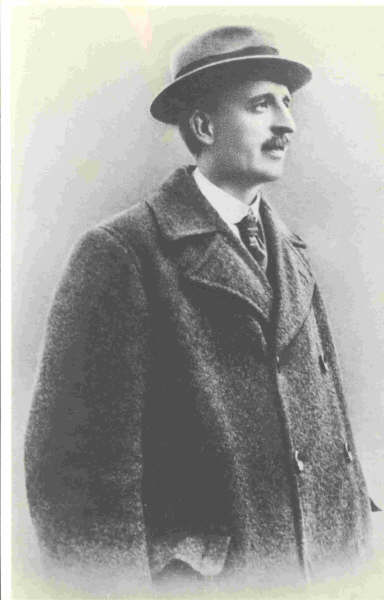
Robert Dunn was local in Newcastle and served extensively among the brethren in the early 1900's.
He died unexpectedly in 1922 while in Vancouver or area.
Mr. Dunn was on his way home to England from Australasia where he had been ministering.
Mr. James Taylor spoke affectionately of him, and said his "journey's end caused great sorrow here. His ministry in New Zealand and Australia bore marks of striking ability".
There were three books of his ministry, now out of print:
- 'Readings and Addresses in Australia', 1921-22,
- Nine readings are in the recent Kingston Bible Trust publication, 'Selected Ministry' Volume 1.
- Two volumes: 'Memorials of the Ministry of R. Dunn'.
- 'Selected Ministry' Volume 1 has three readings.
- There is also one address in Kingston Bible Trust's 'Selected Addresses', Volume 1.
The ministry on this page is from the 'Memorials' but is not included in the items re-printed in 'Selected Addresses' and 'Selected Ministry'.
G.A.R.
Page Top
THE WAY OF SALVATION
– A Gospel Address – |
|---|
Zechariah 2: 13; 3: 1-5; Exodus 12: 3-13;
Joshua 2: 4-7, 15-19; Psalm 101: 8; Acts 16: 7-40
Blairgowrie, Scotland, December 31, 1916
Memorials of the Ministry of R. Dunn, 2: 138-158
|
|---|
I am exercised tonight that the Lord might enable me to present the way of salvation, so that if there be a soul present who is concerned, that soul might get help.
- I would say to such: the Lord takes account of your concern. He is looking out on men.
- He looks upon the hearts of all men, and if there should be anyone concerned among the multitudes of men, that one becomes the object of the concentrated attention of Christ.
- If there be in anyone here the feeblest desire after God, after being right with God, you are of extreme interest to Christ, so much so, that His attention is concentrated upon you.
- You may feel yourself alone in a multitude, with no one to tell your exercises to, but I would say this, you may freely unburden your heart to the Lord.
- There is a grace about the Person of Christ, a grace in His availability to all men, which may well encourage you to throw open all the doors of your heart to Him, to disclose all your exercises, and to leave yourself in His hands.
I have read the scripture in Zechariah to set forth how the attention of God is secured, and secured in such a way that
- He and those who sympathise with Him are seen as the only ones who have a right to speak.
- We get the position illustrated here, how God takes up a bearing towards all men, and silences every voice, so that He Himself may speak. So Zechariah says,
- “Be silent, O all flesh, before the Lord: for he is raised up out of his holy habitation”.
- The scope is here indicated, and Zechariah calls for silence – for universal silence – God is going to speak.
- I should like you to take that attitude in the presence of God, to sit in silence, prepared to bear what God will say.
- The gospel comes thus to people who are exercised as to what God will speak.
- It is blessed to contemplate a scene where God alone and His sympathisers can speak.
What is depicted here is exceedingly beautiful.
- First, there is Joshua with his garments defiled; he has failed in his responsibility, and his garments are filthy.
- There must be the utter condemnation of Joshua if the question of responsibility be raised; but all flesh is commanded to be silent, there is no one among the sons of men allowed to speak;
- Only He may speak; Satan the accuser is standing by. There is Joshua with his career of guilt, his filthy garments; and Satan knows all, and is prepared to bring up the whole course of that man’s life for his prosecution.
- There is a clear case against Joshua, and Satan is about to speak, when he too is commanded to be silent.
- First, all flesh is silenced; then the accuser is silenced; God is to speak. And what will God say?
- “The Lord rebuke thee, O Satan … is not this a brand plucked out of the fire? … Take away the filthy garments from him”.
- ‘It has pleased Me’, Jehovah says, ‘to take account of this man on the line of sovereign mercy. It is the line I love to act on, and when I act sovereignly, no one has a right to speak’.
- God has His own righteous way of securing everything, and it involves the work of the cross.
- In order that He may accomplish His own blessed ends, God comes out in a way which no one can question.
- No one can pass adverse criticism on the ways of God. So the answer to the accuser is,
- “Is not this a brand plucked out of the fire?”
- The filthy garments are all to be taken away, and Joshua is to be clothed in a manner that is suitable to the presence and service of God. How beautiful!
- We do not read of any movement on Joshua’s part, we know nothing about his exercises, that is not the subject; it is how God acts to secure what is pleasurable to His own heart.
- But now, Zechariah says, I should like to say something. It is wonderful that God allows us to say something. Zechariah says, ‘I should like to make this suggestion’, –
- “Let them set a fair mitre upon his head”.
- He expresses sympathy with the heart of God. He desires that that man should be crowned there in the presence of God for His pleasure. And they did it.
- And thus God, in mercy, is acting at this present time.
- The enemy has been silenced; all flesh has been silenced; the cross of Christ silences every voice, all was dealt with there, and God is left perfectly free, so that room is made for blessing.
- A basis is now laid so that mercy, and grace, and love can go out from the heart of God to men.
- The Lord Jesus Christ, as exalted, is the Dispenser of all the bounty of the heart of God; and the Spirit is here in the house of God, so that it might be available for every man on earth. As we were singing:
“His hand, His house, His heart are free,
Because Thy work is done”.
Now I should like to speak of the other side a little, namely, how we reach it in the way of exercise,
- and I would desire to give some impression of the fulness of the blessing, so that you do not stop halfway.
- In Psalm 101 I read the testimony of a man who had gone through it all, who had travelled from the outside, so to speak, to the very heart of God, and who speaks in all the enlargement of the blessing.
- We have before us a man who delights in the fact that nothing has been overlooked.
- The death of Christ means that everything has been dealt with, and that God is able to come out in mercy.
- Mercy and judgment give you the effect of the gospel, the effect of having to do with God in the soul.
- Everything is revolutionised for a man, as we find in this psalm;
- but that is reached by the journey the soul takes; hence I began with Exodus 12, as shewing the way the Lord comes out to His people – His exercised people – and provides a righteous way for them out of the world. He says,
- “This month shall be to you the beginning of months”.
- Now you make a start, and if exercised, you will see that this start involves not only what you have done, but the world you were in connection with.
- You must leave the world, but find a righteous way out of it, God cannot ignore your course and your connection with the world, so provision is made to leave it morally and righteously.
- The Lord Jesus comes before you – the lamb speaks to your heart of the One who has been here, who has come under the eye of God and of man, who grew in wisdom and stature in His private life ere He came into public testimony. You consider Him.
- If a victim is to be found to suffer under the judgment of God, it must be a suitable victim, as set forth in the lamb.
- No consideration would affect one rightly like the consideration of the Lord Jesus here on earth. I am put out of court.
- So from the tenth to the fourteenth day the lamb without blemish comes under review.
- How one’s attention is thus drawn to the Lord Jesus Christ personally, in His perfect life here, as the only One who could take up the question of judgment for me! How it shuts me up to Himself!
- No one but the Lord Jesus will do for God, and no one but that spotless, sinless, holy Lamb of God could fully meet that judgment, so that I might go free.
- The poor lost soul, passing into eternal night and judgment, despising the work of Christ, could never weigh, never fathom the depths of sin, never bear nor exhaust the judgment of God;
- but the Lord Jesus comes before us as the One who did no sin, who knew no sin, neither was guile found in His mouth.
- Have you ever considered Him as Man down here, the only One in the universe Who could take up the question of sin and deal with it?
- It is an accomplished moral fact entered into between His holy soul and God, to the complete satisfaction not only of the throne of God, but of His nature.
- Psalm 22 brings it before us, and we read it with reverent hearts; our spirits are bowed in the presence of it,
- as we hear the utterances of the Lord Jesus, as the holy sin-offering, taking up the whole question of sin and of judgment,
- looking on always to its full result, when all the company of the redeemed shall come into the virtue of that precious death.
Well, as I said, your start in leaving Egypt is to accept the death of Christ, so that you move out, as called to leave the enemy’s domain.
- “When Israel was a child”, God says, “then I loved him, and called my son out of Egypt”.
- God calls you out of Egypt, and, oh, if you only knew how in sympathy with His heart are the hearts of His people and your parents – exercised that you might leave the judgment-world, and come under the influence of the love of Christ!
- One loves to think how the path opens before the believer, so that he passes out with head erect in all the sense of the death of Christ, as having met the judgment of God, so that the world can in no way claim him.
- Moses was exercised, but he took the wrong way at the start, and went out as a thief to escape the grip of Egypt.
- But God took him up. ‘I will educate him where he goes’, He said, ‘and I shall bring him back, and he will go out the right way’.
- “By faith he forsook Egypt”,
- the word says, but that was at the age of eighty, not at forty.
- “For ye shall not go out with haste, nor go by flight: for the Lord will go before you”, Isaiah 52: 12.
- “Ye shall not … go by flight” – they were not to go that way, but as those who had a perfect right to leave.
- Pharaoh and his host have no right to hold you, the whole scene is silenced, and you are entitled to walk out under the shelter of that blood which meets what you are and also what the world is.
- God calls you out, and you take up the wonderful provision of the death of Christ as a matter of exercise.
- You put the blood on the door-post and lintel, and then, inside the house,
- you pass through exercise as to what it cost Him that He should take such a path for you.
- Then you hate yourself and your course, and with staff in hand and your shoes on your feet, you pass out.
- You leave no undischarged obligations, no bills to settle behind you.
- You pass out as a victor, laying tribute on Egypt rather than the Egyptians on you; conscious of the Lord’s victory and claim, you go out.
Now, that is your start. You pass over the Red Sea to come under the Lord Himself, sensible of walking through this world under the authority of Christ,
- conscious of His protection, in the sense too that you have only to look to Him for support.
- And thus you begin to love the Lord personally. ‘He has done all this’, you say, ‘that He might gain my heart’.
- “I taught Ephraim also to go, taking them by their arms … I drew them with cords of a man, with bands of love: and I was to them as they that take off the yoke”. Hosea 11: 3, 4.
- You are now found in a righteous path, and if so, you call on the Lord, and own Him. There is deliverance from the world for you.
- The Spirit’s comment on the movement recorded in Exodus is
- “By faith he” [Moses] “forsook Egypt, not fearing the wrath of the king … Through faith he kept the passover”.
- Moses did it for himself, exercised to leave Egypt rightly. Have you kept the passover yet? Have you placed the blood on your door-post? Have you come to value that exercise, and to appreciate that precious blood?
- And has it moved you to start out of the world, to come under the lordship of Christ now? It is a matter for haste. Do not be detained.
- One cannot read this scripture without feeling the urgency of the matter.
- God calls you out of this present evil world, and we call you, in sympathy with God; come out of the world, and come under the Lord Jesus and His care.
- You will have His protection to shelter you from all that would hurt you; and He will preserve you here in peace, and give you enlargement in the things of God.
But I want you to go further than the blood on the lintel, and like Rahab to put the scarlet line in the window.
- Your position is not properly defined till not only have you the blood on the lintel, presenting to God the way your faith lays hold of the death of Christ,
- as that which meets all you have done and all you are, but have become, in addition, publicly identified with the people of God.
- The Lord was about to overthrow Jericho – if we look at the narrative – and Joshua sends two spies, and they find Rahab. Who directed their steps there?
- The Spirit of Jesus directed them there to that poor exercised woman and to that house. Rahab was exercised about all that had taken place.
- Not only could she take account of the overthrow of Egypt, but her eye could run right along all the line of opposition to what God was doing.
- Can you see what God has done? He has overthrown every power – all the powers of darkness; and this woman could see a people, with whom the power of God was, marching together, cherishing a testimony which would overthrow all wickedness.
- She could see that there was no possible defeat of those people marching with God. She could recognise what God did, and what they did; and she testified to the fact that everybody trembled.
- People look upon Christians as weak, like the spider in Proverbs 30,
- “The spider taketh hold with her hands, and is in kings’ palaces”.
- So when one’s eyes are opened, one sees the power resident in the Lord’s people, a power that will overthrow the whole world system – Jericho will go, and every city will go, and the whole land will be possessed for God.
- The world trembled, and this woman was exercised, and God took account of her exercise and sent two spies. They came with glad tidings to her, and the very fact that they came to her was a mercy.
- ‘The whole system is tottering’; she reasoned, ‘and I do not want to go down with it. I should like to be among the people of God, I should like to commit myself to them’.
- Here were the two spies on the one hand, and all Jericho on the other; the woman said, ‘I am with the two spies’. So she hid them; she became a traitor to her own city. She faced no middle path.
- When it comes to a question of the scarlet cord, you distinctly identify yourself with the people of God, and all the interests of God.
- This woman is prepared to surrender everything, to risk her life and all, in order to identify herself with the people of God.
- ‘They are about to march through Jericho’, she says, ‘and these walls, on which my house is built, are to come down; the people are to possess the land, and I do not mean to miss it’.
- It is the exercise that claims the blessing that we see in Rahab. So she protects the spies, and lets them down with the scarlet line. ‘When this takes place’, she had said, ‘what is to happen to me? I want it sealed’.
- ‘Keep the scarlet cord’, was the reply, ‘bind it in the window – our life for yours’. Take in all your household, God’s intention is to use you to convey the blessing to others in Jericho. Take them all in, there is no end to the blessing.
- “Thou shalt bind this line of scarlet thread in the window … and thou shalt bring thy father, and thy mother, and thy brethren, and all thy father’s household, home unto thee”, Joshua 2: 18.
- The question is, who is prepared to come into fellowship, to become identified with the people of God in testimony now?
- This woman got her portion among them, and there it is, the word tells us, “unto this day”.
- Her house and all her temporal possessions are gone with the walls of Jericho, but her portion with the people of God is there to this day – it is eternal.
Now in order to see how all this works out, I read that beautiful scripture in Acts 16, where the Spirit of Jesus is seen – verse 7, New Translation.
- Nothing is so touching as the activity of the Spirit of Jesus.
- There are two spirits mentioned here, the spirit of divination, as seen in the woman – the spirit of Python – and the Spirit of Jesus. Both are active.
- Paul and Silas, men supported from heaven in all the sense of the grace of God, are seen passing out as two spies – that is what they are.
- Two came to Jericho; two also came to Philippi; they had been moving from one place to another, and were very much exercised as to where they should go.
- As they pass on, their hearts are going out in exercise toward men; they wonder whether they will go to Bithynia, but there is something unhappy about it; the Spirit of Jesus – it is the only place the expression is used – suffered them not.
- And why may they not go there? Ah! there were poor exercised souls at Philippi – just like you, perhaps – and the Lord is all attention in regard to them.
- There might be work to do at Bithynia, but this was urgent, there were exercised souls at Philippi; the Spirit sees Lydia and the jailor, and they must be reached, and now.
- So Paul and Silas, two men in sympathy with heaven, are greatly exercised, and the Lord helps them by a vision, disclosing to them that a work is going on in Macedonia.
- Now their spirits are happy, “assuredly gathering” that they were sent there; they felt that was the way the heart of Christ was going.
- If one could only impress you with the way the heart of Christ was going out!
- So they come to Philippi, and are still moving around desirous to know where they shall go, possibly saying, ‘If only we could find some broken hearts, some people praying!’
- What a resource prayer is to exercised souls! People say there is no virtue in prayer, but it is on the line of prayer that you get blessing. The Lord encourages to pray.
- “If thou knewest the gift of God … thou wouldest have asked of him”.
- It is said that that is not prayer, but it is prayer. It is a mistaken notion that asking in this way is not prayer.
- If you do not know what to ask for, tell the Lord. Throw your heart open to Him.
- God knows what He means to give, if you do not know what you want; and what He gives will be greater than what you ask for. He gives according to His own heart.
- So Paul and Silas came to a place where prayer was wont to be made, and they found women praying in a spirit of exercise.
- They thus came into touch with the exercised element at Philippi, and now Lydia comes into view. A message reaches her, it comes to her very person, speaking to her soul; her heart is opened, and
- “she attended unto the things which were spoken of Paul”.
- The result is that she sees her path out of the world and is prepared to accept it; we know this, because she is baptised.
- She says, ‘I do not wish to continue in Egypt and in sin, I accept the way out made for me by baptism, so that I may come under the lordship of Christ’.
- But that is not all, she wants something more. She not only desires to be outside of Egypt, and to move in a solitary, path of righteousness, she wants her place among the people of God.
- She has learned that everything here will have to go, and she wants to be linked up with that company.
- And so she says, ‘Here is my house, come in and stay. I know you are two spies, but I should like to commit myself to the people of God, so look at my house and my path, and if you are satisfied, come in’.
- “If ye have judged me to be faithful to the Lord, come into my house, and abide there”.
- How the neighbours would take account of it, and the whole town of Philippi!
- There was not only the blood on the lintel with this woman, but she bound the scarlet cord in the window by practically committing herself to the people of God in receiving two spies.
- And it was not to end there, the jailor was to be reached.
- We find how the spiritual powers of wickedness were all active to oppose the Spirit of Jesus. The accuser is still here.
- There is the spirit of Python abroad, bringing in flattery, seeking to popularise the gospel, suggesting that it be accepted.
- But there is nothing in connection with Christ – with the death of Christ, or His exaltation and glory, or His coming again – which has any link with the order of things in this world.
- It was that which grieved Paul; he felt the grace of Christ that he carried was being attacked by flattery, and that it was being connected with the present order.
- The snare was immediately exposed, and then the hostility of the enemy takes the character of persecution.
- But the Lord takes occasion by it all to bring about what He wants, and the Spirit of Jesus is brought near to a man He is after, and to a household He is after. God may use His enemies to do this.
- So Paul and Silas are thrust into the inner prison, and the jailor, after seeing that his orders are properly carried out, falls fast asleep.
- There seemed no exercise with him. What he had seen in the gracious spirit of these men had not affected him, he was quite unconcerned.
- But the Spirit of Jesus was not unconcerned, so a great earthquake takes place.
- Here are these two men in the inner prison, in touch with God and with heaven, sympathetic with heaven, two spies – if you like –
- in all the light of the overthrow of the world system, praying and singing praises to God, and the prisoners hear them!
- The jailor is fast asleep, but God shakes everything up, and shakes him up. It was so different with Lydia; He dealt gently with her and exercised her.
- But here, God shook, not only the prison, but that man to the foundations of his being; and now the jailor, thoroughly aroused, is made conscious of his guilt, and would have ended his life had it not been for Paul’s intervention.
- The Lord had that man in view and His own way of dealing with him – not the way the jailor was about to take – He had His own way of ‘ending’ him.
- So Paul makes known the Savior, the Lord Jesus Christ, to that poor man. How the presentation would arrest him! How he would stand to have it explained.
- “Believe on the Lord Jesus Christ, and thou shalt be saved, and thy house”.
- The whole position is covered; the accuser can say nothing; all flesh is silenced while the way of salvation is explained to the jailor; and now, what does he say? ‘Come into my house’.
- The blood is on the lintel, and now he binds the scarlet cord; he does not mean to stop halfway; having left the world, he comes definitely into line with the people of God.
- It is so beautiful to see the effect of that man having come into touch with Christ; the scene is so different from the night before.
- It is no question of his bad or good qualities, the man has come into touch with Christ, and now all is altered. He looks on those wounds which he had seen were properly inflicted the night before, and washes them.
- Two spies had come into his house, he received them with peace, gives them food and entertains them, and now in full fellowship with them he sends them forth.
How it all illustrates the path of the believer! It is not merely that you leave Egypt and step out, your goings established by the Lord,
- but your house is to be adjusted in relation to Him, so that you are free to move on with the people of God.
- The Psalmist says,
- I never think of mercy but I think of myself. It keeps me lowly when I consider how He met me in my darkness.
- Nothing has been slipped over, the mercy-seat meets every question, the character of God has in no respect been slandered in the way things have come out, and now God is free to bless anyone.
- And then the Psalmist goes on,
- “I will walk within my house with a perfect heart”.
- He is first exercised to be governed by the Lord, having left Egypt; now he gets the good of things, and desires that his house shall be in accord.
- It is like Lydia – “If ye have judged me to be faithful to the Lord, come into my house, and abide”.
- Everything is adjusted in relation to the house, there is now spiritual discernment, so former associations are refused.
- “I will walk within my house with a perfect heart”. Then,
“Mine eyes shall be upon the faithful of the land, that they may dwell with me; he that walketh perfect in the way, he shall serve me”, verse 6, margin.
- There is the company of the Lord’s people, and fellowship is known among them, that is “the way”.
- I see a people here, small but exceeding wise; I can take account of them as distinct from every other company, and I definitely commit myself to them.
- I commit myself, in the first place, to the Lord’s death, but I want to walk with the “faithful of the land”.
- One greatly appreciates the favour thrown open to one, to be cast with faithful people, those who consider for God, who surrender nothing, but seek to maintain everything for Him.
- And not only to go on with them, but to order my life in such a way that they can go on with me, and dwell with me!
- It is exceedingly beautiful to contemplate a soul delivered entirely from the world system, and when you get into touch with such an one, you say, ‘Is that the end?’
- ‘No’, he says, ‘I shall maintain it every day; I shall be exercised every day to maintain the conditions, so that I shall not lose the value of the people of God; my inheritance is among them, and I want to enjoy it’.
May God bring many exercised souls to this point! He will see them all through, and they will celebrate His name with many a psalm. I love the expression found in Psalm 23,
- “Surely goodness and mercy shall follow me all the days of my life”.
- When one has known something of what it is to pass through this scene, one realises it must be days – one day at a time – that are taken into account.
- Then the last part of the verse should read,
- “And I am dwelling in the house of the Lord for ever”.
- It is not when one gets there, but now. It is very blessed. How wonderful are the associations to which one has been brought!
- The pathway involves exercise, but it is a path that leads to supreme blessing, and it is eternal. These are the things that are our own.
- In Luke 15 the prodigal is brought into the centre of the father’s house, where the river of his pleasure flows;
- and in the next chapter we read of the things that are another man’s and the things that are not our own.
- My house and money and all those paltry things are “another man’s”, they are not my own, so that if I have not my portion among the people of God in the house, I have nothing.
- The love and grace of Christ, the Father’s love, and the fatness of the house of God are all tasted among the Lord’s people.
- May He grant that every simple soul may be encouraged to go the whole way, not only to leave the world, but to be planted and watered, and to have his place in the house of God, for His name’s sake.
Page Top Address Top
THE TRUTH
SET IN THE AFFECTIONS |
|---|
1 Timothy 6: 10-16; 19-21
Ephesians 4: 13-15; 2 John; 3 John 3-8, 12
Reading at Dalbeattie, June 24, 1920
Memorials of the Ministry of R. Dunn, 2: 1-9
|
|---|
R.D. The question was asked the other night, “What is truth?” and I thought we might follow that up a little –
- hearing the truth and knowing it, speaking the truth, walking in the truth, holding fast the truth, being fellow-helpers of the truth, and being expressive of it.
In the latter part of 1 Timothy we get Paul’s appeal to Timothy to hold himself available for the conflict.
- He gives him instructions regarding himself – to keep himself pure, not to be entangled, so that he might take his part in the good fight of faith.
- Paul enumerates the things that would draw a soul from the faith, and refers particularly to the love of money.
- I thought we might encourage ourselves to take account of these things and to keep before us that at any moment the whole truth may be at stake;
- we have received it, that it may dwell in our hearts, and that we should be devoted to its maintenance.
Rem. There is an idea among us that we stand for the truth because of the position we occupy as outside systems.
R.D. Yes; but that is only negative.
- There is a side of it that involves our being established in relation to everything connected with the world to come. The truth is positive.
- We are not only to be outside the present world system, but we are to be established in all that is for God, and what is dear to the heart of Christ.
- In 1 Timothy 6 Paul speaks to Timothy about the conflict of faith, of the good confession Jesus made before Pontius Pilate, and of the good confession Timothy himself had made,
- “and hast confessed the good confession before many witnesses”.
In the Old Testament God was dealing with man after the flesh, and when the law was given, it was written on tables of stone, and presented by a mediator.
- Now the mind of God is revealed and the truth should be livingly held in our affections.
- There is a conflict for the maintenance of the truth going on and the affections of God’s people are to be engaged in it. We would not wish to be inactive when the truth is in conflict.
- One feels the earnest appeal to Timothy as a man of God – that the only thing worth entering into conflict for is the truth; strive earnestly in the good conflict of faith.
- My character does not matter, nor that of any one else, but if the enemy assail the truth, then let us enter into conflict.
In Ephesians 4 what the apostle is after is that the saints should all stand in full stature – should not be babes, but should increase and come to the measure of the stature of the fulness of Christ.
- One important element is that we should speak together of the truth – speaking the truth in love.
- The truth is one, but there are all the precious items – the divine thoughts connected with it.
- We should commune together in our conversations about the truth, and the one thing that should be before us is to encourage one another in it.
- The truth has come to light as the result of revelation. Revelation is disclosure as well as exposure.
- The effect of God coming into the light is that Satan and the whole world system are exposed.
- As we come into the light we are set up in the light of God as revealed, and we are enabled to take account of the divine system and thus become adjusted to take our place and part in it.
We tend to be occupied with one line of things, but that is not the truth, because what lies behind all is the Spirit of truth.
- What a scope of things to speak of together in love! When we meet one another we should have something definite to exchange of the truth.
- Think of how we should grow in these blessed family relationships established by the Spirit,
- and in the outgoings of the affections of the circle in which we live,
- if sharing things together connected with the whole system of truth.
I think we are a bit backward in this respect. You may say, I have not got much. Just give us what you have.
Rem. It is not exactly “What is true”, but “truth”.
R.D. “What is true” may be an item, but when we speak truth together we enlarge one another, not on one point, but with regard to the whole truth.
Rem. I do not see how when one point of the truth is attacked, the whole truth is attacked.
R.D. Suppose I tread on your toe.
Rem. Well, I should say you trod on me.
R.D. Exactly; the priestly eye was on the whole tabernacle system.
- If there had to be a fresh move, not one item of that system was to be overlooked – not a pin, or a ring, or a curtain was to be left behind.
- If it were only a pin that was out of order that would affect the whole.
I come along to see a brother and we have our hearts warmed up as to our affections as brethren, but that is not all. What is to engage us?
- It is an opportunity for us to speak the truth together.
- The effect is some point is emphasised, but it is emphasised in its relation to the whole truth.
- We each feel mutually refreshed – and we are enlarged in regard to the whole truth.
- The subject may have been “baptism”, but baptism as it stands in relation to the whole truth.
- It would not be truth, if it were not regarded as part of the whole.
Rem. I do not understand “the whole truth”. I suppose I might apprehend the truth intellectually.
- I have heard of one being “as clear as a bell, and as cold as an icicle”. I understood by that, he had the truth intellectually, but his state did not correspond.
R.D. I have heard that expression too, and I do not quite accept it. Christ is the objective before the eye and heart, and what is built in one’s soul is truth formed in the believer.
- The Spirit of truth is moving behind that. That is not the intellect.
- See ‘One Loaf’, an address by H. Gill, Indianapolis, Jan. 1917, in Selected Addresses 1: 234-35.
- The Pharisee – as we heard in this room some years ago – was a man who contended for sound doctrine, Acts 23: 6, but I am inclined to think that he is illustrative of a purely objective believer. There was no formation and there was no displacement in a Pharisee.
- He might hold the truth in letter, but he was as cold as an icicle. He might lay down rules for others, but there was no warmth, no formation of Christ in the Pharisee.
- Whether the above remark by Mr. Dunn referred to Mr. Gill's statement is not clear. In their context both are correct.
- GAR
|
Rem. In one sense Christ is the truth in a believer subjectively, for He is the truth. If we have Christ, we have the truth.
R.D. Ah, but this is truth formed in the soul. It is built into the affections, not merely a matter of mind.
Ques. What did Paul mean when he spoke to the Galatians and said he had travailed in birth that Christ might be formed in them?
R.D. Christ had never been formed in them. It is important that the truth get a place in my affections, to be cherished there, so that in my affections I embrace the whole truth.
Rem. In that way you have the privilege of producing the blue, the scarlet, the purple, and the fine twined linen.
R.D. Yes; but you may be speaking of the blue, or of the scarlet, or of the purple, not as isolated items, but as connected with the whole system;
- I must have the whole truth always before me.
- It is important, too, that the truth should be our boundaries in the relation to the outgoing of our affections; we should love the truth.
- I must not let my affections run over the limits of the truth. We love for the truth’s sake, because we love the truth. I love that expression,
- “for the truth’s sake which abides in us and shall be with us to eternity”.
- What is going to preserve us in a day like the present but the truth?
- If we have embraced it, we should walk in it. All our service and movements should be governed by the truth.
- What the Spirit ministers is detai1, but every fresh exercise has to be taken up in relation to the whole truth.
- If we take a look at John 9, see how the truth affects that man. The light shines for him, and he is able to take account of it.
- See how the truth sets him free from the system that held him, and sets him down in relation to all the light that has come in by the Son of God,
- putting him in his place in relation to the divine system, which all centres in the Son of God as an object for the heart.
- John’s second epistle encourages the lady to go on in the truth – to love within the light of the truth, which closes the door to any who do not bring in the positive thing.
Ques. I understand the affections of the saints have to move inside the circle of the truth?
R.D. I thought one saw that in relation to the blind man. He is delivered from everything that is untruth, and he widens out until he reaches the outside limits.
- Everything in that man’s soul is set in relation to Christ as Centre of a divine system, to walk in that light, to be governed by that light –
- nothing was to be allowed to come between that man’s soul and God.
We want to walk in that light in our movements and conversations with one another.
- It is the aim of the enemy to break into that circle for the sake of attacking the truth.
- In verse 10 the apostle points out the danger of a man coming along with a wrong doctrine. He says, Do not let him in – what is he after?
- He wants to attack the truth; behind that man is a whole system of untruth.
- Love the truth, walk in it, defend it.
- In the third epistle of John there is an additional thing.
- It is refreshing to hear of one who holds fast the truth; it is what we want in our day, when the truth is little set by.
- I am afraid we are not always at our post of defence, cleaving in our affections in holding fast the truth.
- Gaius has the fear that the truth is in danger – the Diotrephes spirit is among the brethren. The apostle rejoices to know that Gaius held fast the truth.
- Gaius says, as it were, I do not mind what he does to me, but I must hold fast the truth.
- Are we all alert and alive to see that one precious item of the truth does not fall to the ground? If one item go the whole truth suffers.
- Paul in writing to the Corinthians says in effect in chapter 15, If you lose the truth of resurrection the whole fabric of truth goes.
- It may seem to be only trouble about a pin, but it is the ark of the covenant that the enemy is after;
- it is Christ really that the enemy attacks, when he attacks the truth.
John says, I have no greater joy than to hear that my children walk in the truth.
- Receive the friends – be in sympathy with them for the Name.
- Everything is connected with Christ whom he loved, on whose bosom he lay.
- “Receive such, that we may be fellow-workers with the truth”.
- The apostle is set for the promulgation of the truth amongst the brethren.
- We have a wonderful privilege today of being fellow-workers with the truth;
- may we feel we would do anything, go anywhere, spend money and time, and seek opportunity to welcome into our houses those who love the truth, so that they and we may be fellow-workers with the truth.
- They are not coming along to lecture, but we are to be together as brethren. In brotherly love God finds His pleasure.
Page Top Reading Top
| THE MANNA |
|---|
Exodus 26: 12-26
Reading at Caulfield, December 3, 1921
Memorials of the Ministry of R. Dunn, 1: 229-240 |
|---|
Ques. Would you say a word as to the difference between unleavened bread and manna?
R.D. I thought unleavened bread is the food we eat, so that in mind and spirit we are apart from the world,
- but manna is the food that enables us to walk in a wilderness scene according to God.
- It is food for a people who have stepped out from Egypt under the leadership of Moses, it was their sustenance for forty years until they came to Canaan.
- I do not think one would appreciate the manna unless the affections had been feeding on the unleavened bread – the death of Christ as bearing the judgment due to us.
- This latter is the basis of our spiritual exercises, it is formative, we are formed in sincerity and truth.
If you are not feeding on the unleavened bread you will be hindered in every spiritual relationship;
- we are too diplomatic, we are not sufficiently real with one another.
It is those who are in the wilderness according to God who appreciate the manna.
- I come into the kingdom of God, and feed on unleavened bread, and thus I tread this scene as a wilderness for the glory of God.
- Unless we are here to walk for the will of God we shall not appreciate manna.
The manna is very sweet food; we become like the food we eat, and come out here in the grace of another Man.
The manna was very small and round, it was able to go anywhere; we come out here in the grace that marked the Lord Jesus – a lowly Man on earth.
- We are introduced into the presence of all our spiritual food at the outset. God has opened all His store.
- We grow to appreciate strong meat, but all is available for us as we can partake of it.
Ques. What is the difference between the manna and the meat offering?
R.D. The meat offering is for God – our appreciation of Christ in all His perfection down here, yielding pleasure to God from His birth on to His death;
- it is all gathered up in our appreciation, and we offer it for the pleasure of God.
- It was only the priests who could eat the meat offering, but all the people could eat the manna.
- The meat offering was for the pleasure of God and went up to God, but, the manna was rained down from heaven, from God, and every day it had to be fresh.
Ques. Why do we need manna?
R.D. I open my eyes a fresh day’s exercises. I want to pass through the day for the will of God;
- I number this day – whatever day it is – I take account of it for the will of God, my door open to the wilderness.
- How am I going to tread it for the will of God? I cannot do it in my own skill or cleverness, therefore I am dependent on the manna. It strengthens my heart for the day’s exercises.
- I do not want to get through it depending on my wits, but expressing the grace of Christ in this scene.
- God awakens us in the morning, He opens our eyes; we ought to accustom ourselves to be in touch with God, He cares for us in our slumbers. He giveth His beloved sleep.
- He awakens us to the day’s exercises and education in the wilderness. If it be so, are we careless about it?
- It does not help us to talk about it; are we exercised to number our days? We cannot get through a day according to God without having fed on the manna.
Rem. The dew is a very cheering consideration.
R.D. God surrounded His people with blessing. As they slept the dew had fallen upon them, it surrounded the camp.
- It is an immense favour to be dwelling amongst those who are called the “Camp of God”. God visits that camp with peculiar blessing.
- If you are on individual lines you are where the dew and manna do not fall.
- The dew is preparation for the manna. It is God’s love to His beloved people, who went out into the wilderness in the day of their espousals.
- He surrounds them with blessing day and night; our waking minds should take account of that, and give themselves up to the blessed God who wakens us to surroundings of blessing.
- We are among the people who love the Lord Jesus, who have been attracted out of the world to follow Him, and to whom the principles of the kingdom of God are given.
- With that sense in our souls we would each say, I want to be here this day for the glory of God!
- If that be so we would not go through this scene like people in the world.
Ques. What about the manna being given in answer to their murmurings?
R.D. That speaks of the grace of God. It is so touching! God tells Moses to bring the people into His presence that He may tell them how gracious and patient He is.
- It is pure grace, administered in the Lord Jesus typified in Moses.
- The manna is given from heaven to cheer His people through their exercises in their daily need.
Ques. How do we feed on the manna?
R.D. It is a matter of desire. As desiring to be here for the will of God, one gets up and gathers the manna;
- we get something fresh to sustain us; what we had yesterday will not do.
- The point is that we get up having a definite purpose in the pursuit of our souls to gather something fresh.
- God will give it, it is within our reach, we get up and gather it. It is not reading a chapter.
Rem. “What is it?”
R.D. That is the meaning of the word – what is it? I need the old corn of the land and other foods,
- but the point here is I look for the manna, I want to know it first.
- We get the description here, the description of the Lord Jesus in His spirit among men as shewn in the gospels in a peculiar way as He was down here;
- one gathers something from that for every day’s exercises, some fresh impression, and you store that up in your heart for the day;
- whatever you gather, by the Spirit’s power it will take you through.
- You get your omer, and having got it you eat it with a relish, you find it delicious to the soul; whatever you are confronted with in the day,
- the food you have had enables you to meet it not with human skill but in the grace of another Man.
- A person looks at you, and sees that you act differently to others, and they say, “What is it?”
- It is before the exercises of the day begin that we eat the manna, not at eleven o’clock when we have got into a hopeless muddle and lost our temper; we betray ourselves by the way we speak.
Rem. It is a meditation on the Lord as manna.
R.D. There are other meditations we might have, but this is seeking out the manna.
- James tells of those who condemned the just and they did not resist.
- If I ponder what that means, it takes me to the Lord Jesus, to see a Person who went into death and did not resist.
- I get tested through the day: I either stand for my rights or go to the wall; fortified by the truth that He did not resist, I go to the wall.
- My persecutor says, It is not like him, what is it? Manna! Some day he is exercised about his soul, and says,
- That man has got something that no one else has, I would like to go to the meeting that he goes to and hear what he hears.
- A life of piety leads souls to Christ; it is our actions more than our words that speak.
- There should be suggested to men that are unrighteous in the way you do things that there is something about you that is not natural to you.
The manna was small, white, round, the colour like bdellium, the taste like fresh oil.
- These are the features brought in in Numbers, because the people were pouring contempt on the manna, they loathed it.
- The Spirit of God describes it again, if haply our hearts might spring to it again, and say, What wonderful food!
- In eating the manna one is saved from acting by one’s own wits. We are not to act as men, God would find no pleasure in that.
- We want to give an impression of Christ in all we do.
“White” is the spotless walk of the Lord Jesus here.
- Look at Him as He goes into Simon’s house, invited in the spirit of patronage, slighted, yet He goes.
- He anticipates all; but sit down and watch Him in that beautiful scene.
- You may have a similar circumstance; if you are marked by the spirit of the Lord Jesus you will not want patronage, you have no use for it, you are here to express the One you have learned to love.
“Small” – see how small the Lord Jesus could be before Herod! They made nothing of Him.
- He accepted all that, He was lowly and small in His grace, and could go anywhere, no place too lowly for the Lord.
Would I have any kind of importance if I fed on the Lord Jesus in His grace down here in the morning?
- The world is full of it. I may be courteous and patronising, but I cannot be small unless I am feeding on that small round thing –
- nothing can get into corners like a round thing, and there is no friction.
- Whom did He ever offend? Whoever came in touch with Him felt that He was different to any other man. We each need to look for these qualities in the gospels.
If we look for the manna, God gives that presentation of Christ according to what we have to face that day.
- He so loves a lover of Christ, so appreciates a day and numbering it, that He delights to minister in the Spirit’s power the very thing that fits us for the dangers we are going to be confronted with that day.
Rem. The colour was as bdellium.
[R.D.] The only other place where bdellium is mentioned in scripture is Genesis 2. It is a fragrant resin.
- It is the fragrance of the life of that blessed Man – the fragrance of His grace.
- If we feed on that, there will be a fragrance about us, a sweetness – not natural but spiritual – as we pass through this world.
- The taste was like fresh oil. There is a sweetness in taking the Lord home to one’s affection like that.
- The manna is most enjoyable. If careless as to spiritual conditions, our souls will loathe it. It was rained from heaven.
- In the gospels we get a heavenly Man down here. The Spirit of God would bring that afresh to our hearts morning by morning.
- We are oftentimes careless about it! We get up in the morning in a hurry it may be, so much time for breakfast, and so much time to catch the train;
- we see to everything but the manna and wonder why we do not get on spiritually!
- In the type a man gathers food for all in his tent; he has a sense of responsibility that the manna is for everyone in his household, even for the servants;
- he is responsible to see that the manna is brought in and presented to the whole household.
- “This is the thing which the Lord hath commanded, Gather of it every man according to his eating, an omer for every man, according to the number of your persons; take ye every man for them which are in his tents. And the children of Israel did so, and gathered, some more, some less”.
- It is the sense of responsibility that each man is to have who possesses a tent in regard to all who are in the tent; the head had to see to it that at least there should be an omer of manna for every person.
- We get nothing at all without spiritual diligence. We are responsible for the spiritual well being of everyone in our households.
- As head of the house I am to be exercised that there should be some way or other some suggestion of Christ as manna to the hearts of all – a suggestion to each one to take things up in piety individually.
- If we are careful about it, we find God is more than equal to it in blessing our exercises.
- If we only have three minutes it may be turned to the greatest gain possible – some have more time than others.
He says, if we are in touch with Him, I am not going to leave you starving in the wilderness, just see what I will do!
- These are My mercies and considerations for you. My delight is to awaken you in the morning with food to cheer and sustain you,
- so that you may be carried through the day in such a way that you will come out praising Me at the close – all thy day will be bright.
- Each one must have a tenth, it is the same measure for all.
- If you have children, they are responsible in the way suggested by you to get something of it.
- The child goes to school with the manna; he will not fight for his rights, but goes to the wall; but it is the head of the house that brings it in.
- Let us be frank! Let us face our responsibility this way!
- The suggestion that God gives in regard of the manna is a remarkable thing; He says in answer to the murmuring, Bring them into My presence, I want them to have Me before them.
Think of the grace of God!
He says, I have drawn you into the wilderness, and I will never have you unconscious of My presence.
- Have I not been God to you since you moved out of Egypt?
- I will not have you in the wilderness and not supply your need and sustain you in spiritual vigour there.
Rem. Manna was not to be gathered on the sabbath day.
[R.D.] There are times when there is no need to be exercised about the wilderness, and God would have us sit down and rest in our tents.
- We have the wilderness and its exercises, and the manna to take us through, but do let us have rest as well – the Lord says, Come and rest awhile.
- Sometimes we have a sense of rest at the meetings, as being apart from the world and the Lord ministering to us, but this is rest in our own tents. Let us see to it that our souls get a rest.
It is just the simple thought that we enjoy the love of God and communion without any sense of responsibility.
- We need manna on the sabbath day, some has to be kept over. We are very near the wilderness, so we need this grace at every time.
- There is a day that God would have us take account of, a day when we rest our souls, when we are apart from the conflict of the world.
God would stir us up with regard to this, that it is a fresh thought we get each morning, nothing else will do.
- We get something and we say, ‘This will do for a while’, and we store it up.
- The importance of gathering each morning cannot be too strongly emphasised.
- The thought is that I should get an impression for today. It will be a different one for tomorrow. It is called “daily need”.
- It is practical instruction; each day has its exercises; we know the disadvantage of hurrying through things; how much we lose on that account.
On the sabbath we rest from gathering. We sit down quietly in the presence of God and give Him this time.
- The sabbath was made for the heart of God and for us, that we should have our souls resting in His presence.
- We get spiritually tired, but there is a time when we have a rest with God.
- Some have not much time; this is one of the greatest exercises to a mother who has so much to attend to, but if there is purpose of heart to get it, God will see that that heart gets what it needs.
Then we should be ready for fresh exercise when it is time to move out again.
- God will deal governmentally with us if we do not get these rests for our hearts.
- We are very good at looking after other people’s souls, but let us look after our own. We can attend to the spiritual interests of others better when our own souls are attended to.
- Benjamin kept a part for himself. It is the right thing to do.
- “In the morning he shall devour the prey, and at night he shall divide the spoil”, Genesis 49: 27.
Page Top Reading Top