Menu•SiteMap |
Ministry
The Testimony in the World
and other
Ministry by J. Collie-Smith
– Part One
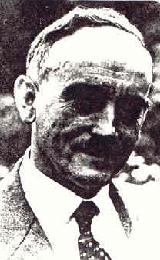
Those who are unfamiliar with Mr. Collie-Smith should see Biography: Brief Sketches: J. Collie-Smith.
Five of the articles here and in Part Two are from pamphlets, originally pages 59-110 of The Mystery.
Bohuslav Koša of Bernolákovo, Slovakia, generously contributed the undated pamphlets.
The Testimony in the World is particularly valuable. It opens up the truth of our Lord's Sonship and its relation to the recovery of the truth.
G.A.R.
Page Top
| SHEPHERDING |
|---|
| John 10: 11-18; 1 Peter 5: 1-4; Acts 20: 28
|
|---|
We do not go far in the history of God's ways with men before we are introduced to divine interests as protected by shepherd care.
There are may outstanding men in the holy writings who come into view in shepherd character, Abel coming to light very early in this way, and indeed, sealing his testimony with his blood.
- Then you will recall how Jacob stands out particularly as a shepherd, how he served year after year in shepherd character, for "Israel served for a wife, and for a wife he kept sheep";
- and how he relates to Laban the exacting character of his service, for not only did it involve him in service by day, but it extended into the night, exposing him to the cold and the frost in the protection of the interests committed to his care.
When it came to the blessing of his sons, who were also shepherds, and who were an abomination to the Egyptians on that account, for they sought to promote and care for divine interests here,
- Jacob when blessing Joseph refers to "the Mighty One of Jacob. From thence is the shepherd, the stone of Israel", Genesis 49: 24.
- Looking down through the ages prophetically he locates the Shepherd of Jehovah's choice, the great antitype of all that had been seen in the ways of God under this heading.
Even David, standing out so distinctly in shepherd character, was but a finger-post pointing on to the incoming of Christ, the One who would fill out every divine idea under this designation,
- and who in the fulness of time would arrive here in this scene, officially representing God in entirety, every moral excellence fully seen in Him.
John 10: 11-18
Thus John, who predicates of Him that He is the Word become flesh tabernacling amongst us, introduces Him in the character of a shepherd; showing the greatness of the Person, and who He is, for John traces Him back.
- "In the beginning was the Word, and the Word was with God, and the Word was God".
- He does not allow any room for conjecture as to who He is, and although He is stated to be "the Word become flesh" dwelling amongst us, that in no wise brings about any deterioration as to He is in His Person.
- There is no change in His Person, though here in flesh and blood condition in manhood; "in the form of a servant", He is Son of God, a new relationship which He had never known before.
John would lay this firmly as a foundation in our hearts as he introduces Jesus in the character of a shepherd here, serving in relation to divine interests;
- he would give us at the very outset a sense of who He is and the greatness of the Person who is assuming this service in relation to divine interests
- in a world where those interests are exposed to the hostility of the enemy, where the sheep are held for the moment in bondage, without pasture and with no liberty;
- He comes into the fold by the divinely appointed way in order that He might establish contact with the sheep, the sheep of Jehovah's pasture.
As He speaks, as the shepherd addresses the sheep, the sheep are able to perceive that it is the shepherd's voice;
- "My sheep hear my voice, and I know them, and they follow me".
- They do not know any other voice; they do not know the voice of strangers; but they know the shepherd's voice.
- There is a richness of quality in the voice of the Good Shepherd that cannot be imitated by any other person.
- The voice of the shepherd carries its own distinctive accents, its own affectionate appeal, which the sheep are able to discern.
- That is a great thing, dear brethren; the youngest here values and cherishes the voice of Jesus as known in shepherd character.
It is a simple idea, but a very affecting one, for the shepherd who addresses Himself to the sheep is the owner of the sheep.
- He is not a casual worker; nor is He an hireling; the sheep are His own personal property, and on account of the link that exists between Him and the flock,
- He is prepared at all times to throw Himself between the flock and the enemy.
- The wolves would scatter the flock, but the hirelings, those pretentious leaders who assume much, but do not really own the sheep and have no real shepherd care, are not prepared to sacrifice themselves for the sheep.
- They would flee at the appearance of the enemy; there was no real link between their hearts and the flock; but the Good Shepherd had a definite link between Himself and the flock.
- He knew every one, He could name every one, and each one individually had its own peculiar value in His eyes, and He was prepared to lay down His life for the flock without discrimination.
The flock in His eyes was such that He was prepared in His unselfish love to go to any length in serving it and to lay down his life for it.
- Does that not touch your heart, dear young believer, that the One who died for your sins and who disposed of all your liabilities lays down His life for you in another light?
- In a more intimate manner He lays down His life for the flock, and in so doing He furnishes an incentive for the Father to love Him,
- "Therefore doth my Father love me".
- His Father loves Him because He lays down His life, and He laid down His life in view of the flock.
- Think of the unselfich love of the Lord Jesus who was prepared to go to that length, to die for the sake of the flock.
- John would impress us with this fact, that the Father has a great regard for the flock; that it represents His interest here on earth, as exposed to the hostility of the enemy,
- and it gives us an inlet to the depth of affection which lies in the heart of the Lord Jesus for the flock
1 Peter 5: 1-4
With that in mind, I would pass on to the scripture which I read from first Peter. Peter, as you know, had companied with the Lord Jesus in the days of His flesh.
- Peter stood at the head of the list in His selection of the twelve, and was habitually in the selction when the Lord narrowed down things on special occasions.
- Peter, therefore, like John, would have a very intimate knowledge of Christ; a very close acquaintance with Him,
- and would understand in a vrey full measure the feelings of His heart as a shepherd, as seeing the Lord serve in this shepherd character here in His sojourn amongst men.
- He could relate many instances when he had watched the shepherd's heart in activity; he would see His hand go out in succour and see Him search for the straying sheep, for the Lord was constantly in that attitude as here in His shepherd service.
- All this would enter into the heart and mind of Peter; it would affect him, it would form him, that Jesus had been a model as a shepherd, just as he introduces Him in this epistle as a model, so that we should follow in His steps.
As He walked through this scene in the beauty and grace and evenness of His ways, yet in all the suffering that marked Him here,
- Peter would pass this on to those who had assumed shepherd care in regard to the saints.
- He himself had been a witness of the sufferings of Christ, a first-hand witness of these sufferings, and he was to be a "partaker of the glory" which followed the sufferings.
- As having all this moving his heart with spiritual feeling and emotion, Peter would appeal to those shepherds, to
- "shepherd the flock of God, which is among you"
- to devote themselves to this work of shepherd care, and not to do it unwillingly ot grudgingly; not with any thought of recompense in a material way; nor were they to do it in a lordly way as lording it over God's heritage.
- They were not to have selfish ends in view in this great service of shepherding and feeding the flock of God. In this shepherd service they were to be
I believe, dear brethren, there is a great call for shepherds, and I would remark that in the gifts given from Christ ascended, in view of the ministry and the edification of the body, the teacher is coupled with the shepherd; "some shepherds and teachers".
- A shepherd's heart and feelings must permeate teaching; otherwise, if we develop at teaching attitude without this shepherd feeling entering into it, we shall become ministerial and official, and we shall be unable to establish contact with the flock.
- We must have Christ before us as our model. He knew the flock, He was acquainted with everyone, and I believe there is a great need at the present moment for those who will come forward, having Christ as a model,
- to shepherd and to feed the flock of God, without having any selfish ends in view, having in measure the same unselfish model that actuated the Good Shepherd in all His service.
- It means that you must be on duty at all hours, that you must be ready to serve, not only in the daytime but extending, as it were, far into the night.
- It means that you are ready to sacrifice yourself, for the enemy is constantly moving in the direction of the flock, seeking to disturb and scatter it.
- How alert is the shepherd, his eye constantly scanning the flock! He knows the flock; he does not regard it as his own personal property to lord over it, but he has some sense of what the flock is to God.
- A shepherd of this kind has a deeply embedded in his affections what the flock is to the Great Shepherd of the sheep, and he is prepared to serve the flock at great personal discomfort.
The shepherd carries the brethren in his heart in this light, and particularly those who call in a special way for care, for a shepherd is prepared to lay down his life for the sheep, and to face the lion and to rescue like a shepherd "two legs, or the piece of an ear"; that is how far the shepherd will go.
- If there is anything left of that straying sheep which has been exposed to the wiles of the enemy, he follows it, such is the shepherd's heart, and he is prepared to rescue two legs.
- He is prepared to risk his life, prepared to face the lion in order to recover those legs, which, no doubt, would speak of movements that had once been in the path where Jesus is the model to follow.
- But it may be only the piece of an ear; a person may be gradually drifting, and the shepherd sees he is getting away from the flock; he observes that he is in a dangerous position, but even if it is but the piece of an ear that is left, he will rescue that from the mouth of the lion.
- Even if there is there is but a little hearing left in regard to divine matters, that person is worth going after; he is worth saving, and the shepherd is prepared to devote himself to that service.
- The shepherd does not say: 'There never has been much in him'. No, that is not the language of the shepherd; he is prepared at great personal cost, to save even a bit of any year.
I commend that to you, dear brethren, for I have no doubt that in this city, as in other cities, we have those who give concern, those who cause exercise, those who may be straying sheep.
- I am sure the Lord would help us and encourage us on the line of devoting ourselves to this work, so that there is recovery, and restoration to the flock, for
- "there is one flock and one Shepherd".
- But as Peter would indicate, there are under shepherds subject to the direction of Christ as the Chief Shepherd in their work, for
- "the words of the wise are as goads given from one shepherd", Ecclesiastes 12: 11.
- The words of the wise, spreading out amongst the brethren, are issuing from the one shepherd, the Chief Shepherd, and in that way, mediately, His own words are recognized and known and understood;
- they are very effective, for how often His word reaches with straying sheep and the there is recovery and returning to Him who is the Shepherd and Bishop [i.e;, overseer] of our souls.
Acts 20: 28
I would pass on to the last scripture in the Acts of the Apostles. It is with design that I have linked these three outstanding vessels in the testimony, all converging on this great thought of shepherd service.
- Paul, as you know, stands in a somewhat different position from John and Peter, for they were numbered with the twelve,
- but Paul received his light from the Lord Jesus glorified in heaven, for He spoke from heaven to Saul of Tarsus, one of those who had been most antagonistic to Christ.
- He was hostile to Jesus and went about persecuting His own and seeking to destroy the people of God for no other reason than the fact that they were like Jesus,
- and you know how the Lord arrested him in that mission of disruption and how He appealed to him.
- He virtually said to Saul of Tarsus: 'You are persecuting Me', and I believe the impression gained then was never forgotten;
- it became the foundation of all that was built up in his soul in the relation to the mystery; it was the initial thought of a suffering vessel here.
- That never was erased from the mind of Paul, and it entered into all his exercises, giving colour to them, and entered also into his more matured thoughts in regard to the truth.
You will understand that when he speaks of the flock, he is speaking to the elders from Ephesus, who he called over to meet him at Miletus.
- They had come from a city where Paul had served then faithfully, and where "he had not shunned to declare the whole counsel of God" to them – it was really the climax in connection with his ministry.
- Just as in Corinthians the foundation is laid in connection with Paul's ministry, so in Ephesians we see the climax, the completion of his work in that sense.
These elders would stand out in a special way as representing fully developed assembly feelings and affections, and as having intelligence and ability to understand what the apostle would now allude to, as he called them to his side,
- charging them in relation to the great service which had devolved upon them as to the interests of God here, referring to their place as overseers, having been set there by the Holy Spirit.
- He would now charge them in regard to the flock which they are to shepherd, for they are to shepherd
- "the assembly of God which he has purchased with the blood of his own".
- The apostle would invest the flock with his own special light.
- John speaks of the flock in his setting; Peter would speak of it according to his apprehension; but Paul would speak of it according to the great light which had shone from heaven into his soul, which gave colour to all his ministry.
- As he charges these elders he would have them to the shepherd the flock, to care for it, to protect it, to spend themselves, to give themselves unselfishly to the interests of God here, the flock constituting the greatest vessel that has ever been known on earth, for he designates it
- "the assembly of God, which he has purchased with the blood of his own".
- This gives us some idea of the value which the blessed God attaches to the flock. He could not find anything in the universe which could adequately express His feeling as to, and His interest in, this great vessel, short of "the blood of his own".
- The assessment of the value was His. Think of the purchase price! I cannot think of a more endearing term as letting us into the very feelings of the heart of God in regard to the assembly: "which he has purchased with the blood of his own".
So the apostle would go further and warn these elders as to what was coming in, for they would see his face no more, he was leaving them finally, but he indicates what they would encounter after his departure;
- grievous wolves would enter in, not sparing the the flock, and indeed from amongst themselves men would arise speaking perverse things, all this being on the line of destroying, scattering and damaging the flock.
- The apostle with his feelings welling up, full of affection for Christ, for God and for the saints, would charge these elders to give themselves to this great work of shepherding, of feeding and caring for the flock; to be prepared, in the light of the assembly, to serve as knowing that great service of Christ:
- "Israel served for a wife, and for a wife he kept sheep".
- All Paul's own personal service in relation to the flock of God, in relation to divine interests here, was carried out with this thought constantly in his heart:
- "the assembly which he has purchased with the blood of his own".
- This is not Christ's blood has connected with the judicial side, but the blood of His own as the great expression of God's love for the assembly.
God has great affection for the assembly, and our Lord Jesus has great affection for the flock, He has great affection for you.
- Everyone that goes to the composing all that flock is known to Him. God would stand by and help any who give themselves to the care of His flock, even if only in every small way.
- As a young brother or sister exhibits some care for a soul that needs help, how the Lord would value and develop it.
- Then the saints would take on an entirely difference appearance in our eyes; they would look different as we view them in the light of the purchase price that has been paid for them, and what the flock is to the heart of Christ, for He is serving it still.
- All His service in relation to the flock has been in view of the assembly, He "served for wife".
Page Top
| THE TESTIMONY IN THE WORLD |
|---|
| 1 Timothy 3: 16; John 1: 32-33; 8: 42; 10: 36; 17: 23
|
|---|
The course of the testimony of God and of Christ through this scene is one which gives record of much sorrow.
- There have been joys that go along with it, but the passage of the testimony has been one of great difficulty, and as encountering the hostility of the enemy its career has been a checkered one.
- I am thinking of it as entrusted to men here inresponsibility, and how the enmy has all the way through endeavoured to wreck that which has been set up here for God.
Our Lord Jesus in building His assembly which would represent Him here took full account of the enemy's designs,
- for He was well aware that the enemy would dispute the ground, and that he would constantly rally his forces against the assembly, but He intimated at the very outset that the gates of hades could not prevail against it.
- All the scheming of the enemy cannot overthrow that which Christ builds, but on the side of the responsibilty of man
- the enemy raided the territory and subjected the people of God to constant warfare, invading and carrying off that which belonged to them as their inheritance.
The history of the assembly will bear witness, particularly the letters to the seven assemblies in Revelation,
- which show how the assembly in its responsibilty as under the pressure of the enemy, has given way from time to time, surrendering valuable territory,
- until we find that Thyatira represents how completely the whole outward position was corrupted, and from man's point of view there would be nothing left; everything gone but,
- even there Christ had those with whom He could make contact and to whom He could appeal.
- Then after those many conflicts, in which so many valuable treasures hsd been lost, the Lord has been faithful, and the element of recovery appeared,
- and the saints through warfare, no doubt, recovered some of those precious things which had been forfeited.
- For example, the Reformation in which the truth of justification, and other truths which had been lost, were recovered.
- Then in Philadelphia we have assembly revival, the most wonderful recovery of the great truth of the assembly as loved by Christ.
Just as these conflicts were spread over a protracted period, and the losses sustained were sustained not in one engagement but many,
- so the recovery of the truth and the recovery of the valuable property lost was not accomplished in one conflict.
Soon after the recovery of the truth bearing upon the assembly, we find it contested by the enemy,
- and those who valued the truth of the assembly were quickly to be tested as to whether they could hold the ground in the face of the opposition of the enemy.
- The conflict was severe, and it centred around the Person of Christ. It was an attack on the Person of Christ and the order of His manhood.
- That attack was repulsed, but not only repulsed, and it resulted in great spoil to the testimont and enrichment of the truth.
Then came a most subtle and severe conflict, not this time in relation to the manhood of our Lord Jesus, but in relation to "the body" which is the sequence to His manhood.
- The enemy was unable to dispossess the saints of the truth of His glorious manhood, but he endeavoured to rob them of the vitality of the truth as related to "the one body", and that "the body of Christ".
- This, instead of overthrowing what had been recovered, resulted in expansion and development of this inheritance of the people of God, giving further light in regard to the truth of "the body".
The enemy still assailed the testimony, and the question of eternal life as the order of life promised, as the thought of God for men,
- and which was found in our Lord Jesus "the Man out of heaven", was also attacked, with the result that great light was imparted and further lost territory regained.
I mention all this as a preface, by way of answering a question which is constantly being addressed to us, as to
- why the light of our Lord's sonship, as now known, had not been brought out until the present moment.
- Just as the ground was not vacated in one engagement, but the battles numerous, so too, the recovery is spread over a protracted period,
- fitting in with the developments of the testimony in unison with the mind of heaven,
- and fitting in wholly with the thought of God and as suited to what He is developing in the affections of the saints.
- So during the last twenty years there has been a remarkable flood of light.
- I do not question that it is light from God coming through the holy vessels which He has honoured and to which we do well to give heed.
This light to which I refer especially as having come to us within recent years is that which concerns our Lord Jesus, which I believe has meant
- a better understanding of His Person, a better knowledge of the order of His manhood, and also His relationship with God the Father.
- I say that, because I would invite your sympathetic, unbiased attention to what I propose to submit for your consideration.
- It may be that you have already made up your mind that you have the truth, and that you cannot receive more than you have in this matter.
- I would beg of you to be receptive, for the voice of the Spirit is speaking in the assemblies in this day, He is still speaking, and we do well to listen.
1 Timothy 3: 16
In 1 Timothy we have a statement which I would venture to say is the greatest statement that could be compressed into a few words,
- and they convey the greatest possible truth to our hearts and minds. Paul writes,
- "Confessedly the mystery of piety is great".
- The secret of piety is great, for wrapped up in it is the great truth of the incarnation, the basis, the foundation of Christianity.
- All that we have as light at the present moment must rest upon this great statement which follows upon the announcement that the assembly, the house of God, "is the pillar and base of the truth".
- It is the pillar supporting all the truth and foundation upon which it all rests, and this great mystery, this great secret is supported there livingly.
- Paul says, "God has been manifested in flesh".
- Think of all that is wrapped up in that statement! Think of the comprehensiveness of it, the vastness of that brief statement; it is a concise statement,
- but what does it mean to your mind? What does it mean to you heart? Do you cherish it? What has it brought to you?
Have you really contemplated the glory of this statement, "God has been manifested in flesh"?
- It refers to One whom we know and love, Jesus, One who subsisting in Godhead's form, sharing equally in all that is proper to Deity, all that is proper to God in His own essential Being, was yet found here in flesh.
- What a profound thought! It goes beyond the human mind.
- The human mind cannot grasp the immensity of it, it is measureless, for it is God come here, as the Lord Jesus says:
- "a body hast thou prepared me", Heb. 10: 5.
- Here in that body we see Jesus moving about in this world in the most ordinary circumstances of life, for He came into this world in poverty;
- He grew up in it misunderstood and unknown, disliked and even hated, but this was God come in flesh.
- It was the Word become flesh, tabernacling amongst us. What a sight for our eyes and for our hearts to see God here, God manifest in flesh.
- His coming into flesh and blood condition did not in any way cancel anything that was true of Him in His own blessed Being prior to Incarnation.
- There was no deterioration in His Person! God was shining out here in all His ways, in all that He said.
There was nothing heard or seen or known in Jesus that could not be fully identified with God;
- every thought, every feeling, every word, every action brought God into this scene,
- for Jesus as here in the days of His flesh, moved about in all the grace and evenness of His own blessed Person.
- He never uttered a word that He had to recall; He never came to a conclusion that He had to abandon;
- never a step taken which He had to retrace, nor was there anythig done in such a way that, were it necessary, to repeat that action again, could be improved; never!
- Jesus here in the perfection of His ways, in all that moral glory that had its springs in this great statement, "God has been manifested in flesh"!
John 1: 32-33; 8: 42; 10: 36; 17: 23
He came here in order that God might be known, that He might be understood, for the mind of man was shrouded in darkness; man had no understanding in regard of God.
- Early in this gospel John says, "in him was life; and the life was the light of men. And the light shineth in darkness; and the darkness comprehended it not", John 1: 4-5.
- The disposition or attitude of the darkness was that of putting the light out.
- There was no affinity between what was shining in Him and the world into which He came, which was one of darkness,
- but the light that shone for it was that true light which come into the world sheds its light on every man.
- Jesus as come here into manhood, as seen in John's gospel, is shining like the sun in all its brilliancy regardless of how the shining would be entertained.
- Whether welcomed or repulsed it shone there impartially; shining for every man.
- He came as John would show us to declare God, to make Him known, to bring Him out, for that, I believe, is the idea of declaration,
- that God might be known as declared by One who was competent in every way to make Him known.
Then we find that John the baptist comes forward as one who had a great appreciation of Christ, though he saw in the incoming of Jesus the displacement of himself:
- he saw that it meant his retiral, but he gave way gladly to the Lord Jesus, as preferred before him,
- and John shows us that God had intimated to him that Jesus was coming in, not to baptise with water, as John was doing but to baptise with the Holy Spirit,
- and God intimates to John the baptist that a moment would arrive when Jesus would be singled out.
John hails with delight the arrival of that moment when the Spirit of God descends from heaven, and abides upon Jesus.
- The ony spot on earth where the Holy Spirit like a dove could stretch out its sensitive foot and find One upon whom He could alight
- and find nothing there other than that with which He Himself, as coming down from heaven, could be perfectly identified.
- He did not come to produce in Jesus what He sought, for it was already there.
- He came to identify Himself in every detail with what was found in that Blessed One who stood under the eye of heaven so pleasurable, so delightful that heaven could mark Him off, distinguish Him,
- "for him hath God the Father sealed", John 6: 27.
- God sealed Him publicly, and publicly sanctified Him, set Him apart for Himself and sent Him into the world.
John the baptist comes in with a positive testimony, he comes in as bearing witness to that which he had seen, for John delighted to behold Jesus, not only to hear His words.
- He had great delight in looking at Christ, and he bears withness as to what he has seen, and he testifies as to the One upon whom the Spirit came, saying,
- "This is the Son of God", John 1: 34.
- John has this intimation that the Person upon whom the Holy Spirit would descend and abide, that He is "the Son of God".
Now this is a remarkable witness, for it is testimony in regard of Christ as being distinguished publicly by God,
- and as calling attention to the relationship which exists between Him andthe Father.
- The Holy Spirit coming down at this juncture would remind us of how Zadok the high priest took the horn of oil out of the tabernacle and anointed Solomon,
- who was the first to come in on the royal line as succeeding his father, the first to take over the kingdom on that principle,
- and God would make a note of it by the fact that a horn of oil was brought from the tabernacle to anoint Solomon, and that on the basis of his sonship; the horn of oil speaking, no doubt, of the Holy Spirit,
- and as coming from the tabernacle would link up with John's presentation of Him in relation to what is eternal, and so John speaks in his gospel of the Spirit being given without measure.
- It is immeasurable, and it fits in with the thought of waht is suggested in the tabernacle, what is eternal,
- and here we are called upon to join the Baptist in his appreciation as he contemplates Christ in the relationship of Son, to see Him,
- and to come into the appreciation of heaven in regard of Him, so that we too endorse in our hearts and minds what has transpired in this scene which John would invite us to contemplate.
- For, dear brethren, this is a subject which calls for affectionate contemplation rather than the idea of study.
It is a subject which makes us feel at once that we must remove our shoes from our feet, for it is holy ground,
- and how every right thinking believer would see to it that the measured pace between him and the Ark are constantly maintained,
- for better that we should fall short of the full idea than exceed one hairbreadth beyond the limitations that God has place upon us as keeping us within the confines of revelation.
- We dare not presume to to force the lid of the Ark to gaze within.
The ark, dear brethren, is a specific type of our Lord Jesus, and I would recall what He Himself states,
- "No one knows the Son but the Father", Matthew 11: 27.
- The inscrutability of the Person of our Lord Jesus must be cherished in every heart that knows Him.
- But this should not deter us in facing the true facts as set out in Scripture in regard of the sonship of our Lord;
- and in coming to the Scriptures to look into this great matter we must do so as not having been formed in our minds by teaching, however orthodox,
- and by that teaching to so warp and bias our minds that we are unable to benefit from what the Lord Jesus would personally undertake to serve us in; that is,
- in opening out this truth to our hearts as He Himself opens out the truth of the Father to us.
- For at the outset I would like to make it clear that Scripture, as I understand it, when it speaks of Jesus as the Son of God, speaks of a relationship which was not true of Him prior to incarnation.
Before I say more about that let me add that at no moment in the history of the truth since the days of recovery, at no stage, has the Deity of our Lord ever been questioned amongst those walking in the truth.
- There has never been a moment when there was the slightest misgiving in the minds of the brethren as to that, for He is
- "over all, God blessed for ever", Romans 9: 5.
- That is cherished, guarded as it were, but when Scripture speaks of Jesus as coming into this scene, He is ushered into this world as a Babe, touching, as another has said, humanity at its weakest point.
- What a contemplation for our hearts!
- Jesus, a Babe in swaddling clothes, and Luke would give us to understand that
- "that holy thing" born of Mary, "shall be called Son of God", Luke 1: 35.
God says, "This day have I begotten thee", Psalm 2: 7.
- This expression can only refer to Christ subsequent to incarnation, and to carry the idea back prior to that, where the Godhead is seen subsisting in its own blessedness, and to speak of those Persons in relative terms of Father and Son would mean confusion.
- Can you think of one of those divine Persons turning to the other, or thinking of the other as Father? Can you believe that one of those Persons would address the other, or think of the other in the Godhead as Son?
- No, dear brethren, it may be orthodox to speak thus, but it is not divine teaching; it is not the truth as presented in the holy writings.
When Jesus was seen here by John, and borne witness to as the Son of God, it was a relationship which had never been true of Jesus prior to His coming into flesh.
- It was a relationship in which He stood as the result of incarnation, a relationship entered into in time, which did not belong to
the past eternity.
- If you will carefully read John's gospel, you will find, that the Lord Jesus when referring to His coming from heaven, speaks of what He does of His own volition; that is, He comes down from heaven, and He came forth from God.
I would like for the sake of the young to make that point clearer,
because I believe all the difficulty relative to the subject on hand lies in a misapprehension of
- the difference between Christ as coming from heaven, and Christ as sent into the world.
- If you will read the passages in John's gospel referring to Son you will not get one solitary instance where it speaks of Him being sent from heaven.
- You will get several instances where He speaks of coming from heaven; He comes down from heaven, and as having come here, the Word become flesh tabernacling amongst us, God manifest in flesh is seen.
- That is, now He is present amongst us as the result of incarnation, but with an added thought that He is now appearing publicly amongst men as the full expression of God, and He says,
- "for neither am I come of myself, but he has sent me", John 8: 42.
Now, as to coming from heaven, I do not think He would say that, but as here in testimony, He would show us that He is here as having been sent into the world; that is, sent is subsequent to incarnation.
- I am delaying a little at this point, because I believe with many it is the real crux of the difficulty as to the apprehension and acceptance of the truth of our Lord's sonship being entered upon here in time.
- It has been concluded by many that when Jesus speaks of Himself as He so frequently does in John's gospel, as being sent by the Father, He is
referring to the Father sending Him down from heaven.
- That is a misconstruction of the truth, and I believe it leads to confusion and it obscures the apprehension of the sonship of Christ.
The third passage from which I read would show how the Lord in answer to the hostility of the crowd, particularly the Jewish leaders, meets the situation by referring to the way in which those to whom the word of God had come were spoken of as gods, and that the Scripture cannot be broken.
- Then He goes on to say, "Say ye of him, whom the Father hath
sanctified and sent into the world", John 10: 36.
- You will notice the order "sanctified and sent", and I would like to dwell on that, because if you will take notice of this order it will, I believe, help to clear our vision.
- The light of God would shine upon our minds, and how ready the Holy Spirit is to serve us in this connection, so that we may have no misconception as to this great matter.
- The Spirit is waiting upon us to serve us so that right ideas, right feelings, right affections, right regard, reverential regard indeed, may be formed in our hearts for Christ, the Son of God.
The Spirit has placed the word sanctified before the word sent.
- If the word sent referred to His being sent from heaven, you could not think of the idea of Christ being sanctified in the Godhead, therefore the Spirit has been careful to place this word sent as following upon the word sanctified, or set apart.
- Although we may rightly regard our Lord Jesus from the very moment He entered this scene as a Babe, sanctified, or set apart, yet I believe
- the public position would relate to what John records, when the Holy Spirit came down publicly and sealed Him, and sanctified Him in that way, set Him apart, and from that point I believe we get the idea of His being "sent into the world".
- From that point Jesus is sent forth by God, sent forth by the Father; and as thus sent He reveals the Father.
- He declares God in the most perfect way, and He reveals the Father, bringing to light every feeling that lay in the heart of the blessed God, manifesting here
- all those divine and heavenly features which came out in all their fulness and grandeur,
- and the manifestation of the Father was so perfect in every detail, that in answer to Philip's question He would say,
- "Have I been so long time with you, and yet thou hast not known me, Philip? He that hath seen me hath seen the Father", John 14: 9.
- What they had seen in Him was identical with what the Father was. Every trait, every quality, all that came out in Jesus here, can be perfectly identified with the Father, that is, the Father is seen in Him.
May I add that I understand that we shall never see God in any other way than in this blessed Person, the Man Christ Jesus, a different order of man to Adam,
- Christ Jesus is the Man out of heaven, the One in whom all the thoughts of God have been perfectly set forth, for He represented Him here, not as a messenger, but as One who was competent to make Him known in every moral quality.
- How He wrought day after day to make the Father known; for He had sent Him into the world, and in sending Him into the world He knew precisely what the result would be, He knew how perfect the declaration would be. He knew that nothing would remain incomplete.
Then this blessed Person is seen at the close of His pathway here, lifting up His eyes to heaven and addressing the Father
- That is, He would continue the glorification of the Father in the new conditions upon which He was about to enter, just as He had glorified Him here, and it says:
- "I have finished the work which thou gavest me to do", verse 4.
- He had left nothing unfinished; the Father had committed everything into His hand,
- "The Father loves the Son, and has given all things into his hand", John 3: 35;
- knowing that nothing would be allowed to fall to the ground; knowing that He would carry everything through, and that He would go all the way to death itself, for the securing of that will which He had come to give effect to, every detail of it;
- secured perfectly through His death, and finally going up to the Father in all the glory and blessedness of His own person, a risen, ascended man.
- As about to go there He pours out His feelings to the Father in regard to His own, and speaks of them from the divine point of view as the men given to Him out of the world, in whom He had confided, men whom he loved. He loved His Father, but He loved those men.
Thank God, He still loves the men given to Him out of the world as continued in the assembly here.
- He speaks of them to the Father; they had believed as to His coming from the Father, showing how they had received His words which He had given them, the words which the Father had given Him, spoken to Him,
- "for the Father loveth the Son, and sheweth him all things that himself doeth", John 5: 20;
- that is, the Son here was hearing from the Father and speaking on account of the Father, not speaking on account of Himself, but speaking on account of the Father who sent Him;
- and His desire is that the world might hear and believe that He came out from God, that He came forth from God the Father.
- This chapter brings us into the very sanctuary, as it were, to hear the outpouring of His own heart to the Father, and give us something of His feelings of affection for us.
Do you believe that He came out from God? Do you believe that He came forth from the Father? Do you believe that as having come forth, He was sent into the world?
- "When the fulness of time was come, God sent forth His Son, come of a woman, come under law, that he might redeem those under law, that we might receive sonship", Galatians 4: 4-5.
There is not time to continue the thought, but the suggestion is that Jesus in the relationship of Son, is the pattern of the vast family of sons God will have surreounding Him.
- As knowing and loving the Father, and as knowing and loving Christ, the One who made Him known and who has filled our hearts with the light and glory of that with which God will fill the universe eternally,
- through grace the assmbly will be filled unto all the fulness of God as fully known, and the assembly eventually will become the repository of the glory of God as the outcome of it;
- "to him be glory in the assembly in Christ Jesus unto all generations of the ages of ages", Ephesians 3: 21.
Page Top
| REMARKS ON THE SERVICE OF GOD |
|---|
These 'Remarks' are from some old shorthand notes taken down at the time and believed to have been checked by JC-S. The address was given especially to help younger brethren. It is based on the understanding that the Lord's Supper is the beginning – not the climax – of the service (worship) of God.As he went to be with Christ in 1949, JC-S does not touch on either the worship of the Spirit, or the worship of God as Father, Son and Holy Spirit, both opened up subsequently.
See Studies: The Lord's Supper and the Service of Godand Ministry by J. Taylor: The Worship of God Himself.
|
When the truth was recovered and Church feelings were revived at the beginning [c. 1827] of last century,
- brethren came together in the light of the fact that "there is one body" – "the body of Christ" – down here and the Head in heaven.
- The "one loaf" – 1 Corinthians 10 – signifies this unity.
- In Paul's ministry, where the supper is connected with the local assembly, the loaf is also the symbol of the body of our Lord Jesus given for us.
- To use the exact words of the scripture; "This is my body which is for you", 1 Cor. 11: 24.
- His body was the vessel of the will of God when here – "by which will we have been sanctified through the offering of the body of Jesus Christ once for all", Hebrews 10: 10.
- The personal love of Christ for His own is represented in the loaf, the true Hebrew servant saying plainly,
- "I love my master, my wife and my children, I will not go out free", Exodus 21: 5.
The cup is that of the New Covenant in His blood and also "the cup of
blessing which we bless".
- The covenant is ratified by the blood of Christ, every article in it being sealed with His blood.
- In this cup we are also "given to drink of one Spirit", 1 Cor. 12: 13 – which conveys the idea of satisfaction and leads to a state of felicity.
The marital thought comes into the service in a general way from the outset, Zipporah having been brought to Moses – Exodus 18: 6 – just before the covenant was inaugurated – Exodus 19.
- She is said to be the wife of Moses and is a wilderness type of
the assembly in responsibility, corresponding with 1 Corinthians 10 and 11, where fidelity is the test.
- The disorder in chapter 11 confirms the thought that it is the assembly, not in her attractive qualities, but in her public responsible relations to Christ. She is His wife.
- Paul, during his stay at Corinth espoused the assembly as a chaste
virgin to Christ.
Then the more spiritual side of the marital bond is seen in Abigail, whose name means "source of pleasure".
- She is marked by beauty and discernment, and she is this before the marriage bond is entered upon.
- She has already been in relation to another man, but is freed by way of death.
- It is now the assembly attractively, the woman being the glory of the man.
Rebekah would give added features, for she is of the same lineage as Isaac and is in every way suited to the heavenly man, being of the same family stock and, as to herself, very fair – Genesis 24.
The first type of Christ's marital relations with the assembly is seen in Genesis 2, and this is the foundation of all other types, but rising to the highest thought,
- there being no past history and the woman being said to be "out of the man"; the body is of Christ.
- The foundational thought of the marriage bond "of twain one flesh" is union, which has been said to come close to inscrutability.
- The apostle in quoting the passage in Genesis says:
- "This is a great mystery, but I speak as to Christ and as to the assembly".
- The light of all this is shed upon the section of the service spoken of as the reciprocated affections of Christ and the assembly.
There are other types such as Asenath, Pharaoh's daughter, and Achsah and the bride in Canticles, this book particularly supplying the language of lovers.
- It is not the thought that all these types should be referred to in the service on every occasion, nor is it a matter of merely using the names of the persons referred to in the types, but of
- apprehending spiritually the features which each one presents, so that we may enter livingly into the feelings of the assembly in her relations with Christ.
- It is the assembly for Christ, the types giving a wide variety of thought to fill the affections.
- He claims her for Himself – "a fountain sealed, a spring shut up", Canticles 4: 12.
All this, though proceeding in the wilderness setting as Canticles would show, is not, it must be remembered, wilderness experience, but is "in assembly".
- This furnishes a secluded spot for the expression of assembly affection, the bride being full of matter relating to her beloved.
- When he is speaking of her, she interrupts him to turn the flow towards himself – Song of Songs 7: 9.
- The bride is seen in the wilderness
- She is not yet in the land, but her face is in that direction.
Through these holy feelings which lie in the bosom of the assembly for Christ, He becomes consciously the Leader in the affections of the saints.
- Like Joshua, He is magnified in view of the people as about to go over Jordan. He is known in an inward way.
- The ark of the covenant is seen ahead of the people with 2,000 paces
between them and the ark, and the ark goes into the Jordan alone, the priests who carry it being required to complete the idea, the ark having no movement in itself.
- The priests in this case do not represent the people, but complete the type which conveys to us objectively the glory of Christ as going into death in order to roll back its power and to make a way through for the people.
- The ark of the covenant stands in the midst of the Jordan, till the people are "clean passed over".
This leads us to the position of the assembly as
- "risen with Christ through faith of the working of God who raised Him from the dead", Colossians 2: 12.
- The saints take this status in their minds, and not till this point in assembly service, can the saints be consciously "risen with Christ" and in association with Him.
- We are silent in the power that works in us as seen in the opening verses of John 12, a worshipful spirit entering into the position where the consciousness of being "risen with Christ" is enjoyed.
- It is faith stressed in relation to power, not power in relation to faith as in Ephesians.
- In "the new man", Christ is "everything and in all" Colossians 3.
The assembly is wholly for God. It is the transference from the side of authority represented in Moses – and for us summed up in "the commandments of the Lord" –
- to the wholly spiritual side of the service to which Christ leads us.
- The type furnishes the thought of Moses, the mediator, bringing the people outside the camp to meet God – Exodus 19: 17.
- They are taken outside their local encampments by the mediator.
- God is now known as having come in for His people in the death of Jesus, that being the ground upon which they stand before God as freed from darkness and bondage.
- This is not the sanctuary nor is it sonship or the brethren of Christ, but a people brought to God by the mediator.
- It is God known as for us as in the epistle to the Romans. This is touched on as we enter upon the full thought of the service of God in the relationship which divine counsel has designed.
In the dominical side of the service, the Lord Jesus only is addressed, and to this phase of the supper belong the marital affections and the glory of Christ as the ark and His being magnified in the crossing of the Jordan.
- All these thoughts are connected with the Lord Jesus, who is known as amongst us, having come to us in the emblems.
- "He was made known to them in the breaking of the bread".
- This is Luke's side of the matter and connected with their midst as distinct from what John says:
- It is now persons, a masculine idea, not the assembly, which is always feminine, but persons whom John looks at as the subjects of the work of God.
- They are viewed abstractly, there is no failure, and no adjustment is needed.
- We are led by Christ as the leader of the praises and we come to the realisation of Hebrews 2: 1-12. He is now in the midst as "first born
amongst many brethren"; they too being the "many sons".
- This is distinct from though closely allied with the feminine thought "of twain one flesh".
- In Hebrews 2 it is our partaking of His order of humanity as risen – "all of one".
Sonship is a greater thought than the assembly, which is subjected to Christ, for Christ has part in Sonship, although He has the pre-eminence as first-born,
- and we have part with Him in affection Godward, the counsels of God having so designed it.
- It is the answer to the feelings and desires of our Lord Jesus expressed in John 17:
- "Father, as to those whom Thou has given Me, I desire that where I am they also may be with Me, that they may behold My glory which Thou has given Me, for Thou lovest Me before the foundations of the world".
- The assembly has become the sanctuary and, as has been said by another, it is a son who serves; He serves as a priest and He serves in the sanctuary.
- Although the assembly becomes the area in which the minister of the sanctuary carries on the heavenly service, this does not mean that the assembly is dissolved.
- It means that it has become the sphere of the divine presence. Indeed it is invested with divine glory as Ephesians 3: 21 would show –
- "to whom be glory in the assembly in Christ Jesus unto all generations of the age of ages".
- Christ is head of the body, functioning in a hidden way in the affections of the assembly concurrently with His priestly service Godward as minister of the sanctuary,
- but Headship should be known early in assembly service.
As the Leader of the many sons, He is on our side Godward, which gives us the thought of "part with me", in John 13.
- The Father as revealed in the Son is known.
- "He that hath seen me hath seen the Father",
- grace being connected with the Father's name, known only in His traits as seen in Jesus, the Father being a limited thought, the relationship upon which we enter being subsequent to the revelation.
He is now known as our Father. "For through Him we have both access
by one Spirit to the Father", Ephesians 2: 18.
- His love fills the hearts of the brethren of Christ and the sons of God.
- We have His part and His place conferred upon us when He says, "My Father and your Father".
- The Father's realm is entered upon with Him who is perfectly loved by the Father, who is perfectly loved by Him, the Father's name being made known
- "that the love with which Thou has loved Me may be in them and I in them", John 17: 26.
- We stand alongside of Him as He says "My God and your God". We bow our heads and worship in this scene of holy delight,
The tabernacle of God is with men – Revelation 21 3.
- The bride, the Lamb's wife, is identified as the city, which is the feminine thought, and also as the tabernacle, which is also feminine.
- This would show that the feminine idea runs concurrently with the masculine in the service of God, being
- the full Ephesian thought, where the body is seen as the complement of Christ, who is said to be
- "Head over all things to the assembly, which is His body, the fullness of Him who fills all things",
- this being a primary thought of God and the fruit of divine counsel and purpose, but
- the great end reached is God tabernacling with men, which is the climax to the resolve "let us make man".
- "He shall tabernacle with them and they shall be His people and God
Himself shall be with them their God".
Page Top Next Page