| INTRODUCTION |
|---|
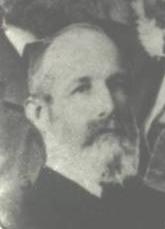
Those not familiar with the author should see Biography: Brief Sketches: T. H. Reynolds.
The eleven articles by Mr. T. H. Reynolds presented here are from A Voice to the Faithful for 1895-96, a periodical edited by Mr. J. B. Stoney.
They are particularly valuable as bearing witness to the Spirit's testimony through others to the truths advanced by those more prominent in the work of the Lord.
THR's statement in the preface to his Reflections on the Prophetic Word in the Old Testament Scriptures applies equally to these articles:
The Testimony of the Christ has been chosen as the title article of this page because of its salutary and prophetic warning:
"It brings in the cross – Christ crucified – as pouring contempt on the pride of man, and it is rendered in the power of the Spirit …
"It is well for us to look back to the start, and to be made conscious that such a testimony can only be maintained in the power of the Spirit.
"Any revival or maintenance of this testimony can only be as the Spirit is given His place, and the power and wisdom of man refused".
G.A.R.
| THE TESTIMONY OF THE CHRIST and other ministry by T. H. Reynolds |
|---|
The testimony of the Christ is evidently that part of the testimony of God – chap 2: 1 – which sets before us the exalted Man, the Man of God's counsel in whom all His purposes are established.
To God's assembly at Corinth had been given a special endowment of gifts, in order that the testimony of the Christ might be confirmed among them.
Such was the start at Corinth; they came behind in no gift waiting for the coming of our Lord Jesus Christ.
It is well for us to look back to the start, and to be made conscious that such a testimony can only be maintained in the power of the Spirit.
The testimony of the Christ was beginning to lose its lustre already at Corinth.
We need to be conscious of how much the people of God – ourselves among them – have slipped away from Paul's testimony of the Christ which was confirmed in the assembly at Corinth.
It is solemn to see in the book of Revelation the testimony of the judgments that will finally fall on the church, then become Babylon
T.H.R.
It is an exceedingly solemn consideration that the church as the vessel of testimony and light has failed, and the candlestick has been removed from its place.
There is a general sense among Christians that this responsibility has not been fulfilled,
Let it be noted also that it is not only a question of failing to
preach the word – to proclaim the gospel to every creature,
but a question also of light.
In the Thessalonians we see the true effect of the word.
A great commission was given to the apostles; they were to go into all the world and preach the gospel to every creature, and doors great and effectual were opened to them of the Lord;
In the address to the angel of the church at Philadelphia, this is, I think, brought to light,
And again, "Count on abundant grace in Him, to reproduce Him in the power of the Father's love; and to be watching and waiting for Christ". It is this reproduction of Christ through keeping His word, while it is accompanied with a godly recognition of the state in which the church is found – our own failure also, which is to be desired above all.
T H.R.
It is evident that the peculiar blessings of the Christian flow from
association with a risen Christ.
In the epistle to the Colossians, we have very distinctly the hope given to the Gentiles who believed the word of the truth of the gospel. It was a hope laid up for them in heaven.
It is all important that we should be clear upon this: so that the knowledge of our association with a risen Christ, alive out of death,
may be the means of our entering by faith into the part we have with
Him, whose life has been taken from the earth.
The gospel has come to us from heaven where Christ is. It has brought all the value of the work of Christ to satisfy the claims of God, and to purge the conscience of a sinner,
It is true that we are actually still on the earth, and that we have to live our responsible life down here while He pleases, for He is our Lord; and
This leads to a further realization of the soul. So far it is the gospel which leads us into association with Christ risen,
How we need to know our origin. On the one hand we need to know what it is to be brought from the darkness without into the kingdom of the Son of the Father's love.
It is beautiful to see the labour and conflict of the apostle to present every man perfect in Christ Jesus.
T.H.R.
It is wonderful that we should be given to know the Lord, and yet He is beyond all knowledge.
Two questions are addressed to the Lord as recorded in the two first scriptures which stand at the beginning of this paper.
It is interesting to see how the subject of chapter 8 is introduced. It is the words of God, no longer in a law containing His claims on man,
I have no doubt that the sinful woman brought to the Lord pictured the state of Israel as unfaithful to Jehovah.
When the Lord plainly states that He is the Light of the world, the Pharisees accuse Him of bearing witness of Himself. Who could have replied,
but the One whose words had convicted with divine light the consciences of those who now question the truth of His witness?
Thus far we have sin whether open or concealed in man, and the light of life in Jesus.
But it is not the work of giving sight to the blind man to which I desire to draw attention so much, as to the end for which his eyes had been opened.
I has often been noticed that one woman who was alone in the world, because she found not the body of her Lord – alone till He spoke her name, Mary! as intimately knowing His sheep, and so giving her to know Him in resurrection –
T.H.R.
In these scriptures are expressed the truth as to "living stones".
The revelation of the Father to Peter engages us in Matthew.
It is deeply interesting to see that which engaged the heart of the blessed Lord at that moment – to think of what a deep joy it must have been to His heart as He recognised – and He alone could – the beginning of a new work.
We must admit that Peter did not understand the blessing and bearing of the revelation;
But to us naturally there cleaves, as to Peter, that which is of man, that which consequently hinders us from apprehending the revelation of the Lord's Person.
and then more closely,
"But whom say ye that I am?"
The Sadducees would not allow anything beyond man in his present order and state. There was, they said, no resurrection, neither angel nor spirit.
Twice had the Lord shown to the disciples that the smallest portion which they had, when taken into His hands, received a wonderful enlargement.
It may be asked what is meant by coming to the living Stone.
but here they confess,
"Of a truth Thou art the Son of God". Now in resurrection, still the Man who came of the seed of David according to the flesh, He is declared Son of God in power.
We have seen that in Peter's epistle we have the living stones. It is well to trace the manner in which the subject comes before us.
It is well to see how the apostle seeks to bring them into an entirely new circle of association.
Not only can they build their every hope upon Him, but all that is for God is built up in the truth of His preciousness –
May the Lord make us willing to come to Him thus; free from the formalism and unbelief of our hearts
T.H.R.
It must be clear to the thoughtful reader that the passage of the Jordan – Joshua 3 – is the way of entrance into the purpose of God for His people,
The wilderness had proved the people, and in the ark was deposited what Moses was instructed to write as a witness against them – Deut. 31: 26 – for it was in their rejection of Christ, that the words of Moses were fully verified,
Besides the ark and the priests, there is Joshua the leader of salvation. The word of Joshua to the people was,
It was when the feet of the priests were dipped in the brim of the water – for the swellings of Jordan were there – that the waters were driven back, and the priests stood firm in the Jordan while the Israelites passed over on dry ground.
There is one point which could not be indicated in the type we have been considering, that is, the glory and love of the Person who is both the ark and the priest;
Hereby perceive we love, because He laid down His life for us; utterly unworthy objects, but love reached us in that way, in order to bring us into the peaceful enjoyment of the privileges which love has conferred.
How little prepared we are to move out of our place; but surely these divine affections have power to create desire in our hearts, and though the swellings of Jordan if we look at the overflowing water might deter us, yet all its power is gone;
in taking that way we have the support of the priest. When Jordan is passed, then we begin to realize the place into which we are brought. We have everything in Christ.
But the point before my mind is this place of association with Christ.
We see the tender affection of the blessed Lord to His own in the closing chapters of John as the moment drew near for Him to part with them, and again in Luke.
Now comes the question for us,
T.H.R.
The end of Romans 8 is very blessed; every circumstance of sorrow or trial is challenged,
In the Epistle to the Philippians we are carried farther, if in any little measure we are able to follow the way in which we there see the energy of the Spirit as it wrought in the apostle.
To the Philippians he had to write that he was set – a poor prisoner in bonds – to answer for the gospel; others were preaching it.
He knew the salvation of which he spoke as the full triumph of the Lord Jesus Christ over Satan's power.
What an answer for the gospel was thus made to the power which sought to crush this servant of Christ, and to terrify those who had fellowship with him in it.
Some of us may be able to take up Paul's utterance in Romans, and say "I am persuaded", who feel – though we may admire it in Paul –
that is, to find our spring of joy always in Himself.
Some fourteen years elapsed in the history of Abraham between chapters 15 and 16 of Genesis.
in the other, "And Abraham fell upon his face and laughed".
We may say that in chapter 17 Abram's soul is lifted on to new ground.
With Paul, the three days during which he neither ate nor drank, completed the experience which taught him the worthlessness of the flesh. Judaism was left for Christ.
To Abraham it was the Almighty God, to us the Father. Connected with our finding a present joy in the Lord through reaching Him, I might here quote a verse from Psalm 37:
There is also the looking for the Lord Jesus Christ as Saviour, to change these bodies of humiliation, and fashion them into the likeness of His body of glory –
This desire of His heart is expressed in order to attract our hearts, as we realize His great love.
T.H.R.
Everything which will enable the soul to enter into the realities of
Christianity will be of great interest to the one who is exercised as to
them.
When God makes known His call, and His call is according to His purpose, it is not then a question of resting under shelter, but of moving;
God and Israel could not be together, according to His love for them, in liberty while in Egypt.
Our realization of that which is set forth in Israel's history, is connected with a work done for us by God through the death and resurrection of our Lord Jesus Christ.
What I would press is, that it is a real journey of the soul from distance to nearness.
The result of the sufferings of Christ Godward, as portrayed in Psalm 22, is that He can make God known to His brethren, as He knows Him.
I do not pursue this subject further, for there is another point
connected with the realities of Christianity to which I desire to turn.
The believer is born of God, he has the privilege of being a child of God.
So in 1 John 3, where the manner of love is unfolded that has given
us now to be the children of God, such are clearly manifested as partaking of the divine nature – verses 9-10 –
Again in Romans 8, we have the full answer in liberty to the groan of chapter 7 –
In John's epistle is shown very distinctly that the children of God have their origin from, and belong in every way to another sphere than this world. Being God's children,
The cross laid the ground for this grace of God towards us; as also to free us from our old estate, for no creature has a right to leave his own estate,
How difficult it is for us to get our souls disentangled from the habit of applying to ourselves all that the grace of God bestows, as remedial of our own state or estate, and be on the line of the gift of God.
T.H.R.
In this chapter we have a beautiful pattern portrayed for us of the way in which the Lord acted in days of rejection –
But I would first trace the history which led up to this point.
In the end of chapter 3 the approaching rejection of the Lord begins to manifest itself, when the Pharisees attribute the power by which Jesus wrought to Beelzebub, the prince of demons.
Disallowed and blasphemed by the religious leaders of Israel, the blessed Lord takes the place of a sower, sowing the word –
The varied effects of this sowing, and the circumstances which would attend this work of the Lord, are then detailed; and finally in verses 35-41,
The Sower of that word which was to produce fruit for God in the souls of men, together with those He had appointed first to be with Him, and then that He might send them forth to preach,
In chapter 5 the further needs of man are met by the Lord, for man not only needs the converting and formative power of Christ's word, but he needs deliverance also.
The power of man's deliverance having thus been manifested by the Lord, a very solemn question arises in chapter 6:
The question first arises in His own country, and the answer given is that He is the carpenter, the Son of Mary.
There is a beautiful presentation of the Person, in whom Israel were to recognize their God, given to us in Isaiah 40: 11-12:
And yet He is the One "Who hath measured the waters in the hollow of His hand, and meted out heaven with the span, and comprehended the dust of the earth in a measure".
One so mighty and yet so near to them in grace.
That this question of owning His Person was a momentous one, is further shown by the mission of the twelve. Mark 6: 7.
The works of Jesus and His disciples attracted the attention of Herod, the worldly and apostate king who reigned in the land of Israel.
But at that moment nothing can surpass the tender care of the Lord for those He had sent forth with His testimony.
The needs of the multitude that came together unto Him drew Him forth from His privacy, and the compassion of His heart led Him to teach them many things,
I do not dwell further upon the details of this portion, as my object is to draw attention to the circumstances of the Lord's rejection,
So far this is heavenly grace brought to our side, and it is a blessed thing to be in the secret of it; but in the close of the chapter we pass to the Lord's side;
Here He is not with them in the retreat of a desert place, but talking with them as One in the sphere of His own supremacy, the One who is above
all.
T.H.R.
In Galatians 2: 20 the apostle gives us the two sides of individual Christian life, as he knows it.
T.H.R.
THE WORD – THE CANDLE – THE CANDLESTICK
WHO IS THE BEGINNING
Colossians 1: 18LIGHT REACHES THE SOUL
that it may be Brought Into
the Knowledge of the Son and the Father
John 8: 25; 9: 35-37; 10: 15THE LIVING STONE AND LIVING STONES
Matthew 16: 6-18; 1 Peter 2: 4-5PRESENT ASSOCIATION WITH CHRIST
Where He Himself is gone.PERSUASION AND REJOICING
SOME REALITIES OF CHRISTIANITY
Well known in Jesus' love."THE SERVICE OF HEAVENLY GRACE
in the Day of Rejection – Mark 6INDIVIDUAL CHRISTIAN LIFE – An Extract