Menu•SiteMap |
History
The First 50 Years: A History
– C. H. Mackintosh
| INTRODUCTION |
|---|
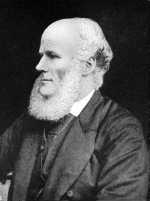 This page is an extract from 'Letters to a Friend on
the Present Condition of Things in
the Professing Church of God'
by C. H. Mackintosh.
The letters, written c. 1875,
are from Things New and Old,
a periodical edited by CHM.
For details as to
Mr. Mackintosh personally,
his service and ministry, see
Biography: C. H. Mackintosh
Ministry: C. H. Mackintosh.
|
|---|
CHM's ministry is widely known and appreciated by brethren generally, but
- just as many will be surprised to learn that he remained in happy fellowship with FER and JBS till the end,
- so many will also be astonished at his thorough denunciation and rejection, not only of the Plymouth errors but of the independency of Bethesda.
- and his vigorous defence of the principle of 'exclusivism'.
Those who wonder what went wrong in recent times may be enlightened by CHM's comments on the low spiritual condition among the brethren in 1850-75,
- just before the decisive decade of divisions – 1881-90,
- and a comparison with the declining spiritual condition among the brethren in the years preceding 1959.
G.A.R.
Page Top
THE FIRST 50 YEARS
A History by C. H. Mackintosh |
It is now close upon half a century since a very remarkable movement commenced in Great Britain and Ireland.
- At that time many of the Lord's beloved people were led to see that there was something radically wrong in the various religious organizations of the day.
- Some, it may be, felt the death and desolation, the dearth, darkness and poverty of all around. They longed for something which the existing religious machinery failed to supply.
- There was a thirsting for Christian fellowship, and a longing for a higher range of truth than was to be found either in the National Establishment or in the various dissenting bodies.
Others, again, were led to search the Scriptures, and to compare what they found in these precious writings with the existing conditions of things around them in the entire professing church,
- and they were not only led, but forced to the conclusion that the whole professing church was in a condition of utter and hopeless ruin –
- that there was not a single ecclesiastical polity, not a single clerical order, not a single theological creed, throughout the length and breadth of Christendom, that could stand the test of Holy Scripture –
- that there was no such thing to be found as a faithful expression of the Church of God as seen in the New Testament –
- no expression of the One Body, no such thing as an assembly of believers gathered simply to the Name of Jesus, and practically owning the presence, power, rule and authority of the Holy Ghost.
Further, as regards the grand question of ministry, they looked in vain throughout the various religious systems, for anything approaching to the truth as taught in the New Testament.
- Whether they examined the Greek, Latin, Anglican or Scotch Establishments, or, on the other hand, the various popular bodies of the day, they found that
- whether under the title of Bishop, Priest, Deacon or Minister, human authority was absolutely essential to the exercise on every branch of ministry, so-called.
- If a man possessed all the gifts of the apostle Paul himself, he dared not preach or teach Jesus Christ, unless he was licensed or authorized by man;
- whereas, on the contrary, though destitute altogether of spiritual gifts, nay, even of spiritual life itself, yet,
- if authorized, ordained, licensed or approved by man, he might preach and teach in that which professed to be the church of God.
- Man's authority, without Christ's gift, was quite sufficient. Christ's gift without man's authority was not.
All this they found was diametrically opposed to the Word of God.
- When they turn, for example, to such a Scripture as Ephesians 4, they found, that ministry, in all its branches, had its source in a risen and glorified, Head in heaven.
- "To every one of us is given grace according to the measure of the gift of Christ".
- Not a syllable about human authority or human ordination, in any shape or form – not a sound of such a thing, or anything approaching to it, but the very reverse. It is simply "the gift of Christ" or nothing at all.
- "Wherefore He saith, when He ascended up on High, He led captivity captive, and gave gifts unto men … and He gave some, apostles; and some prophets; and some, evangelists; and some, pastors and teachers".
- It is remarkable that even "apostles" though ordained by Christ in the days of His flesh, are here viewed as flowing from Christ ascended.
Here then, they found the only source of ministry. All the ministerial gifts, all the gifts for edification flow down direct from a risen and glorified Christ.
- There is no human medium through which they can come – no human channel through which they are to flow – no human authority necessary to render them available – no human addition whatever.
- The gifts come down in all their divine integrity from the Head to the members. Man can add nothing to them. He cannot improve them.
- Those who receive them are responsible to exercise them – to wait upon their gift – to cultivate and develop it, with all diligence and faithfulness;
- but, as to any human authority, licence, sanction, or ordination, in order to make the precious gifts of Christ available for His Body, the Church,
- not only is there no such thing, but it is absolutely and completely opposed to the Word of God and to the mind of Christ.
Page Top
Many earnest Christians, in various places, feeling deeply the state of the professing church, were led to separate from the different denominations of the day.
- Very few, if any of them, knew exactly what they were going to do; but they felt it impossible to go on any longer with what was so palpably opposed to the Word of God.
- The old proverb: 'Birds of a feather flock together' had its illustration in the history of those early brethren.
- They were all dissatisfied with what they saw around them; and it may be truly said of many of them, 'They went out not knowing whither they went'.
- They could not continue in connection with plain and palpable error. They were sick of the worldliness and death of the professing church; they longed for something better; they came out, one from this, another from that, another from something else;
- they met outside and they saw no reason why they could not go on together, or why they might not break bread together as the early Christians did, counting on the Lord to be with them and to enable them to edify one another as He might bestow the needed gift and grace.
Amongst those who thus separated from the various organizations were some men of considerable gift, moral weight, intellectual power, and intelligence –
- clergymen, barristers, solicitors, military and naval officers, physicians, and men of high position and property.
- Their secession, as you may suppose, caused a very considerable stir and drew forth much opposition.
- Many a link of friendship was snapped; many a fondly cherished companionship was broken up; many sacrifices were made; much trial and sorrow was encountered; much reproach, obloquy, and persecution had to be endured.
- I cannot attempt to enter into details, nor have I any desire to do so. It could serve no useful ends, and the records could but give needless pain.
- All who will live godly – all who are determined to follow the Lord – all who will keep a good conscience – all who, with purpose of heart, will act on the authority of Holy Scripture, must make up their minds to endure trial and persecution.
- Our Lord Christ has told us that He came not to send peace but a sword.
- "Suppose ye that I am come to give peace on earth? I tell you, Nay; but rather division. For from henceforth there shall be five in one house divided, three against two, and two against three".
- And again He tells us that "A man's foes shall be they of his own household".
All this was fully realized in those times to which I am now referring;
- and not only was there this domestic opposition and persecution, but public prejudice in various shapes and forms, entailing much trial, sorrow, and loss.
Page Top
Still the work went on. The brethren gave themselves devotedly and energetically to the blessed work of evangelization and teaching. Books and tracts were written and circulated.
- The gospel was preached with a clearness, fulness, depth and power, unknown since the apostolic times.
- The grand doctrines of the Church as the Body of Christ; the unity of the Body; the presence and action of the Holy Ghost, in the individual believer and in the assembly; together with the blessed hope of the coming of Christ, first for His people, and then with them –
- all these glorious truths which had been almost wholly lost sight of for eighteen centuries, were brought out with great power, unction, and freshness, to the joy and blessing of hundreds of precious souls.
Moreover, the important distinction between preaching the gospel to the unconverted and teaching the Lord's people – so little understood or acted upon even now – began to be forcibly illustrated, and with the most blessed results.
- The evangelists and the teacher waited, each upon his own proper work – souls were converted, and believers were built up on their most holy faith.
- Worship, too, and 'the communion of saints', began to be understood. The Lord's people met, on the first Day of the week, to break bread, and found the presence of Jesus to be a divine reality in their midst.
- Of course, none were admitted to the table save such as were believed to be true Christians, sound in faith, and godly in walk.
All this attracted much attention. Many wondered whereunto it would grow. Some prophesied that it would all soon come to nothing. It was but a bubble on the stream of time, which would speedily burst.
- It was deemed utterly impossible that a number of people, without any ecclesiastical framework, any palpable organization, any clerical order, any visible head, any confession of faith, could ever get on together.
- How, it was asked, can your meeting go on? Who is to preside? Who is to keep order? You will have people popping up in all directions to speak, or pray, or give out hymns. It must prove a perfect Babel.
Such were the dark suggestions of many unfriendly and unbelieving prognosticators; but they did not prove true.
- People who attended the meetings were mightily struck by the fact of scores or hundreds of people assembled, without priest, parson or president, and yet no disorder, no confusion, no jar, no hitch.
- The Lord Himself was there. He was allowed His proper place as President, and He took it and filled it to the joy, comfort, blessing and edification of His beloved people, who preferred Him to any human device.
I need hardly say that here and there, mistakes were made. The weakness and folly of mere nature occasionally displayed themselves in the meetings.
- Just as, in the life of the individual Christian, notwithstanding the indwelling of the Holy Ghost, there are mistakes, evil, failure and infirmity,
- so in the assemblies of brethren, as we can easily understand, there would be the exhibition of that which was not of the Spirit although in the main, the Spirit's presence and rule were owned and felt.
- The enemy, we may be sure, would take special pains to introduce confusion into the assembly, in order to bring discredit on the ground which the assembly occupied.
Still, I can say, on looking back over an experience of 35 years, the order and power of the meetings were wonderful;
- while as to the mistakes and failures, I found a thousand-fold worse in the organizations around, and that too, not mourned over as failure but viewed as the legitimate fruit of human arrangement.
- The brethren had not human order or arrangement, yet the solemnity and order of their meetings were most striking.
- Many of those who attended their meetings as spectators, could not be persuaded but that there was after all, some pre-arrangement, some recognized order; but I can solemnly declare there was no such thing.
- We could never tell, when we entered the meeting, what its order, tone or character was to be. I speak only of the meetings of the assembly for worship and communion.
- As to those meetings which were convened on individual responsibility, for preaching or teaching, the case was wholly different.
- The order of such meetings was always pretty much the same. It was entirely a matter of individual responsibility.
I have given you but a very hasty and meagre sketch of an intensely interesting movement in the church of God.
- I have referred to the rise of those called "brethren". In my next I shall speak of their further history and its lessons.
Page Top
| COMPARISON WITH MATTHEW 13 |
It needs not surprise us if that interesting movement should be found to partake of the moral features presented in Matthew 13 – to exhibit the moral tendencies set forth in the parable of the tares, the leaven, and the mustard-tree.
- In its early stages there was much that was profoundly interesting – great freshness, great simplicity, much genuine devotedness, and separation from the world.
- Many of those who at first came out had very undefined thoughts, and very imperfect apprehensions of the truth.
- But they flocked together, and tasted, in a way they had ever done before, the sweetness and power of the communion of saints.
Moreover, as they gave themselves to the free and prayerful study of the Word of God, apart from their preconceived theological views, they very soon began to find the Bible a new Book.
- Deep, precious, and long-lost truth began to pour its living light upon their understandings.
- The grand doctrine of the Church – its place, portion, and prospect; the operations of the Spirit of God; the proper hope of the Church, namely, the coming of the Bridegroom, the Bright and Morning Star, as distinct from the destiny of Israel and the earth –
- all this came forth with great clearness, the vividness, and power, and attracted a large measure of attention in the various sections of Christian profession.
- In short, it was a most distinct, powerful, and blessed action of the Holy Ghost, the influence of which was felt to the ends of the earth.
Of course, there was intense opposition, especially on the part of the clergy and ministers of all the denominations.
- 'The Brethren' (so-called) were designated spiritual Ishmaelites, whose hand was against every man, and every man's hand against them.
- They were looked upon as the most bitter, the most bigoted, the most intolerant, sect in Christendom; and this while protesting loudly against sectarianism.
- Various nicknames were bestowed upon them, such as 'Plymouthists', 'Darbyites', 'New Lights', and various other names, derived from certain prominent individuals in different localities.
- But all this was a mere effort of the enemy to neutralize the influence of the ground occupied by the Brethren, which was felt to be, and really was,
- a standing testimony against the state and practice of the various religious bodies of the day –
- a positive declaration of the utter and hopeless ruin of the professing church,
- and the folly of attempting to form churches, and ordain ministers, without so much as a shadow of authority or power to do so.
However, it was not the opposition and persecution from without that Brethren had most to dread. These rather tended to strengthen their hands, and draw them together.
- Times of persecution have always been healthful times for God's people. So these early Brethren found it.
- There was much love and practical sympathy among them, very little formality, very little of what we may call 'red tape and routine', very little 'Brethrenism';
- but much real love and care for one another, great simplicity, beautiful freshness, and true devotedness to Christ and His cause.
But the arch-enemy had his eye upon them, and marvellously soon the bitter fruit of his subtle wiles began to appear.
- Almost from the outset he commenced, in the very midst of the Brethren themselves, a deep work,
- the manifest design of which was to undermine and set aside those grand truths which, as I most fully believe, the Lord was bringing out by the ministry of the Brethren,
- namely, the unity of the body of Christ; the presence of the Holy Ghost in the assembly, as distinct from His presence in the individual believer; and the special hope of the Church, the coming of the Bridegroom for His people, as distinct from His appearing in judgment upon the world.
Against these most precious and glorious truths the enemy raised up an intense opposition, and that, strange to say, in the very place from whence Brethren had received their special nickname.
Page Top
Now you need not fear that I am going to drag you through our Plymouth and Bethesda troubles. Far be the thought! My desire would be to forget them forever.
- It would be utterly impossible for me to convey to you the bitter memories and sad associations that linger around these two words, 'Plymouth' and 'Bethesda'.
- But this I must tell you, that, although that humiliating history caused me the deepest sorrow I had ever tasted, yet I really reaped a golden harvest from it, for which I shall have to bless God throughout eternity.
- If the reader desires to know something of the particulars of this manifest work of Satan, let him procure a copy of the tract, entitled, The Whole Case of Plymouth and Bethesda, by William Trotter.
- This is the calmest, soundest, and most judicious document that I have read on the subject. The action at Plymouth was quite distinct from that at Bethesda, though often confounded with it.
I had not the honour of being among the first of those who planted their feet on the blessed ground occupied by Brethren.
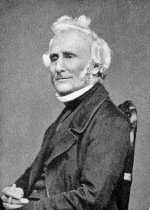 I left the Establishment about the year 1839, and took my place at the table in Dublin, where dear Mr. Bellett was ministering with great acceptance.
- As a young man I, of course, walked in retirement, having no thought of coming forward in public ministry of any kind.
- Indeed, I may say that nothing but the most solemn sense of responsibility could ever have induced me to stand up in public.
- I never could, nor can I now, understand the excessive forwardness of some young men, who seem ever ready to thrust themselves before the assembly of God's people, even in the presence of gray heads and gifted vessels.
- To me this sort of thing has ever been supremely offensive. But this is only by the way.
I was not long on the ground, when it became painfully manifest that the enemy was making a deadly effort to quash altogether the testimony of Brethren.
- I shall not mention any names – it could serve no useful end to do so. It is with facts and principles we have to do.
- I may just say that Plymouth became the special sphere for the display of the enemy's power.
- Numbers increased rapidly there, and there was a most diligent and determined effort to make Plymouth a kind of centre, from which an influence was to go forth throughout Devonshire and Somersetshire.
- But alas! it became the centre and source of mischief and sorrow. There were, I believe, between 800 and 900 in communion.
- It looked very imposing to such as were not behind the scenes, or could not see beneath the surface.
- But, for my own part, I have no doubt that the stamp of death and the power of Satan might have been discerned by a spiritual observer, almost from the very outset.
The presence of the Holy Ghost in the assembly was practically denied.
- Human authority, human management, and human influence took the place of simple, earnest, holy dependence upon the rule and guidance of the Spirit of God.
- Certain gifted leaders held the reins in their own hands. If any, not approved by them or by their admirers, attempted to minister, they were put down, and that, too, often by means which I should blush to name.
- In short, it was clerical authority over again, only in a much more odious form, inasmuch as it was positively dishonest.
| Comments on Mr. Newton's 'Principles' |
|---|
| Fri, 15 Jan 2004: Gordon Simmonds writes: 
Around 1970 I went to the British Museum library and did a bit of research on B. W. Newton.
- This confirmed that he undoubtedly held clerical views and I noted down extracts to prove it.
The headship of Christ and the liberty of the Spirit were practically set aside.
- If these assertions are doubted as being the views of Mr. Newton's traducers only, one would draw the readers attention to what has been admitted by Mr. Newton's avowed supporters.
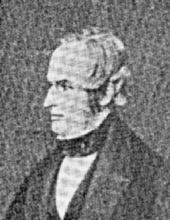 Dr. Tregelles said: "It had been the endeavour of Mr. Newton to prevent the Brethren at Plymouth from adopting the practices and opinions as to ministry and absence of order into which those in other places, professing to hold the same principles were running. In this endeavour he was for some years successful, so that there was at Plymouth the definite recognition of ministry, such as was not unsuitably termed 'modified Presbyterianism' ".
– quoted in 'An earnest expostulation' by John Cox, Jnr, 1869 on page 13.
- In another pamphlet it was said: "Mr. Newton … sought at the same time to maintain the truths embodied in the Creeds and first eighteen articles of the Church of England to which he has always adhered; but with which the Brethren are altogether at variance on many important points" – 'Judge Righteous Judgment' by John Cox, Jnr, on page 4.
- Finally, it may be pointed out that after 1847 Mr. Newton ceased to associate with Brethren, and became minister of his own chapel in Queens Road, Bayswater where, according to the previously quoted writer, he preached "twice each Lord's day", "Sunday after Sunday".
- As the same writer states: "Mr. Newton's official description: 'Minister of a Congregation of Protestants holding the Creeds and first eighteen Articles of the Church of England, but rejecting her order and ritual' is of itself, quite sufficient to show that he does not belong to a body who ignores all Creeds and Articles, and who hold loose democratic views of Ministry and do not recognise 'pastors and teachers as the definite ordinance* of Christ' " 'Judge Righteous Judgment' on page 44.
[* Pastors and teachers are 'gifts' not 'ordinances', Ephesians 4: 7-12.]
- Is it therefore to be wondered at that Mr. Darby stated that at Plymouth "there was a subversion of the principles on which we met", C.W. 20: 40.
|
If we are going to have human authority at all, let us go back at once to the authority of the Pope; for I must candidly declare, I know not any consistent standing-ground between the Pope in the chair of St. Peter, and the Holy Ghost in the assembly.
- In this latter I do, thank God most deeply and reverently believe – yea, so heartily and thoroughly do I believe in it, that, by the grace of God, I should not remain for an hour in any place where it was denied in principle or in practice.
- Human order, power, and arrangement, be they ever so imposing, are a poor miserable substitute for the blessed presence and living ministry of the Holy Ghost, who has come down to dwell, not merely in individuals, but in the assembly;
- and not merely in Pentecostal gifts, but as the blessed Comforter, whose office it is to take of the things of Christ and show them unto us, to feed us with all His fulness and preciousness, and blessed be God, to abide with us for ever.
It was the latter, that was practically denied at Ebrington Street, Plymouth, and in its place there was most manifestly man's iron grasp to keep things in order.
I cannot attempt to do go into detail; I can merely deal with the salient facts; and I do so simply for the purpose of illustrating and enforcing these great truths, of which the devil sought to deprive us, and which, through the goodness and faithfulness of God,
- have come forth from the terrible debris of Plymouthism, in greater brightness, fulness, freshness, and power, than ever; so that, as I said, we have positively reaped a golden harvest from this most sad and humiliating history.
- I am quite sure you have no desire to go and grope amid the debris; were you to do so, you would find a quantity of the most wretched and defiling rubbish that could possibly engage your attention.
- But we shall draw the curtain of silence over it, and thank God that in this, as in all beside, the eater has yielded meat, and the strong sweetness.
Ebrington Street fell, and buried many in its ruins – buried them, I mean, as regards conscience, walk and public testimony.
- But its fall has been fruitful in blessing to thousands. Had it been allowed to go on, we should have been left without a true Christ, and without the Holy Ghost;
- for most assuredly, a false Christ was preached at Plymouth, and the presence of the Holy Ghost was denied.
- And what had we left? Darkness, death, and desolation. I do most solemnly declare to you that in the annals of the church of God,
- I know of no more marked and determined effort of Satan to upset the very foundations of Christianity, and swamp us all in the blasphemous depths of a dark and abominable Socinianism.
- This is the calm and deliberate judgment of your correspondent, after having waded through it all, and looking back at it all, after an interval of thirty years.
But God had mercy upon us; and when the enemy came in like a flood, the Spirit of the Lord raised up a standard against him.
- The very remembrance of the noble stand that was made for the truth of God, from the year 1845 to 1848, fills the heart at this moment with deep praise and thankfulness. The hand of the Lord was with His people.
- It may be all very well for superficial observers, who know nothing really about the facts of the case, to talk about failure in manner, temper, spirit, style, and such like. To me it is all the most vapid and worthless verbiage.
- Even supposing men did lose their temper, can we wonder at it, when we remember that they had to deal, not unfrequently, with shameful lies, trickery, and, above all, with blasphemous doctrines?
- Shall we think for a moment of comparing mere infirmity of temper – even granting that such was manifested – with positive blasphemy against Christ, or cold indifference thereto?
- Supposing a man loses his temper in proving that too and three make five, I am sorry he lost his temper, but two and three make five all the same.
Some, however, may condemn me for raking up old sores. They may deem it better to screen the Brethren.
- I reply, I have nothing to screen. I am not dealing with Brethren, but with the manifested wiles of Satan. Should I screen them? Nay, but expose them, and raise a warning note in the ear of the Church of God.
- It is neither a question of screening nor exposing Brethren, but of simply reading their history, and profiting by its solemn and striking lessons.
- Has all that happened at Plymouth or Bristol touched the ground which Brethren occupy? Not in the smallest degree.
- Nay, it has brought out the truth with greater clearness and force than ever. It has caused us to see with far greater distinctness the grand reality of what was involved.
- I am persuaded there are hundreds amongst us who never really understood the true ground of the Church of God – its standing, its privileges, and its hopes, until they were called to pass through the terrible sorrow of Plymouth and Bethesda.
Numbers had come upon the ground without understanding it. They were attracted by the preaching and teaching. They found at the meetings of Brethren what they could not find anywhere else.
- Hundreds of precious souls, who had been for years in darkness and bondage, groping their way amid the hazy mists of Christendom, were relieved, charmed, and blessed,
- by the full and free gospel of the grace of God, and by the unfolding of the precious truth contained in many portions of the Word of God, which had till then been a dead letter to them.
- Moreover, many were attracted by the love and fellowship which they found amongst Brethren, and were led to cast in their lot amongst them, with very little, if any, intelligence as to the great underlying principles.
- The consequence was, that, when the struggle came, they were not prepared for it, and many were stumbled, and turned aside.
- They were put to the test, as all are sure to be sooner or later, and many gave way, and returned to what they had come out of, thus building again the things which they destroyed, and making themselves transgressors".
- For if the things were right, why had they left them? If wrong, why go back to them? In either case they made themselves transgressors.
Page Top
The year 1848 was a testing time for all who professed to occupy the ground of Brethren.
- In the summer of that year, a question was raised as to whether we were really gathered on the ground of the unity of the body,
- or merely as independent or fragmentary congregations, having a measure of acquaintance and sympathy,
- but no common ground of responsibility in fellowship and testimony as those who were members one of another, united to the living Head in heaven, and to one another, by the Holy Ghost.
- It was at Bristol that this profoundly interesting question was raised; and from thence it extended to every place on the face of the earth, where there happened to be an assembly of Brethren.
As you are doubtless aware, there was a congregation of Baptists who met for worship at a chapel called 'Bethesda', in Bristol. There was an associated body meeting at 'Salem' Chapel; but I shall speak of both under the name of Bethesda,
- and further I shall do so is briefly possible, inasmuch as my sole object is to bring out the great principle at stake, and not, by any means, to dwell on persons or places which can only possess an ephemeral interest.
Well, then, some years previous to the time above referred to, this Baptist congregation was received into fellowship with Brethren – received as a body.
- The whole assembly, professedly and ostensibly, took the ground occupied by Brethren.
- I do not mention names or to descend into minute details; I merely give the great leading fact, because it illustrates a most important principle.
It has been my conviction, for many years, that this reception of a congregation was a fatal mistake on the part of Brethren.
- Even admitting, as I most heartily do, that all the members and ministers may have been most excellent people taken individually; yet I am persuaded that it is a mistake, in any case, to receive a whole body as such.
- There is no such thing as a corporate conscience. Conscience is an individual thing; and unless we act individually before God, there will be no stability in our course.
- A whole body of people, led by their teachers, may profess to take certain ground, and to adopt certain principles;
- but what security is there that each member of that body is acting in the energy of personal faith, by the power of the Holy Ghost, and on the authority of the Word of God?
- It is of the very last importance that, in every step we take we should act in simple faith, in communion with God, and with exercised conscience.
- Indeed I cannot but believe that one special cause of weakness in the various assemblies of Brethren is that numbers have come on the ground who are not in the power of the truth in their own souls, and they act as a dead weight and a hindrance.
- But, most clearly, it is a grave mistake to receive a whole body of people into communion where there is no opportunity of testing the spiritual state of the individuals composing that body.
We had a very striking illustration of this in London, in the year 1853.
- A congregation of Baptists desired to take the ground occupied by Brethren; and they did so.
- But hardly have they taken this step when the brother who had built the chapel and gathered, by his preaching, the congregation, perceived the mistake.
- He immediately called the assembly together, and told them that both he and they must act on their individual responsibility before Lord.
- In pursuance of this statement, on the following Lord's Day, the chapel was locked, and the people were compelled individually to consider their ground and their proper course of action.
Now, some would pronounce this a very bold step; but it was a noble step; and the sequel proved it to be the right step – the only right step.
- In the course of a few weeks – weeks, no doubt, of profound exercise of soul and deep and painful searchings of heart – that whole congregation –
- with two are three exceptions, and those, I believe of a doubtful character –
- not in a body, but individually applied for fellowship at the various assemblies of Brethren, and each case was taken up on its own merits, and tested by the Word of God.
- Then the brother to whom the chapel belonged, kindly lent it as a convenient meeting place for Brethren.
- Of course, he had, during the time the place was closed on Lord's day morning, carried on his individual work of preaching and teaching, as he does to this day;
- and, blessed be God, since that time, that dear spot has been made the birth-place of hundreds of souls, and a blessed feeding-place for the lambs and sheep of the beloved flock of Christ. May it continue to be so till He comes!
How very different was the case of Bethesda!
- A testing time came. Deadly error was taught at Plymouth – error touching the position and relations of our Lord Jesus Christ –
- error which placed Him – I shrink from penning the words – under the curse and wrath of God all His days and that not vicariously, but in virtue of His association with Israel and human family.
I cannot bear to go further into the terrible doctrine taught at Plymouth, or to transfer to this page the expressions in which that doctrine was presented.
- I have no desire to use strong or stern language in reference to individuals; but I must say to you that I consider the doctrine quite as bad as Socinianism itself; at least the former as well as the latter leaves us without the Christ of God.
- It is useless to talk of distinctions, for if we have not the Christ of New Testament, we have no Christ, no Saviour at all.
- Arius or Socinus may deny the Deity of our adorable Lord and Saviour; Irving may deny His pure and sinless humanity;
- a Plymouth teacher may present Him in a position and in a relationship which would make Him need a saviour for Himself – may God pardon the very penning of the lines! May He pardon the man who taught such horrible doctrine! –
- They all deny the Christ of God. They blaspheme His Person and His Name. Their doctrines are to be held in utter abhorrence by every true lover of Jesus.
Well then, this deadly error was taught at Plymouth; and, moreover, the holders and teachers of this error were received at Bethesda.
- A few faithful members remonstrated, protested, and entreated that such doctrine should be judged, and its teachers put out of communion. It was all in vain.
- Ten of the leaders wrote a letter – the well-known Letter of the Ten – well known, I mean, to those of us who were called to wade through those deep waters.
- In this letter, which was adopted by the great bulk of the congregation at Bethesda, they refused to judge the doctrine. They said, 'What have we at Bristol to do with doctrines taught at Plymouth?'
- In a word, they committed themselves plainly and palpably, to the ground of neutrality and indifference, as regards our blessed Head; and independency, as regards His beloved body.
Such was the ground set forth in the Letter of the Ten – a document prepared by ten intelligent men, adopted by some hundreds of Christian people, and which, I believe, remains, to this day, unrepealed and unrepented of.
- It is true that, after the sad mischief was done, and fifty or sixty of the Lord's people had left Bethesda rather than sanction such a wretched principle or ground of fellowship,
- the leaders held what they called seven church meetings for the purpose of examining the tracts in which the error was taught, and one of the leaders said that "according to that doctrine, Christ would need a saviour Himself".
- But the Letter was never withdrawn – never repented of; and hence it remains to this day, as the studied and deliberate statement of the real ground of Bethesda fellowship,
- which is, to my mind, simply indifference, as to Christ, and independency, as to His body the church.
I purposely refrain from giving the names of persons, and from entering into any details as to the conduct, manner, or spirit of individuals.
- As regards all these things, we can believe there were faults on all sides. I must confess I have no taste for dwelling upon such things.
- And further, I may assure you that I am not conscious of a single atom of bitter feeling toward any individual.
- I am writing after an interval of 27 years, and I desire to confine myself to the great principle involved in the whole case of Plymouth and Bethesda.
- I have not depended upon hearsay in the matter. We all know how things may be coloured and exaggerated in the heat of discussion.
- But there can be no question of colouring, exaggeration, or heated discussion, in reading the Plymouth tracts which contain what I must designate abominable doctrine,
- or in reading the Letter of the Ten which sets forth the miserable principles of neutrality, indifference, and independency.
The fact is, Bethesda ought never to have been acknowledged as an assembly gathered on divine ground;
- and this was proved by the fact that, when called to act on the truth of the unity of the body, it completely broke down.
- And not this only; but had the members of the congregation been more animated by true loyalty to Christ they would have risen as one man to expel from their borders every trace of the doctrines which blasphemed their Lord.
- I am quite prepared to believe that numbers were totally ignorant of what they were about; that they meant well, and had no true apprehension of what was involved.
- But if an ignorant pilot is urging the vessel upon the rocks, it is poor consolation to those on board to be told that he is a most blameless well-meaning man.
Such, then, is a very brief and condensed statement of the real ground of what is called The Bethesda Question.
- Of course, Brethren everywhere had to face it. There was no getting out of it. It had to be looked at straight in the face.
- To many it proved a terrible stumbling block. They never could see their way through it.
- For my own part, I felt I had just the one thing to do, namely, to take my eye off completely from persons and their influence, and fix it steadily upon Christ.
- Then all was as clear as a sunbeam and as simple as the very elements of truth itself.
- I have never had a shadow of a doubt or hesitation, as to the course adopted in the main, or as to the great underlying principles;
- but I can quite understand and make allowance for the difficulties of souls just setting out on their course, when called upon to encounter the Bethesda question,
- particularly when I remember how hard it is, generally speaking, to get a thoroughly dispassionate and unprejudiced view of it.
- But this I must say, as a result of a good deal of experience and observation, I have invariably found that where a person was enabled to look at the matter simply in reference to Christ and His glory, all difficulty vanished.
- But, on the other hand, if personal feeling, affection for individuals, anything merely natural, be allowed to operate, the spiritual vision is sure to be clouded, and a divine conclusion will not be reached.
Page Top
There is one thing which seems to act as a terrible bugbear to many, and that is the cry of 'Exclusivism' raised against those who, as I believe, seek to maintain the truth of God at all cost.
- A moment's reflection, in the light of Scripture, will be sufficient to show that we must either go thoroughly in for the principle of exclusivism,
- or admit that, on no ground, for no reason whatsoever, should we ever exclude from the Lord's table one who may really be a member of the body of Christ.
- If any one will maintain this latter, he is plainly at issue with the apostle in 1 Corinthians 5. In that chapter, the assembly at Corinth was distinctly taught, by the inspired apostle, to be an 'exclusive' assembly.
- They were commanded to exclude from their midst and from the table of their Lord, one who, notwithstanding his grievance sin, was a member of the body of Christ.
Now, is not this the very heart's core of the principle of exclusivism? Unquestionably.
- And further, let me ask, must not the assembly of God, of necessity, be exclusive?
- Is it not responsible – solemnly responsible to judge the doctrines and the morals of all who present themselves for communion?
- Is it not solemnly bound to put away any one who, in doctrine or walk, dishonours Lord and defiles the assembly?
- Will anyone question this? Well, then, this is 'exclusivism' – that terrific word!
The fact is very many confound two things which are quite distinct in Scripture, the House of God and the Body of Christ.
- Hence, if any one is refused a place at the table, or put away from it, they speak of 'rending the Body of Christ', or 'cutting off members of Christ'.
- Was the body rent, or a member cut off, when the sinning one was put away from the assembly at Corinth? Clearly not. Neither is it in any such case.
- Thanks be to God, no one can rend the Body of Christ or cut off its very feeblest member. God has taken care that "there shall be no schism in the Body".
- The strictest discipline of the House of God can never touch, in the most remote way, the unity of the Body of Christ. That unity is absolutely indissoluble.
- A clear understanding of this would answer a thousand questions and solve a thousand difficulties.
But then it is often said, when a person is put away or refused, 'Do you not consider him a child of God?'
- I answer, No such question is raised, the "The Lord knoweth them that are His, and let every one that nameth the name of Christ depart from iniquity".
- We are not called upon to pronounce as to a man's secret relations with God, but simply as to his public walk before men.
- If an assembly denies its responsibility to judge the doctrine and walk of those 'within', it is not an assembly of God at all, and all who would be true to Christ should leave it, at once.
Hence, therefore, we can see that 'exclusivism', so far from being a dreaded bugbear, is the bounden duty of every assembly gathered on the ground of the Church of God;
- and those who deny it prove themselves to be simply ignorant of the true character of the House of God, and the immensely important distinction between the discipline of the House and the unity of the Body.
Page Top
| THE GROUND OF THE CHURCH OF GOD |
And here you will allow me just to answer question which is unfrequently put; it is this,
- 'Do the Brethren consider themselves the church of God?'
- They do nothing of the kind. They are not the Church of God.
- There are thousands of beloved members of Christ scattered throughout the various denominations of the day.
- I am prepared to recognize, in the person of a Roman Catholic priest, a member of the Body of Christ and a gifted vessel of the Holy Ghost.
- I may marvel how he can stay where he is, for I believe the Romish system to be a dark and dreadful apostasy.
- But then I do not believe in any one of the religious systems in Christendom.
- Not one of them can stand the test of Holy Scripture. Not one of them is the church of God. No; nor is one of them on the ground of the church of God.
And here is just the difference. I do not believe that the Brethren are the Church of God;
- but they are on the ground of the Church of God, else I should not be amongst them for one hour.
- They occupy a position which ought to command every saint of God in Christendom.
- What should prevent all Christians from coming together on the first Day of the week to break bread, in the unity of the Body of Christ, and in dependence upon the guidance and power of the Holy Ghost?
- Is not this what we find in the New Testament? And, if so, why should we not follow it?
- Do I want to see the church restored to its pentecostal glory? By no means. This was the delusion of poor Edward Irving. I never expect to see the church restored;
- but I long to see Christians departing from error and iniquity, and walking in obedience to the precious Word of God. Is this expecting too much? Nay, I can ever be satisfied with anything less.
Page Top
| OUR CONDUCT ON THE GROUND |
And do not imagine that I want to puff up 'The Brethren'. Nothing is further from my thoughts.
- I believe the ground they occupy is divine, else I should not be on it. But as to our conduct on the ground, we can only put our faces in the dust.
- The position is divine; but as to our condition, we have ever to humble ourselves before our God.
- A friend once said to me, 'Do you know that Rev. Mr. — is delivering a course of lectures against the Brethren?'
- 'Tell him', I said, 'with my kind regards, that I am doing the very same just now. But there is this immense difference between us, that
- 'he is lecturing against their principles, while I am lecturing against their practices. He is attacking the ground; I, the conduct on the ground'.
And yet, it is not that I consider the Brethren any worse than their neighbours;
- but, when I consider the high ground they take, the conduct and character ought to be correspondingly high. This alas! is not the case.
- Our spiritual tone, both in private life and in our public reunions, is sorrowfully low.
- There is that sad lack of depth and power in our assemblies. There is excessive feebleness in worship and ministry.
I cannot, nor do I want to, go into details in the way of proof or illustration.
- I content myself with the statement of the broad fact, in order that our souls may be exercised as to the real cause of all this.
- I fear there are many contributing causes. I believe the vast increase in our numbers, within the last twenty years [1850-75], is, by no means, an index of an increase of power. Quite the reverse.
- No doubt, we have to be thankful for the increase – thankful for every soul brought into what we believe to be a right position. But then we need to be watchful.
- The enemy is vigilant, and he will seek to introduce spurious materials into our midst in order to bring discredit on the ground, and cast dishonour on the Lord.
- In the various denominations around us the inconsistencies of individuals are in a measure hidden behind the bulwarks of the system.
- But Brethren stand fully exposed, and their failures are used as an argument against their ground.
- The grand point for us all is to be humble and lowly, dependent and watchful. Let us remember those precious words to the church of Philadelphia,
- "Thou hast a little strength, and hast kept my word, and hast not denied my name".
- May we remember it! May we be kept very little in our own eyes, clinging to Christ, confessing His Name, keeping His Word, serving His cause, waiting for His coming!
C.H.M.
Page Top