Menu•SiteMap |
History
The Bible:
A New Translation
by J. N. Darby
| INTRODUCTION |
|---|
THE 'HOLY SCRIPTURES'
– A New Translation from the Original Languages
by J. N. Darby
|
|---|
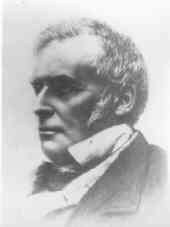
In addition to his labours in both oral and written ministry in Britain, Europe, America and Australia, and an extensive correspondence,
- Mr. Darby also translated the Scriptures – with the assistance of others – into German, French and English.
- His translations – widely recognized for their accuracy – have endured.
- Despite some archaic language – now well over 100 years later – they are still in print and in use.
- For my personal comments, see Guests: My Answer 2: The Darby Bible.
The four introductory notices are in the order in which they appear in the 1961 Stow Hill/Kingson Bible Trust edition.
The complete text of the 1961 New Testament – apart from notes – has now been added.
- The Old Testament may be added later.
G.A.R.
Page Top
| PRELUDE |
|---|
Source: Papers of John Nelson Darby,
Christian Brethren Archive,
John Rylands University Library, University of Manchester |
|---|
This interesting piece of history indicates that JND had thoughts of a 'new' translation of the the New Testament long before the publication of his New Translation, the second edition of which is dated 1871.
- From the date 1837 shown – and the fact that Mr. B. W. Newton's name is on the list – it appears that this note was likely made in the late 1830's to the early 1840's.
Reference code: JND/1/1/16
Handwritten notes
Dates of creation: n.d.
Extent: 1 sheet
Physical Condition: Foxing
Scope and Content
- Scheme for an edition of the New Testament with notes.
- Proposed contributors were assigned segments as follows:
- Mat., Mark, Luke: Soltau and Stoddart
- John Gospel and Epistles: Bellett, Hargrove and Dublin [sic]
- Acts: Wigram and Brenton
- Romans: Newton
- Corinthians: the Writer in the Witness [Possibly connected with the article entitled 'Some considerations on the two epistles to the Corinthians', The Christian Witness, vol 4 (1837) which in some annotated copies is ascribed to W. H. Darby]
- Gal., Ephes., Colos.: Harris
- Philipp. and Thessalonians: Mahon
- Timothy and Titus: Brenton and [William] Morshead
- Hebrews: Fitzgerald and Maunsell
- Peter and Jude: Tregelles
- Revelations [sic]: Darby and Newton
|
Page Top
| 1961: COMPLETE BIBLE |
|---|
Introductory Notice to the 1961 Edition
published by Stow Hill Tract and Bible Depot
and subsequently by Kingston Bible Trust |
|---|
The text of this edition of the Holy Scriptures is a reprint of the first edition of the complete 'New Translation' Bible published by Morrish in 1890, and
- subsequently (with condensed footnotes) by Stow Hill Bible and Tract Depot in 1939, save for the
- fact that a very few needed adjustments, particularly in the use of capital letters, have been made.
- No change has been made in the wording of the text.
The footnotes to this edition have been critically examined to make sure that the sense of the fuller notes in the 1890 edition has been accurately and adequately conveyed despite
- the rewording of many of them in the 1939 edition following the decision then to omit the references to original Hebrew and Greek manuscripts.
The opportunity has been taken to bring into this edition certain further notes from Mr. Darby's French Bible
- and from the editions of his German Bible published during his lifetime.
- A few notes have also been added derived from Mr. Darby's collected writings.
- Many of the notes added in the 1939 edition were in the form of cross-references, and, in the main, these have been retained as of value.
- Other notes added at that time have been scrutinized and confirmation from Mr. Darby's writings sought.
- Any notes which were judged to be of sufficient value to retain, but which could not be positively identified as being Mr. Darby's (apart from those which are capable of easy verification by reference to a concordance) have been marked by an asterisk.
The transliteration of Hebrew and Greek letters in the notes has been retained as being more convenient to the English reader. Such words are printed in italics.
- The use of italics in the text indicates emphasis.
LXX in the footnotes refers to the Septuagint, the Greek version of the Old Testament.
- Keri signifies the marginal note of the Massorites, indicating their idea of how the text should be read.
- Chetiv is the Hebrew text as it is written. Cf. stands for 'compare'; Lit. for 'Literally'.
Square brackets in the text indicate
- words added to complete the sense in English similar to those shown in italics in the Authorised Version; or,
- words as to which there are variations in the original manuscripts.
In order to give the reader of this edition as reliable an account as possible of the origin of the texts of both the Old and New Testaments,
- part of the Introductory Notice to the 1890 edition of the Old Testament, and Mr. Darby's own Revised Preface to the Second Edition (1871) of the New Testament are reprinted on the following pages.
The maps and plans of the temple taken from
Mr. Darby's French Bible are not included here. |
|---|
Page Top Article Top
| 1890: OLD TESTAMENT |
|---|
Extract from Introductory Notice
to the 1890 Edition of the Old Testament
– originally published by G. Morrish, London |
|---|
This translation of the Old Testament has been derived from a study of the common Hebrew text, and represents at the same time a collation of the late J. N. Darby's German and French Versions, he having himself revised the first few books within a short time of his decease.
The completion by Mr. Darby of the French translation, which gives his matured views of the meaning of the Hebrew, was felt by many to be a legacy to the Church of Christ through the labours of His servant that could not be allowed to remain only in the language in which it was written.
- Those who use this English translation may accordingly expect to find incorporated with it whatever is of special value in the above-mentioned Versions, particularly the French, where the common English Bible is defective.
Much of Mr. Darby's Preface to his German version applies equally to the present Work, as where it is said:
- 'In the issue of this translation, the purpose is not to offer to the man of letters a learned work, but rather to provide the simple and unlearned reader with as exact a translation as possible.
- 'To this end however all available helps have been used, different versions and commentaries having been laid under contribution.
- 'All who have laboured in this field know that in many passages even the most learned men are embarrassed; since a language so ancient, quite different in construction and in form of thought from any modern one, must of course present difficulties in translation.'
- But in these cases, as indeed altogether, we can conscientiously say we have worked carefully and prayerfully.
- In such passages, especially where able Hebraists have erred, and respecting which differences of opinion always continue to assert themselves, we do not pretend to have rendered the original text without fault;
- but we hope we can present the whole to the simple reader in a form both exact and intelligible. That is our object.
- 'Our work is not a revision of the Bible in common use' – although the reader of the English translation will constantly meet with familiar words and phrases – 'because, as we think, the object sought would not so be attained.'
- The reader may also be referred to Mr. Darby's remarks upon this subject in the Preface to the second edition of his English New Testament. (This is printed hereafter in this edition – Ed.).
The style of our own excellent so-called Authorised Version, happily familiar, is here preserved, as far as seems consistent with the exactness sought to be attained;
- the purpose being ever kept in view of putting the English reader in possession of labours of Mr. Darby which were undertaken in the interest of Christians abroad.
- The older forms of words are kept for the higher style, suited to the immediate utterances of God and strictly poetical parts.
Our English idiom has been studied, but the difficulty of presenting all in suitable English dress has often been felt,
- though our resource has been the vocabulary of the Authorised Version, which, from its remarkable richness, almost exhausts the phraseology of the language applicable to sacred subjects.
- When the common Bible afforded no help in this respect, aid has occasionally been sought from other English Bibles of repute, both ancient and modern.
- But a certain roughness, derived from close adherence to either the German or the French, will doubtless sometimes be apparent.
Poetical parts are distinguished from the rest by a metrical arrangement to which those are accustomed who use Paragraph Bibles.
- In some of the books however which have almost wholly this character, especially the Prophets, where the poetical form is often complicated,
- it has been thought wise to abandon the metrical arrangement, in order to render the paragraphs more easily discoverable and in this way facilitate the study of the text.
- So too in Proverbs, for the introductory chapters; whilst the rest of the book, like Job and the Psalms, is arranged in verses, as in ordinary Bibles.
- In these cases, the paragraphs are indicated by a star {open} at the beginning.
Another star * marks the grouping of the chapters which form a whole, more or less complete in itself. Attention is called to these especially in the Book of Psalms.
In the Song of Songs, the paragraphs are arranged, as far as possible, to indicate the successive speakers. In this Book, the stars *, rather than the chapters, mark the main divisions of the subject.
The notes are taken partly from the German, often from the French, while several are added from unpublished comments of Mr. Darby, which he supplied for the purpose,
- and others are occasionally introduced with the view of securing either greater uniformity or greater clearness.
- The names of God have been preserved as far as possible according to the original, either in the text or by help of the notes, and are distinguished as follows: –
In the Authorised Version of the English Bible 'GOD' is used as well as 'LORD' for Jehovah, and the form 'LORD' represents both Jehovah and Jah.
- This inconvenience is obviated by the use of the Hebrew words anglicised, that is 'Jehovah,' and 'Jah,' where they respectively occur, and by rendering Adonai regularly 'Lord.'
- In the later Psalms the form Hallelujah, 'Praise ye Jah,' has been maintained wherever the sense allowed it. It is a sort of heading to many Psalms. An exception may be noted in Psalm 147.1.
- For 'Jehovah Elohim,' see the note at Genesis 1.1. It will be noticed how characteristic is Adonai Jehovah, 'the Lord Jehovah,' of the Books of Ezekiel and Amos. [The English reader may compare the forms, 'the Lord GOD' and 'the LORD thy God,' in Isaiah 7.7,11.]
In the Prophets, brackets have been preserved at 'am' in the expression 'I [am] Jehovah,' &c., so often occurring, especially in Ezekiel,
- as they will help the reader the more readily to distinguish the character and use of the various names of God, as compared with 'I AM,' Exod. 3.14.
- In 'I,' Heb. ani (the pronoun without the verb), may be expressed the conscious will of existence which in a divine Being is associated with the existence in itself. Compare also 'I [am] HE,' Isa. 41.4, &c.
Considerable difficulty has been experienced as to brackets, in which even the Authorised Version with its corresponding italics is often inconsistent.
- Such words as 'it' have not been bracketed when merely abstract, or when felt to be logically necessary; and so when a pronoun replaces a noun governed in Hebrew by two verbs: this cannot be considered a word added to the text.
- An exception has been made in the case of there being a legitimate doubt as to the propriety of the word supplied, in order to allow the reader the opportunity of replacing it by one he might consider more appropriate.
Page Top Article Top
| 1884: NEW TESTAMENT |
|---|
Extracts from Introductory Notice
to the 1884 Edition of the New Testament
– originally published by G. Morrish, London |
|---|
The edition of the New Testament now put into the reader's hand is printed from a corrected copy of the second edition (1871), entirely completed by the translator before his death, and revised while going through the press, as carefully as circumstances would permit, from his own notes.
The text varies but little from that of the last edition; a few needed corrections have been made, and certain modifications and various readings, indicated formerly in the notes, have been occasionally introduced into the text, and a few fresh notes added.
The chief feature of novelty in the present edition is the indication in the notes of many of the sources from which the text and the various readings, as found in modern critical editions, are drawn – as has been already explained in the preface to the second edition, to which the reader is referred for the translator's opinion of the comparative value of the Uncial MSS.
A few additional explanatory remarks are here offered in order to warn the reader against being unduly influenced by what is called diplomatic evidence,
- whether the concurrent testimony of the mass of the authorities, or the preponderating importance of a few very ancient witnesses.
- The modern editors of the text often furnish proof that conscientious adherence to their systems of comparative criticism may lead to singular mistakes.
- The latest editions are by no means the most trustworthy; and the reader should be at least cautious against too readily accepting their decisions. Cf. 'Revised Version of the first three Gospels considered', by Cook, and in particular Burgon's 'Revision Revised'.
Though of course in many respects an older MS is entitled to greater weight, yet too many sources of corruption and error had already crept in
- to render admissible the principles laid down by Lachmann and Tregelles, and practically acquiesced in by Tischendorf,
- without at least a very serious and patient examination being accorded to the many later witnesses, which have often of recent years been too lightly set aside.
- A few examples, taken from many given by Burgon and others, will serve for illustration. Scrivener says in his 'Introduction' (3rd ed. p.511):
- 'It is no less true to fact than paradoxical in sound that the worst corruptions to which the New Testament has ever been subjected, originated within a hundred years after it was composed; that Ireneus and the African Fathers and the whole Western, with a portion of the Syrian Church, had far inferior manuscripts to those employed by Stunica, or Erasmus, or Stephens, thirteen centuries later, when moulding the Textus Receptus.'
Admitting the general soundness of this conclusion, we are no longer surprised to find that {aleph} and B, as well as C L U Γ, all interpolate in Matthew 27. 49 some words which are in part borrowed, though changed, from John 19. 34,
- but which have been shewn by Burgon in his 'Last Twelve Verses' to be really derived from the heretical Tatian's Diatessaron or Harmony of the Gospels, composed in the second century.
- What is surprising is to find that Westcott & Hort have introduced it in brackets into their text and the Revisers into their margin.
- Tischendorf and Tregelles have rejected it.
- Nevertheless it was in the copies used by Chrysostom and Cyril of Alexandria.
In Luke 2. 14, however, all these editors follow the corrupt testimony of {aleph} B D, besides quoting A for it, though in another part of A, in the hymn at the end of the Psalms, the correct reading is given; and {aleph} and B have both been corrected by later hands.
- This reading, which originated probably in a mere clerical error, is found in some old versions also: 'in the men of good pleasure.'
- The Fathers all reject this, as Burgon has proved; and every spiritual mind instructed in Scripture must resent such an expression, which, as being very anomalous Greek, has given rise to explanations that condemn themselves.
- Yet the Revisers have introduced it into their text, forcing the translation in an unjustifiable way, and have placed the better text in the margin.
Tischendorf in his 8th edition, influenced no doubt by his favourite {aleph}, supported also by B, 124, and some versions, has in Matthew xi. 19 substituted 'works' for 'children', against all other authority and the evident teaching of scripture.
- The same corrupted reading has been adopted by Tregelles and the Revisers.
All these follow {aleph} B C D and others in admitting 'holy' into the text before 'spirit' in Luke 10. 21, an interpolation which may be ascribed to over-zealous piety, or, as it has been suggested, to the misplaced desire to distinguish the word from 'spirits' used in another sense in the previous verse.
The extraordinary text given in Matthew 21. 31 by Lach., Treg. and W. & H. on the authority, and that only partially, of B, with which they make the priests and elders answer 'The last', instead of 'The first', has been commented on by Scrivener and Burgon. Tregelles attempts an explanation in his 'Account of the Printed Text', p.107.
In Luke 6. 1 the Revisers leave out the important word 'second-first', misled perhaps by Treg. and W. & H. on the precarious authority of {aleph} B L 1 33 69 and some versions.
- The word was evidently omitted by scribes who did not understand it. Tischendorf rightly inserts it.
- For another instance of this kind of modification of the text, see 1 John 2. 13 and the note, and Rev. 22. 14.
The omission in 1 Cor. 9. 20 of 'not being myself under law' in K and a few cursive MSS and versions, probably arose from the same cause. But here the Editors and the Revisers insert the words, following the great mass of MS authority.
In John 1. 18, {aleph} B C L, almost unsupported except by a few versions, and, as to be expected, by many ecclesiastical writers, have the astonishing reading of 'God' for 'Son' after 'only begotten'.
- It is scarcely conceivable that Treg. and W. & H. should have followed so manifest a corruption, and the Revisers have given it a place in their margin.
- Tisch. rejects it. But he has not been equally firm in John ix. 35; for he has introduced into his 8th edition 'Son of man,' instead of 'Son of God,' on the testimony of {aleph} B D. So have W. & H. and the Revisers in their margin.
The addition of 'yet' in John vii. 8, found in B and many others, is evidently an intentional change of ouk into oupw, from the desire to explain a text not understood.
Treg. and W. & H. agree with Tisch. in putting the imperative in I Cor. xv. 49; though the latter had it right in his 7th edition, he now reads 'let us bear'. See the note at this passage. The Revisers have it right in text, but have given the false reading a place in their margin.
But the list might be almost indefinitely prolonged; so numerous and often extraordinary are the corruptions found in these venerable documents: witness the substitution of 'found' or 'discovered' (cf. 1 Sam. 20. 15 (16) in the LXX, Cod. Vatic.), for 'burned up' in 2 Pet. 3. 10, by {aleph} B K P, acquiesced in by Treg. and by W. & H.
The omissions in these old MSS are constant, often doubtless mere errors of the scribe, whose eye unconsciously passed from one line to the second or third below it, especially if he was betrayed by similarity of ending or beginning in two or more consecutive lines, a constant source of error called homoeoteleuton.
- It was no easy matter to avoid it in copying MSS that have no division of words: it requires considerable practice even to read them, and the eye gets no rest in its fatiguing task.
The two oldest MSS, {aleph} and B, omit the end of Mark 16., against all other authority whatsoever, as Burgon has shewn with great pains;
- but in B, the fact that the scribe has here left a column blank – the only one in the whole New Testament – is strong presumptive evidence that if he did not find the passage in the MS he was copying from, he was aware of an omission.
- Such defects as these tend to throw discredit on these ancient MSS, as witnesses to the primitive integrity of the text.
- On the other hand, they are free from the bold interpolations of D (Codex Beza), and are constantly additional and valuable evidence against these.
- But none of the oldest MSS, not even several together, can be of themselves conclusive testimony as to the absolute correctness of a reading, although many facts tend to shew that, as a general rule, the so-called Alexandrian readings come nearest to the primitive text.
- They need to be controlled however by other evidence, as that of the Cursive MSS, versions, and, in many cases, by patristic citations.
- Every passage has to be examined apart on its own merits, in presence of the whole array of witnesses, and in dependence upon God's gracious guidance, special regard being paid to the context and the general teaching of scripture, which ecclesiastical corruption impaired.
The lists of Uncial Mss cited, Cursive Mss cited,
Ancients Versions and Principal Ecclesiatical Writers
in the original Morrish edition are not included here.
|
Page Top Article Top
| 1871: NEW TESTAMENT |
|---|
Revised Preface
to Second Edition of the New Testament – 1871
– originally published by G. Morrish, London
The letters and signs used in this Preface are the recognized
symbols by which the various manuscripts are identified.
|
|---|
The original edition, in which each of the several books was published by itself (or two epistles together if there were two to the same assembly), and the reprints of several, which seem to have attracted more attention than others, being exhausted, I publish a new edition of this translation of the New Testament, as a whole, in a more convenient form.
It has been in no way my object to produce a learned work;
- but, as I had access to books, and various sources of information, to which of course the great mass of readers, to whom the word of God was equally precious, had not,
- I desired to furnish them as far as I was able with the fruit of my own study, and of all I could gather from those sources, that they might have the word of God in English, in as perfect a representation of it in that language as possible.
In the first edition I had made use of a German work professing to give the Textus Receptus, with a collection of the various readings adopted by all or any of the editors of most repute, Griesbach, Lachmann, Scholz, Tischendorf, and some others.
- But the Textus Receptus was itself often changed in the text of the work, and I found that several of these changes had escaped my notice.
- My plan was, where the chief editors agreed, to adopt their reading, not to attempt to make a text of my own.
- My object was a more correct translation: only there was no use in translating what all intelligent critics held to be a mistake in the copy.
- For, as is known, the Textus Receptus had no real authority, nor was indeed the English Version taken from it, – it was an earlier work by some years.
- With some variations, which critics have more or less carefully counted, the Textus Receptus was a reprint of earlier editions. Of these Stephanus 1550 is the one of most note: there were besides this Erasmus and Beza.
- Erasmus was the first published; the Complutensian Polyglott the first printed: then Stephanus; and then Beza. The Elzevirs were not till the next century;
- and the expression in their preface of textus ab omnibus receptus led to the expression of 'textus receptus', or received text.
- The Authorised Version was mainly taken from Stephanus, or Beza. The reader who is curious as to these things may see a full account in Scrivener's 'Introduction' or other similar Introductions.
- After this came, beginning with Fell at Oxford, various critical editions: Mill, Bengel, Wetstein (who greatly enlarged the field of criticism), then Griesbach, Matthei (the last giving the Russian Codices, which are Constantinopolitan so called), Lachmann, Scholz, Tischendorf, and quite recently Tregelles.
- I name only those of critical celebrity. We possess besides, in connection with commentaries, Meyer, De Wette, and Alford.
In my first edition my translation was formed on the concurrent voice of Griesbach, Lachmann, Scholz, and Tischendorf:
- the first of soberer judgment and critical acumen and discernment;
- the next with a narrower system of taking only the very earliest MSS., so that sometimes he might have only one or two;
- the third excessively carelessly printed, but taking the mass of Constantinopolitan MSS. as a rule;
- the last of first-rate competency and diligence of research, at first somewhat rash in changing, but in subsequent editions returning more soberly to what he had despised.
- Still, if they agreed, one might be pretty sure that what they all rejected was a mere mistake in copying.
- Scholz, in a lecture in England, gave up his system, and stated that in another edition he should adopt the Alexandrian readings he had rejected.
- That is the general tendency since: Tregelles laying it down strictly as a fixed rule.
Meanwhile, since my first edition, founded on the concurrent judgment of the four great modern editors, following the received text unchanged where the true reading was a disputed point among them,
- the Sinaitic MS. has been discovered; the Vatican published; Porphyry's of Acts and Paul's Epistles and most of the Catholic Epistles and the Apocalypse, and others, in the 'Monumenta Sacra Inedita' of Tischendorf, as well as his seventh edition.
- These, with Alford and Meyer's (not yet consulted for the text), and De Wette, furnished a mass of new materials. Tregelles' too was published as a whole since my present edition was finished, though not printed.
All this called for further labour. I had to leave Scholz pretty much aside; (his work cannot be called a careful one, and he had left himself aside;) and take in Tischendorf's 7th ed., Alford, Meyer, De Wette.
- I have further, in every questioned reading, compared the Sinaitic, Vatican, Dublin, Alexandrian, Codex Beza, Codex Ephraemi, St. Gall, Claromontanus, Hearne's Laud in the Acts, Porphyry in great part, the Vulgate, the old Latin in Sabatier and Bianchini.
- The Syriac I had from others; it was only as to words and passages left out or inserted I used the book itself; not being a Syriac scholar, I could not use it for myself.
- The Zacynthius of Luke I have consulted; with occasional reference to the fathers; Stephanus, Beza, Erasmus.
- The labour involved in such a work those only know who have gone through it by personal reference to the copies themselves.
In the translation itself there is little changed. A few passages made clearer; small inaccuracies corrected, which had crept in by human infirmity; occasional uniformity in words and phrases produced where the Greek was just the same.
- In the translation I could feel delight – it gave me the word and mind of God more accurately: in the critical details there is much labour and little food.
- I can only trust that the Christian may find the fruit of it in increased accuracy.
As the editors I have named had not the Sinaitic nor Porphyrian MSS., I have occasionally had to judge for myself where these authorities affected the question much, or have occasionally put the matter as questionable in a note, where I could not decide for myself.
I will now say a few words as to these authorities. As to the general certainty of the text, all these researches have only proved it.
- The meddling of ecclesiastics has been one chief source of questionable readings; partly wilful, partly innocently:
- the attempt to assimilate the Gospels, which was wilful;
- and then, more innocently, arising from the passages read in ecclesiastical services, such changes as 'Jesus' put for 'He' where it was needed, as in these services 'He' at the beginning referred to nothing; and 'Jesus' was then introduced by copyists into the text.
- The attempt to make the Lord's prayer in Luke like that in Matthew is another instance;
- so, if we are to believe Alford and most other editors, the leaving out 'first-born' in the Sinaitic and Vatican and some others, (which I note because it affects the oldest MSS.,) because it looked as if the mother of our Lord had other children; and such like instances.
- But these do not make any very great difficulty. Other MSS. and versions (which are earlier than all MSS.), with a little care, make the real state of the case plain; but no MSS. are early enough to escape these handlings.
- So that the system which takes merely the oldest MSS. as authorities in themselves, without adequate comparison and weighing internal evidence, necessarily fails in result.
- Conjectures are not to be trusted, but weighing the evidence as to facts is not conjecture.
The three greatest questions are 1 Timothy 3. 16, the beginning of John 8, and the last verses of Mark 16.
- In the first I pronounce no judgment, as full dissertations have been written on it by many critics.
- As to John 8, I do not doubt its genuineness. Augustine tells us it was left out in some untrustworthy MSS. because it was thought injurious to morality: and not only so, but in my examination of the text I found that in one of the best MSS. of the old Latin, two pages had been torn out because it was there, carrying away part of the text preceding and following.
- As to the end of Mark and its apparently independent form, I would remark that we have two distinct closes to the Lord's life in the Gospels:
- his appearance to his disciples in Galilee, related in Matthew without any account of his ascension, which indeed answers to the whole character of that Gospel;
- and at Bethany, where his ascension took place, which is the part related in Luke, answering to the character of his Gospel:
- one, with the remnant of the Jews owned, and sending the message out on earth to Gentiles, the other from heaven to all the world, beginning with Jerusalem itself; one Messianic, so to speak, the other heavenly.
- Now Mark, up to the end of verse eight, gives the Matthew close; from verse nine a summary of the Bethany and ascension scene, and facts related in Luke and John. It is a distinct part, a kind of appendix, so to speak.
I have always stated the Textus Receptus in the margin where it is departed from, except in the Revelation, Erasmus having translated that from one poor and imperfect MS.,
- which being accompanied by a commentary had to be separated by a transcriber; and even so Erasmus corrected what he had from the Vulgate, or guessed what he had not.
- There was not much use in quoting this.
But it does not seem to me that any critics have really accounted for the phenomena of MSS.
- We have now a vast mass of them, some few very old, and a great many more comparatively modern.
- But it seems to me the oldest, as Sinaitic and Vatican, bear the marks of having been in ecclesiastical hands.
- I do not mean that the result is seriously affected by it, for their work is pretty easily detected and corrected, and thus is not of any great consequence; but, as it is easily detected, proved to be there.
- After all research, it cannot be denied, I think, that there are two great schools of readings. The same MS. may vary as to the school it follows in different parts.
- Thus Griesbach says A was Constantinopolitan in the Gospels and Alexandrian in the Epistles, to use conventional names.
- So Porphyrius (marked P), which I found in six or eight chapters of Acts so uniformly to go with the Textus Receptus, that I consulted it scarcely at all afterwards, does not do so in Paul's Epistles.
- Still there are the two schools. Of the one, Sinaitic, Vatican, and Dublin ({aleph} B Z) are the most perfect examples. For that in the main they are of this school, though with individual peculiarities, cannot, it seems to me, be questioned a moment.
- Of these, Dublin, marked Z, is by far the most correct copy: I remarked but one blunder in copying.
- The Vatican, as a copy, is far superior to Sinaiticus, which is by no means a correct one, in the Revelation quite the contrary, however valuable as giving us the whole New Testament and being the oldest copy perhaps we have.
- But we must remember that we have none until after the empire was Christian, and that Diocletian had destroyed all the copies he could get at.
- This Alexandrian text, so called, is the oldest we have in existing Greek MSS. The Alexandrian MS. (marked A) is not uniformly Alexandrian in text.
- But, if Scrivener is to be trusted, the Peschito Syriac agrees much more with A than with B; yet it is the oldest version that exists, nearly two hundred years older than any MS. we have, made at the end of the first or the beginning of the second century.
- This is not the case with the old Latin. It cannot be said to be Alexandrian, but approaches nearer to it.
- But then even here is a singular phenomenon: one ancient MS. of it, Brixianus, is uniformly the Textus Receptus. I think I only found one exception. Where did this come from?
- The Vulgate is a good deal corrected from the Alexandrian text, though not always following it. Thus we may class them: {aleph}, B, Z, L, which last follows B very constantly; then we have A and a long list of uncials going with it, not so ancient or much thought of; so that in Alford you will find 'A, &c.'
- There is another class of about the sixth century, to which date Z also is attributed, C which is independent, and P which in the epistles chiefly follows the Alexandrian but not unfrequently tends to T.R. and A.
- In the Acts it is, as far as I have examined it, T.R. Δ, or St. Gall, is often T.R., though in many respects an independent witness.
- If in the Gospels A and B go together, we may be tolerably confident of the reading, of course weighing other testimony. D, it is known, is peculiar, though characteristically Alexandrian.
- The result to me is that, while about the text as a whole there is nothing uncertain at all, though in very few instances questions may be raised, the history of it is not really ascertained.
- I avow my arriving at no conclusion, and I think I can say no one can give that history: the phenomena are unsolved.
I have said thus much on the criticism of the text, and the MSS., that persons not versed in the matter may not hazard themselves in forming conclusions without any real knowledge of the questions.
- Such a book as Tischendorf's English Testament I think mischievous. You have the English Version questioned continually, and {aleph}, B, A, given at the bottom of the page, for persons who know nothing about them to doubt about the text, and that is all.
- Thus, to say no more, the readings of A in the Epistles have a totally different degree of importance from that of its readings in the Gospels. And all becomes uncertain.
- In most of these cases the true reading is not doubted a moment by Tischendorf himself, yet it only makes people doubt about all.
- I have followed a collation of the best authorities, but where, though for trifling differences, you have {aleph}, B, L, or B, L, on one side, and A, &c., on the other, I confess I have no entire certainty that B, L, are right.
In the next place the reader has not a revision of the Authorised Version, but a translation from the best Greek text I could attain to any certain knowledge of.
- I do not doubt a moment that numbers of phrases of the Authorised Version will be found in the translation. Filled as the mind is with it from constant use, it suggested itself naturally to the mind. I had no wish to reject it.
- But a revision of the Authorised Version, if desirable for ecclesiastical use, is not (I think) in itself a wise attempt.
- I rather doubt the justness of the taste which attempts to revise the Authorised Version. The new bit does not suit the old, and is the more distasteful from its juxtaposition.
- Imitation is seldom good taste, seldom undetected; it wants nature, and in these things nature is good taste, and attracts.
I have freely used every help I could. I do not mention Grammars and Dictionaries, as they are applicable to all books, and known;
- but I have used Meyer, whose continuators are very inferior, and from whom a large part of Alford is taken; but I have consulted Alford too, and De Wette.
- Ellicott is excellent in what he has done; Kypke most useful in what he affords. I have used them for the exegesis of the text as Greek, not for any doctrine in any case.
- Fritzsche, who is grammatically very full; Bleek, who very much exhausts learning in his book on the Hebrews. Delitzsch and others I have occasionally referred to; there is Kuinoel on the historical books; but I did not find many of them of very great value, Calvin of less than I should have supposed.
- There are Bengel, Hammond, Elsley; Wolff and other German writers; and Stanley, Jowett, Eadie, &c. But I confess reference to the latter did not lead me to repeat it much.
- What I sought was the thorough study of the text; opinions were of little moment. Poole's Synopsis and Bloomfield have been at hand for older commentators.
Of translations, Diodati's Italian is the best of the old ones, then the Dutch, then the English.
- Bengel's German is a very good one, and there is, though tainted by their doctrine occasionally, a very literal one called Berleburger.
- Other translations are Kistemaker, Gossner, Van Ess, which are Roman Catholic; a corrected one of Luther by Meyer; the Swiss one by Piscator, far better than Luther's. These, though I referred to them in a translation made into German, I used comparatively little now or not at all.
- Of the French, Diodati's is literal, but hardly French; Martin and Ostervald, little to be trusted; and Arnaud's, I may say, not at all. Luther's is the most inaccurate I know.
- Besides this, there are in Latin the Vulgate and Beza. De Wette's German is elegant, but from excessive leaving out the auxiliary verbs, which is allowed in German, affected; and in the Old Testament, though a good Hebraist, not to be trusted, from rationalistic principles. His Isaiah is Gesenius's.
I have used all helps I could, but the translation is borrowed in no way from any; it is my own translation, but I have used every check I could to secure exactness.
- I believe the scriptures to be the inspired word of God, received by the Holy Ghost and communicated by His power, though, thank God, through mortal men:
- what is divine made withal thoroughly human, as the blessed Lord Himself whom it reveals, though never ceasing to be divine.
- And this is its unspeakable value: thoroughly and entirely divine, 'words which the Holy Ghost teacheth', yet perfectly and divinely adapted to man as being by man.
- My endeavour has been to present to the merely English reader the original as closely as possible.
- Those who make a version for public use must of course adapt their course to the public.
- Such has not been my object or thought, but to give the student of scripture, who cannot read the original, as close a translation as possible.
There are some remarks I would desire to make on the English Authorised Version, which would debar me from attempting to correct it, which indeed would be a more ambitious task. Its value and beauty are known, and I need not dilate upon.
- I have lived upon it, though of course studying the Greek myself; I have no wish to underrate it.
- But now that everything is inquired and searched into, there are some points to be remarked which make it desirable that the English reader should have something more exact. –
- There is one principle which the translators avow themselves, which is a very great and serious mistake. Where a word occurs in Greek several times in the same passage or even sentence, they render it, as far as they possibly can, by different words in English.
- In some cases the effect is very serious; in all the connection is lost. Thus in John 5 we have 'judgment' committed to the Son; shall not come into 'condemnation;' the resurrection of 'damnation.'
- The word is the same in Greek, and every one can see that 'not coming into judgment' is a very different thing from 'not coming into condemnation.'
- The whole force of the passage depends on this word, and its contrast with life. Here the sense is wholly changed.
- In another the connexion is lost – Romans 15. 12, 13: 'In him shall the Gentiles trust;' 'now the God of hope.' 'Trust' is the same word as 'hope,' only a verb. 'The Gentiles hope;' 'the God of hope.' I only mention these as examples.
In some cases, as 'elders,' 'the Lord's coming,' 'the law,' theological views have biassed the translators.
- Thus in Acts 1 we have 'ordained' put in where there is no word at all. All there is in Greek is 'must one be a witness.'
- So in Acts 14. 23, 'They ordained them elders :' it is simply 'they chose elders for them,' cheirotoneo.
- I am well aware that in ecclesiastical Greek, borrowed from this passage doubtless, and their new ideas attached to it, the word came to mean this ecclesiastically.
- But it is not its own meaning. It is 'to choose,' as 2 Corinthians 8. 19; Acts 10. 41. –
- As to the Lord's coming, Acts 3. 19, there is no excuse for translating hopos an 'when.' It is an attempt to give it a sense.
- Again, in 2 Thessalonians 2. 2, 'as that the day of Christ is at hand:' the word translated 'is at hand' is 'present' or 'come.' It is twice used (once in Romans 8. 38 and once in 1 Corinthians 3. 22) for 'present' in contrast with 'to come.' It alters evidently the whole sense, and the true meaning gives the key to the whole passage.
- Their imagination being wrought on by these false teachers, they thought that the day was come in the tribulation in which they were suffering; whereas the Lord's coming would be rest to them and trouble to their persecutors.
But a more serious mistake is in the words in 1 John 3. 4, 'Sin is the transgression of the law.' A definition of sin is a serious thing, but this is not what is said.
- The word used is that which adverbially is employed in Romans 2 for 'sinning without law,' and is so translated in contrast with 'sinning under law.'
- If sin were the transgression of the law, it could not be said 'until the law sin was in the world;' it could not be said 'sin by the commandment became exceeding sinful,' for there would have been no sin till the commandment came. But it is not so.
- It is 'sin is lawlessness.' It is the wicked will of man; if law comes, then it transgresses it; but it is sin without it, because I ought to have no will of my own, but be in obedience.
- Hence the reasoning of the apostle: 'Death reigned from Adam to Moses over those who had not sinned after the similitude of Adam's transgression.'
- This is a quotation from Hosea 6. 7: 'They, like Adam, have transgressed the covenant.' Adam had a law, Israel had one; they transgressed alike: but death reigned over those from Adam to Moses, over those who had not: sin was there, for death was there.
- I have enlarged a little more on this because the definition of sin is a serious thing, and theology will not hear of such an alteration. Let God be true and every man a liar.
- It is so translated where doctrine was not in question, not only in Romans 2 but in 1 Timothy 1. 9 – 'lawless and disobedient.'
- It is never translated 'transgression of the law' but here, generally 'iniquity:' anomos is twice translated 'transgressor;' but it is never said, in any form of the word, to be 'transgression of the law' but here.
As regards details of translation I have a few remarks to make. I have sought in some instances to render the particles more distinctly;
- but, rich as English is, no care will make the shades and colourings of thought in one language answer to another.
- It is oftener more a question of metaphysics, or metaphysical philology, than of grammar, and grammarians do not always command my assent in these matters, though I am glad to learn from them.
- In our own tongue few remark these shades of meaning, though they exist, as 'indeed,' 'truly,' 'surely,' 'forsooth.' Custom and individual habit form the mind in such cases. See the use of eutheos in Mark.
- In St. John's writings I have to remark that the personal pronoun, generally emphatic where inserted, is used so constantly that it can hardly be considered such. I had marked each instance in the first edition, but it arrested the eye inconveniently for the general sense.
- The same character of style is seen in his constant use of ekeinos.
- Another peculiarity is to be noticed in John, the constant use of hina for hoti. In Luke we have kai for hoti.
I have further to remark on the aorist, as to which a great fuss has been made lately, that English is not Greek.
- The large use of auxiliary verbs in English, and very sparing use of them in Greek, modifies the whole bearing of tenses in the two languages.
- The past participle with a present auxiliary is not a simple Greek perfect, not actual continuance in effect of a past action; a past action morally estimated as present, or in force at present, is just as often its force.
- The real practical question in English is: is it an historical statement or a fact viewed as such morally, i.e. without reference to time?
- 'Christ died for us:' That is historical. 'Christ has died for us:' that is a moral fact always true.
- The question which to use is often a very nice one, and we have to notice the difference of our point of view and that of the time of the passage.
- The only simple tenses in English are both aorist; one signifying accomplishing an act, the other an accomplished act. [For this reason there are only two tenses in Enflish at all; the future, so called, is the present intention; for an accomplishing or accompanied act is not future.]
- And as the latter becomes historic, the use of it in many cases for the Greek aorist falsifies the sense.
- Thus – a case in which no one, I believe, denies it – egrapsa. If I say 'I wrote', it is in another letter (unless specified otherwise); 'I have written to you' is a past act made present by 'have,' and it is (unless specified to be in a letter gone but not received) the letter he is occupied with.
- And the mere doctrine of the aorist in Greek in no way meets the case. 'I wrote to you not to do it' is a past letter supposed to be received. 'I have written to you:' he has done it, but it is supposed to be not yet received. 'I have written to you in the letter' is the present one.
- Now what is true of egrapsa is true of many others. When I want to give the present, not an accomplishing aorist, I say, not 'I write,' but 'am writing;' because 'writing' is the act, 'am,' absolutely present; but on the other hand I say, 'I write five letters every day in the year.'
- 'I wrote a long letter to him' is an historical fact; 'I have written a long letter to him' is a moral assertion to which I attach present value. 'Have,' with the past participle, is used however for the perfect.
- But to aorize in English all the Greek aorists is, I judge, simply a blunder. When the aorist is historic, the simple preterite tense may well answer to it in English.
- I cannot say I have always succeeded in rightly distinguishing the cases: there are cases as to which I have myself doubted.
I have occasionally left old forms where they are more reverential, as 'saith' for 'says,' 'unto' for 'to,' &c. I have left 'ye' for the nominative of 'you.'
- It is the Dutch gij and u, which last in familiar spoken Dutch is used for gij, and is now become usual in English.
- Both languages have the PlattDeutsch for their origin. To these things I attach no great importance; to reverence I do.
And this leads me to the use of the words 'do homage' instead of 'worship,' which I do only for the sake of other people's minds not used to such questions.
- I have not a doubt of the justness of the change, and just because in modern English 'worship' is used for what is rendered to God only:
- when the English translation was made it was not, and the use of it now falsifies the sense in three-quarters of the passages it is used in.
- It is quite certain that in the vast majority of instances of persons coming to the Lord they had not the least idea of owning Him as God. And it falsifies the sense in a material point to use the word now. That we worship Christ who do know He is God is another matter.
- In the English Bible it is, or at least was, all right, because worship did not mean what it does now. The man when he is married says, 'With my body I thee worship.'
- It is said in 1 Chronicles 29. 20, They 'worshipped Jehovah and the king,' which is simple blasphemy, if it be used in the modern sense.
- If the reader is curious, he may look at Wetstein, Matthew 2. 2; Minucius Felix, end of chapter 2; and compare Job 31. 27; and Herodotus 1. 134 for the customs of Persia. It would not have been worth mentioning but for simple souls.
The use of a large or small 's' is of extreme difficulty in the case of the word Spirit; not in giving it when the Holy Spirit is simply spoken of personally. There it is simple enough.
- But as dwelling in us, our state by it, and the Holy Spirit itself, are so blended as to make it then very difficult; because it is spoken of as our state, and then as the Holy Ghost.
- If it be put large, we lose the first; if small, the Spirit personally. I can only leave it with this warning, calling the attention of the reader to it.
- It is a blessed thought that it is so blended in power that our state is so spoken of; but if we lose the divine Person, that blessing itself is lost.
- The reader may see, not the difficulty, for it does not exist there, but the blending of the effect and the person in Romans 8. 27.
All the instances in which the article is wanting before Kurios are not marked by brackets;
- but I give here all the passages in which Kurios, which the LXX employ for Jehovah, thence transferred to the New Testament, is used as a proper name; that is, has the sense of 'Jehovah.'
- It is also used in the New Testament for a title of Christ, who as man has the place of Lordship over all things. 'God,' says Peter, 'hath made him, whom ye have crucified, both Lord and Christ.'
- I have put a mark of interrogation after those that are doubtful.
Matt. 1. 20, 22, 24; 2. 13, 15, 19; 3. 3; 4. 7, 10; 5. 33; 21. 3 (?), 9, 42; 22. 37, 44; 23. 39; 27. 10; 28. 2.
Mark 1. 3; 11. 3 (?), 9; 12. 11, 29 bis, 30, 36; 13. 20; 16.20 (?).
Luke 1. 6, 9, 11, 15, 16, 17, 25, 28, 32, 38, 45, 46, 58, 66, 68, 76; 2. 9 bis, 15, 22, 23 bis, 24, 26, 38, 39; 3. 4; 4. 8, 12, 18, 19; 5. 17; 10. 27; 13. 35; 18. 31 (?), 38; 20. 37, 42.
John 1. 23; 12. 13, 38 bis.
Acts 1. 24 (?); 2. 20, 21, 25, 34, 39, 47 (?); 3. 19, 22; 4. 26, 29 (?); 5. 9, 19; 7. 31, 33, 37, 49; 8. 25 (?), 26, 39 (?); 9. 3I (?); 10. 4 (?), 14 (?); 11. 8 (?); 12. 7, 11 (?), 17 (?), 23; 15. 17 bis.
Rom. 4. 8; 9. 28, 29; 10. 9, 12, 13, 16; 11. 3, 34; 12. 19; 14. 11; 15. 11.
1 Cor. 1. 31; 2. 16; 3. 20; 10. 26; 14. 21.
2 Cor. 3. 17, 18 (peculiar character); 6. 17, 18; 10. 17.
Heb. 1. 10; 7. 21; 8. 2, 8, 9, 10, 11; 10. 16, 30 bis; 12. 5, 6; 13. 6.
James 4. 10; 5. 4, 10, 11 bis.
1 Peter 1. 25; 3. 12 bis, 15.
2 Peter 2. 9 (?), 11; 3. 8, 9, 10.
Jude 5, 9.
Rev. 4. 8; 11. 15, 17; 15. 3, 4; 16. 7; 18. 8; 19. 6; 21. 22; 22. 5, 6.
In the Acts the word is used in an absolute and general way, and applied to Christ. It is usually the same in the Epistles; see 1 Cor. 8. 5, 6.
It may perhaps be useful to some of my readers to give the chronological order of the Epistles: and first those that are certain:
1 and 2 Thessalonians; 1 and 2 Corinthians; Romans, Ephesians, Colossians, Philippians, and Philemon; the last four Paul wrote when a prisoner.
- Galatians was written from fourteen to twenty years after the apostle was first called, and after he had laboured for some time in Asia Minor, perhaps while he was at Ephesus, as it was not a very long time after their conversion:
- 1 Timothy, on occasion of the apostle's leaving Ephesus, – when exactly is not clear.
- 2 Timothy was written at the close of his life when about to be martyred.
- It is questioned if Paul ever got out of prison: if he did, 2 Timothy was written when he was seized the second time.
- Titus refers to a journey of Paul's to Crete; it is not said when; perhaps, it has been thought, when he resided so long at Ephesus. It is morally synchronous with 1 Timothy.
- It has not been the purpose of God to give us chronological dates for them, and in divine wisdom. The moral order is clear.
- The way in which 2 Timothy refers to the ruin of what 1 Timothy builds the order of, is plain enough.
- Hebrews was written late, in view of the approaching judgment of Jerusalem, and calls on Christian Jews to separate themselves from what God was about to judge.
- The Epistle of James was written when this separation had in no way taken place. Jewish Christians are still seen as forming part of the Israel not yet finally cast out, only owning Jesus to be the Lord of glory.
- But, as all the Catholic Epistles, it was written toward the close of the apostolic history, when Christianity had been widely received by the tribes of Israel, and the Jewish history was now closing in judgment.
- In 1 Peter we see that the gospel had widely spread among the Jews: it was written to the christian Jews of the dispersion.
- The second of course is later, at the close when he was about to put off his tabernacle and would leave them in writing the warnings apostolic care would soon no longer furnish.
- Hence, like Jude, it contemplates grievous departure from the path of godliness on the part of those who had received the faith, and a mocking of the testimony that the Lord was coming.
- 1 John insists on its being 'the last time.' Apostates were already manifested, apostates from the truth of Christianity denying the Father and the Son, as well as with Jewish unbelief denying that Jesus was the Christ.
- Jude comes morally before John. These false brethren had crept in unawares, but the evil is pursued to the final rebellion and judgment. It differs from 2 Peter in viewing the evil not simply as wickedness, but departure from first estate.
- Revelation completes this picture by shewing Christ judging in the midst of the candlesticks; the first having left its first love, and threatened, if it did not repent and return to its original estate, to have the candlestick removed:
- the final judgment being in Thyatira, and in Laodicea;
- and then it shews the judgment of the world and the return of the Lord, the kingdom and heavenly city and eternal state.
- This general character of departure and failure, stamped on all the last books from Hebrews to Revelation, is very striking: Paul's epistles, save 2 Timothy, which gives individual direction in the midst of ruin, though prophesying of this state of things, express the labour and the care of the wise master-builder.
- The interest of their date is in connection with his history in the Acts; but Hebrews, and the Catholic Epistles, and Revelation, all shew predicted departure already set in (for even 1 Peter, which is least so, tells us the time was come for judgment to begin at the house of God), and so the judgment of the professing church, and then prophetically of the world risen up against God. This closing character of the Catholic Epistles is very striking and instructive.
The contents of the books of the New Testament must be sought elsewhere: I can only give here some very general thoughts upon them.
- It will be remarked at once that the character of the first three Gospels is different from that of John. The principle of this difference is this:
- the first three present Christ, though in different characters, to man to be received, and shew His rejection by man.
- John begins with this as the starting-point of his Gospel, being the display of the divine nature, and what man and the Jew was in presence of. He was in the world, and the world was made by Him, and the world knew Him not. He came to His own, and His own received Him not.
- Hence we have sovereign grace, election; man must be born again, wholly anew; and the Jews are all through treated as reprobate; the divine and incarnate Person of the Lord as the foundation of all blessing, and a work of atonement which is the basis even of the sinless condition of the new heavens and the new earth wherein dwelleth righteousness, together with, at the close, the gift of the Comforter, form the subject of the Gospel, in contrast with Judaism.
- Instead of tracing the Lord to the Abrahams and Davids, the roots of promise, or to Adam, to bring in as Son of man blessing to man, or giving the account of His service in ministry as the great Prophet that was to come, it brings a divine Person, the Word made flesh, into the world.
- What I have just said stamps their character on the four Gospels.
- Matthew is the fulfilment of promise and prophecy, Emmanuel among the Jews, rejected by them, stumbling thus on the stone of stumbling, and shewn to be really a sower; fruit-seeking was in vain; and then the Church and the Kingdom substituted for Israel blessed by promises, which they refused in His Person; but after judgment, when they owned Him, to be owned under mercy. The ascension is not found in Matthew, I believe, for this very reason: Galilee in Matthew, not Jerusalem, is the scene of His interview with the disciples after His resurrection. He is with the poor of the flock, who owned the word of the Lord, where the light had sprung up to the people sitting in darkness. The commission to baptise goes forth hence and applies to Gentiles.
- Mark gives the servant-prophet, Son of God:
- Luke, the Son of man, the first two chapters affording a lovely picture of the remnant in Israel:
- John, a divine Person come into the world, the foundation (redemption being accomplished) of the new creation; the object and pattern of faith, revealing the Father; with the promise of the Comforter while away.
- Paul and John reveal our being in a wholly new place in Christ.
- But John is mainly occupied with revealing the Father in the Son to us, and thus life by the Son in us:
- Paul with presenting us to God, and His counsels in grace.
- If we confine ourselves to the Epistles, the latter only speaks of the Church, save 1 Peter 2, the building of living stones, but Paul only speaks of the Body.
- The Acts shew the founding of the Church by the Holy Ghost come down from heaven, and then the Jerusalem or Palestinian labours of the apostles, and other free labourers, especially the work of Peter, and then that of Paul.
- With the history of the rejection of his Gospel by the Jews of the dispersion the history of scripture closes.
Page Top Article Top
The Chronological Table and
Note on the Chronological Dates in the 1961 edition published
by Stow Hill / Kingston Bible Trust are not included here.
|
Page Top