Menu•SiteMap |
History
Events at Plymouth,
and Subsequently at
the Bethesda Meeting, Bristol
1844 - 1849
– William Trotter
| INTRODUCTION |
|---|
The following articles are from A. J. Gardiner's 'Recovery
and Maintenance of the Truth' published by Kingston Bible Trust.
|
|---|
 The articles have also been published separately as 'The Origin of (so-called) Open-Brethrenism: A Letter by W. Trotter giving the Whole Case of Plymouth and Bethesda'.
William Trotter was one of the most respected of the early brethren
- His account – written when he was 31 years old – is comprehensive, cogent and objective and deserves the attention of any not acquainted with the facts.
G.A.R.
Page Top
EVENTS AT PLYMOUTH AND BETHESDA
1844 - 49 |
|---|
To: Thomas Grundy, Otley, July 15th, 1849.
BELOVED BROTHER, – In your favour of the 26th ult., you say you have received Mr. Juke’s printed letter to the Leeds and Otley gatherings, from which you learn that something has occurred at Bethesda, rendering it in your judgment needful for us to separate therefrom, and you wish me to furnish you with all that has been printed on all sides.
- The fact is, however, that the present question arises out of others which have exercised the souls of brethren for years; and it would be impossible for you to understand the one without some acquaintance with the others.
- My object, therefore, is to give you a brief and general statement of the whole case, referring you throughout to such of the principal publications on all sides as may enable you to form a judgment for yourself as to whether or not my statements are borne out by the facts.
- All I desire is that with the facts fairly before them, brethren should seek light and grace from God to judge of them in His presence.
- Were He thus simply sought, with nothing to desire or maintain but His glory, I doubt not He would make a plain path before His people (indeed I believe He has done so) however difficult and intricate it may appear to anything but the eye of faith.
It is now nearly twenty years since it pleased God to awaken many of His children to the importance, and solemnity, as well as to the exceeding blessedness of what He has revealed in His word respecting HIS CHURCH.
- Its union with Christ as one body (of which He is the glorified Head) quickened, indwelt, and governed by the Holy Ghost come down from Heaven, along with the proper hope of the Church, which is the coming of God’s Son from Heaven, formed the substance of what the Christians I speak of were led to discern as the teachings of God’s word on this subject.
- I speak not of God’s previous dealings with the souls of many of them. They held of course the common faith of Christians with regard to foundation truths, and there was doubtless a great measure of personal devotedness, self-denial, and separation from the world, before they received clear light from God’s word as to what the calling, glory, position, and hopes of the Church are.
- What I speak of is the effect this light from God’s word had upon their souls, and how it manifested itself in their course.
The first effect was necessarily a deep sense of the entire contrast between all that man and the world calls “the Church”, and what “the Church” really is as seen in the light of God’s thoughts.
- Deep humiliation and sorrow of heart, with unfeigned confession of the Church’s low and sorrowful estate were the fruit of this.
- Then came the exercise of conscience as to whether they could maintain their individual connections with the great professing body in any of its several sections – whether, in short, this was not the practical denial of what the Church is, as the one holy elect bride of Christ separated from the world to wait on Him as her only hope, and knowing now the presence of the Comforter as her only joy.
Many and painful and deep were the searchings of heart through which these brethren passed; issuing, however, in the secession of many individuals from the various bodies of professing Christians, and in their coming together for worship and communion on ground entirely distinct from that taken by any of the denominations around.
It was not that they attempted to re-constitute the Church as God (not man) had constituted it at first.
- To attempt this they (at least most of them) saw would be presumption, and end in something worse than that from which they had withdrawn.
- Having got a higher standard than before by which to judge themselves and things around, I mean God’s own thoughts concerning “His Church”, they had been forced by the contrariety to these thoughts of everything which bore the name of “the Church” to go “outside the camp”.
- Just as Moses went outside God’s camp of Israel because a calf was worshipped there instead of God, so did these brethren go outside the camp of the professing Church, because of the virtual and practical denial there of the holiness, the unity, and the heavenly calling and hopes of the Church; and finding one another thus outside, they were cast upon the living God for His guidance how to act.
They formed no system, they made no plan. Their hope was the speedy return of Jesus, and they desired to. be found of Him, yea, and that as many of His saints as possible might be found of Him in such a position that they might not “be ashamed before him at his coming”.
- The will of God and the end for which Christ died they saw to be
- “that he might gather together in one the children of God scattered abroad”.
- The very instincts of the divine life too, made them desire and feel their need of the fellowship of saints.
- And it pleased God to show them that they neither needed to re-constitute the Church themselves (which was plainly impossible), nor wait till He should re-constitute it upon earth (which He has nowhere promised to do), but that at once they had the warrant of His word for meeting together for worship and communion, with the assurance of the Lord’s presence to bless them and guide them onward in their path.
- “Wherever two or three are gathered together in my name, there am I in the midst of them”.
- In the faith of this they began to meet together, and they found the Lord faithful to His word. His presence was manifested among them, and His strength made perfect in their felt and acknowledged weakness.
There were two things clearly involved in the ground on which they were thus gathered together.
- The name of Christ being the centre of their union, that which they looked for in any who sought their fellowship was the saving knowledge of that name by the quickening power of the Holy Ghost.
- But then, as it was really the perception God had given them of His holiness and the holiness that became His house, which had separated them individually from the bodies with which they had been connected, so was there full provision in the blessed promise of our Lord above cited for maintaining that holiness even where but two or three are gathered together in His name.
- “There am I in the midst of them”.
- More effectual provision for godly discipline there could not be, and solemn indeed is the sanction declared in the context as attaching to any act of discipline flowing thus from the presence of the Holy One in the midst of His twos or threes.
- “Verily I say unto you, Whatsoever ye shall bind on earth shall be bound in heaven; and whatsoever ye shall loose on earth shall be loosed in heaven”.
- The following extract from the 'Christian Witness' of April, 1835, pp. 137-8, will show what were brethren’s views on this subject then.
- “Thus, in the worst possible circumstances, two things are secured to the Lord’s people, their strength and comfort in His presence, and their right to regard as a heathen man and a publican, any one who brings a scandal on his profession, and blasphemes that holy name by which he is called.
- "The people of the Lord can always act; if they be His, they have His Spirit, and in that Spirit can meet together, and with that Spirit they can judge and withdraw themselves from any brother, who, after remonstrance, still continues to walk disorderly. So that the comfort of His worshippers, and the purity of His worship, is secured, by this charter of the ever gracious and loving Lord, to His very feeble remnant.
- "The simple principle is, that the Lord would never oblige His people to sin”.
|
I feel this extract to be an important testimony at this moment, as many are denying that brethren ever acknowledged any power or capacity for the exercise of discipline in the position they occupy.
For a length of time the blessing of God evidently rested on the brethren who thus began to meet together.
- Evangelising testimony went forth, and many in different places were brought to know the Lord.
- The attention of Christians too was awakened very widely, and in both ways the number of those meeting together in the name of Jesus was greatly increased.
- Much opposition was made by leading men in the several denominations, but this seemed only to increase the attention of Christians to what God was doing, and to confirm in their position of separateness to Him and simple dependence upon Him, those who had been brought there by His grace.
But in process of time it became very evident that many had been attracted to the position by other motives than those which swayed the brethren who originally took it.
- Attracted by the manifestation of love and union which they witnessed, or finding more joy and refreshment under the ministry which God raised up among brethren than elsewhere,
- they assumed a position outwardly, the grounds and nature of which they had never really understood by the teaching of God’s Spirit.
- They preferred to be among Brethren, not because they had gone through the exercises of soul which originally brought brethren out of the different sects to meet simply in the name of Jesus, and in dependence upon the Spirit of God alone,
- but just as people would prefer one denomination to another, choosing that one where all were happy and united, and the ministry such as they approved, never troubling themselves about other matters.
- Besides, as at the first introduction of the Kingdom of Heaven, “when men slept the enemy sowed tares” where the good seed had been deposited, so in the case before us.
It now appears that almost from the very first there were elements of evil introduced by the enemy, very slowly and gradually manifesting themselves for a time, but in the end assuming a distinctness and working with an energy which left no room for doubt as to whence they came and to what they tended.
 One person, Mr. Newton, of Plymouth, who if not one of the earliest labourers there, was there soon after the commencement, began at a very early period to pursue a course distinct from that of the other brethren. This you may see traced from the beginning in “The Narrative of Facts”, by J. N. Darby.
- Suffice it to say here that Mr. N.’s course was such as issued in all the other brethren who laboured there at the first leaving Plymouth to work elsewhere. Mr. Darby went abroad, Captain Hall to Hereford, Mr. Wigram to London, and Mr. N. was left almost alone at Plymouth.
- A beloved brother, Mr. Harris, who was not identified with the movement at first, became associated in labour with Mr. N. at Plymouth, and his presence there for several years was the only hope that brethren elsewhere had of any check being put to Mr. N.’s course.
- He, however, at a very early period of the present trouble withdrew from association with Mr. N. and those identified with him.
- The system introduced by Mr. N., and most speciously disguised for a time, was directed to the undermining of all the truth by which God had acted on the souls of brethren, and thus to the setting up afresh in another form of all that had been renounced.
The coming of the Lord as any object of present hope or expectation was denied, and there was substituted for it the expectation of a train of events, many of them nowhere foretold in Scripture, and only existing in Mr. N.’s imagination.
- The real unity of the church as one body indwelt and governed by the Holy Ghost was denied; and instead of it the doctrine was asserted of a kind of independent churches – so independent indeed, that
- when division took place at Plymouth, and godly experienced brethren from Exeter, London, and elsewhere went down to aid by their prayers and counsel, Mr. N. and his party peremptorily rejected their aid on the ground that they were not of Plymouth, and had no right to interfere.
- For the presence and sovereign rule of the Holy Ghost in the church was substituted the authority of teachers, and the authority claimed for them and by them was so absolute, that when Mr. Newton was charged with untruthfulness, and it was sought by one and another that the charge should be investigated before the whole body of believers,
- this was steadily refused on the ground that he could not be tried but by those who with him were the teachers and rulers there, and as they acquitted him there was no further appeal and no remedy.
- Besides this there was the steady systematic absorbing of all ministry in the word or even participation audibly in public worship into the hands of one or two, with the effectual exclusion by one means or another of all others. See as to this Mr. Hill’s letter, entitled “Remarks”, etc.
- There was also the zealous unwearied endeavour to form a party distinguished by Mr. Newton’s views of prophecy and church order, to which the appellation, “the truth”, was arrogated, and means were found to keep away from Plymouth any brethren whose views were known to be adverse to those.
Such were the leading features of the system which silently grew up at Plymouth, and I was quite aware of its existence and of the concern felt by many brethren respecting it from the time that I became acquainted with the brethren between six and seven years ago.
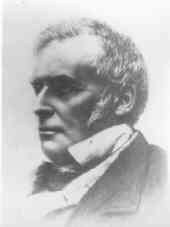 There were worse features to be developed than any of those, but the time did not arrive for their manifestation “till the energy of the Spirit of God was introduced into the scene in the ministry of Mr. Darby”.
- Long had he and others watched the progress of things at Plymouth with sorrow and apprehension; still no hand was lifted to arrest the progress of the evil.
- At last Mr. D. came over from the continent, and after spending several months in Plymouth, labouring within the gathering there, and using what means he could to awaken the consciences of brethren, he was obliged, in order to keep a clear conscience himself, to withdraw from the assembly
- He did so on the ground that God was practically displaced and man set up in His stead, and also that there was evil allowed in the assembly without any means of bringing it before the saints for judgment
- Being called upon by many to explain the grounds upon which he had seceded, he consented, and in doing so he charged Mr. Newton in two distinct instances with having acted untruthfully.
The result of all this was, that a number of brethren from different parts went down to Plymouth, some of them zealous partisans of Mr. N., and others with no judgment formed on the matters they went to inquire into.
- As already stated their interference was sternly refused by Mr. N. and his friends, and he would consent to no investigation of the charges against him except on the worldly principle of arbitration, he appointing four of his friends and Mr. Darby four of his.
- This Mr. D. felt would be taking the case out of the hands of God and His church, as well as making himself the head of a party.
- This proposal he accordingly refused, offering at the same time to meet Mr. N. before the whole assembly, or, if it was preferred, before a number of the most grave and experienced brethren, or before certain brethren, fifteen in number, who had met together previously, and in whose presence that had occurred on which two of the charges were founded.
- To none of these would Mr. Newton consent. His fellow-rulers at Plymouth acquitted him, though one of them was distinctly implicated in one of the charges, and they were all identified with him and zealously aiding him in the course he pursued
- To no other tribunal would he or they allow the case to be referred (the proposal to arbitration having been, of course, rejected by Mr. Darby) and hence a separation became unavoidable.
- Mr. Harris had ceased ministering among them for some time, and he eventually withdrew from communion. Some hundreds withdrew and began to break bread in Raleigh-street, and thus the division was completed at Plymouth.
At first Mr. Darby’s act was judged by brethren almost everywhere to be rash and premature. They had not been inside the scene, and so knew but little of the system that had been introduced.
- Several of those who went down to Plymouth to inquire, found things so much worse than they had any conception of, that they also separated from Mr. Newton and his party.
- One thing which seems to have weighed greatly with these brethren was the corruption of moral integrity, and the system of intrigue and deception which attended the evil.
- In April, 1846, a meeting of brethren from all parts was held in London for common humiliation and prayer, where the tokens of the Lord’s presence were graciously vouchsafed to us, and from that time the eyes of brethren seemed to open to the evil.
- Mr. Newton and his friends were invited to that meeting but refused to attend. They printed their reasons for refusing, which were widely circulated.
Mr. Darby’s “Narrative of Facts” was printed soon after, and in the autumn of that year a series of meetings was held in Rawstorne-street, London, very important in their origin, character, and results.
- They originated in a visit of Mr. N.’s to certain brethren in the neighbourhood of Rawstorne-street and breaking bread there. He held some Scripture readings at the house of one of them, after which he stated that his errand to town partly was to meet any brethren who were wishful of information as to the charges brought against him in the “Narrative of Facts”.
- Most providentially Mr. Darby was at the time in London. He had come to town on his way to France and had got his passports, changed his money, and was ready to depart, when brethren waited on him to detain him till efforts were made to bring about an open investigation of the whole case, with accused and accuser face to face.
- The brethren to whom Mr. Newton had offered to give information, proposed to him this open investigation. It was proposed to him again and again by others, but steadily and invariably refused.
- The brethren meeting at Rawstorne-street then assembled, and after united prayer and consultation concluded that Mr. Newton could not be admitted to the Lord’s Table there, so long as he refused to satisfy their consciences as to the grave charges alleged against him.
In connection with these events there were three documents issued by Mr. Newton and his party
- One, a paper by Mr. Newton himself in answer to the charges of untruthfulness.
- Another, by his four co-rulers at Plymouth, assigning reasons for his non-attendance at Rawstorne-street to satisfy the consciences of the saints meeting there.
- Also a remonstrance addressed by the Plymouth rulers to the brethren meeting at Rawstorne-street on their exclusion of Mr. N. from the Lord’s Table.
- All these were examined at large in four tracts entitled “Accounts of the proceedings at Rawstorne-street in November 15 and December, 1846”. These four tracts are very important as showing the dishonesty connected with the system of which the three papers before named were a defence.
- The proceedings at Rawstorne-street, and the publications growing out of them, cleared the souls of many; and in February, 1847, a meeting was held in the same place, attended by many brethren from the country, in which nearly all those who had been at all looked up to amongst brethren gave their solemn testimony as to the evil system which had grown up at Plymouth, and as to the need of absolute and entire separation from it.
- The testimonies of Messrs. M’Adam, Harris, Lean, Hall, Young, and others, were most solemn and decisive. There was scarcely a brother, whose name was well-known amongst brethren as labouring in the word and watching for souls, who did not at that time acquiesce in the sorrowful necessity for separation from this evil and demoralising system.
And now we come to a new era in this mournful history. Thus far the evil had been confined to the undermining of all the truths of which there had been a special revival, through the Lord’s mercy, among brethren –
- the setting up of clerical power and pretension to an alarming extent, and the effort to form a party for these purposes, by means indicating the total loss of integrity on the part of those who used them, and most corrupting in their effects on others.
- Now we are to find the foundations of the faith assailed by the introduction of false doctrines concerning the blessed Lord Himself. Strange things were known to have been taught previously.
- In his “Thoughts on the Apocalypse”, Mr. N. had taught the astounding doctrine that in the future glory the saints will participate in the omniscience and omnipresent power of the Lord Himself.
- Other statements, equally strange, had been made on other subjects; but it was not till after the London meeting, in February, 1847, that there was brought to light a systematic and diligent inculcation of doctrines which undermine all that is essential to Christianity.
 These doctrines were first brought to light by Mr. Harris. He published a tract, entitled, “The Sufferings of Christ, as set forth in a Lecture on Psalm 6, considered, by J. L. Harris”.
- The lecture, notes of which were thus printed and examined by Mr. H., was by Mr. Newton. The following is Mr. Harris’s account of the way in which he became possessed of those notes, and of what induced him to publish them, with his remarks upon them: –
- “I desire explicitly to state how the MS. came under my notice. About three weeks since one of our sisters in Exeter very kindly lent the notes to my wife, as being Mr. Newton’s teaching, from which she had found much interest and profit.
- When my wife first told me what she had brought home, I did not pay much attention to it; but shortly after I felt it was not right in me to sanction in my house this system of private circulation, and I determined to return the MS. unread. Accordingly I wrote a note to the sister who had lent the MS., thanking her for her kindness, and explaining my reason for returning it unread.
- It was late at night when I had finished writing, and I found in the meantime my wife had looked into the MS. so as to get an outline of its contents, which she mentioned to me, especially the expression that 'the cross was only the closing incident in the life of Christ.’ She thought she did not understand the meaning of the author, and referred to me for explanation.
- I then looked into the MS. myself, and on perusing it felt surprised and shocked at finding such unscriptural statements and doctrine, which appeared to me to touch the integrity of the doctrine of the cross …
- “In the law of the land there is such a thing as misprision of treason, involving heavy penalties when any one who has been acquainted with treasonable practices does not give information.
- In this case I believe the doctrines taught to undermine the glory of the cross of Christ, and to subvert souls; and it seems to me a duty to Christ and to His saints to make the doctrine openly known.
- The MS. professes to be notes of a lecture – I suppose a public lecture. With these notes on Psalm 6 there was given, as accompanying it, notes on Isaiah 13, 14, if I recollect aright, with this notice, ‘This to go with Psalm 6,’ or something to that effect; so that it appears from this title that these MSS. are as regularly circulated among a select few, in various parts of England, as books in a reading society”, etc.
|
The doctrines of this lecture on Psalm 6 by Mr. N., it will be best to state in his own words. Speaking of Christ, he says, page 7,
- “For a person to be suffering here because he serves God, is one thing; but the relation of that person to God, and what he is immediately receiving from His hand while serving Him, is another; and it is this which the sixth Psalm, and many others, open to us. They describe the hand of God stretched out, as rebuking in anger, and chastening in hot displeasure: and remember, this is not the scene on the cross”.
- He says, on the same page, that this – the scene on the cross –
- “was only one incident in the life of Christ … It was only the closing incident of His long life of suffering and sorrow; so that to fix our eye simply on that would be to know little what the character of His real sufferings were”.
- After saying, “I do not refer to what were called His vicarious sufferings, but to His partaking of the circumstances of the woe and sorrow of the human family; and not only of the human family generally, but of a particular part of it, of Israel”,
- he goes on to speak of the curse having fallen on them; and then adds,
- “So Jesus became part of an accursed people – a people who had earned God’s wrath by transgression after transgression”.
- Again: “So Jesus became obnoxious to the wrath of God the moment He came into the world”.
- Again: “Observe, this is chastening in displeasure; not that which comes now on the child of God, which is never in wrath, but this rebuking in wrath, to which He was amenable, because He was part of an accursed people; so the hand of God was continually stretched out against Him in various ways”.
- From this dreadful condition he represents our Lord as getting partially delivered at His baptism by John. I say partially; for elsewhere he distinctly affirms that He only emerged from it entirely by death:
- “His life, through all the thirty years, was made up, more or less, of experiences of this kind; so it must have been a great relief to Him to hear the voice of John the Baptist, saying, ‘Repent ye; for the kingdom of heaven is at hand’. Here was a door opened to Israel at once. They might come, and be forgiven; so He was glad to hear that word. He heard it with a wise and attentive ear, and came to be baptised, because He was one with Israel – was in their condition, one of wrath from God: consequently, when He was baptised, He took new ground: but Israel would not take it”, etc.
- Such were the doctrines promulgated by Mr. Newton.
The exposure of them by Mr. Harris excited general alarm among those who had been associated with their author; and he [Mr. N.], finding it needful that something should be done,
- issued two pamphlets, in neither of which did he disclaim the lecture, or the doctrines asserted in it; but first stated it more at large, though in a less palpable and offensive form, and then defended and supported it.
It appears that, long before this, a paper of his containing the germ of this doctrine had been inserted in the 'Christian Witness'. This was pleaded by Mr. N. and others in palliation of his subsequent course.
- It was said that he had avowed the doctrine openly in
a publication read by brethren generally, and edited by Mr. Harris, and that neither he nor they had detected in it any error, till altered circumstances made them adopt a different standard of judgment.
- But the facts, alas! while quite showing how long Mr. N. had held, or been inclined to hold, his present views, formed no real palliation of the evil.
- In the first place, he had carefully guarded what he said in the 'Witness' against what constitutes the chief evil of his present views. In the 'Witness' he strongly asserts that the sufferings of Christ he speaks of were “vicariously incurred”;
- in his tract – “Remarks on the Sufferings of the Lord Jesus” – he defines the sufferings he specially writes of to be “sufferings which pertained to Him, because He was a man, and because He was an Israelite; sufferings therefore which cannot be restricted to the years of His public service, but which must be extended over the whole of that period during which He was made sensible, under the hand of God, of the condition into which man had sunk, and yet more into which Israel had sunk in His sight”.*
[* The italics (underlining) in the above sentence are Mr. Newton’s own.]
- These sufferings he carefully distinguishes in a note (page 2) from “those which were vicarious”, and “which latter”, he says, “began at the cross”.
- Now this makes all the difference possible. I should regret to hear any one say that our blessed Lord endured God’s displeasure, even vicariously, all His lifetime. It would be an error, and a serious one, to assert even this. Still, it does not so entirely overturn the foundations of our faith.
- But to assert that the hot displeasure of God rested on Jesus throughout His life, not vicariously, but “because He was a man, and because He was an Israelite”, does subvert the faith; because if as a man and as an Israelite He was obnoxious to this, how could He voluntarily endure it on the cross instead of others?
- But, secondly, the remarks in question were not inserted in the first edition of the 'Christian Witness', edited by Mr. Harris, and generally read by brethren, but added to the paper in a second edition, issued from the tract depot at Plymouth, under Mr. N.’s control.
But I must proceed with my narrative.
The two tracts issued by Mr. N. were answered by Mr. Darby. His pamphlet entitled “Observations, by J.N.D., on a tract entitled ‘Remarks on the Sufferings of the Lord Jesus’ ” is most valuable, and well deserving the study of any one anxious to know the bearings of this solemn question.
- He printed another, likewise presenting proofs in copious extracts from Mr. N.’s writings, of what his doctrines on this subject really are.
- The effect of all this, through God’s great mercy, was, that many of Mr. N.’s friends, who had adhered to him till now, began to have their eyes opened to the frightful precipice to the brink of which they had followed him.
- By them Mr. N. was pressed to make confession of his error, and he so far consented to this as to put forth a paper, dated “Plymouth, Nov. 26th, 1847”, entitled “A Statement and Acknowledgment respecting certain Doctrinal Errors”.
I well remember the effect produced on my mind by an extract from this paper, which was sent me, and which was as follows: –
- “I would not wish it to be supposed that what I have now said is intended to extenuate the error which I have confessed. I desire to acknowledge it fully, and to acknowledge it as sin; it is my desire thus to confess it before God and His Church; and I desire that this may be considered as an expression of my deep and unfeigned grief and sorrow, especially by those who may have been grieved or injured by the false statement, or by any consequences thence resulting. I trust the Lord will not only pardon, but will graciously counteract any evil effects which may have arisen to any therefrom”. – B. W. NEWTON.
Supposing, of course, that the error confessed was the error contained in his recent tracts, my soul was bowed before God in thanksgiving for such evidence as this extract seemed to afford of a humbled and penitent state of soul in the writer.
- Judge of my surprise and sorrow, when I received the paper itself, to find that the above is almost the only word of confession contained in the seven pages of which the paper consists.
- And the error confessed is not that of the doctrine already described, the doctrine taught in the Notes of his Lectures and in the two subsequent pamphlets.
- No; he only withdraws these for reconsideration; and the error he confesses is one contained in his paper in the 'Christian Witness', viz., the attributing our Lord’s endurance of the sufferings in question to His connection with Adam as federal head.
- This is the error retracted, and except the paragraph above cited, the tract is little but extenuation and excuse.
Those of Mr. N.’s friends, however, whose consciences were really awakened by the Spirit of God, could not be content with such confession as this.
- A meeting was held in Ebrington-street, in which Messrs. Soltau and Batten made full confession; and as many were more disposed for self-justification than confession, they withdrew from the assembly, and shortly after issued printed confessions, which now lie before me;
- and I am sure these beloved brethren will excuse me in giving extracts from those papers to show, what none could show like those who have been involved in them, what the doctrines in question are.
- The following are Mr. Batten’s words: –
-
These doctrines, or this system of teaching, may be stated as comprising:
- That the Lord Jesus at His birth, and because born of a woman, partook of certain consequences of the fall – mortality being one, – and because of this association by nature, He became an heir of death – born under death as a penalty.
- That the Lord Jesus at His birth stood in such relation to Adam as a federal head; that guilt was imputed to Him; and that He was exposed to certain consequences of such imputation, as stated in Romans 5.
- That the Lord Jesus was also born as a Jew under the broken law, and was regarded by God as standing in that relation to Him; and that God pressed upon His soul the terrors of Sinai, as due to one in that relation.
- That the Lord Jesus took the place of distance from God, which such a person so born and so related must take; and that He had to find His way back to God by some path in which God might at last own and meet Him.
- That so fearful was the distance, and so real were these relations by birth, and so actual were their attendant penalties of death, wrath, and the curse, that until His deliverance God is said to have rebuked Him, to have chastened Him, and that in anger and hot displeasure.
- That because of these dealings from God, and Christ’s sufferings under them, the language of Lamentations 3, and Psalms 6, 38 and 88, etc., has been stated to be the utterance of the Lord Jesus while under this heavy pressure from God’s hand.
- That the Lord Jesus extricated Himself from these inflictions by keeping the law; and that at John’s baptism the consequent difference in Christ’s feelings and experience was so great, as to have been illustrated by a comparison of the difference between Mount Sinai and Mount Sion, or between law and grace.
- That beside all these relations which Christ took by birth, and their attendant penalties and inflictions, and His sufferings under the heavy hand of God, it has been further stated that He had the experience of an unconverted, though elect Jew.
|
After giving this summary of the doctrines which had been held and taught by himself and others, Mr. B. thus proceeds:
-
“I feel, beloved brethren and sisters, whilst writing this outline of doctrine, that it ought to be enough of itself to arouse and alarm you; that it ought to give you at once a sufficient insight into this system of teaching to lead you to ask what spell could have been so firmly bound around us as to make all contented under it; to induce many not only to feed upon it themselves, but to circulate and commend it to others; and to lead some to defend and re-affirm it whenever assailed or threatened.
- “This, I repeat, might be a very proper question for each to put to his own conscience before God; and I do not doubt that a ready answer would be supplied, according to our individual faith and acquaintance with God; at all events, I do not hesitate to declare that my own mind is satisfied to say – delusion, and that I am as free to own my conviction as to the source of this delusive power, however painful and humbling to me to do so”.
|
The evil effects of the system of doctrine from which he had thus been graciously delivered, Mr. B. solemnly points out in the following paragraphs:
-
“I would say, then –
- “That if Christ took at birth, and by birth, certain consequences of Adam’s sin, such as mortality; and that if He stood by birth in the relation to God of Israel under the broken law; and that if He took correspondingly the place of distance from God, and had the experiences of an unconverted man, there was surely need enough that He should work his way back to God, and find some point where God could meet Him.
- “That if the accompanying inflictions, rebukes, and chastisements from God, due to a person in that position, were really allowed to fall upon Christ, and were moreover pressed upon His soul according to God’s power and holiness, there was surely need enough that He should seek to extricate Himself, and find the door of deliverance”.
- “This summary of Christ’s standing before God at birth, and the awful experiences and sufferings of His soul and body under God’s inflictions on this account, I solemnly present to you as containing Christ’s disqualifications for becoming our surety, our sacrifice, our Saviour!
- “For He had to extricate Himself! He had to be delivered Himself out of this horrible distance, and from these fearful judgments. However free from taint His person might be, and is declared to have been, yet because of these relations, which, it has been said, He took at birth, it was even a question, as to fact, whether He could deliver Himself and be owned of God.
- “This was, however, settled as regards His own acceptance by His keeping the law, and by His obedience unto death; but then, alas! all this was due from Him to God – due to the law, as having been born under its curse – due for Himself and for His own extrication: all that He could render to the last moment of His life, all that He could offer up in death, was needed by Him for Himself, and for His own deliverance! …
- “But then what becomes of the blessed doctrines of grace? What becomes of the glorious gospel of God’s salvation? What becomes of the Church? What becomes of us individually? We have lost Christ”.
|
Mr. Soltau’s printed confession was more brief, but equally explicit and humble. So was Mr. Dyer’s: and it would be well for any one anxious to understand fully the nature of the question now before brethren, to read and ponder seriously and prayerfully those remarkable documents.
- They were not without their effect at the time, as a number more withdrew from Ebrington-street, and were in a while received afresh to communion with brethren at Raleigh-street and elsewhere; and some time after Ebrington-street ceased to be occupied by Mr. Newton and his party, a smaller room in Compton-street being the place in which they have since assembled.
Some months after the withdrawal by Mr. N. of his heretical tracts for reconsideration, he published another, entitled, “A Letter on Subjects connected with the Lord’s Humanity”.
- This tract reaffirms the doctrines of those which he had withdrawn, and all the confession now made is of “carelessness”, and “a wrong use of theological terms”.
- Brethren must excuse me when I say, that to refer to this tract as an adequate exposition of Mr. N.’s doctrines seems to me either the height of folly, or something worse.
- First of all, notes of a lecture appear, in which the doctrine flows out freely from the author’s lips without reserve and without disguise.
- Finding the indignation excited by it so very great, he publishes one tract expository of his views, more carefully worded than the lecture, but still plain enough; and another, vindicating those views against the charges of his opponents.
- Finding his own friends ready to desert him, he confesses his error on one point, and withdraws the tracts for reconsideration.
- The fruit of this reconsideration is a republication of the doctrine; but, after months of study bestowed on the subject, who can wonder that the form in which it appears is made as unobjectionable as possible?
- An acute mind, spending months of study on the stating of the obnoxious doctrine in as harmless and apparently unobjectionable terms as possible, while it is still maintained and asserted as firmly as ever, might be expected to produce just such a tract as this of Mr. N's.
- But who would trust it? Does he hold the doctrines he did when he wrote his former tracts? Yes, unquestionably. Then let us look to them to know what those doctrines are; or rather to the notes of his lecture prior to any of them, in which, without a thought of reservation or disguise, he speaks out what was in his soul.
But there is another point I must advert to before Bethesda’s connection with all this comes in view. In the month of May, 1848, a meeting was held at Bath, attended by about 100 brethren from all parts, the leading features of which were:
- That in it the brethren who had been rescued from the doctrinal errors of Mr. N., and whose confessions have been noticed, made further confession, full and ample, as to their implication in the charges made against the untruthful, immoral system of Ebrington-street, as brought to light in the “Narrative of Facts”, and “Account of Proceedings in Rawstorne-street”.
- It is not as delighting in evil, or feeling any pleasure in publishing my brethren’s sins, the Lord knoweth, that I mention this. I am only astonished at the grace bestowed on them thus humbly to acknowledge wherein they had fallen; but I mention it because it is of all importance to remember that the false doctrine is not the only thing in question.
- There was a separation, and solemn necessity for it, before the evil doctrine came to light. And what was made clear to the simplest by the confessions of beloved brethren at the Bath meeting was this, not only that the doctrines must be repudiated, but the system of trickery and deceit guarded against, which preceded the open avowal of the doctrines.
- Both system and doctrines, however, blessed be God, were distinctly confessed, and as distinctly renounced, by beloved brethren who had been most deeply entangled in both. Let this triumph of the restoring grace of our God and Father be our comfort now, and our encouragement to look for further displays of His almighty arm of love.
- The other remarkable feature of the Bath meeting was this, that the “Narrative of Facts”, and other publications of Mr. Darby on these mournful occurrences, were subjected at that meeting to the strictest scrutiny; Lord Congleton endeavouring for five hours to prove them false, and Mr. Nelson, of Edinburgh, aiding him in his efforts.
- The result was, that the statements contained in these pamphlets were so fully established that some, who had always mistrusted them till then, exclaimed that they never knew anything so demonstrated.
- Mr. Robert Howard, of Tottenham, and Mr. Jukes, of Hull, who were present at the meeting, both assured me that nothing could exceed the triumphant manner in which these publications were vindicated from every attempt to call their statements in question; every endeavour to shake their testimony recoiling on the heads of those who made them.
It was immediately after this that the rulers at Bethesda [a meetings at Bristol] admitted to communion there several of Mr. Newton’s devoted friends and partisans, and this in spite of all the remonstrances of godly brethren among themselves, and of others at a distance, who warned them of the character and views of the persons in question.
- The brethren on the spot who had protested against this step were now obliged, in order to avoid fellowship with what they knew to be soul-defiling and Christ-dishonouring doctrines and ways, to withdraw from fellowship with Bethesda.
- This they did; one of them printing, for private circulation, a letter to the leading brethren there, explanatory of his reasons for seceding.
- Ten chief persons at Bethesda then drew up and signed a paper vindicating their conduct in receiving Mr. N.’s followers, and rejecting all the warnings and remonstrances which had been addressed to them.
- This paper you may see at full length in “The Present Question, 1848-9, by G. V. Wigram”. As to this document, I have only a remark or two to make. You may see it fully examined in the pamphlet just named.
- The object of the paper is to vindicate the conduct of those who signed it in taking a neutral position with regard to the solemn questions which have now been hastily reviewed. They say,
- “We were well aware that the great body of believers amongst us were in happy ignorance of the Plymouth controversy, and we did not feel it well to be considered as identifying ourselves with either party”.
They do, nevertheless, at the beginning of the paper, disclaim the doctrines taught by Mr. N. They do not mention his name; but say,
- “We add, for the further satisfaction of any who may have had their minds disturbed, that we utterly disclaim the assertion that the blessed Son of God was involved in the guilt of the first Adam; or that He was born under the curse of the broken law, because of His connection with Israel. We hold Him to have been always the Holy One of God, in whom the Father was ever well pleased.
“We know of no curse which the Saviour bore, except that which He endured as the surety for sinners – according to that Scripture, ‘He was made a curse for us’.
“We utterly reject the thought of His ever having had the experiences of an unconverted person; but maintain, that while He suffered outwardly the trials connected with His being a man and an Israelite, still, in His feelings and experience, as well as in His external character, He was entirely separate from sinners”.
- That is, they severally and jointly disclaim Mr. Newton’s published views on these subjects. And yet it is well known that one of those who signed the paper agrees with Mr. Newton on these points; and in the very last tract I have seen, written by Mr. Groves, brother-in-law to Mr. Müller, and an active agent and zealous advocate of Bethesda, Mr. and Mrs. Aitchison are named as among the known friends of Mr. Newton, and Mr. Aitchison is one of the ten who signed the paper.
- The simplest saint can see the want of uprightness in a course like this. Ten men sign a paper, in which they disclaim views held, and known to be held, by at least one of those who signed it.
- The reasons assigned in this paper of the ten for not judging the error in question are most unsatisfactory, some of them being, in fact, the strongest possible reasons for their investigating it thoroughly. Hear their words:
- “The practical reason alleged why we should enter upon the investigation of certain tracts issued from Plymouth was, that thus we might be able to know how to act with reference to those who might visit us from thence (rather, who had already come), or who are supposed to be adherents of the author of the said publications. In reply to this, we have to state, that the views of the writer alluded to, could only be fairly learned from the examination of his own acknowledged writings … Now there has been such variableness in the views held by the writer in question, that it is difficult to ascertain what he would now acknowledge as his”.
- So, because the author of a heresy is inconsistent with himself, and knows how to puzzle and confuse his readers by apparently contradictory statements, the poor of the flock are to have his disciples let in among them, to scatter the poison of his sentiments, and the pastors plead as their vindication that very tortuousness of error which makes it doubly dangerous, and the necessity for a barrier against it doubly imperative!
- There is a most dangerous principle asserted in this document.
- “Even supposing that those who inquired into the matter had come to the same conclusion, touching the amount of positive error therein contained, this would not have guided us in our decision respecting individuals coming from Plymouth. For, supposing the author of the tracts were fundamentally heretical, this would not warrant us in rejecting those who came from under his teaching, until we were satisfied that they had understood and imbibed views essentially subversive of foundation truth; especially as those meeting at Ebrington-street, Plymouth, last January, put forth a statement disclaiming the errors charged against the tracts”.
- That is, a man may for years teach doctrines admitted to be fundamentally heretical (say Socinian); the congregation which allows him thus to teach (say Socinianism), puts forth a statement disclaiming the doctrines which are still, nevertheless, known to be taught amongst them, and thus accredited by them; members of the congregation apply for communion elsewhere, and unless they can be individually convicted of having “understood and imbibed” Socinian doctrines, this Bethesda principle would require their reception. They are members of a congregation which allows amongst them a Socinian preacher, and boasts of him as deeply taught in the Word, etc.; but unless we can prove that they themselves have intelligently embraced Socinian errors, we have no warrant, Bethesda says, for rejecting them.
- Do saints need more than this to open their eyes as to the ground Bethesda has taken? And this is no “fable”, no “exaggeration!” it is Bethesda’s recorded judgment of what the fellowship of God’s house is. The words above cited, to which “the ten” subscribed their names, and which were adopted by the vote of the congregation, tell a louder and more solemn tale in the ear of conscience than anything which has been advanced by those whom Bethesda looks upon as her adversaries.
- The manner in which the congregation at Bethesda were ensnared into the adoption of this paper of “the ten” is what no one could approve whose judgment was not previously warped.
- “Mr. Craik stated”, at the meeting held July 3rd, 1848, “what would be the order of the meeting, viz., the perusal, first, of Mr. Alexander’s letter, then of their reply. After which the church would give judgment upon it. But that they (the ten, I suppose) stated deliberately and advisedly, that they were firmly resolved not to allow any extracts to be read, or any comments made on the tracts, until the meeting had first come to a decision upon their paper”. [See “The Present Question”, pages 53-4].
- Think of this: ten persons come forward with a paper committing the church, if they adopt it, to a neutral course between the author of those tracts and his friends on the one hand, and those who reject them entirely as unsound and heretical on the other.
- If this paper be adopted Bethesda becomes neutral between Mr. Newton and those who have disowned him; and yet, till this paper is adopted the authors of it will not allow any extracts to be read from Mr. N.’s writings, or remarks to be made on Mr. N.’s doctrines.
- And, when some objected to the congregation thus giving a decision in the dark, Mr. Müller said, “The first thing the Church had to do was to clear the signers of the paper; and that, if this was not done, they could not continue to labour among them; that the worse the errors were, the more reason they should not be brought out”, etc.
- Thus were Bethesda people required, under pain of losing the labours of their beloved and honoured pastors, to assume a position of neutrality with regard to doctrines on which there was not a word to be spoken till they had assumed the position. And the majority acquiesced in this: by standing up they declared their approbation of this paper of “the ten”, and assumed the position which they were required to take.
- But while, on the one hand, the course taken in this matter by the rulers was most sad, let no individual in the congregation think to shift on to their shoulders the responsibility of the body in adopting their paper.
- Be it that they did it in the dark; be it that they were not allowed to have a ray of light shed on the subject, they did still rise up in approbation of the paper, and they had been informed previously by Mr. A. that the errors in question were errors affecting the person and work of our blessed Lord.
- Solemn was the responsibility assumed by the congregation in their vote of that evening; tenfold more solemn the responsibility of those who influenced them to come to it.
It was soon after Bethesda had thus assumed a professedly neutral position by the reception of Mr. Newton’s agents, and the adoption of this paper, explanatory of the ground on which they were received, that Mr. Darby presented the whole case to brethren in a circular, which has been reprinted lately in W. H. Dorman’s “Review of certain Questions and Evils”, etc.
- Soon after the circular was issued Mr. Darby went abroad. All the notice that was taken of it was in a hostile letter from Mr. Wakefield of Kendal, of the spirit of which I will not trust myself to speak, and all the arguments of which you have seen in Mr. Jukes’s letter to the Leeds and Otley gatherings.
- It was by local circumstances that our brother Willans and myself were led, reluctantly enough on our part, to take any share in these proceedings.
- You must understand that by means of Mr. Müller’s Orphan houses, Bethesda has links of connection with almost every gathering throughout the country. With one in Yorkshire we knew that there was a link of great: strength.
- Two other gatherings in Yorkshire we knew to have very strong and tender ties to a brother who had been greatly blessed to them in former days, but who, alas! had been instrumental in part in placing Bethesda in the position she now occupies, and we knew that his policy had always been to keep the saints in ignorance of the Plymouth controversy, and that he had been on a visit to those gatherings since these troubles began.
A brother had removed from Otley to Bethesda, and by returning, or even coming on a visit, might at any time have forced the question on saints here.
- Efforts had been made, moreover, by some to prejudice the minds of saints here and at Leeds by altogether inaccurate representations of Bethesda’s position, and of Mr. Darby’s conduct towards it;
- and what weighed with us more than all the rest, Mr. Jukes, of Hull, came down from Bath, where he had been in intercourse with the friends of Bethesda’s neutral position, resolved to take part with it himself, and this he could not of course do without either the silent acquiescence of brethren everywhere in these parts, or, on the other hand, the consideration by brethren of the whole case.
- We had anxiously looked for some persons of note amongst brethren to summon a general meeting to take Bethesda’s case and Mr. Darby’s circular into consideration. A step of this magnitude it was clearly out of the question for us to take.
- The question for our consciences was whether to stand by and see the Yorkshire gatherings quietly drawn into a neutral position between the Newtonian heresy and the receivers of it on the one side, and those who had faithfully protested against it and separated from it on the other – these gatherings all the while, save a few brethren in Leeds and Otley, being profoundly ignorant of what the questions were on which they were to be thus neutral.
- This we could not with a clear conscience allow. We looked to the Lord, and had, I believe, His guidance in sending out the circular which you have seen. It makes known what the evil is, how by Bethesda’s reception of it all the gatherings were threatened; and then states the course which, as we believed, the word of God required of us in these circumstances, leaving it, of course, to brethren everywhere to form their own judgment of the whole in the fear of God.
- I have no doubt that very many of God’s dear people would have acted in the case better than we did, had they acted at all. But when none would act, and the evil was at our doors, we had no choice left us but to act as the Lord might enable us. He knows whether we sought His guidance, and what our motives were in the step we took.
- Results, too, have shown whether there was not the most imperative need for some such step. Sorrowful and humbling indeed was the state of things which made it needful; but God never fails His people in the worst of times; and I suppose there are very many now who feel that His blessing can be expected on no course in the present emergency but one of unyielding firmness and uncompromising decision.
It has been alleged, however, that Bethesda has cleared itself of all charges of fellowship with Mr. Newton’s false doctrines, or the holders of them; and it may be well first to state what has been done at Bethesda, and then to examine whether by all this it is really cleared, so as to be again entitled to the confidence of saints.
A meeting was held in Bethesda, October 31st, 1848, in which Mr. Müller gave his own individual judgment of Mr. Newton’s tracts, stating that they contained a system of insidious error, not here and there, but throughout; and that if the doctrines taught in them were followed out to their legitimate consequences, they would destroy the foundations of the gospel, and overthrow the Christian faith.
- The legitimate consequences of these doctrines he stated to be “to make the Lord need a Saviour as well as others”. Still, while recording so strong an individual judgment as this, Mr. Müller said that he could not say Mr. N. was a heretic, that he could not refuse to call him brother.
- And he was most careful in maintaining that what he said was not the judgment of the church, but his own individual judgment, for which he and he alone was responsible.
- As to the paper of “the ten”, and all the steps connected with it, he justified them entirely, and said that were they again in the circumstances they would pursue the same course. And what, I ask, is the natural effect of such a proceeding as this?
- On the one hand the individual judgment against the evil lulls to sleep consciences that are beginning to awake. People say, surely there can be no danger of unsoundness where such a judgment against evil is recorded as this.
- While on the other hand the door is left as wide open to the evil as ever; and Satan is quite satisfied if you will only let it in, whatever strong things you may say against it.
But it is now asserted that there has been a public investigation at Bethesda, issuing in a united judgment of the whole body there on the subject.
- This is said to have taken place in November and December, 1848; but the first word of it that has openly seen the light is in a tract which has only reached me since I began to write this letter, and which bears date June 16th, 1849.
- Before examining it, I would solemnly put to the consciences of brethren this question, When Bethesda knew that her conduct had stumbled so many, and was giving occasion to so much division and controversy – if she looked on the decision come to last December as one that ought to satisfy the consciences of godly brethren who complain of her previous course, where was her regard for Christ’s glory, the love of the brethren, or the peace of the church, in keeping this decision a secret from December to June?
- But such as it is, now that it is out, let it be examined, and the Lord give to saints everywhere to weigh it in His fear.
It is presented to the saints in a tract by Mr. A. N. Groves, in which he publishes a letter from Mr. J. E. Howard to Mr. Dorman.
- In this letter Mr. Howard says, The following statement was given me on the authority of Lord Congleton:
- “Seven church meetings were held at Bethesda between November 27th and December 11th, 1848. Mr. Newton’s tracts were considered.
- “CONCLUSION – That no one defending, maintaining, or upholding Mr. Newton’s views or tracts should be received into communion.
“Written down by Lord Congleton from Mr. Müller’s lips, in Mr. Müller’s presence, Mr. Wakefield, of Kendal, being also present. January 3oth, 1849.
- “Result – By the 12th of February, 1849, all Mr. Newton’s friends at Bethesda had sent in resignations – Capt. Woodfall, Mr. Woodfall, Mrs. Brown, Mr. and Mrs. Aitchison, two Miss Farmers and two Miss Percivals. (Signed) C—”.
Before noticing the statements contained in this remarkable document, one word may be allowed as to its author.
- It was Lord Congleton who for five hours endeavoured at the Bath meeting, in May, 1849, to fix the charge of falsehood on the “Narrative of Facts”. Mr. Robert Howard assured me that his efforts were so weak and so absurd, that the only effect of them was to make the charge recoil on his own head.
- His conduct at that meeting was so sad, that when he afterwards sought admission to Rawstorne-street the brethren there declined receiving him until satisfied of his contrition for the course which he there pursued.
- And this is the brother whose name and testimony are put forward by Mr. J. E. Howard to satisfy the consciences of saints that Bethesda has purged itself from the evil!
It is with reference to the meetings Lord C. speaks of that Mr. Groves indignantly asks,
- “What! six weeks’ anxious enquiry, during which every other meeting and business was suspended, to consider the question, arid inform every member of Bethesda, in order to obtain a right and instructed judgment on this difficult and perplexing question – doing nothing! What! disallowing Mr. Newton as a teacher, and refusing communion to all who defended, maintained, or upheld his doctrine or his tracts, after the most prolonged deliberation and prayerful enquiries – doing nothing!”
- It is a sorrowful thing when the only answer one can give to such an appeal as this is, “Nothing to satisfy the consciences of any who value the honour of Christ, and the purity of the fellowship of His house, more than saving appearances and propping up the interests of a party”.
But let us turn to the document itself, and examine its allegations.
- Seven church meetings were held, and Mr. Newton’s tracts were considered. The refusal to do this before had forced out from Bethesda some 50 or 60 godly brethren, and plunged numbers elsewhere into sorrow and strife, and is there no word of confession now that seven meetings are held to consider what might not be considered at all but a short time before?
- In the paper of “the ten” I read, “We considered from the beginning that it would not be for the comfort or edification of the saints here – nor for the glory of God – that we in Bristol should get entangled in controversy connected with the doctrines referred to. We do not feel that because errors may be taught at Plymouth or elsewhere, therefore we as a body are bound to investigate and judge them”.
- Again, I read, “The requirement that we should investigate and judge Mr. Newton’s tracts, appeared to some of us like the introduction of a fresh test of communion”.
- Now, how is it that what was so wrong in June and July has become right and needful in “November and December? How is it that what is refused in summer, at the cost of forcing out a number of godly, conscientious brethren on the spot, and plunging brethren everywhere into sorrow and division, is done in autumn without a word of acknowledgment that wrong had been done before! Nay, if we are to believe Mr. Groves himself, they still think they did quite right.
- The conclusion come to was, “That no one defending, maintaining or upholding Mr. Newton’s views or tracts, should be received into communion”.
- Now this to a person who knew nothing of the controversy, and nothing of the tracts, would sound very fair and straightforward, and it is intensely painful to have at every step to call in question whether documents and declarations do really mean what at first glance a stranger would suppose they mean. But what are the facts of the case before us?
- First, there is no judgment given as to those who had already been received, received too at the solemn cost of the division which immediately ensued at Bristol, as well as all the rest which have followed elsewhere. It is a judgment as to who “should be received into communion”, not as to what should be done with those who had already been received.
- Secondly, the conclusion arrived at still leaves the door quite open to those who are in avowed fellowship with Mr. Newton, provided they do not “defend, maintain, or uphold his views or tracts”. There is nothing here that goes beyond the principle laid down in the paper of “the ten”.
- “For, supposing the author of the tracts were fundamentally heretical, this would not warrant us in rejecting those who came from under his teaching, until we were satisfied that they had understood and imbibed views essentially subversive of foundation-truth”.
- If a person comes from Compton-street, and has frankness to say, I understand and hold, and am resolved to propagate as I can, Mr. Newton’s views on the points now in question, he would not be received by Bethesda.
- But a dozen persons might come at once from Compton-street and be admitted into the heart of the assembly at Bethesda, provided they were so far under the influence of the immoral, deceitful system of the place they came from as to conceal the fact that they sympathise with Mr. Newton’s views. They must “defend, maintain, or uphold” Mr. Newton’s views or tracts to be excluded by this conclusion arrived at in Bethesda.
- Should they say that they do not understand Mr. Newton to teach what others attribute to him, and they themselves entirely repudiate the doctrines charged upon him, there is no hindrance here to their admission at Bethesda. And when admitted, they may speak highly of Mr. N., they may express their sympathy for him as an injured, calumniated, and mercilessly treated man, and so enlist the sympathies of Bethesda people in his favour.
- And is not all this doing Satan’s work, and paving the way for their reception of the doctrines of the tracts themselves, when in some other way these fall into their hands? Nor are the means for this far distant. This we shall now see.
- The result of this judgment of Bethesda is said to be that “By the 12th of February, 1849, all Mr. Newton’s friends at Bethesda had sent in their resignations – Captain Woodfall, Mr. Woodfall, Mrs. Brown, Mr. and Mrs. Aitchison, two Miss Farmers, and two Miss Percivals”.
- And this is clearly put forth in Bethesda’s defence by one of Bethesda’s chief leaders! From the time that these questions arose, the uniform and oft reiterated defence put forth by Bethesda and her advocates was that there were none in Bethesda who held Mr. Newton’s views, or promoted his designs.
- Now we are assured by Lord C. in a tract put forth by Mr. Groves, that all Mr. Newton’s friends at Bethesda have sent in resignations! A list of their names is given us, consisting of the very persons who had been received by Bethesda in spite of every warning and remonstrance from within and from without; including also one name which was appended to the paper of “the ten”
- So that one of “the ten” who committed Bethesda to a neutral course is now ranked by Bethesda herself and her zealous advocates, amongst Mr. Newton’s friends.
- And is there no confession on Bethesda’s part of having despised the warnings and counsels of grave and sober brethren, whose testimony they have at last found but too true? Is there no expression of sorrow for having forced out from her fellowship those whose conduct has thus been justified in the sight of all? No, not the least.
- Bethesda, by her own account, has done right from first to last. Right, in assuming a neutral position, right in abandoning it, if indeed she had abandoned it. Right in receiving Mr. Newton’s friends; and right in pursuing a line of conduct, the “result” of which she states to be the retirement of them all! Right in maintaining she had none within her pale tinctured with the Newtonian heresy; and right in proving herself clear, by alleging that all such have resigned!
- But it is not a course of self-justification like this that either meets with the approval of God or commends itself to the consciences of saints.
The worst, however, remains to be told. So far from the six weeks’ meetings, and the conclusion arrived at, and the result of both, having cleared Bethesda of the evil, or made it more worthy of the confidence of brethren, its actual present position is such as to be less entitled to confidence than before.
- We are not left to learn the value and grounds of the resignations of Mr. Newton’s friends from Lord C.’s statement, as two of them, Captain and Mr. Woodfall, have circulated a paper in which the grounds of their resignation are plainly stated. Two sentences from that paper are enough to make manifest the character of the whole proceeding.
- “This step of ours”, they say, “has been finally determined on from a conversation with one of your pastors, who seems to think this would relieve them from some of their difficulties”.
- “In taking this step we do not at all waive our claim, as brethren in Christ, to a seat at the Lord’s table here”.
Only think of an amicable arrangement between one of the pastors of Bethesda and two of Mr. Newton’s friends who are in communion there,
- the issue of which is the withdrawal of the latter, to relieve the former from some of their difficulties, these voluntary seceders maintaining meanwhile their right to communion whenever they may think proper to return!
- And this is set forth as a proof that Bethesda has cleared herself of the evil, and as enough to satisfy the consciences of brethren that there is nothing now requiring separation from Bethesda.
The fact is, if I am correctly informed, and the truthfulness and accuracy of my informant I have every reason to trust, that there is an open communication between those “friends of Mr. Newton” who have withdrawn from Bethesda, and others remaining in Bethesda still.
- Bethesda has not professed to shut the door against those who are in avowed fellowship with Mr. N. and his adherents, unless they uphold, defend, or maintain his doctrines or his tracts.
- Sympathisers with him there are unquestionably in Bethesda still. They have the work to do inside; while those who have withdrawn can do work of another kind outside more effectually than they could have done it within.
- I say not that Messrs. Groves and Müller intended it should be so; far from it; but when expediency becomes our guide, and to maintain our own consistency our object, we become the dupes and tools of an unseen agent, who seeks to accomplish his own purposes by means of us and our ways.
- I state it subject to correction; and the moment there is a fair and open meeting, where everything can be gone into, I am willing to give up my author, and have the following statement, with every other I have made, thoroughly sifted and weighed.
- I have been assured of the fact, that one person remaining in Bethesda claimed his right, or stated his determination, not to forgo fellowship with Mr. Newton’s friends who have withdrawn.
- And I have been credibly informed again and again that the meetings held by Mr. Newton’s friends have been attended by several still in Bethesda.
- If these things are not so, let the matter be investigated openly and fairly; and if they should be proved untrue, I know who would be one of the first, by God’s grace, to confess the wrong done to Bethesda brethren, and to entreat their forgiveness.
- But if these things be true, let no saints be persuaded that mutual arrangements, as matters of expediency, for some to withdraw while others remain, can clear Bethesda of that wherewith she stands charged, or vindicate the holiness of God’s house, which has been practically denied by her doctrines and her deeds.
Were I asked my reasons as an individual, for being entirely separate from Compton-street congregation, Plymouth, my answer would be twofold:
- The sectarian, clerical, and demoralising system there set up, as unfolded in the “Narrative of Facts” and account of proceedings in Rawstorne-street.
- The awful doctrines since promulgated by Mr. Newton on the subject of the sufferings of our blessed Lord.
Were I asked the same question with regard to Bethesda, my answer would be:
- The declared assumption of a neutral position towards the evil system and evil doctrines of Mr. Newton.
- The latitudinarian principle laid down in the paper of “the ten”, and adopted by the body, that those who are in avowed fellowship with heretics cannot be refused admission to the Lord’s table, unless they themselves have understood and imbibed heretical sentiments.
- The attempt to make the impression on people’s minds that the neutral position has been exchanged for one of separation from Mr. Newton and his tracts, without any confession of error or sin in having taken a neutral position at first.
- That the neutral position has not really been abandoned; that sympathisers with the heresy are yet allowed to be within, and no barrier presented to their free communication with avowed adherents of the heresy without.
- The statements made by Mr. H. Craik in his letter to T.M., in answer to G. V. Wigram’s Appeal. What he says there of the Lord’s humanity, leaves no room for doubt that he does to a great extent sympathise with Mr. N.’s unsound views.
A number of brethren at Rawstorne-street, London, and elsewhere, have addressed to Bethesda the following appeal:
June, 1849.
“To Saints who meet in Bethesda, Salem, etc., Bristol.
“In consequence of the late republication of J. N. Darby’s letter of last autumn (by W. H. Dorman), and of the ten co-labouring brethren of Bethesda, with extracts subjoined from G. Alexander’s letters, etc. (by G. V. Wigram) our souls have been exercised before the Lord in humiliation and prayer.
- “This has led to the conviction that without compromising the holiness becoming the house of God, we could have no further interchange of communion with saints of Bethesda, under existing circumstances.
- “Under this sad conviction, as we most anxiously desire to stand in fellowship with all saints, we earnestly wish to remove the apparent hindrances.
- We therefore, as separate individuals do earnestly entreat and beseech that the only thing which seems to us as a means to this end (viz., a meeting open to all parties concerned, who plead conscience as the reason for being present), may be accorded by you either in Bristol or elsewhere.
“Let any evil which has to be corrected in any be shown there. If it be in brethren meeting in York-street, Bristol – in G. Alexander, J. N. Darby, G. V. Wigram, or W. H. Dorman – we desire in no sense to screen them any more than to condemn any among yourselves. Let the Lord’s honour and the unity and holiness of the church only be thought of.
- “Our hope is, that if such a meeting were held, the Lord Jesus Christ would, for His name sake, so overrule by His Spirit, that some results in common humiliation and blessing from His hand would follow.
- “Misunderstandings might be corrected, evil judged, while holiness and brotherly fellowship were still preserved to His glory and the comfort of our hearts.
- “This step is also urged on us more especially by first, Certain public acts of Tottenham, viz., its publication of the memorandum and reception from Bethesda; and secondly, A secession of brethren from Orchard-street on the grounds connected therewith.
“The answer is requested to be sent (for us) addressed to M.N., at 1, Angel Terrace, St. Peter’s-street, Islington, London.
“For the congregation of Bethesda, etc., to the care of G. Miller, J. H. Hale and C. Brown”.
The above was signed by fourteen brethren, and copies of it by several others.
Mr. Müller’s reply is as follows:
Bristol, July 18th, 1849.
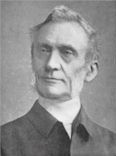 “In reply to a communication addressed to the care of Mr. Hale, Mr. C. H. Brown, and myself, requesting a meeting of brethren to consider certain charges that have been made against Bethesda, I have to state on the part of myself and my fellow-labourers, that
- we are ready to afford full explanation of the course that has been adopted at Bethesda to any godly enquirers who have not committed themselves as partisans of Mr. Darby and Mr. Wigram, but that we do not feel warranted in consenting to meet with those who have first judged and condemned us, and now profess to be desirous of making enquiry.
- We think it well plainly to state, that were such brethren even to profess themselves satisfied with us, we could not without hypocrisy accord to them the right hand of brotherly fellowship.
- If they agree with the course followed by Mr. Wigram and others, then there can be no fellowship between us and them; if they disapprove of that course, we feel that they are bound first to call to account those who have been manifestly guilty of following a course tending to division, and of grossly slandering their brethren.
- Should, however, any godly persons who have not committed themselves to the upholding of such persons desire explanation of the course we have pursued, we are not only most ready to answer their enquiries (either by verbal intercourse in private, or by means of a meeting called for that purpose), but it would also give us real joy to satisfy the minds of such.
(Signed) George Müller”.
I pray brethren to ponder this letter. The glory of Christ may be assailed, and the foundations of the faith, as well as the moral integrity of the saints, be sapped and undermined; Bethesda stands quietly by, and assumes a neutral place.
- George Müller, Henry Craik, and others, are in their own estimation roughly and badly used; but there can be no neutrality as to that.
- Brethren propose to them a general meeting, as much to investigate their charges against J. N. Darby, G. V. Wigram, and others, as to investigate the charges these brethren made against Bethesda.
- They wish to screen none, to condemn none, but to hear all in each other’s presence, and in the presence of the Lord Jesus Christ;
- but no – Mr. Müller and his co-labourers will consent to nothing of the kind.
- They would admit to the Lord’s table the friends and partisans of those who had slandered the blessed Lord; but they will not meet for enquiry even with those who approve of the course pursued by brethren supposed to have slandered them. Surely this may safely be left for the judgment of the saints.*
[* The letter from Mr. Müller and the comments made thereon were added subsequently by Mr. Trotter. (Ed.)]
It only remains for me to notice two or three points much urged by those who object to a decided course of action in this solemn matter.
- It is often said that in declining fellowship with those who come from Bethesda in its present state, we treat them worse than we do Christians in the denominations generally.
- It has been asked again and again, whether we would not receive a godly clergyman remaining in the Church of England, where all indiscriminately are received to communion. I answer, unhesitatingly, yes, we should, as always, receive a brother in the Lord who is in the Establishment or among the Dissenters, without requiring him beforehand to separate from the body of which he is a member.
- But what has this to say to the case in hand? Does a clergyman’s reception of unconverted people at the table of the Establishment accredit them to us as Christians? Not in the least.
- But is this the case with Bethesda? The profession is, that none but Christians are received there; and any one coming thence heretofore, has come fully accredited as a Christian.
- If, then, Bethesda admits those who are unsound in the faith, the result is, that all confidence is destroyed, and we should never know, in admitting persons thence, whether we were not receiving under the guise of a “dear brother or sister” an enemy of the faith, and a subverter of souls.
- This is the position in which Bethesda has placed itself; a position altogether unlike that of the Establishment, or of any evangelical Dissenting body.
- If I knew of a Dissenting congregation which, on principle, and to maintain a neutral place, received Socinians as well as Orthodox believers to communion, I should no more receive persons from that congregation than from Bethesda.
- I should have no confidence in their confessions of faith, however sound, till they had renounced their unholy association with the deniers of the Lord that bought them. And I regard Mr. Newton’s doctrine as a more dangerous, because more insidious and artfully disguised heresy than Socianism itself.
Men may subvert the faith without denying in terms the fundamental doctrines of the gospel.
- The Judaizing teachers in Galatia had not laid aside the name of Christ, or ceased to acknowledge Him in word as the Saviour. But they taught doctrines which, if true, made His death unnecessary and vain. And both Peter and Barnabas were for a little season drawn into the snare.
- But what said Paul of those subverters of the faith?
- “I would they were cut off that trouble you”.
- “Though we or an angel from heaven preach any other gospel to you than that which we have preached unto you, let him be accursed”.
- The assertion that “the resurrection is passed already”* was not the denial in terms of what our faith rests upon; but it was the assertion of that which, if believed, took away from the soul the only resting place for faith.
[* The assertion that “the resurrection is past already” appears in 2 Timothy 2: 18. The writer of the letter probably intended to allude to the assertion that “there is no resurrection of the dead”, which we have in 1 Corinthians 15: 12. (Ed.)]
- “If the dead rise not, then is not Christ raised; and if Christ be not raised, your faith is vain; ye are yet in your sins”.
- Paul knew nothing of the false charity of the present day. He delivered Hymeneus to Satan that he might learn not to blaspheme.
- And though there may be no one in the present day to exercise discipline in that form, the obligation of saints to be separate from such blasphemy, and from all those who practise and allow it, is as solemn now as then. Indeed, separation from evil is not a question of power, but of obligation.
- A saint always has power to keep a clean conscience. It is not to a large and ordered church, but to “the elect lady and her children” that John writes,
- “If there come any unto you and bring not this doctrine, receive him not into your house, neither bid him God-speed; for he that biddeth him God-speed is partaker of his evil deeds”.
But are you not introducing a fresh test of communion, and so setting up a sect? is a question that is often asked. Let us look to Scripture for the answer.
- All must allow that in the earliest days of the church it was as Christians that God’s people met together. They received one another as the Lord Jesus Christ had received them, to the glory of God the Father.
- But when Satan had sown his tares and they began to grow up, when grievous wolves had entered in, not sparing the sheep, and when from among themselves men had arisen speaking perverse things to draw away disciples after them; when for instance, the doctrine was taught that “the resurrection was past already”, and Paul had delivered the teachers of it to Satan that they might learn not to blaspheme; was such an act of holy discipline setting up some new term of communion?
- Suppose a thousand people, and among them many Christians, had sympathised with those heretics and refused to renounce their fellowship, thereby taking sides with them against the apostle and against the Holy Spirit by whose power the apostle acted, can we suppose that such persons would have been received to communion by the apostle, or by any who regarded the apostle’s authority?
- And would the rejection of such be setting up any new term of communion? Did the beloved disciple set up a new term of communion in warning the elect lady not to receive the false teachers of that day?
- Suppose some one who had received these deniers of the faith had come to the elect lady and her children expecting to be received as before; and suppose she, feeble sister as she was, had said, meekly, but firmly – No: the Holy Ghost by the Apostle says that he who biddeth them God-speed is partaker of their evil deeds. You have received those enemies of the faith, and have thus become partakers of their evil deeds. You now stand in the same place as they do, I dare not receive you lest I become partaker with you of your and their evil deeds. Would such a testimony have been setting up some new term of communion?
- Multiply the receptions ad infinitum, the principle remains the same. Many a plea of ignorance and unguardedness may come in and have to be considered, and such pleas would be more admissible the further off the case was removed from the origin of the evil.
- But rejecting heretics and the receivers of them is not setting up any new term of communion; it was not in the apostle’s days, nor is it now.
If any ask then, Do you not meet as Christians, and if so, how can you think of refusing so many who are undoubtedly such? my answer is,
- Assuredly we meet as Christians, and it is because we do that we can receive none among us who either by their sentiments or their conduct undermine the foundations of Christianity.
I would not close this communication without expressing my deep and unfeigned sorrow that any necessity should have arisen for speaking as I have had to do of brethren at whose feet I feel unworthy to sit.
- With brethren Müller and Craik I have never had the pleasure of a personal acquaintance; but often have I had to thank God for the refreshment ministered to my soul through the writings of the one, and often have I been humbled at the thought of the faith and devotedness of both the one and the other.
- However, I may have had in faithfulness to our common Master and love to His sheep, to canvass the course pursued in this matter by these beloved brethren, and however sorrowful my impressions as to the line of conduct into which they have been betrayed,
- I know of no unkindly feeling towards them in my heart, much less could I think of despising their “grey hairs”, or forget the injunction, “Likewise, ye younger, submit yourselves to the elder”.
- But where God’s glory and the honour of His Christ is the question at issue, all lesser considerations must stand aside.
- The Lord look upon us and pity us, and send us restoration and blessing, as, if He tarries, He assuredly will in His own time and way.
- May we have grace to bow to His hand who smites us in love! In patience may we possess our souls; and may the chastenings of His love work in us by the power of the Holy Ghost all that repentance, that vehement desire, that revenge upon ourselves, that will prove us at least clear in this matter.
- The Lord grant it, and send health and healing, for His blessed name’s sake!
Ever, dear brother, Affectionately yours, W. TROTTER.
Page Top Article Top
| APPENDIX: LETTER OF THE TEN |
|---|
| From Bethesda Chapel
|
|---|
“DEAR BRETHREN, –
"Our brother, Mr. George Alexander, having printed and circulated a statement expressive of his reasons for withdrawing from visible fellowship with us at the table of the Lord; and these reasons being grounded on the fact that those who labour among you have not complied with his request relative to the judging of certain errors which have been taught at Plymouth; it becomes needful that those of us who have incurred any responsibility in this matter should lay before you a brief explanation of the way in which we have acted.
“And first, it may be well to mention, that we had no intimation whatever of our brother’s intention to act as he has done, nor any knowledge of his intention to circulate any letter, until it was put into our hands in print.
“Some weeks ago, he expressed his determination to bring his views before a meeting of the body, and he was told that he was quite at liberty to do so. He afterwards declared that he would waive this, but never intimated, in the slightest way, his intention to act as he has done, without first affording the church an opportunity of hearing his reasons for separation. Under these circumstances, we feel, it of the deepest importance, for relieving the disquietude of mind naturally occasioned by our brother’s letter,explicitly to state that the views relative to the Person of our blessed Lord, held by those who for sixteen years have been occupied in teaching the word among you, are unchanged.
“The truths relative to the divinity of His Person – the sinlessness of His nature – and the perfection of His sacrifice, which have been taught both in public teaching and in writing, for these many years past, are, through the grace of God, those which we still maintain. We feel it most important to make this avowal, inasmuch as the letter referred to is calculated, we trust unintentionally, to convey a different impression to the minds of such as cherish a godly jealousy for the faith once delivered to the saints.
“We add, for the further satisfaction of any who may have had their minds disturbed, that we utterly disclaim the assertion that the blessed Son of God was involved in the guilt of the first Adam; or that He was born under the curse of the broken law, because of His connection with Israel. We hold Him to have been always the Holy One of God, in whom the Father was ever well pleased. We know of no curse which the Saviour bore, except that which He endured as the surety for sinners – according to that scripture, ‘He was made a curse for us.’ We utterly reject the thought of His ever having had the experiences of an unconverted person; but maintain that while He suffered outwardly the trials connected with His being a man and an Israelite – still in His feelings and experiences, as well as in His external character, He was entirely ‘separate from sinners’.
“We now proceed to state the grounds on which we have felt a difficulty in complying with the request of our brother, Mr. Alexander, that we should formally investigate and give judgment on certain errors which have been taught among Christians meeting at Plymouth.
“1. We considered from the beginning that it would not be for the comfort or edification of the saints here – nor for the glory of God – that we, in Bristol, should get entangled in the controversy connected with the doctrines referred to. We do not feel that, because errors may be taught at Plymouth or elsewhere, therefore we, as a body, are bound to investigate them.
“2. The practical reason alleged why we should enter upon the investigation of certain tracts issued at Plymouth was, that thus we might be able to know how to act with reference to those who might visit us from thence, or who are supposed to be adherents of the author of the said publications. In reply to this, we have to state, that the views of the writer alluded to could only be fairly learned from the examination of his own acknowledged writings. We did not feel that we should be warranted in taking our impression of the views actually held by him from any other source than from some treatise written by himself, and professedly explanatory of the doctrines advocated. Now there has been such variableness in the views held by the writer in question, that it is difficult to ascertain what he would now acknowledge as his.
“3. In regard to these writings, Christian brethren, hitherto of unblemished reputation for soundness in the faith, have come to different conclusions as to the actual amount of error contained in them. The tracts some of us knew to be written in such an ambiguous style, that we greatly shrunk from the responsibility of giving any formal judgment on the matter.
“4. As approved brethren, in different places, have come to such different conclusions in reference to the amount of error contained in these tracts, we could neither desire nor expect that the saints here would be satisfied with the decision of one or two leading brethren. Those who felt desirous to satisfy their own minds, would naturally be led to wish to peruse the writings for themselves. For this, many among us have no leisure time; many would not be able to understand what the tracts contained, because of the mode of expression employed; and the result, there is much reason to fear, would be such perverse disputations and strifes of words, as minister questions rather than godly edifying.
“5. Even some of those who now condemn the tracts as containing doctrine essentially unsound, did not so understand them on the first perusal. Those of us who were specially requested to investigate and judge the errors contained in them, felt that, under such circumstances, there was but little probability of our coming to unity of judgment touching the nature of the doctrines therein embodied.
“6. Even supposing that those who inquired into the matter had come to the same conclusion, touching the amount of positive error therein contained, this would not have guided us in our decision respecting individuals coming from Plymouth. For supposing the author of the tracts were fundamentally heretical, this would not warrant us in rejecting those who came from under his teaching, until we were satisfied that they had understood and imbibed views essentially subversive of foundation truth; especially as those meeting at Ebrington-street, Plymouth, last January, put forth a statement, disclaiming the errors charged against the tracts.
“7. The requirement that we should investigate and judge Mr. Newton’s tracts, appeared to some of us like the introduction of a fresh test of communion. It was demanded of us that, in addition to a sound confession and a corresponding walk, we should, as a body, come to a formal decision about what many of us might be quite unable to understand.
“8. We remembered the word of the Lord, that ‘the beginning of strife is as the letting out of water.’ We were well aware that the great body of believers amongst us were in happy ignorance of the Plymouth controversy, and we did not feel it well to be considered as identifying ourselves with either party. We judge that this controversy had been so carried on as to cause the truth to be evil spoken of; and we do not desire to be considered as identifying ourselves with that which has caused the opposer to reproach the way of the Lord. At the same time we wish distinctly to be understood that we would seek to maintain fellowship with all believers, and consider ourselves as particularly associated with those who meet as we do, simply in the name of the Lord Jesus.
“9. We felt that the compliance with Mr. Alexander’s request would be the introduction of an evil precedent. If a brother has a right to demand our examining a work of fifty pages, he may require our investigating error said to be contained in one of much larger dimensions; so that all our time might be wasted in the examination of other people’s errors, instead of more important service.
“It only remains to notice the three reasons specially assigned by Mr. Alexander in [justification] of his course of action. To the first, viz., ‘that by our not judging this matter, many of the Lord’s people will be excluded from communion with us‘ – we reply, that unless our brethren can prove, either that error is held and taught amongst us, or that individuals are received into communion who ought not to be admitted, they can have no scriptural warrant for withdrawing from our fellowship. We would affectionately entreat such brethren as may be disposed to withdraw from communion for the reason assigned, to consider that, except they can prove allowed evil in life or doctrine, they cannot, without violating the principles on which we meet, treat us as if we had renounced the faith of the Gospel.
“In reply to the second reason, viz., ‘that persons may be received from Plymouth holding evil doctrines‘ – we are happy in being able to state, that ever since the matter was agitated, we have maintained that persons coming from thence – if suspected of any error – would be liable to be examined on the point; that in the case of one individual who had fallen under the suspicion of certain brethren amongst us, not only was there private intercourse with him relative to his views, as soon as it was known that he was objected to, but the individual referred to – known to some of us for several years as a consistent Christian – actually came to a meeting of labouring brethren for the very purpose that any question might be asked him by any brother who should have any difficulty on his mind. Mr. Alexander himself was the principal party in declining the presence of the brother referred to, on that occasion, such inquiry being no longer demanded, inasmuch as the difficulties relative to the views of the individual in question, had been removed by private intercourse. We leave Mr. Alexander to reconcile this fact, which he cannot have forgotten, with the assertion contained under his second special reason for withdrawing.
“In regard to the third ground alleged by Mr. Alexander, viz., that by not judging the matter, we lie under the suspicion of supporting false doctrine, we have only to refer to the statement already made at the commencement of this paper.
“In conclusion, we would seek to impress upon all present the evil of treating the subject of our Lord’s humanity as a matter of speculative or angry controversy. One of those who have been ministering among you from the beginning, feels it a matter of deep thankfulness to God, that so long ago as in the year 1835, [“Pastoral Letters”, by H. Craik] he committed to writing, and subsequently printed, what he had learned from the Scriptures of truth relative to the meaning of that inspired declaration, ‘The Word was made flesh.’ He would affectionately refer any whose minds may be now disquieted, to what he then wrote, and was afterwards led to
publish. If there be heresy in the simple statements contained in the letters alluded to, let it be pointed out; if not, let all who are interested in the matter know that we continue unto the present day, ‘speaking the same things’.
“(Signed)
HENRY CRAIK, EDMUND FELTHAM, GEORGE MÜLLER,
JOHN WITHY, JACOB HENRY HALE, SAMUEL BUTLER,
CHARLES BROWN, JOHN MEREDITH, ELIJAH STANLEY,
ROBERT AITCHISON”.
The above paper was read at meetings of brethren at Bethesda Chapel, on Thursday, June 29th, and on Monday, July 3rd, 1848.
Page Top Article Top