Menu•SiteMap |
History
Conscientious Objection
to Bearing Arms: 1943
| INTRODUCTION |
|---|
| This brief account of the Conscientious Objection appeal to the Government of Canada in 1943 is adapted from the documents entitled 'Conscientious Objection to Bearing Arms', No. 15 in my Historical Reference Series. GAR.
|
|---|
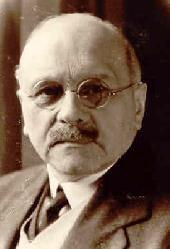
Mr. A. E. Myles had apparently been serving in the ministry of the word in North America and was unable to return to England because of the war conditions. Compare Letters of James Taylor, 2: 230.
- His being detained and his residence in Canada were undoubtedly under the Lord's direction.
- We are especially indebted to AEM for the time and effort he put into the appeal, and for his detailed correspondence.
- It seems clear that there was a certain lack of unity of thought and practice – caused by misunderstanding of principles or the desire for personal convenience – which he laboured diligently to put right.
It is my hope and prayer that younger brethren will never have to face military service – but if in God's will they do, I trust the contents of this volume may be used by the Holy Spirit to guide them in a right path.
- During the last years of World War 2, I was in high school. All male students were required to be in the Cadet Corps, to wear uniforms once a week and do marching drills, with wooden rifles, in the school yard and on neighbouring streets.
- We also did rifle practice with live ammunition in the school basement.
- Just before the final year of the war I was converted and – though in an 'open' meeting which condoned combatant service – I had no doubts about the rightness of being a 'conscientious objector'.
- With fear and trembling, I stated my conscience to the corps commander – my English teacher and a bristling former army captain.
- Under God's good hand I was exempted and was made the sole medical corpsman, carrying smelling salts to revive anyone who fainted in the heat on the parade ground!
G.A.R.
Page Top
5603 Queen Mary Road, Hampstead, Que.
June 2, 1942
The Honourable J. T. Thorson,
Minister of National Mobilization, Ottawa, Ont.
Dear Sir,
In response to suggestions appearing in the public press, that you would welcome suggestions regarding so-called "Conscientious Objectors" as to how they could be used in military service, I venture to put certain information before you relative to a group of Christians commonly known as "Plymouth Brethren".
The number of persons holding the beliefs of those designated, in this country is small, but there are a large number in Great Britain, Australia, New Zealand, and a fair number in the United States and South Africa.
- In all these countries such persons have been recognized as conscientious objectors to taking human life.
This "conscience" is not a political one: it does not depend on what party is in power, or on the form of government, or on the question at issue between nations, but is the result of being truly converted to God and the Kingdom of our Lord Jesus Christ.
Further it enters into every part of our lives, both as to our relations with God and men. As Paul said, before the governor Felix,
- "And herein do I exercise myself, to have always a conscience void of offence towards God and towards men", Acts 24: 16.
The persons designated do not seek to influence or control earthly government in any way such as by voting for any persons or parties, being governed in this by the Scripture,
- "For our commonwealth" [conversation] "is in heaven; from whence we look for the Saviour, the Lord Jesus Christ", Philippians 3: 20,
- but as enjoined they obey all lawful authority, and pray for Kings, Government, Magistrates, and all the necessary accessories of Government,
- but as regards the matter of taking human life, they feel
in the words of the Apostle Peter,
- "we ought to obey God rather than men", Acts 5: 29.
A word of explanation as to the history of this movement, may not be out of place in this letter. It began about the year 1829 in parts of Ireland and England.
Many persons under the light given, withdrew from the Established Church and the Denominations as discerning that sectarianism was contrary to the teachings of our Lord Jesus Christ, and that
- the Church was one spiritually, hence any outward order or name that was a denial of that great fact, could not be according to God's mind.
In result many local "meetings" of Christians were established in parts of Great Britain, the Continent of Europe, as well as spreading to the English-speaking world.
- These companies met in great simplicity, as at the beginning, without any official clergy, or officers, or arranged services.
They are not, nor can they be, registered as religious bodies, hence have no legal entity.
- They hold that to register themselves as anything would only add to the confusion from which they have withdrawn,
- nor can they take any ground or name that is not true of, and for, every true believer in Christ.
In Great Britain they are well known to the Government, and in times of war are placed in Non-Combatant Battalions for army work, or are given work of National importance.
In the United States conscientious objection to taking human life is recognized, and such persons are placed in different branches of the army for which they may be fitted, but are drafted as "conscientious objectors" and, we understand, have distinguishing marks as such.
- The American Government in their "Census of Religious Bodies" Bulletin No. 6, register the persons designated in this letter, as Plymouth Brethren No. 4.
The present position in Canada is that Mennonites and Doukhobors are recognized as having a "conscience" against war.
- Others whose conscience is as regards taking human life, have to appear before Tribunals which may or may not grant exemption from military work and may send the applicant to a "labour camp" specially provided for the religious sects mentioned in this paragraph.
At this time of crisis it is the desire of those concerned to go as far as possible in willing co-operation with the Government, either in army work as non-combatants, or in work of National importance as the Government may direct.
- The "conscience" detailed above, would be satisfied if the persons are not called upon, under any circumstances to take human life.
It is respectfully suggested, that while a matter of conscience must be individual,
- the evidence of two or more "Elder brethren" that the applicant is known to them, and has held these views consistently for some time,
- or has been brought up in a home where this teaching has been impressed upon them from childhood as what is right before God, be accepted as establishing their status,
- and that if sent into army units they be registered or distinguished as "conscientious objectors" so that they should not be called upon to carry arms under any circumstances.
If desired the undersigned would gladly wait upon you at your convenience to place any further details desired before you, but we have endeavoured to set out the matter clearly in this letter. Its length is necessary to do this. We are Honourable Sir,
Your obedient servants.
A. E. Myles, S. J. Hayward
Office Of The Minister
Canada
Department of National War Services
|
Ottawa, June 11, 1942
A. E. Myles, Esq., and S. J. Hayward, Esq.,
5603 Queen Mary Road, Hampstead, P.Q.
Dear Sirs:
On behalf of Mr. Thorson I acknowledge receipt of your letter of June 10th further setting forth the position of the "Plymouth Brethren" as conscientious objectors.
For your information I am enclosing copy of the National War Services Regulations and refer your particular attention to clause 19, entitled "Conscientious Objectors".
I think you will find under this clause ample scope, for "Plymouth Brethren" to make application, when called out for military training and service, to a divisional board having jurisdiction in their individual cases for postponement of their training on the ground that they are conscientious objectors.
On reading others sections of the Regulations you will find that the jurisdiction of the boards is wide and that their decisions are final. In other words, it is for the man called out to make application for postponement on the grounds that he is a conscientious objector and to lay before the divisional boards or the registrar, personally or by correspondence, all the pertinent facts as to the basis for his claim for
recognition as a conscientious objector.
It might be added that your letters are, I believe, the first that have reached the Minister on behalf of the "Plymouth Brethren". Thus it might be fair to draw the inference that men adhering to the "Plymouth Brethren" belief have not been unfairly dealt with by the National War Services boards administering these Regulations.
Yours sincerely, J. A. Hume, Private Secretary
In a letter of June 16, 1942, A.E.M. said, "They do not seem to grasp that brethren are willing to do so much more than they have thought of".
Page Top
| LETTERS: BRETHREN |
|---|
A.E.M. – To Six Brothers – Jan. 13, 1943 |
Beloved brother,
I hope to send you, in a few days, some documents which have been prepared for presentation to Ottawa, to comply with a request that we furnish evidence of our "faith", and of our claims to be regarded as "conscientious objectors".
- This evidence has been prepared with great care so as not to appear to compromise the truth, yet with legal substance so as to go as far as we can in this time of crisis in the world.
This arises from a visit to Ottawa in connection with the difficulty the young men are experiencing in several districts in being allowed the alternative work of a labour camp as provided in the Military Service Act.
- A great deal of correspondence has taken place, and the position is now becoming clear.
- The Officials involved have shown every sympathy, but our difficulties are with the Divisional Boards who administer the Act.
- Three of these have taken the ground that unless a man is a member of a registered sect he is not entitled to be considered at all.
- In all the papers prepared there is no effort to do away with the fact that "conscience" is individual, and must be one's own matter before God, but our young men are being ruled out from the consideration of their conscience.
- The Officials seen advised that we try and furnish evidence which they can forward to the Divisional Boards of the real substance of the companies of brethren,
- that they existed in Canada from 1869 or earlier,
- that they have a Hymn Book, a list of Meetings which is used to maintain communion,
- that they are classed in the U.S. Census of Religious Bodies as Plymouth Brethren No. 4, etc. –
- while denying that we are a sect or claim names not true of any Christian.
The affidavit you are asked to sign, if free, declares that you have read the "Statement of Facts", and that it is true, etc. This will form a part of the documents to be filed at Ottawa.
- It must be signed before a Notary or Commissioner of Oaths, and should be returned to me as soon as possible.
The above all deals with future claims of brethren who may be called to appear. The matter of getting those now in the Army an "indefinite leave" is more difficult but is under consideration.
- It will involve that the man himself starts the matter by making a plea for "indefinite leave", accompanied by sworn evidence by affidavit from persons who know the facts, and by a copy of the Statement of Facts now being prepared.
- This will be to his Commanding Officer, who will send it with his comments to the Military Commander of the District, who will send it to Ottawa.
- The Secretary of the Defence Minister has promised to expedite the hearings. I also hope to see the Defence Minister and Colonel Dyde when I take the docket to Ottawa.
- Esteemed brothers have helped in the preparation of all this, beloved Mr. Taylor helping us with deep understanding and sympathy.
I trust you will feel it is the mind of the brethren, and such as to gain the Lord's support.
Affectionately in Christ, A. E. Myles
| A.E.M. – To Six Brothers – Jan. 14, 1943
|
Beloved Brother,
Enclosed is a "Statement of Facts" relating to the companies known as "Plymouth Brethren No. IV".
- This has been prepared with the help of esteemed brothers in New York for presentation to the Government at Ottawa, and particularly relating to Military Service.
- You will know that the Government has been approached many times as to our young men being refused recognition of their conscience because we were not an organized religious denomination.
- At an interview in Ottawa which the writer secured it was suggested that we go as far as we can to satisfy the regulations now in force, and the matter would be sent to the Boards which hear claims for postponement of military service on the grounds of conscience.
- Every care has been given not to involve the truth of our position, but the records are only for governmental purposes, and the truth is not in question by them.
- They however cannot think in our terms, and it is thought we should help as far as possible.
If free, you are invited to sign the three copies of the affidavit before a Notary, and return to me as soon as possible. The matter of the release of a brother awaits the completion of these documents.
With love in Christ,
Affectionately in Him, A. E. Myles
| A.E.M. – Circular – Feb. 7, 1943
|
A.E.M. wrote "for your interest and prayer" in which he explained the background and details of the conscience appeal, in which he said, "In all these papers, prepared at the request of Government officials,
- "it has been steadily in mind, to go as far as we can to conform to governmental requirements, without doing anything that would be a denial of the truth of the position of the saints in separation.
- "It will be realized that the Authorities are not anti-Christian, nor is the truth in question, indeed the truth has been put before them in the clearest terms, but we have to think, for purposes of governmental demands, in their terms and ways.
- "It has been made abundantly clear that we are not a sect, and that we cannot register ourselves as a denomination as we claim nothing not true of, and for, every true believer in Christ, it is hoped that this explanation will be of service to the brethren."
- J.T. wrote to A.E.M. on August 14, 1943 regarding "volunteering" and on November 13, 1944 regarding responsibility to government, expressing his agreement and support of what A.E.M. had said to the brethren.
- See Letters of James Taylor, 2: 322-23, 356-57.
|
Page Top
| AFFIDAVIT – A.E.M. – JANUARY 10, 1943 |
I, the undersigned, Albert Ernest Myles, Retired Engineer, residing at 5603 Queen Mary Road, in the Town of Hampstead, in the Province of Quebec, Canada, do solemnly declare as follows:
- That the booklet entitled "Facts relating to Christians commonly known as Plymouth Brethren No. 4 or Exclusives, meeting at 3405 Prud'homme Ave., Montreal, Canada, and elsewhere in Canada and the United States and abroad" to be true in substance and in fact;
- That I was one of the committee which revised the Hymn Book entitled 'Hymns and Spiritual Songs for the Little Flock' (1932 edition), referred to in Exhibit 4. This Hymn Book is in use in all our meetings in Canada;
- That I have been in this communion since 1900;
- That I am in a position to speak as to the doctrines held by these companies of Christians, and do affirm herewith that it is regarded by them as contrary to the teachings of our Lord Jesus Christ to engage in combatant warfare or to carry arms in view of taking human life;
- And that any person who taught to the contrary would be regarded as a serious offender.
And I make this solemn declaration conscientiously believing the same to be true and knowing it is of the same effect as if made under oath and by virtue of the Canada Evidence Act.
Declared before me at the
City of Montreal, in the
Province of Quebec,
this 20th day of January, 1943.
(Signed) John G. Porteous. (Signed) A. E. Myles.
A Commissioner of the Superior
Court for the District of Montreal.
Page Top
Facts relating to Christians commonly known
as Plymouth Brethren No. 4 or Exclusives,
meeting at 3405 Prud'homme Ave.,
Montreal, Canada, and elsewhere in Canada
and the United States and abroad |
| EXHIBITS I, II and III |
|---|
Exhibit I – Copy of Census of Religious Bodies 1936,
Plymouth Brethren, Bulletin #6, Published by
United States Government Printing Office, Washington, D.C.
|
|---|
The 1936 Census – which is not included here – consists of some 40 pages with up to 5 statistical tables for each of the eight groups.
It states: "The Plymouth Brethren are eight in number. Roman numerals are used for the sake of distinction, but they do not imply any precedence in chronological order or strength; they simply indicate the order in which the different bodies came to the knowledge of the Bureau of the Census".
The value of the Census is the official recognition by the United States Government of the existence of brethren in that country designated as Plymouth Brethren IV – who could be shown to the Government of Canada to be in fellowship with those brethren in Canada on whose behalf the appeal was made.
- It should be kept in mind that the appeal was to the Government of Canada and only by, and on behalf of, brethren in Canada.
Exhibit II – List of Meetings in the United States, Canada,
Bermuda, Central America, South America and the
West Indies, published by Gospel Book and Tract Depot,
62 Cooper Square, New York City, February 1942.
|
The value of the List – which is not included here – is in giving the number and distribution of the meetings of brethren on whose behalf the appeal was made.
- Despite a considerable number of changes having taken place since
the issue of the 1942 list, its usefulness in understanding the situation
as it existed at the time of the appeal should not be diminished.
Exhibit III – History of Plymouth Brethren
as given in Encyclopedia Britannica, Inc. of Canada,
Fourteenth Edition, published at Toronto, Canada.
|
This "history" – which is not included here – is rife with minor but irksome inaccuracies.
Page Top
| EXHIBIT IV |
|---|
Exhibit IV – Statement of A. E. Myles and James Taylor,
two of the Committee of Revisors of the Hymn Book entitled
'Hymns and Spiritual Songs for the Little Flock' (1932 Edition)
|
|---|
In this statement A.E.M. and J.T. say that
- they were part of the committee of five members who revised the hymn book entitled 'Hymns and Spiritual Songs for the Little Flock' published by the Stow Hill Bible & Tract Depot, 22 Paternoster Row, London, E.C. 4, England, in the year 1932,
- and which was then (1943) in use throughout the companies of Christians in Canada and the United States of America, listed in the "List of Meetings" (Exhibit II), published by the Gospel Book & Tract Depot,
62 Cooper Square, New York, N.Y.
- they have an intimate knowledge extending over a period of 40 years, of the doctrines and teaching current amongst the companies designated in the United States Census of Religious Bodies, 1936, Bulletin #6, Page 21, as "Plymouth Brethren No. 4",
- it is an accepted article of faith amongst these companies in Canada and elsewhere that they cannot take human life,
- any person seeking communion who held to the contrary would not be accepted,
- any person who did not claim the status of "Conscientious Objector" in relation to military service would not be considered as in full and happy communion.
Page Top
| EXHIBITS V, VI VI(a) and (b) |
|---|
Exhibit V – Extract from the Letters of J. N. Darby, Volume 2: 110 (1870)
published by Stow Hill Bible & Tract Depot,
22 Paternoster Row, London, E.C. 4, England.
|
[From the French.] — It is clear to me that a Christian, free to do as he will, could never be a soldier, unless he were at the very bottom of the scale, and ignorant of the christian position.
- It is another thing when one is forced to it. In such a case the question is this: is the conscience so strongly implicated on the negative side of the question, that one could not be a soldier without violating that which is the rule for conscience – the word of God In that case we bear the consequences; we must be faithful.
What pains me is the manner in which the idea of one's country has taken possession of the hearts of some brethren.
- I quite understand that the sentiment of patriotism may be strong in the heart of a man. I do not think that the heart is capable of affection towards the whole world. At bottom, human affection must have a centre, which is 'I'.
- I can say, 'My country,' and it is not that of a stranger. I say, 'My children', 'My friend', and it is not a purely selfish 'I'. One would sacrifice one's life &$8211; everything – not oneself, or one's honour – for one's country, one's friend.
- I cannot say, 'My world'; there is no appropriation. We appropriate something to ourselves that it may not be ourselves. But God delivers us from the 'I'; He makes of God, and of God in Christ, the centre of all;
- and the Christian, if consistent, declares plainly that he seeks a country – a better, that is to say, a heavenly country. His affections, his ties, his citizenship, are above.
- He withdraws into the shade in this world, as outside the vortex which surges there, to engulph and carry everything away. The Lord is a sanctuary.
That a Christian should hesitate whether he ought to obey or not, I understand: I respect his conscience;
- but that he should allow himself to be carried away by what is called patriotism – that is what is not of heaven.
- "My kingdom," said Jesus, "is not of this world; if my kingdom were of this world, then would my servants fight".
- It is the spirit of the world under an honourable and attractive form, but wars come from "lusts that war in your members".
As a man I would have fought obstinately for my country, and would never have given way, God knows
- but as a Christian I believe and feel myself to be outside all; these things move me no more.
- The hand of God is in them; I recognise it; He has ordered all beforehand. I bow my head before that will.
- If England were to be invaded to-morrow, I should trust in Him. It would be a chastisement upon this people who have never seen war, but I would bend before His will.
Many Christians are labouring in the scene of the war; large sums of money have been sent to them. All this does not attract me.
- God be praised that so many poor creatures have been relieved; but I would rather see the brethren penetrating the lanes of the city, and seeking the poor where they are found every day.
- There is far more self-abnegation, more hidden service, in such work. We are not of this world, but we are the representatives of Christ in the midst of the world. May God graciously keep His own.
1870.
Exhibit VI – Statement of James Taylor (Author)
Relative to
Teaching Bearing on Taking of Human Life by Christians commonly called Plymouth Brethren #4
or Exclusives distributed in printed form by the
Gospel Book & Tract Depot, 2 Cooper Square, New York City
to meetings of Christians in Canada and the United States.
|
In this statement J.T. says that
- he is the author of some 160 [now 212, reprinted as 100 in the "New Series"] volumes of Christian Ministry, distributed by the Gospel Book & Tract Depot, 62 Cooper Square, New York, N.Y., or by the Stow Hill Bible & Tract Depot, 22 Paternoster Row, London, England, or by George Morrish, Publisher, Paternoster Square, London, England.
- he has been in this communion for 59 years and is familiar with the history of the movement which began in Great Britain, and immediately prior to 1860 in Canada.
- he has been in personal contact with this movement in Canada since 1892.
- he has travelled extensively in the countries in which this movement has made notable progress as in the British Isles, the Continent of Europe, South Africa, Australasia, as well as Canada, the United States, and the West Indies.
- he is therefore conversant with what is held by brethren as Christian Doctrine including conscientious objection to the taking of human life.
- he can also testify that any person who taught to the contrary would be regarded as a serious offender.
He added that
- he is the writer of the letter of February 27, 1940 to Mr. Eustace Roberts – see Exhibit VI (a) following.
- he is also the author of the article giving questions and answers at a bible reading published by Stow Hill Bible & Tract Depot, December 1942 – see Exhibit VI (b) following.
Exhibit VI (a) – Copy of Letter to Mr. Eustace Roberts,
February 27, 1940.
|
This letter – which is not included here but can be found in Letters of James Taylor, 2: 168-69 – was written in connection with
- the introduction in the British Parliament in World War I of conscription,
- the necessity for those who had a conscience to claim non-combatant service which was recognized in the English and American Military Service Acts.
- In the letter, J.T. distinguished between "conscience" in respect for and subjection to the Civil Authorities as ordained of God and as to how
the believer's associations and conduct should acknowledge in the fullest way the rights of God.
On the basis of Romans 13 he reasoned that the believer
- should regard the requirement of the government sympathetically in its need of his service in time of war,
- cannot take life but he can save life, and can perform many services for the government that in themselves he would gladly take on if he needed work to obtain a living
- should accept the provision made for his conscience according to what Scripture enjoins as due to God.
Additional comments (not included in the submission) can be found in
- the Index of Subjects in Letters of James Taylor, 2: 429, under references to "Conscience" (some of which relate to other matters, e.g., trade unionism) and to "Conscientious Objector".
- Comments on the situation in Canada and A.E.M.'s service are in letters at 2: 296, 303-4, 307, 316 and 356-57.
- The difficulties faced by young brothers is indicated in the reference to "the court-martial of Lynden Ursell", 2: 307.
Exhibit VI (b) – Questions and answers at a Bible Reading
which was published by Stow Hill Bible and Tract Depot
under date of December 1942.
|
J.T. distinguishes between the position of government and of a Christian in regard to war and taking of human life.
- Notes of Readings in New York – 1942 (Old Series 156) or Ministry by J. Taylor, New Series, 52: 222-26.
Page Top
| EXHIBITS VII and VIII |
|---|
Exhibit VII – List of Persons in Business in Canadian Cities who are Communicants in Meetings of Christians
commonly called Plymouth Brethren #4 or Exclusive.
|
|---|
This list gives the name, occupation and business address of seven brothers in cities across Canada and states that
- each of them "is giving an affidavit duly sworn to that they are in accord with the document entitled 'Facts relating to Christians commonly known as Plymouth Brethren No. 4 or Exclusives, meeting at 3405 Prud'homme Ave., Notre Dame de Grace, Montreal, Canada' ".
| Exhibit VIII – Extract from the Letters of J. N. Darby, Volume 1 (1832-1868) published by Stow Hill Bible & Tract Depot, 22 Paternoster Row, London, E.C. 4, England, showing date the movement of Christians commonly called Plymouth Brethren #4 or Exclusives began in Canada.
|
See Letters of J.N.D., 1: 335-37. Two letters from Hamilton,
Ontario, received December 12 and 24, 1962, respectively.
This is the end of the submission.
Page Top
ORDER-IN-COUNCIL P.C. 7251
SEPTEMBER 16, 1943 |
|---|
An 'order-in-council' is not a legislative act.
It is an order of the Privy Council – essentially the Governor-General
acting on the recommendation of the federal cabinet – and has the force of law.
|
|---|
Among other things the order stated: "Whereas … there are in Canada certain persons
- "who are conscientiously opposed by reason of their religious training and beliefs to the bearing of arms, but who are anxious to serve in the Armed Forces in a non-combatant capacity;
- "and … conscientiously object by reason of religious training and belief to war in any form and to participation in combatant military service in which he might be required to take human life, [he] may, for the purpose of performing any non-combatant service or duty with the Royal Canadian Army Medical Corps and the Canadian Dental Corps, be enlisted into an Active Unit or Formation of the Canadian Army …
- "Such person shall be subject to military law and shall have all of the rights and privileges and be subject to all of the obligations and duties of a soldier serving on active service with any unit or formation of the Canadian Army except that he shall not be required under any circumstances to bear arms."
No information is available as to the specific circumstances
leading up to the issuance of this Order-in-Council.
- Under God's good hand the appeal was doubtless instrumental in the change in the attitude of the Government.
- "The king's heart in the hand of Jehovah is as brooks of water: He turneth it whithersoever He will" Proverbs 21: 1.
Page Top
ANSWERS TO QUESTIONS
–
OCTOBER 1943 |
|---|
| See Letters of James Taylor 2: 322-23, August 14, 1943.
|
|---|
In reply to certain questions, A.E.M. wrote to a brother in Vancouver on October 31, 1943.
Among other things he said:
I can now reply further to your letter of October 13th, having talked the matter over with beloved Mr. Taylor and others.
- The attached notes will indicate what was generally thought to be right, and they are sent with a view of being "united in the same mind, and in the same opinion", 1 Cor. 1: 10.
Yours affectionately in Christ, A. E. Myles
- A good conscience involves that we go as far as we can in
obedience and respect to governmental Authority.
- The truth of the Christian position as governing our conscience has been stated in the letters to Ministers and by many individuals who have appeared before the Mobilization Boards as conscientious objectors.
- It has been stressed repeatedly that we have not a conscience against serving the Government in a military unit, provided that we are not called upon to carry arms, and to take human life.
- The Order-in-Council governing the formation of a non-combatant military unit is meant to cover persons described in Clause 2 and, basically, is all that we could ask for with a good conscience.
- The terms employed such as "anxious to serve" or "voluntary enlistment" are not our terms or ways of thought, but the question is what is meant by them.
- The men involved have all first been called for the Armed Forces as combatants.
- They have appeared before a Board set up to examine a claim for conscientious objections and granted an alternative service; formerly this meant only a labour camp, but now there is another alternative service, non-combatant in character, but in the Armed Forces.
- All this softens or modifies the terms "voluntary enlistment" reducing it to the action of a conscript readily accepting a provision now made for his conscience – a provision which gives him all that his conscience demands.
- To appear to be bargaining to obtain preferential treatment, such as remaining in civilian life, is not to the credit of the testimony.
- There are over 5,000 conscientious objectors. We shall hardly number 50.
- Amongst all the conscientious objectors is every kind of prejudice, some refusing to do anything to help the Government.
- If we are asked as to our preferences the way is clear, but conscience demands a readiness to serve.
- The oath is not a difficulty unless the words used are against our conscience, but this can hardly be in view of the Order-in-Council.
- Soldier's pay and allowance are to be given to men accepted in the Non-Combatant Unit, and this will relieve the fund.
- If 50 families at $50.00 per month came on the fund it might get beyond our means and God has opened what is basically a clear way which, it is felt, we can accept.
Page Top
| FURTHER ANSWERS – NOVEMBER 1944 |
Mr. John R. Heggie, Toronto, November 9, 1944
Beloved Brother:
I have received your letter of the 20th October. The matter under consideration is very important.
- As, if some of our brethren can rightly avoid military service, it becomes distressing as we think of those who have taken it up to preserve a good conscience before God and men.
In the discussions at Council Bluffs with beloved Mr. Taylor at which you were present, we felt that we should consider the whole history to see what was involved.
The first item was the passing of a law dealing with compulsory military service for home defence. In this Act provision was made for conscientious objectors, but in such terms that some of our young men were unable to secure relief from military training with arms;
- some were sent to the army where they endured suffering through refusal to use arms;
- others accepted the thought that having stated their consciences they had done all that was required, and proceeded with military training with arms;
- some secured recognition of conscience and were sent to labour camps.
The act did not provide for exemption for any, only postponement, that is, they were draftees but postponed as regards military service.
- Later an amendment was added allowing Alternative Service Officers to place conscientious objectors in industry at reduced pay.
- Still later, restricted enlistment in the army was opened for conscientious objectors, as a result of representation made by us and others to the Government.
The terms of restricted enlistment presented a difficulty to many because of the use of the words "anxious to serve" and "volunteer", and a letter was written to me raising the issue as to whether brethren could be free to accept this.
- In reply I set out the matter as it appeared to me, but added that I was just leaving for Council Bluffs and would take occasion to consult with beloved Mr. Taylor and others on the points raised and write him again.
A meeting was held in Mr. Jensen's house for discussion and counsel as to what a good conscience required under these circumstances.
- The conclusion reached was that we could regard the intention and desire of the Government and not quibble at words which we would not use, especially as these words were capable of differing interpretations.
- It was also recalled that in all our correspondence with the Government we had stated that our conscience did not require exemption from military service, and that had our consciences been provided for in the Original Act we should have responded readily to serve in the Army as non-combatants as was being done by our brethren in Great Britain and the United States.
- I believe that most, if not all, of the young men examined by the Divisional Boards said they were willing to serve in the army if their consciences were provided for.
I now come to the present difficulty, and in order to clarify the
issued I will put down the differing objections as I recall them:
- One brother who served in a labour camp, and was later transferred to essential industry at reduced pay, and when restricted enlistment was introduced, went to the Office of Alternative Service, and on enquiry was told that it was not compulsory to sign the enlistment form, said he would rather remain at home with his family on reduced pay.
- Another brother said the form of enlistment was not sent or given to him, and he was not under any obligation to seek it.
- Another thought that to ask for the form would be taking himself out of God's hands.
- Another brother said he was in business, and if he signed the enlistment form he could not fulfil his righteous obligations (presumably financial), hence it could not be right for him to put himself in an unrighteous position.
- Another brother said he asked an Alternative Service Officer for the form and it was refused. This brother's medical category is low, and that may account for the refusal.
These are typical cases of which I have just mentioned a few, but may serve to bring out what is in the minds of some, and I now set out the matter as it appears to me.
I do this as subject to better counsel or understanding of what is due from us to God and the Government, but as feeling that the issue should be clarified in the interests of peace and unity amongst the brethren.
- Government forms when sent out are regarded as delivered, that is, an obligation rests on the subject as regards his known obligations, or if publication is made in newspapers everyone is presumed to have knowledge of it especially in such a universal matter as compulsory military service.
- If a tax-payer does not receive his form, is he exempted of his obligation to make enquiry? He knows what is due and expected, and if the postal service breaks down or if a minor official fails in his duty, or even uses discretion as to what should be done, is the tax-payer exempted from obligation?
- These are established and well recognized customs of Government in every country, and this should answer section 2.
- No question of family or business considerations can be allowed to interfere with the imperative demand of a good conscience toward God and man.
- Faith would always move forward as counting on God for the future. In this respect a business man is in no different position from a working man.
- The difficulties under which the Government is labouring as regards the enforcement of military service for overseas are known to all.
- The Government has not made this service compulsory because of the objections in one politically strong Province, but this is the form of Government the saints have most to do with today.
- It results in complicated questions being put before the brethren and to solve them we need the special help of the Lord.
- The first demand of the Government was an order to report for military service which involved training with arms.
- In the Act governing this no provision was made for exemption on the ground of conscience but only for postponement.
- The status of persons called is from this point, that of a conscript or draftee on postponement.
- Having stated their willingness to respond to the first call for military service, if their consciences were recognized, some are now unwilling or hesitant as to implementing their statements on the ground that there is a loop-hole in the procedure of enforcement, which is only there, as far as I know, because of the condition referred to in clause (c).
- The intention of the Government was plainly stated when the restricted Enlistment was opened up, that it was for men whose consciences did not allow them to serve with arms, but were able to serve in a non-combatant unit, and with a non-combatant status.
- At this point the issue seems to present itself, in view of the conditions set out in (c) as a choice between working in industry at reduced pay or serving in the armed forces.
- If this is what is meant, it would not take long to make the choice, for what enlightened believer would of his own free choice go into army conditions, but it is just here, that I feel, we should do some careful thinking, especially as allowing an enlightened conscience to govern us, Rom. 13: 5.
- What is the real position as regards conscience? Can it be determined by only taking account of the fact that we can refuse to sign the form, and thus be put into industry, or should we consider firstly, what God is doing at the moment in the testimony; and secondly, what history has led up to this point.
- If the voluntary aspect in which it presents itself to some minds, is what the Government means it to be, that is, to give us a free choice between the army and civilian life, then the path is clear and simple, but if what appears to be a purely voluntary proposal is only put in that form because of political considerations, then a sensitive conscience
would consider the intent and not only the words.
- The position then is that we refuse to bear arms for conscience sake, and the Government in consideration of the conscience of believers has now opened a way to respond to the first military call, but with an assurance that in no circumstances could be called upon to bear arms. Surely we can accept this as God's provision and an answer to prayer.
- The attitude of the officials called Alternative Service Officers varies; some are kindly; some have said, "What do you want to do? If you wish to stay in civilian life I will put you in industry". Others are hard, and have kept brethren in very trying conditions.
- They have a good deal of latitude and the law is allowed to be administered differently in different provinces according to the popular feeling of that Province. Thus in Quebec it is hard, in B.C. it is easy.
- But I feel we have to take the intention of the Government from the highest quarters. When we come down to lower officials, the compulsory aspect may fail through political considerations into democratic weakness.
- The following is the wording of the Order-in-Council:
"Whereas the Minister of National Defence reports that there are in Canada certain persons who are conscientiously opposed by reason of their religious training and beliefs to the bearing of arms, but who are anxious to serve in the Armed Forces in a non-combatant capacity … Therefore, His Excellency the Governor General …" etc.
- The words "anxious to serve" and "volunteer" were interpreted at Council Bluffs as the Government's way of expressing and opening up what we had asked for in more intelligent terms, that is, we said that those called were ready to serve under certain conditions which our consciences demanded.
- The army consented to accept conscientious objectors provided they went overseas, but no man can be sent overseas without volunteering; hence, the voluntary aspect of the matter.
- I feel that in view of certain happenings, it is well to say something about the Universities. It is a related matter to the one under discussion. I believe it is an essential condition for all students, and has been for some time, that they should join the Officer Cadet Corps and train with arms.
- This results in negation of conscience rights and the subsequent help of the Lord, as well as absence from meetings for drill and parades. Those who go into this should be told what is involved.
- It would seem a right thing, in view of all the foregoing, that those who were compelled to go into the Army as combatants, should, if possible, transfer to the Restricted Enlistment Corps even if it involves the loss of pay and rank. It also seems right that these Restricted Enlistment forms should be signed by all the brothers involved.
I must apologize for the length of this letter, but I felt your enquiry though short, could not be answered without going fully into certain matters, I trust it will be of help.
Yours affectionately in Christ, A. E. Myles.
| See also Letters of J. Taylor, 2: 356-57, November 13, 1944.
|
Page Top
THE DUTY OF A CHRISTIAN
IN VIEW OF
MILITARY SERVICE COMPULSION
– D. L. Higgins |
|---|
Mr. Dennis L. Higgins (1847-1943) was local in Highgate.
His initials often appear in readings in London and area with J.T.,
and in earlier years in readings with J.B.S. and F.E.R.
Doctrine: Fellowship: Fellowship in a Day of Public Ruin
is from a letter of D.L.H., September 5th, 1910.
Mr. Higgin's article – 1916 – indicates the stand of brethren in the U.K.
in the previous war, some 30 years' earlier than the subject of this page.
|
|---|
There can be no question for anyone subject to Scripture and intelligent as to the mind of God as revealed therein in regard to the Christian calling that a Christian should not voluntarily become a soldier.
- There is however apparently in many minds a good deal of question as to a Christian's conduct should the State, as at this time, make a claim on his services.
- The question must be decided by what the Scriptures teach, as every right minded person will at once admit.
Now it has been said that if we are to "present our bodies a living sacrifice to God" as taught in Scripture, we cannot admit the title of the State to them.
- This argument, while quoting Scripture, seems to me to unwittingly falsify it.
- The passage occurs in Rom. 12 at the beginning of a section in which the Christian's responsibility in various relationships is set forth beginning with his place in the body and going on to the relation to the powers that be.
- Here we find that we are to submit ourselves to the authority of the latter as otherwise we resist the ordinance of God, and those that do "bring sentence of guilt upon themselves".
- Furthermore the Authority wields a sword – which will certainly come down upon the offender's body – as being the very minister of God, an avenger for wrath to him that does evil.
- It is obvious therefore that far from the body of the believer being removed from the title of the State to deal with, the latter is actually the very minister of God in dealing with it in the circumstances supposed.
It may be said that this has nothing to do with Military Service.
- This may be so, but it has to do with the argument that the State has no claim on the believer's body, and disposes of it in the most effectual way.
- The truth is it is precisely what it has – i.e. a claim – and is God's very minister in so doing. Now if the State passes an act of Parliament claiming every male within certain ages for its defence it is exercising an authority which it certainly derived from God.
- If in doing this it makes careful provision for guarding consciences that may be troubled about the shedding of blood and exercising violence, this is a direct mercy from God, and should be hailed as such from God-fearing people.
The Christian is not voluntarily joining an association for killing
enemies or any worldly association, if his services are claimed by the
State and he is set to do work which he can perform in the fear of God.
- However painful it might be for him to be in uncongenial company which he never would have chosen for himself, he may assuredly seek grace to do the will of God in painful circumstances and to adorn, like a slave in obeying his earthly master, the doctrine of the Saviour God in all things. Titus 2.
Such a line of conduct in no way conflicts with the truth of his
heavenly calling and that his citizenship is in Heaven, or that he is a
pilgrim and stranger here.
- He is claiming nothing for himself, but he is able to distinguish between his life of heavenly relationship and blessing, and that which is amongst men with all its varied and temporary relationships and responsibilities which connect him necessarily with things that are seen.
A point might be reached when the State insists on a line of conduct in which it puts itself in direct conflict with God Himself, and when without hesitation a Christian must say that he must obey God rather than man;
- but that point has in the mercy of God been carefully avoided in the present case, and he may do what the State orders him with a good conscience as submitting to the very ordinance of God in relation to earthly government.
Christianity was never intended to be applied to the government of world kingdoms, nor to the government of the world at all.
- Any attempt to govern the world on Christian lines must be a failure, as government must resist evil, and a Christian must not, but be prepared to give his cloak also to the man who would go to law, and rob him of his coat.
- But government must go on, or we should be in anarchy, and it is of God even when in heathen hands.
- In submitting to it a Christian is not giving up his heavenly calling, even if constrained to do Military Service by it for its own defence.
- Let him keep free if he can and "use it rather", but if otherwise, let him adorn the doctrine of his Saviour God in circumstances where he is no longer a free man.
D. L. Higgins, March 3, 1916.
Page Top