Menu•SiteMap |
History
The Stow Hill Depot
– Part One
A Historical Sketch
THE STOW HILL DEPOT
Part One – A Historical Sketch
by G. A. Rainbow |
| INTRODUCTION |
|---|
| This Sketch has been adapted from my introductory article to 'The Stow Hill Depot – Its Rise and Fall'.Details of the original Stow Hill Depot, its move to London, Morrish printers, and the terms of the Stow Hill trustees, have been added, as has the valuable paper on 'Written Ministry' by JT. and excerpts from his Letters. GAR
|
There being no official history – as far as is known – nor the likelihood of one, 'The Stow Hill Depot – A Historical Sketch' has been compiled from several reliable sources.
- It traces the history of the Stow Hill Bible and Tract Depot from its establishment as a charity under a trust deed in 1931 to 1971, when it ceased to exist.
Much to cause humiliation, shame and sorrow took place among the brethren and with regard to the Depot from 1953 to 1959, and especially from 1960 to 1970.
- By 1960 the Depot, apart from the reprinting, was devoted to the dissemination of so-called current ministry.
- Nevertheless, the abiding value of the great labour and effort put into assembling and reprinting the ministries of JND, JBS, FER, CAC, and JTSr should not be minimised.
- The Lord could say even to Thyatira, "I know thy works … and thy last works to be more than the first", Revelation 2: 19.

Even before he wrote his first tracts – c. 1884 when he was only 22 years old, publishing them at cost – Mr. C. A. Coates had been concerned that the Lord's work should not be regarded as a profit making business.
- The Tract Depots, however, did not approve of profits being eliminated and he had to fall in with the existing system.
- CAC is the well-known author of the 'Outlines'. See
Biography: C. A. Coates.
Page Top
"My Great Grandfather, John Herbert was the founder of the Stow Hill Depot and ran it for many years in Newport, South Wales.
- "There are many 'family stories' that my father, Philip Herbert, often tells about his grandfather,
- "including the way he was offered the opportunity during the 1920's to take on the 'Family Title', as Earl of Powys, which would have entitled him to a seat in the British House of Lords, along with a huge country estate in Mid Wales.
- "My Great Grandfather was a very humble man, and rejected this, keeping in mind the exhortation 'Seek ye first the Kingdom of God".
Recollections of Leslie G. Jones
[Mr. Jones was converted when he was 18, writing, "Whom the Lord took up in August 1922. All things are given by Him". He left the Methodists and came among brethren in his early 20s. He was taken by the Lord in 1998 at the age of 94.]
Stow Hill Depot was created by Mr. John Herbert. It was located in Charles Street, Newport, Wales and consisted of a ground-floor shop with a middle room as an office and a top room used for making and packing up the annual calendars, and other depot work. Very few customers came to the shop.
In June 1927, by Mr. Herbert's invitation, I joined the depot, leaving my employment in a business in the town to have part in the Lord's work. The depot was busy dealing with orders for tracts and ministry from all over the world.
Mr. — and an elderly sister Mrs. — dealt with the correspon-dence and the accounts. On the top floor I dealt with larger orders and the 'Day Dawn' calendars. Mr. Herbert created the calendar. A local sister Miss — compiled the texts. A large quantity was distributed. The modern easy clip-on block was unknown in those days. It was my job to paste the back of each block, stick same to the board and when dry, hammer a small brass nail through the back of the board into the block. LGJ
|
Page Top
For some time prior to 1930, many brethren had been distressed at the connection of the commercial element with the publication and distribution of printed ministry.
- It became increasingly clear that this was inconsistent with the service of God.

Mr. James Taylor pointed out that while it is not on the same level as
- the ministry of the word – Kohath –
- or the maintenance of divine principles – Gershon –
- the publication and distribution of printed ministry was properly Levitical – corresponding to the service of Merari –
- and that those responsible for it should be thought of in that light.
- This does not apply to the physical work involved in printing, binding and shipping, etc. even if done by believers.
There was also a desire that ministry and tracts should be available at cost, or as close as possible, following the apostle's example of making "the glad tidings costless to others", 1 Corinthians 9: 18.
- In addition to making it less costly for the brethren to acquire the ministry, it was hoped that this would help in reaching other believers.
Page Top
General support was evident among the brethren for a depot to meet these objectives. As a result the Stow Hill Bible and Tract Depot was established as a charity under a Trust Deed in 1931.
- By September, if not earlier, it was in operation at premises in London.
Recollections of L. G. Jones of the move to London
When the concern regarding selling ministry books at a profit was prevalent, Mr. Herbert was approached by Mr. Myles and Mr. Ide with a view to purchasing Stow Hill Bible and Tract Depot and its contents. The ambition was to open a depot in London and sell at cost price, eliminating all profit. Mr. Herbert agreed to sell and a price was arranged.
The management of the new depot was offered to me. The day arrived when all the contents of the Newport depot was transferred to a large van. This involved hundreds of packages of tracts and books. By evening all was packed in the van.
Mr. Myles and Mr. Ide were anxious to have the contents in the new depot in morning of the next day so the van travelled through the night. In order to be available the next morning, I travelled with the van, inside on the top of all the packages.
The new depot premises was in one of the narrow streets near St Paul's. The street was busy and when the van arrived, the police would only allow it to park three minutes at a time. This meant that the van had to make a circuit in between parking.
Beneath the depot premises was a basement room and there was access from the pavement via a chute so that parcels could be passed directly into the basement. The van was now at a serious disadvantage: instead of being able to park without limit and the contents passed through the opening and carefully placed on the shelves in the basement, the van could only park for its allowed three minutes. In that short time, as much as possible of the contents had to be taken out and thrown onto the chute and into the basement.
There was no time to arrange the various parcels of books and tracts on the shelves. Speed was necessary and this involved many packages bursting open on the chute. The floor of the basement became full of piles of books and tracts. It was a sorry spectacle and not one anticipated by those responsible and the confusion unavoidable.
The depot was due to operate at once and orders were duly received. The books and tracts in the basement were just a hopeless muddle and some brothers volunteered to start sorting it out and putting them onto the shelves. This took several days and no orders could be dealt with.
Mr. Stanley was a brother helping at this time. He worked full time in bringing order out of chaos. After a while I decided to withdraw from the depot and let him take over as manager. LGJ |
It was understood that the brethren were not involved collectively in the publishing business but that several brothers had taken on the work as a service under the Lord and to the brethren.
For many years, Morrish in London had printed most, if not all, of ministry by the brethren, and continued to do so until the Depot was functioning, although a false report had been circulated that Mr. A. E. Myles was doing some printing in his house.
Morrish Printers
The original George Morrish lived 1814-1911 and was a printer at 20
Paternoster Square. London, EC4. There were many other printers used by brethren at that time, but JND asked GM to do printing for him. He and his daughter Hannah, 1848-1945, compiled 'A New and Concise Bible Dictionary'.
His son George 2, d. 1920, lived over the printing business at Camberwell, London SE5 – there was more than one location – then lived in Denmark Hill, a road in Camberwell. George 3 did his printing training at Cooper and Budd and Morrish's. His brother Stanley, 1885-1967, also trained at Cooper and Budd and worked at Camberwell.
His son George 3 lived in St. Albans, but also bought Morrish and Company – no relation – in Tichfield Street.
John – 1852-1936, brother of George 2 – ran a bookshop in Paternoster Row. The printing was done at Camberwell.
The 'Blitz' – World War II – destroyed both Paternoster Square and Paternoster Row by fire in 1941, but Camberwell escaped almost unscathed. It was after this that Stow Hill Depot moved to Fife Road, Kingston, and it then moved to Upper Teddington Road in 1955. |
The favourable attitude of Morrish's to the new Depot was welcomed as a deterrent to the criticisms which would inevitably arise.
- It was realised that the Depot would come under attack by the enemy and that a particular danger would exist in personal motives entering into its management.
At a meeting at Park Street, London, in 1931 and subsequently at Teignmouth,
- JT had stressed that if the service of the Depot was to prove all that was desired, it was essential that its proper level as Merarite be recognised –
- that is that it should not be in the hands of brothers whose service was distinctively that of Kohath – those engaged in the ministry of the word – and that
- the active management of the Depot should be in the hands of a qualified brother.
- Compare Written Ministry and its Distribution, below. This appears to be a memorandum by JT.
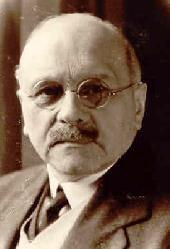
The original three trustees were
Mr. A. E. Myles, Mr. Frederick Ide of Teddington and Mr. Frederick Elliott of Cranleigh.
- JT pointed out to AEM that service in the Depot was not suitable in view of his gift, and urged him to disengage himself when the hymn book was completed.
- The earliest reference to the vacancy caused by his resignation is 1936.
Page Top
1932
Despite initial difficulties, the work at the Depot prospered in 1932.
- The availability of two brothers – Mr. Ide and Mr. Elliott – with business experience to devote time to the management
of the Depot was a distinct advantage.
As expected, there were criticisms but, while there had been some defectiveness in service, JT judged that the criticisms arose from other causes which would remain however well the service might be done.
- He encouraged those engaged in the work to deal with complaints but to go on steadily, looking to the Lord to show that they were acting for Him.
On July 26, 1932, a meeting was held at Park Street to outline the progress of the Depot, and
- the gist of this was also conveyed by Mr. Taylor to the brethren in the New York area at a meeting convened for that purpose, and also to the saints gathered at Detroit for special meetings in September, 1932.
The Depot published the first Hymn Book since the 1903 revision by Mr. T. H. Reynolds.
- Mr. A. E. Myles, who served the brethren extensively, was largely responsible for the 1932 revision.
1933
Continued progress was made during 1933 and the circulation of ministry increased.
1934
In January 1934, a letter from Australia, raised the question of censorship at the Depot.
- Mr. Taylor denied that there was any such thing, pointing out that there was watchfulness as to what was to be published, anything that seemed questionable being looked over by brothers capable of judging and that there should be thankfulness for such care.
1937
On June 1, 1937, Mr. Andrew Beattie of London was appointed to join Mr. F. Ide and Mr. F. Elliott in the trusteeship, filling the vacancy left by the resignation of Mr. Myles.
- The work continued to be blessed and later in the year the Depot moved to new premises.
1938
The value of the Depot's work was particularly in evidence, when in 1938, in Bo'ness, Scotland, 25 brethren of open background were seeking their way in conformity with the truth obtained from the printed ministry.
1939
In 1939 the Depot issued Mr. Darby's New Translation of the Bible.
- The text was a reprint of the first edition of the com-plete New Translation published by Morrish in 1890.
- The references to original Hebrew and Greek manuscripts in the footnotes of the Morrish edition were omitted necessitating the rewording of many of the notes and, in addition, Hebrew and Greek letters were transliterated for the convenience of the English reader.
- A number of notes were added, mostly in the form of cross-references.
Because of the severe bombings early in World War II, the Depot was moved from London to Kingston-on-Thames but the work continued uninterrupted.
- One address was: 5 Fife Road, Kingston-on-Thames.
Publications had the following imprint:
- Obtainable at Bible and Tract Depots:
N. Ireland: Belfast - 14 North Street Arcade
U.S.A.: New York - 62 Cooper Square
Australia: Sydney - 14 Royal Arcade, George Street
Australia: Melbourne - 8 Regent Place, 201 Collins Street, C.1
New Zealand: Auckland - 416 Karangahape Road, Newton, C.2
New Zealand: Wellington - 96 Lower Cuba Street
B.W.I. Jamaica - 7a King Street, Kingston
|
Page Top
In the early part of 1942 some were anxious that the Depot should move back to London because of its inaccessibility to others.
- Before the war the Depot had been in the Paternoster district, where the so-called religious depots were located, thus making spiritual ministry available where persons searching for such might easily find it.
- While favouring such a location, Mr. Taylor felt that no move should be made while the possibility of further destruction remained and until it was clear that a similar district would be permanently reestablished –
- and that, unless there was evidence of incompetence or neglect of duty, there should be continued confidence in the judgment of the trustees and no attempt to override them in the matter.
The Depot was intended to spread the truth universally through the printed ministry, but the desire of some to make it a centre for instruction or information caused Mr. Taylor to be uneasy about a return to London.
- He feared the revival of the damaging metropolitan idea, long since judged, and that such a concept of the Depot would interfere with the working out, in the local gatherings, of the truth of the temple as the place of enquiry.
Wide and increasing interest in the work of the Depot was evidenced by a large number of brethren from all parts of the country attending a meeting at Park Street, in July 1942, to hear the report of the trustees.
- On July 30, 1942 Mr. Ernest Ghinn was appointed to join Mr. F. Ide and Mr. A. Beattie in the trusteeship, replacing Mr. F. Elliott who had died 20 June 1942.
Author-Editor-Publisher Relations and Responsibilities
The manager of the Depot had been entrusted by Mr. Taylor with making minor necessary corrections in his manuscripts for publication, for many years.
- In early 1942, JT received an enquiry as to certain of his statements – published incorrectly – in printed ministry which conveyed a viewpoint different from the text of the New Translation regarding Ephesians 1: 22-23.
- This led to the discovery that the manager had for some time been making numerous unwarranted changes, in some instances to support special views of his own.
- In particular, reference to Numbers 21: 17 as supporting singing to the Spirit had been deleted from the original publication of the New York Readings.
All this resulted in Mr. Taylor having extensive correspondence* with the manager and also with the trustees, as to the changes made and as to the whole matter of author-editor-publisher relations and responsibilities.
- JT took a very grave view of the latitude and liberty that had been taken, not only with his ministry but possibly of others as well, and what it might lead to.
- He insisted that the rights and responsibilities of author-ship and editorship be fully recognised and that the publisher should only make sparing necessary changes and no important changes at all, especially respecting doctrine, without consulting the author or editor.
Page Top
1945
Writing to Mr. Beattie in April 1945, Mr. Taylor had to again meet the notion that the Depot should be a gathering place for brethren.
- He maintained that from the outset the Depot was understood to be universal in principle and not a local London depot.
- In the same letter, he also expressed the view that there should be no question that the Depot should return to London after the war.
- Subsequently, however, at a meeting on October 7, 1945, at which there were representative brethren, the conclusion was reached that, as most of its business was done by mail, it was right for the Depot to remain in Kingston.
Mr. Ernest Ghinn died November 5, 1945, and Mr. Frank Ghinn was appointed to replace him on October 8, 1945, joining Mr. F. Ide and Mr. A. Beattie in the trusteeship.
1948
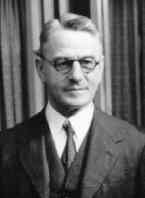
Mr. Fred Ide of Teddington – one of the original trustees – died on October 24, 1948, and
Mr. Alfred J. Gardiner of Streatham, London, was appointed to replace him on November 30, 1946, joining Mr. F. Ghinn and Mr. A. Beattie in the trusteeship.
- There is no record of the resignations or deaths of Mr. Andrew Beattie or Mr. Frank Ghinn.
1951
In 1951 a further revision of the hymn book was published.
- As in 1932, Mr. A. E. Myles took on the responsibility, working closely with JT and other brethren, until he was laid aside by a stroke when the work was almost completed.
Another trustee, Mr. William Henderson of Glagow was appointed on August 2, 1951.
Page Top
1954
After JT's death in 1953, a Depot meeting took place on September 21, 1954 at the Park Street room, London.

At that time the trustees were Mr. A. J. Gardiner of London, Mr. Wm. Henderson of Glasgow, and Mr. G. H. Stuart Price of Harrow who was officially appointed on September 28, 1954.
The return of the Depot to London was again considered but not acted on. Among the reasons advanced for moving was that it would enable those not in fellowship to have access to the ministry.
One of the principal purposes of the meeting was stated to be for the trustees to acknowledge the wrong that had been done at the Depot in the past in making certain alterations to manuscripts of Mr. Taylor's ministry without his knowledge.
- Although it was admitted that these had been gone into in 1942 it was stated that some of them had subsequently assumed special importance owing to their relating to "the truth as to the Spirit" which had come forward in 1947.
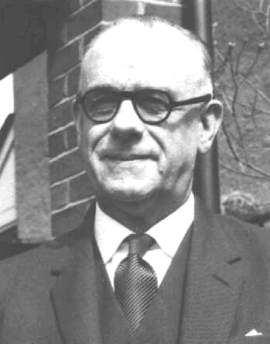 Another trustee, Mr. Robert Stott of Hove, was appointed December 15, 1954.
- In view of the dissolution of Stow Hill after the Aberdeen events, the appointment of Mr. Stott was clearly a divine provision.
1955
The manager was dismissed from his post as manager of the Depot.
- In view of the fact that this matter had been settled while JT was still alive, the action appears to be vindictive – especially as the brother was also excommunicated.
Page Top
1960
At the Depot meeting of July 26 certain ministry of Mr. G. R. Cowell – who had been withdrawn from on July 12 – was condemned and withdrawn from circulation, as was also a book of AEM.
- Both actions appear to be unfair and unjust.
The publication of gospel magazines, books for young people, children's magazines, and daily calendars was stopped.
At that time the trustees were Mr. A. J. Gardiner of London, Mr. Wm. Henderson of Glasgow, Mr. G. H. Stuart Price of Harrow and Mr. Robert Stott of Hove.
1961
The Depot meeting of February 21 was largely occupied with the question of the revision of the 1951 hymn book, and the content and use of certain hymns.
The 2nd edition of the New Translation was issued. It had only a few changes in the text in the use of capital letters.
- The footnotes were examined for accuracy and adequacy. Some notes added in 1939, apart from cross-references and others easily verified, were removed.
- Other notes were added from Mr. Darby's French and German translations published during his lifetime and from his Collected Writings.
1962
The Depot meeting of July 12, 1962 was largely occupied with the publication of ministry especially reprints and methods of distribution.
- A further revision of the hymn book was published. The resonsibilty for the revision had been taken by the four trustees.
1963
Mr. G. H. Stuart Price died January 5, 1963, and Mr. Ralph G. Ball of Bromley was appointed as a trustee on January 23, 1963.
Mr. Wm. Henderson died in 1963. Mr. A. John E. Welch, of London, was appointed on May 28, 1963.
| March 2004: Here are some comments of Charles Barrett:
The last three day meeting I attended was at Coventry 1975 and I had a conversation with a London friend of many years standing – who is still with the EBs –
- who told me that the London brethren had been questioning Mr. Gardiner about the changing or altering of the ministry.
- AJG, having lost his memory, could remember nothing about this.
- As I worked at Stow Hill Depot as Accountant and proof reader 1962-1965 I am certain AJG was not involved in any altering of the sense and words of current ministry.
- Stow Hill adopted a 'house style' which was sent to all proof readers and those in charge of editing ministry.
- This indicated when capital letters should be used and there was a standard way of showing scripture references.
- The use of good English was encouraged and this could have involved changing the words of what was actually said.
- — had full confidence in the person who edited his ministry – he was a lovely person and an English scholar, with a detailed knowledge of the Bible.
I think your history of Stow Hill Depot is very good and I can add little to it.
- My three years as an employee there were interesting and the skills I developed, and the knowledge of the printing industry which I picked up whilst there have been extremely useful to me all through my working life.
- For the last twenty five years I have been a lecturer in accountancy, and design and produce my own study material.
I do remember a visit to the Dorstel Press, the organisation which bound the Bibles and good quality hymn books.
- I watched the workers put the gold leaf on the edges of the pages. The way it was done was this:
- about 10 Bibles were clamped together before their covers were put on; the sides of the pages were painted with red dye.
- Then white of egg was brushed on to the edge of the pages. Then 24 carat gold leaf – each sheet was about two inches square – was carefully placed on the pages, the egg white being the glue. If the gold leaf was mishandled it would disintegrate into powder.
- The craftsman would then take a special onyx stone and polish the gold on the pages until they shone brightly.
- The choice of leather or pigskin for the cover had to be done carefully also; skins were rejected if it could be seen that the animal had rubbed itself against branches of trees.
Sometimes what was going on amongst the brethren was felt at Stow Hill – happenings in the brethren made waves in Stow Hill Depot.
- For example in 1964-1965 the rise of the commercial system was evident.
- Two members of Depot staff were brave and courageous enough to question and oppose — publicly over things he was saying.
- The result was that both lost their employment, one was sacked and AJG gathered the staff into the general office to inform us that it was because of his opposition to —.
- The other, Tommy Gratten – TJG in the books of ministry – who was a fellow proof reader, wrote in and withdrew from the brethren, and he then lost his employment at the Depot.
- I personally found that time traumatic.
- Mr George Hollington was manager from 1964 for a few years.
|
1965
At the beginning of 1965 the trustees were Mr. A. J. Gardiner of London, Mr. Robert Stott of Hove, Mr. R. G. Ball and Mr. A. John E. Welch of London.
On April 30, 1965 Mr. R. G. Ball retired, and Mr. David C. Clapham was appointed.
1966
Mr. D. C. Clapham retired on March 4, 1966 and Mr. H. Maxwell Woodcock was appointed on September 12, 1966.
1967
The Depot distributed a Concordance to the New Translation compiled and published by Mr. Charles J. H. Davidson of London.
On August 8, 1967 Mr. A. J. Gardiner retired and Mr. John E. Dallow was appointed.
The trustees were then Mr. R. Stott, Mr. A. J. E. Welch, Mr. H. M. Woodcock and Mr. J. E. Dallow. These four continued till the Depot was dissolved in 1971.
Page Top
At the end of 1968 the Depot withdrew all the ministry of —— from public sale, followed in early 1969 by the withdrawal of the ministry of earlier teachers including JND, JBS, FER, JTSr, and others.
- When I first came among the brethren in 1950, several brothers made it clear that the truth recovered in minis-try was held for, and available to, the whole assembly.
- This was still the position in 1962 – even as to persons under discipline – as the notes of the Depot meeting show clearly.
- This restriction on the sale of some of the Depot's publications appeared to conflict with its status as a registered charity and was reported – by persons unknown – to the Charity Commission.
- The Commission took the matter up with the trustees who finally removed the restrictions on the sale of ministry.
In 1996, an inquiry to Bible and Gospel Trust – one of Stow Hill's successor trusts and agent for the legal sect – brought to light that BGT does not list any ministry of — or his successors.
- BGT said that — had requested that his books be sold only to those in the same fellowship.
Page Top
In 1971, as a result of the July 1970 Aberdeen division, the Stow Hill Bible and Tract Depot ceased to exist, being succeeded in 1971 by two distinct and separate Trusts.
- Mr. Max Woodcock and Mr. John Dallow – who had become trustees of Stow Hill Depot in 1966 and 1967 respectively – formed Bible and Gospel Trust, the agent for the legal sect.
-
Mr. Robert Stott, 1954, and Mr. A. John E. Welch, 1963, – the senior trustees of the Stow Hill Depot – joined by Mr. John Mason of Belfast,
- established Kingston Bible Trust, the other successor trust.
Page Top
In 1973 Kingston Bible Trust published a re-selection of 480 hymns from the 1962 and previous books, adding 22 hymns from the same sources in 1984 but still using the 1973 date.
Subsequently, Kingston Bible Trust has also completed publication of the ministry of Mr. C. A. Coates.
- The reprinting of the other major ministries – JND, JBS, FER, JT – had been completed by Stow Hill Depot before its dissolution.
G.A.R.
Page Top
WRITTEN MINISTRY
AND ITS DISTRIBUTION
by James Taylor, September 1931 |
|---|
| 'Ministry by J. Taylor', 13: 187-190
|
|---|
Writing as a means for the communication of His mind has been used by God from the time of Moses. It is a feature of His service, as is speaking.
- Thus written ministry has a divinely recognised place, evidenced most strongly in its use for the permanent record, among men, of God's thoughts – the holy Scriptures.
- Indeed, one important advantage of writing is that it constitutes what might be forgotten, or lost, permanent, for reference and meditation.
- The first recorded writing was for rehearsal; it refers to the overthrow of Amalek – Satan in the flesh – and so is specially important for young believers. [Exodus 17]
What is to be observed, however, is that in the testimony of God writing appears after oral ministry.
- This is attested, both in the Old and New dispensations.
- Moses' service began with speaking, and so generally; writing came later.
- In our Lord's ministry we have no writing, save on the ground [John 8], and we have no writings from the apostles until long after Pentecost.
- Thus it is clear that writings sent to countries where there has been no oral testimony is not in keeping with the divine way of serving men.
- As the testimony is presented in an oral, or living way, then the written message has its place.
From the above it will be seen that spiritual ministry in a written form is of immense value – second only to what is spoken – and its circulation should be as wide as possible.
The publication and distribution of written ministry is therefore an important part of God's service, and so should not be conducted on a commercial basis.
- Using a typical term, it is properly levitical, and while those engaged in it have much to do that may be regarded as 'common', their work, generally, is that of Levites.
- We learn from the book of Numbers that the work of the Levites was graded, that of Kohath being the most sacred.
- The sons of Merari had the most onerous part of the tabernacle service, and so they had wagons assigned to them: the sons of Gershon also had wagons.
- From this we learn that while the distribution of printed ministry is not exactly on the level of the oral communication of it; yet it is part of the same service,
- and those engaged in it should be regarded in this light, and not simply as rendering common or mercantile labour.
The fact that mere physical labour has to be employed, such as type-setting, book-binding, etc., and that this labour may be performed by a Christian and paid for in the ordinary way, in no way interferes with the truth set out above;
- it is like a railway ticket that ensures the passage of a servant of the Lord to a town where he wishes to give an address to the saints there.
- Although he is carried by a train, his service throughout is entirely levitical.
- The engine driver on the train might be a Christian, but his work is not levitical.
The reference in the Scriptures to books besides those which make up the Bible is remarkable; such as
- "the book of Jasher", "the book of the wars of the Lord", the books of "Nathan" and "Gad", also such writings as "the words of Nathan the prophet", "the prophecy of Ahijah the Shilonite", and "the visions of Iddo the Seer" and "the writings of David King of Israel", and "the writing of Solomon".
- All this literature would correspond to the written ministry of the present time, and the manner in which the Holy Spirit alludes to it indicates its great importance.
The reader of Scripture was directed to it as affording help as to the respective subjects treated.
- The more his interest, the more he would look into the book or books to which the Holy Spirit directed him.
- The same is true today; the interested and diligent believer will seek out all available help, and if the Lord gives food and instruction in a written form he will not say there is too much, but rather will thank Him for His bounty. [Compare Malachi 3: 10.]
- If he cannot find time to read it, he will not seek to prevent it reaching others who have, even although these may be but a small percentage of the saints.
- Of course, as said above, this can but refer to what the Lord gives. The Lord enables His people to judge, and we are enjoined to prove all things and hold fast what is good; indeed, to
- "judge of and approve the things that are more excellent".
- Thus, those immediately responsible should discern what is presented for publication, and if there is nothing distinctive as instruction or food for the flock, it should be withheld.
- If papers are presented containing helpful matter, but also having unscriptural expressions, great care should be used to correct and eliminate these.
- All this requires the exercise of our spiritual senses
- "for distinguishing both good and evil", Hebrews 5: 14.
For a good while the existence of the mere commercial element in the publication and distribution of written ministry has distressed many,
- and more recently attention has been called to it in a definite way, as wholly out of keeping with the service of God.
- Extensive enquiry was made and counsel taken, as before the Lord, among many brethren, very widely located, and
- it was apparent throughout that He was helping toward a mode of executing this important service, bearing a definite levitical stamp.
- A depot has been secured, where helpful ministry for the saints and suitable gospel literature for general distribution will, under the Lord, be published at cost, or as nearly so as possible; any profits made will be devoted to the free distribution of spiritual literature.
- This undertaking in no sense implies that saints are in the publishing business in any collective way;
- the position is simply that this important work is needed and certain brothers have undertaken it as a service to the Lord and His people.
- Other services are constantly rendered on the same principle. [Compare 2 Tim. 4: 5; Ecclesiastes 9: 10.]
- But saints everywhere may have part in it, either by monetary contribution or distribution of books – above all by prayer.
Page Top Article Top
| AUTHOR - EDITOR - PUBLISHER |
|---|
|
Excerpts from Letters of J.T. 2: 275-334, July 31st, 1942 - December 22nd, 1943
|
|---|
July 3Ist, 1942 … I received your letter of the 1st instant and I appreciate your expression of regret, etc. Had I known that there was any different view as to Ephesians 1:22, 23, from that which I have often given expression to, I should probably have observed alterations in the text of the MS. in question, but I had no knowledge of it until I received Mr. ------'s letter.
- The passage you refer to in 'Names of Divine Persons', page 23, was in no way intended to convey any other thought than that which Mr. Darby's translation furnishes. In that passage, as you will have observed, I stressed "given" to convey that the place of headship over all things was seen there as given to Christ, and not the outcome of His Person as in Colossians.
- I had no idea of connecting the word given with the assembly by itself. I used it in the sense that it was granted, or given to Him to take the position stated, that is, head over all things to the assembly.
- I note in your letter to Mr. Parker* of the 9th instant, that you say that, the Greek word in the passage is universally translated 'give'. It may be that you use the word universally in the sense of generally, at any rate, the word is translated otherwise many times, particularly as grant.
- But I quite accept the word 'give', but in the sense that it refers to the Lord Himself – something given to Him. In Revelation 19 it is said as to the bride, "It was given to her that she should be clothed in fine linen". Philippians 1:29 should also be noted.
- [* Mr. A. Bufton Parker, Staten Island, New York, long-time editor of the Stow Hill periodical 'Readings in New York and other Ministry'.]
- I quite see that the original structure is somewhat difficult and is evidently regarded so by scholars, but Mr. Darby's translation, confirmed by the authorised version and the revised authorised version, should heavily weigh with us in the matter.
- The Spirit of God in the passage is enlarging on what God has made Christ, and to make verse 22 mean that among these glories and honour He is given to the assembly, is making too much of the assembly.
- Whereas, if we accept that it is given to Him to be head over all things to the assembly, the main thought of glorifying Him is maintained.
- At the same time the assembly is honoured in her own relative place in that she is associated in headship, which is strengthened by the statement that she is His body, the fulness of Him, who fills all in all.
- This is in keeping with the general teaching of Scripture as to the relative position of man and woman, for the man was not made for the woman but the woman for the man, and the woman was given to the man – not the man to the woman.
I do not think I need say more, and from what I have said you will see that I do not agree with your view of this passage. But I do not regard that it should be made a matter of controversy.
- I would add that as you directed Mr. Parker to look at the October number of the Notes of 1941 for confirmation, I have examined the original MS.,
- "He is given to be head over all things to the assembly which is His body".
- The printed page 199 reads, 'It is as head over all things that He is given to the assembly which is His body'. This change was not made either by Mr. Parker or myself. As I said to ------ , I can understand that you could have made this change with the understanding that it agreed with what I held.
- In view of this peculiar situation arising, it seems that it is a good opportunity to review the matter of authorship as related to the publication of ministry. It is quite clear that authorship and editorship should have their full place and responsibility in all publications,
- and that if the publisher is forced, under certain conditions, to make changes, it should be as sparingly as possible, and that he should make no important changes at all unless he consults the author or editor of a paper.
- In view of the unprecedented delays in mails, some alterations may need to be made by the publisher, but these should not affect doctrine.
I feel very free in leaving papers that I am responsible for in your hands and have been most thankful for the help you have been to me for these many years, and I am not altering the position at all, only, I would suggest that changes should be as sparing as possible.
- I regretted that you omitted some reference to Numbers 21 in a recent paper, because I believe that what was said was in keeping with Scripture.
- While I fully admit that there is little said in Scripture about singing to the Spirit, there is something said and this should be fully recognised. The well in Numbers 21 undoubtedly refers to the Spirit, and this should not be ignored.
- The truth of the Trinity is foundational in Christianity and we are baptised
- "to the name of the Father, and of the Son and of the Holy Spirit".
- The three Persons are seen there objectively and the Name involves all. I fully believe this underlies Hymn 126. Mr. Parker wrote you about this matter but I am adding this note now so that you may have before you my exercises.
- While the Spirit in His grace keeps out of sight as an object of worship, the passage I allude to recognises Him in this sense, and I am certain He should be held objectively in our souls as in His place in the Deity.
- Although we may avoid addressing Him formally, yet we never lose the sense that He is operating objectively in relation to the Father and the Son. Some Psalms, e.g., Psalm 46, have allusions to the Spirit involving at least indirect praise. The subject involves the intelligent subjective response in the saints to God revealed …
August 29th, 1942 Mr. George Spiller … The peculiar activities and complaints relative to the Tract Depot are causing us considerable exercise, but I quite believe the Lord has brought the whole matter up.
- Certain remarks made in the New York Readings led ------ to write me, and upon investigation it was found that these remarks were not made in the readings as they appeared in the printed form. They had been changed in three instances.
- The changes were evidently made to conform to a certain view held on Ephesians 1:22, 23. ------ accepts the responsibility for the changes, and this has led to considerable correspondence both with him and about him.
- You saw what I wrote Mr. Ide and evidently Mr. Ide showed my letter to ------ , and the latter has written to me. He has written me as if to satisfy me in regard to a trespass, whereas I am not at all concerned about any personal matter, I am concerned about the latitude ------ is taking with manuscripts sent to the Depot for publication.
- ------'s letter has raised this whole matter, because I have been obliged to make certain inquiries, comparing what has been published with the actual manuscript sent to London. ------ seems to make a thorough revision of papers sent to him or the Depot and has been omitting and changing at his pleasure, and in some instances, as remarked above, involving support of special views of his own.
On this account I wrote Mr. Ide and I have also written ------ , that the methods now used are not at all in keeping with the principles governing a Tract Depot.
- As I said, I have a feeling that the Lord has raised the matter, as I never thought that ------ was changing papers so radically. I had given him a free hand as to any papers I was responsible for, but never expected that he would take such liberties as he has.
- I do not suppose that the trustees are aware of the extent of what has been done. I think it well to send you this information in view of what you have written about Mr. Ide's health, and also that you saw my letter to him.
- Unless the principles governing authorship, editorship, and publication of ministry are recognised, the peace of Jerusalem is sure to be constantly disturbed. You will, I am sure, not fail to bear all this before the Lord …
September 2nd, 1942 … Your letter of August 14th was duly received. I had written to you on July 31st covering some of the points you mentioned, and I hope my letter has reached you.
- As regards my letter to Mr. Ide, part of which you saw, I will say very definitely that in writing to him I had the general position of the Tract Depot in mind and in no sense was I writing as one trespassed against. Your letter is largely to satisfy me as to possible infringements of my rights, but all you write in this respect is wholly beside the mark.
- In writing to Mr. Ide I was, as I said, concerned about the submerging of the rights of authors and editors in the extensive way in which you revise and change at will manuscripts sent to the Depot for publication. I am assuming that what I have observed in the papers sent from New York represents what is done on all such manuscripts.
This has come to my attention quite recently, almost entirely through the letter I received from ------ relative to Ephesians 1:22. ------'s letter led me to examine certain copies of Notes which I had revised and also which Mr. Parker had revised and sent to you for publication.
- I may say that since these New York Readings began to be published, I had never seen a MS. of them after I had made a general revision of it. ------'s inquiry led me to look at several, which Mr. Parker kept, so as to make comparison with what appeared in the printed page which he had questioned.
- I examined particularly the MS. I had revised and which also Mr. Parker in due course revised and forwarded to you, and found that you had made about eighty changes in the paper after it had been revised by myself first and then by Mr. Parker.
- Several of the changes you made were deletions of questions and answers, and in one particular case a change of a remark by me relative to Ephesians 1:22. This alteration I noted in my letter to you of July 31st, and I am referring now not to the rightness or the wrongness of the change you made, but the fact that you made it without any reference to Mr. Parker or to me.
- I am referring also to the fact that the extent of your revision of articles constitutes you [in] practice a chief editor, and consequently all articles for publication in the Stow Hill Depot not only come under your notice so that nothing in a general way should be published contrary to the truth
- but that you edit articles, altering them at will and this to the extent of altering a paper structurally, revising it throughout in the ordinary sense of the word.
I was very thankful when you took on your primary services in the Depot as manager of it, and profited much by help from you from time to time, and had given you liberty to treat my articles in a cursory way so as to prevent mistakes of any kind, but I had no idea that you intended to treat articles as you now manifestly do,
- and I am thinking not only of your present service but of the office that you have created, that it is not in keeping with a publishing house among the saints, for as I have said, it will obscure authorship and editorship, and hence cause friction among those who serve in these respects.
- You may not be always available, but the office will stand and whoever takes on the work will in all probability pursue your methods. My exercise therefore in writing Mr. Ide, was that this whole position might be looked into and rectified before it is too late.
- That general oversight of papers to be published is necessary is quite obvious, and your work, as I have said, at the outset was good and as far as I am concerned it was in my mind good until the papers I have referred to had to be looked into.
- I am covering the whole matter in this letter to you briefly, intending to send Mr. Ide a copy of what I am writing for his own use and that of his fellow trustees, for the responsibility properly devolves on them.
- You will understand that as already said, I am concerned for the general position of the Tract Depot and that there may be nothing about it to cause friction among those who seek to serve in ministering a portion of meat to the household,
- for they all should be on mutual lines, each one who serves recognising the rights of his fellow servants to the fullest extent. It was in this sense that I quoted from 1 Corinthians 9 in my letter to Mr. Ide.
- If what I write is taken seriously by the trustees, it will mean that authors and editors will be required to be more careful in their work and it will be necessary to make it plain to them what space can be supplied for their contributions, and that it is expected that little or no alterations should be needed in any papers.
- This will tend to improvement all round of the service contemplated, and will prevent undue centralisation in the work which, as I have remarked, can only tend to dissatisfaction and complaint.
Returning to your letter of August 14th I have been distressed to find alterations in MSS. which I had not known of when I wrote you on July 31st. One of the alterations is in 'Names of Divine Persons', page 23.
- When I wrote you I had not seen the revised edition of this book, but on looking at it two days ago, I note that the paragraph has changes which support your view of Ephesians 1: 22, and I am certain I never made these changes when looking over the book in view of another edition. I believe I sent you a copy with what little alterations I suggested
- but it is morally impossible that I could have made the changes that I find in the new edition.
- The old edition reads in the beginning of the last paragraph of that page, 'In Ephesians He is given to be Head over all things to the assembly'. Whereas, the new edition has, 'In Ephesians He is made Head over all things and given to the assembly'.
- Again in that same paragraph the first edition has, 'He is taken by the exceeding greatness of the power of God out of death and set at His right hand in the heavenlies over all as Head to the assembly'. In the second edition this sentence reads, 'He is taken out of death by the exceeding greatness of God's power and is set at His right hand in the heavenlies over all as Head, and given to the assembly'.
- I became very uneasy when I discovered these changes and as I have said, they could not have been made by me.
- A passage in Readings in New York in 1933 is unquestionable evidence that I did not hold such a view of Ephesians 1: 22 as appears in the second edition of 'Divine Names'. The passage I refer to is on pages 319-320, which you can easily find.
- But apart from any statements of mine, I am quite certain that I never held this view and that I never quoted intentionally Ephesians 1: 22 save as it appears in the New Translation and the Authorised Versions. As regards Ephesians 1: 22 I need say no more as my letter of July 31st covers the matter fully from my point of view.
Now as to Numbers 21. I have to point out that changes have been made in the New York Readings of August, 1942, contrary to what I hold as to the teaching of verses 16-18 of that chapter.
- The first change is on page 21 of the MS., and page 144 of the magazine. In the former, in answer to a question by A.R., I say, 'Our hymn singing is very important in assembly service, as helping us to move into the presence of God'. And then in answer to a question of H.H., I refer to 'the idea of alternate singing' and that 'Miriam represented that as a sort of ministerial side'.
- The magazine reads, 'Our hymn singing is very important in assembly service, as helping us to move into the presence of God. In Numbers 21:17 singing conveys the idea of alternate singing: that we respond in song to the Spirit's movements and suggestions in assembly'. The clause just quoted, that 'we respond in song to the Spirit's movements and suggestions in assembly', is attributed to me, and the phrase does not convey my understanding of the passage in question.
- Singing to the well, or in type to the Spirit, is not simply responding in song to the Spirit's movements and suggestions, but the Spirit Himself. "Sing ye unto it", was quoted by Mr. Hardwick, whose quotation evidently has been deleted by you.
- The truth, however, is plainly stated in the first paragraph of the page referred to in the magazine, but the words attributed to me already quoted are not mine, and, as I said, do not represent the truth.
- Another change is on page 145 of the magazine. On page 22 of the MS., in answer to a remark of F.N.W., I say, 'Rise up well, sing unto it, well which princes digged'. Then I go on to say clearly 'the well is the objective in the words that are given'. Whereas, in the magazine these words of mine do not appear.
Further, as to this subject, in your letter to Mr. Parker of June 11th, you say, 'It is a little puzzling to know how it is that J.T. so understands the verse of Hymn 126, and I might mention that it is not the first time that he has so expressed himself. Previously I have just deleted it. And then again, the first line of verse 3 is not an address to the Holy Spirit, but is directed to God for the gift. Further, J.T. speaks of following the scriptural example and says that',This, however, is sparing …'. In point of fact it is so sparing that it does not occur anywhere as far as I can see'.
- I furnish this quotation from your letter to call attention to the liberty you take, as you say, in deleting something of mine off hand. I do not know what passages you refer to as deleted, I only refer to the way you speak of the matter.
- Then as to verse 3 of hymn 126, you say it is directed to God, whereas verse 2, which immediately precedes, is directed to Christ, not God. Verse 3 in the original primarily referred directly to the Holy Spirit, and the spirit of the hymn plainly shows that even if verse 3 stands, we should keep in mind that the Spirit is to be viewed objectively, and that Numbers 21 supports this.
- As I said elsewhere, I am not advocating that we should address the Spirit in any formal way, but I do believe that we should keep Him before us as an Object in the Trinity. Numbers 21 speaks of Him typically as viewed in this way in song.
- You make a great deal of the so-called authorities as to the use of the word "sing" in Numbers 21:17, but the fact remains that Scripture elsewhere uses the same word for singing in an objective sense. While the original word implies sometimes alternate singing, yet this singing is to some person or thing objectively viewed by the singers as in passages in Exodus 32, 1, 1 Samuel 18, Isaiah 27, and Hosea 2.
- The fact that it is used far more frequently for the ordinary idea of 'answering' does not set aside the fact that the New Translation and Authorised Versions retain it in the text, and that hence there must be good ground for such usage. Strong's Concordance to which you refer, says amongst other things, 'specially to sing' and again 'singing together by course'.
- Therefore, as we sing together by course to the well it plainly implies that we sing to the Spirit. Miriam and the women of Israel would sing to Jehovah on that principle, and so will Israel in the future sing to Jehovah on that principle according to Hosea 2, and therefore, the singing to the well is also on that principle.
In your letter to Mr. Parker of August 10th you say, 'In thinking of such a matter I would look for a basis in some passage in the New Testament and would hesitate to base it on a type, but rather interpret the type by the New Testament'.
- These remarks discredit the Old Testament scriptures. The Lord says, "the scripture cannot be broken". Typical language is as intelligible and expressive, if we understand it by the Spirit, as is the language of the New Testament. The types often add to New Testament statements of truth.
- The subject of the Spirit, as spoken under the symbol of a 'springing well' and 'rivers', is treated in John 4 and 7, and it is remarkable that the Lord in dealing with this subject in chapter 7 says,
- "He that believes on me, as the scripture has said, out of his belly shall flow rivers of living water".
- The Lord confirms what He says by referring to the Old Testament. The living water referred to in John 4 is enlarged upon by Numbers 21.
As already remarked I earnestly hope you will take a broad view of what I have written, that on the one hand it is to help as to the services of the Depot, and on the other, to make the truth on the subjects mentioned clearer to us all.
- Also that any moral issues involved in the facts that have come before us may be fully adjusted
September 17th, 1942 … I am thankful for your reference to the change made in the booklet, 'Names of Divine Persons'. I had not known of this change until about three weeks ago, and it has caused me much anxiety.
- Besides this, and the changes made referred to in our earlier correspondence, I find some similar ones in the August number of 'Wells and Springs'. All these changes considered together have led me to write at length to ------ . I sent my letter to him on the second instant and a copy on the same date to Mr. Ide. I hope these were duly received, and if so doubtless you will have heard of them.
- I cabled later to Mr. Ide urging the importance of the trustees looking into this matter and I am looking to God to give them strength to do so. I regard the matter as of great importance as affecting the testimony generally.
- No doubt there will be much said as to the need of space on account of the shortage of paper, but such facts do not at all affect the main object of my letter to ------ . I had, as you know, been gracious to our brother in regard to these changes, but since the later discoveries I should be obliged to withdraw what I said under this head.
- I cannot now admit that ------ made all these changes on the assumption that they represented my mind. The changes made in the book, 'Names of Divine Persons', affect me most seriously.
I can understand how the trustees assumed things were going well as regards ------'s services, especially as it is not likely that complaints were made. I certainly made none, and only since being forced to investigate have I discovered the facts I have called attention to in my letter of September 2nd.
- Such a condition as is disclosed is I am sure detrimental to the service of written ministry. All such services should aim at perfection, but where authors and editors know that their work is not final, they will not have the same sense of responsibility to Him for what they contribute to the portion of meat which the Lord so values for His household.
- The Lord Himself says, "Blessed is that bondman whom his lord on coming shall find doing thus".
- This is a word of encouragement for all servants ministering food for the saints, for each should have his own full place and sense of responsibility.
- The work, of course, is one, and the mutuality of love and sympathy should permeate all so that in a given item of service in printed ministry the order should stand: author, editor, publisher, all under the Lord's hand working in the mutuality of love.
- The author has the most spiritual place of the three, and the characteristics which mark the work of God in him in relation to his service should enter into his article or paper, and therefore, his phraseology, so long as it is in conformity with all rules governing it, should stand and not be altered to conform with the literary views of those who may help in preparing it.
- It is a natural disposition in an editor of MSS. not his own to make changes according to his literary taste or use of language. Whereas, all such changes are of no value but perhaps the contrary.
Of course, in readings many take part, but it is obvious that the brother who proposes the subject in a reading and leads in opening it up has to be regarded as responsible for what is unfolded, and so he is in principle the author,
- and his way of presenting the truth should be allowed to stand, save, of course, that actual errors or omissions in doctrine, grammar, etc., should be adjusted.
- If adjustments are contrary to what he might be understood to agree with, he should be consulted before they are made.
- All the above remarks under this head will, I am sure, commend themselves to you as obviously right, and I believe the Lord would help the brethren in looking into this matter before Him so that there may be nothing to hamper the free action of intelligent love …
October 31st, 1942 … You may be aware of the recent correspondence between the trustees of the Stow Hill Depot and myself. What has come to light as to ------'s services there has caused me much concern, and I may say, distress.
- It seems to me that there is inability with ------ to rightly gauge the bearing of things that have been called attention to in his service in the Depot. I am hopeful, however, that the Lord will use the correspondence to make the position clear and that whatever adjustments are made may be in the light as God is in the light.
- The trustees have written to say that they have decided to recognise the principles that should govern a publishing house relative to contributions. The methods that have been adopted assumed that not only publishing responsibility but also revision and editorship of papers were largely vested in the Stow Hill Depot.
- The methods imply centralisation and tend to weaken authorship and editorship amongst the saints universally, besides they tend to exclude personal character from the various contributions, as all necessarily go through one mould. Therefore, I trust the trustees will be definite in this matter; as they are, I believe the services of the Depot will, on this account, be rendered more acceptable generally …
October 31st, 1942
Messrs. F. Ide, Andrew Beattie, Ernest Ghinn.
Beloved Brethren, Your letter of the 8th instant was duly received and I thank you for it. I appreciate the pains you took in replying to my letter of September 1st
- I am assured you will abide by your decision to leave the revision of the New York magazine in the hands of the authors of the articles, Mr. Parker serving as editor.
- This decision being in accord with principles governing printed ministry, which hitherto have been observed among the saints will, I believe, have the approval of brethren generally and will promote the mutual good feelings which God blesses.
- Your rights and responsibilities as publishers will undoubtedly be freely owned by all who take part in the service of ministering the truth in printed form.
But while writing the above my conscience is by no means satisfied by your reply to the part of my letter which refers to the past – what is shown as extended revisions by ------ of articles for publication without the knowledge of those directly responsible for them; and what is more serious, alterations made in those articles contrary to the truth as held by the author of them.
Another matter of grave importance is that ------ states in a cable and letter to me that the alterations and deletions were made in the magazine to save paper and that other MSS. were not so treated;
- whereas the copy of the book 'The Second Established', just received, shows that this is not true, for it has proportionately a much greater number of changes than appear in the magazine. ------ wrote me of one of the changes, but said nothing of the general revision of the MSS. he was making.
- But I am writing now not of the character of his revision but of the fact that he cabled that he did not make it – that is, that he did not make extensive alterations in such MSS. as the book mentioned represents.
- His cable of September 24th reads, 'The many changes monthly manuscript solely due necessary deletion over matter for pages available … other manuscripts never so treated as printing pages not limited'.
- With the help of J.T.Jr. , I have made careful examination of three readings on Job and I find that an average of 141 changes in each reading have been made, and by general observation I can see that all the other articles in the book have been subjected to the same proportionate changes.
- Because the original paper used in the Notes on Job was heavy and the revisions extensive, I had copies made on light paper which I sent to Kingston, so that as possessing the original MSS., I am able to compare them with the book.
As regards the changes made in the booklet 'Names of Divine Persons', while making due allowance for the feebleness of memory, it is morally impossible for me to accept ------'s explanation of the matter as given by you
- That the two changes if made in the same paragraph of the copy he sent could have escaped my eye is utterly unlikely. Whether they were made in pencil or ink I would surely notice them, especially as going over for a second edition a paper which had been severely attacked.
- And if I did notice them, I would certainly have deleted them as contrary to the standard translations of the passage of scripture involved, which I always accepted as right.
- The truth is, as I definitely remember, ------ sent me a copy of the booklet without any proposed changes, and I made what few alterations I thought needful and returned the booklet.
I think it right to say here that in commending his view of Ephesians 1: 22, ------ wrote Mr. Parker to look at page 23 of 'Names of Divine Persons' as affording proof that I agreed with him. ------ added that I had gone over the booklet very carefully because of the opposition it had encountered.
- He also directed Mr. Parker to October, 1941 number of the New York magazine, to obtain the same proof, but what he had in mind was my statement in that number which he (Mr. ------ ) had altered, as stated in my letter of September 1st.
- In letters to ------ I suggested twice that ------ in making the changes in question may have thought I agreed with him as to Ephesians 1:22, but I subsequently cancelled this, as my conscience does not now admit that our brother could have this thought, for having searched, I cannot find any foundation on which to base it; on the contrary I have found much to negate it.
- I have always accepted the rendering of the passage in the New Translation and the Authorised Versions, and I am getting ready for the press Notes of Readings at Indianapolis of last November in which comments based on them are included.
- At that time I knew nothing of the view ------ advances. I have no wish to discredit ------ , but I most certainly believe he should own and repudiate the manifest wrong doings that I have furnished proof of in my communications to him and to you; also that the roots of which they are the fruits should be searched out and judged.
- As to yourselves, the word comes to me "the glory of kings is to search out a thing", Proverbs 25: 2.
October, 1941 not August, 1942. Mr. Parker made some of the alterations in this as he has done in all numbers, but he and I made due allowance for these and calculated with practical accuracy, as we believe, that the eighty were in addition to those he made.
I note that you are getting out a new issue of 'Names of Divine Persons' and have scrapped what stock you had of those changed, 'in deference to your wishes', as you say.
- I value the spirit expressed in this, but please note that I did not express any such wishes. Those remaining in the New York Depot are being corrected by pasters. For the benefit of those who have copies of the second edition a notice of the correction could be inserted in a number of the New York magazines – if the trustees agree …
P.S. Referring again to the alterations made in the readings on Job, the careful examination shows about 140 changes in each reading, and a cursory observation of the other articles in the book, 'The Second Established', indicates the same proportion for each.
- As said above the book was received recently, and yet -------- wrote and cabled me as quoted above, and in his letter to me of September 26th he writes. 'As far as other MSS. are concerned, no such need of reducing them arises, and therefore the alterations are negligible'. Surely in this statement truthfulness is overlooked.
You can see by the facts I give that the book just received was subjected to a full revision by ------ . This was wholly unnecessary, and must have involved considerable expense of time.
- If a manuscript sent to the Depot for publication requires much attention it should be returned to the author with the comment that revision is not properly the responsibility of a publishing house.
- I had an understanding with ------ to adjust any verbal errors or omissions, but I did not intend any such alterations as appear in this book. To expect him to make regular revisions of my papers would be unfair to the Depot.
January 5th, 1943, Mr. F. Ide.
Beloved Brother, – I have to thank you for a cable, received in November, and a letter dated November 19th. And I have to thank you, Mr. Beattie and Mr. Ghinn for your letter of the 8th ult.
I shall write first of the last, as really covering the other two. I am very thankful in noting the free and definite way in which you all have treated this peculiar and delicate matter.
- I accept your letter as satisfactory and I am assured you will be helped of God in seeking to make the Depot what you wish it to be – an efficient instrument for the spread of the truth and the furnishing of food for the people of God.
I need not remind you of the value of the truth or of the glory of the ministry of it as become so extensive and varied through many vessels raised up by God in these last days.
- You are aware that the blessed Spirit is seeking to guide us into all the truth in preparing the assembly for her translation; and as the major part of all the written ministry is passing through your hands a serious responsibility rests upon you, namely, that it should not suffer damage in its passage through the Stow Hill Depot.
- You have taken on the trusteeship of the Depot without cost to the saints and the Lord values this service of love and He will continue to protect and bless you as committing yourselves in a sacrificing manner to further His interests.
- You are carried in the appreciation and prayers of the saints in view of the charge you have accepted and you will find, as always in such circumstances, that your personal affairs will gain also.
But the burdens mentioned above rest on you, especially the preservation of the truth in written form as it passes through the Depot; and I would humbly suggest that you secure the aid of a few brothers capable of detecting anything contrary to the truth in papers sent in for publication.
- Their services should not need to be more than cursory and in general affecting only papers specially requiring critical attention. Thus the brothers would not be seriously burdened; but their work would insure safety and also greatly relieve the Depot manager upon whom, under the trustees, the main responsibility would rest.
- The suggestion I am making should not interfere with your decision to return to authors for reconsideration all questionable statements in their papers.
------ sent me lately two letters in both of which he expressed sorrow for the wrongs done by him which occasioned the present distress. These letters confirm what the trustees mentioned of our brother and for which I am most thankful.
- I am praying much for ------ , also for myself in connection with him – that I may appraise rightly what he has humbly written and that he may in the same spirit find help from the Lord to render the services to Him and His people for which he is qualified.
- Our brother causes me to wonder – how could one comparatively young, possessing an energetic and clear mind, change a statement of another several times in papers sent to him for publication, which statement as changed supports a special view or doctrine of the one who made the change, and yet he cannot furnish a definite explanation of the transaction?
- I write thus because Mr. G------ wrote me shortly after the date of his meeting with the trustees that he had just had a long interview with ------ and that he (Mr. ------ ) has no explanation to offer as to the changes made.
- Mr. G------ wrote at length, manifestly impressed favourably by ------'s account of the whole matter. He stresses the extenuations which ------ had made in his letter and cables.
As regards your remarks about ------ , the quotation I sent from your letter was exact. I think you had imperfect information.
- There was an effort to make ------ responsible for the difficulty which has arisen, but in truth the Lord called attention to what was giving the enemy an advantage and we all should thank Him for this ^#8230;
January 6th, 1943 … I duly received your letters of October 13th and December 4th, and I am touched by the humble attitude as to the distressing situation in the Stow Hill Depot expressed in both. I should have replied to the first earlier only I was awaiting the answer from the trustees to my letter of October 31st. This came lately and it confirms what you wrote of your own exercises.
I am writing the trustees to express my thankfulness for the lowly character of your regrets and confessions. I am waiting on the Lord as to the whole matter – that I may have a right judgment of what you have written – that I may be fair, and free to pray for you without reserve as I am able to see that you are with God.
No one should have a better knowledge than you of the moral and business principles entering into the management of a Tract Depot – an institution possessing a levitical and hence a holy character.
- Mutual feeling and consideration in those responsibly active as excluding all personal exploitation is essential to the success of such a service through the blessing of God. I assumed the Stow Hill Depot possessed all these features and placed the most implicit confidence in the trustees and in yourself.
- So that there was no need for any one to apologise for you to me. As you know, I said to ------ more than once as to the changes made in the magazine that you must have thought that they represented my mind, although I had no ground for saying this save confidence in your integrity.
But as other similar alterations came to light my mind was forced to the opposite view; and at the present moment a certain anxious inquiry lurks in it:
- How could a brother long experienced in critical examinations and revisions change a statement of another to an opposite meaning four or five times in the same number of papers in the hands of the former for publication,
- the changes in each case being practically identical, and supportive of a special view or doctrine held by the brother who made the changes,
- and yet within a comparatively short period afterwards the brother cannot tell why he made them?
Another thing weighing on my mind is a letter from Mr. G------ written shortly after he had a long conversation with you at your request, and after Mr. G------ had conferred with the trustees concerning my letter to them regarding the many changes made in the book 'The Second Established'.
- Mr. G------ says you had no explanation to offer as to the changes you made in the magazines and booklet, and as to those made in the Notes on Job, you said you thought you were expected to make them – notwithstanding that you wrote and cabled to me that what you did on such productions was nothing or negligible.
- Mr. G------ stressed the so-called extenuating circumstances, and intimated that these largely cancelled the wrongdoing; and that while you felt things before God, the whole matter was a surprise to you, although also a 'calamity'.
The true way to reach a result as to extenuating circumstances is to weigh them separately and deduct the total from the total facts:
- thus if you were requested to take care of 'errors and omissions' in an article and you make instead almost a re-revision, involving 140 changes, saying at the same time that you made no changes at all in such MSS., the extenuating circumstances are hardly worth mentioning.
You have been ill from time to time and you are the subject of prayer by the brethren on this account. I trust your health is improved.
- You are a comparatively young man, your mind clear and energetic, and as helped of God, who is ever available to us, you should, it seems to me, have been able to meet this whole matter as it arose in a more practical and definite way.
- You have been resentful because, as you said, you have been questioned for doing what you had been doing for ten years. The questioning has been almost entirely by me, and I had not the slightest idea that your methods were such as they have been shown to have been.
- As the full truth came to light I was convinced that the Lord was calling attention to them, and hence I wrote plainly, for I believed the enemy was advantaged by the liberties taken with manuscripts (sent to the Depot) without the knowledge of their authors.
- The knowledge and experience you possessed should have prevented this. Had they acted, the current sorrow would have been averted …
December 22nd, 1943 Mr. Andrew Beattie.
Beloved Brother, – Referring again to your letter of November 15th I wish to say that the three MSS. you sent for my examination arrived two days ago.
- I regret much that they confirm what you reported, showing not only about 25 – almost all clerical – errors, noted by ------ , but 12 additional ones of the same character, which I have noted. I am afraid the remaining MSS. for the new book will also have been found to contain similar errors.
- As I said, I much regret all, but I am hopeful that further Notes going forward will be generally free of such defects …
But you will now know – from my last letter – that I am quite free to comply with your suggestions that ------ should make any needed minor corrections; such as he made on the papers just received.
- Indeed my letter to Mr. Ide, from which I quoted in my last letter to you, indicated plainly that I have been agreeable to and thankful for such help; and that I am also agreeable to needed corrections of even more important nature being made – with a council of capable brothers.
- The great delay in the mails, and because of general pressure – the delay in the transcription and copying of Notes, added to unusual tediousness of the work of revision, make imperative the elimination of all unnecessary obstruction to the circulation of what may be helpful to the Lord's people …
Page Top Article Top