Menu•SiteMap |
History
Later Contentions for the Faith
– G. W. Ware
This page is a continuation of History: Early Contentions and concludes 'A Review Of Certain Contentions For The Faith' by Mr. George W. Ware.
- The major part deals with the Decade of Divisions, from 1881 to 1890.
- The latter part deals with the 1908 'Glanton' division,
- and concludes with the largely internal conflict of 1920 which established that the manner in which evil was dealt with must recognize the public ruin.
Later Developments:
- Major developments only, shown at end of each section,
- some dates are approximate,
- data is believed to be reliable but is subject to correction.
This information is provided to answer genuine inquiries.
- It is not intended to be unfair or prejudicial to any of my brethren of whatever persuasion, and
- certainly not meant to titillate those who – as Edom of old – rejoice over the failures and sorrows of their brethren.
- Such happenings should bow our souls in contrition before our Lord Jesus, the Head of the assembly.
|
G.A.R.
Page Top
Author's Introduction
In introducing to the Reader the following papers I desire to add somewhat to that which is stated in them, feeling that
- it is important that there should be on record an account of all the conflicts for the truth which have taken place during the last hundred years or so,
- for the sake of those who are imperfectly acquainted with what has
transpired during that period.
We shall find that it is well, in considering these matters, to avoid details as much as possible, and confine ourselves to the moral issues involved in each conflict.
- It is this which is of importance for us today, for we shall, I think, see as we proceed that there is in them a present voice to each one of us …
Page Top
RAMSGATE AND MR. KELLY
1879 – 1881 |
Although this difficulty, which has been termed the 'Kelly Trouble', was occasioned by the action of Dr. Cronin who was breaking bread with the gathering at Kennington, London,
- Mr. Darby and many others had been grieving for some time over the low state of things existing among us.
- It had been felt that while outwardly brethren were going on in the acceptance of certain principles of truth, there had been an increase of the spirit of the world in their midst, which had seriously affected the general spiritual tone.
- There was a danger of a condition becoming largely prevalent such as Mr. Darby had in view when he wrote
- "Nothing can be more offensive to Jehovah than that those who have the name of His people should clothe themselves with the privilege of His presence, and use this pretension to honour self, and justify evil, or maintain a divine claim in spite of it", 'Synopsis' 2: 390 – Micah 3.
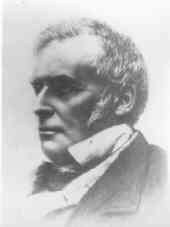
So grave was the state of things, and there seemed to be such powerlessness to deal with the evil that was coming in, that at one time Mr. Darby seriously considered whether he could continue with the brethren any longer,
- but eventually he came to the conclusion that it was not the way of faith to leave them, and that his place was to remain and count upon God to come and deal with things in His own way.
The undisputed facts of the difficulty which gave rise to the crisis which transpired were as follows:
- There was at that time a gathering meeting in Temperance Hall at Ryde in the Isle of Wight, which, though confessedly in a low state,
- had never been refused by brethren in the neighbourhood or elsewhere as no longer walking in the truth.
- Mr. Darby's attitude in this regard is plainly shown by the following
account by Mr. H. C. Anstey, of what transpired at a meeting held in London during that time.
A letter of commendation had been sent from Ryde to Kingston-on-Thames, where Mr. Anstey resided, and had been read to the saints in the usual way. Mr. Anstey remarks,
-
"My having done right in reading to the saints a letter of commendation from a gathering in such a condition, was gravely questioned by our brother W. Kelly.
- "The usual monthly of brothers in London came on a few days after, and at the meeting – with about 150 brothers present, including W. Kelly – I asked JND before them all if I had done wrong in reading, as usual, a letter of commendation from Ryde.
- "He replied 'Certainly not; Ryde has never been judged out of fellowship'. W. Kelly replied – as did others – on behalf of his view of the matter.
- "JND answered, 'Your individual judgment has no weight whatever in such a case, Ryde is in fellowship, and a letter of commendation of one in fellowship there, is valid everywhere among us, until at a competent meeting of brethren it is shown before all that that gathering cannot be owned'. "
|
This account is fully confirmed by the following extract from a letter of Mr. Darby's evidently written to Sir Edward Denny, and quoted by him subsequently.
| The letter quoted below cannot be found in 'Letters of JND'.
|
"The question of Ryde was raised at the London monthly meeting by Mr. Anstey's stating that he had received one from that meeting – Temperance Hall – and had been blamed by another for it.
- "I got up at the time and said he was quite right, as without pretending to decide the merits of the case, the meeting had never been
disowned by brethren and he had no right to refuse a person on his own private opinion;
- "and then Mr. McAdam, and others, defended their – Temperance Hall – cause; Mr. Kelly having spoken nearly the whole of the meeting, to prove that they ought not to be owned; a pretty plain proof that it was not the case yet".
[J.N.D.]

While things were in this state, Dr. Cronin attempted to force recognition of an independent company which had been formed by some previously breaking bread at Temperance Hall, Ryde – which was the original meeting in that town – in connection with a case of discipline which had arisen in the gathering there.
- Dr. Cronin went down from Kennington, one of the London meetings, and broke bread with this company, well knowing that the gathering at Temperance Hall had never been disowned, and that it was recognised by
brethren generally in the neighbourhood.
Mr. Darby characterised this action of Dr. Cronin's as 'profane'
and in two letters written at this juncture, explains his thoughts in the
following words:
| 'Letters of JND', 3: 3-4, Pau, June (1879)
|
My dear Brother,
Thank you much for your kind note. I suffered more than is any good for me to talk about, more or less for these two years or more, but said nothing and did nothing, but bore, till I gave up everything to God;
- since then I have been as peaceful as possible, and free to enjoy the unspeakable goodness of God.
The state of things forced me to act in this matter alone, and when Dr. Cronin gave expression by an overt act to what was going on, and I knew to be going on, for a long while, and he sent me word, I had a full correspondence with him, friendly, but telling him what I saw to be the working of his act;
- and it was not till all remonstrance and reasoning was useless that I ceased the correspondence, and told him so. Those who backed him up in evil are responsible for a great deal.
- I then felt I must act individually which I did, and only stated what I had sure and certain ground for, but that definitely and plainly.
I have no particular pleasure in the word 'profane' but my business was to make plain what his act was.
- He pretended to have a kind of private inspiration as to it, and long insisted being led of the Holy Ghost.
- Now the thing was wrong, done secretly, knowing that all brethren
would be against it; none defend it now.
- He had been thinking of it before, I know, though I paid no attention to it at the time.
- So little was there any leading of the Holy Ghost, that in three weeks he had broken with the person he was led to, and they were in utter
opposition.
- The bringing in the Holy Ghost for what was wrong in itself, and done in this way, and really to put down the meeting which was and is there, I felt and feel was a profane thing.
- The mischief which was at work seemed to blind to all the plainest features of what was right and wrong, honourable and dishonourable. This was what made it urgent to be plain.
- Having given my personal testimony, I have never meddled in the discipline part, and, indeed being out here, could not in the practical part, and I had no advice to give.
- I cast it on the Lord, and He has wrought. Consciences are gradually
awakening …
I have never had for a moment an unkindly feeling towards Dr. Cronin. I do not think he is the most complete leader in the evil, but it was he who did the overt act; but I do not think I am out of charity with any.
- I have, up to this, kept the greatest part of what pressed upon me to myself.
- What I dealt with was a public act done in defiance of the brethren; and the state of things was such that it must have led ere long, not to my giving up what are called brethren's principles for I believe they are God's testimony and in His word, but those who were pretending to carry them out – how I cannot tell …
- Stay in the evil and see the work corrupted I could not, when it came before the conscience of others – and the very effect of what had been going on was to deaden the conscience.
- That, I trust, God is awakening up, and if brethren are patient that will bring out clear blessing. I trust God will give me patience still to leave it all to Him, for in seeking to do good we would seek sometimes to hurry His working; but I believe in His mercy He is at work.
- If brethren are humble and seek His face they will find a blessing … [ JND ]
| 'Letters of JND', 3: 48, November 1879
|
My dear Brother,
I do not think you see the bearing of Dr. Cronin's act. It was not that he broke bread with you or any other isolated Christian. That, and I said so, and was reproached with it, might pass.
- One might desire confidence and fellowship in such actings, but if done in the unity of the Spirit, there was no wrong in it.
- But at Ryde, there was a meeting, owned right or wrong by the other gatherings in the Island and elsewhere, and he went down, while saying in London that it was only to follow what he considered a movement of God,
- declaring to others that he went also to give testimony against the gathering that was there – in fact, setting up something apart from it.
- This entirely altered the character of the act … [ JND ]
The gathering at Kennington, where Dr. Cronin was much esteemed and beloved, were very slow in repudiating his independent action, though remonstrances were pretty freely addressed to them on the subject.
- This hesitation on their part caused very deep exercise among saints wherever it became known, and there were some at Ramsgate in Kent, who in particular felt that Kennington had grievously failed in this matter which called for solemn discipline.
- On August 17th, 1859, saints composing the gathering at Ramsgate had all
broken bread together at Guildford Hall, the recognised place of meeting, and on the 22nd they all assembled there to consider their relations with Kennington.
- They were, however, unable to come to a unanimous conclusion, and many felt that the only course open to them, if they were to maintain a good conscience before God,
- was to separate from Kennington and its sympathisers – whether in Ramsgate itself or elsewhere – in their apparent indifference to Dr. Cronin's action, to which, in spite of earnest pleadings, he firmly adhered.
- Those who thus judged separated from the rest, and on August 24th broke bread at Almorah House, Ramsgate.
- This they undoubtedly did with the best of intentions on their part,
- but with undue precipitancy, which they afterwards acknowledged, in view of what immediately transpired at Kennington.
The leaders of those they had left abandoned the breaking of bread locally.
- A few went to the Meeting Room at Guildford Hall, but not finding the door open, went away. Thus the meeting broke up.
- On that very day, however, the gathering as Kennington took action, and proposed the separation of Dr. Cronin from fellowship,
- which was exactly what those who separated at Ramsgate, had been
insisting upon as imperative under the circumstances.
On the next day – Aug. 25th – news reached Ramsgate that Kennington had yielded and that London was purposing the desired discipline.
- On hearing this, the leaders of those who had not broken bread at Almorah House, and had had no gathering together on the 24th ignored their scattering on that day, took another hall at Abbotts Hill, Ramsgate,
- and assuming assembly status, resolved to accept the London action, – though then only in prospect and not actually accomplished –
- and without one word of godly care towards those who had met at Almorah House, on the 24th, closed the door upon them as having withdrawn from fellowship.
When Kennington's proposed action became known among those who had broken bread at Almorah House,
- they immediately ceased the breaking of bread, acknowledged they had been precipitate in their action and proposed to rejoin their brethren.
- This was, however, refused, and they were told that they could only be received as individuals on the ground of repentance.
- To this they solemnly objected, affirming – which was evidently true – that however much they may have failed in detail, they had only had before them in their action, the maintenance of what was due to the name of the Lord.
- It was felt by very many brethren that this attitude of those meeting at
Abbotts Hill indicated a very bad spirit on their part,
- and that if they had been actuated by a spirit of love, they would have sought their brethren who had separated from them,
- and in view of the new position created by Kennington's proposed action, have proceeded to take common ground with them.
- Instead of doing so, however, they insisted on being regarded as the acknowledged company at Ramsgate, and as such, entitled to hold their brethren who had met at Almorah House, as in excision for schism.
- On the 21st November the brethren at Abbotts Hill withdrew their excision on those who had separated from them – and who were at the same time meeting in the old room, Guildford Hall – though still declaring their judgment of excision as righteous.
- On the 16th December, the brethren at Guildford Hall proposed, in view of their common failure, that Abbotts Hill should adopt the course which they themselves had adopted, and should cease to break bread for one Lord's Day and that they should then all meet together for prayer and confession.
- This Abbotts Hill refused on the 1st January, 1880, on the assumption
that they had continued all along to be the recognised gathering in
Ramsgate, despite the break-up on 24th August.
Much correspondence and intercourse having taken place, and brethren from other parts – including Mr. Darby – having sought to help with godly counsel, and all proving useless in view of the attitude which Abbotts Hill maintained,
- the Meeting at Guildford Hall finally resumed the breaking of bread in March, 1881, after waiting on their brethren for many months, and appealed for the fellowship of brethren generally in so doing.
- It was felt by very many that the moral condition of those at Abbotts Hill was plainly exposed by their disregard of remonstrances, and by their attitude towards their brethren locally, and when in April, 1881,
- a letter of commendation from Guildford Hall, Ramsgate, to Park Street, London, compelled the gathering there to consider which of the two companies at Ramsgate should be regarded as in fellowship,
- the saints there had no difficulty in coming to the conclusion – Mr. Darby being present with them at the time –
- that the claim of Abbotts Hill for recognition could not be regarded, in view of their evidently unjudged moral condition.
- After an extended time of waiting on the Lord, it was decided to
accept the letter of commendation from Guildford Hall, thus recognising that company at Ramsgate,
- solemn note being taken of their acknowledgment of precipitancy in their initial action on August 24th, 1879.
Most of the saints in London and the gatherings throughout the
country accepted this decision on the matter being brought to their
doors in one way or another.
There were those, however, who refused the acceptance of the company at Guildford Hall and insisted on the recognition of those at Abbotts Hill.
- Thus division which had been impending for two years became an accomplished fact.
In reviewing the whole matter later on in the year, Mr. Darby wrote as follows, evidently referring in the first part of his letter [ not included here ] to the precipitate action of those who broke bread at Almorah House on August 24th., 1879.
| 'Letters of JND', 3: 202-204, November 26, 1881
|
… We must have patience and help each other; a lack of patience has caused some to act too quickly and though they acted with the best possible intentions, of separating themselves from evil, the result has been unsatisfactory.
- We are quick at seizing the reins when we see danger ahead; but the Lord knows better than we do what has to be done; in due season He will deliver all who look to Him.
- But this must be real, not trying to escape the test, or to delay the time of action, when evil is clearly manifest
- … One is inclined to act by means of outward pressure, instead of waiting for the inward action of the Spirit, who would lead the assembly by the
healthy and spontaneous action of all who form part of it.
- This ought always to be the aim, but alas! very often it is not possible on account of a corrupt influence which has already been too active, and for too long a time,
- so that morally, many have become incapable of a spiritual judgment; thus division is inevitable when the test comes to the door.
- But in any case we ought to wait until God sends the test. A man cannot be hung because he intends to kill me.
- We must wait until the act is accomplished before taking action, doing all we can, at the same time, to raise the spiritual standard by a healthy ministry of the word, as the Lord may in His grace give us.
- Then when the test does arrive, some, at least, will be able to act according to God.
The present struggle is between intelligence and the Spirit. It is a subtle thing which exercises the heart to its depths –
- must I be guided by my intelligence according to the things that I know, or must I walk in dependence on the Lord?
- Some pretend to be an expression of the assembly of God when their acts prove that they have no sense of the Lord's presence in their midst.
- To admit their pretension would evidently be to deny the presence and action of the Spirit of God, for such walk by human intelligence and override conscience. This is what happened at Ramsgate, and a division was
the result.
- All was enquired into in London, and three meetings with a week's interval were held on the subject, and every facility was given to arrive at a correct knowledge of the facts, in order to come to a conclusion according to God,
- and this not by any preconcerted measures, plans, or arrangements, but simply through God's intervention in rather a remarkable way.
- Many … wished to set aside the decision arrived at on that occasion, and to walk in their own way; hence the reason of the present trouble.
- The principles involved I have endeavoured to shew to a certain extent.
- It is scarcely necessary for me to inform you that the above enquiry was
forced upon the assembly in London through a letter of commendation from an assembly in Kent where the difficulty arose;
- it was necessary to come to a decision, because all means during
several months had been used to induce the opposing ones to humble
themselves, but without fruit. [ JND ]
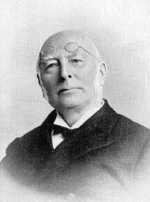
Behind all the occurrences of this painful time lay the influence
of Mr. Wm. Kelly, who had once been a valued brother and expositor of Scripture among us,
- but for a long time had lost the confidence of his brethren generally; many feeling, moreover, that he had lost spiritual power.
- This lack of confidence was mainly owing to the fact of his persistent efforts to interfere in difficulties which arose in various localities.
- He used his utmost endeavours in support of the independent company at Ryde, the recognition of which, as we have seen, Dr. Cronin sought to enforce, and afterwards of the pretensions of Abbotts Hill,
- and when these were definitely refused by brethren, he openly identified himself with that company, and became recognised as the leader in the schism which ensued.
The exercise which arose all over the country in connection with the difficulty had a salutary effect,
- and it was felt that the Lord had used it to bring home to brethren generally, the underlying cause which had rendered the discipline necessary.
- In this connection the following extracts from a letter by Mr. Darby will be read with interest. He printed it as a leaflet letter, desiring to address himself to all concerned.
| 'Letters of JND', 3: 41-44, October 1879
|
My Beloved Brethren,
I never felt the same distrust of myself as I do now in writing this, and I desire to speak to my own conscience as to you.
- I should not write at all, but as taking the lowest place, always the best, and now especially the only true and right one. He who is lowly and lowliest will be the most blessed …
- But God has wrought a great deliverance for us, much greater than most of those spared are aware of; some have felt it.
- And what I desire now is, that our consciences may turn and see where we have so failed as to bring this sorrow upon us.
- I am not going to turn back and charge anyone or refer to any recent circumstances, but to weigh, where conscience is awake, how we brought ourselves into the strait place we were in.
- I hesitated a moment whether I should say anything, before the details which remain were set in order by God, as I am assured His grace will do, but they do not affect my object.
Is it not true for every thoughtful conscience that the spirit of the world has invaded us?
- We do not go to parties; if we meet, we meet to read the scripture and edify one another.
- Discipline for any gross evil would be, I suppose, exercised with some measure of faithfulness where the evil was apparent;
- I make no exaggerated statement of evil; many, I doubt not, were walking Christianly, I dare say better than myself.
- But as to the course of this world, had we not greatly fallen into its ways? Not, as I have said, in open worldliness, –
- but was there not that current and let pass which grieved
the Spirit of God, and hence weakened all spiritual energy, and spiritual discernment for discipline, and for the Lord's mind in all our course –
- the loss of discerning things that are excellent "to be sincere and without offence till the day of Christ", "filled with the knowledge of His will in all wisdom and spiritual understanding … fruitful in every good work"?
- Have we been as purified unto Himself for a peculiar people; not our own, bought with a price; as epistles of Christ known and read of all men;
- living by Him and close to Him; as it is said, "Christ is all and in all", so that whatsoever we should do should be done in the name of the Lord Jesus?
- Were our sole and constant motives Christ, or the common motives of the world? Were buying and selling, our houses, our clothing, ordered on principles which Christ, if there, would approve?
- Did we walk even as we once walked? Was there devoted service among the poor and needy, visiting the fatherless and the widow in their affliction, and keeping ourselves unspotted from the world?
- We read, "Be not conformed to this world, but be ye transformed by the renewing of your mind".
- Were we yielding our bodies a living sacrifice, holy, acceptable to God as an intelligent service proving what was the good and acceptable and perfect will of God, as Christ offered Himself for us a dying sacrifice?
- Ah! What place had He, has He in our hearts? Do we live to Him who died in love for us?
- If the testimony of God as to the truth was with brethren, was it the truth as it was in Jesus, the having put off the old man and put on the new man, which, after God, is created in righteousness and true holiness?
I had long dreaded; the Manchester meeting alarmed me. I was not there; but the discussion was whether we were Philadelphia or who was Laodicea – and not at Manchester only.
- Brethren had got to think of themselves as a body of people, and to say the least, less of Christ and His body.
- Now God calls us, and that in love, to remember from whence we are fallen and repent, and do the first works.
- He looks for consistency and devotedness. He always does, and I bless His name He does, but He does so call us now by special circumstances.
- Satan, long practically undermining as to devotedness and unworldliness, had made a deadly effort to set brethren aside in their testimony to the truth.
- God in His sovereign mercy has broken his effort. It has been His doing only.
- Now comes the positive side. Is that which gave entrance and a handle removed, and the Lord truly honoured?
- If our consciences do not take notice of His way, the next thing, though His patience is great and long, would be His judgment.
- Satan's efforts and power He can easily break, humbling us in the
meantime; but His judgment who shall withstand?
- I ask myself, I ask you how we can say "To me to live is Christ"? This is the grave question for us all now. I do not seek to discourage, quite the contrary.
- The Lord in sovereign mercy has not left us, though we have greatly failed. He has shown Himself most gracious with us, when we might have expected the contrary.
- How soon could the apostle say, "All seek their own, not the things of Jesus Christ"! He has shown Himself full of mercy and grace, what I seek is that our hearts may turn to Him according to that grace …
Your affectionate brother in Christ
J.N.D.
It would be a bold man who would affirm that the enemy is still not attempting to corrupt saints on these lines by enticing them into being satisfied with the correct ecclesiastical position,
- without exercise as to the moral condition apart from which the approbation of the Lord cannot be gained.
- How should the Spirit give His support to such in testimony, or in the company in which Christ desires to sing praise to God?
- It would be making the Holy Spirit of God the minister of sin, which is impossible.
- It is important that we should ever remember that in His mind, as revealed in Scripture, position and moral conditions are never separated.
Later Developments:
- 1926: Most Kelly meetings joined with the Bexhill: Lowe-Continental meetings in the 'Reunion'
Further Accessions to the 'Reunion':
- 1939: Bexhill: English Tunbridge Wells
- 1953: Grant: Mory
- 1974: Grant: Booth / Glanton
Division in the 'Reunion':
- 1999: The 'New' Movement' vs. the 'Old Brethren'. It began in the Netherlands, a rejection of the traditional position for wider fellowship and looser practices.
|
Page Top
READING AND MONTREAL
1883 |
|---|
Clarence Esme Stuart (1828-1903) lived in Reading, hence the reference to that locality.
Frederick William Grant (1834-1902) was born in Putney, London, moved to Toronto, Canada, then to Brooklyn, NY and finally to Plainfield, NJ. The division over his teaching took place in Montreal, Canada, after he arrived there to uphold his views while A. P. Cecil and Alfred Mace were holding meetings.
|
In this difficulty, which arose almost simultaneously in England
and America, it seemed evident that the effort of the enemy was to lower in the minds of the saints the truth of the Christian position as "in Christ" – new creation – 2 Cor. 5: 17, by inducing them either,
- on the one hand to connect with it the status of the first man,
- or on the other, to ignore the distinctiveness of the heavenly character of Christianity.
In America, Mr. F. W. Grant, who was the originator of the difficulty there, may have been more pronouncedly on the former line,
- while in England, Mr. C. E. Stuart, may have been more so on
the latter.
- The movements, however, coalesced, as might have been expected, for both of these teachers had evidently before their minds lower ideals of Christianity than that presented in Scripture as being the mind of God for saints of the present dispensation.
- That they were essentially one is further shown from the fact that there was no division in America over what became known as the Stuart, or
Reading, conflict
- while there was no division in England over the conflict raised by Mr. Grant's teaching in America;
- and the members of these connections have always been on terms of association as they passed from one country to another.
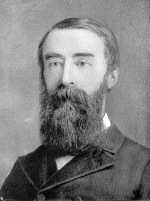
Mr. Grant's avowed teaching was that the saints of previous dispensations had "life in the Son",
- and he put forward views that would have lowered Christianity to their level,
- though he admitted that there was an increase of light at the present time.

Mr. Stuart reached the same point by his views as to new creation.
- His system revolved around his thought that Christian standing existed in the title and ability of fallen man, once guilty, to be before the throne of God without fear of judgment overtaking him.
- This man he introduced into Christian conditions – new creation – failing to see that that position involved the entire setting aside of man after the order of Adam, and our being created anew in Christ.
After the main conflict was over, Mr. Stuart put forward very unsound views as to the propitiatory work of the Lord Jesus,
- which he averred was not completed until He entered the presence of God on high, and presented His blood there.
- This error doubtless arose from an attempt on his part to adhere too strictly to the details of the type of Lev. 16.
As to the danger involved in this, I cannot do better than quote what another has recently remarked,*
- "If we read them" – i.e. the Old Testament details – "in the light of the New Testament they amplify the New and bring them out,
- "but if we approach the New from the Old, we shall subvert the New, and that is what Christendom has done.
- "If you take up any thought in the Old Testament and carry it through into the New, it will subvert what it typifies.
- "If you take up the New Testament in the light of the Old Testament you have details of what is definitely intended for our instruction in righteousness".
* See 'Response from Known Relationships',
an address at Peterborough, England, 1925,
'Ministry by J. Taylor', 24: 136.
|
Both these teachers failed to grasp the distinctive character of
Christianity as based on the believer being delivered from his status in the flesh and after the order of the man who was "of the earth, earthy",
- and his being set up in wholly new relations with God, after
the order of the second Man who is "out of heaven".
- The status and ability of the first man can add no lustre to such a position as this in which the believer is regarded as complete in Christ. Col. 2: 10.
- Mr. Stuart's opposition to the present heavenly calling of the saints had long grieved his brethren, and it was felt that this underlay the attitude he maintained against the teaching of Mr. J. B. Stoney and others.
- He averred that such scriptures as 1 Cor. 15: 48 only applied to the resurrection condition, and had no present application to us as believers.
Again one would ask the question, are we clear of this snare? Is it not still being used by the enemy of souls,
- and do we not find the tendency to bring into the profession of Christianity that which does not emanate from Christ, but from the order of man that was set aside in His death?
- How could we expect those who are on such lines to be found walking in the communion of the mind of the Holy Ghost as to present Divine intentions?
Stuart: Later Developments:
- 1885: Fellowship established with Grant
- 1908: Merged with Glanton
|
Grant: Later Developments:
- 1885: Fellowship established with Stuart
- 1892-94: Discussions as to whether there could be fellowhip with open meetings decided in the negative
- c. 1909: Merged with Glanton/Stuart
- c. 1928: Began merging with open meetings: 'Then and Now' by W. H. Dorman – written in 1916 – was reprinted and circulated in 1931 by A. S. Loizeaux, and it was instrumental in confirming those partial to 'open' views.
Grant - Mory:
- 1928: Separated over business matter and refused fellowship with 'opens' and Glanton
- 1953: Joined Reunion
Grant - Booth:
- 1930: Separated, refused fellowship with 'opens' but continued with Glanton
- 1974: Joined Reunion
Grant - Ames:
- 1946: Grant - Ames: separated from Grant - Booth and refused fellowship with Glanton
|
Page Top
In the controversy which arose some years later, and which resulted in what is commonly known as the 'Bexhill Division',
- the enemy pushed with determination his assault against recovered truth and the purpose of the Spirit to bring about on earth at the present time, a people morally consonant with Christ.
The insidiousness of the attack lay in the fact that while certain brethren insisted that everything which had been established in Christ was true of all believers on the ground of title – which was undoubtedly true as far as it went –
- they disregarded that subjective work of the Spirit which forms us morally by "beholding the glory of the Lord .… into the same image", thus qualifying us for the present conscious enjoyment of our portion in Christ.
- We can easily see how this would produce an unreal condition of soul and cause the believer to settle down satisfied with certain dogmatic statements as to that which is objectively true of him as "in Christ",
- with little or no exercise as to his being led experimentally into the present enjoyment of such things by the Spirit.
- How different the attitude of one who, like Moses from the top of Pisgah, contemplates the purpose of God, as presented to us in Romans 16: 25-26, in the full recognition of the title of His people to it all,
- and who is actuated with affectionate desire to pass over into the present enjoyment of the promised possession.
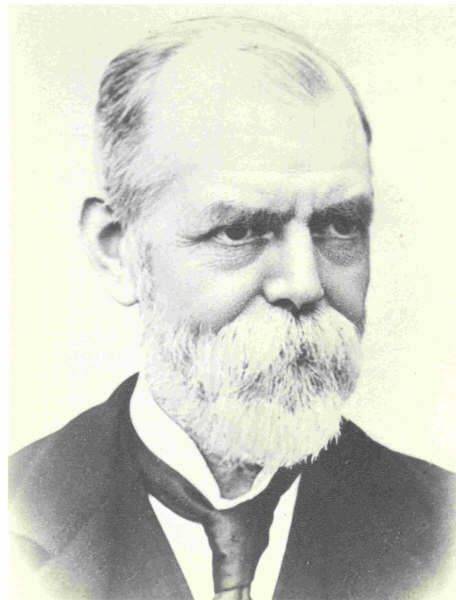
The brunt of the attack fell upon Mr. F. E. Raven, who sought strenuously to maintain the truth.
- The conflict raged chiefly around the truth as to eternal life.
- By many this had long been regarded as something imparted to the believer at new birth, bringing with it to the soul the confirmation of eternal security,
- instead of seeing that it was an order of blessing provided by God for man, as a free gift, into which the Spirit would introduce the believer, and by doing so enable him to contribute to the present pleasure of God.
Eternal life was evidently a condition of life into which such as the young ruler – Luke 17: 18 – had a great desire to enter, for they had had the desire kindled in their hearts to be found among the "saved ones".
- This lay at the bottom of the question put to the Lord in Luke 13: 23, "Sir, are such as are to be saved few in number?".
- As to this class Mr. Darby says in a footnote, "Spared in the judgment of the nation by Messiah, so as to enter into the kingdom; 'the remnant' ".
- They are again referred to in Acts 2: 47, where we read, "The Lord
added to the assembly daily those that were to be saved".
- In another note Mr. Darby says, "the remnant of Israel whom God was sparing …. The Lord now added these to the Christian assembly. Compare Luke 13: 23. Are the sozomenio, that class, few – The Jews discussed this point much".
- This remnant among the people who were expecting to find eternal life in
the kingdom in a material way when Messiah came, now found it in the assembly in a spiritual way.
- In a day yet to come, of which the Lord Jesus spoke in Matthew 25, the remnant of Israel again come into view as "these my brethren" who were waiting for the kingdom to be set up.
- They had been used in the preaching of the everlasting gospel, and as a result of their preaching there are seen saved ones from among the nations, whom the King speaks of as "Ye blessed of My Father", and invites them to "inherit the kingdom prepared for you from the earth's foundation".
- They are again referred to in the last verse of the chapter when the King says that the righteous shall go away into eternal life.
- Potentially, both they and the "brethren" had life already, but now they get this further blessing that they enter into the kingdom and find eternal life there. This indicates the setting in which eternal life must be considered.
It is now to be enjoyed in a spiritual way by those who belong to the assembly in connection with heavenly things;
- it will be enjoyed in the future in a material way in connection with earthly things by those who are accounted righteous and enter the kingdom.
- It was doubtless this which the Lord Jesus referred to when He spoke of
earthly and heavenly things in John 3: 12.
- It was this condition of life to which the Lord referred when He said to the young ruler as recorded in Matthew 19: 17, "If thou wouldest enter into life, keep the commandments".
- And again in Mark 9: 43-45, He speaks on the same subject.
- All this demands a careful consideration, and fully confirms what has been said by another, that eternal life always involves a sphere.
- One would like to affirm that new birth and life, viewed potentially, must precede entrance into eternal life, whether now, in assembly conditions, or in the world to come.
- In referring thus to the assembly we do not speak of it as the body of Christ, etc., but rather as
- the sphere in which the authority and rule of the Lord Jesus are maintained at the present time, – the kingdom in mystery.
The life which is our portion as a result of our being quickened together with Christ, and as such constantly referred to in scripture, is another aspect of the subject of life into which we cannot now enter further than to say that
- in this aspect it is the life of eternity, when time shall have ceased to be. Into this also the believer has a present entrance in the power of the Spirit.
Those who opposed, for the most part, confounded these presentations of life, failing to see that the believer is made potentially alive in view of his entering into the enjoyment of eternal life,
- which Mr. Darby once said consisted in "an out-of-the-world heavenly condition of relationship and being" – evidently an 'over-Jordan' condition, when connected with believers.
- "He came, eternal life into this world, but was alone in the out-of-the-world heavenly condition of relationship and being in which eternal life
consists: which was before the world, not only in God, but in counsel for us, given us in Christ, manifested in Him alone in the world, and now consequent on His being lifted up and gone out of it into the heavenly place of which He brought word, that into which we are introduced in Him", 'Bible Treasury', Jan. 1867, 6: 206-7.
- This is part of an anonymous answer to an inquiry; it has commonly been attributed to JND.
|
- Hence they lost the real force of the truth about it, as "consisting in conditions" fully set forth in the Lord Jesus as a blessed Man living here in relation to God, as His Sent One. John 17: 3.
- It was dogmatically insisted upon by them that He was 'It' whatever that might mean to them but at the same time is was said that 'it' was in us.
- This was the force which they unwarrantably gave to the word "hath" in such passages as John 3: 36, overlooking the plain statement of scripture in 1 John 5: 11-12, "God hath given to us eternal life, and this life is in his Son". "He that hath the Son hath life".
- Moreover they failed to grasp the true character of that subjective work of the Spirit, which brings the believer morally into accord with what is presented objectively to him in Christ – "which thing is true in him and in you". 1 John 2: 8.
- This resulted in the moral force of such a scripture as that addressed to Timothy, "Lay hold on eternal life", being lost.
Incidentally, it came out during the controversy that there was much obscurity in many minds as to the truth regarding the Person of the Lord Jesus.
- Mr. Raven insisted that He brought into Manhood all that He ever was as a Divine Person, and that though there was change in condition there was none in Person,
- thus refuting the contention that His Person was constituted of a union of God and man.
- In this he was fully in accord with the teaching of Mr. Darby who wrote in his 'Practical Reflections on the Psalms' – 'Collected Writings', 17: 19 –
- "He had taken a place while never ceasing to be God, and which Godhead alone could fulfil the conditions of, outside Godhead; but in which, as man to satisfy God, to glorify God in an earth of apostasy and sin" etc.
- When challenged as to his teaching in a conference at London, and being asked 'Who was it that died on the cross?' he unhesitatingly replied 'The Son incarnate'.
- He maintained that this gave its character to His Manhood which was wholly of a new order – Mr. Darby said it was sui generis – and such as had no previous existence among men,
- and that in Him, as Man risen from the dead, there is presented to us manhood in new conditions altogether – outside of flesh and blood and made available for the believer according to the eternal purpose of God.
Those who had eyes to see, had no difficulty in discerning that from 1879-1890 the enemy made a determined effort to annul the truth as to the heavenly calling of the saints.
- His endeavour plainly was to destroy its moral force for present testimony, either by seeking,
- as in Mr. Stuart's attack, to introduce into the souls of the saints a spirit of allowing that which, however estimable it might appear to be,
nevertheless emanates from the order of man after the flesh; or,
- as in the attack on Mr. Raven by inducing them to disregard that
subjective work of the Spirit which fashions saints after the pattern of
the Heavenly One.
How we need to be prayerfully on our guard today lest we fall under one of these influences,
- and grieve the Spirit by so doing and thus hinder the effectuation of the purpose for which He has come down from on high.
- What a hindrance it is to the effectuation of Divine intentions in the souls of the saints, where there is the allowance of any traits of the first man,
- or the disallowance of the operations of the Spirit to bring about the moral traits of the Second Man in the souls of God's people.
- In either case the vital force of Christianity is destroyed.
Later Developments:
- 1909: Tunbridge Wells separated, administrative matter
- 1926: Bexhill: Lowe-Continental meetings joined with most Kelly meetings in the Reunion
Tunbridge Wells:
- 1939: English meetings separated and joined Reunion
- 1939: Main TW group centered in North America
- 1992: The 'assembly discipline' of Nepean, Ontario was refused by nearby Perth causing a general division.
-
Compare: Guests: My Stand 3: Hyper Ecclesiasticism
|
Page Top
| GLANTON AND ALNWICK – 1908 |
Later on, recovered truth was again imperilled by an attempt to interfere with the authority of Christ in relation to the assembly,
- by some assuming the right to exercise administration in respect of
conditions existent outside the locality which constituted the sphere of their responsibility.
The undisputed facts of the case were as follows.
- In the town of Alnwick, some miles distant from Glanton in Northumberland, that gathering had fallen into great confusion owing to local differences among the saints,
- which resulted in their having ceased to assemble together, and there were two companies in the place, both of which appealed for the fellowship of gatherings around them.
It had been generally recognized that under such conditions matters should be left in the hands of the Lord, who, as Son over God's house, had alone authority to deal with them;
- but plea was put forward by some that because saints composing the gatherings at Alnwick could not assemble together for the enjoyment of assembly privileges, there was nothing of assembly character in the place.
- The truth, however, was that all these saints at Alnwick were, in the faith of their souls – however greatly it might have been weakened – truly desirous of walking together in the light of the mind of God about the assembly, ostensibly so, at any rate.
- That there was nothing at Alnwick characteristic of the "assembling together" of the assembly, no one disputed, and it was finally admitted by all that under such conditions as existed at this time,
- there was not one assembly function which saints there could discharge. They were deprived of the privileges of assembling together, unless indeed it were for humiliation and their confession of their common shame.
Now if is asked what are we to do when saints have failed in this manner, the enquiry must be referred to Scripture.
- While we find there is a great deal of instruction as to the administrative responsibility of saints concerning matters in their own locality
- we search in vain to find one word which would authorize saints in any specified locality intervening in the affairs of another.
- We read, indeed, of 'office' but all points to it being confined to certain specific localities and that it was not general, as in the case of gift, which is given to the whole church.
- We learn, moreover, that each local company, as forming part of the one assembly of God on earth, has a responsibility deputed to it from the Lord, to act for Him. and in His name, in relation to matters in their own locality,
- but there is not a word about His having deputed authority to them to take up matters of an assembly character outside the sphere of their own local responsibility.
- On the very contrary, what we do find is, that when an assembly has failed in its responsibility to Him, the Lord takes it up personally. See Revelatiom 1, 2, and 3.
- We are, therefore, fully justified from Scripture in saying that when saints fail locally as at Alnwick, all that the other gatherings can do – not for a moment shutting out the work of the spiritual in view of the restoration of those who have erred, Gal. 6: 1 – is
- to wait until such time as there is evidence of restoration by the Lord, in the company, to which the right hand of fellowship can then once more be extended in His name.
- This does not necessitate that all must be recovered. Some may, after every effort, remain obdurate and irreconcilable, and may have to be left on one side; but this the Lord can make clear in His own way.
Now, instead of acting on these lines of scriptural principles, brethren at Glanton, urged on by some in Newcastle and in Northumberland, assumed to themselves authority to receive to the breaking of bread,
- certain from one of the companies at Alnwick who had been sitting behind at Glanton, eventually sending them back to Alnwick as a recognized company in that place.
- There were those at Alnwick who consistently refused this breach of divine order, which Glanton made and persisted in and never recognized their procedure nor sought fellowship there.
- It was felt by many that they had acted in ignorance of divine principles and it was pointed out to them that they had assumed to themselves rights which the Lord had not delegated to His saints.
- They practically yielded the point, but afterwards under pressure brought to bear upon them from other quarters, they took up the position that having acted in the name of the Lord
- – although as we have seen they had no authority from Him
to do so – they could not withdraw from it and their action must be
recognized.
- Thus they not only transgressed the commandments of the Lord, but with outside support they insisted that they were right in what they had done, and "teaching men so" – Matthew 5:19 – placed themselves under the rebuke of the Lord.
It was felt that this was an insidious effort of the enemy to entice saints to substitute expediency of human device for those principles which the Holy Spirit had come to maintain
- and that if we were to have the continuance of His support we must refuse the suggestions.
The lack of principle that had wrought such havoc in the Bethesda question was painfully evidenced by those who supported Glanton in this action.
- This has borne its own sad fruit in the way that considerable numbers from among them drifted into either the Bethesda, or Stuart or Grant fellowships.
- On the other hand, very many of them have had their eyes opened and have judged the evil of their position and sought restoration to fellowship with those with whom they had previously walked.
Who is there among us who has not felt in his own spirit the temptation to avoid the sharp consequences of the maintenance of God's holy principles by the same act of expediency?
- Let us not say that this conflict is over and passed when in countless ways, the enemy is still seeking to entangle us in the snare.
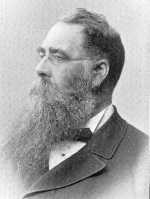
- After a lengthy attempt to justify Glanton's actions, Dr. W. T. P. Wolston states:
"For several years there has been, as is well known a divided spirit among those outwardly walking together.
- "On the one hand were those whose energies and affections found vent more in the direction of the testimony of the gospel to the unsaved …
- "On the other hand were those before whose minds that which pertained to the Church – its privileges, its blessings, its destiny – loomed much more distinctly, while points of ecclesiastical procedure held great sway.
- "Each perhaps thought … they could do without the other – and in some instances perhaps even desired to be quit of the other. This was utterly wrong, but this state existed.
- "Along with this, and markedly during the last four or five years, a system of doctrines, diverse and strange, as compared with that which most of our souls had been reared and nurtured, has come upon the scene.
- "In 1905, Notes … at Chicago containing very questionable
statements about the Church appeared, were circulated largely, and
by some applauded highly.
- Sober men like … were greatly distressed with these teachings, as also was JB [ James Boyd ] who paid a visit to America that he might see Mr. J. Taylor of New York, who was very largely responsible for the utterances".
From: 'Plain Facts regarding Alnwick and Glanton' WTPW.
- The sting is in the tail. Rev. 9: 10. As Dr. Wolston indicates, "the root of the matter" was really the favouring of the gospel over the assembly and the rejection of ministry, both of which JBS referred to as far back as 1873. GAR
- See: History: Review of Truth: Manchester - 1873 and
- Ministry: G. R. Cowell: The Gospel and the Church.
|
Later Developments:
- 1908-09: Merged with Stuart and Grant
- 1938: Little Glanton separated and refused looseness and fellowship with open meetings.
- 1974: Main group joined Reunion
|
Page Top
DIVINE PRINCIPLES
AND A DAY OF RUIN – 1920 |
A sharp controversy arose in 1920 as to the way in which evil-doers are to be dealt with.
- The attempt was made to enforce a literal use of the words in 1 Corinthians 5: 13 as to 'putting-away'.
- It had for a considerable time been felt by many that to make use of the words of this scripture in any restricted sense, as applicable to a few saints meeting together in the light of divine principles,
- savoured of presuming to take up the position of acting on behalf of the whole local assembly, and of employing words which could only rightly be used by it.
- It is incumbent upon us as having the light of 1 Corimthians 5 to refuse association with evil-doers.
- While, however, it was shown that we must be governed by the light of such a scripture it was insisted upon that we must also give the fullest weight to the indications of the Spirit in 2 Timothy 2.
|

- See the Index of 'Ministry of J. Taylor', Book 1 (Scriptures), page 10, for comparisons of 1 Corinthians 5 and 2 Timothy 2.
- Righteousness and the Pursuit of it, Rochester, U.S.A., May, 1918, 'Ministry by J. Taylor', 9: 484 (497-506) is of particular interest.
- Mr. Geo. W. Ware, author of this 'Review', was present and took a helpful part in that reading.
|
These reveal the mind of the Lord as to the manner and spirit in which those who profess His name in a day of ruin should act in relation to evil-doers.
- that in the light of both these scriptures – the former giving us the commandments of the Lord on the subject, and the latter indicating how we can carry them out in a day of ruin –
- all we can do is collectively refuse to walk with evil-doers, having come to the conclusion before the Lord that they are as such unfit for any Christian fellowship and telling them so in His name.
- The holiness which becomes God's house is thus fully maintained, without there being any assumption of acting as, or representing the assembly when discipline becomes necessary.
- The preposterous claim 'We are the church' was the pretentious prelude to the shameful exposure of blasphemy and immorality at Aberdeen in July 1970. "Pride goeth before destruction, and a haughty spirit before a fall", Proverbs 16: 18.
|
It was thus afresh emphasized that assumption in any form does not become "a poor and afflicted people who call on the name of the Lord" in a day of great confusion
- and who seek to regulate their course in the light of divine principles, with the sense in their souls of how grievously they have been departed from on every side.
- If we act on any other lines, or in any other spirit, it is evident that
the Holy Ghost will be hindered among us,
- as it is clear that He cannot uphold a people who are not walking together in the communion of His mind as to the conditions that are existent in the church of God today.
We feel sure that any thoughtful reader of the foregoing pages will endorse the remark made at the commencement,
- that though Satan may have been defeated in the main attacks on the truth recovered to us, he is still pursuing the object he had in view in making them.
- It is evident that he is persistently seeking to instill into souls unholy principles, the acceptance of which would place those who received them outside the communion of the Holy Ghost, whether in regard of assembly praise or living testimony.
In writing thus, reference has not been made to the light which afresh came out through the teaching of Mr. Darby and others as to the believer's union with Christ and his place in sonship before the Father and all that flows from these and kindred truths.
- We have rather had before us, not so much to develop the believer's heavenly position according to eternal counsel,
- but rather to show the danger we are in at the present time in view of the efforts of the enemy to defeat the maintenance of the position in responsibility down here.
- Still one would solemnly assert that without some apprehension of this heavenly line of things, the position in responsibility cannot be taken up according to the mind of God.
Moreover, one would desire to point out, as a principle of the ways of God, that what has been won in conflict can only be maintained as we are held in the appreciation of that which the Spirit is giving from time to time as to the mind of God for His saints.
- The history of the past hundred years has abundantly shown that ignoring this has been the secret cause of the shipwreck of many who, until the fresh test came, had apparently maintained the position against the
assaults of the enemy.
G.W.W.
Later Developments:
- 1953: James Taylor Sr. – "with Christ"
- 1954: Many separated, refusing prayer and worship to the Holy Spirit and to God as Father, Son and Holy Spirit
G. R. Cowell:
- 1959-60: Many including G. R. Cowell separated from the Legal Sect over the introduction of legality
- 1963: G. R. Cowell – "with Christ"
- 1967: Division over marriages – Croham Hall vs. Ilford
- c. 1973: Most of Ilford joins Aberdeen: Strang
|
Later Developments: Legal Sect
- 1959-60: Introduction of growing legality and wrong doctrine led to withdrawal of G. R. Cowell and others
- 1960-70: Increasing legality and wrong doctrine culminated in blasphemy and immorality at Aberdeen meetings, caused a major withdrawal known as
Aberdeen
- 1970: Death of universal leader, followed by a succession of increasingly legal leaders
|
Later Developments: Aberdeen - A House Divided
- – Compare Guests: My Stand 2: Aberdeen 1-6
- 1970: Separated from 'Legal Sect'
- 1972: Division in Edinburgh over what constituted an unequal yoke into Renton vs. Strang
Renton:
- 198–: Minor division over fellowship, West Coast, U.S.A.
- 198–: Minor division over unequal yoke, Australia
Strang:
- c. 1973: Joined by most of the remaining Ilford group
- 1974: Division over looseness, Croydon vs. Oxted
- 1992: Division over looseness, Croydon vs. London
- 1999: Division over reception, Croydon vs. Gardenstown
|
Page Top
