Menu•SiteMap |
Doctrine
Ministry
– J. N. Darby, J. B. Stoney
and R. M. Beverley
Scripture indicates that worship and ministry – Godward and manward respectively – should be the main activities in the assembly, but both have been corrupted in the public church.
- Worship has been turned into an idolatrous system or into an empty ritual.
- In some circles, ministry has superseded worship but is tightly controlled by clericalism effectively shutting out the Spirit.
In the recovery of the truth which began c. 1827, the truth and practice of both worship and ministry gained increasing prominence.
- The following articles clearly show the scriptural nature and responsibilty of ministry.
G.A.R.
Page Top
ON MINISTRY: ITS NATURE, SOURCE,
POWER AND RESPONSIBILITY |
|---|
| Collected Writings of J. N. Darby, 1: 206-32
|
|---|
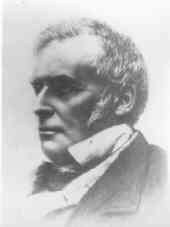
The state of the church of God sufficiently, it seems to me, points out the usefulness of the following observations on ministry, which are not presented with a view to controversy, but to throw light on a subject on which much controversy has been expended.
- It is a subject, moreover, of sufficient dignity and interest to lead us above the mists of theological discussions, and into the enjoyment of the pure light of heaven, whence true ministry emanates.
It may be well as a preliminary to give its true place and proper aspect to the idea of ministry; for it appears to me, that the importance of it has scarcely been fully apprehended. Its details may be taken up afterwards.
COMPARISON BETWEEN THE LEVITICAL PRIESTHOOD
AND THE MINISTRY OF THE GOSPEL
The existence of ministry is consequent on the nature of the present dispensation; and, in saying this, we ascend very high to discover its source; for the nature of this dispensation is nothing less than the sovereign grace of God, the activity of His love.
The position and the character which distinguish the servants of God, are always, and necessarily, in unison with the principles of the relation which exists between God and men.
- When God only recognised certain families, the head of the family was its priest and prophet. We find examples of this in Abraham, Noah, and the other patriarchs.
- But this principle acquires a more general and important application, when a whole dispensation is in question; as in the case of Judaism and Christianity.
- The ways of God, and the principles of His dealings with sinners, are here unfolded with many more details for the conscience, and more distinctness and splendour as to the accomplishment and the revelation of grace.
Observe, accordingly, the marked distinction between these two dispensations.
- In Judaism, under mount Sinai, where the law was given and those ordinances established which regulated the intercourse between the people and God, we have a people already formed and recognised as such before God;
- a people whom God had already brought to Himself, Exodus 19; whose existence and whose rights depended on their being the children of Abraham, of Isaac, and of Jacob, and who, with few exceptions, were perpetuated by natural descent.
- In a word, they already existed as a people, when God entered into covenant relationship with them; for it pleased God to try if man, so privileged and put in possession of every possible advantage for the maintenance of his position, could stand before Him.
The work and principle of Christianity are altogether different.
- Christianity supposes man to be lost; it supposes that the trial, to which God has subjected him by means of the law, has only served to prove more plainly how impossible it is for man, whatever his advantages or his privileges, to stand before Him.
- But this having been proved, Christianity presents to us God in His grace visiting this ruined race.
- He beholds the Gentiles sunk in ignorance and idolatry, and degraded by the most revolting crimes; He finds the Jews still more culpable, having been unfaithful to higher privileges;
- and He exhibits both Jew and Gentile as the terrible proof that human nature is fallen and corrupt, and that in the flesh good does not dwell.
- In Christianity God sees man wicked, miserable, rebellious, lost; but He sees him according to His infinite compassions; He only notices the wretchedness of man to bear witness to him of His own pity.
- He beholds and comes to call men by Jesus; that they may enjoy in Him, and through Him, deliverance and salvation, with His favour and His blessing!
The consequence of the position of the Jewish nation was very simple: a law, to direct the conduct of a people already existing as such before God;
- and a priesthood, to maintain the relations which existed between this people and their God – relations which were not of a character to enable them to draw nigh to Him without mediation.
- The question was not, how to seek and call those without; but to order the intercourse with God of a people already recognised as such.
As we have already seen, Christianity has an entirely different character. It considers mankind as universally lost, proves them in reality to be so, and seeks, through the power of a new life, worshippers in spirit and in truth.
- In like manner does it introduce the worshippers themselves into the presence of God, who there reveals Himself as their Father – a Father who has sought and saved them.
- And this is done, not by means of an intermediate priestly class who represent the worshippers because of the inability of the latter to approach a terrible and imperfectly known God;
- but it introduces them in full confidence to a God known and loved, because He loved them, sought, and washed them from all their sins, that they might be before Him without fear.
The consequence of this marked difference between the relations in which Jews and Christians stand as toward God is, that
- the Jews had a priesthood – and not a ministry – which acted outwards, that is, outside the people;
- while Christianity has a ministry which finds its exercise in the active revelation of what God is – whether within the church or without – there being no intermediate priesthood between God and His people, save the Great High Priest Himself.
- The Christian priesthood is composed of all true Christians, who equally enjoy the right of entering into the holy places by the new and living way which has been consecrated for them – a priesthood, moreover, whose relations are essentially heavenly.
- Ministry, then, is essential to Christianity; which is the activity of the love of God in delivering souls from ruin and from sin, and in drawing them to Himself.
On earth, then, as regards the relations subsisting between God and man, a priesthood was the distinguishing characteristic of the Jewish dispensation; ministry, of the Christian:
- because priesthood maintained the Jews in their relations with God;
- and because by ministry Christianity seeks in this world worshippers of the Father.
- I say, on earth, for, in truth, when we consider the portion of the Christian in its highest point of view, namely, in that which has relation to heaven, Christianity has its "kings and priests" – that is to say, all saints.
- The worship of God is not ministry; it is the expression of the heart of the children before their Father in heaven, and of priests before their God;
- in the intimacy of the presence of Him who, in His love, has rent the veil, which His justice had opposed to the sinner;
- and has rent it by a stroke which has disarmed justice, and left her nothing but the happy task of clothing with the best robe those to whom before all entrance had been denied.
To suppose, then, the necessity of a priestly order is to deny the efficacy of the work of Christ, which has procured for us the privilege of our presenting ourselves before God;
- it is, in fact, though not in words, to deny Christianity, in its application to the conscience, and to the justification of the sinner;
- it is to overthrow all those relations which God has established that He might glorify Himself and place man in peace and blessedness.
- On the other hand, God acting in Christianity according to the active energy of His love towards sinners, Christian ministry becomes the expression of this activity. It has its source in the power of this love; whether it be in calling souls, or in nourishing those who are called and whom Jesus loves.
It is thus presented to us by Paul, as one of those things which characterise the gospel of the grace of God.
SOURCE OF MINISTRY
"God was in Christ reconciling the world unto himself, not imputing their trespasses unto them: and hath committed to us the word of reconciliation".
- These are the three things which flow from the coming of God in Christ:
- "reconciling", "not imputing", and "committing unto us the word of reconciliation".
- Without this last, the work of grace would have remained imperfect in its application, for He who, in His coming here below, was reconciling and "not imputing" – this Jesus needed to be "made sin" for us, to die and go away.
- The work finished, it remained thus suspended in its application; and the crowning of this glorious work of the grace of God was to commit to man "the word of reconciliation", according to His own power and good pleasure.
- There were thus two elements contained in ministry:
- first, deep conviction and powerful sense of the love displayed in this work of reconciliation that capacitated;
- secondly, gifts, to declare to men, according to their necessities, the riches of this grace which animated the hearts of those who bore witness of it.
This it is that is presented to us in the parable of the talents – Matthew 25.
- He that had five talents, as well as he who had two, was actuated by the confidence which grace gives, by the knowledge of the character of his master, and by the confidence engendered in him, both by this knowledge of his master, and by this trust which he saw was reposed in himself.
- Their abilities, and their gifts, were not the same. God is sovereign in this respect.
- He who had only one talent, according to his ability, was wanting in this confidence, which is inspired by the knowledge of God in Christ. He mistook the character of his master. He was slothful, because of the state of his soul; as the two others were diligent from the same cause.
We thus see, that the principle of ministry is the active energy of love, of grace, flowing from the faith by which we know God.
- To touch this is to overthrow the whole in its fundamental principle. In its essence, ministry flows from individual knowledge of the Master's character.
- Grace known and strongly felt becomes active grace in our hearts – the only true, the only possible source, in the nature of things, of a ministry according to God.
- We see, moreover, that it is the sovereignty of God, who gives, as He sees good, either natural capacity – as the vessel to contain the gift – or the gift, according to the measure of the gift of Christ, out of those treasures which are found in Him, and which He has received for men.
We find ministry based on the same principle, when the Lord says to Peter,
- "Simon Peter, lovest thou me"; and, on His reply adds, "Feed my sheep, feed my lambs".
- This leads to the two essential parts of ministry, namely:
- first, the free activity of the love, which impels to call souls to Christ;
- and secondly, the service of love which is unwearied in its efforts to edify them when called.
- As regards the ministry of the word – for there are other gifts – these two divisions are distinctly presented to us in the first chapter of the Epistle to the Colossians.
- In verse 23, Paul is "a minister of the gospel preached to every creature under heaven"
- and in verse 25, a minister of the body of Christ, the church, to fulfil the word of God.
As the mainsprings and sources then of all ministry, there are these two things:
- the love produced in the heart by grace, the love which impels to activity;
- and the sovereignty of God, who communicates gifts as seems good to Him, and calls to this or that service – a call, which renders ministry a matter of faithfulness and duty, on the part of him who is called.
- It is to be observed, that these two principles both suppose an entire freedom from man, who cannot interfere, as either the source or the authorisation of ministry, without,
- on the one hand, neutralising love, as the source of activity, or,
- on the other, infringing on the sovereignty of God, who calls and sends, and whose call constitutes duty.
- Co-operation and discipline according to the word find, withal, their own place untouched.
Whatever ministry is not founded on these two principles is really no ministry at all. There is no Christian source of activity but the love of Christ and the call of God.
ON THE POWER OF MINISTRY, AND ON ITS RESPONSIBILITY
Having thus briefly considered the question of the source of ministry, which connects itself with the very first principles and with the existence of Christianity, and which has its being in the activity of the love of God, let us examine the power which works in this ministry, and under what responsibility it is exercised by those to whom it is committed.
POWER OF MINISTRY
2 Corinthians 3 indicates its general character. It is the ministry of the Spirit.
There are two grand features which characterise the work of Christ in the world.
- He is the Lamb of God who takes away sin, and He baptises with the Holy Ghost.
- I pass by the first point, however full of interest, as not belonging to our subject, save so far as it is an object about which ministry is occupied.
- I rest on the second of those things by which John the Baptist describes the work and the glory of Christ.
- "He shall baptise you with the Holy Ghost"
- – a point which is evidently of the utmost importance, and the spring of all the power and spiritual energy which is to be found in the church.
- And truly, a spiritual energy is needed, that Satan may be combated with success, and that these poor bodies, the flesh being mortified, may become the vessels of testimony and of the power of God.
This power of the Holy Ghost in man is a most important truth. Jesus Himself was anointed by the Holy Ghost and with power.
- "How", said Peter to Cornelius, "God anointed Jesus of Nazareth with the Holy Ghost, and with power, who went about doing good, and healing all that were oppressed of the devil, for God was with him".
- This was not spoken of His divinity; for He was God before the foundation of the world; nor of His perfection as man; for, as born of the Virgin Mary, His flesh was holy. He was the Son of God in the world, as the man born of this same Mary by the power of the Holy Ghost.
- He had the consciousness thereof when He answered His mother who sought Him in the temple:
- "Wist ye not that I must be about my Father's business?"
- Neither does it refer to His love: His mere presence in the world was love itself. But in addition to this, John the Baptist sees the Holy Ghost descending like a dove, and remaining upon Him.
- "God had anointed Jesus of Nazareth with the Holy Ghost and with power";
- and then, for the first time, filled with the Holy Ghost, He begins His ministry, acts officially as Son of man in the world, and endures the temptations by which the Last Adam was to be tried, in order that He might assert His title beyond the power of Satan; while, on the contrary, the first Adam had fallen under that power
- Then it is that we see Him casting out devils by the Spirit of God, and saying to His mother,
- "What have I to do with thee?"
- His whole life was the power of the Holy Ghost in ministry. By the Holy Spirit He offered Himself without spot to God. He was much more than man; and yet was He a man – this Jesus of Nazareth, "whom God had anointed with the Holy Ghost and with power".
Our part in all this has another and different element. In Him it was man, the Last Adam on the earth, Himself accomplishing, in the face of Satan, all that the spiritual man could offer to God in His life.
- His voice was not heard in the street. He must needs be perfect, and as man overcome Satan in that world in which man had failed, and in the very circumstances in which man found himself in consequence of his fall.
- This is what that precious Saviour has perfectly accomplished. Up to this, however, He had not become the commencement of a new order of things.
The first Adam failed in the garden of Eden, in the very place where he was surrounded by blessings. It was when driven from it, that in his fallen state he became the head of a fallen race in this world of sin and ruin.
- Jesus, the Last Adam, must needs first be perfect, and personally gain the victory over Satan in the midst of the ruin – a victory so complete, and so perfect, that, having bound the strong man, He could spoil his goods, and that His name, in the mouth of those whom He sent, sufficed to cast out devils.
- But to commence a new world of glory and of blessing, to redeem His church, and make her like unto Himself, according to the power by which He is able to subdue all things to Himself, it was necessary that He should overcome Satan in the last stronghold in which he held men captive, by the judgment and under the sentence of God Himself, that is to say, in death.
- It was necessary that He should undergo, to the full, the last effect of sin, as the result of the wrath of God, and of the power of Satan, as well as of the weakness of man. This He did.
Thus, the wrath of God having passed over – except as to those who reject Jesus – all the power of Satan being destroyed in the very seat of that power as regards man, death being overcome, his gates of brass burst open –
- Jesus, the Last Adam, Victor over Satan and death, Heir, as Son of man, and, by the righteousness of God, of all that Adam possessed, and much more than Adam lost, while, as Son of God, upholding all things by the word of His power; the image of the invisible God, and the expression of His glory
- – Jesus, conformably to the counsels of God concerning man, begins to act as the Head of a new world, and of a new creation.
- Nevertheless, although He had abolished all that was against us, although He had triumphed over Satan on the cross, and led captivity captive, the time for the deliverance of creation had not yet come.
- The present was only the period for the witness of the power of Jesus, in the midst of a creation still in its fallen state and from whence Satan was not yet expelled.
- It was the time for gathering the church of His elect out of the world, that He might nourish and cherish them, until they should be presented to Himself in glory; that is, in a word, for making this church on earth the receptacle* of the power possessed by the Son of man at the right hand of God.
[* Christ, having won the victory over Satan, and redeemed the church, could associate this church with Himself seated in the heavenly places, and make it the vessel for the manifestation of the power which conquered Satan, though Satan was not yet driven out. This is what the church ought to have been practically; it is what she was at the beginning.]
- He, who now filled all things, having first descended into the lower parts of the earth, and then re-ascended up far above all heavens – He had received gifts for men. Ephesians 4: 8-10.
The day of Pentecost was neither a moral change of the affections, nor the breath of life from the risen Jesus; all this had already taken place. The disciples were waiting at Jerusalem until they should be endued with power from on high.
- Having been endued therewith, no doubt this acted powerfully on their affections, because it revealed Jesus with power; but the life and affections were already there, even as in a still higher sense the life and affections of the Son of God were in Jesus before the Holy Ghost descended upon Him as a dove.
- Jesus took His place, according to the counsels of God, with the faithful in Israel, in the baptism of John, "fulfilling all righteousness"; and was then anointed for service among them.
- By virtue of His death and resurrection, He placed His disciples in the same relation with God, in which He Himself stood, going to His Father and their Father, to His God and their God;
- and He baptised them with the Holy Ghost, as the witness of His glory in heavenly places, and the power which identified His disciples with Himself in this glory.
- It is very certain, from the words of Jesus Himself – Acts 1 – that the gift of the Holy Spirit on the day of Pentecost was the baptism of the Holy Ghost, and that nothing which the apostles had previously received was the fulfilment of this promise; for He says to them:
- "Ye shall be baptised with the Holy Ghost not many days hence".
The gospel by Luke, of which the Acts of the Apostles is only a continuation – the Acts taking up the subject in almost the same words as those of this gospel – presents to us the Lord Jesus specially as Son of man, Head of a new order. That gospel presents this truth morally, the Acts in power.
The gospel by John, although touching the same subject, presents it under another form.
- The Holy Spirit is the Spirit of truth, Advocate or Comforter, sent by the Father in His name or by Jesus Himself from the Father. He guides into all truth, shews things to come, and gives them to know that Jesus is in the Father, the disciples in Jesus, and He in them.
- If I were considering the subject of the Holy Spirit, I should have to speak of the close of this gospel, where He is seen as the Spirit of truth in the midst of the church, witnessing against the world by His presence, and guiding believers into all truth.
- It would be necessary to consider all those passages where He is presented to us as the seal of redemption, the earnest of the inheritance, and the Spirit of adoption, such as 2 Corinthians 1; Ephesians 1; Galatians 4; Romans 8, and many others.
- But I am reminded that, if the thought of the presence of the Holy Spirit, that mighty Comforter, draws the heart in that direction, our subject is ministry – a subject which is sufficiently important to glorify the Spirit.
To return to our subject. It is because of the relation which exists between the exaltation of Jesus to the right hand of God, and the mission of the Holy Ghost, of which we have just spoken, that we find in John that
- the Holy Spirit "was not yet, because Jesus was not yet glorified";
- for the presence of the Holy Spirit here below was the consequence of the glorifying of Him who here below had accomplished all the work of God, and fills all things.
And here we may remark, in connection with the point which has been occupying us, the progress of ideas presented to us in chapters 3, 4, and 7 of John.
- In chapter 3 the Holy Spirit is seen as quickening;
- in chapter 4 He is the power of communion – of true communion;
- in chapter 7, the Son of man, not being able as yet to shew Himself to the world, declares, that rivers of living waters shall flow from the bellies of those who should believe; for the Spirit was not yet, because Jesus was not yet glorified;
- and it was then that He – the Spirit – was to become the witness of the glory of the Son of man, and to bear testimony on earth to this glory.
What a source of ministry is now opened to us! The love of God in Christ towards poor sinners, but this love, fulfilled* in the glory which was consequent upon the death of the Son of man, who had descended into the lowest depths of man's misery, had there glorified God, and was now Himself glorified as man.
[* See 1 John 4: 9 and 17, margin.]
- In what a position is ministry thus placed! What a glorious function; and how does man sink into nothing before it!
- It is, indeed, the ministry of the Spirit and of righteousness; for, if the love of God be the source and the subject of it, the righteousness of God accomplished in the glorifying of the Son of man who had glorified Him upon earth, and who had more than re-established all that glory of God – which was falsified, and, in appearance, belied by the victory of Satan, and the ruin introduced into God's creation – this righteousness becomes also its foundation.
- And because of this glorification of Christ in power, there were also healings and miracles attached to this ministry – at least, it is one reason for them,* for miracles were likewise a confirmation of the most important part of it, namely, the life-giving word.
[* But here also, they were, generally manifestations of that gracious power, which, by providing a remedy for those evils perceptible to the natural faculties, drew attention to that which in the power of the resurrection of Jesus – the great miracle of divine interference in human misery – provided a remedy for sin – the root of the evil. I say generally, for we have examples of the judgments of the Holy Ghost within the church, as in the case of Ananias and Sapphira; and upon apostate Judaism, as in the case of Elymas the sorcerer.]
But they were also a testimony to the victory of the Son of man over Satan, and to His right of blessing over creation, notwithstanding all the evil which is there discovered. A time was to come when all this evil would be removed; but that period was not yet arrived.
- Nevertheless, He, who was to accomplish it, was exalted, and was manifesting, in the midst of the evil, this power in man.
- Thus, the prince of this world, he who was the mover of all the evil which is found therein, was shewn to be judged; and this is why miracles were also called the powers or miracles of the world to come – Hebrews 6: 5; because then all this evil will be subjugated and arrested by the presence of the Son of man; and the miracles were a sample of this blessed result, a sample wrought by the Holy Spirit come down from on high.
- In this respect, it is indeed but a poor exhibition of the glory of the Son of man that we present before the world. May we, at least, have the wisdom to acknowledge and confess it.
But these things were, it is true, only accessory. The principal thing was the testimony borne to the love of God, to the victory of the second Adam, and to the work which He had accomplished as man –
- a testimony borne by the word, by that word which had created, which sustains, which quickens unto eternal life, which nourishes the renewed soul, and which reveals all the glory of God
- – the word, of which Jesus is the living fulness.
Considered as ministry of the word, the ministry which manifested the presence of the Holy Spirit, manifested at the same time the sovereignty of God, the miraculous power of Him who was sent, and the extent and activity of grace.
This ministry was carried on, whether among the Jews, or, as in the case of Cornelius, among the Gentiles, by the gift of tongues: Galileans, Romans, speak all kinds of languages. Man becomes only an instrument in the hand of God – of the Holy Ghost sent down from on high.
- He it is who guides, rules, and acts: but He does this in order to convey the testimony of the glory of the Son of man to all men; and in order, while speaking to them of the wonderful works of God in the languages in which they were born, to draw their hearts by a grace which had come even unto them, towards the power there manifested; and, at the same time, to assert the rights of the last Adam in grace over all men.
- This, while commencing with the Jews, evidently addressed itself to the entire economy of the Gentiles.
- The judgment of God had separated the nations by confounding their languages, so that they were reckoned by languages, families, and nations – Genesis 10 and 11; and in thus separating them, He had established the bounds of the people, according to the number of the children of Israel, Deuteronomy 32: 8.
- The time for putting an end to all this had not yet arrived; but grace is brought in, and takes the rule, in this state of things, among the Jews, who were, after all, the most wicked of all the nations. A testimony appears, which uses the very fruit of sin to shew that grace was reaching men just where the judgment of that sin had placed them.
- The Holy Ghost enables Jews to speak all the languages, by which men and the hearts of men were divided in consequence of the judgment of God against the pride of the renewed earth.
The subject of this ministry, although the circumstances which accompanied its exercise might manifest to an instructed eye the sovereignty of God, the rights of the Son of man over the nations, as well as His grace towards the Jews who had rejected Him –
- the subject of this ministry was, at the commencement, solely the glory of the man Jesus raised from the dead
- – a glory, which was to be the centre and rallying-point of souls saved by the operation of grace, and formed into the body, the church – a church which thenceforward was to be instructed and governed by this same Spirit.
Jerusalem, which had been for so long a time the beloved city, not having submitted itself to this testimony to the glory of Christ, lost the glory of being any longer the centre and fruitful source of evangelical administration.
- Her citizens had sent a message after the King who had gone to receive His kingdom, saying, that they would not have Him to reign over them. And, upon the death of Stephen, the whole church is dispersed, "except the apostles".
- Thereupon, God, who ever finds in evil the opportunity of displaying some grace more glorious than that which has been defaced, raises up, independently of the work at Jerusalem, an apostle born out of due time, who was neither "of man nor by man";
- and reveals, at the same time, this unspeakably precious truth, of which this apostle, thus called, becomes the great witness, that the church is one with Christ glorified in heaven – that she is His body, which He nourisheth and cherisheth as His own flesh.
- Thus disappeared that which Peter had announced to the Jews, namely, that Christ would return to them in grace, as to a people subsisting before Him.
- And thenceforward, we have to do with the hopes which are identified with Christ in the heavens, with the marriage supper of the Lamb, with the union of the Bride and Bridegroom in heaven.
- The return of Christ here below is entirely in judgment – although for the deliverance of a remnant. This is a point of progress in the ministry and administration of the church, of which the results are very perceptible to us.
Consequent upon the full revelation of the union of Christ and the church, we find, in the writings of the apostle Paul, a much greater development of those gifts of the Holy Spirit – in connection with the position of him who, as a member of "the body of Christ", might possess this or that gift. The same principles, however, are found practically set forth in the writings of Peter.
ON ELECTION AND ON GIFTS, AS THE POWER OF MINISTRY
We have already seen, and we have a very striking example of it in Paul, that the sovereignty of God is exhibited in ministry as in salvation.
- "Ye have not chosen me", saith the Lord, "but I have chosen you, and ordained you that ye should go and bring forth fruit, and that your fruit should remain".
- "He is a chosen vessel unto me", said the Lord to Ananias, "to bear my name before the Gentiles".
- So that, as this sovereignty of God excludes the choice of man, anyone who denies the existence of a ministry having diversity of gifts, is opposing this sovereignty
- But here, on examining the word, we shall find this sovereignty exercised by the Holy Ghost in the midst of the church: we shall likewise find that it is Christ who gives, and that it is God who works, all in all.
- The first point on which the apostle insists, touching his ministry, as the consequence of his remarkable position, is, that it is neither of man, nor by the medium of man, but by Jesus Christ and God the Father.
The objection was often made, that he [Paul] was not of the twelve; that he was not a regularly-appointed apostle. This subject we find frequently discussed in the Epistles to the Corinthians and to the Galatians.
- The apostle takes pains to assure them, that his ministry was independent of man; that he had not consulted flesh and blood, but had preached Christ so soon as God had revealed Him to him for this purpose. He founds his authority upon the proofs of spiritual power which he had given.
- Afterwards he confers with the other apostles: he communicates to them his gospel; but he receives nothing. God takes care that unity should exist between Antioch, at that time the centre of Gentile evangelisation, and Jerusalem, originally, we may say, the only seat of the church.
- We see a co-operation,* according to existing necessities: Barnabas seeks Paul, who had retired to Tarsus; and Silas determines to remain at Antioch, finding a work to accomplish there. Paul, afterwards, associates with himself other labourers, and desires Apollos to go to Corinth: Apollos refuses.
[* The special work of Peter, and of Paul, was also mutually recognised; the one being, according to the will of God, the apostle of the circumcision, the other of the uncircumcision. It is to be remarked here, that the general mission of the apostles to the nations – Matthew 28 – is not even noticed in this arrangement.]
- But, in all these varied circumstances, Paul most positively repudiates all the pretensions of that Judaism which required – at the same time that it put forth other principles of Judaism, and in order the more easily to give currency to them – a mission from man to authorise his ministry.
- In truth, it was neither the wisdom, nor the arrangement of man, which carried the gospel beyond Jerusalem: it was the dispersion of the whole church – the apostles only excepted.
- All those that were scattered abroad went everywhere preaching the word; the hand of the Lord was with them; and many believed. Their mission was that which persecution and their own zeal conferred on them.
In truth, the church cannot be a source of ministry; for this expression of the power of the Holy Spirit, which ministry is, necessarily precedes in many things the existence of the church: the church is created, called, and formed by means of it.
- Apostolic ministry, or at least that of the evangelist, precedes necessarily, by the very nature of the case, the existence of the church – although after the church is once formed, its members may become evangelists: and the mission of these apostles, or evangelists, must be directly from Christ, and from the Holy Spirit; otherwise it is absolutely null.
- The twelve apostles had been sent forth by Christ during His life, although they were specially gifted after His resurrection. Paul, as regards his call, received his mission from Christ in glory, having seen that Just One, and heard the voice of His mouth: as to his separation to a special work, he had received the immediate direction of the Holy Spirit at Antioch.
- They went out sometimes from the bosom of a church, as Paul from Antioch: they might report to the church with joy, what God had wrought by them; but they held their office from God and from Jesus Christ: it was in the name and by the authority of God and of the Lord Jesus that they acted, and they recognised none other.
- They could not "please men" and be the "servants of Jesus Christ". Paul did not scruple to say it was a small thing for them to be judged at man's tribunal: He who judged them was the Lord.
- The Pharisees, it is true, called in question the conduct of Peter in the case of Cornelius; but the God of all grace had not waited for their decision! The presence of the Holy Spirit upon the Gentiles had justified the fruits of grace and obedience in the accused apostle, and stopped the mouths of those who complained of the extent and power of this grace.
I see two things in the exercise of this ministry, in the body of the church:
- the whole body, of which Christ, the glorified Man, is the Chief and Head; and hence the position of this body as on God's part, in the world, there to represent the glory of its Head;
- and this body, considered as the body of Christ Himself, the beloved object of His affections, the bride whom He has loved, for whom He gave Himself, and whom He nourishes as His own flesh:
- the church as the instrument of the glory and power of God in the world; and the church as the beloved object of the affections of Christ.
The gifts bear the characters, as it seems to me, of these two relations.
- The first of these positions is much more general, and, at the same time, has to do more with the responsibility of the church:
- in the second is involved, that which Christ does, and, as to the substance of it, can never fail to do, for His church – His bride.
- In both, the oneness of the body united to Christ is continually kept in view.
- In the one, we have the Lord Jesus, the Head, in heaven, but who nourishes His body till all come to His perfect stature.
- In the former, although personally Jesus is necessarily excluded from the ministry, He and the church are, nevertheless, seen as a whole, wherein God is acting before the world, in His name, as it is said – 1 Corinthians 12: 12 – "So also is Christ".
- Accordingly, in this case – see the same chapter – the spiritual power of Christianity is contrasted with idolatry. We have that which distinguishes the Holy Spirit from demons – for the question was concerning spiritual power;
- the Holy Spirit alone said "Lord Jesus"; and, on the contrary, no one, speaking by the Holy Spirit, said, or could say, "let Jesus be Anathema".
- There were diversities of gifts, but the same Spirit; divers services, but the same Lord; divers operations, but the same God wrought all in all.
- Thus the Spirit, the Lord and God, are brought forward in connection with the gifts; and it is added, in order that we may see the immediate source of these things in the church, that one and the self-same Spirit divideth to every man severally as He will.
The power of the gift came from the Holy Spirit – comparing verses 6 and 11 we learn the divinity [deity] of the Holy Spirit –
- but inasmuch as the Spirit acted in each with a view to the glory of the Son, as the Son had with a view to the glory of the Father, each became, by his gift, the servant of Christ, as Christ Himself had become a servant in His ministry.
- The Holy Spirit acts in sovereignty, but ever in the accomplishment of the counsels of God – even as the Son quickeneth whom He will, John 5: 21;
- and, being a witness of the glory of Jesus – Son of man, and Lord – each one of those in whom He acts becomes the obedient instrument of this Lord.
- Such operations are not, however, secondary, nor of any subordinate spirit, nor of any angel; they are the operations of God Himself, and the servants have to do with Him.
- Thus the apostle, who was gifted for his apostleship by the Holy Spirit, calls himself an apostle, not of man, neither by man, but by Jesus Christ and God the Father. He also calls himself the apostle of Jesus Christ, the servant of God, and, speaking generally, "by the will of God".
In the list which is given to us in 1 Corinthians 12, we have, in general, all the gifts which are, for the establishment of Christianity, signs to the world, and proofs of the glory of the victory of Christ as man, and of His rights of government in the church.
- Evangelists and pastors [shepherds] – that which is now called ministry – are not found there at all. It is rather the aggregate of divine operation and capacity in the body, than the care which Christ takes of the body as being His.
- Thus, except the gift of teacher, which is connected with that of pastor, all the gifts found here are now lost – at least in their primitive form and character. I speak only of the fact, and leave to others the task of explaining why this has come to pass, and how far it may or ought to be justified.
- This is a very solemn subject for those who value the glory of Christ, and of His Church, and who recognise the power of the Holy Spirit.
All these things, although, in a certain sense, they might constitute a testimony of the love of God, might be exercised without love; the question was more properly of power. Accordingly, the apostle here shews us a more excellent way.
- Love or edification ought to have directed the exercise of these things, and at Corinth this was not the case then: discipline was needed, as the apostle teaches us in these chapters.
- The gifts, in themselves, were rather the expression of power; for this reason, the Spirit, as exercising the authority of Christ in the church, regulates and controls the exercise of the gifts which He has entrusted to this or that individual; and even represses their exercise when they are not used in love, for the edification of the body.
- This is what we find in the Epistle to the Corinthians.
In the Epistle to the Ephesians, it is not so much God operating in the body as a whole, and employing its members for His service to manifest His power, as Christ, who had descended into the lower parts of the earth, and then ascended, that He might fill all things, having led captivity captive, and received gifts for men, by which He forms and nourishes His body on the earth in order to present it to Himself perfect at the end.
- Thus its unity, although essentially the same, is here seen as the result of grace, which calls those who are afar off and those who are nigh, that God may make them His habitation through the Spirit.
- It is a unity of relation and blessing: one body, one Spirit, one God and Father of all, etc.; while, in the Epistle to the Corinthians, the attention of those Christians is directed to their condition in contrast with their state when in idolatry, where there were many gods and many lords, and, in reality, many demons.
- It was now one Spirit who did all; one Lord; and one God who wrought all in all; and not dumb idols.
The Epistle to the Ephesians gives us specially the privileges of the church united to Christ.
- God is the God of our Lord Jesus Christ, and also the Father of our Lord Jesus Christ.
- At the end of chapter 1 he prays for the blessings flowing from the title of God of Jesus Christ, namely, the understanding of the glory of God's inheritance in the saints, and of the power which has set us there with Christ as it has set our Head Himself there.
- In chapter 3, having developed the "mystery" which had been confided to him, namely, the union of the Jews and Gentiles in one body in Christ to be the habitation of God through the Spirit, being saved and washed by Christ, and united to Him in glory,
- he seeks the blessings flowing from the title of Father of Jesus Christ, namely, the knowledge of the love of Christ by the power of the Holy Ghost, strengthening the inner man, to render him capable of enjoying these things, to the end he might be "filled with all the fulness of God".
- Behold the boundless and fruitful sources of blessing to the church, and that to the glory of Him, who worketh in us, in the church throughout all ages, world without end.
- But until we are perfected, those blessings are accomplished by the Holy Spirit acting in us, in the oneness of the body, according as Christ hath received for the members of this body.
- He, having fulfilled all things, ascended up on high, and received gifts for men; and He has given some apostles, some prophets.
- We see that the gifts, presented here as the fruits of the ascension of Christ, are not power acting in the body within, and acting without to manifest the glory of God;
- but they are that which served to establish and edify the church, as the "habitation of God" and the object of the love of Christ, in order that all may come to the measure of His stature.
Lowliness, love, the bond of peace, are first presented as the walk worthy of our vocation to be the habitation of God in unity.
- Then follow the individual gifts: "to every one is given", according to the measure of the gift of Christ, the exalted Head of this body.
These gifts are, properly, that which is called ministry. The apostle does not here speak of miracles, of healings, or of tongues: these things, the signs of power in the face of the world, were not the direct channels of His love to the church.
- Every gift is a ministry: for, as there are diversities of gifts, yet but one Spirit, so there are divers ministries, but one Lord.
- By the possession of a gift I become the servant of Christ, from whom I hold the gift by the Spirit, and whom the Spirit reveals as Lord.
- Hence every gift in exercise is a ministry – service discharged under responsibility to Christ;
- but the gifts mentioned in Ephesians 4 are more especially gifts of ministry, of service rendered to Christ in His body,
- "for the perfecting of the saints, for the work of the ministry, for the edifying of the body of Christ".
- It was a work and not merely signs of power.
We have here enumerated apostles, prophets, evangelists, pastors, and teachers.
- The first two, in the exercise of their highest functions, have laid the foundation of the church, either by revelation, or by the authority of Christ, which was committed to them; for it is by this last that the apostles were distinguished from prophets.
- A prophet revealed the mind of God, and his work was, in this respect, finished.
- An apostle was sent direct, as an architect, authorised by Christ to build His church. They ordained, put in execution, took the oversight, governed, established authorities in the churches, and took cognisance, as having authority, of everything that went on in them, in order to regulate it
- in a word, they were authorised, on the part of Christ, to found and to build, and to establish rules in His church. In this sense there are no longer apostles.
- Paul knew that after his departure grievous wolves would come in. Peter takes care, by his epistle, to remind them of what he had said to them.
- But it appears to me, that, in a lower sense, there may be apostles and prophets in all ages. Barnabas is termed an apostle. Junius and Andronicus are called apostles, and it is said of them that they were "of note amongst the apostles", Romans 16: 7-8: so that there were others who were not named.
As regards the revelation of God, it is complete; as regards any authority to found the church, it no longer exists: neither the twelve nor Paul have had any successors.
- The foundation cannot be twice laid; but one may act under an extraordinary responsibility as sent by God, and by a faith which depends upon communications made only to him who enjoys them –
- although there can be no new truth, which would not be found in the word
- – a line of conduct which is only vindicated in the eyes of others, by its resulting in blessing to the children of God. This may still exist.
- We may cite as examples, without pretending to justify all that they did, a Luther, a Calvin, a Zwingli, and perhaps others.
- So for prophets; although there be no new revelations of truth, there may be, as proceeding from God Himself, a power of applying to the circumstances of the church, or of the world, truths hidden in the word; such as, in practice, might render the ministry prophetic.
- Moreover, all those who expressed the mind of God "to edification" were called prophets, or, at least, prophesied.
- But the apostles never speak as if the church would last long; or, as if the faithful would have to wait long for the coming of Christ.
Teachers and pastors, to guide and to instruct the flock, are, in this epistle, joined in one gift – for the Holy Spirit is speaking of edification – although the gift of teacher is mentioned separately elsewhere.
- It is by these gifts that Christ nourishes, cares for, and strengthens the sheep, as it is by evangelists that He calls and brings them to Himself.
- The distinction between teacher and pastor is easily perceived, although connected together; for the one is occupied about the doctrine, the other about the sheep – an obvious distinction, but a very important one;
- because there is an affectionate interest in the progress of the sheep, an exercise of heart, in the gift of pastor, a care for the sheep, which is not necessarily presupposed for the simple act of teaching.
- It is thus that this gift of pastor gives occasion to the most tender affections, and to the strongest ties, as did also the gift of an apostle, and as does the gift of the evangelist with regard to those who have been converted through his testimony.
I notice here, that the apostle does not speak of the gifts, but of the persons who possessed them. "He gave some pastors and teachers".
- The gift, without doubt, was in the vessel. But God had attached it to the person, and this person, known by his gift, was given to the church. We cannot be united to a gift, but to a person. God has given not a mere apostolate, but an apostle.
It is certainly conceivable, that he who possesses the gift may be unfaithful, and even that the gift itself may be withdrawn, or at least, that it may not be in exercise.
- But, generally, we have to do with a person having a certain function permanently committed to him; we have to do with a joint in the body, and that joint is always that joint.
RESPONSIBILITY OF MINISTRY
Furthermore, the exercise of gift, although subject to the directions of the word, is in nowise dependent on the will of the body, but on that of the Head.
- He has given, He has placed in the body such or such a joint; and they are responsible to the Head for the fulfilment of their functions. The wisdom of the Head is disputed, if the employment of the gift be gainsayed.
- This responsibility is to be exercised in love and for edification – not otherwise: but responsibility to Christ cannot be set aside; nor may we touch Christ's claims upon the service of His servant.
The circumstances of the church may occasion difficulties in this matter; but humility and faithfulness to the Lord will always know what to do. Love and obedience always find the path. The Spirit will ever be with him who obeys Christ in love.
- This responsibility of the individual to Christ is of the utmost importance – as important, in its place, as regards service flowing from gift, as it is when the question is one of moral conduct.
- Whatever affects this, affects the rights of Christ and the responsibility from which none can be exempt.
- We sometimes see both destroyed by the spirit of corrupted Christianity, and men exempted from their individual responsibility in matters of moral duty, just as in their responsibility to Christ in the exercise of their gift: God, however, never forgoes His claims upon them.
- To hinder this service, does not hinder heretics or false teachers. The flesh in the most true Christian must be everywhere kept down; and it needs to be so in the use or abuse of gifts real or supposed, as in other things.
- The flesh is never a gift of God. I cannot think, that to strengthen the sense of individual responsibility is to open a door to the flesh.
These gifts placed in the church as a whole, in the body of Christ, become joints and bands; and it is in the church, in the body, that they are placed.
- A gift is a gift in the body and for the whole body, as a member of the human body acts for the whole. My eye sees for my whole body; my foot steps for the whole body. To give them a charge over that which is not the body, is to dislocate them.
- They may, indeed, be exercised in a given locality, but as the expression of the grace and of the claims of Christ; and this grace and these claims of Christ extend to all the body.
- Let us remember, that they are never to be used by the will of man: where that will comes in, sin enters. This may happen, as may any other sin; but, as in the case of any other sin, it becomes the subject of discipline. We see this in the abuse of the gift of tongues at Corinth.
- On the other hand, the narrow spirit of man is often corrected by the inalienable and universal rights of the Spirit of God, supreme and one in all the body. No human arrangement can supersede His claims; but He, as we have seen, has the right to direct the exercise of each individual gift. He it is who exercises the government of God in the church.
- It is good to remember, let us add, that the gifts are not necessarily exercised in an assembly. Placed in the body, it is in the body they are exercised, though it may be often, doubtless, in an assembly; but they are also exercised on other occasions.
There are other very precious practical passages, besides the two we have been considering, which take up the subject of ministry in its highest connection with the glory of Christ and of God: we desire not to omit them.
- The first of these passages, Romans 12, enjoins particularly the modesty which leads the servant of God to confine himself to the assiduous and faithful employment of the gift committed to him.
- The second [1 Peter] requires that if any man speak, he should speak as from God, in order that God may be glorified.
Let each one, says the apostle, think soberly of himself – how truly gracious and good, how encouraging to the heart, and, at the same time, how wholesome is the word of God!:
- let him "think soberly, according as God hath dealt to every man the measure of faith … Having then gifts differing according to the grace that is given to us, whether prophecy, let us prophesy according to the proportion of faith; or ministry, let us wait on our ministering; or he that teacheth, on teaching; or he that exhorteth, on exhortation".
- Hence we may also remark, that we find not only special gifts as joints in the body; but, generally, the humble and faithful use of the talent confided to the servant – a talent with which he trades, according to his responsibility towards the Master, from whom he had received it.
In 1 Peter 4: 10, there is the same responsibility operating in love towards others.
- "As every man hath received the gift, even so minister the same one to another, as good stewards of the manifold grace of God. If any man speak, let him speak as the oracles of God".
- I know that many fear such a principle; but that does not change the truth. If any one does not speak to me as announcing the truth of God, I do not know why he speaks to me at all.
- Moreover, this is what the apostle says; not according to the word of God, as some translate, but "as the oracles", as announcing the word, of God.
- This is what every man does who preaches the gospel: he has no doubt of the certainty of what he says. If one has not this assurance, he ought not to teach.
- The pretension to infallibility is one thing: quite another is the certainty that we possess God's mind, and that on such or such an occasion, we give it out from Him and according to His will.
This responsibility would often prevent a man from speaking, when he is not taught of God: and if, as among the Bereans, even what an apostle says is judged by the word, there is no danger.
- It is not a question of new revelations, nor that the things spoken should be received without examination; but that the speaker should have the assurance that he is giving utterance to the mind of God, and not merely to his own thoughts.
- If anyone undertakes to teach me, and I ask, Are you sure that this comes from God, that it is the truth of God, and that God would have you to teach it to me? and he answers me that he is not sure of it, what confidence can I have in him?
- Even supposing that he replies he is sure, I have still to examine it by the word. The more we place him who teaches under such a responsibility, the more solemnity and sobriety will there be in his teaching; and where there is love, and real gift, he will not shrink from this responsibility.
- If he does, let him reflect upon the parable of the servant who buried his talent: if he has not sufficient love to trade, because of the responsibility, he is exactly in the position of this wicked servant; he is not acting according to grace.
- We are thus reminded of this great principle: direct responsibility to Christ, by whom the talent has been entrusted to us – a responsibility from which no earthly relationship can disengage us. The claims of Christ, and His judgment, are ever there.
Responsibility, power, liberty, according to the Spirit, and the restraint of the flesh, these are the great principles of the Christian walk in this matter – a walk of which love will ever be the spring, the moving principle, and the aim.
- A service which is rendered to Christ, as wholly above man, without which responsibility to Christ would be made void, it acts in the unity of the whole body: otherwise the unity of the one Spirit is denied.
- Such is the order that the Spirit alone can produce, because He alone can put man out of sight, and subject his will by communicating a liberty, which is not the liberty of self, but of the Spirit of God –
- a liberty which ever recognises with joy, and as its blessedness, the authority of the Lord and entire submission to His will
- – a liberty which exists only to serve Him, and considers independence as the miserable pride of sin.
He who speaks of the rights of man, whether of an individual or of mankind, only speaks of sin.
- He who does not acknowledge the rights of the Holy Spirit, resists the sovereignty of God, who, by means of these gifts, exalts on this earth that same Jesus who once visited it in humiliation.
- The church, the dwelling place of the Holy Ghost Himself upon earth – this is the grand truth of ministry, and of the glory of Christ, and of His service upon this earth.
- The presence of God gives joy, liberty, responsibility, and solemnity. Man, in the presence of God, is set aside, as to his vanity and pride, and strengthened in his service and fidelity.
CONCLUSION
Such is the source of power, and order of ministry, as set before us in the word of God.
Essential to Christianity, because Christianity in accordance with the active energy of the love of God seeks that which was lost, testifying to the work and to the victory of Jesus by which the lost may be saved,
- this ministry of Jesus, who alone is worthy to be thus glorified, receives all its power, and has its only source, in the Holy Ghost sent down from heaven.
- It is the ministry of the Holy Ghost, in the choice and employment of His servants.
- In all this God is sovereign. The exercise of the gifts bestowed by Him is regulated by the Holy Spirit, who acts sovereignly in the church.
- The proofs and examples of this are found in the word. As a source of ministry, or as authority for its exercise, man interferes only to sin.
It will be seen, that I have not touched the question of local charges, as not exactly entering into my present subject.
It is evident, that the apostle Paul, and those delegated by him, established, according to his direction, several elders in the churches which he had gathered;
- and that servants or deacons of the assemblies, and even deaconesses, had been, at least in certain cases, appointed for the temporal affairs and necessities which were ministered to by the charity of those female servants.
- Peter speaks of elders much more vaguely. There is no proof that elders were appointed among the Hebrew converts. It would rather appear, that men of gravity and of character acted among them upon their own responsibility – a responsibility laid upon them in this matter by love.
- In the Epistle to the Corinthians, where details of discipline are given, there is no mention made of elders. The Holy Spirit has perhaps permitted this in order that we might have these things directly from the hand of the apostle.
- It is only, I believe, in the Epistle to the Philippians that we have the expression "with the bishops and deacons".
The ruin in which the church is found at the present day acts more directly upon the apparent order in this respect, than upon ministry itself; because, in this matter, man can more easily come in with exterior arrangements.
- But we must not confound gifts, and the service flowing from such gifts, with charges.
- Furthermore, the Holy Spirit is sufficient for this, as for every other need of the church, provided she take the position in which the Holy Spirit sees her.
- Love will then suffice for all that God requires, and will make the best improvement of the means of blessing bestowed by Him; and He ever bestows that which is suited to His own glory, and to the real welfare of His believing people.
I see no more real difficulty, as regards authority, than as regards the ministry of the word; because
- authority in the church is not a place with certain powers limited by a written law; nor something confided by men jealous lest the authority they have given should be overstepped through the lust of power, or the ambition of the person to whom it has been entrusted.
- Authority in the church is always, like the ministry of the word, the power of the Holy Spirit on the conscience; which moreover will not be found wanting.
- Where it exists, God will enforce, even by chastisements, the authority of His Spirit which He has lodged in a man, if that authority be despised.
- The discipline of the church also confirms it in certain cases; examples of this may be seen in the Epistle to the Corinthians.
- If we do but believe in the presence of God in the church, we cannot doubt that He is able to compel respect to Himself, and that in the authority which He has entrusted, to whomsoever it may have been given.
- As to the spirit in which this ministry should be exercised, I say nothing; for it does not become me to speak of it.
- An entire self-renunciation – and that goes very far when we know the subtlety of the heart – is the only means of walking with the full blessing which belongs to this happy position of service to God, our brethren, and mankind.
- We must always remember, that is, by the power of God, we are free from all men, and responsible to God alone for the employment of the gift which He has confided to us, it is in order that we may be the servants of all.
- Let us remember that no one is able to give liberty to himself; and if the love of God has given us liberty, it is in order that, by this love in us, we may serve one another.
- He has made us free from self, free from independence, free from our own wills, to act as God acts, as He has acted in Christ – not to please ourselves, but to serve one another in love.
There is nothing more blessed in this world* than ministry in this kind.
[* We do not speak here of communion with God, but of the various positions in which man may be found.]
- We shall quickly find how much faith is needed in order thereto, and how much of that holiness which keeps us near to God that we may draw strength from Him.
- May God teach us to keep near to Him every moment, that we may not in detail be following our own wills, even although on the whole we may be seeking to do His.
I would here remark, that grace is required in these days to realise at the same time the two principles of brotherhood and the exercise of gifts; because the latter necessarily gives externally an appearance of superiority.
- The flesh, it is true, may use these gifts to seek an earthly superiority, instead of the love and service of others.
- The humility which seeks only the good of all, makes everything easy.
- In worship there is an entire equality of position. More holiness may give a nearness to God in which the worship will be more true, and will be a juster expression, and at the same time nearer to God, of the wants of the assembly.
- The Spirit of God will then act more immediately, and will produce a more intelligent development of the links of souls with God; so that there may be in this a difference of capacity. What we have to seek is spirituality; this is the principal thing.
- The priest was in a higher place than the Levite; and all the priests were one, save the high priest: this is our position as worshippers.
- There was another position, which was very blessed, and where God, as sovereign, assigned the occupation. This was the position of the Levite. The glory of the Levite was to do that which God gave him to do.
- A Merarite was not to touch the vessels of the sanctuary, nor a Kohathite the different parts of the tabernacle. The Gershonites and the Merarites had a more extensive charge – more oxen and chariots; but they were not entrusted with such precious things as the Kohathites.
It is thus that the apostle reasons in reference to gifts, comparing them to the members of the body.
- All the services, all the gifts, are inferior to worship.
- In the distribution of gifts God is sovereign, and puts more external honour upon that which is least honourable. The gifts, which are not set off with so many external adornings, are sometimes the most precious.
- If we are in a low state spiritually, we shall look at the outward appearance, and thus at those gifts which are more external. The Gershonites and Merarites will have more importance in our eyes, with their oxen and their chariots.
- Nearer to the sanctuary we shall discern that the Kohathites, who carry the vessels on their shoulders, are as much or even more honoured than the others.
- At all events, each will be esteemed happy, in proportion as he shall have accomplished the task that God has given him to do.
- In Ephesians 4 we see, in the first place, that which is common to all: that which is special to each comes after; and these latter things are only to accomplish the former.
- Let not brotherhood displace gifts, but let gifts subserve brotherhood. The sense of the presence of God will keep everything in its place.
The same Lord has said, "all ye are brethren"; and, "strengthen thy brethren".
- In order truly to strengthen them some painful experience of self will always be necessary, as in the case of Peter. It is not thus that man would have appointed, but God has so ordered.
- To deny the Saviour, with whom he had companied three or four years – to destroy, if he had been able, His name from the face of the earth – such, as regards our importance, is the preparation through which God causes one to pass, when He is pleased to put him forward in His service; perhaps, in addition to this, a thorn in the flesh, because the other is insufficient
- For what are we, and who is sufficient for these things?
May God Himself direct His church according to her need, according to the love and the riches of grace which are in Jesus, by the power of the Holy Spirit who dwells in her.
Page Top Article Top
MINISTRY: ITS USE
AND ITS RESPONSIBILITY |
|---|
Thoughts For This Day – 1873
Ministry by J. B. Stoney, 9: 428-33
|
|---|

The first great thing connected with ministry is that it is the communication of the truth of God.
- In the beginning of God's dispensations with man, the mind of God was revealed by inspiration, word by word. The prophet could only say what the Spirit communicated to him. This of course was the basis and authority for every exhortation in connection with it.
- In those early times we do not find so much the preaching side as the practical effect produced by the revelation; hence the opening books of Scripture are for the most part a detail of the effect produced on men of God through faith in the revelation.
- There is very little actual revelation, but a great deal of the effect produced by the power of God on man, in keeping with the revelation.
- The revelation to Noah, directing him to build an ark, produced a history of its own; the revelation of the new covenant in Genesis 9 introduced a new era, and there were effects accordingly.
- The effects were certain, whether essentially natural or spiritual, so that the history sets forth on the one hand the reception of the truth and the nature of it, and on the other the rejection of it and the nature of that.
- It is a faithful record of both sides, the reception and the rejection; and it is by inspiration, because no one but God could distinctly so determine what, according to His mind, is adherence to His word, or what is the denial of it, or how both would be disclosed or ascertained.
Further on we get the prophets, and to them the revelation was much larger and more copious.
- It announced the judgments that were coming on Israel because of disobedience, and on man in general, because of departure from God, and it also announced better things to come, the sufferings of Christ and the glories that should follow.
Now when we come to the New Testament, it is all different. In it we have God manifest in the flesh, the record of Him in four different aspects, and how man answered to it.
- It was not a mere revelation, but it was God manifest in the flesh, walking among men, doing everything in divine perfection; and every response or return made to Him by man disclosed what man was in relation to God, because God was there beside man, clothed in the humble garments of a man.
- Thus man was thoroughly tested. This we have in the gospels.
- But when the Lord, being rejected and ascended on high, having led captivity captive, gives gifts unto men, now for the first time true ministry by gifts really begins.
- It is not merely, as at first, revelation to guide the saint, nor is it the prophets to recall what was already given, while pronouncing judgment, or foretelling the eventual state, even "new heavens and a new earth, wherein dwelleth righteousness".
- Gifts are now given from the ascended Christ, the exalted Man. It is not simply revelation, but gifts concurrent with the fulness of revelation, for the perfecting of the saints.
- The apostles and prophets are the channels of the revelation, and the others more the missionaries, each in a peculiar way, of what has been revealed.
- The apostle is the great channel to introduce and establish the truth, or to recover it and re-establish it if lost;
- the prophet, as a gift, to use the word so as to expose the state of the heart;
- the teacher to expound the word of God;
- the pastor to apply it to any individual case;
- the evangelist to declare or preach the gospel.
- Now the power and usefulness of each gift is as the gifted one uses the word of God in its force and integrity to effect that for which it was sent and for which he received the gift.
- A gift is not eloquence or any mental power, but it is a faculty conferred by the Spirit for expounding and presenting a distinct line of truth, drawing from the word of God that which will contribute to the good of souls
- His power is not anything natural or acquired, but it is simply great according to the true and direct application of Scripture.
- The power is in the word of God, and the Spirit of God alone can impart it, and the gift is the effective direction of the word of God in its own peculiar, perfect light.
Thus the use of ministry is incalculable. No study of the word for oneself can ever supersede ministry.
- No one possesses all the gifts in himself, and yet if he does, he is dependent on his gift for edification, and not on his mere knowledge of Scripture.
- No soul indifferent to the gifts can be perfected. The word of life may and often does reach the soul apart from any apparent instrumentality, but there is not progress without appreciation of the gifts; as I know the nurture and admonition of the Lord I value the gifts.
- Ministry by gifts is the great evidence of the exaltation of Christ.
- "He … gave gifts unto men".
- The gifts are the means, divinely appointed, for the edification of the body.
- It is true that there is an edification of the body effected by the contribution which every joint compacted together supplieth, but then the gifts and their special effects are all there.
I shall now call attention to the various ways in which ministry is regarded. I shall not refer to the use superstition makes of it, except so far as it leavens the saints.
1. First then there are some who disregard ministry, and say that they can learn from the Bible for themselves.
- These gradually sink to a low standard of truth, or they become unsound because they have not subjected their own thoughts to the scrutiny of gifted men beside themselves.
- It is reducing the whole of the circle of Christ's interest and power to an individual, and therefore something unnatural and preposterous must be the result; and if bad in a man, how much worse in a woman!
- Paul communicated the gospel he preached to the apostles privately – Galatians 2 – lest by any means he should run, or had run, in vain.
- Self-taught men, who have not submitted their acquisitions from Scripture to the scrutiny of their brethren, are generally unsound.
- The best taught do not hesitate to invite discussion respecting the truths they have seen, and thus have been only confirmed in them and enabled the better to expound them.
- Those who fall into the snare of rejecting ministry are but drones in the hive; they derive from it, but add not to it; they are never bright, and never concerned for Christ's interests on the earth, however interested they may be in works of philanthropy; they condemn every one but themselves.
2. Secondly, there are those who have their favourites as to ministry;
- these border on having "itching ears"; they consult their own tastes, and the minister is the impersonation of those tastes, while at the same time he presents truth sufficient to satisfy their conscience.
- They are bound to him, not as to a pastor, whose care and knowledge of them personally might entitle him to a special place with them;
- and indeed if he were such, he would expose and condemn the gross partiality which led them to confine themselves to the ministry of only one of the Lord's servants, as the Corinthians did, when they said, "I am of Paul; and I of Apollos".
- A soul might as well expect to grow and advance when warped by this exclusive partiality, as a man could expect to be constitutionally in vigour, who devotes his whole attention and energies to the cultivation of one sense.
- The Spirit is given to every man to profit withal, and the value and use of ministry is lost sight of and unappropriated when only one person, be he even Paul or Cephas, is the sole oracle, the one you class yourself under; for no one saint can say that he is exclusively of Christ.
- We are all of Christ, and all the gifts are ours in common too. Contentions and eccentricities are the result of this abuse of ministry. Such are not practically governed by the truth, however great and devoted their assumed patron, they have "men's persons in admiration".
3. Thirdly, there are those who are Athenian in their character; who like some new thing; Acts 17: 21.
- They like going to hear where they are interested. Good words and fair speeches greatly affect them; they like to be acted on, and the remarkable and painful consequence is that, as a rule, those who seek to be acted on rarely act out the word and truth of God.
- It is for solemn warning to every minister, lest he should intermix with the word of God that which can meet the human mind, and thus damage souls by constructing that which is unreal, forgetting the commission to the minister, namely,
- "But as we were allowed of God to be put in trust with the gospel, even so we speak; not as pleasing men, but God, which trieth our hearts".
- This class tends to produce those who are "ever learning, and never able to come to the knowledge of the truth".
4. Fourthly, there is the right class, those who with fear seek the word of the Lord from the mouth of every taught servant, with purpose of heart to carry it out.
- They always apply themselves to the understanding of the word, because it is as the word is understood that the conscience is ruled by it, and their one desire is to be governed by it.
- They are often less quick in apprehension of its meaning than the less conscientious and the sentimental,
- but they always value the close and direct exposition of the word of God ministered in the quiet solemnity which always marks one who is himself controlled by what he expounds.
- It is not a mere vision which excites him, but a reality that he himself is in, and into which he seeks to conduct others.
The Lord teach us both the use and the responsibility of ministry.
Page Top Article Top Next Page