Menu•SiteMap |
Doctrine
God in Absoluteness and Relativeness
– J. Taylor and J. N. Darby
Ever since the end of the apostolic era there have been speculations as to the 'nature' of God.
- Even when there have been genuine attempts to guard God's glory, the working of the mind of man has led to various degrees of error.
- It has been well said that 'In discussion, God ceases to be God' because, in discussion, man's natural and limited mind sets itself above God as if competent to understand and judge of its Creator.
Those represented on 'My Brethren' have always been cautious in such holy matters and have sought to stay within the bounds of Scripture and what has actually been revealed.
- In keeping with this approach, 'The Names of Divine Persons' is a sober and reverent examination of the relevant Scriptures.
- Apart from his 'Letters' – this article is one of the very few written by J.T. Almost all of the 100 volumes of his published ministry consists of notes of oral ministry in readings and addresses.
- This holy subject is greatly expanded in 'Divine Names', 12 'New York Readings' in 1940-41.
The comments of Mr. Darby add valuable insights on this holy matter.
G.A.R.
Page Top
| NAMES OF DIVINE PERSONS |
|---|
| Ministry by J. Taylor, 50: 426-452
|
|---|

To be balanced in considering so great a subject as divine Names, we must distinguish between God in absoluteness and in relativeness.
- The Deity has to be regarded by Itself, so to speak, that is, as before and outside relations with time and creation. In this aspect no one has seen or can see God. He is altogether beyond the grasp of the mind of the creature.
- To assume that the declaration of God implies that men may now see God as He existed eternally, is a mistake; it makes Him cease to be invisible, which, according to John 1: 18 and Colossians 1: 15, is not the truth. He is still the invisible God.
- That Christ is God, and that all the fulness dwelt in Him, and that God was seen in Him, is, of course, true, but this is in manhood, not in His eternal form and essence. In the latter sense He remains in infinite inscrutability.
- His form and His mode of existence are beyond the understanding of the greatest creature. Being creatures, we can think and speak only in finite terms, whereas the Absolute is infinite,
- and the relations between divine Persons, and the names by which they may be known to Each Other in Their infinitude, are above our understanding.
While God is thus absolute, He has been pleased also to take up a relative position. He has created and He has entered into relation with His creatures;
- and the names He has taken, as presented in Scripture, contemplate this relativity.
- They do not convey, as their several meanings show, the relations of the Persons of the Godhead viewed in absoluteness; that is, as between Themselves.
Of those names in the Old Testament, Elohim comes first. It is plural, signifying the Supreme, the object of worship.
- Elah and Eloah – both singular – also signify God as the object of worship.
- Then El and Shaddai convey strength
- It is obvious that all these contemplate God as in relation with creation, not the Deity in its absolute or abstract relations.
- No One of the Persons would be an object of worship to the Others, for instance; nor can One be regarded as stronger than the Others.
- Jehovah may seem to be exceptional as indicating eternal self-existence, like "I AM"; but again it is clear that it would not have force as between the divine Persons Themselves, each being self-existent. It points, too, to a covenant relation with Israel, Exodus 6: 3.
- Adon and Adonai, signifying Lord, Master, are, needless to say, relative; also Jealous, Exodus 34: 14, and Most High – Elyon.
In the New Testament, Theos, God, the object of worship, etc., is relative.
- Father, Son, and Spirit are names divine Persons take as declared or revealed. Here they are relative to Each Other, but clearly as unitedly relative to the creation through redemption.
- Thus it is God or the Godhead, relatively, not absolutely.
While these designations involve mutual affection in the Persons so made known, their general presentation in Scripture proves unmistakably that an economy is conveyed in them.
- Relationships have been taken by the divine Persons in which the nature and attributes of the Godhead are presented intelligibly to men, and at the same time, in the most gracious and tender way, such as is calculated to win their hearts.
- In John's gospel we have the economy formally stated:
- "The Father loves the Son, and has given all things to be in his hand";
- it is also stated in Matthew 11: 27 and in Luke 10: 22.
- What follows in John 4 is the gift of living water – the Holy Spirit – proposed by the Son. This is enlarged on in chapter 7.
- Then in chapter 14 the Comforter is given by the Father as asked for by the Son. The Trinity is thus seen throughout.
- In chapter 20 the Lord breathes into the disciples, saying,
- "Receive the Holy Spirit", after having said,
- "as the Father sent me forth, I also send you".
- The blessed economy or administration devised by divine love is thus seen as including the disciples. Compare 1 John 1: 1-3.
The other evangelists agree with all this. Each brings the three Persons of the Trinity into view at the Lord's baptism.
- Matthew also presents Them at the end of his gospel in the baptismal formula. The nations through baptism were to be introduced into the blessed light of God as now revealed or declared – the Father, the Son, and the Holy Spirit.
- To insist that this order, and the relation of the Persons to One Another, including the names attaching to Them thus seen, are the same as existed in the pre-incarnate absolute – this word is used as the converse of relative – conditions of Deity, is to force or disregard Scripture, and is intruding into things we have not seen.
- Moreover, we are implying, whatever we may say to the contrary, that the Persons were not co-equal, for this is conveyed in the order in which They are presented, and in the names taken; that is, the Father, the Son, and the Holy Spirit.
It may be objected, 'But the Persons must be co-equal, even as revealed'. True, as viewed abstractly in their absolute relations of Deity, for They do not change;
- but viewed relative to creation, They do at least change in attitude, for in love They have come into relations in which They are known to the creature, One of Them having become Man.
- He has taken another form. The Father and the Spirit have not another form, although They have taken an attitude toward men in the economy of grace in keeping with what Christ has taken.
- The Father, the Son, and the Spirit, are working together for the salvation and blessing of men, and for the accomplishment of Their own counsels of love.
- While God remains in impenetrable absoluteness, yet in the economy of grace the Trinity is seen serving men. Luke 15 sets this fact before us most touchingly, as is well known.
- All is in the spirit and grace witnessed in the incarnation and death of our Lord Jesus Christ. This attitude of service is not imposed by One of the Persons on the Others; all is in the liberty of infinite love, for God is love. Christ, being in the form of God, took a bondman's form. It was His own act.
The Spirit being sent, is in keeping with the position Christ has taken up as Man sent by the Father. The peculiarly lowly attitude the Spirit has taken maintains the full import of the incarnation.
- That the Persons of the Deity viewed in Their absoluteness existed in Oneness is true, and that They may have borne names in relation to Each Other is possible, but those names would express Their unchangeable infinite equality;
- whereas the names by which we know Them are relative to creation, as already said. 'God' – the Supreme, the Being to be worshipped – is relative to creation, and does not apply to the Persons as between Themselves in Their absoluteness; that is, apart from creation.
- They are not 'God' to Themselves. This is a matter requiring the strictest attention if a clear understanding is to be had of the great subject we are considering. The Deity must be thought of by Itself; then as in relation to creation and redemption.
The hesitation to apply names to divine Persons as in Their absolute form – that is, before creation – has occasioned the charge of Tritheism, meaning that if one does not hold that the Persons were bound in the unity expressed in the relation of Father, Son, and Holy Spirit, he must regard Each as a God.
- What, among other things is fatal to this charge, is that Tritheism, although false, is necessarily a term relative to creation, whereas the condition of the Deity contemplated is that which existed apart from and before creation.
- Is that condition, with names expressing it, revealed? Clearly not. That three infinite, co-equal, co-eternal Persons existed, is unquestionable, and that relations and affections suitable to Them existed is owned, but Scripture does not disclose to us these relations or the names that express them.
- Whatever they are, they remain in their own setting of infinitude and so are beyond the creature's power to grasp.
- Not that there is no link between the absolute and the relative which the creature can take hold of: there is – it is love, for God is love. This is absolute, and so the Lord Jesus says to the Father,
- "Thou lovedst me before the foundation of the world".
- The Persons are the same in the absolute as in the relative, but the latter involves graded relations taken, in the former the Persons are taken account of, so to speak, in Their natural or normal relations.
- The instructed believer recognises, not three Gods, but one God in the Trinity, as Father, Son and Holy Spirit, and he assumes that nothing inconsistent with this ever existed,
- but he does not admit that graded relations, involving relative inferiority in two of Them, existed between the divine Persons prior to the incarnation.
It may be said that the writer is inconsistent in using the designations God, Godhead, and Deity, when speaking of divine Persons in absolute conditions, if these designations are relative;
- but it is obvious that we must so speak of Them, for no other names are furnished in Scripture;
- the creature must speak in terms intelligible to him, and those are necessarily the ones God provides – those involving God's relations with the creation.
- The designations "I AM" and "The Same" suggest absoluteness, but close examination shows that their use is comparative as of divine Persons with others; they could have no force or application to the Persons in relation to Themselves.
Again, I would say that I believe relations suitable to Themselves always existed between the divine Persons. Any other thought would be incompatible with love. God is love, and this is absolute.
- It is now known relatively in that Christ has laid down His life for us, 1 John 3: 16; but it ever marked the nature of God.
- As already noted, our Lord speaks of the Father loving Him before the foundation of the world.
- Some will insist that, because the Lord spoke thus as Son to His Father, the relation in which They then were, was the same as that in which They existed before the incarnation;
- but this is simply ignoring the difference between absolute divine conditions and relative ones.
- Moreover, it involves confusion in the use of appellations given to Christ as Man to suggest that titles used in Scripture to designate Him when in absolute Deity, must have applied to Him then.
- There is really no means, as said before, of distinguishing the Persons in absoluteness save as by employing the relative names furnished in Scripture.
- Spiritual simplicity accepts this obvious fact,
- but controversy – in some – will insist, as it suits its purpose, on making certain titles or names retrospective.
- Those that do so forget that, to be consistent, they must hold that Christ was Son of man before He became Man, see John 3: 13; John 6: 62, and that our Lord bore the name "Jesus Christ" before He became flesh, see 1 John 4: 2.
Coupled with this most regrettable attitude, there is the inability or disinclination to acknowledge the inscrutable;
- for while it is a blessed fact that the three divine Persons co-equally and co-eternally existed, and, according to John 17, existed in relations of ineffable love,
- yet these relations are not defined; they are inscrutable, beyond the creature's power to grasp.
- God dwelling in light unapproachable, whom no man has seen nor can see. There is no heresy in this; it is imperative to insist on it.
- Instead of detracting from the Trinity, it honours it by ascribing to the Holy Persons the co-equal and co-eternal dignity that belongs to Each, humbly owning at the same time our creature limitations.
The assumption that the declaration of God involves that the veil is removed, so that men may look on the Deity in its pre-incarnate relations, is unwarranted from Scripture and is false, as making the finite equal to the infinite.
- The creature is not capable of looking at the Deity in its abstract form and relations; he cannot think in terms of infinitude, but only in finite terms.
- Hence God, while ever the same, has come in grace into the creature's realm and has presented Himself in terms that appeal to the creature's mind and understanding.
- He has come in as a Man – see 1 Timothy 3: 16 – and in the lowliest possible way; also in relationships already known to men for the incarnate One is contemplated
- "as an only-begotten with a father".
- That statement is descriptive. He is said to be in the bosom of the Father, as declaring God. In these relations He is known and worshipped.
- But the statement of the Spirit that "no one has seen God at any time" reminds us of the inscrutableness of His abstract relations. He remains "the invisible God".
The Spirit of God, the Spirit, and the Holy Spirit are titles of a divine Person.
- He is presented in Scripture as having part in the Deity. He is seen as a distinct Person from the outset.
- "The Spirit of God moved upon the face of the waters", Genesis 1: 2.
- He acts as God, but, at the outset at least, as expressing His feelings. His attitude in the above scripture suggests this as also His striving with men, Genesis 6: 3.
- As we link the word 'strive' here with 'moved' in chapter 1: 2, which has the force of brooding or hovering, we see that divine compassions were active in the presence of the consequence of sin.
- The statement later, that God by His Spirit garnished the heavens, would show that He had specially to do with the refined features of creation.
The title or designation Spirit is relative. It means in Hebrew and Greek 'wind' or 'breath', and so conveys unseen but felt action. Primarily, at least, Scripture presents this feature in the Spirit of God.
- It is how He was apprehended in creation, expressing, as said above, divine feelings.
- But while a relative appellation is used to designate this divine Person, Scripture makes plain that it conveys what God is essentially;
- not that this can be fathomed by the creature,
- but in so far as power of understanding is given him he grasps what God is in this sense – God is not material
- Man has a spirit given to him by God, and in this he has a link with God and a correspondence with Him which the beasts have not. He is said to be God's offspring, Acts 17, and hence has a means of determining what God is.
- "The spirit of man is the candle of the Lord, searching all the inward parts of the belly", Proverbs 20: 27.
- By means of this element in men God can work in them, making Himself known to them.
The Lord told the woman of Samaria that "God is a spirit".
- This statement is remarkable, especially in its setting, for John 4 treats of the deliverance of the believer, and his being adjusted and set up in purified living relations with God in the very place, outwardly, of his degradation through sin.
- The gift of the Holy Spirit is involved. The believer is not constituted a spirit through this gift, but he has the means of being in holy, intelligent, relationship with God, who is a spirit. He worships Him "in spirit and truth".
- Thus, while the name Spirit is primarily relative, as denoting God active in creation, as the original word implies, it is what He is essentially in contrast to what is material.
- He made His angels spirits, and the last Adam is said to be "a quickening spirit". This latter does not, of course, weaken the reality of our Lord's humanity, but it points to His deity, asserting that He is a spirit.
In view of the foregoing scriptural facts, it is clear that while the designation Spirit conveys what God is essentially,
- it cannot be regarded as a name of One only of the divine Persons viewed in the conditions of absolute Deity,
- for this would be to assume that the other two divine Persons were not spirits, which, of course, is not true, for God is said to be a spirit, as we have noted.
- The title is taken by one of the Persons in relation to the declaration of God. The Holy Spirit is called "the eternal Spirit", Hebrews 9: 14, as God is said to be "the eternal God", Romans 16: 26,
- but these expressions should be regarded as contrasting divine Persons with creatures.
- So also the scripture, "From everlasting to everlasting, thou art God", Psalm 90: 2.
We may now look briefly at the names given to Christ as Man, especially in John's gospel. Matthew and Mark begin with "Jesus Christ", Luke and John with "the Word".
- Luke presents Him "from the beginning"; John "in the beginning" – however far back this may have been.
- It is to be noted that this ["the Word"] is not a title formally given to the Lord, such as the titles 'Jesus', 'Christ', 'Emmanuel' are given.
It is quite obvious that the appellation 'Word' is relative; it refers to the mind of God being made known in Christ, as we read in Hebrews
- "God … has spoken to us in [the person of the] Son".
- This term could have no application in the abstract relations of Deity, for the idea conveyed would not be necessary as between Themselves.
- 'Logos' in its ordinary significance is employed by the Spirit over three hundred times in the New Testament, and this should be borne in mind as we consider its meaning as a name of Christ.
- It is characteristic of Him as Man. In Revelation 19 we read
- "His name is called The Word of God";
- it is manifest, but in that chapter He is also said to have
- "a name written which no one knows but himself".
- Probably John wrote the book of Revelation before he wrote his gospel, and this, with Luke 1: 2, helps to show that our Lord was known by the title 'Word' prior to the appearance of the latter book, and that the apostle employed the designation in no 'mysterious' sense.
- That Luke speaks of Him as Man known by this title is plain, for he alludes without explanation to
- "those who from the beginning were eye-witnesses of and attendants on the Word".
- 'Logos' being so familiarly used in Scripture, it is also plain that John in employing it begins with our Lord as known characteristically here.
- Speaking of our Lord by this name, John has in view in his early verses the assertion of His eternal personality and His part in the Deity, He was in the beginning with God and He was God.
- The first verse cannot be read as meaning, 'In the beginning He was the Word'.
- It reads, "In the beginning was the Word"
- – that is, the Word, the One known in testimony here, was eternal.
- Then that as eternal He was distinct in Person, "was with God", with implying equality, and then the Word "was God".
- The threefold use of "the Word" in verse 1 is striking, as emphatically declaring of the Person known in testimony on earth His full part in the Godhead.
I believe every subject student of Scripture, who will carefully weigh what has been said during recent years on this subject, will come to understand John 1 in this way.
- Very many do, and thus enjoy 'John's simple page' as clear of the mystic speculations of theology on 'the Eternal Logos'.
- They see that John does not begin with a 'mysterious' designation of Christ as in the Deity and trace Him to Manhood,
- but rather that he identifies the Person known in manhood as One eternally in the Godhead.
Confirmatory of what I said of theological speculation, I may quote the following regarding "the Word" in John 1
'Long before John wrote thus of the Word, such a description was attributed by Greek religious writers and others to a mysterious Person in the Old Testament, distinct from the Divine Being and yet His equal, and it is this Memra or Word which John adopts as applying to the Lord'. – 'Believer's Magazine', October, 1932, p. 237.
In this we are given to understand the 'theological employment' – Trench, 'Synonyms', 12th edition, page 337 – of Logos as in John 1.
- We are to understand by the statement in the 'Believers Magazine' that John used the word as employed in a heathen religion or theology, and not according to its ordinary meaning, but there is no attempt to produce scriptural evidence of this.
- That it has been used in this sense in the theology of christendom since the days of the so-called christian Fathers is true, but there is no evidence that John used it in any other way than in its ordinary meaning, Christ, as I have said, being the expression of the whole mind of God.
- He was the full and intelligible expression of all that was spoken or could be spoken of the mind of God.
- According to recognised authorities – and the most learned have to rely on authorities – there is nothing in the regular meaning of 'logos' that conveys the idea of a 'mysterious Person'.
Divine speaking is prominent from the outset, Psalm 33: 9, and as a leading feature of the declaration of God it is extolled in Scripture. In Psalm 138 we read,
- "thou hast magnified thy word above all thy name".
- Answering the Pharisees' inquiry as to who He was, the Lord said,
- "Altogether that which I also say to you", John 8: 25,
- and so God is all that He has said. In a sense His word is Himself.
- It "is living and operative … a discerner of the thoughts and intents of the heart. And there is not a creature unapparent before him", Hebrews 4: 12-13.
- We learn thus that His word is in effect God Himself. Peter writes of
- "the living and abiding word of God" by which we are born again.
- Christ was the embodiment of all this and would be so regarded by believers in apostolic times.
- That John and Luke use this designation of Him without any explanation, is unquestionable evidence that He was known as the Word to those who had received His testimony.
- Luke speaks of eye-witnesses and attendants on the Word. He is referring to the Lord as actively engaged in His ministry, in which the thought of the Word is manifested.
The appellative conveys what was characteristic of Him as become Man, as Hebrews 1: 2 shows.
- "At the end of these days" God spoke in the Son. 'Son' sets forth the dignity of the Person who actually spoke; 'Word' the inherent ability to declare the whole mind of God.
- Both titles imply His Deity, but as incarnate. The latter is more characteristic of Him as anointed, denoting His personal qualification to unfold the whole mind and will of God; in a word, to make God known.
- In contrast, those through whom God spoke in Old Testament times did not fully understand what they said, 1 Peter 1: 10-12.
An examination of theological history will reveal that soon after apostolic times certain ideas as to Logos, found in heathen teaching, were adopted by christian teachers and read into John 1: 1.
- The 'Believer's Magazine' would have us understand that the apostle John used the name Logos in this heathen sense, but there is no scriptural evidence of it.
- The notions that prevailed, largely borrowed from the Greeks, were developed by Philo, a Jewish-heathen philosopher who flourished about the time of our Lord. In his view the agent of action in the universe was a combination of certain qualities or attributes of the Supreme God, who Himself was infinitely apart from material things, and by this combination the world was made; at the same time it was held that the Logos had a separate existence.
- That the Spirit of God should have employed a term with any such meaning to designate our Lord as in pre-incarnate condition, is to a spiritually instructed believer, unthinkable.
John did not so understand his Master. In Him the word of God was set forth before the apostle's own eyes, and it was in this sense, as having learnt from Christ, that he spoke of the Lord in the language of the first verse of his gospel.
- He did not present a mysterious Person bearing the title 'the Word' as in the Deity in the past, but One in whose bosom he had lain, and who as here on earth had made known to him and to his fellow disciples, the mind and love of God.
- Now the saints were to be assured that this lowly Man was Himself God.
- We should note that John does not say that the Word created "all things", verse 3, until he has said He was God.
- The understanding of the truth in John 1: 1 lies in discerning the Person rather than the name used to designate Him.
- The importation of a heathen idea into the theological interpretation of John 1: 1 has darkened it but it accounts for the 'orthodox' view, that the Word was eternally the name of the second Person in the Trinity.
- Whereas John, writing after the Lord had finished His testimony in the world, presents Him, as already said, by a characteristic name, and he shows His eternal personality and Deity; also that in Him was life and that this shone as light among men; that this light appeared in darkness and the darkness apprehended it not.
- The lowly Jesus, known in testimony here, is the starting point in the mind of the Spirit. His personal dignity and glory are maintained impregnably, as by a sword that turns every way, in this most marvellous passage.
The sonship of Christ is a leading feature of John's writing, and the Spirit would undoubtedly call our special attention to it.
- From Genesis 4 onwards the family appellative 'son' has been most familiar among men; indeed, it is applied to angels as from the outset of God's operations, Job 38. These facts are in mind in the application of this relative designation to our Lord in John 1: 14.
- As become flesh, His glory is seen
- "as of an only-begotten with a father".
- This is descriptive, a well-known relationship being suggested. There is no ground for the assumption that it was a relationship of Deity carried into manhood; nor is there a hint of this in the corresponding record in Luke, where we read,
- "shall be called Son of God".
- Luke clearly bases our Lord's sonship on the great divine transaction of the incarnation. The angel says to Mary,
- "The Holy Spirit shall come upon thee, and power of the Highest overshadow thee, wherefore the holy thing also which shall be born shall be called Son of God".
- The "wherefore" links sonship with the transaction of the Holy Spirit mentioned. Were He Son already, this could be stated, and the passage would read, 'is Son of God', the "wherefore" being unnecessary.
- These remarks apply in measure also to John 1: 14. If the evangelist by the Spirit wished to teach eternal sonship he could have said, 'He who was Son became flesh, and so we contemplated Him in this relation with His Father'. But Scripture contains no such statement.
The first direct presentation of sonship in John 1 is in verse 18.
- This presentation is in keeping with the descriptive one of verse 14, but the only-begotten Son is in the bosom of the Father, not 'with' the Father, as in verse 14.
- Verse 18 tells of the position of the only-begotten Son as declaring God. It is a position reached as indicated by the preposition 'in' – the Greek, as is well known, meaning 'direction towards, motion to, on, or into', etc. Liddell and Scott.
- J.N.D. says, 'Eis, is in general simple – the direction towards; reaching, if not hindered. I am going to Rome. It is well known that where it is used with verbs of rest it implies arrival there by motion. "Thou wilt not leave my soul in [eis] hades", Acts 2: 27, where it had gone on leaving the body'. 'Collected Writings', 13: 194.
- See also Luke 16: 22, where the same preposition is used of Lazarus being carried "into [eis] the bosom of Abraham".
- Some would remove this important evidence against so-called eternal sonship by saying that this preposition has not its ordinary meaning here. But why not?
- If we bear in mind that in becoming flesh, Christ came under God's eye, not only as His equal in Deity, but as Man, expressing all loveliness, moral and personal, answering to eternal desire and purpose,
- it is quite intelligible that the Spirit would convey this in indicating, by the preposition He employs, that the Lord had come into the bosom of the Father.
- The announcement from heaven in the synoptic gospels,
- "This is my beloved Son in whom I have found my delight",
- confirms this view. What is in the mind of the Spirit is not our Lord's relations in Deity, but who and what He was and is as Man before God.
In order to weaken the force of the preposition 'eis' here some have stressed essential being and disregard of time in the present participle 'is'. This would be important, of course, if the participle invariably expressed essential being,
- but it is often used to convey what is characteristic of persons or things, and in John 1: 18 it is clearly subordinate to the idea of place – where the Only-Begotten Son is.
- After the eternal personality of our Lord is stated in verse 1, a similar thought is added as to position, to that of verse 18:
- 'With' here is said to have the meaning of 'ending in' and 'communicative associations' – 'Notes and Comments', J.N.D., 7: 2.
- It conveys the outgoings of mind and affection of the Person designated the 'Word' to God. There would be infinite mutual satisfaction between the divine Persons.
- The first 'was' in verse 1 expresses eternal existence; the second and third are more characteristic additional facts as to the Word. John 1: 1-4 thus refutes in the most concise and striking manner Sabellian, Unitarian, and Tritheistic errors.
- There is no thought in verse 1 of the expression 'with God' indicating that the position was entered into, whereas the preposition 'in' in verse 18, according to the ordinary meaning implies, as already said, that the Only-Begotten Son had entered into the position mentioned.
- Where our Lord's eternal personality and Deity are clearly confessed, there is nothing whatever derogatory in the thought that in becoming flesh He came into the Father's affections, and that He was in the Father's bosom in full responsive affection.
- On the contrary, it honours Him, for it calls attention to His excellence and loveliness in the new relation and position He had taken as become Man.
- In the light of these considerations, with many others that could be mentioned, there cannot be a doubt in a subject spiritual mind that the sonship of our Lord is contingent on His incarnation.
- The first direct notice of it in Scripture, Psalm 2: 7, connects it with His birth. The Lord's own treatment of His sonship, especially in John 5: 18-23 and Mark 13: 32, precludes its being regarded as a title attaching to Him as viewed in pre-incarnate Deity.
- It has been alleged that 'only-begotten' is only a term of endearment and does not necessarily imply birth, this is of course to remove the difficulty implied in the ordinary meaning of the word, that as applied to Christ, if He be regarded as the Eternal Son, He must have been begotten before the worlds, as the orthodox creed asserts.
- But an only-begotten or darling of a father must be a child – son or daughter – as an only one of a husband must be a wife.
- Then if it is insisted that 'only-begotten' is a term of special endearment employed by one of the divine Persons of Another in pre-incarnate Deity, is there not disregard of the third Person in some sense?
The unique place taken by One of the Persons as become Man, and the lowly place the Spirit has taken in relation to this, make the term 'only-begotten' as applied to Christ intelligible.
- The Spirit's undefined relations with the Father emphasise the unique position and relationship of the One divine Person who became flesh.
The Lord, in causing attention to be called to His sonship in a definite way during recent years, has in mind assuredly to clarify the understanding and faith of His people as to it; indeed, to lead us into a more spiritually intelligent apprehension of the manner of the divine intervention.
- That the greatness of the divine transaction of the incarnation and its full spiritual import should be understood, is also in view.
- One of the divine Persons, according to eternal purpose, has become Man, taking the relation of Son to God, so that God in all that He is as revealed should be known, and that men, through faith, should be brought into the relation of sons of God.
- His sonship, although contingent on His humanity, is also contingent on His eternal personality. Only One "equal with God" could be the Son.
- The title conveys One as on God's side who presents all that He is to men, and what man is to God as answering to the counsel of His love.
- It is important to bear in mind that the incarnation implies, not only the action of the Holy Spirit as seen in Luke 1: 35, but also that the Word became flesh, as seen in John. The latter presents a divine Person coming into manhood Himself.
On the other names or titles of Christ I need not fully enlarge here, although each, of course, has its own special importance.
'Jesus' is the most personal. It is the name divinely given before His birth by which our Lord was to be called.
- It is the Greek equivalent of 'Joshua', and so was applied to others, but although Christ's name as Man, it involves His Deity, for none but a Person, Himself divine, could "save his people from their sins".
- The change from "Hoshea" to "Jehoshua", Numbers 13: 16, by Moses had a prophetic significance: Jehoshua means Jehovah the Saviour.
As already remarked, Matthew and Mark begin their narratives with "Jesus Christ". Thus designated He is the Man anointed to effect the whole will and pleasure of God.
- In Romans the work of God is through Jesus Christ and the results of it are in Christ Jesus.
Christ – the Christ, Messiah – also appears in the Old Testament. It implies divine anointing.
- The idea of anointing is very extended, beginning with Satan, Ezekiel 28: 14. Abraham in Psalm 105: 15, is one of those alluded to as "mine anointed ones", and then the high priests and kings of Israel; some of the prophets also were anointed; and likewise the tabernacle.
- But the Lord Jesus is the Anointed, the Messiah. He is directly alluded to in this way in Psalm 2: 6 and in Daniel 9: 25, while Matthew and Luke present Him as Christ at His birth, Matthew 1: 16 and Matthew 2: 4; Luke 2: 11.
- The title conveys God's committal to the Man of His choice. As risen He is made Lord and Christ. He effects all the will of God as prophetically foretold in Psalm 89: 20-27.
Emmanuel is an appealing and triumphant name, for it is 'God with us'.
- It appears most significantly in Isaiah: first, as expressive of grace, for the Son to be born of the virgin would be a sign given to the house of David, in spite of the unbelief of Ahaz; secondly, as a sure guarantee of victory over the Assyrian.
- The remnant understands the import of the name, for as the enemy comes in like a flood they are assured of victory, saying, "God is with us", compare Isaiah 7: 10-15, Isaiah 8: 8-9.
- 'Emmanuel' is noted in Matthew, a gospel intended to support the saints in the pressure occasioned by opposition to the testimony.
Son of man is an appellation appearing in the Psalms, in Daniel, and very extensively in Ezekiel. In the New Testament it is found in the gospels, Acts, Hebrews, and Revelation only.
- In the gospels the Lord alone applies it to Himself. It implies that He is Heir to all that God conferred on Adam. The Lord is quoted about eighty times in the gospels as using this title of Himself, and this fact shows that what it conveys has a great place in His mind.
- As rejected by the Jews, He asserts His relation to the whole race of men. Stephen saw the Son of man standing at the right hand of God. Rejected and put to death like his Master, it was meet that he should see Israel's hopes deferred to make way for the universal glory of the Head of all men.
- Becoming Man, the Lord has vicariously taken on the liabilities of men and has discharged them to the infinite glory of God, and now He is making all this effective through the gospel.
Saviour. This is a title included in the name Jesus – which implies, as we have seen, 'Jehovah the Saviour'.
- The designation is applied to God throughout Scripture, but it has a special touch as applied to Christ. As He was born, the announcement of the angel to the shepherds is,
- "today a Saviour has been born to you", Luke 2: 11.
- The Samaritans who believed in Him said,
- "we have heard him ourselves, and we know that this is indeed the Saviour of the world", John 4: 42.
- John says, "we have seen, and testify, that the Father has sent the Son as Saviour of the world", 1 John 4: 14.
- Paul connects this great name with our Lord as God:
- "awaiting", he says, "the blessed hope and appearing of the glory of our great God and Saviour Jesus Christ", Titus 2: 13.
- "Christ also, having been once offered to bear the sins of many, shall appear to those that look for him the second time without sin for salvation", Hebrews 9: 28.
- He has effected "an eternal salvation", which includes the resurrection of the sleeping saints and the change of the bodies of those who are alive on the earth when He comes, Philippians 3: 21.
Lamb, Lamb of God. These titles have a sacrificial signification, involving, of course, suffering: Isaiah 53.
- The word translated Lamb in John 1 conveys maturity, whereas that in Revelation describes what is diminutive.
- The former is on God's part. It appears also in Acts 8: 32 and 1 Peter 1: 19.
- The latter word suggests more what Christ is as exposed to persecution and consequent suffering; although viewed thus, redemption is also accomplished by Him, Revelation 5: 9-10.
- The term is calculated to endear Christ to the hearts of His own, as having suffered patiently in His love for us: it correspondingly induces His spirit and character in ourselves – compare Romans 8: 36 and 1 Peter 2: 20-24.
Shepherd. Under this name the Lord expresses His self-sacrificing and skilful, vigilant care for His people. It is prophetically used of Christ in Genesis 49: 24, and runs through Scripture.
Head. Christ is said to be "head of the church", "head of every man", "head of all principality and power", "head of the corner". Headship implies competency to guide with authority.
- Jehovah is significantly called Head by David, 1 Chronicles 29: 11. This was in the presence of the great wealth and glory which had developed in the kingdom. All the magnificence depicted in 1 Chronicles 22-29 was the outcome of the wisdom and general resources of God.
- David was endowed in this respect in a remarkable way, and this shone out particularly in the ordering of the divine service. He was a type of Christ, not only as King but as Head.
- David "became a captain" over those who gathered to him, 1 Samuel 22: 2, and this indicates how the headship of Christ comes to be recognised among His people.
In Colossians He is Head by personal right.
- "He is the head of the body, the assembly".
- In Ephesians He is given to be Head over all things to the assembly.
- Here Christ is viewed as Man – typified in Adam – according to divine counsel. He is taken by the exceeding greatness of the power of God out of death, and set at His right hand in the heavenlies over all as Head to the assembly, which is His body, the fulness of Him who fills all in all.
- Romans lays the basis for headship in the believer. Christ becomes apprehended through the gospel in His moral worth, and hence, advances in the minds and hearts of the saints in His greatness and wisdom. "The one Jesus Christ" of chapter 5 becomes Head, as in Colossians and Ephesians.
- As Head, Christ influences, sways, and holds the whole moral universe according to the wisdom of God, of which He is the embodiment and expression.
The above remarks lead to inquiry as to whether Scripture admits of the application of 'wisdom' as a name to our Lord.
- It should be noted that while wisdom is personified in both Old and New Testaments, the word is feminine, the Lord Himself saying,
- "Wisdom is justified of all her children".
- It is to be observed that other attributes or qualities are also personified, especially in Proverbs.
- That Christ is said to be the wisdom of God is true, but this is not a warrant to regard it as a designation of His Person.
This use of it, however, is founded mainly on Proverbs 8. Indeed that chapter is generally interpreted to mean that wisdom was a name attaching to our Lord before the world was.
- Such a use of the chapter involves disregard of certain facts which stand out in it, and which if accepted, entirely refute the above interpretation.
- First, wisdom is said to be possessed by Jehovah in the beginning of His way. 'Possessed' is given in concordances to mean 'acquired', 'set up', and the word is used in Deuteronomy 32: 6 for "bought".
- Then "brought forth", Proverbs 8: 25, refers obviously to birth, the original word signifying 'pain', 'travail'. To apply these thoughts to a divine Person in pre-incarnate Deity is clearly wrong and derogatory.
- The following remarks on Proverbs 8 indicate how this application came into orthodox currency:
'When in christian times it was observed how well the description of Wisdom in Job and Proverbs harmonised with that of God the Son in the New Testament, such passages as this [Proverbs 8] were universally applied to Him, and the present one was interpreted as describing His eternal generation from the Father, such was the view, for instance, of Justin Martyr, Irenaeus, and Tertullian.
'But when the Arian controversy arose, this phrase was seized upon by the opponents of our Lord's Divinity, and claimed as teaching that He was, though the highest of created beings, still only a creature. The Catholics then changed their ground … applying the term to Christ's incarnation', etc. – 'Ellicotts Commentary'.
But though the Catholics 'changed their ground' to combat Arian blasphemy, the application of wisdom as an appellative of our Lord in pre-incarnate Deity, with the corresponding belief that He was 'begotten of His Father before all worlds', remained in orthodox doctrine,
- the former being currently advocated in support of eternal sonship, and this by those who would rightly refuse the latter. But both are unscriptural.
The truth is that in Proverbs 8 wisdom speaks as on earth, active in a world of sin. She speaks as a person and refers to prudence in a personal way.
- "The foolish woman" of chapter 9, as occupied in wickedness, is set over against wisdom as engaged in promoting what is of God.
- Wisdom as working on earth was embodied in Christ, and its all-various features are now made known in the church to the principalities and authorities in the heavenlies, Ephesians 3.
- In Proverbs her activities are seen making a way for faith out of the labyrinth of confusion which sin has brought to pass in this world, and in chapter 8 she furnishes us with her own origin and history.
- As already noted, the terms she employs denote that, viewed as a personality, she had a beginning: she was brought forth – born.
- It is not implied that wisdom, viewed as a quality or attribute of God, is not eternal, but that as the divine operations were contemplated, it assumed this personal character, God thus seeking to impress all with its prominence in all His works. It is inherent in Himself and was brought forth as the need for it existed.
Verses 22-26 of this well-known chapter are unique as bringing the wisdom, already known to faith, into evidence in its peculiar form and setting before sin or the world existed.
- Verses 27-31 present her in relation to the creation. She was there.
- "I was by him his nursling, and I was daily his delight, rejoicing always before him; rejoicing in the habitable part of his earth, and my delights were with the sons of men".
- As speaking, she is presented as actually in the scene described, in the earth amid the sons of men, what is recorded in this respect being anticipative. Her delight in the habitable part of God's earth, and with the sons of men, points to wisdom taking form and expressing itself in Christ as Man – compare Psalm 16.
- It is important to observe that wisdom, in this section of the chapter, is not seen actually operating in the creation. Jehovah is the Operator; she is by Him. This fact in itself shows that we cannot regard wisdom here as Christ personally, for viewed as a Person in the Godhead He created all things, John 1: 3.
- Thus Jehovah here, verse 22, is our Lord Himself, although not exclusive of the other Persons of the Deity, for God is the Creator. It is quite intelligible spiritually that wisdom, as anticipatively taking form in Christ as Man should be the delight of the Deity in all its operations.
Lord. Under this title Christ stands in relation to the kingdom. At His birth He was announced by the angel as Christ the Lord, Luke 2: 11. The angel's statemen
- is not "shall be" Christ the Lord, but is Christ the Lord. It refers to His personal right, corresponding with the statement of our Lord's headship in Colossians 1, to which we have referred.
- Acts 2: 36 tells us that God has made Jesus both Lord and Christ. There is a similar statement as to His headship in Ephesians 1.
- Thus we learn that as becoming Man, Christ, in virtue of who He is, takes these titles; also that as having accomplished redemption, He has them conferred on Him, as we may say, officially.
He is invested with kingly authority, and through Him – He having sent the Holy Spirit – the kingdom of God has been inaugurated, and exists down here for the deliverance and protection of believers from the power of Satan and the world.
- The kingdom of God is announced in the gospel. The believer comes into it outwardly through baptism, but inwardly by the confession of Jesus as Lord.
- Normally, this latter is by the Spirit – compare Romans 10: 9 and 1 Corinthians 12: 3.
- Christ was owned as Lord by His own while here in the flesh, and the Acts and the epistles greatly emphasise the importance of this official title in relation to the present dispensation. He is reverently and affectionately confessed as Lord by those who love Him, to the glory of God the Father.
- Paul says, "To us … one Lord, Jesus Christ, by whom are all things", 1 Corinthians 8: 6.
- It is instructive to note here that the effectuation of "all things" is attributed to Him under a title that manifestly could not apply to our Lord as in pre-incarnate Deity.
- If such scriptures as this were fully accepted, believers would be deterred from insisting that, because certain names are employed in Scripture to designate Christ as creating the worlds, they must have been borne by Him then, that is before the incarnation.
The authority that our Lord exercises now will be wielded by Him until
- "he shall have annulled all rule and all authority and power"; then "he gives up the kingdom to him who is God and Father", 1 Corinthians 15: 24.
- In the exercise of His royal authority in the future He also takes the title,
- "King of kings and Lord of Lords". This is imperial.
Priest. This is an appellation under which the Lord stands specially in relation to His people.
- "It behoved him in all things to be made like to his brethren, that he might be a merciful and faithful high priest in things relating to God … for, in that himself has suffered, being tempted, he is able to help those that are being tempted", Hebrews 2: 17-18.
- This passage shows how near Christ is to His own in sympathy and support. Having Him at the right hand of God, we may have the utmost confidence and liberty in approaching
- "with boldness to the throne of grace, that we may receive mercy, and find grace for seasonable help", Hebrews 4: 14-16.
- On the other hand, He did not take the honour of priesthood on Himself,
- "but he who had said to him, Thou art my Son, I have today begotten thee. Even as also in another place he says, Thou art a priest for ever according to the order of Melchisedec", Hebrews 5: 5-6.
- Psalm 2 and Psalm 110 are thus prominently linked together, almost as the basis of the epistle to the Hebrews. The first, the acknowledgment of the sonship of Christ as begotten of God; the second, the constituting of Him High Priest, being Son, by the swearing of the oath.
The priesthood of Christ is founded on His sonship; and His sonship is owned, not as existing in pre-incarnate Deity, but as the consequence of incarnation.
- The epistle opens with the fact that God has spoken "at the end of these days", "in Son". This had evidently been accepted, but there was need of asserting the greatness of the Person so designated.
- The Psalms, having absolute divine authority in the minds of the Hebrew christians furnished adequate proof of His Deity, supporting the magnificent assertion of it by the writer of the epistle in chapter 1, Hebrews 1: 2-3.
- His sonship is proved from Psalm 2, and "the Son" – the same Son – is addressed as "God" in Psalm 45; and in Psalm 102 He is addressed as "the Same", or the unchangeable One.
- It is assumed by some that the sonship of Psalm 2 differs from that spoken of elsewhere, but Hebrews knows no other sonship; nor has it been shown that Scripture anywhere treats of another sonship than that which is presented in that epistle.
The Son, of Psalm 2 is the Priest, of Psalm 110. As already said. He is so presented as on the side of the saints. Hebrews 7: 26 says,
- "such a high priest became us, holy, harmless, undefiled, separated from sinners, and become higher than the heavens".
- This indeed is a wonderful statement, bringing into evidence, as it does, not only the greatness of Christ as Priest, but also the greatness of the saints viewed in relation to their heavenly calling. Chapter 8 confirms this:
- "We have such a one high priest who has sat down on the right hand of the throne of the greatness in the heavens; minister of the holy places and of the true tabernacle, which the Lord has pitched, and not man".
- The service of God in the assembly now is in view in all this; having a great priest over the house of God, we are to draw near to God in praise and worship.
- Melchisedec sets forth the order of Christ's priesthood; Aaron the manner of its exercise at the present time. He will function as Melchisedec in the millennium, being priest of the Most High God. He will sit as a priest upon His throne, Zechariah 6.
Some have thought that because Melchisedec is "assimilated to the Son of God", this is proof of Christ's eternal sonship, but clearly a son has a father, and so the assimilation cannot be to Christ as Son, but rather to His Person.
- Viewed as eternally in the Deity, He is without father, without mother, without genealogy, having neither beginning of days nor end of life. The truth is, that our Lord's priesthood did not hang on genealogy, like the Aaronic priesthood, but on His own divine personality as in manhood.
Other characteristic designations of Christ deserve consideration, but what has been already written exceeds the proportion primarily intended for the present work, and hence a bare mention of them must suffice.
- Among them. Amen, Alpha and Omega have obvious significance, especially in the book of Revelation, in which they appear.
- Isaiah 9: 6 furnishes a marvellous prophetic testimony to the Deity of our Lord as the Child "born" and the Son "given".
- "His name is called Wonderful, Counsellor, Mighty God, Father of Eternity, Prince of Peace".
- How transcendently rich and glorious is this Name.
In presenting the foregoing pages to the saints, the writer is very sensible of the smallness of his apprehension of the supremely great subject considered in them, but as before the Lord he has been pressed to serve Him and His people in this way.
- Whatever imperfections may appear in the work, he is assured that, as engaged in it, Christ in His personal and official glories has been unvaryingly before his soul.
- And he is more than confirmed in the belief that, if these glories are to be maintained in our minds and hearts and in testimony, we must think of our Lord as in absolute, inscrutable Deity, while regarding Him according to the relative names in which He is presented in Scripture.
In the presence of the great facts which have been under review, writer and readers may well bow in homage to Him who loves us and has washed us from our sins in His blood, and made us a kingdom, priests to His God and Father, to whom be the glory and the might to the ages of ages.
- He is "the Alpha and the Omega … who is, and who was, and who is to come, the Almighty";
- with Paul it is for us to say,
- "To the King of the ages, the incorruptible, invisible, only God, honour and glory to the ages of ages, Amen".
Page Top Article Top
THE WORD 'PERSONS'
AS APPLIED TO THE GODHEAD |
|---|
| Ministry by J. Taylor, 43: 142-43
|
|---|
J.T. The word "Persons" as applied conveys what is true.
- You may say the word "person" is not applied to divine Beings as such in Scripture, but the personal pronoun is used constantly of each of the three divine Persons.
- One old doctrine taught that what we call Persons were three phases of the Deity, but this is utterly erroneous.
- There are three distinct Persons, and nothing is plainer in the Scripture than that. There is nothing more definitely asserted in Scripture than the Trinity.
Ques. When we worship God, do we worship a Person in the Godhead, or the Godhead?
J.T. "To us there is one God, the Father", 1 Corinthians 8: 6 – a most important expression.
- The other two persons are subservient to One, and Deity is presented in Him – the Father. We worship one God, the Father.
- But then in 1 Corinthians 12 and Ephesians 4 we have the Spirit first, then the Lord, and after that God. We thus travel along with the Spirit and the Lord to God.
- In certain connections we cannot exclude the other two Persons, the three Persons are included in the one God.
- But as we are standing in relation to the Mediator, we do not address God as including Him; He is on our side as towards God.
- In this supremely important matter wisdom lies in following the teaching and example of the apostles. The early disciples persevered in their teaching.
- What is clear throughout Acts and the epistles is the economy into which the Godhead has come;
- that is, one of the Persons, as already shown from Paul's writings, occupies the place of God,
- the other two Persons take a mediatorial position in order to effect the divine thoughts.
- There is abundant evidence that in abstract Deity the three Persons are in equality; and further, that the Son and the Spirit as in the economy act severally as God. Thus the Scriptures fully assert Deity in all three Persons.
- This being accepted in our souls, we have liberty in our service Godward to appropriate the Son and the Spirit in Their gracious mediatorial service on our side, enabling us to approach and worship God. Hence Ephesians 2:18 says,
- "Through him" [Christ] "we have both access by one Spirit to the Father", and other similar passages.
Page Top Article Top
COMMENTS ON THE WORDS
'TRINITY' AND 'PERSON' |
|---|
| J. N. Darby, Collected Writings 10:1 – from the article 'Law'.
|
|---|
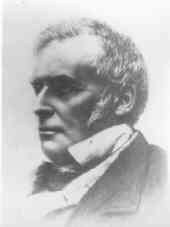
Taught myself exclusively by scripture, a multitude of expressions which are never found there appear strange to me, while they are at the base of the habits of thought of those whose views I have here to consider.
- Thus, "the moral law", "Christ's righteousness", and the like, which lie at the heart of the subject, are never found in scripture.
- But we must make allowance for these theological habits and expressions, see how far they are scriptural in substance, and hold fast the substance, while preferring, as surely clearer and more excellent, scriptural forms of expression.
- I have no doubt that unscriptural expressions are the fruit of, and lead to, unscriptural habits of mind;
- on the other hand it is not good to jeopardize substantial truths by making war on words which express them.
The word "Trinity" is not found in scripture; the expression "justified by faith only" is not found in scripture; yet I need not justify them to you as human expressions of essentially fundamental truths.
- I have no better words, and I use what I find commonly used to express what I believe in my inmost soul;
- and I would not shake the faith of those who hold fast the truth expressed in these words to quarrel with the words by which thousands of saints have expressed it before me.
So with the word "Person" applied to the Godhead. It is not scriptural;
- but I have no better word for One who sends, is sent, comes, goes away, wills, distributes, and does distinctive acts. The Father sends the Son, the Son does not send the Father.
- I doubt that any one will give me a better word than that which has clothed the deep divinely given convictions of faith in saints for ages.
- If a person quarrels with the word always used to express a truth without having a better, I dread a little his quarrelling with the truth it conveys.
- I say this that you may be assured that I do not seek to unsettle any simple soul by captious difficulties about words, or by resistance to expressions formed in the schools.
Page Top Article Top
| A FEW WORDS ON THE TRINITY |
|---|
| J. N. Darby, Collected Writings 32: 15-17
|
|---|
The application of numerals to divine or any moral being is absurd.* We do not mean the same thing by unity in figure and in minds.
[* This refers to ideas opposing the Trinity as set out in Scripture.]
- But I deny that God was, or ever could be, fully revealed as one. He is one; but He never was revealed as one. He was revealed to be one in contrast with a multiplicity of gods. But when revealed to be one, He was not fully revealed.
- He existed always in trinity in unity – not that I pretend to fathom this, but I know it, because, when fully revealed, He is so revealed.
- When He was revealed as one, He did not suffer Himself to be approached, carefully shewed this, dwelt – as so made known – behind the veil.
- In a word, He used various sensible figures to shew that He was not known, that the true light did not shine, and that the way into the holiest was not yet made manifest.
But when He does reveal Himself, the Son is on earth, yet in the bosom of the Father. He is the image of the invisible God. He that has seen Him has seen the Father.
- The light of God was in the world, but man did not see or comprehend it. The revealed One, the Father, was known or to be known in goodness by the Son.
- Though the invisible God was made known by Him who was His image, yet if He had ceased to be invisible, Christ would have ceased to be a special revealer and image.
- If He had not perfectly shewn and revealed Him as really manifested – that is, if He had not been God – no love, goodness, forbearance, patience, power – no revelation would have been. If He had not been Son, He could not have revealed the Father to us as such.
But this is not all. The darkness comprehended not the light.
- The Holy Ghost became power – when the needed work was done to put us according to God's holy and righteous nature into that place, without which He would not have been so known, that is, in truth –
- to give competency of apprehension, and to reveal, not as object but as communicating power, having quickened us so as to have a capacity to apprehend.
- I am not saying this by mere deduction, but from the revelation of God.
Without the Trinity love was not known, righteousness, holiness – the spiritual nature of God and purity as such.
- That is, He never was revealed as He is and always was. All the true nature of God, that is, what He is, without the Trinity is unknown.
- The Father wills; the Son quickens whom He will; but because we have separate wills, why necessarily have the Father and the Son? The Spirit distributes to whom He will; but this is not separate from the will of the Father and the Son.
- They have not the same counsel but one counsel, mind, purpose, thought; yet they act distinctly in the manifestation of that counsel. The Father sends the Son, and the Son the Spirit. Yet when the Son comes, He is not thereby separate from the Father.
- "The Father that dwelleth in me, he doeth the works".
- So He casts out demons by the Spirit of God; yet He casts them out.
- There is unity in all that constitutes oneness when we speak spiritually – not unity as one by arriving at the same things, or union, or by being united, as we are by having only one Spirit dwelling in all, but
- – by being one in eternal being; so that all else flows from that one will and counsel, yet so as that distinction in action in that will is revealed to us: not distinct will, but distinct willing.
Not that I have the least pretension to fathom this divine mystery where all are God, all one God, God all three
- yet the Father is revealed, the Son reveals, the Holy Ghost quickens and makes known.
- The Son who reveals is not different from the Father whom He reveals, or He would not reveal Him.
- By the Spirit who quickens and makes known, we are born of God and know God dwelling in us. He reveals Him to us by His own presence and is in every way the power of God, active in the creature.
Nor could the creature reach to God; or God would not be God. It is simply impossible; for if finite reach to infinite, there is neither finite nor infinite.
- And the infinite God could not, as such, reveal Himself to a finite creature. Nor is this mentally true only; for if God in His glory had done so, the creature could not have existed before Him.
- So if morally revealed – that is, as righteous and holy, and simple glory, that is, "in essential glory" – man could not have stood before Him. There was contrariety morally.
- Not even love would do; for what was it to man as he was? No link, no desire, and, if man was a sinner, no fitness in the simple display of it.
But in the Son by the Holy Ghost, by the work of Christ and the operation of the Holy Ghost, God is revealed;
- and in the love of the Father, righteousness and holiness are maintained and glorified, with capacity of communion in enjoyment of both the Father and the Son and intelligence of all these ways conferred by the presence of the Holy Ghost.
Hence, while John says God so loved the world, we find, whenever he speaks of grace and power bringing man into the knowledge and enjoyment of God,
- he speaks of the Father and the Son, adding afterwards in the words of Christ the presence and work of the Comforter.
- John is the one who speaks specially of the revelation of God, not of the presentation of man to God, though he does this;
- as Paul also speaks of the revelation of God, but specially of man's presenting to God.
Thus we see that there could be no full revelation of God, but through the Son by the Spirit, and thereby of the Father.
- The full revelation of the one God is only thus – Father, Son, and Holy Ghost.
- This, this only, is what the one God is, one identity of will and being, so that they are essentially one and one only, yet distinct in willing and acting
- – and we can distinguish them in willing and acting: hence we commonly speak of persons –
- yet never willing or acting but in the common will and unity of nature.
I fear much human language on this. But I affirm that the only full revelation of the one true God is the revelation of Him in the Trinity.
- Our prayers rise up the same. Through Him – Christ the Son – we have access by one Spirit unto the Father.
Page Top Article Top