Menu•SiteMap |
Doctrine
Page Top
| 3 - DELIVERANCE FROM THE FLESH |
|---|
Romans 8: 1-17
Ministry by F. E. Raven 2: 337-351
|
|---|
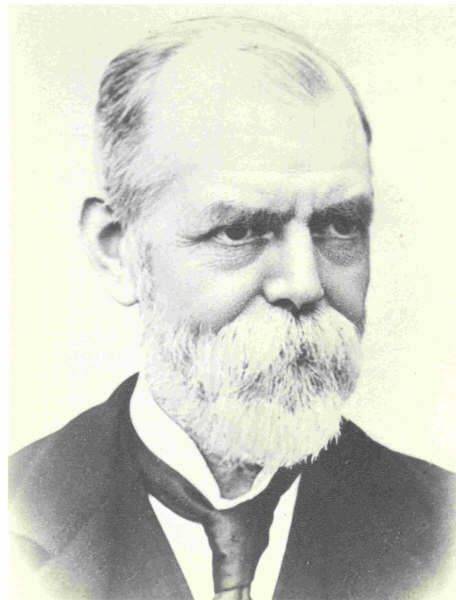
We have had before us, on two former occasions, the subject of deliverance;
- and I can understand the question being asked, What is the great importance to the Christian of deliverance?
- I am not now speaking of conversion, and I do not want any one here to confound deliverance with conversion.
- The fact is, we are converted before we know much about deliverance. Deliverance is entered into by a Christian after he is converted, not before.
- I quite admit that there is a great change brought about in conversion as the effect of the light of God having entered the soul.
- It is totally impossible that the light of God should shine into a man’s soul without producing a great effect, and that effect is conversion.
- But that is not the same thing as deliverance.
- It is when there has been the turning to God in conversion, that a person begins to prove the great reality of bondage and need of deliverance, and not, I think, until then.
- You may take it for granted that deliverance is not experienced until the need of it is realised.
- It is when the light of the gospel has really entered in and the Spirit of God has been received, that the need of deliverance is felt, and the way of it is found.
- But what is the end of deliverance? What is the gain of it? I will tell you;
- it is essential in order that you may enter into the thought and purpose of God concerning you.
- It is entirely out of the question that any one could enter into this apart from deliverance.
- If I were asked what my impression is as to the need which exists among Christians in the present day, I should say it is the need of deliverance.
The subject of deliverance has been before us on previous occasions, as I may say, partially.
- First I spoke of deliverance from sin and the world, the two being very intimately connected.
- Last time we had another aspect of deliverance, and that was, from the law.
Our subject now is one which goes to the bottom of the matter, and that is deliverance from the flesh. That is what I want to bring forward at this time, if the Lord enable me.
- Deliverance from the flesh is the point that is reached in the passage I read in Romans 8; and it is in order that the Christian may enter into life,
- for in Romans 8 you come to this, that you are passed out of death into life.
- As far as I understand the structure of the epistle, I do not think the Christian reaches life as regards himself until he comes to chapter 8.
- In chapter 6 I see life in Christ; but I do not see life spoken of as in the Christian until chapter 8.
- The question of life is and must be mixed up with the question of deliverance; and until deliverance is realised, I do not think any Christian knows or can know very much about life;
- for he has to pass out of death into life.
- I refer to verse 13 of chapter 8, where the apostle says,
- “If ye live after the flesh, ye shall die; but if ye through the Spirit do mortify the deeds of the body, ye shall live”.
- That is the point where you come to life as to the believer, and then immediately consequent upon that, the Spirit of sonship is brought in. Now you get to the idea of correspondence to Christ.
- “As many as are led by the Spirit of God, they are the sons of God”.
- It is the first time you get any such thought in the epistle as that you are “sons of God”. It adds,
- “ye have not received the spirit of bondage again to fear; but ye have received the Spirit of adoption, whereby we cry, Abba, Father”.
- You are come now to the answer in the believer to chapter 5. In chapter 5,
- “the love of God is shed abroad in our hearts by the Holy Ghost which is given unto us”;
- and now in chapter 8 we cry, “Abba, Father”;
- and the idea of crying, “Abba, Father” is, that you respond to the love that has been made known to you.
- Depend upon it there is a good deal passes between those two points, between the thought of God’s love shed abroad in the heart
- and the time that the Christian really understands what it is to cry, “Abba, Father”.
- Then it is that it says,
- “The Spirit itself beareth witness with our spirit, that we are the children of God: and if children, then heirs; heirs of God, and joint heirs of Christ; if so be that we suffer with him, that we may be also glorified together”.
- And that is the furthest point to which doctrinally the epistle brings the Christian
- – the object of the epistle is gained, that is, the Christian is brought into the truth of life.
Allow me to say one word about life before I pass on. You cannot rightly talk about life apart from position;
- you must have a divinely ordered position in which to live.
- You get the position unfolded here, namely, that of sons or children of God, consequently you can now talk about life.
- It is curious that Paul constantly takes the opposite order to John. For instance, in John 20, the position is first given, and then the life is brought in: the Lord says, Go tell my brethren,
- “I ascend to my Father, and to your Father”,
- and afterwards He breathes on them and says,
- “Receive ye the Holy Ghost”.
- Here in Romans 8 it is the opposite order, you are in the Spirit and the Spirit is life, and by the Spirit you mortify the deeds of the body,
- and then you come to the truth of sonship.
- Life for the Christian really means correspondence to Christ, and until you have got to the point of correspondence to Christ you have not got the true idea of life.
Now I come back to my present subject, the very important question of deliverance from the flesh.
- It will lead me to bring before you, first what is meant by the expression “flesh” in Scripture, and then what is the way of deliverance.
- This is found in principle in a single expression,
- “You are not in the flesh, but in the Spirit, if so be that the Spirit of God dwell in you”.
Now, I think, that a believer receives the Spirit some considerable time, in a general way, before he learns that he is in the Spirit;
- for it is evident from chapter 5 that when we believe in God who raised up Christ from the dead, then the Spirit is given and the love of God is shed abroad by the Spirit in our hearts.
- But the believer may not have come to the sense that he is “in the Spirit”; though it be true of him as having received the Spirit.
Let me go back a little over the epistle, because the point is so important.
- You get conversion fully at the close of chapter 4, when there is the apprehension that
- Christ “was delivered for our offences, and was raised again for our justification”;
- that is, the believer is not only cleared as to the question of offences, but as to the question of death, and it is when he comes to that point that he learns the attitude in which God is toward believers, through our Lord Jesus Christ;
- that is, by the apprehension of what prevails in the Lord Jesus Christ, the last Adam, the believer learns what the attitude of God is toward him.
- And not only that, but the Holy Ghost is given to him; that is, he stands in the presence of the grace of God, and in the light as God is in the light;
- God is fully revealed to him, and he knows the grace of God, which is established through the Lord Jesus Christ, the last Adam.
Now remember, that so far it is the grace of God toward the believer; and you are entitled to that from the very beginning,
- and the learning of what you are for God will not improve that.
- I quite admit it may enable you to enjoy it more; but no amount of apprehension of what you are for God will ever improve what God is towards you, because
- hat is established and assured eternally in the Lord Jesus Christ, and therefore it cannot alter.
- It is not a question of what the grace of God is toward each individual believer, but of what is established in the last Adam, the Lord Jesus Christ;
- and that describes what the grace of God is toward the believer and toward every believer.
- Therefore you never can improve upon the grace of God.
- And then, as I said before, the love of God is shed abroad in our hearts by the Holy Ghost given to us;
- but in that the Holy Ghost is not acting on our side but on God’s side, shedding abroad God’s love;
- He is not making us love God, but He is teaching the love of God towards us; it is God’s love, not ours.
- I am loth to leave the point, because I feel we cannot really enter very much into the great question of what we are before God if we are not well established in the truth of what God is towards us, for that is where the grace of God is known.
- And the measure and description of what God is towards us is what is established in the last Adam, the Lord Jesus Christ;
- that as we got sin and death by the first Adam, so we get the grace of God, divine favour and everything else by the last Adam.
- “As through one offence towards all men to condemnation, so through one righteousness towards all men unto justification of life”;
- and it goes on to say, that “as sin has reigned by death, so might grace reign through righteousness unto eternal life, by Jesus Christ our Lord”.
- It is all established in the Lord Jesus Christ, the last Adam, the Head of all; and the Head describes the attitude in which God is toward all.
Then comes the great question of what we are for God.
- And that brings in a most important truth, the truth of another Man.
- If I might use the expression, speaking reverently,
- The practical difficulty for us is to change the man; and we could not do this if we did not first understand how God has changed the man.
- For four thousand years God was dealing with one man; but now God’s ways are all displayed in another Man, and that is the great truth that chapter 6 brings in.
A person newly converted of necessity begins to be troubled by finding that he still has that in him which tends to connect him with the whole course and order of things down here, that is, sin.
- I do not think there ever was a converted person who was not troubled more or less by that.
- He did not trouble about it before, because, though it is very possible he knew something about sins, he did not know much about sin.
- Many a person when first converted thinks that the whole course is cleared, that it will be all plain sailing. But it is not quite such plain sailing, for the reason I have spoken of, that
- he finds he has got this terrible principle in him, which always tends to connect his soul with the course of things down here.
- Also he has to find out another painful truth, and that is, that he is weak; he might have been strong in sin,
- but when it comes to be a question of what pleases God, and of the expression of God’s will, which the law is,
- then one finds he is powerless for good.
- Those two lessons I believe every converted person has to learn.
Now the first thing the Spirit of God brings to your attention is this, that God is not expecting improvement or strength in you, but He presents before your soul the great truth of
- another Man, who having been proved and tested, has entered in to His entire satisfaction.
- He is on that ground, He is not on the ground of an innocent man, but
- ”In that he died, he died unto sin once; in that he liveth, he liveth unto God”.
- Then the Spirit of God says further,
- “You likewise reckon yourselves to be dead unto sin, but alive unto God in Christ Jesus”;
- you reckon yourselves in correspondence to that Man.
- If I might use the expression which I did a fortnight since, that is the leverage in the soul;
- for so long as I have any idea that God is looking for improvement or victory in me, I shall do no good at all;
- nor until I apprehend the great truth that there is another Man, who has been raised from the dead by the glory of the Father.
- That is the second Man, and that is what made me use the expression a short time since that God has changed the man.
- It is no longer testing or proving or anything of the kind; that went on for four thousand years;
- now there is another Man before God, and all starts from Him, and the Christian is going to be in His likeness,
- “If we have been planted together in the likeness of his death, we shall be also in the likeness of his resurrection”.
- It is simply a question of being conformed to Him.
And in connection with this, another truth which I have also touched upon on a previous occasion comes out in chapter 7
- – the believer is “married” to Him who is raised from the dead.
- The first bond, that is, law, has been dissolved by the death of Christ; and it is now another husband to whom the Christian is united, and is consequently subject, and at the same time deriving character from Him.
- So it is not improvement at all, but another Man.
I very much wish you to bear in mind, if the Lord enable you, what I have tried to bring before you, this great truth of another Man,
- because it is there you get the thought of life brought in; not subjectively in you, but life in another, life in Christ Jesus.
- What does it mean? I will tell you – there is one Man living actually,
- “In that he died, he died unto sin once; in that he liveth, he liveth unto God”;
- and living unto God is now all on the principle of resurrection.
- Even in regard to the saints in the millennium that will live on earth, I believe they will live on the ground of resurrection; I do not say in resurrection, but on the ground of resurrection;
- because it is the presence of Christ risen which will relieve them of death.
- Now the Christian properly lives on the ground of resurrection.
- The only possible ground on which a man could live for God is that of resurrection, for death is on man, and so it says,
- Thus you have come to this point, the apprehension of life; I do not say life in the Christian, we have not come to that yet, but life in one Man, as it says in verse 2 of this chapter,
- “The law of the Spirit of life”, not “in me”, but “in Christ Jesus”,
- the One who is spoken of in chapter 6, as having died unto sin once, but living unto God.
- If you do not apprehend life in that way, objectively, in Christ, you do not get the idea of life at all, because the great thing that Scripture brings before you is life in another Man, and on a totally different footing;
- He is raised from the dead by the glory of the Father, that is the ground of life now.
- Christ is as Man in the Father’s presence, to the Father’s delight; He is everything that the heart of the Father could desire; He lives to the entire satisfaction of God.
- That is where life is now, in Christ Jesus, and you have to learn it as there.
- Many a person who has wanted to understand something about life has begun by looking at himself, and has made a fatal mistake, because he has not begun from Christ.
- You must learn from Christ, you must first see what has come to pass in Christ before you can learn what is true in yourself,
- for the grace of God puts you in correspondence to Christ;
- and if you do not learn what is true in Christ you cannot learn what is true in yourself.
Now when I come to the point of life in the believer, it necessarily involves the question of flesh and the Spirit.
- I think anybody will understand that the flesh is a very different thought from sin. I will show you that it is so in an instant. Scripture speaks of sin as having
- “entered into the world”, but
- you could not talk about the flesh having entered in.
- I have said before, that sin did not originate with man; it came in by man, but it existed before,
- “By one man sin entered into the world”.
- As far as I have any insight into it, I think the flesh is man’s natural condition, it is man’s nature, the seat of what I might call his moral being; thought, feeling, will and purpose all lie in the flesh.
- Now you can see that that is a very different thing from sin; it has become
- but I do not talk about sin exactly as being man’s nature.
- I think the nature of an unconverted man is flesh, that is often the idea of the expression in Scripture.
- You find a great deal in this chapter about the
- that is, the thought and purpose of the flesh.
But now let me go back a moment. From the outset, from the time that a man through grace believes in Christ as raised again from the dead, that man receives the Holy Ghost, and the love of God is shed abroad in his heart;
- and he further learns another great lesson, that the first man is superseded, and that there is another Man raised from the dead in the presence of God,
- and that he is united to that other Man, married to Him, to use the figure of Scripture.
- Now what about the flesh? He has come to this point, that the flesh is radically bad, the character of the flesh is discovered, and there is no hope of amendment in it;
- he has learnt in chapters 6 and 7 that there is a principle in him, sin, which always connects him with this scene;
- and he has learnt another thing too, that when it is a question of the will of God he is perfectly weak, there is no hope in the flesh at all.
- Mark how it is put here; it says in verse 5 of chapter 8,
- “They that are after the flesh do mind the things of the flesh, but they that are after the Spirit the things of the Spirit.
“For the mind of the flesh is death, but the mind of the Spirit is life and peace.
“Because the mind of the flesh is enmity against God; for it is not subject to the law of God, neither indeed can be. So then they that are in the flesh cannot please God”.
- Now that is the second great lesson in the chapter;
- the first is that there is life in Christ Jesus;
- the second that there is no good in the flesh, that the flesh is radically bad and God has condemned it,
- “God sending his own Son in the likeness of flesh of sin, and for sin, condemned sin in the flesh”.
- And you cannot mix up the flesh with the Spirit. Many people like religious stories. Religious literature all appeals to religious flesh.
- You may depend upon it people would never coin religious stories if they did not believe in acting on religious flesh.
The practical lesson taught us in the early part of this chapter is this, that you cannot mix up flesh and Spirit, they are totally antagonistic,
- and there is no help in the flesh, that it is radically bad, so bad that God had to condemn it;
- and we have to learn the lesson, that nothing whatever is to be hoped for from the flesh.
- But then comes the great point for the Christian,
- “You are not in the flesh but in the Spirit, if so be that the Spirit of God dwell in you”.
- If I look to the flesh for anything, I am looking to what God has condemned, to what cannot yield anything at all for God, I am on a totally
wrong tack, I have forgotten that
- I am “not in the flesh, but in the Spirit, if so be that the Spirit of God dwell in” me.
- That is, the Spirit of God has taken up His abode in the Christian, not simply to shed abroad the love of God in his heart, but for another purpose now,
- to be to him all that the flesh was as the source and spring of thought and purpose.
- I have sometimes said that Scripture does not recognise two natures in the Christian;
- the flesh is the nature in an undelivered man;
- when he receives the Spirit he is “not in the flesh, but in the Spirit”, and the Spirit is not a nature but a person.
- And when he gets more light, it can be said of him that he has
- “put off the old man and put on the new”;
- and then the nature of the new man is the Christian’s nature – the new man is
- “created after God in righteousness and holiness of truth”, that is the Christian’s nature.
- If he should fail, and allow the flesh to come in, that does not prove to me that the flesh is his nature;
- it is like a foreign substance in him, it has no business to be seen, and has to be judged;
- but nature is what is characteristic.
- An unconverted man is characterised by the flesh, and there is nothing else to characterise him.
- With the Christian there is a new spring, and that is the Spirit.
- The Spirit of God has come to take the control, so that it can be said now not only that you have the Spirit, but that you are in it. Then it goes on to say,
- “If Christ be in you, the body is dead because of sin”,
- but what then? “The Spirit is life”, the flesh is entirely disowned,
- “the Spirit is life because of righteousness”,
- that is, in view of righteousness; you can get no righteousness from the flesh, but righteousness has to be maintained, and so
- “the Spirit is life in view of righteousness”.
Then we come to another point, the ultimate raising of the body; for if the Spirit of God dwells in you it is witness that you have nothing to expect from the flesh,
- but you have everything to expect from the Spirit, righteousness, and the eventual raising up of your mortal body.
- Therefore you are not a debtor to the flesh, you will not get righteousness from the flesh –
- if you want eternal life you must reap it of the Spirit – that is how Scripture puts it.
- It is virtually what the Lord says in John 4,
- “He that drinketh of this water”,
that is, the water that springs from beneath,
“shall thirst again, but he that drinketh of the water that I shall give him shall never thirst; but the water that I shall give him shall be in him a well of water springing up unto eternal life”.
- It is a great thing when we have really settled it in our souls that we have nothing to expect from the flesh, but everything from the Spirit that dwells in us.
Now we have come to the statement,
- “If you live after the flesh you shall die”;
- the apostle puts it in a very strong way; any person that lives after the flesh will die, all tends to that end, of the flesh he will reap corruption;
- “but if by the Spirit you mortify the deeds of the body, you shall live”.
- When I mortify the deeds of the body, then it is I am delivered from the flesh; the flesh is there, but I am no longer under the control of it;
- The flesh can only work in the members, and when we mortify the deeds of the body, that is, the deeds to which the body is prone, then the apostle says, we shall live;
- you come on to other ground, it is, so to say, the condition on which you live.
- I venture to say this, that no Christian has any experience of life at all if he does not “mortify the deeds of the body”.
- I do not deny his Christianity, and that he may know something of what the grace of God is towards him; but he has no sense of life, of correspondence to Christ, save as mortifying the deeds of the body.
- The principle of life in Christianity is this, that you pass out of death into life, “The Spirit is life because of righteousness”;
- and the practical carrying out of that is, that by the Spirit you “mortify” – you do not allow – “the deeds of the body”.
- They are called the deeds of the body because if the flesh works, it works in the body.
- Take a person that gets into a passion, it is the body that is the vehicle; the will, and the lusts of the flesh all work through the body.
- For my own part, I have felt that my members are my great trial. Something hasty comes to the tongue: what is it offends? The tongue, the member, What has been working there? The flesh.
- If the conception is there, the thing in the Christian ought to be nipped in the bud; the deeds of the body are to be mortified by the Spirit.
- Thus you come to this wonderful point, that now that the Spirit of God is there you are practically delivered from the dominion and control of the flesh, and the Spirit is free to do His own proper work.
- When the Spirit is in conflict with the flesh, He is doing the work which is necessary for the Christian, but not the work in which He delights.
- I put it to anybody here, if Christ has been
- “raised from the dead by the glory of the Father”,
- do you not think the Spirit of God has the most supreme delight in Christ?
- He has, and what do you think His delight is in the Christian? To lead him in suitability to Christ, in entire correspondence with Christ; that is His proper work, not to be simply in conflict with the flesh.
- I think it is miserable and degrading to think that there should be that continual conflict between the flesh and Spirit to the end of the chapter.
- The word as to the flesh lusting against the Spirit, and the Spirit against the flesh, was spoken to Christians who were very low down. [Galatians]
And there is another great truth, that the Christian is now formed by the place in which Christ has set him.
- As surely as possible, my child is formed by my house; he is formed for good or evil by the system and framework of affections by which he is surrounded.
- The same thing is true of the Christian – he is set in the presence of the love of God, and is formed by the associations in which the grace of God has set him.
- The youngest Christian has “the love of God shed abroad in his heart”, he has the power and ability to cry “Abba, Father”; but he does not know much about it till he knows deliverance.
- But the moment I come to that, I am formed for God by the associations and affections in which the grace of God has set me.
As I said at the beginning, why I insist so strongly on the truth of deliverance – though I am ashamed to speak of it, because I know so little about it – is because
- I believe it to be of all moment if you want to enter into what the thought of God is about you.
- It is totally impossible to enter into the divine thought that you are the companions of Christ – for that is what God has called you to –
- unless you are practically set free as to the state of your soul from everything to which Christ has died, sin and the world, and law and flesh.
- And as I have said before, the first thing that the Spirit of God sets to work to do when He is received is to bring before your soul the great truth that
- God has changed His man; that all the stages of probation of the first man are completely over, all has been ended in the cross of Christ;
- but that another Man has come in, in whom God has been completely glorified, and that the Christian is joined to Him, to take his character from Him.
- Then the truth of life in Christ Jesus is apprehended, the true character of the flesh is discovered, and now the Christian is
- “not in the flesh but in the Spirit”,
- and the purpose of the Spirit is to lead the Christian in correspondence to Christ.
- That is all on the blessed ground of sonship, and
- “the Spirit bears witness with our spirit that we are the children of God”.
- We are a heavenly band.
I pray God in His great grace to make it plain to all here.
- All these truths we have to enter into experimentally; the mere statement of them, or the mere apprehension of them doctrinally will not suffice, will not bring deliverance to you.
- All has to be wrought in the soul. The soul has to learn practically and experimentally the truth of another Man, and
- – what is so essential if you are going to join company with that Man – that
- you must part company with the man that is here, the man that is dominated by sin. That is of all moment.
- And in that way the believer learns what the true character of the flesh is, and the righteousness of God’s judgment of it, that
- God has “condemned sin in the flesh”;
- thus the whole state has been condemned, that the believer might be
- “not in the flesh but in the Spirit”,
- that the Spirit might be life because of righteousness, and also be the Spirit of sonship to lead the believer, according to the grace of God, into what is true in Christ.
May God give to us to understand it in His great grace, and to be led by the Spirit of God on that blessed line where we not only know the love of God,
- but where by the Spirit we respond to that love, that is, we cry, “Abba, Father”, with the blessed consciousness by the Spirit that we are the children of God;
- and if suffering with Him here, if in that association, that we are
- “heirs of God and joint heirs of Christ, if so be that we suffer with him, that we may be also glorified together”.
Page Top Article Top
| ASSOCIATION WITH CHRIST |
|---|
Colossians 2: 20-23; 3: 1-6
Ministry by F. E. Raven 2: 352-65
|
|---|
The subject that has occupied us on the three previous occasions has been deliverance, but then
- deliverance has, in the thought of God for the saints, its own distinct purpose and object.
- And as I understand it, the end in view is that we may enter in our souls into the proper place of Christians as in association with Christ risen, and thus as one body by the Spirit here on earth.
- When we have reached that point, then I think all can understand that deliverance is realized.
- That is what led me to the passage I have read, for in the beginning of chapter 3 you get the thought of being risen with Christ, and this means that we are in association with Christ.
- The idea, as I understand it, is that the power of God that has operated in Christ in His resurrection has also taken effect in the saints;
- not in the same way, because with Him it was in literal resurrection, and in the saints it is moral;
- but it is the same power, and by divine power they are placed on one common platform with Christ, as risen together with Him.
- And I doubt if anybody understands what Christianity is if he does not apprehend that.
- It is all very well to bear a good name in the world six days in the week, and to be a Christian on the seventh; but that is not Christianity.
- Christianity is brought out in the passage I have read in Colossians;
- at the close of chapter 2 you pass out of one scene,
- and in the beginning of chapter 3 you have got another scene in view, though you may not yet be there.
- That is what I shall try by the grace of God to make plain:
- there is another scene opened to the view of the Christian.
- It is presented in a few words in the beginning of chapter 3,
- And I make bold to say this, that until we as Christians have in faith another scene in view, we really do not understand what it is to be intelligently for Christ down here.
Of the two scenes to which I have alluded, the one is in contrast to the other;
- the one is an order of things in which man dogmatises, and lays down the law.
- The other is an order of things in which man has no place at all, but everything is completely of God,
- “the things above, at the right hand of God”:
- you may depend upon it there is nothing of man there, all is of God.
I have spoken of deliverance as a subject of the last importance to us as Christians, and have referred to it in three aspects,
- first, deliverance from sin and the world, which are intimately connected,
- then deliverance from law,
- and finally deliverance from the flesh.
I will briefly touch on the three again, to connect the whole together.
Deliverance from Sin and the World
I do not think that people enter into deliverance from sin and the world until they get something positive in their souls.
- It is no good their saying they are dead to sin and the world if they are not dead;
- and I do not think they reckon themselves dead, until there is a certain power of God in the soul, and this lies in the apprehension of another Man. As we get in Romans 6,
- It is perfectly evident that the man here lives to himself; that is the principle of sin.
- But what has come to pass in regard to another Man is,
- “in that he died, he died unto sin once”,
- He had to say to sin in bearing the judgment of it,
- “in that he liveth, he liveth unto God”.
- The great point is this, that a Man, of another order, has entered in to the eternal and perfect satisfaction of God,
- “raised from the dead by the glory of the Father”;
- and it is the sense and power of that in the soul which really enables the Christian to reckon himself
- “dead to sin, and alive unto God in Christ Jesus”.
- Any Christian would feel the incompatibility of sin with grace.
- Then in regard to the world, the world is the system of things in which the flesh lives; and I do not think persons would be content to accept death to the world
- if they did not apprehend that there existed another sphere, another circle, in which the character of Christ is seen.
- I do not say more now in regard to deliverance from sin and the world, because I am only recapitulating.
Deliverance from Law
Subsequently we had before us death to the law, a very important point.
- The law was a bond under which the Jew was held; but God has dissolved the bond by the death of Christ. The bond does not exist for the Christian, he is not under law.
- It is not quite like death to sin and to the world, there is no bond there; but the law was a bond, and the point in regard to it is that God has dissolved the bond in order that another bond might be formed.
- You are “become dead to the law by the body of Christ”,
that is, in Christ that bond is dissolved,
“that you might be to another, to him that is raised up from the dead, to bring forth fruit unto God”.
- I will put it in other language for you, which may perhaps tend to simplify it. The apostle says,
- “In that I live in flesh, I live by the faith of the Son of God, who loved me, and gave himself for me”;
- that is my bond, he says, not law. The Christian is bound to Christ, by the sense of what Christ has done for him.
- The law did nothing for him except condemn; now he lives by the faith
the Son of God, who loved him and gave Himself for him; there it is he gets deliverance from law.
- He walks under the influence of love, not simply the love of God but the love of Christ.
- Some might think they are the same thing, but they are not; there is the love of God and there is the love of Christ.
- You could hardly say that God loved me and gave Himself for me; God gave His Son for me, but
- Christ “loved me and gave himself for me”.
- It is a Man that loved me and gave Himself for me; He is divine, but He is a Man. So, too,
- He “loved the church and gave himself for it”.
- That is the second point, deliverance from law.
Deliverance from the Flesh
Then the third point came before us last time, and that is, deliverance from the flesh, which is comparatively simple,
- because it lies in this, that the Christian being indwelt by the Spirit is not in the flesh.
- He has to learn that; and as to the way deliverance is realized, he has to learn that God has in the cross judged sin in the flesh.
- I do not think the Christian practically understands deliverance from the flesh until he sees what was effected typically in the brazen serpent and actually in Christ;
- then he sees that the state of man in the flesh has been judged in order that the believer might be indwelt by the Spirit.
- When I once see that God has judged sin in the flesh, then I say, I am not debtor to the flesh; I am indwelt by the Spirit, for the judgment was effected in order that the Spirit might be given and might be life in the believer.
- It is just according to the type in Numbers, where the next thing after the brazen serpent is the digging of the well and the springing up of the water,
- That is, it is the Spirit of life in Christ Jesus springing up in the Christian, and that is the way he gets, practically, deliverance from the flesh.
Association with Christ
Of course it is easy for me to dwell on these things in detail; but the difficulty is that all these things have to be put together in each one of our souls, because they all work together.
- I am quite warranted in taking them up in detail, for indeed Scripture does so;
- but they must all be put together in the soul of the believer, because deliverance has to be complete;
- he has to be practically freed from sin, and the world, and law, and the flesh; that is the divine thought.
- And the object and purpose on the part of God in it is that he may enter into the blessed truth of association with Christ;
- pass practically out of one scene into the presence of another blessed scene opened up to his view entirely outside of all that is here.
Allow me to dwell first on the two or three verses at the close of chapter 2.
- The apostle has completed the doctrinal part in verse 19, and then in verse 20 he comes to the hortatory part, and says,
- “Wherefore if ye be dead with Christ from the rudiments of the world, why, as though alive in the world”
– not ‘living’ exactly, but “alive” in the world –
“are ye subject to ordinances, (Touch not, taste not, handle not, which are all to perish with the using), after the commandments and doctrines of men? which things have indeed a show of wisdom in will, worship, and humility, and neglecting of the body, not in any honour to the satisfying of the flesh”.
Now I think any one can see there is one scene here, the world; and it is not the world of gross things, not Egypt, but it is what one may call the religious world,
- and in the religious world man dogmatises, the law is laid down.
- Even the law of God in the Old Testament was in dogmas; the apostle speaks of it in the early part of the chapter, as
- “the handwriting of ordinances”, dogmas.
- But in the religious world it is after the traditions of men; man lays down and prescribes what is suitable to the religious person.
- You will find it in all the great systems which exist in the present day;
- Christianity has got back to dogmatism.
- Man prepares a rubric, he lays down rules as to service, he gives directions as to the ordering of the person and even of the dress.
- That is the character of things that exist in the religious world, it is dogmatism; it calls for unintelligent obedience, and the end and purpose of it is the satisfaction of the flesh.
- I have often thought, in connection with the great religious things in the world, for whose satisfaction do they exist? Whom do they please?
- Suppose you have intellectual preaching, to which it is a great pleasure to man to listen, is that to please God or man?
- So, too, in regard to musical services; whom are they intended to please?
- If you had the most magnificent music which it was possible to produce upon earth, do you think for an instant that human music could please God? What has God to say to human music?
- There is such a thing as singing with the heart and in the Spirit, and with the understanding; but nothing can please God except what is in the Spirit. All else is for the satisfaction of the flesh.
- Of course you see all I have spoken of in its most gross form in Popery; but you can see plenty of it outside Popery, round us here in the world.
- I might take up a good many other things besides those I have mentioned, such as laying down of seasons and times and days; for they are of the same order of things.
- People are dogmatised; it is not intelligent subjection which is called for, but unintelligent subjection, that is,
- people do things, not because they see any spiritual purpose or reason in them, but because they are laid down after the commandments and traditions of men, and serve for the satisfaction of the flesh.
- And they are well pleased with what they do in this way; there is a sort of satisfaction in it,
- it is not that God is pleased, but the flesh is satisfied, and it ends there.
- It has often been said that there is a strong religious tendency in the nature of man, and therefore a cultivated world cannot do without religion;
- but the character of worldly religion is always dogmatism, what is laid down by man, “the commandments and traditions of men”:
- it cannot rise above this.
In regard to the Christian, the point is this: he is dead with Christ from the rudiments of the world.
- Christ in a sense came under the rudiments of the world, for He had His human identity, was
- “made of a woman, made under the law”,
- He was presented to Jehovah, and was circumcised.
- But He has died out from all that order, and we are dead with Him,
- “If ye be dead with Christ from the rudiments of the world”.
- A Christian has passed morally out of that scene.
Now I want to look a little at the scene opened to us at the beginning of chapter 3, though I can speak but little as to it,
- seeing that so little is said about it, and really it is a scene on which one finds it very difficult to touch.
- “If ye then be risen with Christ, seek those things which are above, where Christ sitteth on the right hand of God. Set your affection on things above, not on things on the earth. For ye are dead, and your life is hid with Christ in God. When Christ, who is our life, shall appear, then shall ye also appear with him in glory”.
- Now may the Lord enable me to say a word in regard to these two or three verses. It is not that I can pretend to expound them; I can only throw out a thought or two in regard to them.
We have come, as I was saying at the beginning, to what I believe to be the great purpose and end of deliverance, that is, that we are risen together with Christ.
- How that is brought about we are told in verse 12 of chapter 2,
- “Buried with him in baptism, wherein also ye are risen with him through the faith of the operation of God, who hath raised him from the dead”.
- My own impression, although I would not be very positive about it, is that it should read,
- “in whom also ye are risen with him”:
- I am not clear about connecting it with baptism, I am more inclined to connect it with Christ: “in whom”, that is, it is in Christ, the Christian is risen with Him.
- In the 2nd edition, 1871, of his New Testament – and in the 1890 edition of the whole Bible – Mr. Darby has a footnote to “in which”, verse 12: “q. Or ‘in whom’ ”.
- Inexplicably, that footnote does not appear in the 1939 or 1961 Stow Hill editions. GAR
|
- Now we come to the exhortation founded on it,
- “If you are risen together with Christ”.
- You can understand that the Christian is not yet risen; but Christ is risen, and God has wrought in the Christian in the same power by which he raised Christ, and by the same Spirit; and the way in which it is wrought in the soul is
- “through faith of the operation of God, that raised him from the dead”.
- What that means is this, that I see the force and meaning of God’s operation in raising Him from the dead.
- I begin to see something of the glory of God, what God would secure for Himself out of the wreck and ruin of everything here, and the beginning of it was the resurrection of Christ.
- When Christ died, everything was gone as you might say; the world was dead in trespasses and sins, Jew and Gentile alike; Christ was in death, and what was to come out of it all?
- The first ray of light that breaks in upon that scene of darkness is the resurrection of Christ; the power of God raises Christ from the dead;
- it is God working, who commanded that out of darkness light should shine, and the first ray of light is the glory of God raising Christ again from the dead, that is the real beginning of all for God.
- Now I apprehend what God is doing, I see the character of his operation, that the purpose and intent of God is to recover.
- The resurrection is really the divine power in recovery.
- Satan destroys, man destroys, as the Lord said to the Jews,
- I see that Christ raised again from the dead is the glory of God in contrast to the destructive power of man and of Satan.
- I delight not only in the personal resurrection of Christ, but in the operation of God that raised Him from the dead.
- And I am entitled to take this ground, I am risen together with Him; God is bringing a company out of death, and Christ is first of that company, He is the first-fruits of the resurrection.
- God “is bringing many sons to glory”,
- and He has taken the first-born of them out of death.
- And the same power which wrought in Christ has wrought in us, and the way in which it is evidenced is in faith in the operation of God, that raised him from the dead.
- We are of His company, risen together with Him, in association with Him, and
- He is “not ashamed to call us brethren”.
- All the sons that are brought to glory are taken out of death. It is the triumph of God, His glory, that He takes a company for glory out of death.
I want next to show you the effect of it, and how it opens up to us another scene, a scene which is outside this scene. And the first point is,
- “If ye then be risen with Christ, seek those things which are above, where Christ sitteth on the right hand of God”.
- It is interesting to see the different way in which Christ is presented to us in the different epistles.
- I think you will find that almost every statement in regard to Him in the epistle to the Colossians is really leading up to the divine glory of His Person.
- And the reason of it is that there had been a tendency among those who were affecting the Colossians to set aside the true glory of the Person of the Son.
- For instance, in chapter 1 we read,
- “who is the image of the invisible God, the first-born of every creature: for by him were all things created, that are in heaven and that are in earth”.
- And again, “for it pleased … that in him should all fulness dwell”, and so on.
- So again in verse 9 of chapter 2 it says,
- “For in him dwelleth all the fulness of the Godhead bodily”.
- When you come to chapter 3 it says,
- “where Christ sitteth on the right hand of God”.
- I understand by it that that is the place which Christ has taken personally; it is not a place in which any other but Christ will ever be;
- you read of the saints being in heavenly places, but not at the right hand of God.
- It is the place which Christ has taken personally, and to me it is the declaration of the glory of His Person.
- Angels are the most distinguished of created beings,
- but “unto which of the angels said he at any time, Sit thou at my right hand until I make thy foes thy footstool”?
- The place that Christ has taken as Man at the right hand of God, the place of supreme honour and power, is the declaration on the part of God of who Christ is.
- I will give you a proof of it. The Lord told the Jews when He was before the Council that they should see the Son of man sitting at the right hand of God, and they said unto Him instantly,
- “Art thou then the Son of God?”
- They felt what it conveyed.
- So, too, Stephen saw Jesus standing at the right hand of God.
- And here you get the great truth that He sits at the right hand of God; it is the proof and declaration that He is the Son of God, in the place of supreme honour and glory.
- I have often thought in regard to Christ here upon earth, that the greatest proof of His deity is what He was as Man; you could not have such a man if He were not God.
- And here I get the declaration of His deity; that is, that He sits as Man at the right hand of God.
- It is a wonderful thing for the Christian, because everything is consequently changed, and he can look up there for that very reason, for the blessed truth has come out that there is actually a man sitting at the right hand of God.
- And then the practical bearing of it is that that Man is the One with whom as Man the Christian is associated, in order to draw his thoughts and heart into another scene where everything is of God.
- Mark you this, there is nothing there but what is of God; love reigns there supreme.
- When you think of Christ rejected, spit upon, and crucified down here, now sitting at God’s right hand, the object of all homage and honour and glory in heaven,
- it is a wonderful thing to think that as Christians we are placed by the grace of God in association with such an One.
- The practical effect of it must be that you
- “seek the things which are above where Christ sitteth at the right hand of God”.
The next point is this:
- “Set your affection on things above, not on things on the earth”.
- There are “things above” and there are “things on the earth”.
- It is a very difficult thing to attempt to describe what the things above are; but I should suppose they are most blessed things,
- and I take it that things above all centre round Him who is everything to us, who loved us and gave Himself for us.
- There is no one here tonight but knows very well what the things on earth are.
- You do not want to find the earth made agreeable to you, because another scene is opened up to you,
- where everything centres round a Man, highly exalted, proved to be divine, and
- where everything is of God, and love reigns supreme.
But now we have this great truth,
- The statement is not doctrinal but practical; you are dead, and
- “your life is hid with Christ in God”.
- No one knows what the life of the Christian is, it has never yet been manifested, it is hidden in God.
- If you could see Christ, you would understand then what the life of the Christian is; you will never know it till Christ appears, that is, I imagine, the meaning of the expression, “your life is hid with Christ in God”.
- “When he is manifested we shall be like him, for we shall see him as he is”,
- and no one will be like Him until He is manifested; then we shall be like Him in order that we may see Him. But for the moment our life is hid.
- How does that work? I think in this way, that a Christian wants to be hid so far as the world is concerned;
- I do not want to be prominent here so long as my life is hid; I would like to be in the shade down here until Christ who is my life is manifested,
- but though in obscurity I would not be inactive, but serving the Lord in the place of obscurity.
Now we come to the third point, and that is
- “When Christ, who is our life, shall appear, then shall ye also appear with him in glory”.
- Christ is our life, He is the real living power in the Christian, as the apostle says,
- “Not I, but Christ liveth in me”;
- that is what obtains in the present time, our life has not yet been manifested, but Christ is our life, and when He appears we shall appear with him in glory.
- I think I speak the sentiments and feeling of a great many, when I say, You do not want to come out glorious in the present time. You are content to wait for the time when Christ who is our life is manifested.
- I do not think we want to antedate the glory. One would not care to be glorious here, knowing that all the glory is at the right hand of God.
- There has been nothing but the deepest shame and humiliation and ignominy down here for Christ; He has now the blessed answer to it in the place of supreme honour and glory at the right hand of God,
- and I think the Christian should refuse to be renowned or distinguished in a scene where Christ has only been dishonoured, and content to wait until Christ is manifested in glory.
It is a great point to me that God has opened another scene to the Christian.
- I might illustrate it by the position of the Lord Himself when He was raised again from the dead;
- you can understand that He had clearly broken every link with this world, though morally He never had any.
- The potentates of the world had cast Him out, but as raised He enters the Holiest in the virtue of redemption.
- He had glorified God, and He was on the point of going up to heaven, but he remained here forty days for the will of God.
- And the Holiest is now true with regard to the Christian. We are risen together with Christ; the same power which raised Him from the dead has operated in us.
- We are in association with Him, and God has been pleased in His great grace to open up to us that blessed scene into which Christ has entered, and He bids us to seek the things which are above.
- Our souls are to be filled now with a sense of the blessed things where Christ is.
- As the apprehension of Christ is opened out to the believer, it is not only that we see Him as the anointed of God, who was here entirely for God’s will, and was the vessel of God’s pleasure,
- but we apprehend Him now in the glory of His Person;
- He is the One who sits at the right hand of God, and who is worthy to sit there, and He is declared to be what He is, the Son of God.
May God give you to see the great blessing of this truth, to see what a great end is to be gained by deliverance, what deliverance brings you to as to the practical state of your souls, that is
- into the consciousness of association with Christ, according to the grace of God; that He is not ashamed to call you brethren; you are in association with Him, you have got glory in view,
- and the blessed scene where everything is of God, where there is righteousness and holiness and love and majesty, and all that is of God, vindicated in a Man.
- That is the scene which is opened up to the Christian, and opened up to him in order that he may know what it is to be according to God and for God down here during the little moment he is on earth.
- May God in His great grace show it to all, in a way in which it is totally impossible for me to show it to you.
- I have only tried to give the idea of it; and I trust through the grace of God it may really take possession of our souls, that all may see the great gain which is to be obtained through deliverance.
Page Top Article Top