Menu•SiteMap |
Doctrine
The Lord's Coming
The blessed hope of the coming of the Lord is dear to the hearts of all true lovers of the Lord Jesus.
- But the manner and the relative timing of His coming have caused deep and ofttimes bitter differences.
It is generally conceded that the truth of the Lord coming for His own prior to the great tribulation was – after centuries of ignorance – revived among the "early brethren".
- This precious truth – intended for the private comfort of His own – has been publicly popularized by a number of modern day evanglelical writers
- and has been shamelessly exploited in movies, novels and even bumper stickers.
It may come as a surprise that brethren – among whom this truth was revived and still cherished – deplore
- the fact that it has been brought under public notice, and
- that, for many, it has completely over-shadowed the expectation of our Lord's return to take up His rights on the earth where He was rejected.
- The 1894 reading with JBS is a powerful witness against the misuse of this precious teaching to obscure the glorious appearing of our Lord Jesus Christ for which the Spirit and the bride say, "Come".
At the other extreme there are those who – in an audacious attempt to discredit "the word of the Lord" in 1 Thess. 4: 13-18 – attribute the origin of this precious truth to the wild utterances of a discredited and extinct sect.
- The 1908 article by WK exposes and dissipates the speculations – which, like the false report denying our Lord's resurrection in Matthew 28: 11-15 – are still being spread abroad, and deceiving many.
Other pages relating to J. B. Stoney:
Other pages relating to W. Kelly:
|
G.A.R.
Page Top
THE LORD'S COMING
Revelation 22: 15-21 |
|---|
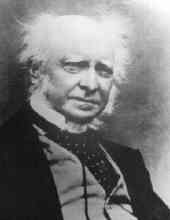 The following is from a reading at the annual meetings in Quemerford, Wiltshire, 1894.
This was three years before the Lord called His beloved servant to Himself, after having been laid aside with illness for two years.
The following is from a reading at the annual meetings in Quemerford, Wiltshire, 1894.
This was three years before the Lord called His beloved servant to Himself, after having been laid aside with illness for two years.
Ministry by J. B. Stoney, New Series, 2: 469-480.
|
| Key to Some Initials (? = unsure): |
? James Boyd, ?
D. L. Higgins, Highgate
Joseph Pellatt ? London
|
F. E. Raven, Greenwich
T. H. Reynolds, Burford
J. B. Stoney, Scarborough
|
J.B.S. The first thing here is the fact of a distinct communication from the Lord. "I Jesus have sent mine angel to testify unto you these things in the churches. I am the root and offspring of David, and the bright and morning star".
- Then in verse 17 there is response to it. No one could know what communication is but someone near Him.
- I hear people singing about the coming of the Lord who are not feeling the solemnity of it, they have not the gravity of it before them, they are not in a condition to say, "Come".
- No one can say "Come" but the Spirit and the bride. You may say it is individual, but the individual must have condition of heart and the sense of relationship, to be able to respond to this communication and say, "Come".
Rem. Being interested in His interests would be part of it.
D.L.H. The thought here is not our going up to Christ, but His coming to enter on His rights.
J.B.S. The prominent idea is that Christ is coming to reign. You could not have the day without the morning star. There is first the rapture, for when He comes, we come with Him.
- I do not think the wife of a rejected king would be satisfied that her husband should come for her, and not have prominently before her that he was coming to reign where he had been rejected.
- From Thyatira onward the prominent thought we get is Christ's coming to reign. It is the event looked for.
Ques. Is there not the fact of the rapture in verse 17.
J.B.S. The rapture is included, but there is more. The first wave of His power manifests it self with reference to His own. All who belong to Him will be brought under the effect of it.
- It will gather up every one who belongs to Him. I do not say the church only, but all who belong to Him.
D.L.H. Has the truth of the rapture taken too prominent a place with us so as to obliterate the thought of His coming to take His rights?
J.B.S. Exactly. Responsibilty is lost sight of. His coming is looked for because He will take us out of all trials here.
- The rapture is spoke of only once in Scripture – 1 Thess. 4 – and it is implied in John 14.
J.P. Is it the rapture in John 14?
J.B.S. It is so only by inference. It is to take them to Himself. It involves the rapture.
J.P. What is the "Where I am", is it the Father's house?
J.B.S. The point is Himself, to take them to Himself.
T.H.R. In that chapter it is all carrying them to His side.
F.H.B. In John 14 you do not get the idea of reigning.
J.B.S. No; but any true heart would not think of being with Him without thinking of His rights. "I will come for you", not send for you.
- A faithful heart looks for His rights, not only for its own relief.
D.L.H. If the rapture were not unfolded in 1 Thessalonians we should not have thought of it in John 14.
F.E.R. If we had not 1 Thessalonians 4 we should know nothing about the rapture.
Ques. Is not the rapture in 1 Corinthians 15?
J.B.S. That is not the subject, but the resurrection. There is more about the day than the rapture in 1 Thessalonians. In chapter 1 we have waiting for God's Son from heaven which was to set up His kingdom.
J.P. Does not "all be changed" in 1 Corinthians 15 refer to the rapture?
F.E.R. It does not refer to it. The rapture refers to our being "caught up", not to being changed.
Ques. What then is the mystery there? "Behold, I shew you a mystery; We shall not all sleep, but we shall all be changed".
F.E.R. The change is not the rapture. The rapture is catching up. The mystery is the change.
- It all forms part of the victory over death effected here, and does not go on to taking us to heaven.
J.B.S. It only shows how the rapture is before your eye, and not His coming.
- Where the rapture is the thing prominently before the mind, the rights of Christ are not truly in your heart.
F.E.R. I think putting the rapture in 1 Corinthians 15 spoils the whole force of the passage; it is what takes place on earth, not the rapture.
- The Corinthian epistle is for the earth; the resurrection of the body does not in itself go beyond the earth. In 1 Corinthians saints are God's temple and Christ's body, and God gives them victory over death.
J.B.S. The object is the resurrection of the body.
J.P. Is not the proper hope of the church the Lord's coming for her?
F.E.R. I would say the Christ Himself is the hope of the church, all other thought of His coming is merged in this, all is merged in Christ. When the hope is realised, the church is merged in Christ; all is found in Christ.
J.B.S. I agree with that thoroughly.
J.P. What is the effect of looking for the rapture?
J.B.S. Looking only for the rapture produces laxity, because your thought is that you will be taken out of all here.
J.P. But the Spirit did not reveal it for laxity.
J.B.S. No, surely not; but they were full of the appearing. There is no fear but you will be right as to the rapture, if you are right as to the appearing.
F.E.R. I think the right thing is to think of the Person who is coming. If the Spirit and the bride say "Come", it is to some One.
J.B.S. Yes. Such an One is coming. I do not believe any but the bride could understand the communication. You must be near enough to hear it and to respond to it.
D.L.H. Does not, "Ye shew forth the Lord's death till he come" associate us with Him as the One rejected from this scene during that rejection till he recives His rights?
J.B.S. Yes. "Till he come" embraces the whole interval from His rejection here till He come and is owned as rightful King.
- In the Lord's supper, if I announce the simple fact that He died, I expect nothing in the place where he was rejected, where He died – nothing between His death and His coming.
T.H.R. "Till he come" is His coming into eveything that is His. I should think of the coming of the Lord as bringing God into this scene – and what it will be to Him to do that, not how it will affect us.
J.B.S. Yes, as Enoch was looking for the Lord to come with ten thousands of His saints, and yet he is caught up himself.
F.E.R. A person is not rightly looking for the Lord if he is not in His interest here.
J.B. Just go back to John 14, I am not clear as to what you said about that. He said it to comfort their hearts.
J.B.S. He was comforting them to stay here, not to take them away. He was going to leave them, and to comfort their hearts during his absence, He says, "I will come again, and receive you unto myself; that where I am, there ye may be also". To take them away was not His immediate object.
J.B. But He was going to take them away to Himself after a bit.
J.B.S. Ah, yes, that is just it, "after a bit", we all agree to that; but He leaves you here first. He has left you here a good long bit, and He comforts the heart during the time with the promise, "I will come to you", meaning Himself.
F.E.R. It was in regard to feelings about saints who had died that the rapture is brought in. It was comfort about the dead, not about the living.
J.P. What is our "gathering unto him" in 2 Thessalonians 2: 1? Is it the rapture?
J.B.S. Not exactly. It is included. In John 14 the rapture is inferred, but not stated. That and 1 Thessalonians 4 are the only places where the rapture is referred to.
- 1 Thesslonians 4 is the only statement of the rapture.
D.L.H. It is important to see that the revelation of the rapture is only introduced to comfort the saints about their dead, not to comfort them about themselves.
F.E.R. In Revelation 12 the rapture is involved in the catching up of the man child; it must include the church as well as Christ, but then Satan is cast down.
- Satan is not cast down now, or the church would be in heaven. There is no more church here when the church is caught up.
J.B.S. … The idea that if the Lord were to come we should be caught up produces laxity, if dissociated from the truth of "the day".
- He will hold you responsible for the state in which He finds you when He comes.
Ques. What is the hope of seeing Him as He is?
J.B.S. What could delight your heart more than to see Him as He is? Hence remember you must like to see Him. This promotes responsibilty.
- "Every man that hath this hope in him purifieth himself even as He is pure".
- You lose the sense of responsibilty if only the rapture is before you.
H.H. Hence the rapture is a means to an end?
J.B.S. Yes. Who is really waiting for Him? The one who is occupied with His interests here, but you cannot be in concert with His interests if you do not realise union with Him.
Page Top
THE RAPTURE OF THE SAINTS:
WHO SUGGESTED IT,
OR RATHER ON WHAT SCRIPTURE ?
– WILLIAM KELLY |
|---|
This article is from 'The Bible Treasury',
No. 92, August 1908, New Series, 4: 314-318.
See My Stand 2: W. Kelly and His Ministry
|
|---|
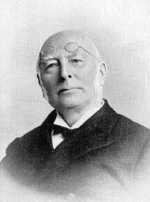 When a bitter adversary of the Christian's heavenly hope sought many years ago to stigmatise it as having a foul and even Satanic origin, there were questions, in which he was compromised, too serious for any who weighed their import to notice so unworthy an insinuation.
"I am not aware that there was any definite teaching [i.e. in the early
days of the Plymouth movement] that there would be a secret rapture of the
saints at a secret coming, until this was given forth as an utterance in
Mr. Irving's church, from what was there received as being the voice of
the Spirit.
- "But whether anyone ever asserted such a thing or not, it was
from that supposed revelation that the modern doctrine and the modern
phraseology respecting it arose.
- "It came not from holy scripture, but from that which falsely pretended to be the Spirit of God; whilst not holding the true doctrine of our Lord's incarnation in the same flesh and blood of His brethren, but without taint of sin".
What must one think of a polemic who would extract an envenomed shaft to
injure, if he could, the apostle Paul's preaching and teaching of "salvation", from the utterance at Philippi of the maiden with a spirit of
Python?
- "These men are servants of the Most High God that announce to you the way of salvation".
- The then instrument of Satan was not so openly hostile as the slanderer of JND. On the contrary the enemy adopted the craftier policy of commending the apostolic testimony.
- But Paul, distressed by it, for it went on for many days, turned at length, and in the name of Jesus expelled the unclean spirit, disdaining such an ally.
- The spirit's talk of "the way of salvation", however, did not hinder Paul or his companions from proclaiming "so great salvation", which having
been spoken by our Lord, was confirmed by those who heard, God also
bearing witness with them.
- Argue, as adversaries might, from the fact that the apostle never wrote a word on the way of salvation before the evil spirit proclaimed this as his errand, he was not to be driven from the truth by the wiles of the devil; and woe would surely be to such as availed themselves of that craft to turn away from the glad tidings of God.
But let us turn from surmise to such facts as exist; for both assailed and assailant are departed.
- Though Mr. D., in general used to say little of himself, he does speak, in two pieces which appear in his Collected Writings, of the way in which light dawned on his heart as to the future according to the scriptures.
- The first bore on the change in the divine dealings with men at the end of this age.
- "But I must, though without comment, direct attention to chap. 32 of the same prophet [Isaiah]; which I do the rather, because in this it was the Lord was pleased, without man's teaching, first to open my eyes on this subject, that I might learn His will concerning it throughout – not by the first blessed truths stated in it, but the latter part, when there shall be a complete change in the dispensation, the wilderness becoming the fruitful field of God's fruit and glory, and that which had been so being counted a forest, at a time when the Lord's judgments should come down, even great hail, upon this forest; and the city even of pride be utterly abased", Prophetic 1, pp. 165-66.
Of that light which later shone on the heavenly side of the Lord's coming he speaks rather differently.
- "It is this passage [2 Thess.2: 1,2] which, twenty years ago [i.e. from 1850 when he then wrote], made me understand the rapture of the saints before – perhaps a considerable time before – the day of the Lord [that is, before the judgment of the living]."
The difference is this, that he expressly excludes "man's teaching" in the first case, which he does not even imply in the second.
- There he simply says that it was 2 Thess. 2: 1-2, which made him understand the rapture of the saints to be before the day of the Lord, but not a word about the Lord pleased to open his eyes in the same way: how he does not say, as there was no call for it in his criticism of M. Gaussen on Daniel the Prophet.
Now it so happens that, during a visit to Plymouth in the summer of 1845, Mr. B. W. Newton told me that, many years before, Mr. Darby wrote to him a letter in which he said that
- a suggestion was made to him by Mr. T. Tweedy – a spiritual man and most devoted ex-clergyman among the Irish brethren – which to his mind quite cleared up the difficulty previously felt on this very question.
- No one was farther from lending an ear to the impious and profane voices of the quasi-inspired Irvingites than Mr. T., unless indeed it were JND himself
- who had closely investigated their pretensions and judged their peculiar heterodoxy on Christ's humanity as anti-christian and blasphemous.
- As to this anyone may satisfy himself by the Collected Writings XV, the first two articles of Doctrinal 4, with strictures in six other vols., to which may be added, in a new edition, a longer paper that has been discovered since.
On the other hand Mr. Newton knew, as well or better than most at this time of day, such of the Newman St. oracles as reached ears and eyes outside.
- But he also knew that no serious brother in fellowship regarded them with less than horror, as emanating not from human excitement merely sbut from a demon accredited with the power of the Holy Spirit.
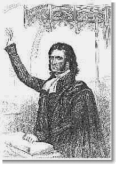
- Their sorrow was great over E. Irving as a man of rare ability, large gift as a preacher and teacher, and zealous to live the truth in faith and love.
- Though he was carried away pitiably by the claim of tongues and miracles, and by the yet more dangerous pretension to restored apostles and prophets, they thankfully observed, what was his humbling admission, that he received no such endowment.
- It was a striking difference from his associates; that he, much the most eminent of them all spiritually, should have been unvisited by the alleged new power from on high.
- Yet Irving was bolder than any in affirming the fundamental heterodoxy as to Christ's person, nay that His sinful humanity – may God forgive the blasphemy! – was the basis for the divine gifts, the spirit (whatever its source and character) coming as its seal.
But Irving was at least honest and outspoken; and however erring as he surely proved, God kept him personally from the evil energy which wrought in those to whom he bowed down with abject superstition, and took him away comparatively young but worn out, contrary to their confident predictions.
- Their apostles and prophets with the rest of what they called the fourfold gifts, shuffled and prevaricated in the way habitual among men under demon powers.
- Take a single sentence of his out of many, "I believe it to be most orthodox, and of the substance and essence of the orthodox faith, that Christ could say until his resurrection, Not I, but sin that tempteth me in my flesh", The Orthodox Catholic Doctrine of our Lord's Human Nature, p. 127, London, 1830.
- And when Mr. Robert Baxter challenged this doctrine as false, Irving could reply that the spirit in their prophetess, Miss E. C., had laid down that B. had departed from the truth which Irving had maintained, the Lord being pleased with him for it. This was confirmed by another prophetess, Mrs. C. – Baxter's Narrative of Facts, etc. pp. 104-5.
But I willingly bear my testimony to Mr. N. that he never to me thought of attributing the source of the so-called doctrine, the rapture of the
saints, to that seducing spirit.
- It was new, however, to hear that Mr. Tweedy, who died full of blessed labours in Demerara, was the one who first suggested, as a decisive proof from scripture, 2 Thess. 2: 1-2.
- I so implicitly believed in his telling me the truth as conveyed in Mr. D.'s letter to himself, that it did not occur to me to question Mr. D. about it.
- I knew the latter to be generous in acknowledging readily any debt of the kind he owed to other brethren, having experienced it in my own case and in that of Mr. Bellett, if not of more still.
- Indeed it was very touching to observe that one, to whose richly suggestive help so many were indebted, was himself so frank to own any fresh thought of value in another, and to manifest his simple-hearted pleasure, not only in hailing the accession but in adding to the evidence of its truth, as he so well could and did, while pointing out its importance.
Further, when Mr. N. named to me the disclosure of Mr. D.'s old letter,
things had reached a very high temperature, and on no question more than
the one before us.
- Mr. N. had issued the first edition of his 'Thoughts on the Apocalypse' in parts, completed in 1844; and Mr. D. was at that time bringing out in parts his 'Examination' of it, as able a volume as he ever wrote, not only in my judgment thoroughly subversive of the 'Thoughts', but establishing on a sound basis the grand truths which were sought to be
undermined.
- Now BWN was no neutral, but abhorred it in divine things as much as JND or anyone.
- Christ's relation to God had not yet come into controversy, nor the righteousness of God; but he was quite right in feeling the immense moment of God's revealed mind as to the Lord's coming, the heavenly calling, the church of God, etc.
- These truths he opposed through his prophetic system, which was sadly narrow and crude, however assured he might be of its certainty. His antagonism to Mr. D. and his teaching as incompatible had already come out clearly and decidedly, though the open breach did not occur till some months after.
On that humiliating breach there is no call to speak here. It was followed about two years subsequently by the distressing discovery of a systematic heterodoxy, one part of which, singular to say, appeared in the Second edition of the vol. 2 of the Plymouth 'Christian Witness', an article of BWN on the Doctrines of Newman St.
- The Editor (JLH), through the loan to his wife of MS. Notes on Psalm 6, divulging doctrine revolting to his spirit, deemed it his duty to Christ and the church, that it should appear with his comment, no matter what the secrecy enjoined might be or any possible consequence.
- He (JLH) also disclaimed all knowledge of this 'Second' edition, like most of the elder brethren also, being already provided with the first. This it is well to state, as an effort was made to show that people were inconsistent in complaining later of what was in circulation long before.
- The fact is that an active teacher of the system (WBD) acknowledged, just before it was exposed, that it had been fully canvassed in their large meeting for eight years before, and that the party were fully made up in it. He too with N.'s chief associates renounced it in print.
|
- Mr. N. hastened to defend his scheme of thought, and thus first laid open what had been working too long in the dark.
- JND, providentially detained beyond the time when he meant to go abroad, was thus called to deal with it searchingly, and with such effect that the most trusty of N.'s fellow-workers who remained broke down in confession of their fatal departure from the true Christ, owning the evil to be worse than what was known and laid to their door.
- Even BWN, threatened with the desertion of his friends if he did not retract, sent out – 26th Nov., 1847 – 'A Statement and Acknowledgement respecting certain Doctrinal Errors'.
But this failed to satisfy those aggrieved. Mr. N. did confess his awful sin "in holding that the Lord Jesus came by birth under any imputation of Adam's guilt, or the consequences of such imputation"; but he put a similar issue on His being made of a woman.
- Think of including Christ with the many constituted sinners!
- This he gave up; but he never disclaimed the horrible falsehood that He was under the curse of a broken law as a born Israelite, not vicariously, but in His own relation to God.
- No one any longer alleged against him his perversion of Rom. 5: 19, first half; but he gave no sign that he renounced his evil teaching against the Lord, as "come of a woman, come under law".
- On the contrary, in a 'Letter on subjects connected with the Lord's Humanity' – Oct. 1848 – the latest known to me in which Mr. N. brought out his own doctrine on Christ's relation to God, he maintained the principles of the obnoxious tracts withdrawn for reconsideration – all, save involving Christ in Adam's guilt.
- He had "used wrong theological terms, and a wrong application to the fifth of Romans" – p. 32!
It is plain that this system is semi-Irvingite, and though rejecting sinful humanity, comes to the same result of overthrowing His person directly, and indirectly the work which depends on His person.
- No doubt he wrote often on His work, and on justification by faith; but what is the value, as I told an eminent religious leader, of faith in a false Christ?
- Living faith is in the true Christ of God. Now it is one fully implicated in his kinsman's* heterodoxy who dared to impute to an Irvingite spirit the doctrine of the church's rapture!
| * Dr. S. P. Tregelles was a cousin of Mr. B. W. Newton.
|
|---|
- Far from me to say a needless word of one who is no longer alive to speak and explain.
- Now I was not with the new departure of Park St., nor approved of proceedings that led up to and followed it, and have reason to feel grief for that which there is good ground to impute to others.
- But unbroken deep regard to a great and good man, [ J. N. Darby ] an uncompromising champion for Christ's glory and God's truth, makes it an imperative duty to expose so low an effort of polemical rancour.
If there had been no letter from Mr. D. to Mr. N. stating the actual source, it was a rash and wicked surmise to say or think that "it was from that supposed revelation that the modern doctrine and the modern phraseology respecting it arose".
- That a vexed and vindictive spirit might thus imagine under a lamentably sad temptation, one can readily understand.
- But can any fair mind in God's presence, if he knew no other facts, conceive a greater improbability than JND adopting the utterance of what he believed a demon as a truth of God?
On the face of it, the "supposed revelation" [among the Irvingites] declared that, within three years and a half, the saints would be caught up to the Lord, and the earth wholly given up to the days of vengeance.
- The power came upon another at the same time confirming the rapture of the saints within three years and a half.
- Mr. N.'s words are purposely quoted from the article in the "Christian Witness", though at hand is Baxter's Narrative from which he drew the information.
- This betrays a source and character totally different from Mr. Tweedy's suggestion, or Mr. Darby's letter, for the doctrine [the pretribulation rapture of the saints] which became a factor of force not only among brethren so-called but among saints of God largely throughout the world.
The oracular utterance was grounded on the ordinary system, which Mr. BWN shared, of making the Lord's coming a link in the chain of prophecy.
- The rapture was to be within three years and a half from the time of prediction; as the voice then or afterwards taught that those described in Rev. 7 and 14 – for they confounded the two companies – would be the saints caught up.
- But all such ideas are baseless, and prove the absence of any real intelligence as to the book of Revelation.
- In neither case is there a translation to heaven, which takes place between Rev. 3 and 4.
- For the saints are still viewed as in the churches on earth according to the one chapter; and in the other they are seen under the symbol of the twenty-four crowned and enthroned elders.
- During that interval Christ must come to fetch them on high. The hope is thus carefully kept in scripture from confusion with the prophetic account of God's dealings with Israel and the Gentiles which follow.
- The like distinction is not less carefully marked by the coming of the Lord in 1 and 2 Thess. with other corresponding scriptures, and has nothing in common with the Irvingite voice in its unfounded and false application to the prophetic part of the Apocalypse.
Whatever men think, scripture – in the capital seat of the revelation of Christ's coming for the church, 1 Thess. 4 – is express, that the dead in Christ shall rise first; then we the living that remain shall be caught up together with them in the clouds to meet the Lord in the air, and so shall we ever be with the Lord.
- All must believe in this rapture at some time, for it is surely the common hope of Christians.
- The humbling fact, even among prophetic students, is that it has occupied so little their hearts and lips.
- But allowing this, why should any who wish to decry its prominence rush to the malignant conclusion, that it was derived from an Irvingite source, by those who are and have ever been as far as possible from such teaching, and who deem it utterly antichristian?
Ah, yes; but the "modern phraseology" – that tells the tale! Is it then that "the rapture" betrays the tainted source beyond a doubt?
- What a blinding preoccupation must have possessed the mind which drew such an inference!
- It is true that in the Dictionary of Dr. S. Johnson, and even in that of the much lauded Richardson, "rapture" is wholly absent in the sense before us. Webster, and Worcester also ignore it. It is an inexcusable blank.
- For it is not a modern "phraseology", but employed as in this case two or three centuries ago by well known authors of choice expression.
An early use of the word "rapture" for actual removal out of the present scene by power is by Shakespeare. Pericles, Act 2, sc. 1, near the end.
- This however applies, not to the Lord for heaven, but to the sea, "the rapture of the sea".
- As there is no other expression for the idea in our tongue, we cannot afford to lose it. But in fact it did not become obsolete.
- On the contrary it is employed, and in its scriptural application to divine power catching up to heaven, by men of celebrity for their language.
- John Milton, who, whatever the splendour of his style in prose and verse, is not one to be relied on for soundness in the faith, or decent respect for prelates however pious, did believe that
- "Thou, the eternal and shortly-expected King, shalt open the clouds to judge the several kingdoms of the world", and of course to reward so sober, wise, and religious a commonwealth as that of England!
- But no reference of his to heavenly hope do I know; and hence he had no need of such a word.
- But in the same literal sense he does use its kindred "rapt" in Paradise Lost, III, 522, "Rapt in a chariot drawn by fiery steeds", and in Paradise Regained, II, 39, 40, "For whither is he gone, what accident hath rapt him from us?" Nor is he by any means the only old English poet who so wrote.
But let us pass to the graver roll of divines, which any can verify
without trouble.
- Bishop Joseph Hall in the most popular of his writings, 'The Contemplations', so entitles Elijah's translation to heaven, 'The Rapture of Elijah'. Hall's Works, II, p. 80, Oxford, 1837.
- A second is Dr. Thos. Jackson, Dean of Peterborough, born after Bishop Hall but deceased before him; in whose second folio, p. 1068, we read of the "taking up" of Enoch and Elijah, yet in the Table of the third it is their "rapture", ed. 1673.
- A third and later witness is the still more celebrated Bishop Jeremy Taylor, who in vol. VI. 548 of his Whole Works, a new ed. 1828, uses "rapture" twice over for Paul caught up or rapt up; and he has the credit of being considered one of the refiners of the English language.
From the Episcopalians of that early day I turn to Non-conformists, not so far back but by no means modern;
- Matthew Henry's Exposition of the O. & N. Test. VI on the scripture before us, "At, or immediately before, this rapture into the clouds, those who are alive will undergo a mighty change", etc.
- Of course it is known that Henry only left MSS. for the latter half of the N.T., and that D. Mayo completed the Epistles to the Thessalonians. But this only confirms the fact that "rapture" was commonly known in that day. instead of being a modern phrase due to Irvingite vagary.
|
The last that we need is the respectable Dr. John Guyse, who wrote the Practical Expositor – i.e. of the N.T. in three quarto vols. The Second ed. of 1761 now lies before me.
- In his paraphrase of 1 Thess. 4: 17, he says of the dead saints raised, "and we with them shall be carried up by a divine rapture", etc.
These quotations are the more seasonable, as whether Anglicans or Dissenters they were little conversant with the blessed hope. Nor was anyone more uninstructed than Dr. G.
- For in the Lord's call he hears only "an awful summons", and he confounds the glorified saints when caught up with the sheep or blessed of all the nations. Matt. 25: 34.
- Like all the theologians and their Oxford critic, Prof. Jowett, he, with even more evident blundering, makes the apostle entreat them by "the awful coming" of the Lord to the final judgment at the last day, and by their hope of being then gathered with us to meet the Lord in the air.
- That is, he makes Paul treat of the same subject in his true comfort and in the falsehood he refuted!
- Yet even Dr. G. did not go so far as a highly respected Bp. of Carlisle – an Oxford double first – who translated ενεσηκεν will immediately come.
- Dr. G. was more grammatical; but all err who deny it to mean that the day of the Lord "is present".
It is no question of omniscience in man, but of the inspired truth God was pleased to give.
- The confusion, not merely among Christians little conversant with prophetic scripture, but in those who fully look for the Lord to return in His kingdom and fulfil the predicted times of refreshing for the earth, is deplorable.
- Take, as an instance out of multitudes, the words of the late Dean Alford in his Prolegomena on 1 Thessalonians, Sect. II. 6, 4th ed. p. 46.
- "Their attention had been so much drawn to one subject – his preaching had been so full of one great matter, and from the necessity of the case, so scanty on many others which he desired to lay forth to them, that he already feared lest their Christian faith should be a distorted and unhealthy faith. And in some measure, Timotheus had found it so.
"They were beginning to be restless in expectation of the day of the Lord – 1 Thess. 4: 11 ff.– neglectful of that pure, and sober, and temperate walk, which is alone the fit preparation for that day – 1 Thess. 4: 3 ff.; 1 Thess. 5: 1-9 – distressed about the state of the dead in Christ, who they supposed had lost the precious opportunity of standing before Him at His coming – 1 Thess. 4: 13 ff.".
Here the mistake corrected in the First Epistle is mixed up with the error which the Second dispels. They are quite distinct.
- The first was not restlessness in expecting the day of the Lord, but was unintelligent sorrow over departed brethren, because they were supposed by death to lose their place in the cortège of glory.
- This gave occasion to the fresh revelation in 1 Thess. 4 of the Lord's causing the dead in Christ to rise first, while it is also shown that both dead and living saints are to be caught up together into the air to meet the Lord; and thus shall we ever be with the Lord.
- After the removal of their needless grief, disturbing alarm befell the saints by the unfounded rumour that the day of the Lord was actually there,
- in all probability confounded with their sore trials and persecution from their worldly countrymen and the unbelieving Jews, embittered by envy against the gospel and all who had received it.
- This the apostle clears away by setting before them the true nature of that day, which will display their enemies as the objects of retributive punishment, and Himself glorified in His saints and marvelled at in all that believed.
- He next beseeches them, by their bright hope of His presence and their gathering together to Him, not to be shaken quickly from their mind, nor yet troubled by this false report; and then he proceeds to prove that there must be the apostasy first, and the man of sin revealed,
- not before the Lord comes to receive His own, but before they come with Him from heaven to accomplish that tremendous day. 2 Thess. 2.
Again, what misconception of the hope as a whole can be more profound than to represent that the later epistles gradually modify the earlier "expectation of His almost immediate coming". Sect. iv. 8, p. 49?
- "9. And in this, the earliest of those epistles, I do find exactly that which I might expect on this head. While every word and every detail respecting the Lord's coming is a perpetual inheritance for the church – while we continue to comfort one another with the glorious and heart-stirring sentences which he utters to us in the word of the Lord, – no candid eye can help seeing in the epistle, how the uncertainty of 'the day and hour' has tinged all these passages with a hue of near anticipation: how natural it was, that the Thessalonians receiving this epistle, should have allowed that anticipation to be brought even yet closer, and have imagined the day to be actually already present.
"10. It will be seen by the above remarks how very far I am from conceding their point to those who hold that the belief, of which this epistle is the strongest expression, was an idle fancy, or does not befit the present age, as well as it did that one. It is God's purpose respecting us, that we should ever be left in this uncertainty, looking for and hasting unto the day of the Lord, which may be upon us at any time before we are aware of it". etc.
Thus then the rapture of the saints is not a mere catching up into the air in a moment, to come down again with the Lord the next, which seems to be the strange, hasty, and narrow conclusion of some men; but even Matt. 13
might correct them.
- For the saints are transferred from earth to heaven to be for ever with the Lord, as the wheat from the field into the barn.
- No doubt it is the harvest season, and after the darnel are collected by the reaping angels into bundles for the purpose of burning them.
- It is Christ's presence who calls and assembles the saints to Himself above.
- The consummation of the age is not a point of time, but a period which consists of successive events highly important, distinct, and even contrasted; for after the rapture beyond controversy the darnel are consigned to the furnace and burnt; and then do the righteous shine out, not on the earth, but as the sun in the kingdom of their Father, the heavenly region of the kingdom of God.
- Antichrist is not destroyed till then, whereas before it the marriage of the Lamb is celebrated above.
- Other scriptures of more formal and comprehensive prophecy, as the Revelation, enable us to see the interval, and to learn the momentous aims which it subserves for the divine ways of both judgment and mercy, almost quite lost in the superficial and confused view referred to.
Ps. 110, so often and boldly urged for Christ's rising from the Father's throne at once to take His own in the new age, leaves room for these great events which lay outside of Israel's hopes, and are here passed by in silence.
- The notion – Five Letters p. 58 – that for a time the "saints in their risen bodies will be in the midst of those who remain unchanged: a terrible sight bursting suddenly as in a moment upon the slumbering world: – the Lord over them in the air in His glory, and raised saints near and around them"! is a dream worthy of the Shepherd of the Pseudo-Hermas, and beneath even the Pseudo-Barnabas.
Not less suicidal is the notion that after Christ has received the wheat and executed final sentence on the darnel in Christendom, the lawless one "was still existent", and "undismayed by all he had witnessed", instead of being annulled by the appearing of the Lord's presence. 'Thoughts on the Apocalypse, 1st ed. 298.
- But what destroys the entire scheme is the admission – in the page before, 297 – that the saints "are recognised in the commencement of this chapter – Rev. 19 – as being above with the Lord in the glory".
- This is indeed quite true; but how does it consist with the systematic effort to jumble all up in a single act at the moment of His presence?
- It is not for me to defend his spurious idea in the same pages, "that the moment when the Lord terminates the history of Christendom, and takes His saints to meet Him in the air is the moment when He also gives His final blow to Babylon". To Babylon!
- Why, this is another absurd contradiction of his and almost every one else's fundamental principle, that the vials like the preceding series of judgments are God's activity, before Christ comes judicially; and great Babylon came in remembrance before God to give her His cup of wrath in the most extreme form before the Lord with all His saints left heaven to deal with the Beast and the False Prophet, etc.
Now this is the staunch champion of the school implacably hostile to
allowing any but one act of coming.
- For on Rev. 19: 11-14 he concedes – in 'Thoughts', 299 – that the saints have joined Him, and fall into the train of His glory.
- Yet he knew, as do his followers, that the Lord must have come into the air to receive them, before they could thus follow Him out of heaven to execute judgment on the most blasphemous and daring of all his enemies.
Magna est veritas et praevalebit. Who before could anticipate such an
acknowledgement from BWN?
- For he thus acknowledged the principle, without having learnt that the only true time for the rapture is at the close of Rev. 3 and before the scenes of Rev. 4, 5.
- But even he was compelled by the force of scripture to confess that Rev. 19: 14, to say nothing of the preceding vision of the heavenly bridals, compels the admission of Christ's having come for His saints before He appears, and they with Him, manifested together in glory.
- Granted the great truth of His coming for the saints in sovereign grace before they follow Him from heaven for His overwhelming judgments on the earth, the interval is quite secondary; but this too can only be learnt satisfactorily from scripture.
- Surely acrimony might be well spared in searching into such a detail, though of no small interest and importance.
The criticism then, in order to deny the "rapture", evinces not only a captious spirit but real ignorance.
- "Rapture" in the usage required is a word familiar to English Christians from earlier days, and gives no ground of offence save to an evil eye.
Need it to be pointed out that "the modern doctrine", if of any weight, assumes that the rapture of the saints by Christ to the Father's house is not the doctrine of God? But this is the question for revelation to decide.
- We on the contrary here join issue, being assured that no other conviction truly answers to the inspired testimony, only let scripture be fully taken into account, and adequate room left for what it speaks about Jews and Greeks, and the church of God, as the apostle says.
- The failure to distinguish Christ's coming, or Presence for the Christian – for the phrase bears a generic sense – from that later aspect of it which is specified as "the day", throws even careful minds into confusion, and creates sure collision with scripture.
- Where for instance is the force of the apostle's appeal in 2 Thessalonians 2: 1-2, when they are mixed up?
- Distinguish them, and chaos is reduced to divine order, and the argument is seen in all its cogency without strain or effort.
Take this illustration from a still more solemn subject, though not strict but sufficient to help, if the enemy were seeking to destroy faith's confidence by the terror of the great white throne.
- We beseech you, brethren, for the sake of [or by] the known grace of Christ and the life eternal and the everlasting redemption we have in Him, that ye be not soon shaken in (or from) your mind, nor troubled, either by spirit, or word, or letter as by us, as that the eternal judgment will bring perdition on you.
- That awful doom is to be at the close, long after you have been caught up to heaven; and it will fall on the cowardly and unbelieving and abominable and murderers and fornicators and sorcerers and idolaters and all liars.
- Their part will not be in a new heaven and a new earth, but in the lake that burns with fire and brimstone; this is the second death.
Page Top
| 1 Thessalonians 4: 13-18, JND Translation |
|---|
13 But we do not wish you to be ignorant, brethren, concerning them that are fallen asleep, to the end that ye be not grieved even as also the rest who have no hope.
14 For if we believe that Jesus has died and has risen again, so also God will bring with him those who have fallen asleep through Jesus.
15 (For this we say to you in [the] word of [the] Lord, that we, the living, who remain to the coming of the Lord, are in no way to anticipate those who have fallen asleep;
16 for the Lord himself, with an assembling shout, with archangel's voice and with trump of God, shall descend from heaven; and the dead in Christ shall rise first;
17 then we, the living who remain, shall be caught up together with them in [the] clouds, to meet the Lord in [the] air; and thus we shall be always with [the] Lord.
18 So encourage one another with these words.)
|
Return to 'Introduction' audacious attempt. |
Page Top
| Dr. S. P. Tregelles |
|---|
| Under The First Appearances of Secret Rapture Teaching, page 45 of B. W. Newton and Dr. S. P. Tregelles – Teachers of the Faith and the Future – 2nd Edition 1969, The Sovereign Grace Advent Testimony, London – George H. Fromow says,
"Dr. S. P. Tregelles has recorded for us the origin of this teaching in his book The Hope of Christ's Coming, How it is Taught in Scripture and Why? (page 35 of the fifth edition).
"Dr. Tregelles wrote: 'When the theory of a secret coming of Christ was first brought forward (about the year 1832), it was adopted with eagerness; it suited certain preconceived opinions, and it was accepted by some at that which harmonized contraditory thoughts, whether such thoughts, or any of them, rested on the sure warrant of God; written Word".
There follows the quotation given above by Mr. Kelly.
Mr. Fromow goes on to opine, "If the exact terms used by Dr. Tregelles are noted, allowance can be made, that suggestions of a 'secret coming' were put forth a few years earlier, some say at the first Albury conference in 1826; but the precise date does not alter the fact that it was a novel doctrine".
|
Return to "a polemic". |
Page Top