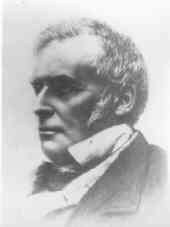
Mr. Darby's buoyant spirit is noteworthy in view of the then recent Plymouth trouble.
Ques. What is the church, and in what sense is it now in ruin?
J.N.D. There is, dear brethren, great importance in the subject we are about to enter upon, and I feel that the Lord is particularly gracious to us at this time.
- It is very certain He is always so, whether we apprehend it or not, but He manifests His power in working in the midst of His people.
- It is not that I am unconscious of the trials and difficulties of "brethren", but at the same time I do discern the Lord's hand at work, and it is ever cheering to see this,
- for when He takes anything in hand, the soul that trusts Him is sure to get blessing, because He is ever working for our good, though He may sift and humble us.
- I see that some of the saints are brought more than ever to value their position, and if asked as to this would say, Yes. In this I see positive blessing.
- I see there is flesh – and the sifting in many cases will manifest it – but still blessing, and this is a comfort to those who know how to trust God.
- Assuredly there is failure, great failure, but our failure does not close the eye to the fact that God is working.
- It is true the world has crept in among us; I admit it; but I do not dwell upon it now, but when God begins to work there must be blessing, although, of course, when the Lord stirs up the pool a little of the mud will appear, because it is there.
Many dear brethren have been troubled at the expression "the ruin of the church";
- now I can quite understand this, and I make no complaint about their jealousy lest it should be thought that the church could fail, because in one sense it is impossible that the church can be ruined;
- but there is confusion in some minds between the purposes of God, and present dispensation in which man is placed under responsibility.
- In speaking of the ruin of the church, we speak of it as down here, set to manifest Christ's glory in unity on the earth, and we must remember that there we are placed, and as in this responsibility, there we must stay. If it could fail spiritually it would be disastrous indeed!
There are two thoughts respecting the church in ruin which are full of mischief.
The thought on some brethren's minds is, that we intend by this the interruption of God's purpose, which evidently cannot be.
- There is a jealousy, which I respect and for which I have no regret, lest the idea of the church in ruin should seem to affect the purpose of God.
- As regards the purpose of God the church cannot be ruined, but as regards its actual present condition as a testimony for God on earth it is in ruin.
The other thought is: Well, suppose it is in ruin, so it must be; there we are and there we must stay; so that we are saved at last, never mind;
- we will take no thought about the present condition of the church, being satisfied that we are saved from the wrath to come.
- This listlessness and hanging down of the hands, causing cessation of all spiritual energy, is induced by a want of apprehension of what the church is in God's sight.
- But practically many saints think they are to remain content in the ruin. There is danger in taking up such a thought, because it would be the denial of the power of God.
- To unbelief discouragement may be the result of this idea of the church's ruin, but I do not look at it as discouragement,
- because I believe the grace and power of the Lord is suited to the need of the church such as it is at all times.
- I should feel it to be a very sad effect if the expression "ruin of the church" were to dishearten a soul about the operation of the Spirit in bringing blessing to the church.
Neither of the suppositions I have alluded to can be proved, for it is impossible that the church can be in utter ruin in the sense of upsetting God's purpose, or that the power of the Lord is enfeebled when there is actual present ruin.
- His working will be according to the state the church is in, not to the state she is not in.
- We are all liable from the feebleness of our minds to say too much or too little, even where truth is held.
- Man is in a sad state, and I should get disheartened unless I saw the power of Christ to meet that state.
- God's purpose, of course, is unfailing, and therefore it is not true that the church can fail as it exists in God's purpose.
- What we want is not so much an abstract notion that the church will be saved, but real practical faith in the application of the resources of God to meet present circumstances.
- If a Christian is in a bad state, and I do not look beyond it to Christ I am troubled, but if I do I have confidence, and in that sense I am at rest, because I know the Lord can and will bring it right by His power working for him.
- I should feel sorry if seeing failure should enfeeble faith as to the Lord's care of the church, and I have felt the danger of this; still I say He introduces blessing according to the present condition of the church.
We must not say, if we are looking for blessing in the path of faith, the church is sure to be brought through according to God's purpose of grace, it would produce listlessness;
- we have to look to the present working of His power in blessing to glorify Christ.
- God always takes an interest in the church's circumstances, and if we are looking for blessing, we shall find it even in times of the greatest failure, for God will have His church in glory,
- and living faith sees not only the need, but sees also the thoughts and mind of the Lord about that need, and counts on the present love of the Lord.
- It is as true of an individual as of the church. As having the Spirit of Christ I cannot rest in the thought that a Christian is secure in Christ, and therefore not endeavour to instruct and exhort him and lead him on.
- The church will be saved, and so will every member of it; but if I have the affections of Christ, I cannot be contented unless I see the power of the Spirit in any individual saint manifesting that saint's relationship to Christ, and just so is it with the church of God;
- if my faith is in exercise, I am not satisfied unless I see the carrying out of its relationship to Christ as a present thing.
- If I see in an individual saint that which is not consistent, I am not happy, and so of the church.
I do believe in these latter days that the Lord has awakened the minds and souls of many of the saints who were walking in single-eyedness, to examine what the church of God is.
- Therefore it is not surprising that Satan should come in to resist the truth of the Lord's coming, and the church's relationship to that.
- Besides this, many have come into the position of blessing, without knowing in themselves what the church's blessing is, and therefore feebleness is the result, for when worldliness crept in they fell backward and were discouraged.
- They had fellowship in the blessing, but they had not intelligence and fellowship in the principle and grace that produced the blessing,
- and consequently when there is the want of blessing, restless apprehension and uncertainty will be the result, for when Satan comes in upon our souls, the shallowness of our faith appears.
Well, I see this, and bless the Lord that He is awakening in the souls of many saints everywhere the question – "What is the church of God?"
- I have no doubt that with many very dear saints we should find that they have no definite idea of what the church is beyond the thought, that there are certain persons who are saved and brought to glory.
- This is true, but then it is clear that the understanding of the relationship in which the church stands to Christ is the basis of all its affections to Christ.
- If the Lord is now awakening saints to the coming of the Lord Jesus Christ, and the relationship of the church of Christ, and it is not understood, we cannot be bearing a true and faithful testimony for God;
- and I add further that the truth which does not come up to any special testimony of God at a given time is used by Satan to hinder its reception.
- Satan will use a past testimony to hinder the reception of the testimony God has raised up for His saints.
- Thus, the unity of the Godhead is a truth we all hold, but it was held by the Jews for the upset of Christianity. They held "Jehovah our God is one Jehovah", but they did not hold the Father and the Son.
- Thus they strove to upset the special testimony by which God was then acting – the revelation of the Father and the Son.
- If God is presenting truth to set His saints in a place of testimony, Satan will also seek to perplex their minds about that very truth, so that they should not be able to give any testimony concerning it.
- If Satan succeeds in distracting their minds so that they become tired of it, and go back to past truth, then Satan has gained his point by perplexing their minds.
- Now this is most important. Yet the Lord has always the upper hand of Satan.
- I doubt not there will be some Lots, who will get tired, but I believe the exercise of soul on the subject will be used by the Lord to bring the souls of those who are faithful on to more solid ground.
- Thus as to the Lord's second coming, and the presence of the Holy Ghost in the church, many may get hindered, but souls walking in simplicity will be more strengthened by these efforts of Satan.
As regards the salvation of any soul, it is by the blood and work of the Lord Jesus Christ, but I do not dwell now on the great truth of the work of Christ, and the quickening of the Spirit;
- neither do I dwell on the fact that the Old Testament saints were saved by the blood, and will be in resurrection glory with the Lord.
- I assume all this as acknowledged truth, taking it for granted that the soul may rest there, while I go on to other points.
And first, Has God taught us anything about the church of God?
- Now there are many very precious saints, sound in the faith, who are not prepared to accept what the church of God is as set forth in the word of God.
- If it is meant that all the saints ever saved will in the end be in company in glory, and surround the second Adam as His family, so to speak, in redemption and life through Him, and they call that the Assembly of God, I have no objection.
- I do not doubt that the second Adam will have all around Him in glory, as the first Adam had all around him in sin.
- But Scripture speaks of another thing which greatly concerns us – of our place, our privileges and responsibilities.
- In Israel it was the same thing; it was true that there was salvation before Israel was a people, for Abraham was saved before Israel was brought in, and yet there was a distinct revelation concerning Israel, and relationship based on it;
- and if any neglected the revelation, they would not only have been unfaithful, but would have lost blessing.
- David was saved as Abraham was, but the manner of his relationship and responsibilities towards God on earth were not the same as Abraham's,
- because David formed part of a people placed in a position, the claims of which did not apply to Abraham.
- If Samuel and others had neglected this, they would have been unfaithful to God, because the ground on which God had set them as a nation was the measure of their special responsibility to Him.
- In the word of God I find that the church of the living God is a body brought into testimony by the Spirit of God definitely and distinctly, as set in a special relationship to God.
- And now, as the Lord may enable me, I will shew you what the church is.
The church of the living God is the body of saints formed on earth in unity with Christ in heaven as the Head, by the Holy Ghost sent down from heaven to form them into unity with Christ at the right hand of God.
- The church is not merely a number of saved persons, but a body formed into unity with Christ their Head, by the Holy Ghost sent down from heaven consequent on the exaltation of Jesus to the right hand of God.
- There has been a habit of calling all the saints from first to last the church, and there is a fear lest tender-hearted saints who have done so should be alarmed by altering it.
- I greatly respect the jealousy of souls – who have the consciousness of the electing love of God, in saving every one whom He has called from Adam downward
- – in being alarmed lest this distinction should affect the foundation of salvation through the blood according to God's electing love;
- but still it is my duty as well as my privilege to understand the position in which God has set me, and to call by the right name what God has called by name in Scripture.
The Lord said to Peter, "On this rock I will build my church". He had not been building from Adam downwards, but He says, "I will build".
- What do I find people talking about? A visible and invisible church. Now this is Satan's lie.
- The so-called visible church is in fact the world, and cannot give any testimony at all for Christ.
- If I say it is an invisible body, the testimony is all gone.
- In Israel, what was the visible body then? A nation. God's unity then was the unity of a nation, ninety-nine out of a hundred of whom were not converted – the true saints were invisible for God had His hidden ones among them.
- When Christ came Anna spake of Him to all who waited for redemption in Israel.
- But the church of God is very different, though so often confounded with this state of believers in Israel.
- The saints are now formed on earth into a body in unity with Christ risen by the Holy Ghost come down from heaven in consequence of the exaltation of Jesus.
- Our relations, our affections and our duty to Christ are all founded on this truth; and if it be not understood, there must be defect in the walk and in the consciences of the saints.
- When the Lord said to Peter, "I will build", of course it was a thing not yet done. The foundation stone was Christ.
We all know the way the epistle to the Ephesians speaks of this; indeed that epistle is founded on the truth that God has set Christ far above all principality and power in heavenly places consequent on His death and humiliation.
- Redemption work gave Him the title, although as the Son it was His already. The church is put into association with Him there; Ephesians 1 and 2.
- Before Christ came they waited for righteousness, and God forbore, but now we are waiting for the hope of righteousness; not waiting for righteousness, but for the hope – what belongs to righteousness.
- The righteousness of God is perfect in its accomplishment, Christ the Righteous One being set down in glory.
- God has now set up a people in union with Christ their Head by the power of the Holy Ghost; hence I find that Jew and Gentile distinctions are done away.
- Before, the whole ground of God's dealings was the distinction of His people the Jews from the Gentiles, but now there is "neither Jew nor Gentile, Barbarian, Scythian, bond nor free".
- Was that ever before? At that time they were Gentiles in the flesh, but now made nigh. He "hath made both one, and hath broken down the middle wall of partition".
- God had Himself built up the wall between them which He has now broken down, to make of twain one new man.
- Now many a Jew had been saved, but had not been made one new man with Gentile sinners called by God, through Him who hung upon the cross and abolished the enmity, and having ascended on high formed both into one new man in Himself.
- Simeon and Anna and many godly Jews who looked for redemption in Israel were saved, and saved, of course, as alone any can be, as saints are now saved; and what did God do with them? left them Jews.
- But when Peter preached and three thousand souls believed, what did God do with them? He added them to the church. "In whom also ye are builded together for an habitation of God through the Spirit".
- The old habitation – a temple made with hands – is cast down, and a new one formed both of Jews and Gentiles.
- Ephesians 3 opens out this mystery and adds, "Now unto him that is able to do exceeding abundantly … according to the power that worketh in us"; not for us.
- Chapter 4 is practically speaking of the vocation. If we get away from what has previously been spoken of, we cannot walk worthily of the calling by which we are called, and God has called the saints to be His habitation.
- It is not enough to be merely saints, but they must listen to the vocation, and endeavour to keep the unity of the Spirit in the bond of peace.
- It was not enough for Abraham to be a saint, but he must leave Ur of the Chaldees, because this was his calling, and if he had not obeyed, he would have acted most inconsistently as a man of God.
- When God had given him a sign to keep of His covenant relationship with Him, if his posterity had neglected to keep it, they would have been cut off from God's people – outwardly manifested as such on the earth.
- So also we do not answer to God's calling unless we obey it.
- Of course, the church will form a glorious body in heaven, but the Spirit in addressing the church does so as on the earth.
- The Holy Ghost has come down and formed the church for a habitation of God here on the earth, not in heaven.
- In Ephesians 4 we find certain gifts for the edifying of the body of Christ on the earth, not to edify it in heaven; "edifying itself in love" that is not in heaven; "making increase of the body" must be on earth.
In 1 Corinthians 12 I find the same testimony most distinctly. The Spirit baptises into one body on the earth, not in heaven.
- "Now hath God set the members every one of them in the body"; this was not done before.
- Israel was the body, as far as there was one in any sense, or God's assembly in the wilderness, and most of them unconverted.
- "Now ye are the body of Christ, and members in particular". Nothing can be plainer than that the body is formed on earth – of course to be glorified in heaven – by the Holy Ghost sent down from heaven after Jesus was glorified.
- This is what the church is as taught by the New Testament.
When I look at the church in glory, I look at it as a body securely and infallibly perfect in God.
- There will then be no question of glorifying God, for God will glorify Himself in us.
- I see that whenever man is put in a place of responsibility, in which he fails, God brings in a better accomplishment.
- Thus Adam fails, and the Lord Jesus becomes the fulfiller of his responsibilities for the glory of God as the second Adam.
- Israel failed; God gave them His law and thus brought them into a certain relationship with Himself which did not exist with any other people, and He required them to bear testimony to this, and for this they were responsible.
- Under God's new covenant the law will be written in their hearts, so that they will yet keep it.
- The priesthood itself failed, and I see the same thing in the church – at first set up, and then failing, but God will accomplish all in full purpose in glory;
- but there I see an important difference, for we ought to be by the Holy Ghost the manifestation of God's thoughts down here.
- What do I see in the church? The bride of Christ, engaging His affections as His bride, and her affections should be according to her relationship.
Now what do I mean by the ruin of the church? A simple question will answer this.
- Who will shew me the manifestation of the unity of the body of Christ?
- I cannot find it; but I can find saints that will be saved; I can find the unfailing faithfulness of God in manifest tokens of His faithfulness, "for where two or three are gathered together in my name, there am I in the midst" – and therefore blessing,
- but the church as a manifested body on the earth is ruined.
- When Lo-ammi, not my people, was written upon Israel, still the Lord in Haggai comforts them with
- "according to the word that I covenanted with you when ye came out of Egypt, so my spirit remaineth among you: fear ye not".
- The power of God could not change, and hence the word, "fear ye not". When God said to Israel, "not my people", it was not that God gave them up. He did not change His mind; no, never!
- They shall be His people at last, because He did not mean in purpose when He said Lo-ammi but now they are Lo-ammi still.
I have been much struck of late with the fact that the Lord never addressed Israel as His people in the three prophets after the captivity – though He says they shall be hereafter – still the word was "fear ye not".
- It is not simply, then, the evil amongst "brethren" that gives me sorrow,
- but a certain character of discouragement among them – because of circumstances – from the lack of simple faith to rise above the circumstances to Christ.
- Does Christ love the church less? Is He less powerful? Faith has constant unfailing confidence in Christ.
- I know what sorrow is, but discouragement I do not know.
- If you are counting on your own strength, then I am not surprised at your discouragement, but "He that keepeth Israel neither slumbereth nor sleepeth".
- We ought to be humbled – ah! humbled in the dust, if you please, but never discouraged.
- A truly humble man is not discouraged; the discouraged man is not a humble man, for he has trusted, as man, to something beside God; true nothingness cannot.
- "While men slept, his enemy – sowed tares". Does this discourage? No. "Let both grow together until the harvest".
Some years after the conversion of my soul I looked around to find where the church was, but I could not find it.
I feel the importance of definitely apprehending the relationship in which the Lord has set us; it will touch us in our consciences, not merely saying the church is secure – surely it is,
- but we ought to be touched with the sense of our relation to Christ, and the responsibility of that relationship.
- Hence would flow that rigid obedience, and obedience is the only thing in which a Christian should be rigid, it would keep us from latitudinarianism;
- and there should be nearness to Christ which would keep us from sectarianism, the most natural weed of the human heart –
- sectarianism is getting an interest in a little circle round ourselves –
- and would give us a feeling as to, and an interest in, the whole church of God, for Christ can love nothing less.
- Then I shall refuse to own anything that is not the bride of Christ, but be ready always to acknowledge and receive that which is the bride of Christ.
Will Christ have an English bride – a Swiss bride – a French bride? No. The evangelical alliance, is that it? No.
- At home and abroad I find this question, What is the church of God?
- One says, The church is visible. What do you mean? – that the professing church is the visible church of God? What is its testimony? Is it to Christ its heavenly Head, separate from sinners?
- Another says, It is invisible. What? the church of the living God invisible! What then is its testimony? It is only invisible because in sin.
- There is a false church visible, a true one invisible.
But there is no enmity produced by such a conviction against those mixed up with the evil, or in ignorance of it, because the man who is certain, though he may be pained, can never feel enmity.
- When "brethren" came out, what were they? Nothing. What was their feeling? They took up the interest of the church of God, desiring to see all who loved God manifested in it.
- A large measure of blessing followed; numbers joined. Then came trouble and trial within, and that plentifully occupied their hearts, and practically that became their circle, and consequently not the church of the living God.
- People say, we have been too narrow, we must mix up a little. No, never, I cannot go back. "If I build again the things which I destroyed, I make myself a transgressor". I have nothing to go back from.
- The one desire of my heart is the beauty and blessing of the church – the bride of Christ. That will make me earnestly love all saints for they are of it.
- I desire its entire separation to Christ to whom she belongs – espoused as a chaste virgin. My feet in the narrow way – my heart as large as Christ's.
It occurs to me to add a thought as to difficulties in some minds. The church of God as distinguished from other things which are found in Scripture.
- This is not only a question of interest to our minds, but one of extreme importance.
- First, the question as to Romans 11. To many minds it has the appearance of grafting the church on to the previous system. This has the effect of keeping the mind in abeyance.
- If our souls are kept in hesitation there is no affection at work, and what I desire to see is active affection.
- Secondly, Ephesians 2: 19, "Fellow citizens with the saints, and of the household of God".
- Lastly, distinguishing between the church of God and the kingdom of heaven. There are two things – Matthew 16 – "On this rock I will build my church"; there is no key there.
- Then it is further said to Peter, "I will give unto thee the keys of the kingdom of heaven".
It is clear to me that Romans 11, properly speaking, has nothing to do with the church as such, though it has to do with those who go to form the church.
- There is no thought here of the body in unity with the Head in heaven.
- The unbelieving Jews were broken off because of unbelief. Now in no possible sense could it be said that the Jews were broken off from the church, for they were never in it.
- The apostle speaks also of breaking off the Gentile branches. That cannot be the church, because in no possible sense can it be said that the church of the living God in its true sense is broken off.
- The whole wording of the chapter proves that the olive tree has reference to the line and channel of the administration of God's promises on the earth. In that all this takes place.
- The children of Israel were heirs of promise according to the flesh; they were broken off and the Gentiles graffed in. The Gentiles will be broken off if they do not continue in God's goodness, and the Jews graffed in again.
- The church cannot be broken off nor graffed in again; the olive tree shews the successional administration of God's promises on the earth.
- It is connected with God's outward dealings, and the moment this is seen the difficulty of the chapter is removed.
- The Jews will be graffed into their own Olive Tree again, not into this new thing, the church of God.
The passage in Ephesians is in direct contrast with what is here spoken of as the olive tree; it owns neither Jew nor Gentile. It is the position of the church down here, "fellow citizens with the saints".
- It is a simple fact that the Gentiles are what they never were before, but so, too, are the Jews who believe. The Gentiles are not brought into the previous condition of the Jews.
- The passage does not speak of a previous Jewish state, the Jews themselves together with Gentiles are brought into a new condition where both are made one new man; they are "fellow citizens" together.
- It is not uniting the Gentiles to the previous Jewish constitution, but bringing Jews and Gentiles into a common new one.
Now one word as to the kingdom of heaven. It is in one point connected with the church, because it is the administration of the power and authority of the Lord Jesus Christ, though it is invisible or in mystery now.
- It is not the reign of Satan or of the four beasts, but the reign of heaven.
- It is the reign of righteousness and judgment, and the thought of its being the church will not do, as I do not find grace characterising it.
- When the kingdom of heaven was preached by John, he said, "Whose fan is in his hand, and he will throughly purge his floor". "He will gather out of his kingdom all things that offend".
- Now this is judgment, and though the church will be associated with Christ in it as reigning with Him, yet the kingdom of heaven has not the same character as the church of the living God.
- Again, "Those mine enemies, which would not that I should reign over them, bring hither, and slay them before me". This has nothing to do with the church of God or the gospel.
- Still the church has a testimony to the kingdom of heaven, that it is to be set up.
- Again in Psalm 68: 23, "That thy foot may be dipped in the blood of thine enemies, and the tongue of thy dogs in the same". Now this is vengeance, and not the characteristic work of the power of redemption.
- This greatly facilitates the understanding of the psalms, for in them we constantly find the Spirit of Christ crying for judgment on His enemies.
- The dreadful expressions of vengeance in the psalms apply to the judgment of enemies on the setting up of the kingdom.
- In Psalm 21: 8 we find that in consequence of the exaltation of Jesus to the right hand of God there will be judgment upon His enemies, as it is said, "Thy right hand shall find out all thine enemies"; it speaks of Him as King.
- But in Psalm 22 there is not a word about enemies. When He cried out, "My God, my God, why hast thou forsaken me?" He was suffering for sin in the way of atonement.
- When it was that kind of suffering, His soul entered into it, as He, and He alone, could know it.
- Then I find nothing about enemies, but "I will declare thy name unto my brethren: in the midst of the congregation will I praise thee".
- The principle is, that He takes His place among a happy people. The church is altogether above and beyond the kingdom; the church is a happy people associated with Christ in the love God has for Him.
- The church will reign with Christ over the kingdom, and she now owns Christ as King by right.
To return to Ephesians 2. There is something entirely new. "We are his workmanship" – verse 10 – "and are built upon the foundation of the apostles and prophets", verse 20.
- They are not the prophets of the Old Testament, but of the New. This we see by comparison with chapter 3: 5, "it is now revealed unto his holy apostles and prophets by the Spirit".
- What is here spoken of as revealed is something entirely fresh. There is one new man made of two sets of people.
- Jew and Gentile are done away with, and "He is our peace, who hath made both one". Jew and Gentile are brought in as "fellow citizens".
- The Gentiles could not be made Jews, but both are reconciled to God in one body by the cross.
- The apostle addresses those near and those far off, and of both one new man is made in Christ. They are "fellow heirs" in the new thing, the heavenly Jerusalem if you like it.
In Romans 11 the point discussed is whether God has cast away His people. Whether Israel whom He foreknew should be cast off?
- "God forbid!" says Paul, "for I also am an Israelite, of the seed of Abraham, of the tribe of Benjamin. God hath not cast away his people whom he foreknew"; though He may have cast off the nation temporarily.
- Now this question applied to the church would have been utter nonsense, as He was then and ever since gathering the church of God in by the gospel.
- "But to Israel he saith, All day long I have stretched forth my hands unto a disobedient and gainsaying people". Was this casting them off? In verses 4, 11, 26, the apostle gives three proofs that God had not cast off His people.
- God replied to Elijah when he said that he was left alone, It is not so at all, for "I have reserved unto myself seven thousand men, who have not bowed the knee to Baal". "Even so then at this present time also", says the apostle, "there is a remnant according to the election of grace".
- Again, God is caring for them in the very bringing in of the Gentiles "to provoke them to jealousy".
- And again, "So all Israel shall be saved: as it is written, There shall come out of Sion the Deliverer, and shall turn away ungodliness from Jacob".
At the close of chapter 8 the apostle had finished the salvation question – "no condemnation".
- Then comes the difficulty that in planting the saints in Christ he threw down the special place of the Jews – "there is no difference".
- He then reconciles this with God's immutable purposes towards Israel, and in chapter 9 reasons thus: If you say that as a child of Abraham you have a right, then Ishmael and Esau come in.
- Your national claim is through God's sovereignty, your own title of descent from Abraham will not stand, for then Ishmael and Esau have a title to come in.
- God exercises this same sovereignty in letting in Gentiles.
- Then in chapter 10 he shews the Jews how they stumbled. This is not the principle of sovereignty as in chapter 9; it had happened according to the plain testimony of the Old Testament: "They stumbled at that stumbling stone".
- God has not ceased to care for Israel, He is still carrying out His plan as to them, and the Gentiles have been graffed in.
- If some of the branches are broken off it shews there must be some remaining, and He cares for them. "If God spared not the natural branches".
- Now who are the "natural branches" of the church of God? The natural branches are looked at as having been in the position of heirs of promise down here on the earth, and God is able to graff them in again – these Jews who were broken off – into the position on earth of heirs of promise.
- It is impossible to apply all this to the church, "Blindness in part has happened to Israel until the fulness of the Gentiles be come in". How can this be the church? "The Jews beloved for the fathers' sakes". Is this the church of the living God?
Ques. Suppose a child of God recognises what the church of God is, and its ruined condition, is he to labour and pray for its restoration; or what course is he to pursue?
J.N.D. Well, if it is so – ruined – the conscience cannot be satisfied with it.
- If the church of God is responsible in walk and affection and everything to God, the conscience acknowledging the ruin, what is it to do?
- It cannot be satisfied for it cannot rest in a sinful state.
- Now the Lord remembers the kind of relationship in which we know ourselves to be, as in Jeremiah 2, "Go, speak in the ears of Jerusalem, I remember thee, the love of thine espousals" –
- not God's love to Israel, unfailing as this proved to be, but Israel's love to God, when they thought God worth following for Himself, when they had nothing else beside.
- Then Jehovah asks, "What iniquity have your fathers found in me?" Have I failed towards you in goodness?
- Their being in the wilderness, in a land of deserts and pits, and being brought safe through, was the very proof that God was with them.
- They went on badly enough, they went back in heart to Egypt, and Dathan and Abiram despised Him; still, their being there in the wilderness proved that they cared for the Lord so as to follow Him,
- and the Lord here complains that no one said, "Where is the Lord that brought us up out of the land of Egypt"? that no heart referred to that time?
- Now Gideon did plead in this manner; his faith was in the Lord that brought them out of Egypt, and herein was the secret of his strength, for God said to him, "Go, in this thy might".
- It is impossible, if the word has reached our ears, that we should be contented where we are, for there cannot be contentedness where there is a sense of failure.
- As regards what I look for, and it is the one sole object before my soul, it is Christ's coming.
- If I have the spirit of the bride I shall desire the Bridegroom, because He is the Bridegroom. "The Spirit and the bride say, Come".
- There may be much ignorance as to what to do, but let the relationship, the affection to Christ be seen.
I should feel disappointment at the thought of reconstruction; if I have the Spirit of Christ I shall be sensible of the loss of suitability in the bride to Him, and the sense of unfaithfulness will be accompanied with the wish to become fitted for Him.
- "He that hath this hope in him purifieth himself, even as he is pure".
- That is the principle; the bride that is looking for the Bridegroom will seek to be purified for Him; to be prepared and ready for Him through "the washing of water by the word".
- Spiritual energy will seek that the church be ready for Christ.
- The Lord, spiritually, has brought us into a land of blessing, but we have lost the consciousness that we are for Him, and have become occupied with one thing and another, and are not sensible that we are for Him and for Him alone.
- It would be immeasurably happy for our souls if we knew nothing whatever of all that is passing around us, save as God Himself brings it before us, and had the light of that truth in full power on our souls, that we are for Him – the whole soul should be His, and His alone.
- Reconstruction is not the object of pursuit. Whenever a man from desire is in God's service, if he has not entirely God's object, he will succeed because he will be setting up something instead – some other object looking like it, but quite another thing.
- Paul did not succeed, for the end with him was "all seek their own". When a man has God's object, and is thoroughly working for God, he must be a man of sorrows.
- Paul never got the faith of his fellow labourers nor the church up to his own.
The true notion as to the church now is – a people made ready in spirit for their Lord; not as adorned, because that is resurrection glory, but kept ready in spirit by the "washing of water by the word".
- I believe the sole object in all ministry, even in evangelising, is to present the church to God as Christ's bride –
- wholly separated unto Him as a bride ought to be.
- Ministry, and reconstruction of the church, are quite different things. I am ministering tonight, but not reconstructing.
- Many may be confused in their minds on this point. Now I do not doubt that ministry comes in as "washing of water by the word" in order to "make ready a people prepared for the Lord".
Now I must guard against any thought that I undervalue order.
- Subjection to the Spirit of God is shewn in subjection to what the Spirit of God gives;
- but I am not pursuing that as an object, but looking for the coming of our Lord Jesus Christ.
- Still I do not doubt but that all my service to the saints down here will come in as ministry.
Ques. Is there a church now on earth or not?
J.N.D. Is there an army or not? Suppose an army not destroyed but scattered to the four winds – why, there is an army, and there is not an army; it has lost its corporate character.
Page Top Article Top
ON THE FORMATION OF CHURCHES
– An Essay by J. N. Darby |
|---|
Published originally in French, in Switzerland, about 1840. In English it has been entitled, 'Reflections on the Ruined Condition of the Church; and on the Efforts making by Churchmen and Dissenters to Restore it to its Primitive Order'.
Collected Writings of J. N. Darby, 1: 138-155
|
|---|
AIM OF THIS ESSAY
Circumstances have latterly drawn the attention of many Christians to the question of the competency of believers, in our days, to form organised churches after the model, as they suppose, of the primitive churches,
- and have led to the inquiry whether the forming of such bodies is at this time agreeable to the will of God.
- Some respected and beloved brethren insist that the forming and organising of churches is, according to God's will, the only means of finding blessing in the midst of that confusion which is acknowledged to exist.
- Others consider that any such attempt is altogether man's effort, and as such, is wanting in the very primary condition of lasting blessing, namely, the condition of entire dependence upon God;
- although it may be blessed by God up to a certain point on account of the sincerity of purpose and piety of those who take part in it.
The writer of these pages, bound by the strongest ties of affection and of love in Christ to many who belong to bodies assuming the title of 'Church of God',
- has studiously avoided all collusion of judgment with his brethren on this subject, although he has often conversed with them concerning it.
- He has done no more than withdraw himself from the things he found among them, when those things appeared to him at variance with God's word, always endeavouring to "keep the unity of the Spirit in the bond of peace,"
- and remembering that word, "If thou take forth the precious from the vile, thou shalt be as my mouth", Jeremiah 15, a direction of unspeakable value in the present confusion.
- His affection is not lessened; his attachment is neither interrupted nor impaired.
Two considerations especially constrain the writer to declare what to him appears the instruction of the Scriptures on this head:
- duty to the Lord – and the welfare of His Church is the highest of all considerations –
- and love to brethren – a love which must be guided by faithfulness to the Lord.
He writes these pages because the project of making churches is one of the hindrances in the way of the accomplishment of what all desire, namely, the union of the saints in one body:
- first, because those who have attempted it, having gone beyond the power given them by the Spirit, the flesh has been fostered in them;
- and, secondly, because those who were wearied with the evil of national systems, thinking themselves under a necessity of choosing between such evil and that which meets their view as dissenting congregations, often remain where they are in despair of anything better.
In the actual condition of things it would be an extravagance to affirm that these churches can realise the desired union; but I will not press that lest I should pain some of my readers.
I shall rather endeavour to put in the foreground the points on which we are agreed, points which will at the same time assist us to form a right judgment on certain systems standing around us – systems which,
- if themselves incapable of yielding the good result desired by many brethren, leave the partisans of each, as their only consolation and excuse, the thought that others can do no more than themselves towards realising the object in view.
THE LORD'S PURPOSE IN
THE GATHERING OF THE SAINTS ON EARTH
It is the desire of our hearts, and as we believe God's will under this dispensation, that all the children of God should be gathered together as such, and, consequently, as not of the world.
- The Lord hath given Himself "not for that – the Jewish – nation only, but that he should gather together in one the children of God which are scattered abroad".
- This gathering together in one was then the immediate object on earth of Christ's death. The salvation of the elect was as certain before His advent, though accomplished by it, as afterwards.
- The Jewish dispensation which preceded His coming into the world had for its object, not to gather the church upon earth, but to exhibit the government of God by means of an elect nation.
- At this time the Lord's purpose is to gather as well as to save, to realise unity, not merely in the heavens, where the purposes of God shall surely be accomplished, but here upon earth, by one Spirit sent down from heaven.
- By one Spirit we are all baptised into one body. This is undeniably the truth concerning the church as it is set before us in the word.
- Men may go about proving that hypocrites and evil men had crept into the church, but there no resisting the inference that there was a church into which they had crept.
- The gathering together of all the children of God in one body is plainly according to the mind of God in the word.
NATIONAL SYSTEMS AND THEIR RELATION
TO THE GATHERING OF BELIEVERS
As to systems called national, the existence of them cannot be traced higher than the period of the Reformation. The very idea seems not to have found entrance anterior to that period.
- The only thing in the least analogous – the privileges of the Gallican Church, and the practice of voting by nations in certain general councils – are so widely different, that they cannot be considered to call for any discussion.
- Nationalism – in other words, the dividing of the church into bodies – consisting of such and such a nation, is a novelty, not above three centuries old, although many dear children of God are found dwelling in it.
- The Reformation did not directly touch the question of the true character of God's church. It did nothing directly tending to restore it to its primitive estate.
- It did what was more important: it brought out the truth of God as to the great doctrine by which souls are saved, with much more clearness, and with far mightier effect than the modern revival.
- But it did not re-establish the church in its primitive powers. On the contrary, it placed it in general under subjection to the state, in order to free it from subjection to the Pope; because it regarded the papal authority as dangerous, and looked upon all the subjects of a country as Christians.
To escape from this anomaly, believers have sought to shelter themselves under the distinction between a visible and an invisible church.
- But I read in Scripture, "Ye are the light of the world". Of what use is an invisible light? "A city set on an hill cannot be hid".
- To say that the true church has been reduced to the condition of being invisible is at once to decide the question, and to affirm that the church has entirely lost its original and essential standing, and departed from the purpose of God, and from the constitution it received from Him;
- for God did not light a candle that He might put it under a bushel, but that He might put it upon a candlestick to give light to them that are in the house.
- If it has become invisible it has ceased to answer the purpose for which it was formed. Such, upon its own shewing, is the present condition of Christianity.
POSITION OF DISSENT RELATIVELY
TO THE GATHERING OF BELIEVERS
We are – may I not say it? – agreed that the gathering together in one all the children of God is according to God's will as expressed in His word. But I ask, before I go farther,
- Can any one believe that the dissenting congregations, such as we see them in this or any other country, have attained to this end, or are at all likely to attain to it?
This truth of the gathering together of God's children is in Scripture seen realised in various localities, and in each central locality the Christians resident therein composed but one body: Scripture is perfectly clear on that head.
- It has indeed been objected that such union is impossible, but no evidence is produced from God's word in support of the assertion. It is said, How could it possibly be in London or in Paris?
- Now the thing was practicable at Jerusalem, where there were more than five thousand believers: and even though meeting in private houses and upper rooms, Christians were nevertheless but one body, under the guidance of one Spirit, with one rule of government, and in one communion, and were so acknowledged.
- Thus, at Corinth, or elsewhere, a letter addressed to the church of God would have found its way to a known body.
- I go farther, and say, that it is plainly our duty to desire pastors and teachers to take the care of such congregations, and that God did raise up such in the church as we see it in the word.
Having fully recognised these weighty truths; namely
- the union of all the children of God;
- the union of all the children of God in each locality;
having, moreover, acknowledged that they are so seen in the word of God – the question might seem to be settled. But here we pause.
It is indeed undeniable that this state of things, appearing in God's word – for it is a fact, not a theory – has ceased to exist, and the question to be solved is no other than this:
- How ought the Christian to judge and act when a condition of things set before us in the word no longer exists?
- You will say, he is to restore it. Your answer is itself one proof of the evil. It supposes that there is power in ourselves.
- I would say, Listen to the word and obey it, as it applies to such a state of declension.
Your answer takes for granted two things:
- firstly, that it is according to the will of God to re-establish the economy or dispensation on its original footing after it has failed;
- and secondly, that you are both able and authorised to restore it.
Is this scriptural ground to take?
Suppose a case: God made man upright – God gave His law to man. Every Christian will allow that sin is an evil, and that it is our duty not to commit sin.
- Suppose that one convinced of this truth should set about fulfilling the law and being upright, and in that way pleasing God.
- You will at once exclaim, he is self-righteous and trusting in his own strength, and does not understand God's word.
- A return from existing evil unto that which God at the first set up, is therefore not always a proof that we have understood His word and will.
- Nevertheless, we shall rightly and truly judge that what He did at the first set up was good, and that we have departed from it.
Apply this to the church. We all acknowledge – for to such only am I writing – that God established churches;
- we confess that Christians – In a word, the church generally – have sadly departed from this original settlement by God, and are guilty therein.
- To undertake to re-establish it all on its first footing is – at any rate, it may be – an effect of the working of that very spirit which leads one to seek to set up again his own righteousness when it has been lost.
Before I can accede to your pretensions, I must see, not only that the church was such in the beginning, but, moreover, that it is according to God's will that it be restored to its primitive glory, now that man's sin has tarnished and departed from that glory; and, furthermore,
- that a voluntary union of "two or three" or two or three and twenty, or several such bodies, are each of them entitled, in any locality, to take the name of the church of God, when that church originally was an assemblage of all believers in any given locality.
- You must, moreover, make it clear to me, if you assume such a place, that you have so succeeded by the gift and power of God in gathering together believers, that you can rightfully treat those who refuse to answer to your call as schismatics, self-condemned, and strangers to God's church.
And let me here dwell on a most important consideration, which they who are bent on making churches have overlooked.
- They have had their thoughts so fully engaged in their churches that they have almost lost sight of the church.
- According to Scripture the whole sum of the churches here on earth – or, rather, the Christians of whom they consist – compose the church, at least the church on earth;
- and the church in any given place was no other than the regular association together of whatever formed part of the entire body of the church, that is to say, of the complete body of Christ here on earth;
- and he who was not a member of the church in the place in which he dwelt, was no member of Christ's church at all;
- and he who says that I am not a member of God's church at — has no right to acknowledge me as being any member of God's church at all.
- There was no idea of any such distinction between the little churches of God in any given place, and the church as a whole. Each one was of some church, if one existed where he was, and thus in the church,
- but no one imagined himself to be in the church if he was separated from the church in the place he lived in.
- The practice of making churches has alone led to the separation of the two things, and almost obliterated the idea of God's church, by making partial voluntary churches in different places.
I return to the case of the person already supposed.
- Let us now suppose that his conscience has been touched and received life through the Spirit of God, what will be the effect?
- In the first place it will be to make him acknowledge his ruined state in consequence of sin, and the absence of all resource in any innocence or righteousness of his own.
- The next result will be a feeling of entire dependence on God, and submission of heart to the judgment of God on such a state.
- Apply this to the church and the whole dispensation. Whilst men slept, the enemy has sown tares. The church is in a state of ruin, immersed and buried in the world – invisible, if you will have it so; whilst it ought to hold forth, as a candlestick, the light of God.
- If the professing body is not in this state of ruin, then I ask our dissenting brethren. Why have you left it? If it be, then confess this ruin – this apostasy – this departure from its primitive standing.
- Alas! the fact is too evident. Abraham may receive men-servants and maid-servants, oxen, camels, and asses; but his spouse is in the house of Pharaoh.
How, then, will the Spirit work? What will be the acting of such an one's faith?
- To acknowledge the ruin; to have it present to his conscience, and to be humbled in consequence.
- And shall we, who are guilty of this state of things, pretend we have only to set about and remedy it? No; the attempt would but prove that we are not humbled thereby.
- Let us rather search in all humility what God says to us in His word of such a condition of things;
- and let us not, like foolish children who have broken a precious vase, attempt to join together its broken fragments, and to set it up in hopes to hide the damage from the notice of others.
IN THE FALLEN CONDITION OF THE PRESENT
DISPENSATION, CAN MAN RESTORE IT?
I press this argument on those who are endeavouring to organise churches. If real churches exist, such persons are not called on to make them.
- If, as they say, they did exist at the beginning but have ceased to exist, in that case the dispensation is in ruins, and in a condition of entire departure from its original standing.
- They are undertaking in consequence thereof to set it up again. This attempt is what they have to justify; otherwise the attempt is without anything to warrant it.
- It will be objected that the church cannot fail, and that God has given to it a promise that the gates of hell shall not prevail against it.
- I acknowledge it, if we understand by that promise that the salvation of the elect is secure, that the glory of the church in the resurrection will triumph over Satan, and that God will secure the maintenance of confession of Jesus in the earth till the church be taken away.
- That, however, is not the question. The salvation of the elect was equally secured before there was a gathered church.
- On the other hand, if it is intended to affirm that the present dispensation cannot fail, it is a great and pernicious error so to say: indeed, if such be the truth, why have you separated yourselves from the state in which it was?
- If the economy or dispensation of God in the gathering of the church on earth still subsists according to its original standing, how is it that you are making new churches?
- It is a point upon which Popery alone is consistent with itself.
But what says the word? That apostasy is to set in before the judgment; that in the last days perilous times shall come; that there shall be a form of godliness without the power. It adds, "from such turn away".
- And the thought that the dispensation of the church cannot fall away is treated of in Romans 11 as a fatal presumption, which leads the Gentile Church to its ruin.
- The Holy Ghost passes condemnation on those who have that thought, as being wise in their own eyes, and teaches us, on the contrary,
- that God would act towards the present dispensation as He did towards the previous one;
- that if it continued in the goodness of God, this goodness would be continued to it, otherwise the dispensation would be cut off.
- Thus the word reveals the cutting off, and not the restoration of the dispensation, in case it should not continue faithful.
- And to go about re-making the church and the churches on the footing on which they stood at first, is to acknowledge the fact of existing failure
- without submitting ourselves to the witness of God, as to His purposes in reference to such a state of ruin.
- It is to act according to our own thoughts, and to rely on our own strength, for the accomplishment of our project – and what has been the result?
The question before us is not whether such churches existed at a period when the word of God was written;
- but whether, after they have, by reason of man's sin, ceased to exist, and believers have been scattered – and these are facts, the truth of which is admitted –
- those who have undertaken the apostolic office of re-establishing them on their original footing, and in so doing, to set up again the entire dispensation,
- have really apprehended the divine will, and are indued with power to accomplish the task they have taken upon themselves – questions which are widely distinct.
I cannot think that any, even the most zealous of those persons, who, with a desire of which I willingly acknowledge the sincerity, have sought to again set up the fallen dispensation –
- and David was sincere in his desire to build the temple, although it was not God's will that he should do so –
- are in a condition to be able to do it, or that they have the right to impose upon my faith, as God's church, the little edifices that they have set up.
- And yet I am very far from thinking that there have not been churches in time past, when God sent His apostles to settle them; and in my opinion,
- he who is unable to discern the difference between the state in which the church was in those days and its present condition, has no very clear judgment in the things of God.
IF THE DISPENSATION CANNOT BE RESTORED,
WHAT REMAINS TO BE DONE
It will be said that the word and the Spirit still remain in the church: most true.
- Blessed be God for it: this it is which is the whole ground of my confidence. What the church wants, is to learn to lean upon this.
- It is on that account that I am enquiring what the word and the Spirit say of the state of the fallen church, instead of arrogating to myself a competency to realise that which the Spirit has spoken of the first condition of the church.
- What I complain of is, that the thoughts of men have been followed, and that which the Spirit has recorded as having existed in the primitive church has been imitated,
- instead of searching for what the word and the Spirit have declared concerning our present condition.
- The same word, the same Spirit, which, speaking by Isaiah, told the inhabitants of Jerusalem to be still, and that God would preserve them from the Assyrian,
- said, by the mouth of Jeremiah, that he who should go forth to the Chaldeans should be saved alive.
- Faith and obedience in the one case was nothing less than presumption and disobedience in the other.
- Some will say this tends to confuse simple minds. Obedience to the word in humility of mind never confuses.
- I add, that those who are bent on restoring the whole church ought to be well instructed in the word, and to abstain from doing anything under the pretext of simplicity.
- The lowliness that feels aright the real condition of the church, preserves us from pretensions, that impel to an activity which is unauthorised by the word.
- The truth is, that the Scriptures, even those already quoted, prove that the condition of the dispensation at its close will be just the reverse of what it was at its opening.
- And the text quoted from the Romans 1: 22 is decisive on this point, that God would cut off the dispensation instead of restoring it, if it continued not in the goodness of God.
The passage – "My Spirit remaineth among you – fear ye not," contains a most sure and precious principle. The presence of the Holy Spirit is the keystone of all our hopes.
- But this cheering prophecy of Haggai did not lead Nehemiah, who was faithful to God, when Israel returned from the captivity, to set about fulfilling the task assigned to Moses, who was faithful in all his house at the commencement of that dispensation.
- No, he confesses, in the plainest and most affecting language, the fallen condition of Israel, and that they were "in great distress".
- We see him doing all that the word authorised him to do, in the circumstances in which he stood; but never did he set about making an ark of the covenant as Moses had done, and because Moses had made one –
- nor imitate the Shekinah, which God only could make, nor the Urim and Thummim, nor put in order the genealogies while the Urim and Thummim were wanting.
- But we are told in the word that he had blessing such as had not been "since the days of Joshua"; because he was faithful to God in the circumstances in which he stood, without assuming to make anew that which Moses had made, and Israel's sin had destroyed.
- If he had done that, it would have been an act of human presumption and not of obedience.
- Obedience, and not the imitation of the apostles, is our duty in such circumstances. It is far more humbling; but, at least, it is more lowly and safe; and that is all I ask or desire, that the church should be more humble.
- To rest satisfied with existing evils, as if we could do nothing, is not obedience; but neither is it obedience to imitate the actions of the apostles.
- The sense of the presence of the Holy Spirit delivers us at the same time from the evil thought of being obliged to continue in that which is evil, and from the pretension to do more than the Holy Spirit is at the same time doing –
- or from regarding either the one or the other of these states as a state of true order.
I shall be asked – Would you then have our arms hang down, and ourselves to do nothing until we have apostles?
- By no means. I only doubt whether it be God's will that you should do what the apostles did; and I say that God has left for faithful Christians directions sufficient for the state of things in which the church now is.
- To follow those directions is more truly to obey, than if we should set about imitating the apostles; and the Spirit of God is ever with us to strengthen us in this way of true obedience.
DIRECTIONS GIVEN BY THE HOLY SPIRIT
FOR THE PRESENT CONDITION OF THINGS
The Spirit of God, foreseeing all that would happen in the church, has, in the word, given warnings, and at the same time, the needful assistance.
- If He tells us, that in the last days perilous times shall come, and if He pictures to us the men of that time, He adds, "from such turn away".
- If He says, "Be not unequally yoked with unbelievers", 2 Corinthians 6: 14, and this warning is one of all ages;
- if He says that we are all "one body", and therefore partake of one bread; and, notwithstanding, I find no such union of the saints,
- He tells me at the same time, that there, where two or three are gathered together in the name of the Lord Jesus, He is in their midst.
- But His directions are even more precise than this. I have for comfort in all times, that the Lord knows them that are His,
- but for my own direction, that he that names the name of Christ should depart from iniquity: where I find this established, I must leave it.
- But there is more; I learn that in a great house, such as the professing church is become, there are vessels to dishonour, and that if a man purge himself from these, he shall be a vessel made to honour, fit for the master's use.
- And the man of God is exhorted to follow righteousness, faith, charity, peace, with them that call on the Lord out of a pure heart. [2 Timothy 2: 19-22]
Those who have been endeavouring to form churches seem, though meaning well, to have entirely forgotten our need of power as well as of direction.
- When we are told that all the directions for the churches are for all times and places, I venture to ask if they are for times and places in which churches do not exist? and we are brought back to the inquiry – If the dispensation is in ruins, who is to make the churches?
- Again, I would ask, is the direction given by the apostle, as to the use of the gift of the tongues for our own times? Doubtless, if that gift exists; but that condition is assuredly a most material modification of your rule, and the very turning point of the discussion between us.
DOES THE WORD OF GOD AUTHORISE
THE NAMING PRESIDENTS AND PASTORS?
Those who cling so fondly to the practice of making and settling of churches, quote the Epistles to Timothy and to Titus, with most undoubting confidence, as serving for guidance to the churches in all ages;
- whilst they were really never addressed to any church whatever.
- It may be observed that the quotations from God's word on matters most bearing on those who are engaged in settling churches, such as the choosing of elders, deacons, etc., must be derived from these epistles alone –
- and most remarkable it is, that those companions of the apostle who possessed his confidence, were left in the churches, or else sent to them when already existing, in order to select such elders, when the apostle had not done it –
- a clear proof that the apostle could not confer upon the churches the power of choosing their elders, even when churches he himself had formed were still in existence; and notwithstanding, we hear all this adduced as instructions for the churches in after times.
- Official nomination is an assumption of apostolic authority, and contrary to the order and principles on which it took place then. Nor has this left the saints without resource when God graciously works.
- Pastors, and doctors [teachers], and evangelists are gifts which have their places in the unity of the body, and have their just exercise wherever God has graciously given them;
- and in 1 Corinthians 16: 15-16, I find the Holy Ghost directing submission to all who in devotedness of heart have given themselves to true labour in the Lord.
- So 1 Thessalonians 5: 12, and Hebrews 13: 17, teach the same godly submission to those who labour, and thus take the lead in the work of the Lord.
THE CHILDREN OF GOD
HAVE NOTHING TO DO BUT TO
MEET TOGETHER IN THE NAME OF THE LORD
With what design then am I writing? Is it that Christians should do nothing?
- No! I have written from a desire that there should be less presumption and more diffidence in what we undertake to do:
- and that we should feel more deeply the ruined condition to which we have reduced the Church.
If you say to me, 'I have separated myself from the evil that my conscience disapproves, that which is at variance with the word' – it is well.
- If you urge that God's word requires the saints to be one and united; that it tells us that, there where two or three are gathered together, Jesus is in the midst of them, and that therefore you "assemble yourselves" together, I say again, it is well.
- But if you go on to tell me that you have organised a church, or combined together with others to do so; that you have chosen a president or a pastor, and that, having done this, you are now a church, or the 'Church of God' of the place you inhabit – I put this question –
- My dear friends, who has commissioned you to do all this? Even according to your principle of imitation – although to imitate power is an absurdity: and the kingdom of God is "in power" – where do you find all this in the word? I see no trace of the churches having elected presidents or pastors.
- You say that for the sake of order it must be so. My answer is, I cannot get off the ground of the word – "He that gathereth not with me scattereth". To say that it is necessary that it should be so, is to reason after the manner of men.
- Your order, being constituted by the will of man, will soon be seen to be disorder in the sight of God.
- If there are but two or three met together in the name of Jesus, He will be there. If God raises up pastors from amongst you, or sends them among you, it is well; it is a blessing.
- But ever since the day when the Holy Spirit formed the church, we have no record in the word that the church has chosen them.
What then, it will be asked, must we do? That which faith ever does – acknowledge our weakness and take the place of dependence upon God.
- God is sufficient in all ages for His church.
- It is of the last importance that our faith should hold fast the truth, that whatever the ruin of the church on earth, there is ever in Christ all the grace, and faithfulness, and power needed for the circumstances in which the Church is. He never fails.
- If you are but "two or three," who have faith for it, meet together: you will find that Christ is with you.
- Call upon Him. He can raise up whatever is needed for the blessing of the saints; and doubt not He will do so.
- The blessing will not be ensured to us through a pretension on our part to be something when we are nothing.
- In how many places has not blessing to the saints been hindered by this choosing of presidents and pastors?
- In how many places might not the saints have assembled together with joy in the strength of that promise made by Christ to the "two or three,"
- if they had not been scared by this pretended necessity for organisation, and by charges of disorder – just as if man was wiser than God –
- and if their fear of disorder had not persuaded them to continue a state of things which they confess to be wrong?
- Nor does the constitution of these organised bodies by man hinder the domination of a single individual, or a struggle between several. It tends rather to produce it.
That which the church specially needs is the deep feeling of her ruin and necessity, a feeling which turns for refuge to God – with confession, and keeps clear from all known evil
- – acknowledges the authority of Christ, as He who rules as Son over His own house, and the Spirit of God as the sole power in the church; and by so doing,
- acknowledges every one whom He sends, according to the gift such a one has received, and that
- with thanksgiving to Him, who by such gift constitutes such brother a servant of all under the authority of the great Head, the great Shepherd of the sheep.
- To acknowledge the world to be the church, or to pretend to again set up the church, are two things equally condemned and unauthorised by the word.
If you say, what then is to be done? I rejoin – Why are you ever thinking of doing something?
- To confess the sin which has brought us where we are, to humble ourselves low before the Lord, and, separating from that which we know to be evil,
- to lean upon Him who is able to do all that is necessary for our blessing, without assuming to do more, ourselves, than the word authorises us to do –
- such is the position, humble it is true, but proportionately blessed by God.
A point of the utmost importance, which they who wish to organise churches seem to have altogether lost sight of, is that there is such a thing as power,
- and that the Holy Spirit alone has the power to gather and build up the church.
- They seem to think that, as soon as they have certain passages of scripture, they have nothing to do but to act them out; but under the garb of faithfulness, there is in this a fatal error –
- it consists in leaving aside the presence and the power of the Holy Spirit.
- We can only act out the word of God by the power of God. But the constituting the church was a direct effect of the power of the Holy Ghost.
- To leave aside that power, and still hold to the pretension of imitating the primitive church in what flowed from that power, is strangely to delude ourselves.
- Only I must remark that, where a direct act of obedience is concerned, the Christian has not to wait for power: the constant grace of Christ is his power to obey the word.
- In what precedes, I speak of power to do a divine work in the Church.
I know that those who esteem these little organised associations to be the churches of God, see nothing but mere meetings of men in every other gathering of God's children.
- There is a very simple answer on this matter. Such brethren have no promise authorising them to set up again the churches of God when they have fallen,
- whilst there is a positive promise that, where two or three are gathered together in the name of Jesus, He is in their midst.
- Thus there is no promise in favour of the system by which men organise churches, whilst there is a promise for that "assembling together" which so many of the children of God despise.
And what do we see to be the consequence of the pretensions of these bodies?
- Those who contrast these pretensions with the reality, are disgusted and repelled: while multitudes of them are formed apart from each other, on the various views and opinions of those who formed them;
- and thus the desired object is hindered, namely, the union of God's children.
- Here and there the pastor's gifts may produce much effect; or it may happen that all who are Christians may be living in unity, and there will be much joy;
- but the same thing would have resulted though there should have been no pretension whatever to be the church of God.
CONCLUSIONS
I conclude by a few propositions:–
- The object to be desired is the gathering of all God's children.
- The power of the Holy Ghost can alone effect this.
- Any number of believers have no need to wait till that power produces the union of all – provided they act in the spirit of unity, which, if carried out, would unite the whole body of Christ –
because they have the promise that, where two or three are gathered together in the name of the Lord, He will be in the midst of them, and two or three may act in reliance upon this promise.
- The necessity of ordination for the administration of the Supper nowhere appears in the New Testament, and it is clear that it was to break bread that Christians came together on the Lord's Day; Acts 20: 7; 1 Cor. 11: 20, 23.
- A commission from man to preach the gospel is a thing unknown in the New Testament.
- The choosing of presidents or pastors by the church is also altogether without warrant in the New Testament.
The election of a president is a mere act of man, entirely unauthorised. It is a mere intervention of our wilfulness in the concerns of God's church, an action pregnant with evil consequences.
The choosing of pastors is an encroachment on the authority of the Holy Ghost, who distributes gifts according to His will. Alas! for him who does not profit by the gift which God grants to another.
Where elders were appointed, it was either by the apostles or else by those sent by the apostles to the churches.
If the church is in ruins, God is sufficient even for that state of ruin; God will lead on and guide His children, if they walk in humility and obedience, without setting about a work that God has not called them to.
- It is clearly the duty of a believer to separate himself from every act that he sees to be not according to the word, though bearing with him who ignorantly does the act; and his duty requires this of him,
even though his faithfulness should cause him to stand alone, and though, like Abraham, he should be obliged to go out without knowing whither he goes.
Page Top Article Continued