Menu•SiteMap |
Doctrine
Religious Holidays,
– J. N. Darby, C. A. Coates
and R. D. Gracey
Most Christians read the Bible only in the light of what they see around.
- As a result, they assume that the celebration of Christmas and
other religious festivals is sanctioned by Scripture because the churches generally promote these observances.
- However, there are some Christians who have learned from Scripture, and history, that Christmas and other religious festivals are of pagan origin, and are antiscriptural and dishonouring to the Lord Jesus.
- As seeing this, it would be unfaithful to the Lord and to fellow-Christians if these concerns were not shared.
Whatever our opinion, as those who profess the name of the Lord we cannot afford to ignore this subject.
- To do so would be to say that what concerns the glory and honour of Christ is no concern of ours.
The celebration of religious festivals is not an isolated issue. It
is just one evidence of how earthliness and worldliness invaded and
then permeated and dominated the church.
- The truth of the heavenly calling and character of the church and its union with Christ was given up and never publicly regained.
- It is now the responsibility of every one who names the name of the Lord to act in faithfulness to Him, no matter what others say or do.
- See Phil. 3: 13-21; 2 Tim. 2: 19-22; 2 Cor. 6: 14-18.
There are very few references to religious holidays in the ministry of either the early or later brethren.
- This lack – if it may be called a lack – is doubtless because, from the beginning,
- brethren were clear that their committal to the death of Christ meant separation from the world in all its phases, including the religious world.
The Scriptural considerations – and the historical facts of which many Christians have no knowledge – are set out in the following items.
- The Gospel and the Church according to Scripture a review by J. N. Darby of an article by a clergyman,
- an 1899 letter of C. A. Coates,
- Is the Keeping of Christmas Pleasing to the Lord? a 1935 pamphlet by Robert D. Gracey, Westfield, NJ,
- Mr. Gracey's pamphlet is valuable for his personal experience as well as his grasp of the matter,
- Betty's uncle John K. Steen used to recount this story. In the early 1930's when JKS was a young unmaried man Mr. Gracey, who was an accountant, came to Toronto on business.
- At that time the brethren were not yet having a Lord's Day afternoon reading. But a number of the younger brethren including JKS, Frank K. Corney and Jack Heggie did have a reading and prevailed on RDG to attend.
- Afterwards, when asked how they had got on, Mr. Gracey said it was like two calves sucking each other's ear – a lot of enjoyment but not much nourishment!
|
- two poems which helped me as a young believer.
As those to whom the Lordship of Christ in their lives, obedience to the Holy Scriptures and not grieving the Holy Spirit are serious matters,
- we should challenge ourselves as to where we stand on this important issue.
G.A.R.
Page Top
THE ORIGIN OF CHRISTMAS
J. N. Darby |
|---|
Collected Writings of J. N. Darby, 29: 330-32
See also 18: 126, 191.
|
|---|
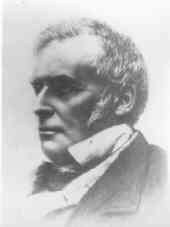
The church gives a yearly round of fasts and festivals, so that mere outward events may be before the mind without any dealing of God with the individual soul …
- Scripture says, "it pleased God by the foolishness of preaching, to save them that believe"; but this foolishness of God dealing with the individual does not please the wisdom of the church.
- It has its own way of doing it. It keeps days, and months, and years.
- They turn again to the weak and beggarly elements, to which they desire again to be in bondage.
"I am afraid of you", says the apostle. It was, he tells us, going back to heathenism …
- except Easter, which was the Jewish Passover, and Pentecost, and perhaps some more recently added saints' days,
- the church festivals were deliberately and formally added from heathenism.
- Christians, so-called, would have festivals, and they tacked on Christian names to heathen ones.
The great Augustine informs us that "the church" did it, that
- if they would get drunk – which they did even in the churches – they should do do in honour of saints, not of demons.
- One of the Gregorys was famous for this, and left only seventeen heathen in his dioceses by means of it.
And another Gregory, sending another Augustine to England, directed him not to destroy the idol temples, but to turn them into churches;
- and as the heathen were accustomed to have an anniversary festival to their god, to replace it by one to a saint.
- It was thus Erope, Africa, and Asia Minor as least were Christianised.
- Sicily, which in spite of all efforts had remained heathen, as soon as it was decided that Mary was the mother of God at what I must call the disgraceful and infamous general council of Ephesus, gave up all her temples and churches.
It was as easy to worship the mother of God as the mother of the gods.
- But everywhere drunkeness in honour of the saints, and even in the churches, took the place of drunkeness in honour of demigods, the great Augustine and other fathers bearing witness.
- Such were the festal anniversaries.
- Christmas having been – and it is still celebrated in heathen countries – the worst of heathen festivals, to celebrate the return of the sun from the winter solstice, without a pretence that Christ was born that day,
- but as they could not stop the revelry, they put Christ's birth there.
- Such, in real fact, is the church's celebration of anniversaries and saints' days.
This is certain, that the apostle declares that it was a return to heathenism, so that he was afraid his labour was in vain –
- avowedly turning the great and mighty parts of Christianity, by which God acted upon souls, to bring them into blessed and divinely-wrought relationship with Himself, individually and collectively,
- into certain outward events, or outward facts, and exclusively to their announcement as occurring at particular times. "I am afraid of you".
In result the gospel is founded on a series of mighty and divine facts, by which, through the foolishness of preaching,
- God, in the power of the Holy Ghost, does act on individual souls for salvation, and gather them into one.
- The church system makes of them a set of outward events, historically remembered by anniversaries.
J.N.D.
Page Top Article Top
FIDELITY TO CHRIST
C. A. Coates |
|---|
| Letters of C. A. Coates: 25-6, February, 1899
|
|---|

What you say about your friend feeling that she was going beyond her faith in standing aloof from Christmas parties, etc., made me think of what Mr. Stoney said at a rather important point of his career.
- He went to J.N.D. and asked to be allowed to take his place with the very few who were at that time breaking bread.
- Mr. Darby asked him if he had faith for it. He replied, "Faith or no faith, I can't stop where I am".
When a thing is seen to be contrary to God's will, and inconsistent with fidelity to Christ, it will be separated from by any one with spiritual energy or true purpose of heart.
- Such a one would not stop to consider whether he had faith for it or not;
- but the very fact that he broke with the unclean thing would show that he was walking in the energy of faith.
When one is really after Christ he is most diligent in the renunciation of things which he judges to be inconsistent,
- and this is not always because he has rest and satisfaction in Christ, but because he is set for it.
- Such a one is inquiring the way to Zion with his face thitherward, and there is not the smallest doubt that the compensation will come in due time.
- Indeed, any one who had really come under the attraction of Christ in glory would feel that there was a blessedness in going after Him which threw everything esle into the shade,
- though he might be perfectly conscious that he was far from having reached a region of satisfied desire.
The great point of the Nazarite, which I sought to call attention to in my published address on Numbers 6, is that he was a man commanded by the Lord.
- The key to the chapter lies in the words – "unto the Lord".
- It was not ideas with the Nazarite, but a Person.
I remember hearing of a young man who complained, after apparently breaking with a great many things, that he had given up everything for an idea.
- the truth was he had never come under the attraction of a Person in glory; he was imitating others, and being influenced by others rather than by Christ.
- And, of course, instead of finding satisfaction he met with nothing but disappointment.
- It was an attempt to get the Nazarite's compensation by imitating the Nazarite's behaviour, instead of coming under the influence of the Nazarite's Object.
No doubt you will be able to discern whether your friend is really awaking and rising from among the dead so that Christ may shine upon her,
- or she is merely being influenced to take a certain course of action without having her heart touched by the attractiveness of Christ.
- If the former, she will come out all right and bright presently without a doubt;
- if the latter, she needs the presentation of Christ to her heart in Holy Spirit power
- so that His attractiveness may command her, and the "expulsive power" of the knowledge of Him may displace other things.
C.A.C.
Page Top Article Top
IS THE KEEPING OF CHRISTMAS
PLEASING TO THE LORD?
Robert D. Gracey |
|---|
| This 1935 pamphlet had a wide circulation among brethren.
|
|---|
Christmas a name that has lost its one-time charm!
- Years ago when we were children, Christmas was to us a name associated with the purest joys of earth.
- It stood for giving and forgiving, for love, self-sacrifice and neighbourliness.
- Even the first day of the week, the Lord's Day, held no charm like December 25th.
- Such as they were, there were always enough little gifts to go round the large family circle.
- And, literally, the day was scarcely over before we were laying plans for the next year's happy family reunion and celebration.
Page Top
• The Reproach of Being Different
We do not keep Christmas now. It was a terrible wrench to give it up.
- But, thank God, there are many others who are prepared to share the reproach of being different to the majority of those about them;
- who are willing to forego the popularity which might be theirs by simply joining in the popular enjoyments of the times;
- who place faithfulness to Christ in His absence before personal pleasure.
The Scriptures say nothing about the disciples of the Lord Jesus
celebrating the anniversary of His birth.
- On the other hand, there are many references to the commemoration of His death, the Breaking of Bread, which was evidently to take place on the first day of each week.
- See Luke 22: 19-20; 1 Cor. 11: 23-26; Acts 20: 7.
Like many other things which affect people generally and which have more or less of a connection with Christianity,
- the kindly sentiment and activities connected with Christmas-keeping have doubtless had a softening effect upon this Godless world.
- But think how this ostensibly religious festival has become commercialized!
- Theatres, restaurants, stores and business concerns generally, have
come to depend upon it annually as a source of revenue.
- True, it is still to many sincere persons a time of family reunion and of simple, natural pleasures,
- but can any true lover of the crucified Saviour, the rejected Son of God, afford to overlook how He must regard these annual celebrations which bear His holy Name?
Page Top
• The World's Idea of a 'Merry' Time
As another has pointed out, if on the occasion of celebrating the
birthday of a dead patriot one were to arise and eulogize him feelingly in well-chosen terms, those gathered in his memory would be delighted.
- Alas, how different it would be if a lover of the Lord Jesus Christ were to stand up in any one of most of the Christmas Day gatherings large or small and tell out in simple, heartfelt language the story of
- the humble circumstances of His miraculous birth;
- of His pathway of untiring service, yet of rejection, culminating in His vicarious death on Calvary's cross;
- of His burial, resurrection and ascension and of the glorious prospect of His soon coming to take those who love Him to be forever with Himself.
- Who would hesitate to admit that such a theme, even on Christmas Day, is not the world's idea of a 'merry' time?
- To venture to tell of the Saviour's dying love of His hatred of sin yet compassion for sinners, and of His holy perfections so delightful to the heart of God,
- would indeed be inappropriate and unwelcome in the great majority of Christmas Day parties or audiences.
Page Top
• Objections
'But', says a fellow-Christian, 'what you have said so far does not apply to my case at all. The fact that so many leave the Lord Himself out of their Christmas Day activities does not mean that everybody leaves Him out.
- 'For me the Day is filled with thoughts of His lowly birth, of the visit of the magi who brought Him gifts of "gold, and frankincense and myrrh".
- 'The family reunions, the renewing of friendships by means of greeting cards and visits, as well as the providing of food and other presents for the poor, are joys connected with Christmas that are almost sacred.
- 'In fact, I hold the Day itself so sacred that I would give up my position rather than consent to work on December 25th! '
Page Top
• God is Calling Attention to Death of Christ
That is all quite understandable. No doubt your convictions and feelings are perfectly honest and sincere. Your motives too may be the best.
- But our convictions and feelings and motives, even at their best, are an unreliable guide in themselves.
- Cain's motives may have been good enough when he thought to give an offering of the fruit of the ground, but his offering nevertheless was not acceptable to God.
- The important thing was not Cain's intention, but God's requirement what would be pleasing to Him.
- Cain's offering overlooked the necessity of blood-shedding; Abel's, on the other hand, gave evidence that he valued in type the death of Christ, so he offered a lamb; and it says that
- "The Lord had respect unto Abel and to his offering; but unto Cain and to his offering He had not respect".
- Surely no lover of the Lord Jesus who reads his or her Bible prayerfully and in dependence upon the Spirit of God, can fail to see that God is calling special attention to the death of Christ rather than to His birth.
Page Top
• A Device of Satan
Not only does the word of God make no request of us to commemorate the Lord's birth, but, as we have already noted, it gives no intimation that the earliest disciples marked its anniversary.
- Nor does Scripture indicate the exact date of His birth.
- Turning to accredited encyclopedias – e.g., Encyclopedia Britannica – we find the speculation as to the probable date ranged in early centuries from January 6, March 28, April 19 or 20, May 20, November 17 to
December 25th!
- December 25th was evidently a day originally connected with sun-worship.
My own suspicion is that Christmas-keeping was a device of Satan – who according to 2 Corinthians 11: 14 is transformed into an angel of light –
- with a view to creating a place where Christian and unconverted might eventually meet on common ground in the Name of the Lord Jesus.
- If my suspicion is correct, Satan's plan would seem to have proved to be one of his masterpieces, for Christmas calls supreme attention to the birth of Jesus whereas
- it is unmistakably evident from the Scriptures that God would have us constantly engaged with the efficacy of His atoning death.
Commemorating the Lord's death involves reproach, which is true Christian ground. Heb. 13: 13.
- Commemorating a day which is generally accepted as His birthday involves no reproach whatever;
- on the contrary, to fail to keep it is sure to cause misunderstanding and reproach.
- Evidently, therefore, not to keep the Day as the masses do is consistent for those who "esteem the reproach of Christ", Heb. 11: 26.
Page Top
• Three Questions
To those therefore who are really concerned as to whether or not they should 'keep Christmas', I would commend prayerful consideration of three questions:
- Do I keep Christmas to please myself?
- Do I keep it to please others?
- Do I keep it to please the Lord?
The beloved Apostle Paul indicated that he felt the need of such
concern as to matters in his own life, for he says in writing to the
Corinthians
- "Wherefore we labour, that, whether present or absent, we may be accepted of Him", 2 Cor. 5: 9.
Of the Lord Jesus it says that He "pleased not Himself; but, as it is written, The reproaches of them that reproached Thee fell on Me", Romans 15: 3.
I am persuaded that in the face of the word of Scripture, of history and of present-day conditions,
- the question of Christmas-keeping will not be a difficult one for the Christian whose honest concern in life is to be pleasing to the Lord.
R.D.G.
Westfield, N.J., December 7, 1935
Page Top Article Top
Pray, why should Christmas merry be?
And what is Christmas day to me?
Is it because my Lord was born
At Bethlehem, on Christmas morn,
That I should merry be and gay,
And with the world keep holiday?
When Jesus came from sins to save
What welcome was it the world gave?
No room! No shelter given from men.
He shared the humble cattle pen,
My Saviour in a manger lay.
Oh, how can I keep holiday?
The angel band's bright voice might flow
"Glory above and peace below";
The world heeds not heaven's notes they drown
With earth's harsh sounds, while men sit down
To eat and drink, then rise to play
And keep their hollow holiday.
What marked Christ's lowly sojourn here?
Grace met with hate, and truth with sneer;
His life of love was nought to them
Dark Calvary shadowed Bethlehem.
In enmity the Lord they slay
And start their merry Christmas day.
Without Golgotha's deed of shame
Christmas is but an empty name,
And resurrection's tale now told
'Tis "New" creation, not the old.
From earth His life is ta'en away;
There's naught for me in Christmas day.
'Tis not His birth, though that must be
Before my Lord could die for me;
It is His death I would show forth;
'Tis through His death I know His worth.
I will announce it "till He come"
To take me to His Father's home.
So "Merry Christmas" has no place
With me a sinner saved by grace;
Christ in the glory claims my heart;
With Him alone I'd seek a part.
Dead to the world, I turn away
From mocking, merry Christmas day.
Anonymous.
Page Top Poem Top
'Tis the wish of the hour A "Happy New Year".
But powerless are wishes, however sincere;
So glance for a while at the prospects there be,
Of a "Happy New Year" for you and for me.
Are you seeking your joy in this world below,
Full of sins, wants and sorrows, oppression and woe?
You'll ne'er grasp true pleasure, howe'er you pursue,
And it won't be a "Happy New Year" for you.
1 John 2: 16-17
True joy comes from God. If you wish to be blest
Then turn unto Him, He alone giveth rest;
Your soul must be saved and your conscience be clear,
Before you can look for a "Happy New Year".
James 1: 17
Then look to the Saviour – so willing to bless;
Believe on His Name: the Lord Jesus confess.
He died for the unjust, and judgment passed through
A "Happy New Year" He now offers to you.
Romans 10: 9
Through grace I am linked with God's glory above,
My blessings come down from the Son of His love;
Christ broke all my fetters and set my soul free,
So it's always a "Happy New Year" for me.
Ephesians 2: 8
My sins are all covered, my transgressions hid,
Yet not through my merits or ought that I did;
But Jesus has borne them on Calvary's tree
And thus there's a "Happy New Year" for me.
Romans 4: 6-8
I'm secure in Christ's love, whatever betide;
I'm part of the Church, of His Body, and Bride;
For me He is coming. His glory to see
The happiest day of the year it will be.
1 Thessalonians 4: 16
When the Lord Jesus comes, then His Church shall go
And the saints will finish their sojourn below.
But, if you are left with the Judgment in view,
There will ne'er be a "Happy New Year" for you.
Hebrews 10: 27
No, nothing of Happiness; only to know
The fate of the lost, in the region of woe;
And to find that sin's pleasures are costing you dear,
And have cheated you out of the "Happy New Year".
C.D.
It is uncertain whether this is Charles Deayton.
Page Top Poem Top
| • • • Clericalism • • • |
|---|
Another evidence of earthliness and worldliness is the almost universal acceptance of clericalism.
Just as most Christians assume that the celebration of religious holidays is sanctioned by Scripture because the churches generally promote these observances,
- so also on the same basis they accept the custom of clericalism without question.
- But a careful and unbiased search of the New Testament will substantiate that clericalism has no scriptural basis whatever.
But someone may say, 'But we have a godly pastor. What can be wrong with that?'
- It is not a question of the personal character of the clergyman – who may well be an estimable Christian – but of Scriptural principles.
"Clericalism is the assumption of a privileged and exclusive position in the leading of worship and the exercise of ministry or administration, by certain persons as distinct from other members of the body of Christ.
- "It is not based on divine choice and spiritual qualifications but on a secular-style education and human preference and authorization.
- "Clericalism sets aside the sovereignty of the Spirit in the assembly, the rights of the Lord over His servants, the priesthood of believers and the functioning both of the gifts and of the body".
The above quotation is from Studies: Our Responsibility in the Present State of the Church. Serious Christians, committed to "prove all things", and to "hold fast the right" – 1 Thess. 5: 21 – are encouraged to read and reflect on the matters covered on that page.
G.A.R.
|
Return to evidence. |
Page Top Note Top
| • • • My Experience as a Young Believer • • • |
|---|
In my family Christmas was celebrated in a secular way.
- By the next year, I had become convicted from the Scriptures that the celebration of Christmas, religious or secular, was antiscriptural and worldly.
But I was shocked to find that the believers with whom I had started to break bread had no judgment of it.
- There was even a tree in the 'gospel hall' at that time of year!
- Being young, I did not know what to do and so went on uneasily.
- A few years later I had to withdraw from that group because of an unrelated but very serious issue.
- In searching for a gathering of Christians with whom I could meet, I used the repudiation of the celebration of Christmas as one characteristic of such a company.
- I found such a company but, happily, learned from them that there were other and more positive evidences of the Lord's approval.
G.A.R.
|
Return to do not keep. |
Page Top Note Top