Menu•SiteMap |
Doctrine
The Sonship of Christ
– F. E. Raven, J. Taylor,
A. G. Brown and C. A. Coates
From the early centuries, the nature of the Sonship of Christ has been the subject of debate and controversy which those known as brethren have not escaped.
In an early publication, 'The Son of God', Mr. J. G. Bellett, 1795-1864, made an impassioned plea for the traditional concept of 'eternal' Sonship.
- There is no indication as to what caused him to so stoutly defend the position of ancient creeds.
- Despite a great respect for JGB, and his honoured part in the revival, it must be said that he seemed to have overlooked the mediatorial operations of God.
- The following remarks – which have subsequently come to light – are by Miss L. M. Bellet. See Biography: J. G. Bellett: Recollections. As far as is known it is the only reference extant to this matter which possibly may have only affected Dublin. GAR
- About two years after my brother's death [which was c. 1849] another great trouble came into my dear father's life, caused by the division which took place amongst the Brethren who had hitherto been united in Christian love and service.*
[ *The controversy that arose about the writings of Mr. Benjamin Newton had
already taken place; and this was consequent upon it. GAR]
- It was at this time that my father wrote two papers in the 'Present Testimony', called 'The Son of God'. His mind was led to the subject – as he has explained – by thoughts concerning the person of our blessed Lord, which he felt to be erroneous, and which had been suggested by some whom he knew.
- In looking back, I can see how great was the mercy which did not suffer this sorrow to visit him until the former wound was in a measure healed.
- The controversy assumed a grave form. Decided judgments had to be formed and acted upon, and much sorrow followed in the separation – in many instances – of close and tried friends.
- My father's judgment was not shared by the greater number of those amongst whom he had ministered for so many years in Dublin, and by whom he was greatly beloved. Many meetings for conference were held — and I well remember the pain and anxiety he suffered.
- His dear friend Mr. Darby was of the same mind as himself; but his visits to Dublin at that time were few; and at first my father stood much alone.
- He felt it all most keenly; and the temptation must have been very great to silence his conscience, and remain, as before, united with so many whom he loved, and who wished still to have him as their friend and teacher.
- The trouble began to tell upon his health and he was persuaded to leave Dublin for a time.
- On his return, a separate meeting was formed by the few who felt with him, and whose numbers gradually increased. With them he resumed his ministry, and continued it with only occasional interruptions until his last illness began.
- It was a comfort to him that living a few miles from Dublin, at Booterstown, he was spared the more frequent meetings with those friends from whom he differed, but whom he never ceased to love.*
- But, by degrees, when the pain was in a measure softened, on coming home, he would sometimes say with a smile, "I had to run the gauntlet today!" and would then mention the familiar names of some of these friends whom he had met. LMB
[* How different was JGB's attitude to that of those who many years later also differed from their brethren as to the nature of our Lord's Sonship. GAR]
|
- Mr. J. N. Darby and other early teachers used the term 'eternal' Sonship freely and, evidently, with some conviction but apparently
- without having subjected it to the same critical examination that they gave to other dogmas of the systems from which they had withdrawn.
To some, both then and now, the use of the term by those early honoured teachers is sufficient to establish it as an unquestionable and essential article of faith,
- even though those teachers would not countenance establishing truth based on their word or of any other.
- The Berean spirit, "daily searching the scriptures if these things were so", finds no place with the present days adherents among those known as brethren.
As a young man, I asked an older leading brother in a 'Grant exclusive' meeting as to other brethren who did not hold 'eternal' Sonship – and I was told quite bluntly,
- 'We don't even know if they are Christians'!
- I have also heard such brethren vehemently – but ignorantly – denounced as denying the Deity of Christ!
- Recent correspondence confirms the current existence of a bitter and unbrotherly spirit by those who defend 'eternal' Sonship.
- I am conviced that the apprehension of the true nature of our Lord's Manhood and His Sonship – and the mediatorial operations of God towards men – is basic to a fuller understanding of the purposes and ways of God. GAR
- Adam Clarke (1760/1762–1832) was an eminent Methodist theologian and Biblical scholar. His commentary on the Bible was valued by Methodists for many years.
- However his view on our Lord's Sonship was opposed and rejected by other Methodist theologians who clung to the traditional ecclesiastical creeds, but will be of interest to many readers of this page. In one of his letters, he said,
-
“You once asked my opinion concerning the meaning of the phrase 'the Eternal Son of God'. I gave it you, and howsoever singular, and unauthorized by Doctors, it may appear, yet I never had any reason to alter it, nor do I believe I ever shall. After having been sorely tost in beating about the common bay for anchorage, without success, I have at last, through the tender mercy of God, found it where I almost ride alone.
-
“As long as I believe Jesus Christ to be the Infinite Eternal 'I AM', so long I suppose I shall reject the common notion of his 'Eternal Sonship'; not only because it is an absurdity and palpable contradiction, but because I cannot find it in the Bible. On His Godhead, the foundation of the salvation of my soul is laid: every thing therefore that derogates from that, I most cordially reject.”
|
Items on this page are excerpts from:
- two letters from F. E. Raven – 1894 defining his use of 'eternal' Son, and 1898 marking the beginning of the inquiry as to our Lord's Sonship;
- a 1929 reading with J. Taylor in which the matter came forward publicly among the brethren, and a subsequent letter to S. J. B. Carter
- – there are numerous references to our Lord's Sonship in the index to Letters of James Taylor –
- and a 1933 letter refuting a pamphlet from Ayr which "advances the principle that the ministry of a previous generation is the test of a current one";
- two letters – 1955 and 1972 – of Arthur G. Brown of Eltham, London, and Banstead, Sussex.
- While Mr. Brown was not in the front rank in ministry – as FER, JT, CAC and others – he was clearly an intelligent brother.
- His remarks are of special interest because of his personal knowledge of the contemporary situation.
- Mr. Brown is the author of the now out-of-print 1970 booklet The Departure from the Truth after its Recovery;
- three 1931 letters from C. A. Coates answering inquiries as to our Lord's Sonship, and his
- valuable and reverent Remarks on a pamphlet by A. J. Pollock entitled 'The Eternal Son' on this page.
G.A.R.
Page Top
| F. E. RAVEN – 1894/98 |
|---|
Letters of F. E. Raven: 101, December 29, 1894
This letter shows that FER did not apply "Eternal Sonship"
to "eternal relations" but to "distinct personality". |
|---|
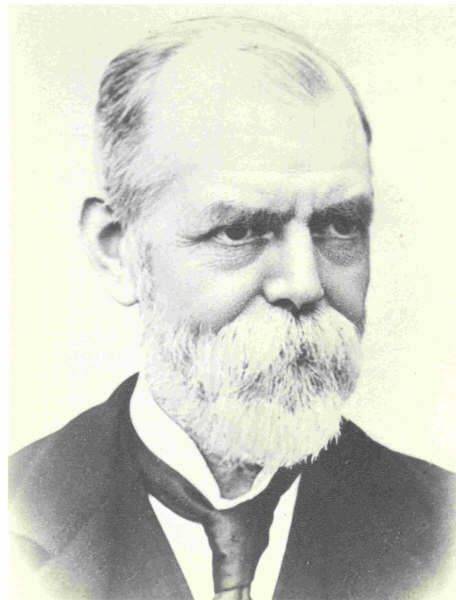
My dear brother …
In answer to your question I should say that if a man intended to deny the Eternal Sonship of Christ I certainly should not care to remain in fellowship with him – for "the Son" is the name that conveys to me the idea of the distinct personality of Christ;
John 5: 19-20; 1 John 4: 14.
- The expression 'the Word' is much more a moral idea, and is really taken up from philosophy – though a peculiar significance is given to it by the Spirit of God.
- On the other hand I fear a little speaking of the Eternal Son
as 'in relationship' lest the thought be extended according to human ideas in which we rightly regard a son as in a position of inferiority to a father.
- The eternal relations subsisting between the Father and the Son and the Holy Spirit are entirely beyond our knowledge.
Believe me, Your affectionate brother,
F.E.R.
Letters of F. E. Raven: 147-48, November 23, 1898
Written after his return from his first visit to America |
… As to what you refer to, my point was that it was permitted us to know divine Persons as and when revealed and only so.
- In view of that revelation the Son has taken a new place relatively,
that is, of inferiority to the Father, coming to do the will of God,
though of course there would be no change morally or in affection.
- The names under which we know divine Persons, that is, Father, Son and Holy Spirit are, I judge, connected with this position, and I doubt if we are allowed to enter into the eternal relation of divine Persons apart from this revelation. No one knows the Son but the Father.
- What I think led me to it was a fear lest in our minds we should almost insensibly give to the Son a place of inferiority – save as regards
revelation – in our thoughts of the Godhead, which could not be right.
- The point is to be within the limits of Scripture and not trading on what is merely orthodox.
F.E.R.
Page Top
| J. TAYLOR – 1929 |
|---|
The Divine Standard of Service: Reading 2
Ministry by J. Taylor, 29: 361-74, Barnet, June 1929
Remarks not relating to the Lord's Sonship have been omitted. |
|---|

S.J.B.C. Referring to the Son of God, would it be the Son as begotten in time, or would it suggest resurrection?
- He was "marked out Son of God in power, according to the Spirit of holiness, by resurrection of the dead", Rom. 1: 4,
- or would it be His eternal sonship?
J.T. I do not know that there is such a term in Scripture as eternal sonship. "Son of God" is a question of a Person. The Son of God is announced in Scripture after the Lord Jesus was here.
- In Luke it says, "The holy thing also which shall be born shall be called Son of God." That is what Luke says, meaning that that should come out in Him in due course.
- Jesus asserts His relation as Son at the age of twelve in saying, "My Father's business," but the Father's voice announcing it is at His baptism.
S.J.B.C. You believe He was the Son in eternity?
J.T. What the Scriptures say is, "In the beginning was the Word." It does not say 'the Son.' "In the beginning was the Word, and the Word was with God, and the Word was God", John 1: 1, that is to say, His eternal personal existence is stated. He was there personally in the beginning.
- To go so far as to give Him a personal name or designation then, is going beyond Scripture it seems to me, but that the Person was there is the great point.
- To give Him a name is another matter, but the Person was there. It is the foundation of Scripture that He was a divine Person and so was there in the beginning.
- Now Luke says that He "shall be called Son of God," and He says Himself at the age of twelve years, "Did ye not know that I ought to be occupied in my Father's business?" There is a plain intimation of His relation with God.
- There is the assertion of His relation with His Father as Son at the age of twelve years, and then God Himself calls Him Son as He was thirty years old: "Thou art my beloved Son, in thee I have found my delight." That is what He was here.
- Luke presents Him in that way; and John speaks of His sonship only after He is said to have become flesh.
E.J.M. "God … at the end of these days has spoken to us in the person of the Son," Heb. 1: 1.
J.T. Quite. It was a divine Person, and that Person was the Son, but in a mediatorial position; it is in that way He speaks. The speaking was by Him, as in manhood.
- I am sure we should be most careful as to applying to Christ as "in the form of God" designations given to him as in Man's form.
G.J.E. When the Son of God is mentioned in Scripture is it not always in manhood?
J.T. I know of no other way in which He is so spoken of in Scripture than in manhood, but that in no way detracts from the fact that He was a divine Person and was there in the beginning.
- I believe many assume that the revelation of God and the form of God are equivalent, but this is to ignore that it is expressly stated that
- no one has seen God at any time, that He dwells in unapproachable light, whom no man has seen, nor is able to see.
- This was written after God is said to have been declared by the only-begotten Son.
Ques. Does the title "Son of God" stand in regard to God's faithfulness to His Old Testament promises?
J.T. It does. It has to be borne in mind that the divine personality of our Lord is properly based on the statement,
- "In the beginning was the Word, and the Word was with God, and the Word was God."
- He is a divine Person and that underlies the fact that He is capable of representing God.
- As Man the designation "Son" undoubtedly regards Him in this light, but to make it apply to Him as "in the form of God" is another thing entirely.
S.J.B.C. I thought that in incarnation He took up in new conditions a relationship that had ever existed in eternity and that as the Son of God it was the relationship in a new condition.
J.T. I think you are asserting too much in saying the relationship 'had ever existed.'
- It does speak of the glory He had with the Father, but to give the thing a name is, I believe, going beyond Scripture.
- That the Person was there and that He was God is the point.
- I believe many have in their minds a fixed conception of the form of God. That is, they think they can bring the infinite and unknowable within their finite comprehension.
- But we have the declaration of God, of His nature and attributes, and that is in "the only-begotten Son, who is in the bosom of the Father"; God is now working in that connection in His own Son. Paul and Silvanus and Timotheus preached Him among the Corinthians.
- While God is thus brought within our range in a Man, owned as Son of God – the title showing who He is – there is infinity in the Person – what is beyond us. "No one knows the Son but the Father."
M.W.B. Is your point that it had to wait for revelation before the title "Son" could be disclosed?
J.T. That is how Scripture presents it to us. He is called Son in manhood. So Paul was not moving in Corinth on the low level of man's mind, but on the high level of what God was doing. God is operating in His Son, His own Son, and that is what was preached.
Rem. I was wondering if Scripture would bear out that He is the Son in Deity, and the same Person Son of God in time and humanity.
J.T. But you will run across difficulties if you begin to analyse things like that, because the Son, without any modification, is said not to know certain things; Mark 13: 32.
- You have to bear in mind that Scripture is dealing with a mediatorial system of things.
- Christ has come within the range of men to speak to men, but to attempt to give Him a name before He became Man is going beyond Scripture, it seems to me.
- Because of His taking up a mediatorial position as Son we can understand the references to subjection, obedience, etc.
W.R.P. You would not carry the title "Word" into what He was in Deity.
J.T. No. He had acquired that name among the saints. So in Hebrews 1 you get a variety of the glories of Christ mentioned, but they are all taken from the statements of the saints, that is,
- they are all taken from the Psalms, as if God loves to bring in the saints to establish the great truth of the Person of the Lord Jesus Christ.
- But like "Son," "the Word" implies His Deity, for only a divine Person could reveal – it is a question of speaking the mind of God.
F.S.M. Does the preaching of the Son of God involve the presentation of a divine Person, the perfect representation of God as He is, and the establishment of all the promises.
J.T. That is what I thought. You apprehend God in a mediatorial way, but in One who is none less than God Himself, that is, He is the Son, but the Son comes in in subjection.
- No evangelist is more pronounced on subjection than John, and it is set forth in One who was absolutley at the divine bidding.
M.W.B. What do you understand by the expression in Matthew 11: "No one knows the Son but the Father"?
J.T. That is His Person as to His eternal relaton; that is inscrutable.
M.W.B. That has not been revealed.
J.T. No. You cannot give names to, or define relations between divine Persons before incarnation. You have to go by Scripture.
H.D'A.C. You do not deny the relationship, but Scripture speaks of it as it came out in Him when in the mediatorial position.
F.H.B. I remember FER saying that we have no testimony in Scripture of the relationship of divine Persons in eternity.
J.T. I think that is just. You are careful as to what you say, but the way in which Scripture presents the thing, as said already, is that the Person was there.
- "In the beginning was the Word, and the Word was with God, and the Word was God."
- I was helped by the remarks made by FER in America on this subject.
Ques. Scripture says, "We have seen and tesify, that the Father has sent the Son as Saviour of the world," 1 John 4: 14.
- Was He the Son as He was sent, or did He become the Son?
J.T. It is the Person, I think, that is in view. "A body hast thou prepared me, … Lo, I come to do thy will." It is the Person come into manhood.
- But I do not see that we should make 'sent' allude to His birth simply; morally it was there before and so entered into the incarnation, but the bearing of it is toward His actual entrance into service.
- The Father had sanctified Him and sent Him into the world. I do not apprehend this to mean that He was sent before He became Man, but sent as in manhood.
- The same may be said of "Jesus Christ whom thou hast sent," John 17: 3. He did not bear the name "Jesus Christ" before incarnation.
- Being sent into the world does not necessarily mean that it is from another place literally, but that the Father does it.
- Hence the Lord says, "As thou has sent me into the world, I also have sent them into the world."
- It is a question of being sent by a Person; the disciples as not of or in the world morally, were sent into it for testimony.
- We may thus see that while it is said the Father sent the Son, we cannot fairly deduce from this that He was actually in that relation with God as "in the form of God."
Page Top Article Top
Lettters of J. Taylor, 1: 262-65, July 18, 1929
to Mr. Samuel J. B. Carter
See SJBC's poem The Remant that is Left. |
My dear Mr. Carter,

Thanks for your brotherly letters …
When the subject of the Lord's sonship was mentioned at Barnet I was unaware – had forgotten perhaps – that you had written a leaflet on it – quoting FER Lately this was sent to me by a brother named Ghinn, of Melbourne.
I think it is right to mention this, as it might seem that I had you specially in mind.
In truth, I was thankful you brought the matter up – although you did, I was not thinking of you, or attacking you in my remarks.
- It is a most weighty subject and I have no doubt the spiritual intelligence in the meetings warranted attention being called to it.
What I expressed has been in my mind for at least twenty-five years; it came to me through FER when he was in America in 1902.
- It came out in a Reading but was not included in the printed notes. It is also extant in correspondence.
- JND evidently had the same thought, although like FER he generally treated the subject as commonly accepted; Mr. Raven had the thought later, I think.
- I refer to "Notes and Comments", Vol. 7, page 7: "Nor do I see", he says, "that in this character – John 1: 14 – He is spoken of as Son save as known in flesh".
- He guards this afterwards in a note, but the text remains.
But, of course, what we must rely on is the Scripture itself and the more I weigh it on this great matter
- the more I am unable to see the justness of applying the designation Son to our Lord as in "the form of God" – before incarnation, I mean.
Your remark – in the leaflet – that the relationship was not made by revelation is just as far as it goes,
- but what should be noted is that the Lord's Sonship in Manhood existed before the revelation.
- It was, of course, there from His birth, and Luke and Matthew formally recognise this, but the announcement of it was at His baptism.
As was said at the meetings, the great and blessed fact is His eternal distinct peronality and the infinite glory of it – He was God.
- We are all agreed as to this and there can be no admission of compromise or doubt as to it.
- The language of Scripture, John 1: 1-3, is wonderfully plain and concise.
- The question then is, Does Scripture apply sonship to Him as in the form of God, or before He became flesh?
What is usually said is that God could not send or give a Son unless He had one.
- This is obviously true, but what underlies the remark is that the act, so to speak, of giving or sending must be before the incarnation, or that the incarnation was the expression of it.
- I am not prepared to deny or aver anything as to time definitely, but the matter should be weighed in a spiritual way.
- We might also, on the same ground, say that God must have had "Jesus Christ", John 17, in order to send Him.
- No one will say that designation applied to Him before incarnation.
- We have also, "Whom the Father hath sanctified and sent into the world".
- As far as I understand, JND connects sanctification there – John 10 – with Him as Man. Anyway I am assured it should be.
It helps, I think, to bear in mind that revelation is for finite minds – no man can take in the form of God – and so sonship, being owned in Christ by the Father, conveys what He is personally;
- our minds can take this in, we can apprehend – not comprehend – Who He is thus, always bearing in mind that no one knows the Son but the Father.
- But the truth of His Person – Who He is – is in the soul as a solid rock.
- It is a term – I am only submitting this– seeking to be subject and cautious as on such holy ground) therefore, which,
- while applied to Him as in Manhood only, asserts His deity; the Person is before the adoring believer, John 9, and known.
- We cannot compass Him, but we apprehend Who He is; He loves me in a known personal way, and I love Him.
- But, as I said, my finite mind is met; I can apprehend Sonship in a Man, but I do not pretend to apprehend it in One in the form of God. This is beyond the finite mind, it seems to me.
- The relationship of Son, or Son of God, in a man is enough to denote His Person – a person I can know and love –
- but what He is in the Deity is beyond my range.
- He dwells in light unapproachable whom no man has seen nor can see.
Thus in John's gospel, where the truth of our Lord's person is formally treated, Sonship is not mentioned until He is said to have become flesh;
- and then it is given as the conclusion arrved at by those who contemplated Him; they saw His glory as on an only-begotten with a Father.
- John the baptist's testimony is also on the ground of what he saw, and that of Nathanael.
- In verse 18 we have the formal statement of our Lord's Sonship by the Spirit, but this also obviously contemplates Him as Man; He is in the bosom of the Father.
- The preposition "in" – eis – as you will know, points to His coming to the position.
- This probably implies His personal worth or attractiveness as Man.
As to giving and sending, while these are generally in the past tense, the greatness of the person given or sent is in view.
- Such terms as the "Word", John 1, and "Jesus Christ", John 17, and "Christ Jesus", 1 Timothy 1, have to be borne in mind as well as "the Son".
- Designations known and used, having come out in Christ become Man, are used to indicate His Person whether before or after incarnation.
- As I said, I do not see how we, as finite, can apprehend His person save as we see what He is to and with God. What was seen was intelligible to man – an only one, with a father.
My wife joins in love in Christ to Mrs. Carter and you,
Affectionately in Him, James Taylor.
Lettters of J. Taylor, 1: 392-95, March 25, 1933
re "the pamphlet from Ayr" |
Beloved Brother,
I thank you for your letter and enclosures – the latter are sorrowful reading.
The pamphlet from Ayr, which you sent, advances the principle that the ministry of a previous generation is the test of a current one.
- What has the stamp of a ministry of the Spirit at any time will, of course, agree generally with such ministry at other times,
- but to make the teaching of uninspired men a standard is false and pernicious, as placing it on the level of Scripture, the only true standard.
- No one would admit that he regards such teaching in this way, but while not formally stated, evil is implied in the manner in which the earlier ministry is used.
- Quotations from Scripture are meagre, whole pamphlets being almost made up of quotations from servants who ministered to a past generation.
- Were one inconversant with Christianity, to read most of the papers I am referring to, he could not but assume that its late teachers are regarded as more authoritative than those of the beginning.
As you will know, I am not questioning that the ministry of the servants mentioned in the main, was of the Spirit.
- I am writing of the use made of it.
- For instance, this pamphlet from Ayr has 22 pages, and in only three of them is there any attempt made to bring in the direct teaching of the Scriptures.
- I have no hesitation in saying that one who premises mainly on writings other than Scripture is disqualified to deal with divine things and has no moral right to address the people of God.
- He is not speaking "as oracles of God".
Another feature marking some of the papers dealing with the Lord's sonship is the placing of Mr. Darby along with Mr. W. Kelly and Mr. F. W. Grant.
- It is well known that JND had serious conflict with the former and that he refused the views of the latter as to the Spirit and eternal life.
- There is a moral defect shown in grouping the servant whom God so honoured and who continued faithful to the end, with men who divided the saints in turning away from the truth.
- We also find Mr. Raven quoted as supporting 'eternal sonship' although the writers, as having read the Barnet Notes, must be aware that in his later ministry he refused it.
- Thus a moral defect in them appears here also.
The effort to make the ministry of a past generation the standard of what has followed is a notable trait of current evil.
- Those active in it, doubtless, do not mean to weaken Scripture; they assert that Scripture alone is authoritative,
- but the constant profuse citation of writings other than Scripture, overshadowing the latter, is,
- by implication, leaven which works in the minds of credulous readers, and the authority of the inspired word is weakened.
- The enemy is unmistakably in this.
- The statement – often given out of its contextual meaning – of an honoured servant is accepted as final
- and thus the soul is robbed of the gain of arriving at the truth, as seeking prayerfully the direct teaching of Scripture as to the subject in question.
- His soul would be tested by the word of God, which is sharper than any two-edged sword;
- he would not only acquire a clear view of the truth in question, but also an increased knowledge of God.
I need not say that I am far from discrediting the previous delivering and constructive ministry of the last century.
- I owe too much to it under God to do this.
- It marked a great movement of the Spirit; but this movement continues, and so the word is,
- "He that has an ear, let him hear what the Spirit says to the assemblies".
- Those working with God today will gladly own the distinction God gave Mr. Darby and others of an earlier day,
- but they will not, cannot, admit that the ministry of the last century was final, or that the Holy Spirit has ceased to speak.
- Indeed no one would refuse more vehemently than Mr. Darby any such suggestion.
As regards ministry, the most advanced and honoured of those who have part in it would never abandon the learning attitude; and so constant adjustment goes on.
- Thus a servant's later ministry may in detail vary from what he presented earlier. This may be seen in Mr. Darby's writings.
- That he held and urged the eternal sonship of Christ as an accepted truth is true, but that he was satisfied with it in his later years is more than questionable.
- 'Notes and Comments', Volume 7, page 7, affords undoubted proof of this.
- Great efforts have been made to neutralise it, but his statement, 'Nor do I see that in this character He is spoken of as Son save as known in the flesh' stands.
- The 'note' makes this statement specially important, for it shows that the writer reconsidered it fearing that it might be used to favour Sabellianism, as like statements today are alleged to do.
- The note indicates that Mr. Darby had not committed himself to the full significance of the text, but that he left the latter unaltered shows how his mind was moving.
- Sabellianism, it may be remarked, was not simply the denial of the eternal sonship of Christ, but His eternal distinct Personality – dreadful error.
- Hence the unfairness of those who seek to fasten this error on others and myself now, seeing we assert the eternal Personality of our Lord in the strongest possible terms.
- The statement of JND's referred to above is enhanced as we follow his meditation on John 1.
- He develops sonship in the saints from the sonship of Christ as seen in verses 14 and 18.
- He says, 'This, then … He is as become flesh, [page 11]. If we look at it simply in His divinity all this is lost'.
As to Mr. Raven – whom the Ayr paper quotes in support of eternal sonship – it is well known that his mind became altered as to it.
- Besides myself, there are many witnesses to his refusal of it, say from 1898 to the end of his service.
- It is also a fact that Mr. Reid in a magazine article in 1878 – four years before Mr. Darby's death – questioned the scripturalness of eternal sonship. There is no evidence that it was denounced as an error.
- These remarks are not made merely to support the truth as I understand it, but to show the misleading character of the current profuse reproduction of the writings of the Lord's servants no longer with us.
Mr. Coates' earlier ministry is adduced as opposed to what he holds now.
- This proves nothing save that Mr. Coates has clearer light now on the subject in question than he had earlier.
- To say that he was right then in following unquestioningly what was generally accepted and wrong now, is just 'begging the question'.
As to myself, the excerpts furnished in page 5 of the Ayr pamphlet to show that I held earlier as to sonship the opposite of what I hold now fails of the object intended.
- In using the designation "Son" in the older ones I simply meant to convey the Person.
- In using a title or name applying to our Lord as Man to designate Him before He became Man I followed scriptural example: e.g.,
- "Christ Jesus; who, subsisting in the form of God".
- It is over thirty years since the Scriptural untenableness of the term 'eternal sonship' became fixed in my mind,
- and while the truth of the Lord's sonship is much clearer to me now than it was then, I cannot find that I have said or written anything inconsistent with what I held.
What has been asserted as to the original of the preposition "in" in John 1: 18 is the well-known fact that it implies motion towards, and no 'scholar' – Ayr pamphlet, page 12 – will deny this.
- The Holy Spirit used it in this most important verse knowing well how Greek readers would understand it.
- The passages quoted from Mark do not ignore this meaning.
- If the Spirit meant to convey that the Lord had always been in the Father's bosom as Son, He would, according to the general usage, have used 'en' as in John 3: 13, "in heaven".
I am grieved because of the brother whose letter you enclosed.
- He is affected undoubtedly by the unbalanced quotations to which I have referred.
- If he searches the Scriptures daily as subject to the teaching of the Holy Spirit he will, I am assured, find with many of his brethren that they – the Scriptures –
- do not apply the relation of sonship to Christ viewed as in absolute Deity – that is before incarnation.
In the foregoing not the faintest thought to discredit the ministry of the last century is intended to be conveyed. I am sure I value it as much as anyone.
- I use it constantly, but as provided of God to help – to edify, confirm, and sustain us in the truth – not as a basis of my faith.
- What I have written is to show the misuse of it currently made, and how those who fall in with this are
- being drawn – unconsciously no doubt – from the infallible ground of "the law and the testimony" to a lower plane.
- I do not go into the subject of sonship now, as what is already in circulation from me conveys my mind pretty fully.
Affectionately yours in the Lord, James Taylor.
Page Top
| A. G. BROWN – 1955/72 |
|---|
| From a letter of Arthur G. Brown, April 1955 |
|---|

Beloved brother,
… As Mr. Stoney said, "In Christendom the pious Christians think of Christ as God and not as Man, and they read of His miracles in the gospels to prove that He was God.
- "They do not see that indirectly they are siding with Satan, who will tolerate any measure of religion so that the Man out of heaven is not paramount".
- To this end I would refer to the passages in the Gospel of John
where the Lord Jesus refers to Himself as "the Son", or the writer by the Holy Spirit speaks of Him under this title.
John 3: 35-36, reads: "The Father loves the Son and has given all things to be in His hand. He that believes on the Son has life eternal, and he that is not subject to the Son shall not see life, but the wrath of God abides upon him".
- In this passage it is evident that "the Father" is in the dominant position, having the disposition of all things,
- while "the Son" is in a subject position in which all things are given into His hand, by virtue of which He becomes the glorious
Administrator of the great blessing of eternal life.
- Consequently the Son is not in our view in the dignity of Godhead, since, as such, we cannot think of Him as occupying a relative position in which He receives from the Father.
- To take account of Him as occupying a position in which all things are given into His hands we must hold Him before us in Manhood,
- though never forgetting that the One whom we are viewing thus is God, for only One who is God could fill out such a position of glory.
- But no name or title can present the Lord to us both in the dignity of Godhead and the position of Manhood,
- since the essential features of each are diametrically opposed and natural mind is not capable of apprehending two opposing presentations at one and the same time:
- Godhead presents supremacy, self-sufficiency and command, Manhood necessitates subjection, dependence and obedience.
- So that while we can never divorce in our minds His Deity from His Sonship, we must distinguish the one from the other, since otherwise our minds and our thoughts will become confused.
- The Scripture already referred to makes it clear that as "the Son" the Lord is presented to us in a subject position in Manhood.
This view of the Son is continued and indeed expanded and confirmed in John 5. The Lord in verse 17 says, "My Father worketh hitherto and I work".
- The Jews sought for this to seek to kill Him because He violated the sabbath and "said that God was His own Father, making Himself equal with God".
- Now the Lord does not deny that, indeed it was the truth, but immediately He speaks in most striking language of the place of dependence in which He was as "the Son", taking His directions in what He did from what the Father did.
- "Verily, verily I say to you, The Son can do nothing of Himself save
whatever He sees the Father doing".
- The Father raises the dead and quickens, the Son does likewise. And He does it because the Father, who has life in Himself, "has given to the Son also to have life in Himself".
- He executes judgment also, not because the Father does this, for He judges no one, but by virtue of the Father giving Him authority to execute judgment "because He is Son of Man".
- Accordingly it is clear that if He quickens or judges it is not presented as being on account of what He is intrinsically as God, but by virtue of what is received by Him as the Son from the Father – that is
in Manhood.
It is also stated that all judgment has been given to the Son
"that all may honour the Son, even as they honour the Father".
- This again indicates that the Son is not in view in the dignity of Deity, but in a position in which He is elevated in honour by judgment being given to Him.
- A right of God is given to the Son by the Father so that He may be honoured as the Father is honoured.
- Note that the Lord says "even as they honour the Father", clearly identifying the Father with God as the One that was honoured.
The purpose of the Holy Spirit in presenting the Son thus is, I am assured, to magnify and glorify before our eyes His supremacy and greatness in Manhood,
- to distinguish this from His glory in Godhead and see the glories more distinctly that attach to Him in Manhood but magnify Him to us,
- and we marvel at the supreme triumph of God that all His thoughts and glories are so wonderfully secured for His pleasure in a Man.
In chapter 6: 40 the word is "For this is the will of My Father, that every one who sees the Son, and believes on Him, should have life eternal".
- In chapter 8: 36 He is presented as the great Liberator of men "If therefore the Son shall set you free, ye shall be really free".
- Finally, in chapter 14: 13 He does what is asked in His name that "the Father may be glorified in the Son".
- These Scriptures all confirm that as "the Son" the Lord is presented as in the mediatorial position.
Two further Scriptures may well be drawn attention to. Mark 13: 32 reads "But of that day or that hour no one knows, neither the angels who are in heaven, nor the Son, but the Father".
- It is evident that our Lord is not presented here as God, since
omniscience attaches to Deity and here He is said not to know something.
- Without question He is in view in this passage as a Man.
- Finally in the well-used 1 Corinthians 15: 28 it is stated "But when all things have been brought into subjection to Him, then the Son also Himself shall be placed in subjection to Him who put all things in subjection to Him, that God may be all in all".
- Here the Son gives up a position of authority which had been given to Him – evidently for the subjugation of evil – and is "placed in subjection".
- There could be no clearer Scriptural evidence that in eternity the Lord will, as the Son, be in Manhood's place of subjection to Him who is God and Father …
Yours affectionately in our Lord Jesus,
A.G.B.
Page Top
From a letter of Arthur G. Brown, February 29, 1972,
to a brother who was seeking to justify 'eternal' Sonship |
Dear brother,
I have received and would thank you for your letter, and am now seeking to give you my comments on the papers which you kindly sent for my perusal.
To deal first more fully with your letter on the Sonship of Christ, may I say quite definitely that the statement that this teaching was accepted world-wide "as coming through the medium of 'temple light' " is news to me.
- I came into fellowship in London in 1920 and I am quite certain that teachings were not pressed and promulgated on that basis in those days.
Indeed there were brothers who ministered regularly amongst the brethren at that period on their own exercises and knowledge of the truth and, in consequence,
- there was an element amongst the brethren which would not have countenanced such a basis for the acceptance of new teachings.
- I am thinking of such brothers as Messrs. H. D'A. Champney, A. S. Loughnan, G. W. Ware, Whitworth Lumb, A. M. Hayward, Malcolm W. Biggs, Sidney Pledge – all of whom I knew personally – my father [A.J.H.B.] and many more.
- All these I believe accepted this teaching feeling that it was according to Scripture. Indeed I believe that it was already held by some amongst
the brethren.
- No doubt there was an underlying element developing which regarded the ministry of the leading brother as authoritative;
- but I am emphatic that the teaching as to the Sonship of Christ was not in any way brought forward on this basis.
- Mr. H. D. Thomas was in my house to afternoon tea last week and I raised this with him and he was equally emphatic as I am that this teaching did not come in on this basis.
I also enclose herewith prints of a pamphlet by H. D'A. Champney entitled 'My Son' which I have had amongst my books for very many years.
- I am unable to fix the date of this now; but I feel sure that it was issued before Stow Hill was taken over by the brethren and put under a Trust Deed in 1932.
- If you had known Mr. Champney as I did you would never have accused him of accepting the teaching on the basis you suggest.
- He started his career as a clergyman, I understand, and then ran the brethren's school at Cambridge which my father subsequently took over and transferred to Bexhill about 1898.
To me personally this teaching answered a difficulty I had long had as to the Deity of our Lord and gave me a much greater and clearer impression of His full Deity than I had ever had before.
- Previously my thoughts had been confused due to the fact that, whatever anyone may say to the contrary, the names Father and Son inevitably
convey to our minds the precedence of the One designated the Father.
- This teaching brought to my mind and soul the full equality in Deity of the Father and the Son, and enhanced in my soul the greatness of the One designated "the Son".
- What I say in this paragraph I assert very definitely and it is unaffected by the fact that some of the statements made in support of this teaching may have gone too far.
- There is no question and it cannot be brushed aside – as you appear to do – that the expression 'the eternal Son' is not found in the Scriptures and full weight must be given to this.
I disagree entirely with your assertion that this Sonship teaching
is "in reality a most subtle and dangerous attack on the Person of the
Son" and that the current disaster amongst the brethren flows from
it.
With regard to the statement [as to change in a "vital truth"], I think this is too dogmatic an assertion altogether.
- There was no change in a "vital truth" affecting the Person of the Son of God.
- What is vital is the Deity of our Lord and there was no question as to that either by those who accepted this teaching or by those who refused it.
Coming now to your summary, you say "It is clearly a question of the teaching of Scripture",
- but you have in no way brought forward any Scripture to show that our Lord was "the Son" in past eternity.
- Hebrews 1: 2 is not past eternity but the beginning of the economy which commenced with creation and so is Colossians 1 [15-17].
- These Scriptures show that our Lord acted mediatorially then and might justify attaching the relationship implied by that name to the mediatorial position He occupied at the beginning of the economy;
- but it in no way establishes that He was in the relationship of Son in past eternity.
Summarising, I feel that what FER said is the safe ground to take –
- "The eternal relations subsisting between the Father, the Son and the Holy Spirit are entirely beyond our knowledge".
- The great matter is to assert and maintain His Deity and none of the brethren question that …
With love in the Lord Jesus, Your brother in Him,
A.G.B.
Page Top
| C. A. COATES – 1931 |
|---|
| 1. Letters of C. A. Coates: 191-5, March 5, 1931 |
|---|

Beloved brother,
In reply to your letter I may say, in the first place, that the question raised in regard to the expression "the eternal Son", as applied to our Lord, is not at all a question as to His Deity, or His eternal personality.
- The dear brethren are all, thank God, perfectly clear as to these great and vital matters of revelation and faith.
- The Son was eternally God, John 1: 1, and subsisted in the form of God, Phil. 2: 6; before Abraham was He was "I am", John 8: 58.
- Whatever inscrutable blessedness and glory and power belongs to the Godhead belongs in the fullest and most absolute way to Christ; He is "over all, God blessed for ever", Rom. 9: 5.
But the question is raised as whether Scripture ever uses the expression
"the eternal Son" in speaking of Christ,
- or whether He is ever called the Son when spoken of as subsisting in the form of God?
- If Scripture does so speak the question would be settled at once for all who own its authority.
- But if we find the Son, or the Son of God, spoken of in many scriptures as sent, or given, or as coming down from heaven to do the will of the One who sent Him,
- or as sanctified by the Father and sent into the world, or as the only begotten Son in the bosom of the Father declaring God,
- we see that in many scriptures, at any rate, the designation applies to Him in a mediatorial position.
- Now is there any scripture which speaks of Him as the Son when there is clearly no reference to what is mediatorial but to His eternal place in Deity?
We know that He existed eternally in the form of God, in a character of Being which we, as creatures, have no power to apprehend.
- It is infinitely beyond us in ineffable majesty and greatness,
- "whom no man has seen, nor is able to see", 1 Timothy 6: 16.
- We cannot connect the thought of "begotten", nor any idea of derivation, or relative inferiority, or posteriority, with One who is in the inscrutable glory of Godhead.
- He was God, in all the incomprehensible and unsearchable greatness which that holy Name conveys.
I desire to write with much self-distrust, and with great reverence, knowing that these subjects are thrice-holy.
- And I hold myself ready to be corrected in every way by Scripture.
We know the Godhead as revealed, and only so, and in the economy of revelation divine Persons have been pleased to be known in the terms of
- a relationship known to us as men – a relationship created I have no doubt, in view of God's purpose so to reveal Himself.
- In the conomy of revelation there is a certain subordination of both the Son and the Spirit; both are regarded as sent and given, and as taking up services committed to Them.
- Son is a relative term, and it implies a certain positional difference which Scripture never loses sight of.
- Now, so far as I have been able to trace, Scripture does not carry back this relative and positional difference into the essence of Deity, or what is spoken of as "the form of God".
- We are brought by Scripture into presence of the profound and majestic fact that "the Word was God".
- As such He is incomprehensible by creatures.
- We have to recognise that there are depths which are beyond us, and to be thankful that we can know divine Persons as and when revealed.
- The Persons are eternal, but the names by which we know Them belong to the economy of revelation.
Divine Persons were known to Themselves alone in the past eternity, known in mutual affections for God is love, but known in a way that Persons in Deity alone could know each other.
- According to divine good pleasure One of those Persons – now known to us through revelation as the Word and the Son – created the universe.
- It was in the form of God that He did so, for "in the beginning God created the heavens and the earth".
- Scripture does not say that He created as Son, but John 1, Colosians 1, and Hebrews 1, make known to us that the One we know as the Word, and as the Son of the Father's love,
- the One in whom God has spoken Son-wise was the Creator-God of Genesis 1, Psalm 102: 25, and many other scriptures.
- Creation was an act incomprehensible to creature minds, but it is a matter of revelation, and is understood by faith.
All that Christ was in His eternal Personality gave unique character to that blest name of Son by which we know Him,
- and hence we can understand that "no one knows the Son but the Father", Matthew 11: 27.
- A relationship is now revealed between divine Persons which is apprehensible by us.
- That precious name of Son gives character to the revelation of God, for He is made known as Father.
- But it also intimates the relationship into which God purposed to bring men, through infinite grace.
- "God sent forth his Son … that we might receive sonship", Galatians 4: 6.
- He has predestinated us to be conformed to the image of His Son, Romans 8: 29.
- The Son of God will be eternally the Firstborn among many brethren.
- So that His name or title as Son would appear to be connected with eternal purpose rather than His place in essential Deity.
- Certainly none but One who was God in the most absolute sense could have taken that Name so as to bring to men the revelation of God in love,
- that, in result, holy myriads might be secured to be in the place and relationship of sons eternally.
- As Son too, He will be in the subject place eternally, 1 Corinthians 15: 28; one could not speak of God, as such, being "placed in subjection";
- it brings out in a striking way the relative place taken by the Son mediatorially.
There is a sweet mutuality in the affections of a father and a son, but those affections are not exactly co-equal.
- It is evident that the terms used of the Father and the Son cannot be transposed.
- One is the Sanctifier, the Sender, the Giver; the Other is the Sanctified, the Sent, and the Given;
- He comes at the Father's behest, and in His own devotion, to do the will of the One who sent Him.
- All this has to do with the form which divine revelation has taken; it has to do with what is mediatorial.
In absolute Godhead there could not be any precedence or any relative inferiority.
- The glory of divine Persons, as such, was equal, Their majesty co-eternal.
- We do not safeguard the personal greatness and glory of Christ by connecting with Him as in eternal Deity thoughts which in Scripture are connected with Him viewed mediatorially.
- Our attention is now being called to the difference between what is mediatorial and what is connected with the eternal Personality of Christ as in Deity.
- It is, I believe, of the Spirit to establish our faith in His eternal greatness and majesty as God.
- It is the divine answer to all the diverse and multiplied efforts of the enemy at the present day to obscure His ineffable and divine greatness as in absolute Godhead.
When we see that He is the Son and the Word as having taken a mediatorial place it magnifies before our eyes the perfection and grace of the revelation which has come to us.
- We are bowed in adoration as we behold His glory. We get a deepened sense of the condescending gentleness in which grace and truth have come to us.
- In the light of what He was eternally all that He is as the Son and the Word becomes more glorious than ever in our eyes. God grant that it may be so!
All that can be made know of God to creatures such as we – and all that creatures redeemed, renewed, and indwelt by the Holy Spirit, can know – is revealed to be our present and everalsting glory and joy.
- We need not desire to go into matters which are not revealed.
No doubt the expression "the eternal Son" has often been used with a godly intention to denote His eternal Personality,
- and one would be very jealous that a sense of this should not be weakened.
- But we gain greatly by recognising how things are presented in Scripture, and particularly those great and infinitely precious things which relate to the holy Person of our Lord and Saviour.
He had glory with the Father before the world was; He was loved by the Father before the world's foundation.
- But He spoke of this to the Father in connection with the unfolding of those purposes of divine love which He had come into manhood to effectuate …
- His was the unique glory of giving effect to all that had been purposed from eternity for love's full satisfaction and rest.
- His eternal personality was essential to this, but it was a glory that stood in relation to the purpose of divine love concerning men.
- He would give effect through His incarnation, death and resurrection, and as a result of His being glorified as Man along with the Father, to all that was in God's eternal purpose.
- We know Him as the Son come forth from with the Father, and now glorified as Man with the Father, but the glory given to Him thus can be beheld by His own.
- It was not of a character which is in unapproachable light, or which no man has seen, nor is able to see.
All that is pleaded for is that we should keep within the limits of Scripture,
- and that we should regard divine names and titles as they are presented to us,
- and that we should remember that the greatness of God is unsearchable.
- One would not care to assert anyhting of divine Persons that Scripture did not support.
With much love in the Lord Jesus,
Your affectionately in Him, C.A.C.
Page Top
2. Letters of C. A. Coates: 195, April 10, 1931
The reference to "over thirty years ago" indicates that
CAC knew of FER's thoughts in 1894/98. |
Beloved brother,
I think I can understand the exercises expressed in your letter, with reference to such terms as "the eternal Son", and "the everlasting Word",
- for mine was a similar attitude when the subject was suggested for our consideration over thirty years ago.
- One has had to learn that on all great and holy subjects, and especially on that which relates to the Son of God, our Lord and Saviour,
- absolute subjection to the Holy Scriptures is the only safeground.
- And it is important that we should be careful to make sure that Scripture does really say what we have been accustomed to think it says …
With much love in the Lord,
Yours affectionately in Him, C.A.C.
3. Letters of C. A. Coates: 200-01, July 28, 1931
Another reference to "thirty years". |
My dear brother,
You may be sure that any desire on your part to maintain the full personal glory of the Lord Jesus Christ finds sympathy and appreciation in my heart.
- If you can suggest anything that will enhance His personal or mediatorial glory before my soul I will gladly be your debtor …
But the mediatorial glory that attaches to Him as thus sent and given could only attach to One who was, and is, personally God over all.
- His mediatorial glory is wondrous in our eyes because we never forget His greater and personal glory as in essential Deity.
- But the title Son is ever attached to Him in Scripture in relation to His mediatorial glory. This is simply a question of fact as to what is written.
- If any Scripture could be adduced which attributes the title Son to Him as in absolute Deity, and with no reference to His mediatorial glory, it would settle the matter at once.
- But I must confess that, after considering this subject carefully and prayerfully for 30 years, I have not been able to find one.
I have found that in praying over this, and pondering the Scriptures, the infinite greatness of Christ and His inscrutable glory as in eternal Deity – as God and in the form of God – have been magnified before my heart.
- And His mediatorial glory as made known throughout Scripture has opened out before me in greater fulness than ever.
- I know whom to thank for this, and I desire the deepened apprehension of it for myself and all saints.
- But for this there must be an inward man strengthened with power by the Father's Spirit.
Yours affectionately in the Lord, C.A.C.
Page Top Next Article