Menu•SiteMap |
Doctrine
The Person of Christ
– F. E. Raven, J. B. Stoney,
C. A. Coates and J. Taylor
The Person of the Christ – Object of our adoration, devotion and worship both in time and in eternity – was the subject of human speculation even before the departure of John, the last apostle.
- In the following centuries there were successive attempts to define His Person from a merely human and natural perspective –
- for the Holy Spirit had no place in the ecclesiastical councils, over which the secular power often presided.
- Some of those speculations have been embedded in various creeds and have become articles of faith.
- To this day, Christendom generally – and the majority of even the most enlightened believers –
- unquestioningly accept and revere those human speculations rather than the divine pronouncements in the Holy Scriptures.
The following papers and letters soberly set out the Scriptural truth of the incarnation.
G.A.R.
Page Top
| F. E. RAVEN |
|---|
THE PERSON OF THE CHRIST
Ministry by F. E. Raven, 3: 268-73, c. October 1895 |
|---|
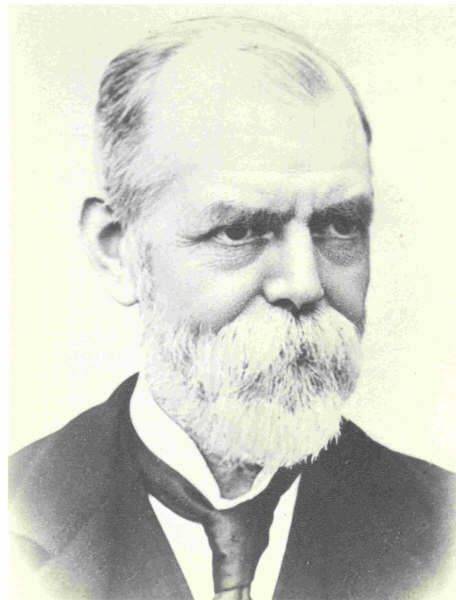
While extremely unwilling to enter on the field of controversy, especially on subjects touching the Person of our Lord Jesus Christ,
- I have thought it right, in the interest of the truth and of the Lord's people, to put out a few remarks on two points of importance which have been in question.
- In so doing I decline to reply to any attack which have appeared, based on isolated statements culled from letters I have written, partly from reluctance to notice them,
- and partly because I see in these attacks the tendency to shift (it may be almost unconsciously) the ground of conflict, in order to gain a point of vantage.
Page Top
Two Points in Question
In what I have to say I adhere to two points that have been in question, which are these:—
- As to whether Christ is ever viewed in Scripture as man, distinct and apart from what He is as God.
- As to whether the truth of His Person consists in the union in Him of God and man;
- a favoruite formula with those so holding is "God and man one Christ" –
- and with this is connected the idea that every title referring to Christ covers the whole truth of His Person.
Now I affirm that the denial of the first, while claiming to maintain orthodoxy, is destructive of Christianity in its real power;
- and I would affectionately warn saints against giving up, in zeal for orthodoxy, the blessed foundations of Christianity.
- Further, that the assertion of the second is derogatory and dishonouring to the Son;
- and I proceed to show that both the denial and the assertion are contrary to the teaching of Scripture.
Page Top
The Incarnation
The first betrays a singular inability to apprehend the great reality of the incarnation, at all events in a most essential aspect of it, namely, the fact of Christ having by it a place as man Godward.
- As the Word become flesh He dwelt among men and revealed God, and in Him all the fulness was pleased to dwell; but He Himself filled and still fills a place as man toward God. See Psalm 16;
- and the two thoughts are wholly distinct conceptions, which cannot be grasped at one and the same time by any finite mind. "No one knows the Son save the Father".
- As Man He is both Apostle and High Priest. In other words in the Apostle God has, so to say, come out, and in the High Priest man has entered in.
- Now these two thoughts, though realized in one Person, must of necessity be separately and distinctly apprehended. The one presents God, the other man.
The reality of Christ's manhood in its aspect Godward is amply presented in the New Testament.
- There we have the truth, that Christ, having died to sin once, lives to God; Rom. 6.
- The having put off the old man and having put on the new is said to be, "as the truth is in Jesus", Eph. 4.
- Christ Jesus before Pontius Pilate witnessed the good confession; 1 Tim. 6.
- He sings praises to God in the midst of the assembly; Heb. 2.
- He praises in the great congregation; Psalm 22. He has entered in for us as Forerunner; Heb. 6.
- He appears in the presence of God for us; Heb. 9.
Now, while fully admitting that morally Christ's manhood had it unique and the blessed character from God, for in becoming man He gave character to manhood,
- yet in the thoughts above presented it is utterly impossible to introduce the idea of Deity in its proper character and attributes,
- because in every case it is man that is presented, or rather, Christ is viewed in the light of man Godward.
The refusal of this is destructive of Christianity in its true power, for it is on the side that I have indicated that Christ is placed within the reach of our appropriation, so that we can eat Him and live by Him.
- He is, as a second Man, the pattern of our blessing, the Leader of our salvation.
- He draws us to Himself by making known to us His love;
- and the affection on our part begotten by this appropriates Him as the expression and pattern of what we are according to the counsel of God;
- and it is in this way that the believer is led into the true sense of the greatness of his portion, and even partakes morally in the life of God.
- As "Lord" Christ is the Object of faith, as Head He is held by the believer, who is led by Him into heavenly blessing.
- Hence I am entirely at a loss to understand how the truth of Christianity can be maintained in the absence of the apprehension of Christ in His place as man Godward,
- distinct and apart from the glory and attributes which belong only to God, in and in which Christ as part as Himself being a divine Person.
I may observe here that Christians are, as a rule, uninstructed in three important point of Christian doctrine:
- Reconciliation, which they do not know as in the mind of God. The distance between God and the sinner must have been removed to effect it, and but few know the nature of the distance.
- They do not see that the man after the flesh has been terminated judicially in the cross in the Man Christ Jesus.
- Christ as manna. They do not apprehend in any degree the manner of life of Christ here as Man, "the life of Jesus".
- The mystery. They have no true conception that the church is the complement of the Man who glorified God here; but while admitting that all saints are united to Christ,
- they are leavened with the error that they are united to the Son of God, and they thus betray their ignorance of the mystery.
Hence, it is not surprising that many find difficulty in the apprehension of Christ in the point of view which I have sought to make plain.
Page Top
His Person Unchanged
The second error maintains that the truth of Christ's Person consists in the union in Him of God and man.
Now, this idea arises, I judge, from confusion of thought as between person and condition,
- and has been fostered by expressions found in hymns, and the like, which have been used simply and devoutly by Christians without any very strict inquiry into their real force;
- but it involves a thought very derogatory to the truth of the Son, namely, that in becoming Man a change has taken place as to His Person – He is in Person something which He was not before.
- This is not the teaching of Scripture, nor do I think that it can be entertained.
- When I come to the word, I find that while in three gospels the truth of Christ in certain official positions is prominent, the fourth – John – is given to us to afford full light as to His Person, that is, "the Son";
- and in this respect He is seen in three positions, namely, as eternally with the Father, as come into the world, and as going back to the Father,
- the same Person unchanged and unchangeable.
Further than this, the Person is even viewed as acting in regard to His form or condition, divine or human;
- "Being in the form of God, He emptied Himself and took on Him a servant's form, becoming in the likeness of men".
- He comes to do God's will in the body prepared for Him.
- He raises up the temple of His body.
- He gives His flesh for the life of the world.
- He lays down His life (human condition) to take it again.
- We have thus a divine Person presented, even apart from the question of form, and the idea of the unity of the Person in the sense asserted is not found.
The One who being in the form of God, emptied Himself, and took on Him a servant's form,
- is the same who, having become Man, humbled Himself, and became obedient to the death of the cross, and is now highly exalted.
- There is no idea either of unity, or of change, in the Person. It is the same Person in servant's form, and entering into what that form involved.
The truth of a divine Person assuming human condition, the Word becoming flesh, and in such wise as that He can be viewed objectively as man, I believe;
- but that is not a question of unity of a Person. It is the Person in a condition in which He was not previously.
Page Top
Titles and Names
Another idea connected with the above appears to be that every title or name inherited by the Son or applied to Him in Scripture embraces or covers, if it does not describe, the whole truth of His Person.
- Now I believe this to be a fallacy, and a mistaken way of apprehending Scripture.
- Unquestionably the Lord is identified or designated, and designates Himself, by official names or titles, as "the Christ" or "Son of man";
- but such titles, though serving sufficiently to identify or designate the Person, do not cover the truth of His Person;
- and different titles applied to or fulfilled in Christ have to be understood each within its own appropriate limits.
- They describe the office, but not the Person that holds the office.
- In the same way we commonly used official and acquired titles, as 'The Queen', 'The Colonel', 'The Doctor', to identify or designate a person,
- but we have no idea that such a title is descriptive of the person, or covers all that is true of the person,
- though once the person is so designated, many things can be said which refer to the person, and have nothing whatever to do with the particular designation;
- for instance, I might say, 'When the Queen was a child'. She was not queen as a child. It is simply a title used for designation, which has its own particular force and meeting.
Jesus is the anointed of God, that is, the Christ, but not properly so until He was anointed, whatever might be true in purpose.
- So too, He was not Son of man until He became Man, yet He says, "The Son of man came to minister". "What and if ye shall see the Son of man ascend up where He was before?" "The Son of man which is in heaven".
- The simple fact is that a title serves to designate the Person, without being descriptive of the Person, or involving any question of the unity of the Person.
- The titles "The Christ" and "Son of man" are both official titles which could have had no place or meaning except in the Son having become Man;
- and it is remarkable that the Lord does not in the gospels use what is, perhaps, the nearest approach to a personal name, that is, Jesus, in the same way.
Page Top
Come to Scripture
In conclusion, I earnestly entreat saints too come prayerfully and patiently to Scripture to get their thoughts of Christ formed by the word of God;
- and not to adopt the creeds or moulds into which men, often with pious intent, have cast the truth in the vain effort to guard against error;
- and is significant that those who have of late come forward to expose what they deemed to be error, have shown a tendency in their minds in the direction of Tritheism.
- It is not in this way that the truth of Christ's Person is guarded, or that of the unity of the Godhead maintained.
F. E. Raven.
Page Top
A Letter re: THE PERSON OF THE CHRIST
Ministry by F. E. Raven, 3: 273-75, December 24, 1895 |
My dear brother,
I have received your letter of 10th November and am glad to reply to it – I am thankful that you have read the little paper, The Person of the Christ – and have found any profit in it.
- Some have found fault with it, but I am more and more convinced that it presents only what is substantially right.
- That others might have put the points better is likely enough, but they have not done so.
My use of the term "divine Person" in reference to our Lord was not from any lack of faith or sense on my part that He is God –
- but to avoid the idea of His being God in such an absolute and exclusive sense as to trench on the unity of the Godhead –
- that "God is one" may be said to be the backbone of Scripture –
- but in the New Testament we have the additional light that in that unity are three Persons all equally divine –
- and I should speak of the Holy Ghost being a divine Person in the same way as I would speak of the Son being so.
I had no doubt that you know something of Greek – and that in the use of a noun as a predicate it makes a distinction by the use or omission of the article which we cannot so well make in English.
- When a noun is used as a predicate and has the article the proposition is reciprocal and the subject and the predicate may be reversed –
- for instance it says "sin is lawlessness" – it may equally be said that "lawlessness is sin".
- When, however, the article is not directly before the predicate the predicate is characteristic, and the proposition is not reciprocal.
- This is the case in the expression "The Word was God" – there is no article before God – God is characteristic of the Word – but the expression is not reciprocal –
- for if God were the Word you would exclude the Father and the Spirit from the thought of God, and thus set aside the unity of the Godhead.
It is only in this sense that I would apply the term "divine Person" to Christ, in the same way that I would apply it to the other Persons of the Godhead,
- viewing each in His distinctiveness and yet with the sense in the soul that each is as truly and as characteristically God as the other.
The passages in my paper in which the term occurs would not admit of the substitution of "God" in its place.
- For instance "we have thus a divine Person presented" – I mean here the particular Person who became man.
- So too "the truth of a divine Person assuming human condition".
- In neither sentence could I rightly say "God" – the statement would not then be right.
What I understand by "God has been manifested in the flesh" is, that all that God is – Father, Son and Spirit – has been set forth down here in words and works, all the fulness was pleased to dwell in Christ.
I do not think that Deity and Divinity mean the same thing in common language – the former applies exclusively to God as such – the latter is often used in a much more general sense as of writings, etc.
I have no difficulty in saying that Jesus is God – but in the same way that I have referred to in the expression "the Word was God".
- In all such statements the unity of the Godhead must be maintained in the soul.
I think if you weigh the above you will see that there is no attempt to trespass on any ground other than that of what is revealed.
With love in the Lord.
Believe me. Your affection up brother, F. E. Raven.
Page Top
THE PERSON OF CHRIST
Galatians 4: 4, no date,
Ministry by F. E. Raven, 19: 519-203 |
The same Person abides, though the condition be changed, in His coming of a woman.
- He is a real Man, body, soul and spirit, but still God's Son (that same Person).
If you carry the thought of the incarnation beond the scriptural limit, that is, form (that of a servant) and condition (flesh and blood),
- you cannot avoid, that I can see, reaching distinct personality, and so making two personalities in Christ, a divine and a human.
- These may be said to be mysteriously blended in one, the unity of the Person, but that is as great an error as if they were spoken of as distinct and apart in Him.
- The mystery of the incarnation and the true sense in which the union of God and man can be spoken is that
- in one and the same Person God was made manifest to man (in flesh), and man was presented for the good pleasure of God.
- Unity of Person, or indivisibility, is not, I believe, a thought found in Scripture.
John 3: 13 and 6: 62 are simply the Lord speaking of Himself, as commonly, under an official name.
- Every scripture which definitely refers to the incarnation speaks of it as the assumption by Christ of a form or condition.
- One who is in Person divine and existing in the form of God emptied Himself in grace and took on Him a form and condition not commensurate with the greatness of His Person.
- But the Person never changes (so J.N.D. says) and any line of teaching that gives the idea of change in any way as regards the Person is, to my mind,
- dishonouring to the Son, and interferes with what He calls "My glory", John 17: 24.
- 'His complete person' is an expression I do not at all like.
I only now add that if 'human condition', 'bondman's form', 'likeness of men', 'flesh and blood', do not describe what the Son took in becoming Man, it raises the question, whence did the rest come?
- I should certainly have thought that what was spiritual was of Himself.
- Cretainly there was no creation in Him, as in us, of an intelligent moral being (in which the true idea of "person" lies), for we are "the offspring of God".
The idea of union, or unity of Person, appears to me to have greatly clouded in people's minds the truth of incarnation.
In the expression, "Father, into Thy hands I commend My spirit", I judge that the Lord takes up an expression suited to the position in which He was.
- But is is the Person who left the condition, which He had assumed, to take it again, and not as flesh and blood but still as Man, and meantime He was in paradise.
F. E. Raven.
I deprecate discussion on this momentous subject.
The moment you travel outside the very words of Scripture you are in danger of error.
"God manifested in flesh" is Scripture, but "perfect God and perfect Man" is not scripture.
Satan's direct opposition is against the Word made flesh – the "manchild", Rev. 12 – from Herod's day down to this.
In Christendom pious Christians think of Christ as God and not as Man, and they read of His miracles in the gospels to prove that He was God.
- They do not see that indirectly they are siding with Satan, who will tolerate any measure of religion so that the Man out of heaven is not paramount.
- Satan, in his opposition to God, perpetrated the fall of man in the garden of Eden,
- but when the Son of God became a Man His first work (see Mark 1) was to drive the unclean spirit out of man.
The Son of God became a Man. He thought it not robbery to be equal with God, but He laid His glory by and took on Himself the form of a servant, and was made in the likeness of men.
- "Forasmuch as the children are partakers of flesh and blood, He also Himself likewise took part of the same; that through death He might destroy him that had the power of death), etc.
- He became a Man, born of woman, to bear the judgment on man. He died, and in His a death the man after the flesh was judicially terminated:
- so "henceforth know we no man after the flesh: yea, though we have known Christ after the flesh, yet now henceforth know we Him no more".
There is the earthy man, and there is the heavenly Man.
- The blessed Son went through the terrible sorrow of death as a Man.
- His very greatness caused Him to suffer beyond our conception, for He bore the judgment on the first man, and He is the second Man.
- The first man is of the earth, earthy, the second Man is out of heaven. You must see the first man superseded by the second Man. Every believer is of the second Man.
- You must keep in mind that the greatness of the grace is that the Son of God, who could say, "I and My Father are one", took on Himself the form of a servant or slave, and He says, "I can of Mine own self to nothing".
- He, the only begotten Son in the bosom of the Father, declared God while in the form of a servant.
- In His grace He connects His own with all He is as a Man.
From not seeing this they fell into error at Plymouth in assuming that the church was united to God.
- The church or the body of Christ is of His order and nature. It has come from Him and is united to Him.
- It is marvelous grace that the Son of God became a Man – a Man to free every one believing in Him of the man after the flesh, so that every one in Him is a new creation.
- I think we have but a very feeble appreciation of the new man. We are brethren of the risen Christ.
- "Both He that sanctifieth and they who are sanctified, or all of one: for which cause He is not ashamed to call them brethren" –
- the offspring of His resurrection, in all His divine beauty as a Man.
Again, the manna is not essentially His acts, or His obedience, but the grace in which He did everything;
- as Mr. Darby has said, His springs were in God: our springs naturally are in ourselves.
Finally, the better we comprehend His manhood, the more fully we see the greatness of the mystery of the church – His complement.
- He would not be complete without His body.
- The world could not contain the books which could be written of Him,
- but the vastness of this blessed Man will be expressed by His body, the church, to the glory of God forever.
J. B. Stoney.
Page Top
| C. A. COATES |
|---|
Letters of C. A. Coates, 149-51, September 28, 1926 |
My dear brother,

I would say, with reference to the questions which you ask, that I believe "that which is natural", 1 Cor. 15: 46, refers to the order of life in which the first man Adam became a living soul.
- I do not know that the word "natural" is ever applied in the Scriptures to the Lord Jesus.
We do read that the Word became flesh, and Christ could be known according to flesh; "the days of His flesh" are spoken of, referring to a condition in which He is now no longer.
- He was born, and grew, and ate and drank and slept, etc., and all this may be spoken of as natural in the sense that it refers to what belongs to man's condition here as in flesh and blood,
- yet His humanity was unique on account of who He was.
- In speaking of the Lord Jesus it is of the utmost importance to keep close to Scripture, for its language is wiser than ours, and many, as you observe, have fallen into pits by adding expressions of their own.
In Him we see manhood in the power of the Holy Spirit; He was conceived of the Holy Spirit in the womb of the virgin.
- This is, obviously, quite outside and above the order of nature.
- No one could believe in the Incarnation without realizing the unique character of His manhood, who, though come of woman, and of Israel, and of David's seed according to flesh, is "over all, God blessed forever".
- He was truly in man's condition, but that condition derived a wholly new character from the One who was in it.
- His body was prepared of God, the holy Vessel for the manifestation of God in flesh, and for perfect obedience too – creature perfection – for it was characterised by ears being digged.
- So that the condition of humanity in Him was not what it was in Adam either before or after his fall.
- It was unique and incomparable – a wondrous contemplation for those who have spiritual eyes to see it, recognising Him to be the sent One of God.
Scripture clearly states that "as to the life of all flesh, its blood is the life in it", and it is given upon the altar to make atonement, Lev. 18.
- This is true of the life in which the Lord Jesus was here in flesh – a life which it was possible for Him to lay down for men, having come in grace for that very purpose.
- But He did not die by His blood being poured out, for God would have it to be manifested that His death was in no way a natural death.
- He laid down His life. He said, "No one takes it from Me, but I lay it down of Myself".
- His death was unlike every other death; it was an exercise of His authority as having received commandment of His Father.
- But having laid down His life His blood was poured out, the witness of the reality of His death – the ending of that life in blood and flesh in which He had been here.
- And many scriptures speak of its efficacious sacrificial value, and of it in its character of witness.
Whether blood flows naturally from a dead body or not is quite immaterial; we know that it did so from the pierced side of the Lord Jesus.
- It was the evidence that His life here in blood and flesh had ended, and many scriptures tell us the precious and divine results of that death.
The Son of God was here as Man, having taken part in the blood and flesh that He might die – not taking up our nature as sinful, save to bear the judgment of it vicariously upon the cross,
- for He was "the holy thing", Luke 1: 35, "the holy one of God", "Him who knew not sin". The note to Hebrews 2: 14 in the New Translation is an important one.
He did not take hold of angels by the hand, by taking up that order of being;
- He became Man, but it is to be noted that the Scripture does not speak of His taking hold of the seed of Adam, but of the seed of Abraham.
- That is, men are in view from the standpoint of divine calling.
- It supposes men being such by the call and work of God that He could take hold of them by the hand – a generation suited to Him as having faith, the saints that are on the earth, the excellent.
- They are "the children", "His brethren", "the people" standing in relation to God.
- Though subject to bondage through fear of death, and needing propitiation to be made for their sins, and help as tempted, they are viewed as subjects of divine calling.
- The place that He takes in grace in relation to such is before the mind of the Spirit, not His relation to men in general,
- but it necessitated His becoming a Man, taking part in blood and flesh condition.
- That condition was in Him unique. He was truly the Seed of the woman, conceived and brought forth by the virgin, her first-born Son, truly Man,
- but His humanity was by divine power altogether on its own order as without sin.
- The body in which He was found here was the prepared and holy vessel in which God was manifested in flesh,
- and in which every feature in Man that was delightful to God also had its full expression.
I just send you what comes before he in connection with your letter, with my love in the Lord to yourself and the brethren.
Yours affectionately in Him, C. A. Coates.
Page Top
| J. TAYLOR |
|---|
Letters of J. Taylor, 1: 271-72, September 20, 1929 |

Mr. C. A. Coates,
Beloved brother,
I regret to to find I omitted referring to your enquiry as to FER's remarks on our Lord's spirit.
- His paper helped me greatly at the time it appeared and what you write confirms me in my understanding of the truth involved.
It is a question of a Person said to be God – John 1 – and so in the "form" or condition of God, taking another form or condition, becoming flesh. "The Word became flesh".
- He was really Man – spirit, soul, body.
- As to spirit, I may speak of my spirit as something characterizing me or a feature of myself,
- but Scripture also regards the spirit as the man himself; that is, his real self, what he is inwardly, eternally, what he is in relation to God.
- The spirit, in contrast to the material, returns to God who gave it.
- Thus the saint, while in falling asleep he commits the spirit to the Lord Jesus, or asks Him to receive it, departs to be with Him – the person goes.
All this bears on our Lord's incarnation. Becoming Man He was really Man. His Person was unchanged.
- His spirit was Himself. He commits it to His Father. He had become a Man and was in man's place and so committed Himself to His Father.
- He had just said to the thief, "This day shalt thou be with Me in Paradise".
Scripture presents fact so that our finite minds can take them in and I am sure
- our wisdom is to take them simply as presented and the Holy Ghost gives us understanding or apprehension in keeping with our limitations.
- We thus see a blessed Man committing His spirit, as about to die, to His Father and we know He refers to Himself – what He was inwardly; His body would be separate for a moment.
- We adore, bearing in mind Who was there, the whole truth being inscrutable.
Matthew and Luke give us the maternal side to establish the reality of His humanity – He came of a woman,
- but John says "The Word became flesh" – One who was God, taking human condition. It is thus Himself, whether He speaks of His Spirit or His soul.
- FER's opponents had in mind that there was a human being, spirit, soul and body, and besides a divine Being; that is, a dual personality (more accurately two Persons inwardly), one merely human and the other Divine.
- This is manifestly false.
Affectionately your sin Christ, James Taylor
Page Top
THE SPIRIT OF MAN
From an Address, September 22, 1939
Ministry by J. Taylor, 48: 182-3 |
Our spirits have the greatest place, being first mentioned in the order in which the Spirit refers to our three component parts:
- "Your whole spirit and soul and body be preserved blameless unto the coming of our Lord Jesus Christ", 1 Thess. 4: 4. Our spirits are mentioned first.
Evidently the greatest component part of man is his spirit. He gets it directly from God according to Ecclesiastes, and the Lord alludes to it as to Himself.
- The Lord commended His Spirit to His Father, a most impressive reference to the perfection of His manhood, not that He had a spirit other than Himself.
- Whilst He was really Man, He was uniquely so, having existence before His manhood, which does not apply to any of us.
- Becoming Man, He is Himself His Spirit, for He tells the thief that he should be with Him in paradise.
- They were both going there that day, not through resurrection, but through disembodiment for the moment, but they were both men in that sense.
- Jesus was as really man as the thief, having a spirit as a man, too, but it was Himself.
- Coming into manhood he became His own spirit, taking on other component parts of humanity.
- Personally, He never ceases to be God, but yet He is Man, but His Spirit is Himself, as my spirit is myself, but I receive my spirit from God.
- He was God and came into humanity here.
- He was personally a divine Person and became His own spirit in manhood, so that it was Himself. "Today shalt thou be with Me in paradise".
I refer to this to make the matter clear as to Christ, so that we should not have the erroneous thought that He had a spirit besides Himself.
- Incarnation is the thought presented in scripture; that is, "the Word became fleah" – a divine Person taking human condition.
- He was His own spirit, and yet as in manhood, He was really Man.
- He felt as we do, sin apart, committed His spirit unto God, to His Father;
- as Stephen did in committing his spirit to Jesus, saying, "Lord Jesus, receive my spirit".
- You can see therefore how great the thought of spirit is in manhood, especially in Christ. It is Himself.
- It is inscrutable that He should be so compressed, and it touches the heart, but He never ceases to be Himself. He is Himself always.
- Yet coming into manhood, He compresses Himself and speaks as a man, feels as a man, using the words "My spirit", and "My soul", and "My body".
- He "emptied Himself, taking a bondman's form", Phil. 2: 7.
J. Taylor.
Page Top