Menu•SiteMap |
Doctrine
Fellowship
– W. J. Pearce, D. L. Higgins,
W. E. Ellis and Geo. Cutting
The series of three articles on 'Fellowship' was written by W. J. Pearce of Hastings, England.
- The articles appeared in the 1954 'Stow Hill' periodical 'Words of Truth' 22: 61-64, 87-90, 105-08.
- The letter, written by WJP in 1967, was in answer to a specific inquiry.
- Other ministry by Mr. Pearce – and some personal information – appears in Ministry: W. J. Pearce.
Fellowship in a Day of Public Ruin is an excerpt from a letter of September 5th, 1910.
- It is a translation from the German which may account for a certain roughness.
- The author, Dennis L. Higgins (1847-1943), was local in Highgate. His initials often appear in readings in London and area with JT.
- His 1916 paper 'The Duty of a Christian in view of Military Service Compulsion' appears on the page History: Conscientious Objection to Bearing Arms.
The Divinely Ordered Path in the Midst of the Confusion in Christendom is a clear, concise and reliable review of the relevant scriptures.
- The author, W. E. Ellis, was local in Sydenham, London, and wrote his article c. 1947.
Are you a Member? and of What? will be challenging – and enlightening – especially to those who have never given any serious thought to their associations.
- The author, George Cutting (1843-1934), also wrote the well-known tract 'Safety, Certainty and Enjoyment'.
'Fellowship' is one of the words most misunderstood and misused by believers.
- Some having little understanding of the dignified and holy meaning of fellowship or,
- perhaps more likely, having been disenchanted by its misrepresentation in recent years have become involved in religious imitations.
- May the consideration of the following "sound words" as to fellowship challenge any who have forsaken it as unworkable,
- and attract some who have never had the truth clearly presented to them.
G.A.R.
Page Top
FELLOWSHIP
– W. J. Pearce, 1954 |
FELLOWSHIP – 1
1 Corinthians 1: 9; 1 John 1: 7
One of the first marks of a person who has put his trust in the Lord Jesus Christ and has received the Holy Spirit is that he finds delight in the company of those who love the Lord.
- This is the normal result of the reception of the Holy Spirit, who develops in our hearts feelings and affections that are according to God.
- It is not the mind of God that the believer should tread a lonely path: on the contrary, God has called us to fellowship – "the fellowship of His Son, Jesus Christ our Lord".
The word fellowship means partnership; and God's thoughts for all believers is that they should be bound together in a wonderful partnership.
- This has a double bearing: on the one hand, there are the most precious things to be shared together and on the other, these precious things must be treasured and defended.
- Wondrous things have been committed to us in the way of light: especially as to God, in what He is in all His blessedness, and as to Christ.
- We have also been given wonderful light as to all the great thoughts of divine purpose – our place in Christ in heaven and our place in the
most blessed and intimate relationship with God that is possible to the creature.
- Not only the light of these things, but the joy of them has been brought to our hearts by the Holy Spirit, and it is the mind of God that this joy should be shared among those who have part in it.
- Love delights to share what it has. How blessedly the Lord Jesus has given us to have part with him sharing with us what is His!
In his first epistle, the apostle John speaks of his desire to share
what he had with the saints: "That ye also may have fellowship with us".
- And so believers, as walking in the light, have fellowship with one
another.
- We delight to share with others our spiritual joys, and God has great pleasure in seeing the blessings which He has in love conferred, being shared in love amongst us.
But there are also precious things to be defended. The truth itself is viewed in Scripture as something deposited with us, and is to be zealously defended.
- Satan is ever ready to wrest it from us, so that God may be robbed of His pleasure, but we are called to stand in fellowship together to defend it from his attacks.
- An illustration of this is seen in the tabernacle which was committed to Israel. This was a structure which set forth in a typical way the truths which have been committed to us in their spiritual reality – truths which those who love God would value more than anything beside.
- Just as the children of Israel were called to stand in military array in the defence of the material tabernacle, so we are called to stand together shoulder to shoulder in the defence of the truth;
- in order that here, where Satan's power is wielded, there should be a practical setting forth in God's people of all that is according to His mind.
This is a collective matter. We all have our own individual pathways, in which we may have to stand alone; and we have God's support in them.
- But we are also called to this collective position, where every one is required to stand in his place in the defence and maintenance of what God would have here in a collective way.
- Just as every Israelite from twenty years old and upward was numbered for military service in relation to the tabernacle – Numbers 1 – so every one who calls on the name of the Lord in any place – 1 Corinthians 1: 2 – and who has the Spirit, is taken account of by God in view of filling his place in the fellowship of God's Son here.
The name given to the fellowship to which we have been called is expressive of the greatest possible dignity: it is the "fellowship of God's Son, Jesus Christ our Lord".
- How precious to God is the name of His Son – the One who is to be honoured even as the Father is honoured! What grace that such as we should be called to such a fellowship!
- How mean the most select circles of the earth appear in the light of the name of God's Son! How can one called to such a fellowship as this demean himself by being attached to the fellowships of men, however exalted and select they may appear to be?
- Our fellowship is the fellowship of God's Son, and we have been called to it by God Himself. In the eyes of men it may appear mean enough, for "not many wise according to flesh, not many powerful, not many high-born" have been called.
- God has, indeed, deliberately chosen the weak things of the world, the foolish, the ignoble and despised, that they might have part in the fellowship of His Son – who Himself when here was the "despised and rejected of men".
- We do well to view one another in the light of the calling of God – for we have been called to the fellowship of His Son.
The title "Jesus Christ" no doubt sets the Lord Jesus before us as the Leader of the new order of manhood which is to subsist for God's delight;
- and this is the kind of manhood that is to appear in the fellowship that bears His name.
- If in grace we have been called to His fellowship, it should be our constant concern to be marked by the features manifested by the lowly Jesus here, cast away as worthless by men, but now made Lord and Christ in heaven.
He is also "our Lord". There can be no thought of lawlessness or of self-pleasing in His fellowship. All in it call upon the name of Jesus Christ our Lord.
- His will is to be supreme: there can be no room for any other. It is not here 'the Lord', but "our Lord": the same blessed Person swaying every heart, and controlling all for the pleasure and glory of God.
May we all recognize our call to this fellowship, and be concerned ever to be found standing true to it!
- It works out in our various localities, though the fellowship itself is but one, a great universal matter.
- It involves that we set the "things of Jesus Christ" before everything else, and stand wholeheartedly with our brethren,
- ready to withstand every attack that the enemy may bring against the truth, but to support the practical expression of it in the place where
we live.
- It will involve conflict and sufferings, but we can confidently face these in the light of the faithfulness of God.
- "God is faithful, by whom ye have been called into the fellowship of his Son".
- If we are dependent upon Him, He will not fail to maintain us, faithfully supplying all we need, so that we shall be sustained in the conflict to the end.
W.J.P.
Page Top Article Top
FELLOWSHIP – 2
1 Corinthians 10: 15-22
In a previous article we considered the important fact that God has called every believer to the fellowship of His Son, Jesus Christ our Lord. 1 Corinthians 1: 9.
- In 1 Corinthians 10, we again have the thought of
fellowship, or communion – which in this passage is the same word – but as specially linked with the breaking of bread,
- this latter, indeed, becomes in a peculiar way an expression of Christian fellowship, for it is an act in which, normally, every believer has part every first day of the week.
- In actual fact, alas, many do not do so, though it is difficult to understand how one who really loves the Lord can hear His appealing word, "This do for a remembrance of me" and yet be unconcerned to answer to it.
- How can one who loves Him hear Him say, as to the bread, "Take eat: this is my body", and yet decline it? Or, as to the cup, "Drink ye all of it" and yet neglect to partake?
Normally, therefore, every believer would be found in his place as the Supper is celebrated, uniting with the lovers of Christ in breaking the bread and blessing the cup;
- and this is pre-eminently the act by which we publicly commit ourselves to the fellowship to which God has called us.
- For the blessing of the cup and the breaking of the bread is a collective matter: it is "the cup of blessing which we bless" and "the bread which we break".
- If I break bread, I am thereby publicly identifying myself with those with whom I am breaking bread, not only locally, but universally, for it is said in verse 17,
- "Because we, being many, are one loaf, one body; for we all partake of that one loaf".
Thus the blessing of the cup and the breaking of the bread is a matter of fellowship.
- But the fellowship is not described here as the fellowship of God's Son, but as the communion, or fellowship of the blood of Christ and of the body of Christ.
- As we partake of the Supper, we identify ourselves not only with one another, but also with the precious elements of which we partake.
The illustration is used here of Israel according to flesh; those who eat the sacrifices are said to be in communion – or fellowship – with the altar.
- They stand identified with one another and with the altar of which they partake.
- So also are those who partake of heathen altars, though in that case it is called the table of demons.
- But we who partake of the Supper similarly identify ourselves with the blood and the body of Christ.
This is full of suggestion as to the character of Christian fellowship and as to what should mark us as having part in it publicly.
- As called to the fellowship of God's Son, we are obligated to be true to the import of His blessed Name:
- as committed to the fellowship of the blood and the body of Christ, we are obligated to be true to the import of His death – for it is His death which is implied in the blood being spoken of separately from the body.
- We say 'obligated' – but the obligation becomes a delight of love in the light of what the blood and the body of Christ set forth.
- For these precious elements speak of the matchless love of Christ, the love that went into death itself in order to secure hearts that would delight to be here in loyalty to what that death means.
- It is as valuing that love that our hearts are drawn to partake of the emblems, and also to be true to what those emblems speak of.
Each of the emblems has its own voice to us, not only at the Supper itself, but also in relation to our daily walk here.
- In this setting, the blood is spoken of first, for the "precious blood of Christ" is that by which we have been purchased and redeemed, and by which God has established His rights over us in love, so that we should be for Himself, a peculiar treasure unto Him.
- How inconsistent, then, for one who partakes of the cup, and has part week by week in giving thanks for it, to be going on with the world from which Christ's blood has redeemed him, or with anything that would rob the blessed God of His pleasure in him!
- And then the loaf speaks of a body held entirely for the will of God, a holy vessel devoted to Him, even unto death itself, and that "the death of the cross".
- In giving His body for us, the Lord Jesus had in view that we, His saints, should be united into a holy vessel in which there should be morally the continuation of Himself, in His holy devotedness to the will of God.
- True Christian fellowship stands in the light of all this, and each of us is morally obligated to walk in a way which is consistent with the blood and the body of Christ thus set forth.
Let us not think, however, that this responsibility can be avoided by our refraining from partaking of the Supper.
- It is a responsibility which surely rests upon every believer, for Christ's body has been given and His blood has been shed for every one who believes in Him, whether actually breaking bread or not.
- Can it be that one could claim the benefits that flow from the sacrifice of Christ and yet ignore what was upon His heart to secure through that sacrifice?
- Surely every believer is morally bound to seek to answer to the practical claims of the love that has expressed itself to us in such a wondrous way!
- The breaking bread is but the acknowledgement of claims that embrace all – claims to which every true heart would long to answer.
- To refrain from acknowledging the claims of love is far worse than to fail in answering to them.
- We all have to own, alas, that we often fail – indeed, we sin. But the precious blood of Jesus ever avails to cleanse us from all sin; and if we confess our sins, God is faithful and righteous to forgive us our sins, and cleanse us from all unrighteousness. 1 John 1: 7-10.
- This very chapter, too, further comforts us by reminding us afresh of the faithfulness of God, "who will not suffer you to be tempted above what ye are able to bear", verse 13.
May the Lord therefore encourage every one who owes his all to Him to take up His place in this wondrous fellowship, seeking grace from Him to be faithful to it!
- It will no doubt mean a certain amount of sacrifice and surrender; but "God is faithful", and as we seek, dependently, to be true to the fellowship, we shall not fail to experience in a remarkable way "the grace of our Lord Jesus Christ, the love of God, and the fellowship of the Holy Spirit".
W.J.P.
Page Top Article Top
FELLOWSHIP – 3
1 Corinthians 10: 16-17; 2 Timothy
2: 19-22
In considering the passage in 1 Corinthians 10 in a previous article, we saw that the breaking of bread is the expression of Christian fellowship,
- and that those who break bread identify themselves with all others with whom they break bread, "because we, being many, are one loaf, one body; for we all partake of that one loaf".
If this truth is apprehended, it will at once raise serious concern as to those with whom I am linked.
- If I break bread with those not walking according to the truth, I identify myself with them, just as if I was not walking according to the truth myself;
- and in a day such as ours, when so much corruption has crept into that which bears the name of Christ, this has become a most serious matter.
At Corinth, when the letters to the Corinthian saints were written, there was but one Christian company, and it could be designated "the assembly of God which is at Corinth".
- But now, alas, there are numerous companies described as 'Christian', but which have no link with one another.
- In many such companies, much that is plainly contrary to the mind of God, as set forth in the Holy Scriptures, is tolerated.
- There are many where the Supper itself is not celebrated, or where the simplicity of it is shrouded in clericalism, superstition and in some cases even idolatry.
- In other instances there is a simple coming together to break bread, many of those who do so having a measure of true affection and devotedness;
- but the companies themselves owe their very existence to their opposition to some feature of the truth, and are marked by a serious disregard of the claims of the Lord.
There is in many instances a genuine work of God in some who are found in associations of this kind; but the systems to which they belong are iniquitous, and the word of Scripture to believers in them, as to us all, is simple:
- "Let every one who names the name of the Lord withdraw from iniquity", 2 Timothy 2: 19.
- There can be no question of fellowship with those who disregard this
commandment of the Lord, for such it is.
- There are some who think they can have fellowship with the persons without identifying themselves with what is going on, but the idea is wholly false and contrary to Scripture.
- If I break bread with a person, I identify myself with him, as we have already seen from 1 Corinthians 10, and that identification remains, whatever he may be going on with;
- so that whatever he does or wherever he goes, I stand fully identified with him, before God and man.
- If I have myself withdrawn from anything, as judging it to be iniquitous, I cannot identify myself with one who is still part of it. To do so would be to return to it. The word is,
- "Let them return unto thee; but return not thou unto them", Jeremiah 15: 19.
Therefore in days such as ours, to which the Second Epistle to Timothy particularly applies, there can be no question of fellowship, and therefore no question of breaking bread, except with those who have obeyed the Lord's word to withdraw from iniquity.
- Yet, thank God, such are available. They are not sinless persons – to pretend to be such would itself be gross iniquity – but there are persons who, in the words of 2 Timothy 2: 22, are
pursuing righteousness, faith, love and peace.
- It is not that they claim to be righteous but they are pursuing righteousness, and I can pursue it with them, and with them alone,
- for it is plain that I cannot pursue righteousness with those who are walking contrary to it.
- It is on these lines that in the present day we can find fellowship according to God.
This being so, we should expect to find, among those walking according to the truth, a godly vigilance as to those with whom they break bread.
- We should not expect them to break bread with believers simply because they are believers, without raising any questions as to their associations.
- We should understand that they would require a certain confidence in one wishing to break bread, before identifying themselves with him.
- And if the brethren give me their confidence and identify themselves with me, it surely becomes me ever to remember that in all my relations I stand in full identification with them. Wherever I go, and whatever I do, I take all with me.
- How solemn it is if by my own action I commit my brethren to what is displeasing to the Lord; and how grieving it must be to Him! How wrong
it is to seek the fellowship of brethren, and then involve them in what
I know is abhorrent to them!
- Can I think that the Lord has any pleasure in seeing me week by week partaking of the loaf with brethren, and then betraying them by involving them in matters from which they may have been at much sacrifice to clear themselves?
- Even if I cannot see for myself the rightness of their feelings as to
certain matters, honesty would lead me to be true to the trust placed in me, though it might mean the sacrifice of my own will.
- What we generally find is that the recognition of our obligations to one another in this way works out for our personal salvation from associations
which would bring loss upon us and dishonour to the Lord.
Let us therefore thank God that fellowship still remains, for our
preservation and joy, and for His glory!
- His faithfulness will maintain it to the end, in conditions of smallness outwardly, but it will still be in principle "the fellowship of His Son, Jesus Christ our Lord".
- May we all find our place happily in it and stand faithful and true to the love that has secured us for it!
W.J.P.
Page Top Article Top
FELLOWSHIP
Extract from a Letter
– W. J. Pearce, 1967 |
As to fellowship a matter which I don't think has ever been very clear with us, although we say much about it.
- As I see it, 'fellowship' as presented in 1 Corinthians 1 simply means collective Christianity.
- God has called us to go on together collectively in a way which is in keeping with the name of His Son, Jesus Christ our Lord.
- All believers are called into – or 'to' – it, but I don't think that that means that all are therefore in it.
I understand from 1 Corinthians 10 that we are in fellowship with one another as having broken bread together;
- though where for special reasons it is impossible to break bread, we might say that it included all who would break bread together were they able.
- As breaking bread together we are formally in fellowship with one another; but we should be more than formally in fellowship,
- we should all be "perfectly united in the same mind and in the same opinion". God's call to fellowship would surely have that in mind.
- However, if I break bread with you, we are in fellowship with one another, in the sense too that we are identified with one another, and thus each of us is involved in whatever the other may do.
I have thought that being in fellowship with may be a little
different from having fellowship with, such as we get in 1 John 1;
- this latter being the sharing together in the joy of the knowledge of divine Persons and in the activity which would flow from that.
- But are there not many Christians with whom you can up to a certain point share things together, but with whom you could not absolutely identify yourself as you would do if you broke bread with them?
- I would not say I was in fellowship with such persons, or with any with whom I was not breaking bread, apart from exceptional circumstances such as I have already referred to.
- The only persons available to us for full fellowship in the Corinthian sense are those who are answering to 2 Timothy 2.
As to mixed marriages, how could one possibly condone the marriage of one in fellowship to one who is unfit for Christian fellowship?*
[* This refers to a particular situation as to which WJP's correspondent had inquired. GAR]
- It seems terrible for a sister to marry a man with whom she cannot break bread.
- I think that one so devoid of moral sense as to do so would show that she herself was unfit for fellowship.
- It is no question at all of 'rules' … but of Christian sensibility to the spirit of 2 Corinthians 6 in the light of present day conditions.
W. J. Pearce
Hastings, June 10, 1967
Page Top Article Top
FELLOWSHIP IN A DAY
OF PUBLIC RUIN
– D. L. Higgins, 1910 |
|---|
|
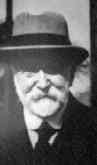
D. L. Higgins – 1847-1943 – wrote 'Fellowship in a Day of Public Ruin' as a critique of, and an answer to, the obviously unscriptural assertion quoted immediately below:
"It is the right, duty, and privilege of every child of God who holds sound doctrine and walks in obedience to the word, to be at the table of the Lord and show forth His death, as the Lord Himself has appointed;
"and this, when and where any two or more of those that are His assembled to his name – regardless of their associations with any of the officially-recognized churches or denominations, or irrespective if they belong to any at all."
Anonymous
|
In an upright response, it is always suitable and profitable to turn to the Scriptures.
- It is the duty of every believer to give his own account to anyone who wishes to walk in a pathway which is pleasing to the Lord.
For a better understanding, I say beforehand that some of accusations against the so-called 'Brethren' are absolutely justified.
- For example, if some maintain that the table of Lord is only to be found with 'such-and-such brethren' and nowhere else.
- Furthermore, if one speaks of the 'setting up of the table', the 'exclusion from the table', or the 'reception to the table of Lord' and so on,
- I cannot defend such expressions, but have to declare them to be presumptuous and unscriptural.
But now I want to turn to your assertion and to the teaching of Scripture about the "table the Lord".
- The only place where we find this expression in the Scripture is then 1 Corinthians 10: 21,
- and one should not overlook that in this chapter, believers are not yet looked upon as assembled – that occurs in the following chapter.
- Furthermore, one should take note that, in chapter 10, the cup is mentioned before the loaf. And in connection with that, the apostle alludes to the corresponding fact, that Israel "according to flesh" was in communion with the altar.
- No doubt he alludes to the peace offering, in which all of Israel had part.
- The fact that the cup is mentioned before the loaf shows that we do not have the Lord's supper here before us.
- I have believed for a long time now that the leading thought here is that, as the whole nation of Israel was one with the altar and were reckoned in communion with that of which they ate,
- so also the entirety of all Christians is reckoned as in communion with the death of Christ, that is in the communion of His blood and His body.
- Therefore we have here the usual order of the sacrifice in which the blood comes first, and not the order of the Supper.
- I believe that the similarity is complete, with the difference that our peace offering never will be repeated,
- and in contrast to former times, our table is always spread – it does not need first to be set up or prepared.
What the apostle is emphasizing here is that the communion in which all Christians therefore stand, they who had part at the Lord's table, is to also have a moral influence upon their practical walk.
- This comes out quite clearly in the exhortation that, in accordance with their faithfulness to their communion – with the death of Christ – they could have no part in the feasts of the heathen in connection with their idol sacrifices.
- By the way, the expression in the verse 21, "the Lord's table", points only to the body.
- Now, concerning the table of Lord, doubtless it refers to the entirety of all Christians, evidently even today.
- The application of the truth of the table of the Lord is, today as much as then, that we turn and separate from all that is not in accord with the death of Christ.
- At that time, the application was easy because the entirety of all Christians stood in contrast to the world.
- At the present time, difficulty arises in that the world has taken on the profession of Christianity and one cannot view any special circle in a place as the church of God.
The subject in 1 Corinthians 10 is therefore that the fellowship of the death of Christ should have an influence on our walk, and all true Christians are regarded as belonging to this fellowship.
- Instead of making big speeches that 'we' have set up the Lord's table, no matter to whom the 'we' refers, we should rather be concerned that we refuse every link that is not in accord with the death of Christ.
- The principle of separation quite clearly confronts us in 1 Corinthians 10, and in this principle lies the practical application of Lord's table.
- If we bring this into practical expression, separation will characterize us, and not the presumptuous assertion of a particular ecclesiastical position etc., which only betrays deplorable ignorance and the worst sectarianism on our part.
Therefore I believe that the truth of the "Lord's table" according to 1 Corinthians 10, extends to all true Christians at all times, not just when they come together; for the death of Christ is looked at here in the aspect of the peace offering.
- On the contrary, the Lord's Supper was celebrated when the believers of a place were gathered together – chapter 11 – and this would no doubt, under normal circumstances, presuppose the presence of all true Christians.
But now we come to a very serious question in connection with the total breakdown of the church, namely,
- do the Scriptures give light for the path of the individual member of the body of Christ, who in the presence of the ruin, is concerned about that which is pleasing to the Lord?
- No one who professes to be saddened by the sects and parties of the professing church – in which the mass of the true Christians are found – can pass over the ruin of the church carelessly,
- especially when he also sees the sectarianism of the so-called 'Brethren'.
What should one now do in such as situation?
- The opinion held by many is that the 'Brethren' should renounce their divisions and likewise the believers in the churches their differing creeds, and thus all would have to go back to the beginning. Genesis 13: 3-4.
- Some also go further and say, all true Christians should be allowed to break bread, regardless of their associations, ecclesiastical or otherwise.
- Is that the language of the Holy Scriptures? No, emphatically not. Its teaching concerning the table of the Lord is completely the opposite, at least as far as the latter point of view.
- The path of Scripture we find outlined in 2 Timothy 2. This chapter shows the individual believer that, if it is impossible to put away iniquity from the mass of profession, he can still purify himself from it.
Also, there we are not told to make a new beginning, for example, to set up the 'table of the Lord' in a clean place, nor to set up a small version of the church, nor to presume anything like it.
- The word applies simply to the individual, to you and me, and it says, "If therefore one shall have purified himself from these [in separating from them] he shall be vessel to honor, sanctified, serviceable to the master, prepared for every good work".
- This is the only Scriptural ground that I can produce for separating from the unrighteousness in the circle of professing Christendom; be it from doctrine, sectarianism – 'brethren' included – or other evil, which is contrary to sound teaching.
- This is something intensely individual, an individual action; but it is very blessed that immediately following this exhortation we have a word which shows us that a faithful Christian on such up a path will find like-minded companions.
- It says, "But youthful lusts flee, and pursue righteousness, faith, love, peace, with those that call upon the Lord out of a pure heart".
- All of this carries with it a moral, rather than an ecclesiastical, character.
Those who act thus, will certainly come to know the truth of the Lord's table in reality, because, faithful to the fellowship of His death, they will then the break bread in His remembrance.
- They can then walk in the light of the one body, and they will endeavor to keep the unity of the Spirit in the uniting bond of peace. Ephesians 4: 3.
- They will experience the support of the Lord in the pathway, which is like His own, a pathway of loneliness and one in which He was evil spoken of.
- It is however, a path upon which they can at least acknowledge and love God's beloved people wherever they are,
- and this in spite of perhaps being forced to separate from many, who still go on with unrighteousness and who perhaps say that they could not themselves separate from so many true Christians.
Such separate believers can, although they do not presume to be the church or the assembly, act in faith, in the light of the truth of the church of God,
- and at the same time seek to acknowledge the holiness of God's house as well as the existence of the body of Christ, of which the first principle is love.
- They can therefore put away from amongst themselves an evildoer, who has proved himself as such, but at the same time show forth godly love towards all members of the body of Christ.
- And they also acknowledge the necessity of the members of the body which seems to be weaker, as well as the gifts given by the head for its edification.
- And finally they would refuse to walk with those that do not follow after righteousness, faith, love and peace.
- There are many that thank the Lord for such a possibility in the day of decline, who have the experience that the Lord supports them in such a path.
It is not difficult to point out the faults of the so-called "Brethren".
- Material for this is easy to be had because there was much presumption amongst them and much of the foolishness of the presumption became manifest.
- Wherever there was an attempt to set up something, claim something, or be something, Lord has exposed it.
- I have no confidence in the 'Brethren' as a body, or as a 'witness to the unity of the body' or anything else. [The expression, 'the unity of the body', is not a Scriptural term.]
- I have confidence in faithful men who are not worldly-minded and to walk in devotion.
- Some of them have gone home already. In their time, they were great gifts to the whole church of God, despite how little the church in general listened to them.
- They have been a witness, and many gave thanks to God for the light and examples that they were.
From time to time there were conflicts among those who, through the testimony of such men, were animated to fallout walk in accordance with the Scriptures.
- The principle of 2 Timothy 2 does not only give light or the first step in the purification of self, but also for consecutive steps in case they are needed.
- The upholding of that which is suitable to the Lord, will never been understood or laid hold of by the mass of true believers in a day of general departure.
- So even Paul had to stand alone for the sake of the testimony of Lord and had to say, "all who are in Asia … have turned away from me".
The path, as found in 2 Timothy 2 is, as already remarked, a very individual one; and if it is trodden by relatively few believers, it does not mean that they set up to be the church.
- On the contrary, such would rather be undisturbed and in obscurity. The day in which the Lord will acknowledge every true servant is near at hand, and such are willing to wait until then in the consciousness of His support.
- I do not believe in the 'Brethren' as a so-called Christian corporate body and never have.
- And where they have laid claim to that characteristic, the divisions that have happened among them have made them the offscouring of Christianity.
- Yet I do not doubt, in spite of it all, faithful men endeavored to be pleasing to Lord; and as such, amidst the unavoidable strife caused by the present circumstances, still endeavored to learn what the Lord had to say to them.
During the wilderness journey, the cloud was almost always in movement to guide all Israel, and although the tabernacle of the testimony remained ever the same – it always testified of God's purposes in Christ in view of the coming glory –
- nevertheless the location of their setting up and their circumstances changed continually.
- The Spirit now corresponds to the cloud, and where He is, there we find movement that receives its existence from His living power.
- This should keep all our hearts and conferences in activity, in order to take down our tents at the proper time and follow the ark on its way.
- Such are the ways of Lord towards us and, as long as we are in this world, there will be conflict.
D.L.H.
Page Top Article Top
THE DIVINELY ORDERED PATH
– HAVE YOU FOUND IT?
– W. E. Ellis, c. 1947 |
|---|
The Divinely Ordered Path
in the Midst of the Confusion in Christendom |
|---|
It is a matter of deep concern to many christians that there are so many different sects and denominations all professing to walk in the truth.
- It is obvious that they all cannot be right, so the question arises as to what “body” of christians the believer should attach himself to.
- We would credit every believer with wishing to do what is pleasing to the Lord and he would therefore desire to know what form of worship or gathering will meet with His approval.
- He will also need to seek grace to be found in the divinely ordered path whatever that might involve.
- How can the Lord’s mind be known in this respect, and who is competent to say when so many leaders disagree?
- In such a position it is important to recognise the
INSPIRATION OF THE SCRIPTURES
and resort to the Bible as our unquestionable authority.
- If men “speak not according to this word, it is because there is no light in them”, Isaiah 8: 20.
- We must not accept the word of men unless it is confirmed by the word of God, for God is infinitely greater than men. The Lord Himself said,
- “The Scripture cannot be broken”, John 10: 35.
- The Scriptures must therefore be accepted and bowed to in their entirety, for if we refuse any portion we throw doubt upon the whole.
- “All scripture is given by inspiration of God”, 2 Timothy 3: 16
- – whether written by Moses or Peter or Paul, or any other of the inspired writers.
- The Lord indicated the importance of accepting Moses’ writings – John 5: 47 – and
- Peter testified to the authority of Paul’s writings – 2 Peter 3: 15-16 – giving them a place amongst the Scriptures.
- Some may say, however, ‘Are there not many interpretations of Scripture?’
- It may be stated that there is only one right interpretation, although there may be many applications.
- How then is the true interpretation to be known?
- It is important to recognise that the Scriptures were indited by the Spirit of God – 2 Peter 1: 20-21 – and to rightly understand them we must depend upon Him and not upon the reasoning of the natural mind.
- The Holy Spirit is ever willing to help the truly dependent and subject soul. The Lord Himself said,
- “He shall teach you all things”, John 14: 26, also,
- “He will guide you into all truth”, John 16: 13.
- We must not lean on our own understanding, but help will be found from the Holy Spirit as we make enquiry. The deep things of God will thus be revealed to us – 1 Corinthians 2: 10.
Let us examine the Scriptures with a view to arriving at the truth.
Firstly it should be understood that
THE HOUSE OF GOD
is built by Christ and is not a material building, but is composed of living persons, as Peter says,
- “Ye also, as lively” [living] “stones are built up a spiritual house, an holy priesthood, to offer up spiritual sacrifices, acceptable to God by Jesus Christ”, 1 Peter 2: 5.
- We are told in the epistle to the Ephesians that we are
- “builded together for an habitation of God through the Spirit”, Ephesians 2: 22.
- The house of God is where God dwells, and He dwells there by the Spirit.
- In Old Testament times the house of God was composed of material stones as in Solomon’s day,
- but there is no suggestion anywhere in the New Testament of a material building being the house of God, but God’s house is a spiritual house composed of believers.
- The place of worship is therefore of little note, but the persons with whom we gather is of prime importance.
- It will be seen that imposing buildings are not in accord with New Testament teaching, and it should be pointed out that
- they are quite inconsistent with the reproach which attaches to the name of Christ in the world, as also are stained glass windows and gorgeous vestments.
Another point of cardinal importance is that the church has no visible head. The teaching of Scripture is that, having ascended on high,
CHRIST IS HEAD OF THE CHURCH.
The word ‘church’ is more correctly translated ‘assembly’, and clearly does not refer to a material building. Hence it says,
- He is the head of the body, the church”, Colossians 1: 18.
- It is the influence and direction of Christ which is to be known in the church, and it is from Him that wisdom comes and ministry is received.
- He alone is to be acknowledged and held as Head.
- To set up any rival head to the recognised sovereign of a country would be rebellion and insurrection.
- To have any rival to Christ in the church is equally serious. He must be recognised as supreme.
When Christ was exalted and glorified as a blessed Man at the right hand of God,
- He sent down the Holy Spirit, a divine Person, to take charge of the affairs of His people during His absence – Acts 2: 33.
- The reader will be acquainted with the coming of the Spirit of God at Pentecost, when there appeared cloven tongues as of fire and all present were filled with the Holy Spirit – Acts 2: 1-4.
- By one Spirit all were baptised into one body – 1 Corinthians 12: 13 – thus the true Church of God was formed.
- Every believer who has received the Holy Spirit since then has become a living part of the church of God and a member of the body of Christ.
- It is important thus to see that the church is a living organism actuated by the Holy Spirit who indwells it.
- As every member of the human body is necessary, so every member of the body of Christ is necessary and has a particular function to perform in relation to the whole – 1 Corinthians 12: 22.
- In the majority of religious systems one officially appointed person is expected to carry out nearly all the services, so that
- the operation of the Holy Spirit is hindered and frequently quenched,
- and persons in the congregation are not permitted to speak or function in the way intended.
- “Ye may all prophesy one by one”, 1 Corinthians 14: 31, says the Scripture.
- The reader is strongly advised to read 1 Corinthians 12. Among many important points it is interesting to see that
- the manifestation of the Spirit is given to every man, verse 7,
- and in verses 8-10 there are no less than nine different persons referred to as having important functions in the assembly.
- The responsibility is not left to one.
The presence of the Holy Spirit must on no account be overlooked, if there is to be true worship.
- “We are the circumcision”, says the apostle, “which
WORSHIP BY THE SPIRIT OF GOD,
and boast in Christ Jesus and do not trust in flesh”, Philippians 3: 3, New Translation.
- The Lord Himself said to the woman of Samaria,
- “The hour cometh and now is when the true worshippers shall worship the Father in spirit and in truth”. John 4: 23-24.
- The appointment of a recognised leader – i.e., clericalism – the use of printed prayers, previously written sermons and general organisation of services
- limits the activities of the Spirit of God,
- and indicates that His sovereign right to control the worship and general conduct of the assembly is not recognised.
- “Quench not the Spirit”, says the scripture – 1 Thessalonians 5: 19.
- Human organisation is entirely unnecessary if room is made for the Spirit, who operates as He will not merely through one man – Acts 13: 1 –
- but through the various members of the body, and through the gifted persons set in the assembly – 1 Corinthians 12: 28.
- It must not be thought, however, that if He has the right to use whom He will, He will act in contravention of Scripture.
- If, for example, a woman were to speak in the assembly, that could not be accepted as the ordering of the Spirit,
- for He would not act contrary to the scripture which He Himself indited.
- For women to be silent in the churches is the commandment of the Lord – 1 Corinthians 14: 34-38.
It is also important to see that the church of God is not confined to any one nation, but is secured from all nations – Revelation 5: 9 – including Jew and Gentile, being
UNIVERSAL IN CHARACTER.
A national church is therefore not in accord with the truth and neither is an independent movement confined to one locality – 1 Corinthians 1: 2.
Whilst a believer is linked with others in every place throughout the world
- he has a special responsibility in regard to the place in which through the ordering of God he lives, and
- it is there that the truth of the body can be worked out.
- A person living at Corinth belonged to the church of God which is at Corinth, so a person living in London at the present time belongs to the church of God in London,
- and his responsibilities and privileges are firstly in that locality.
The question may arise as to what name should attach to believers at the present time.
- In the early days there were those who said,
- “I am of Paul, and I of Apollos, and I of Cephas, and I of Christ”. 1 Corinthians 1: 12.
- The apostle condemned this in unmistakable language.
- Similarly there are religious systems at the present time calling themselves by the name of some evangelist or other great man.
- The result of the preaching of John the baptist was that his disciples left him and followed Jesus – John 1: 37.
- The only name in which we should be gathered is that of the Lord Jesus – Matthew 18: 20 –
- and there is no scriptural warrant for being called by any title other than the simple general names which attached to all true believers in the early days.
- These names – such as ‘christians’, Acts 11: 26; ‘brethren’, Matthew 23: 8; ‘saints’, Acts 9: 41 – are clearly indicated in the Acts of the Apostles and other parts of the Scriptures.
There is an important principle in Scripture which should now be drawn attention to, that is,
THE EXCLUSION OF EVIL
in practice and doctrine.
- If there is to be the conscious support and approval of the Lord, and the known presence and freedom of activity of the Holy Spirit, holy conditions must be maintained.
- This means that evil arising in the Church should be judged and dealt with in the light of Scripture,
- and unsuitable persons should be excluded particularly from participation in the Lord’s supper – 1 Corinthians 5: 12-13.
- It is clear that the responsibility for this rests upon the assembly, and must not be left to the individual concerned.
It seems hardly necessary here to refer to the gross forms of religious wickedness which have sprung up during recent years, and are blasphemously associated with the name of Christ.
- These have come to light in these latter times when men have departed from the faith,
- giving heed to seducing spirits and doctrines of devils – 1 Timothy 4: 1.
- The people who propagate these doctrines, sometimes calling at our very doors, will pretend to wholly accept the letter of Scripture
- and at the same time deny such fundamental truths as the deity of Christ and the atonement.
- The believer is warned to have nothing to do with them – 2 John 10-11.
In the light of the truth so far indicated in this paper, the reader may well enquire as to what sect or denomination is in accord with Scripture.
- The answer is that all the denominations are in some degree contrary to the teaching of Scripture and sectarianism itself is not in accord with the truth.
- Is it not humiliating that such should be the state of christendom in these last days?
- Is christianity then a failure? God forbid.
- A word of comfort and guidance for the exercised soul comes from the Holy Scriptures,
- “The foundation of God standeth sure, having this seal, The Lord knoweth them that are His.
- “And, let every one that nameth the name of Christ” i.e. the Lord “depart from iniquity”, 2 Timothy 2: 19.
- How comforting that amidst all the outward ruin of the church, and the iniquity, corruption and division which are found, the Lord knoweth them that are His.
- He takes account of every one of those who have been redeemed by His blood, whatever they may be associated with, and before Him the church is complete.
- He will yet present it to Himself a glorious church not having spot or wrinkle, or any such thing – Ephesians 5: 27.
What attitude or position then is pleasing to Him for those who form His church?
- Are they to remain in the sect or denomination in which they are found?
- No! The second part of the verse quoted above gives us the clue.
- “Let everyone that nameth the name of Christ
DEPART FROM INIQUITY”, 2 Timothy 2: 19.
‘Iniquity’ is the word used by the Spirit of God to describe that which is wrong in divine things,
- the working of the mind and will of man in the things of God.
- It may be thought a strong word to use in connection with the religious systems, but if we get a real sense of the holiness of God and the authority of the Lord, we shall come to a right judgment of these matters.
- Is it not a serious thing, while professing the name of Christ, to refuse His commandments in the Holy Scriptures, to set aside His authority in the church, to ignore the presence of the Holy Spirit, or fail to deal with evil arising in the midst?
- Such things are rightly named iniquity, and there is no doubt that all the denominations and sects in christendom are to some degree marked by one or more of these features.
- The camp of christendom has become defiled by human innovations through failing to listen to the word of the Lord and the voice of the Holy Spirit.
- “He that hath an ear, let him hear what the Spirit saith unto the churches”, Revelation 2: 7.
- Stereotyped forms have been introduced which are the teachings of men according to the elements of the world, replacing the living freshness produced by the free operation of the Spirit of God – Colossians 2: 8.
Let the reader examine his position and say whether there is iniquity in the system to which he is attached, or is it all in accord with the expressed mind of the Lord?
- If there is iniquity there let the one who desires to be pleasing to the Lord take heed to the word to depart from it – let him cease to do evil, Isaiah 1: 16.
- The Lord is outside it all, and appeals to those still connected with it, saying,
- “Come out from among them, and be ye separate”, 2 Corinthians 6: 17.
- Should not the reply be of everyone who truly loves the Lord,
- “Let us go forth therefore unto him without the camp, bearing his reproach”, Hebrews 13: 13.
Having gone forth unto Him, without the camp, we shall find others who have done likewise, so the scripture says:
“FOLLOW RIGHTEOUSNESS
- – that which is right in the sight of God – faith, charity – i.e., love – peace, with them that call on the Lord out of a pure heart”, 2 Timothy 2: 22.
- The believer will thus find that he is not treading the path alone, but in pursuing what is right according to divine standards he is brought into company with others who call on the Lord out of a pure heart.
- As following the truth they will be found walking together in fellowship one with another – 1 John 1: 7 –
- calling on the Lord alone, gathered to His name, recognising His authority, and making room for the Holy Spirit.
- They will not be together as a sect, but whilst in faithfulness to the Lord and obedience to His commandments walking in separation from the systems of men,
- they will embrace in their affections all believers.
- They will not forsake the assembling of themselves together – Hebrews 10: 25 – but will be rallied week by week to the Lord’s supper answering to His appeal,
- “This do in remembrance of me”, Luke 22: 19.
- As thus together they will provide a place free from defilement into which the Lord can come, as He Himself said,
- “I will not leave you comfortless; I will come to you”, John 14: 18. He also said,
- “Where two or three are gathered together in my name, there am I in the midst of them”, Matthew 18: 20.
- To be conscious of the Lord’s presence when gathered together in such days as these is a marvellous experience, and is a blessed compensation to those who take the path of His will.
- Those thus privileged do not assume to be “the church”, although belonging to it,
- but as recognising the ruin of the church publicly,
- seek to walk in humility in the light of the truth expressed in the Holy Scriptures. Such are the possibilities in these days.
Some have held back from taking the pathway indicated on account of the reproach entailed, but let us remember the words of the Lord Jesus,
- “Blessed are ye, when men … shall say all manner of evil against you falsely for my sake. Rejoice and be exceeding glad; for great is your reward in heaven”, Matthew 5: 11-12.
- Others have been hindered by some evangelical or other service they do not care to give up, but
- “to obey is better than sacrifice”, 1 Samuel 15: 22,
- and the believer who takes the step will be a vessel unto honour, sanctified and meet for the Master’s use – 2 Timothy 2: 21.
- Thousands have taken this step of individual faith during the past one hundred and twenty years,
- in spite of family relationships, friendships and other considerations which might stand in the way of full committal to the Lord,
- and have been fully confirmed in so doing, reaping a rich reward for their sacrifice – Mark 10: 29-30.
It is only possible in this brief paper to introduce the subject, but it is desired that the reader by prayerful reading of the Scriptures – Acts 17: 11 –
- with the help of the Holy Spirit and in submission to the will of the Lord – Acts 22: 10 –
- may find himself in this blessed position for the joy of his own soul and for the glory of Him who loved the church and gave Himself for it – Ephesians 5: 25.
W. E. Ellis, Sydenham
Page Top Article Top Next Article